


Blood in the stool, ongoing diarrhea, fatigue, or weight loss shouldn't be written off as IBS or a sensitive stomach. IBD, which includes Crohn's disease and ulcerative colitis, is immune-driven inflammation that can injure the digestive tract over time. IBS can cause painful, disruptive bowel changes, but it does not cause ulcers, bleeding, or intestinal tissue damage.
Crohn's disease can affect anywhere from the mouth to the anus and often causes patchy, deeper inflammation, while ulcerative colitis affects the colon and rectum in a continuous pattern. Because cramping, urgency, diarrhea, and bloating can occur with either IBD or IBS, symptoms alone cannot confirm the cause. Blood and stool tests, colonoscopy with tissue samples, and imaging help identify inflammation and bowel injury.
Flares can disrupt meals, sleep, work, and family plans, while remission can bring major symptom relief without meaning IBD has gone away. Prompt assessment for bleeding, fever, unintended weight loss, or persistent diarrhea helps distinguish IBD from IBS and other digestive conditions. Modern treatment helps many people maintain long periods of remission while protecting bowel health.
IBD, IBS, and Outlook Key Takeaways
- IBD includes Crohn's disease and ulcerative colitis, which cause immune-driven digestive tract inflammation.
- Crohn's disease can affect any digestive tract area, while ulcerative colitis affects the colon and rectum.
- IBS causes real symptoms but does not cause intestinal inflammation, ulcers, or bleeding.
- Persistent diarrhea, blood in stool, fever, fatigue, and weight loss can signal active IBD.
- Blood tests, stool tests, colonoscopy, biopsies, and imaging help diagnose IBD.
- Flares increase symptoms and inflammation, while remission means symptoms improve but IBD remains present.
- Treatment aims to control inflammation, support bowel healing, prevent complications, and maintain remission.
What Is Inflammatory Bowel Disease?
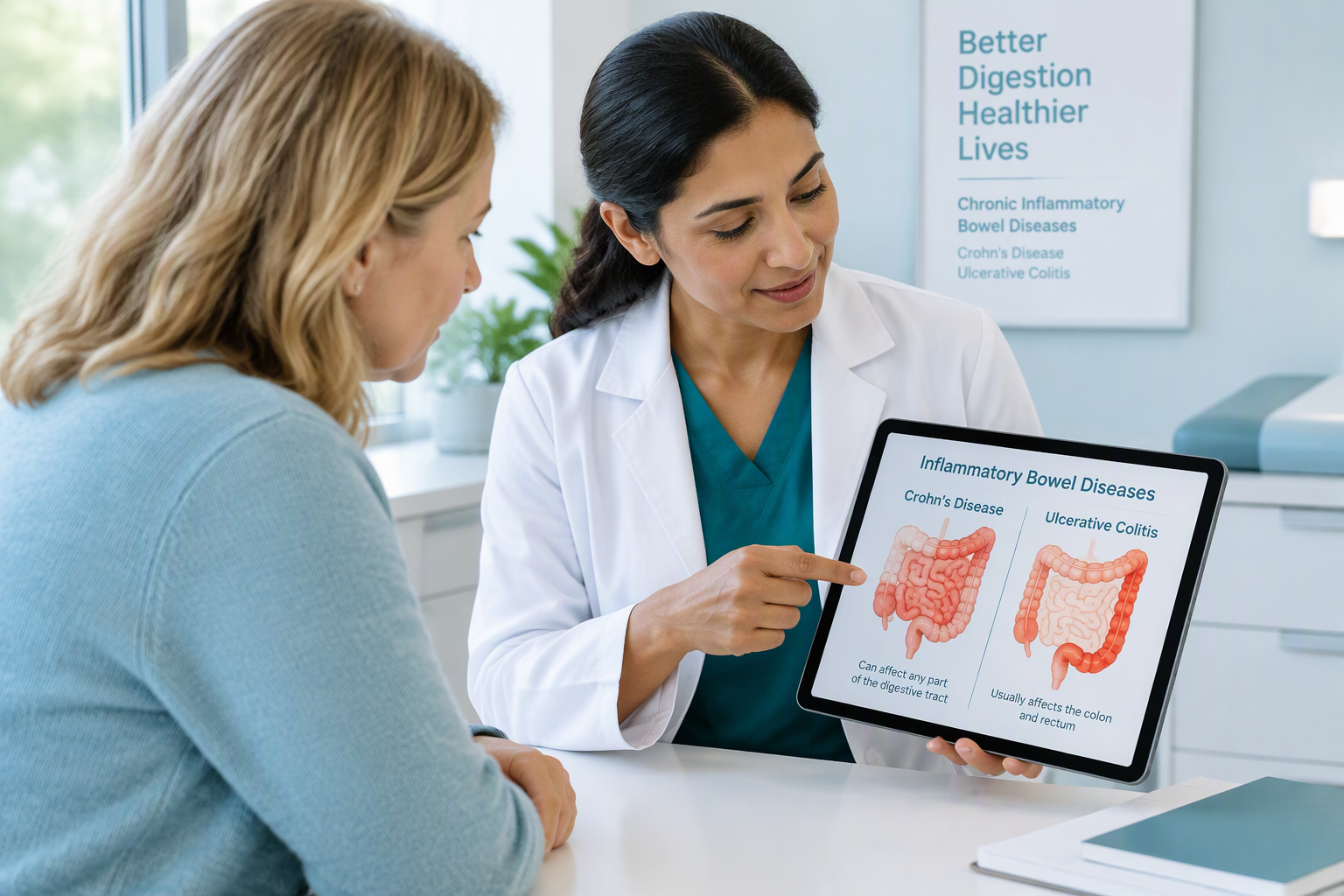
Inflammatory bowel disease (IBD) is an umbrella term for chronic digestive conditions driven by abnormal immune activity. Unlike an occasional stomach upset, IBD causes ongoing digestive tract inflammation that can injure the intestinal lining over time. This inflammation may lead to:
- Swelling in the intestinal lining
- Open sores called intestinal ulcers
- Lasting damage to bowel tissue
Crohn’s disease and ulcerative colitis are the two main forms of IBD. Both can cause persistent symptoms that disrupt meals, sleep, work, and family life, though they affect different parts of the digestive tract and create different patterns of inflammation.
IBD is generally lifelong, but symptoms can change over time. A flare is a period when symptoms and inflammation become more active. During remission, symptoms may improve greatly or disappear for a while, yet the condition still needs ongoing medical attention. Remission does not mean your symptoms were imagined.
IBD affects millions of Americans. Ulcerative colitis alone affects an estimated 600,000 to 900,000 people in the United States, according to the National Institute of Diabetes and Digestive and Kidney Diseases (source).
There is no permanent cure for IBD, but treatment can help manage inflammation and support long-term remission. Care may focus on:
- Reducing abnormal immune-driven inflammation
- Promoting intestinal healing
- Relieving symptoms that affect daily life
- Lowering the chance of future flares
The right plan depends on your symptoms, medical history, and the type of IBD involved. Digestive disorders beyond IBD can also cause symptoms that overlap with IBD.
This IBD overview covers immune-mediated bowel inflammation in both forms, Crohn's disease and ulcerative colitis (UC), and inflammatory bowel disease symptoms are the same list either way.
How Do Crohn's Disease and Ulcerative Colitis Differ?
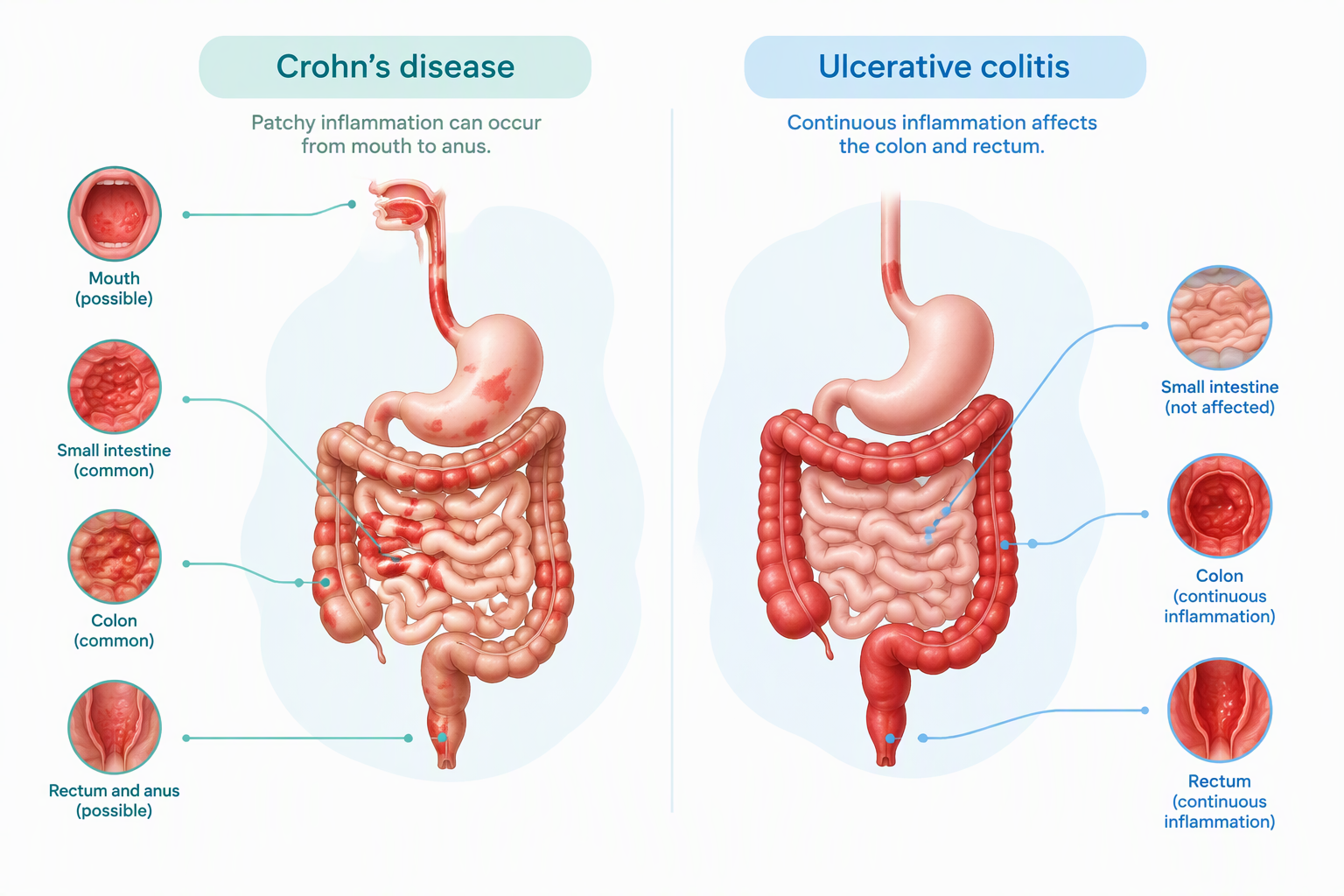
Both conditions are forms of inflammatory bowel disease (IBD), which causes digestive tract inflammation that can flare and settle over time. The main differences between them are the location and depth of inflammation. Symptoms can overlap, so they cannot confirm either condition on their own.
Feature | Crohn's disease | Ulcerative colitis |
|---|---|---|
Location | Can affect anywhere from the mouth to the anus, often the ileum, or end of the small intestine, and colon. | Affects only the colon and rectum, usually beginning in the rectum. |
Inflammation pattern | Often occurs in patches, with healthy tissue between inflamed areas. | Usually forms one continuous area of inflammation. |
Depth of inflammation | May extend through several layers of the bowel wall. | Mainly affects the colon’s inner lining, where ulcers can form. |
Common symptoms | Persistent diarrhea, cramping, reduced appetite, weight loss, and pain that may be strongest in the lower right abdomen. | Bloody diarrhea, urgent bowel movements, cramping, and pain on the left side or across the abdomen. |
Possible bowel damage | Deeper inflammation can cause narrowed bowel sections called strictures, fistulas, or abscesses. | Ongoing bleeding and severe or widespread inflammation can lead to serious colon-related problems. |
Fatigue, loose stools, abdominal pain, and appetite changes can occur with either condition. Bleeding is more often linked with ulcerative colitis, but no single symptom, including where pain occurs, can diagnose IBD.
Crohn's disease in depth explains how its patchy, deeper inflammation may affect symptoms and complications.
Ulcerative colitis in depth covers its colon-focused inflammation and common concerns such as bleeding and urgency.
Clinicians consider symptoms alongside blood and stool tests, colonoscopy with tissue samples, and sometimes imaging to identify the inflammation pattern. Treatment for either condition aims to control inflammation, relieve symptoms, support bowel healing and remission, and reduce complications. Persistent diarrhea, bleeding, weight loss, or abdominal pain warrants medical assessment.
Crohn's disease vs ulcerative colitis is mostly a question of where in the digestive tract the inflammation sits and how deep it goes.
How Is IBD Different From IBS?
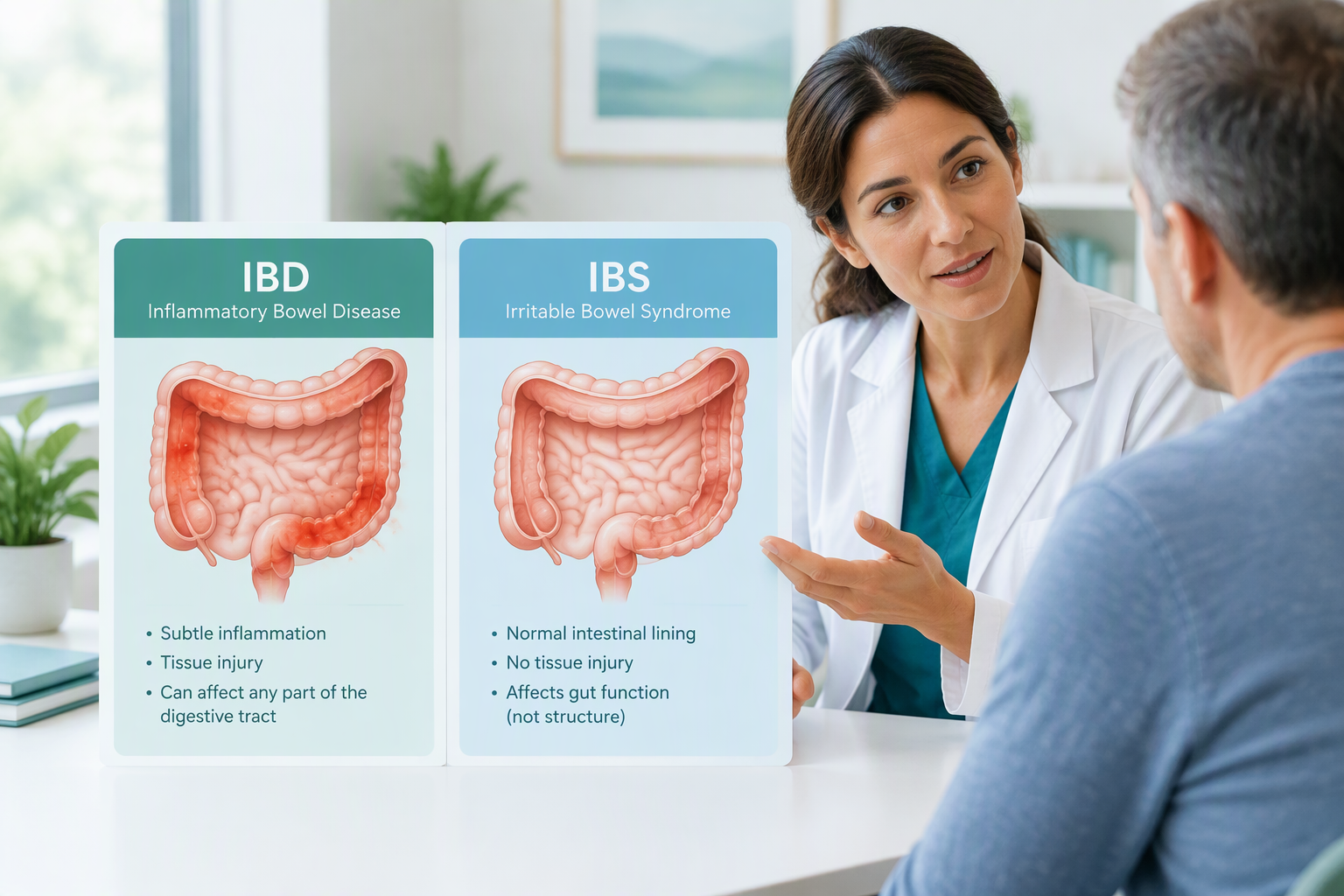
Beyond distinguishing Crohn's disease from ulcerative colitis, the main distinction between IBD and IBS is whether inflammation is damaging the digestive tract. IBD involves an immune-driven inflammatory response that can cause ulcers and lasting tissue injury. IBS can cause very real, disruptive symptoms, but it does not create that type of inflammation or damage. It is not “all in your head.”
Both conditions can involve abdominal pain or cramping, bloating, diarrhea, constipation, changing bowel habits, and urgency. That overlap is why symptoms alone cannot always identify the cause.
Feature | IBD | IBS |
|---|---|---|
Intestinal inflammation | Present | Not present |
Tissue injury or ulcers | Can occur | Does not occur |
Bleeding | Can occur | Not caused by IBS |
Symptoms outside the bowel | Fatigue, fever, and weight loss may occur | Less typical |
Active IBD may also cause signs that are less typical of IBS:
- Persistent or frequent diarrhea
- Mucus or blood in stool
- Fatigue or reduced appetite
- Unintended weight loss
- Fever
Bright-red rectal bleeding or dark stools can occur when IBD-related ulcers or inflammation bleed. IBS itself does not cause bleeding. Blood in stool, fever, unexplained weight loss, or ongoing diarrhea needs medical assessment rather than an assumption that IBS is responsible, although these signs do not always mean IBD.
Testing helps separate conditions with similar symptoms. Blood and stool tests may show inflammation or anemia, while colonoscopy and imaging can reveal bowel injury. The tests that separate IBS from IBD explain the usual evaluation. How IBD is diagnosed details what those results can clarify.
IBD vs IBS, or IBS vs IBD from the other direction, is settled by an IBD diagnosis built on endoscopy for IBD, sometimes upper endoscopy for IBD in Crohn's disease, and biopsies.
IBD versus IBS is a question colonoscopy for IBD answers directly, since IBS leaves a normal lining.
What Symptoms Can IBD Cause?

IBD symptoms can be mild and intermittent or severe enough to disrupt meals, sleep, work, and daily plans. They usually worsen during flares, when inflammation is active, and may settle during remission, and knowing what an IBD flare looks like helps you spot a meaningful change early. Common bowel symptoms include:
- Persistent or chronic diarrhea
- Frequent bowel movements or sudden urgency
- Abdominal pain or cramping
- Mucus or blood in the stool
- Leakage or trouble reaching the bathroom in time
Crohn’s disease often causes diarrhea, cramping, low appetite, and unintended weight loss. Abdominal pain may be strongest in the lower-right abdomen, although the location can vary. Ulcerative colitis more often causes bloody diarrhea, urgency, and cramping, with pain on the left side or across a wider area of the abdomen. These patterns can help guide an assessment, but symptoms alone cannot identify the type of IBD (source).
Inflammation can also affect more than the bowel. Fatigue, anemia, fever, reduced appetite, and weight loss may result from ongoing inflammation, poor intake, or nutrient loss. Even when digestive symptoms seem less noticeable, fatigue can make ordinary activities feel harder, and eating with Crohn's or colitis becomes its own daily puzzle.
IBD may also cause signs elsewhere in the body:
- Joint pain or arthritis
- Tender red skin bumps, other rashes, or painful sores
- Eye redness, pain, or vision changes from inflammation
- Kidney stones or liver problems in some people
Bright-red blood, dark stools, or recurring rectal bleeding should not be assumed to be IBS. Blood can occur when inflammation causes ulcers in the digestive tract, and it needs assessment. Seek clinical care for persistent diarrhea, repeated urgency or pain, unexplained weight loss, fever, or any bloody stool (source).
Extraintestinal manifestations of IBD is the clinical name for these effects outside the gut.
Crohn's disease symptoms track the part of the digestive tract involved, which is why they vary so much from person to person.
What Causes IBD?
No single factor explains what causes IBD. It is not caused by one meal, a stressful period, or a lifestyle choice. Instead, it comes from a mix of inherited susceptibility, an immune system response that stays active in the gut, and environmental exposures.
Genes can raise risk without making IBD inevitable, and many genes tied to immune regulation, the intestinal lining, and bacterial handling play a part. Having a parent or sibling with IBD raises the odds, though most people have no family history. IBD can begin at any age, and Crohn's disease is most often diagnosed between 20 and 29 (source).
The gut microbiome, the community of microbes in your digestive tract, may also help sustain inflammation. In susceptible people, the immune system may overreact to normal gut microbes or fail to switch off after responding. Changes in the intestinal barrier can add to this process. Infections are a possible trigger still under study, not a proven cause for everyone.
Several factors are associated with risk or a more severe course, but none independently causes IBD:
- Antibiotics: Heavy use or exposure early in life is linked with higher risk.
- NSAIDs: Nonsteroidal anti-inflammatory drugs are associated with IBD risk and may worsen symptoms for some people.
- Industrialized settings: Living in these settings is linked with IBD, though the reason is unclear.
- Smoking: Cigarette smoking raises Crohn’s disease risk and is associated with more severe disease and surgery. Quitting supports management, and IBD treatment from mesalamine to biologics does the rest.
Stress and certain foods can worsen symptoms or contribute to flares, but they do not cause IBD. Is IBD an autoimmune disease? The answer is not simple because abnormal immune activity is only part of the picture. Persistent diarrhea, bleeding, abdominal pain, fatigue, or unintended weight changes need medical assessment rather than self-diagnosis as IBS.
IBD risk factors, then, are inherited susceptibility, immune signaling, the microbiome, and the exposures above, and in Crohn's disease the ileum and colon are the digestive tract segments most often involved.
What Complications Can IBD Cause?
Given the factors that can sustain inflammation, IBD complications can develop when inflammation stays active over time, but they are not inevitable. Ongoing inflammation and deep intestinal ulcers can damage bowel tissue beyond the symptoms of a flare. In Crohn’s disease, scar tissue can form a stricture that narrows the intestine and may cause a blockage. Fistulas are abnormal tunnels between body parts, and abscesses are infected pockets that can develop near the bowel.
Most flare symptoms are not emergencies, but a few changes need urgent assessment. Deep inflammation can rarely cause a bowel perforation, meaning a hole in the bowel. Severe ulcerative colitis can also lead to toxic megacolon, when the colon becomes dangerously swollen and stops working normally. Seek urgent care for:
- Severe or rapidly worsening abdominal pain
- A swollen, firm, or noticeably enlarged abdomen
- Fever, repeated vomiting, or a rapid heartbeat
- Feeling severely unwell, weak, or faint
Spotting a meaningful change early beats pushing through symptoms that are getting worse.
Inflammation, intestinal bleeding, poor appetite, and reduced nutrient absorption can lead to weight loss, malnutrition, iron-deficiency anemia, and low bone density. Anemia means you have too few healthy red blood cells to carry oxygen. It can worsen fatigue, weakness, breathlessness, and dizziness, while low bone density raises fracture risk over time.
IBD may also affect organs outside the digestive tract, sometimes even when bowel symptoms are quieter. Report joint pain or arthritis, tender red skin lumps or rashes, and painful, red, light-sensitive eyes. Kidney stones and liver disorders can occur as well.
Long-standing inflammation affecting much of the colon raises colorectal cancer risk, especially after years of active disease (source). This is a reason for specialist follow-up, inflammation control, and recommended colon surveillance, not a prediction that cancer will develop. Modern treatment prevents most of these complications by controlling inflammation.
What Do Flares and Remission Mean?
Even with the risk of complications, IBD usually has periods of active disease, called flares, and quieter periods called remission. During a flare, intestinal inflammation increases and symptoms become more noticeable. IBD remission means symptoms have eased greatly or disappeared, but it does not mean Crohn's disease or ulcerative colitis has gone away permanently. Remission can last for different lengths of time.
A flare may bring:
- Diarrhea or more frequent bowel movements
- Abdominal pain and urgent trips to the bathroom
- Rectal bleeding
- Fatigue that makes daily activities harder
- Unintended weight loss
Symptoms vary from person to person. Unlike IBS, IBD causes inflammation that can damage bowel tissue, even when the digestive symptoms seem alike.
Feeling better is encouraging, but symptoms alone do not confirm IBD remission. Ongoing symptoms can have causes other than active inflammation, and some people feel well while inflammation continues. Your clinician may use symptom history, blood tests, stool inflammation markers, endoscopy, or imaging to check disease activity.
Treatment depends on the type of IBD, the severity of a flare, and your goals, and the aim is to regain and hold remission while supporting daily life.
IBD flare-ups and remission are the rhythm of the disease, and nutrition in IBD shifts with them.
What Is the Outlook With Modern Treatment?

With treatment focused on maintaining remission, modern treatment can help many people with IBD reach long periods of remission with little or no active inflammation. A realistic outlook also includes protecting bowel health over time.
Your treatment plan depends on whether you have Crohn’s disease or ulcerative colitis, where inflammation occurs, how severe it is, your response to past medicines, and your preferences. The medicine classes run from aminosalicylates and short courses of corticosteroids through immune-modifying drugs to biologics and other targeted therapies, chosen for the type and severity of disease.
Feeling better matters, but IBD symptoms can improve before bowel inflammation has fully settled. Specialist follow-up considers daily symptoms alongside evidence of ongoing inflammation, so treatment can be adjusted when needed. Antibiotics are not routine long-term IBD treatment, though they may be used for selected complications.
Surgery is not a personal failure. When medicines cannot control inflammation or complications cause severe damage or a blockage, surgery may be necessary. In Crohn’s disease, surgery can remove badly affected bowel. For severe ulcerative colitis that does not respond to treatment, removing the colon eliminates colitis, though recovery and long-term effects need careful consideration.
Living with IBD often involves flares and remission rather than a straight path. Report returning symptoms, blood in stool, or unintended weight loss promptly, since treatment needs can change over time. Ongoing specialist care helps many people remain active while protecting bowel health.
When Do IBD Symptoms Need Prompt Assessment?
Book a prompt healthcare appointment when digestive symptoms are new, keep returning, worsen, or last more than a few days (source). IBD symptoms may be mild or severe, and symptoms alone cannot diagnose IBD. Still, blood in stool, fever, or unintended weight loss should not be assumed to be IBS.
An appointment is especially important for chronic diarrhea, frequent or urgent bowel movements, ongoing abdominal pain or cramping, mucus in stool, fatigue, reduced appetite, or weight changes. Rectal bleeding may appear as bright-red blood, while dark stools can need different assessment.
Same-day urgent or emergency care is needed for:
- Severe or rapidly worsening abdominal pain.
- Heavy rectal bleeding or black, tar-like stools.
- Fainting, confusion, or severe dizziness.
- High fever with significant illness.
- Repeated vomiting or being unable to keep fluids down.
- Very little urine or other signs of dehydration.
These symptoms can have several causes, but they need timely medical assessment rather than home treatment.
Bring a simple record of when symptoms began, stool changes, pain, fever, weight, recent illness or travel, medicines, and family history, since it helps the clinician decide whether blood or stool testing for inflammation or infection is the next step.
The Crohn's and Colitis Foundation is the main source of IBD patient resources in the US if you want support beyond your care team.
Inflammatory Bowel Disease FAQs
Common IBD questions can help you make sense of symptoms, testing, treatment, food concerns, and daily life. The answers below offer clear starting points for discussing your concerns with a clinician.
1. How Is Inflammatory Bowel Disease Diagnosed?
No single test diagnoses IBD. A clinician considers your symptoms, their pattern and severity, your medical and family history, and an exam to decide whether immune system-related inflammation may be involved. Blood and stool tests can find inflammation, anemia, or infections that mimic IBD, but they do not confirm it alone. CT, MRI, or intestinal ultrasound can assess the bowel, while colonoscopy, sometimes with upper endoscopy, allows direct viewing and biopsies that help distinguish Crohn’s disease from ulcerative colitis.
2. Is Inflammatory Bowel Disease Hereditary?
IBD can run in families, but it is not passed down with certainty. Having a parent, sibling, or child with Crohn's disease or ulcerative colitis raises your susceptibility, yet most people with IBD have no close relative with the condition. Many genes are tied to risk, but immune activity and environmental factors, including changes in gut bacteria or infections, also play a role. IBD can start at any age, although diagnoses are most common in young adulthood.
3. Can Children Develop Inflammatory Bowel Disease?
Children and teens can develop Crohn’s disease or ulcerative colitis at any age, even though IBD is most often diagnosed in teens and young adults. A parent or sibling with IBD raises risk but does not mean a child will develop it. The cause is not fully known and involves more than family history. Persistent diarrhea, urgent bowel movements, belly pain, blood or mucus in stool, fatigue, poor appetite, fever, weight loss, slowed growth, or delayed puberty warrant a pediatric gastroenterology assessment.
4. Can Diet Trigger IBD Symptoms?
Food does not cause IBD, and no single diet is proven to prevent or cure it. During a flare, certain foods may worsen diarrhea, cramping, bloating, or urgency without causing the intestinal inflammation itself. Smoking can make Crohn’s disease worse, while antibiotics, NSAIDs, and stress may contribute to symptoms or flares for some people. Choose foods and textures you tolerate, replace fluids lost through diarrhea, and seek prompt care if you cannot keep fluids down or develop dehydration symptoms. Short-term changes should not become permanent restrictions. A registered dietitian can help protect nutrition and assess whether specialized liquid nutrition may help.
5. Can IBD Affect Pregnancy?
Many people with IBD have healthy pregnancies, especially when plans are discussed early with a gastroenterologist and obstetric clinician. Guidance depends on whether Crohn’s disease or ulcerative colitis is active, its severity, your treatment history, and your preferences.
Keeping inflammation controlled before and during pregnancy supports both parent and baby. IBD has no permanent cure, so review medicines with your care team rather than stopping them yourself. Nutrition support can help when appetite, weight loss, or nutrient deficiencies are concerns.