


Bloating, cramping, diarrhea, and constipation can look like IBS, but IBD is diagnosed through a combination of symptoms, lab results, endoscopy, biopsies, and sometimes imaging. Blood in the stool, nighttime bowel movements, unexplained weight loss, fatigue, or persistent diarrhea can point to inflammation that IBS does not cause.
CRP, ESR, and stool markers such as fecal calprotectin can show whether intestinal inflammation may be present, but none can confirm IBD alone. Colonoscopy with biopsies is often central because it lets clinicians see the colon, collect tissue samples, and assess whether findings fit Crohn's disease, ulcerative colitis, infection, or another cause.
Crohn's disease may affect patchy areas anywhere in the digestive tract, while ulcerative colitis causes continuous inflammation limited to the colon. Small-bowel imaging or capsule endoscopy may be needed when colonoscopy does not fully explain ongoing symptoms.
IBD Diagnosis and IBS Key Takeaways
- Symptoms alone cannot diagnose IBD or reliably distinguish it from IBS or infection.
- Blood tests can identify anemia, inflammation markers, and nutritional effects of digestive disease.
- Stool tests check for hidden blood, infection, and intestinal inflammation.
- Colonoscopy with biopsies often provides the strongest evidence for an IBD diagnosis.
- Crohn's disease can be patchy and affect any digestive tract segment.
- Ulcerative colitis causes continuous inflammation in the colon, beginning in the rectum.
- Symptom timelines and prior test records help gastroenterologists choose appropriate next tests.
What Symptoms Prompt an IBD Evaluation?

Inflammatory bowel disease (IBD) cannot be identified from symptoms alone, but ongoing or disruptive bowel changes should be assessed. The IBD hub explains the conditions and tests that may be part of that assessment.
Diarrhea that returns repeatedly, wakes you at night, or differs from your usual pattern deserves attention when it continues beyond a brief stomach illness. Blood in the stool, rectal bleeding, mucus, or pus should not be assumed to be a routine digestive upset. Frequent stools and urgent trips to the bathroom can occur with IBD, irritable bowel syndrome (IBS), and other conditions, so clinicians consider the full pattern.
Useful details to share at an appointment include:
- How long symptoms have lasted and whether they come and go.
- Stool frequency and appearance, including blood, mucus, or urgency.
- Nighttime bowel movements or difficulty delaying a bowel movement.
- Pain or cramping, including its connection to bowel movements, bloating, diarrhea, or reduced appetite.
- Effects on meals, sleep, work, and daily activities.
Lower-left abdominal pain can occur with ulcerative colitis, but pain location alone cannot identify the cause or distinguish it from Crohn's disease. A physical exam, your symptom history, and any available blood, stool, or colonoscopy results help clinicians choose appropriate next tests.
Unexplained weight loss, fatigue, fever, reduced appetite, poor nutrition, or anemia alongside digestive symptoms need assessment. Anemia and IBD can occur together when inflammation, bleeding, or limited nutrient intake is present. In a child, delayed growth also needs prompt evaluation.
Seek prompt care for very severe or bloody diarrhea, fever or shivering, a fast heartbeat, severe abdominal pain, inability to pass stool or gas, dehydration concerns, or a rapid decline.
How IBD is diagnosed, and how to diagnose IBD at all, starts with this clinical evaluation for IBD rather than any single test.
Tests for inflammatory bowel disease follow this physical exam for IBD, and ruling out other conditions before diagnosing IBD is built into every step.
How Do Blood and Stool Tests Guide Next Steps?
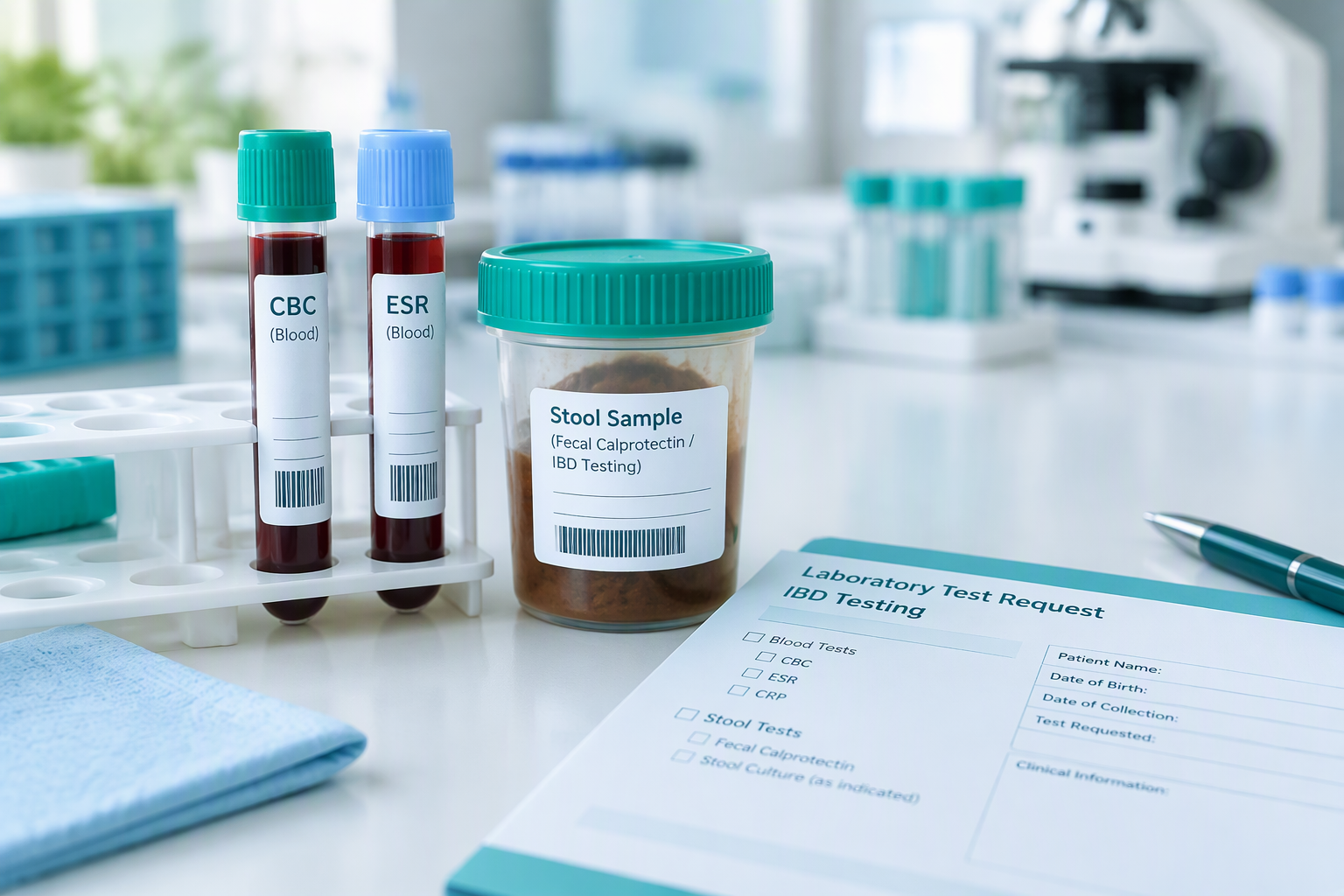
To investigate the symptom patterns that can raise concern for IBD, no single blood draw or stool sample can diagnose IBD, including Crohn's disease and ulcerative colitis. A gastroenterologist considers your symptoms, medical history, examination, blood tests, and stool results together. Colonoscopy with biopsies, imaging, or other procedures may then confirm the cause and rule out similar conditions, including infection.
Your history and examination put test results in context. Clinicians consider:
- Symptom pattern: When diarrhea, abdominal pain, rectal bleeding, fatigue, appetite changes, or weight changes began and how they have changed.
- Possible triggers: Recent illness, travel, medicines, diet, and lifestyle factors that could affect symptoms.
- Personal and family history: IBD, autoimmune disease, and related health concerns.
An examination may identify abdominal tenderness, dehydration, weight loss, or signs of poor nutrition.
Rather than identifying the exact diagnosis, blood tests show how a digestive condition may be affecting your body. They can find anemia related to intestinal bleeding or poor iron absorption, elevated white blood cell counts linked to inflammation or infection, and nutritional deficiencies caused by reduced intake or absorption.
Common IBD inflammation markers include C-reactive protein (CRP) and erythrocyte sedimentation rate (ESR). Higher levels can support concern about inflammation rather than IBS, but infections and other conditions can also raise them. These markers cannot locate inflammation or confirm IBD.
Stool tests check for hidden blood, intestinal inflammation, and infection. Stool tests for gut inflammation may include stool infection testing for bacteria, viruses, or parasites. An infection can cause diarrhea, pain, and inflammation that resemble IBD.
A fecal calprotectin test and fecal lactoferrin test measure proteins associated with intestinal inflammation. Elevated results make an inflammatory condition more likely than IBS, especially with ongoing diarrhea, but cannot identify the cause or distinguish Crohn's disease from ulcerative colitis, and the AGA now uses these markers to track disease activity once IBD is established (source). They can help determine whether endoscopic testing is warranted.
These are the first diagnostic tests for IBD: blood work, sometimes an inflammatory bowel disease serology panel, and stool tests for IBD.
How Does Colonoscopy Confirm IBD?
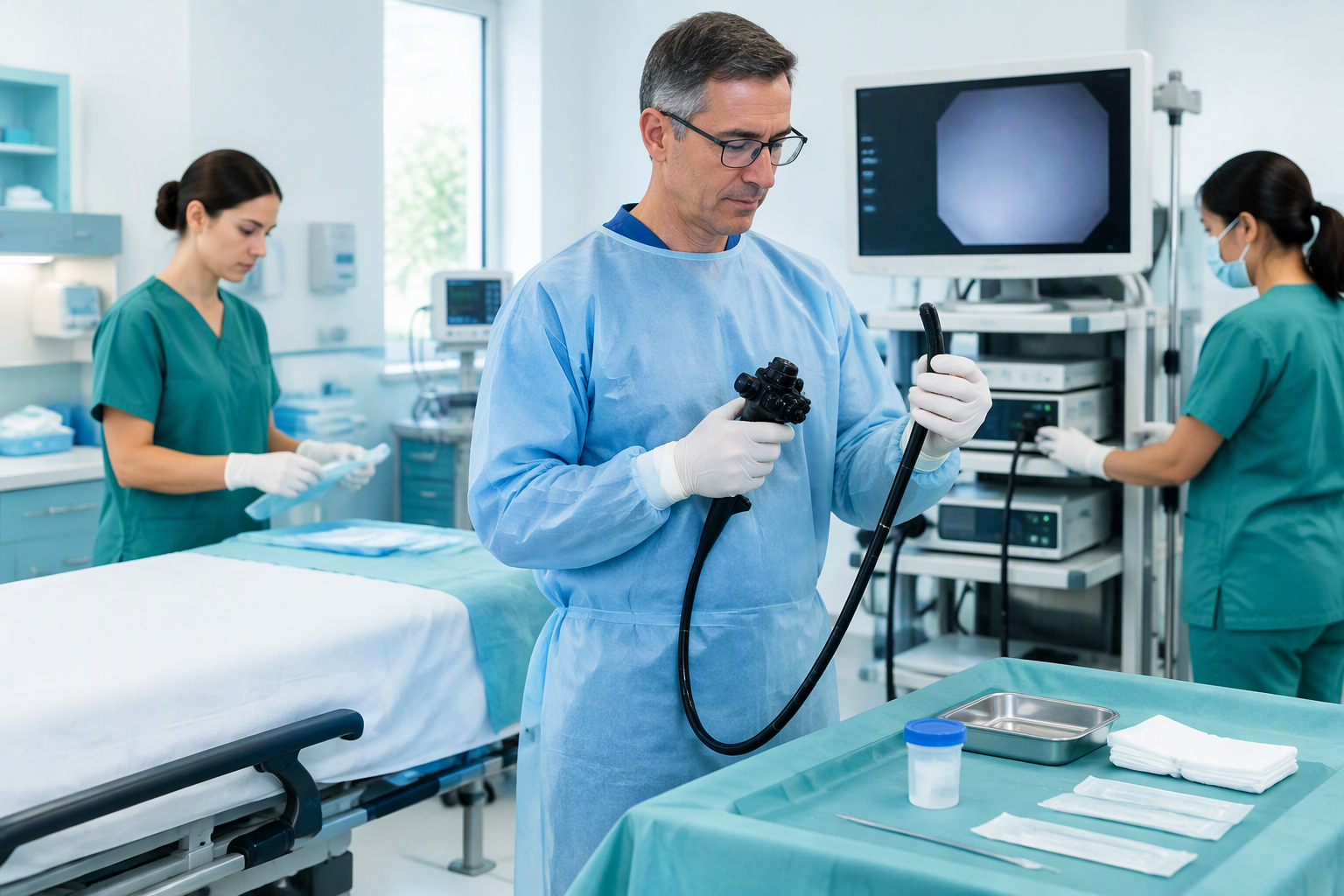
When blood and stool results raise concern but cannot confirm IBD, colonoscopy gives a gastroenterologist direct evidence of inflammation inside the large intestine. A thin, flexible camera examines the rectum and colon and may reach the terminal ileum, the last part of the small intestine. Symptoms, blood tests, and stool tests can raise concern for IBD, but they cannot confirm it on their own.
During the procedure, the gastroenterologist maps where inflammation occurs and how severe it appears. The examination may show:
- Redness and swelling: Signs of an irritated or inflamed bowel lining.
- Ulcers, bleeding, or fragile tissue: Damaged areas that may bleed easily.
- Narrowing: A tightened bowel segment that can develop with ongoing inflammation.
- Patterns of affected tissue: Continuous colon inflammation may support an ulcerative colitis diagnosis, while patchy inflammation or terminal-ileum involvement can fit a Crohn's disease diagnosis.
The camera view is only part of the assessment. A biopsy involves collecting several tiny samples from inflamed tissue and sometimes from areas that appear normal, and you usually do not feel it.
A pathologist examines the samples under a microscope for chronic inflammation and structural changes in the bowel lining that the camera cannot see. Colonoscopy findings combined with microscopic tissue review are often considered the gold standard for IBD diagnosis. This assessment helps the gastroenterology team distinguish Crohn's disease and ulcerative colitis from infection, medication-related injury, and other forms of colitis (source).
Visual findings may be discussed soon after the procedure, while biopsy results take additional time. The exam also establishes a baseline of disease location and activity, and biopsies may be checked for precancerous or cancerous cell changes when clinically appropriate. Crohn's disease as a condition describes why inflammation can appear in different parts of the digestive tract.
Colonoscopy for IBD, with upper endoscopy for IBD when Crohn's disease is suspected higher up, is the core of the endoscopic procedures for IBD.
IBD endoscopy with a tissue biopsy for IBD is what settles it, and the diagnostic procedures for inflammatory bowel disease beyond it exist to map extent, not to replace this.
When Are Small-Bowel Tests Needed?
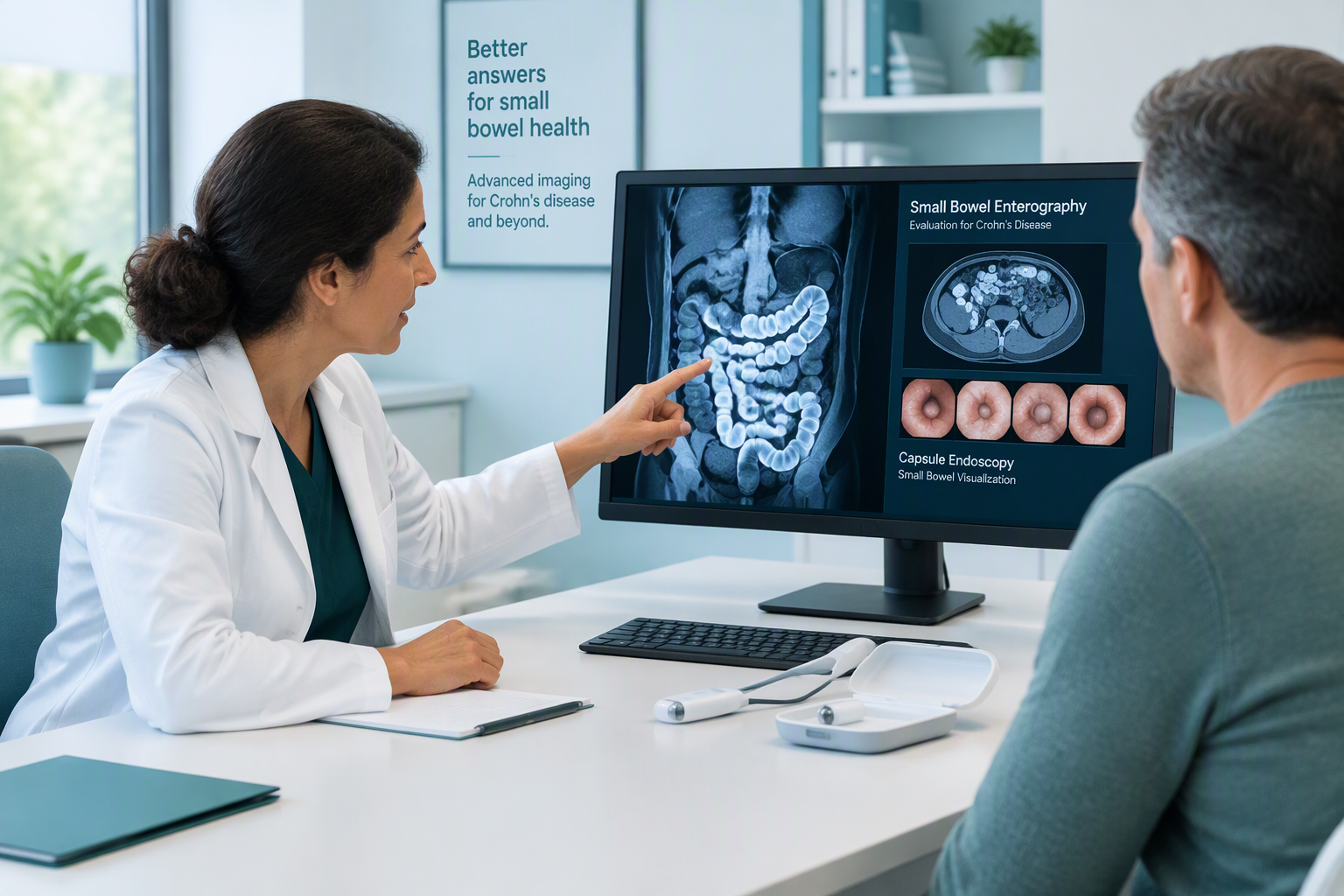
Small-bowel testing is targeted follow-up when symptoms, inflammation markers, biopsy results, or colonoscopy findings suggest Crohn’s disease without providing a complete answer. Unlike ulcerative colitis, Crohn’s can affect any part of the digestive tract and deeper bowel layers. Colonoscopy and upper endoscopy cannot reach most of the small intestine, so added testing can support a Crohn’s disease diagnosis and identify complications (source).
CT enterography and MRI enterography are cross-sectional forms of small intestine imaging that map the bowel and nearby tissues. They can show bowel-wall thickening, deep inflammation, strictures, fistulas, abscesses, obstruction, or perforation that surface-level scopes may miss. When repeat imaging is needed, MRI enterography avoids radiation, which can matter.
Abdominal ultrasound is a noninvasive, radiation-free first look at bowel-wall thickness and intestinal inflammation. Results can vary based on the bowel segment, body anatomy, equipment, and examiner expertise, so persistent symptoms or uncertain findings may still need enterography or endoscopy.
Other tests may be used when earlier results point to a specific area or need confirmation:
- Capsule endoscopy: You swallow a small camera that photographs the small-bowel lining beyond the reach of standard scopes over several hours. Clinicians check for significant narrowing first because the capsule can become lodged behind a stricture (source).
- Device-assisted endoscopy: This procedure can reach farther into the small bowel, inspect an area flagged by capsule testing or imaging, and collect biopsies when confirmation is needed.
- Upper endoscopy: This scope examines the esophagus, stomach, and first part of the small intestine when nausea, vomiting, swallowing trouble, or upper-abdominal pain suggests Crohn’s involvement there. It complements, rather than replaces, colonoscopy.
Your symptom pattern and earlier findings guide which tests are most likely to answer the remaining clinical question.
IBD diagnostic imaging fills the gap the scopes leave, especially for diagnosing Crohn's disease.
How Do Clinicians Distinguish IBD From IBS?
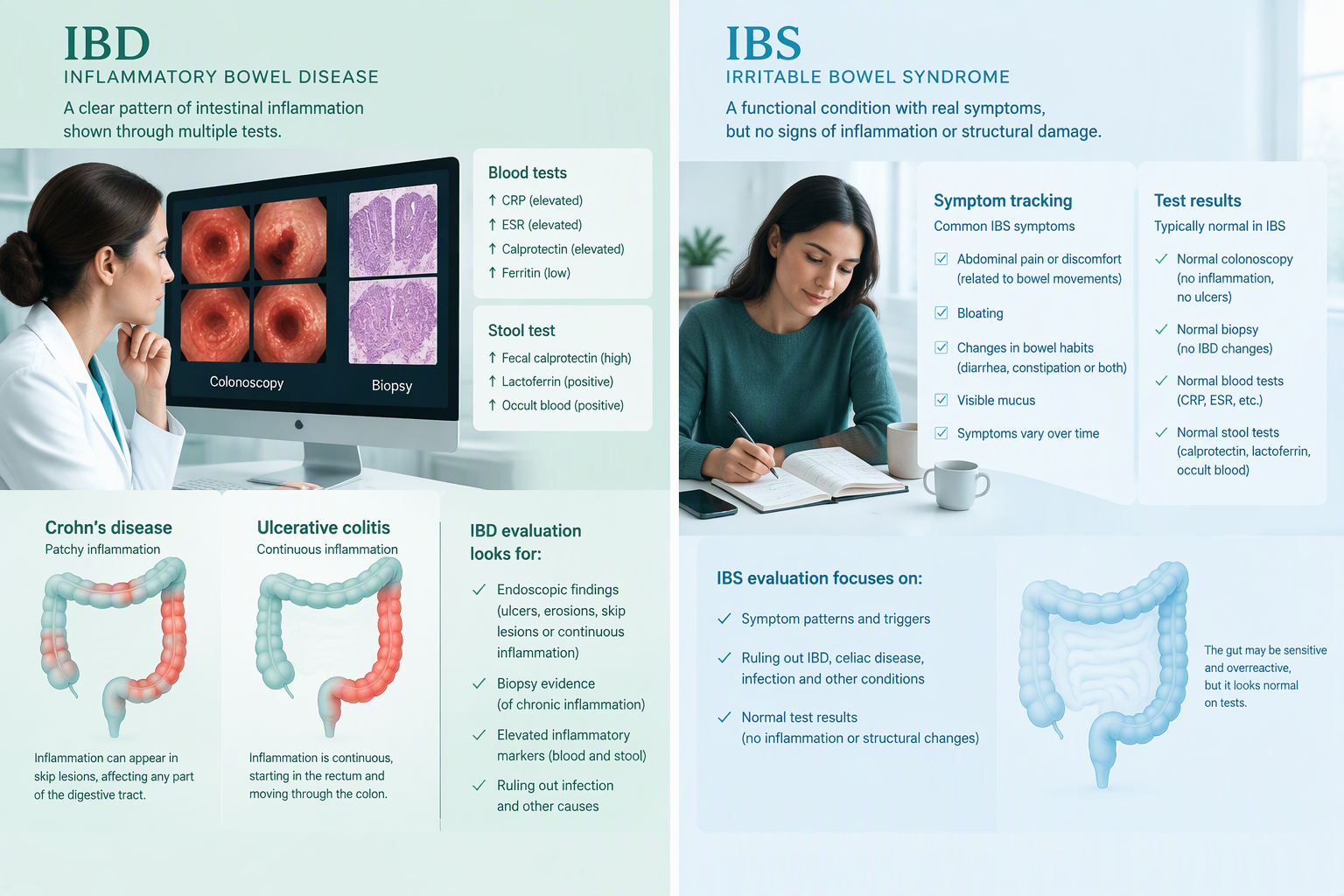
Separating IBD from IBS depends on test results and disease patterns, not symptoms alone. Clinicians consider your medical and family history, physical exam, blood and stool tests, endoscopy with biopsies, and sometimes imaging to separate IBD from IBS, infections, and other conditions with similar digestive symptoms. An inflammatory bowel disease diagnosis comes from this full clinical picture, not a self-diagnosis checklist.
IBS can cause recurrent abdominal pain with constipation, diarrhea, or both, but it does not cause ongoing intestinal inflammation or visible bowel injury. Prompt clinical assessment is important when symptoms include:
- Rectal bleeding
- Persistent diarrhea
- Unintentional weight loss
- Fatigue or fever
- Symptoms that wake you from sleep
- A family history of IBD
No one symptom proves or rules out IBD. Blood work can identify anemia or signs of inflammation, while stool tests can detect intestinal inflammation and infections that may resemble an IBD flare. Normal inflammatory results make active IBD less likely and may support IBS, though persistent concerns can still need further testing.
How is IBD diagnosed when symptoms overlap? Colonoscopy with biopsies is often central. IBS usually causes neither visible inflammation nor characteristic tissue changes, while biopsies may show microscopic inflammation, rule out infection or other causes of colitis, and support a Crohn’s disease or ulcerative colitis diagnosis. NIDDK notes that clinicians combine blood tests, stool tests, endoscopy, and biopsy findings during an ulcerative colitis evaluation (source).
Disease location helps clarify the IBD diagnosis. Crohn’s disease can affect any part of the digestive tract, from mouth to anus, often in patchy areas with healthy tissue between them. It may cause deep ulcers and bowel-wall inflammation. Ulcerative colitis as a condition begins in the rectum, remains limited to the colon, and usually causes continuous surface inflammation.
Imaging, capsule endoscopy, or upper endoscopy may find Crohn’s-related inflammation beyond the colon. When findings overlap, clinicians may use indeterminate colitis until the pattern becomes clearer over time, and treatment after an IBD diagnosis can begin before the label is settled.
That is how clinicians differentiate IBD from irritable bowel syndrome: the diagnostic tests for Crohn's disease and ulcerative colitis find inflammation, and tests for ulcerative colitis or Crohn's diagnostic tests come back normal in IBS.
The difference between Crohn's disease and ulcerative colitis is read from the same IBD diagnostic tests, so how inflammatory bowel disease is diagnosed and which form it is are answered together.
How Can You Prepare for a Gastroenterology Visit?
Because distinguishing IBD from IBS relies on the full clinical picture, a brief, dated symptom timeline helps your gastroenterologist identify patterns during an IBD evaluation, rather than leaving you to interpret symptoms yourself. Before the visit, record:
- Bowel changes: Stool frequency, consistency, urgency, nighttime bowel movements, and when symptoms began or changed.
- Other symptoms: Pain location and timing, fatigue, fever, appetite changes, and unintended weight changes.
- Rectal bleeding: Whether blood is bright red, dark, or mixed with stool, how often it occurs, and whether stools are black or tar-like.
Heavy bleeding, black stools, fainting, severe pain, dizziness, fever, or dehydration need prompt medical care rather than a routine visit.
Your medical history should include symptom duration, abdominal surgery, recent illness, stress or smoking changes, and digestive diagnoses in close relatives. A minority of people with IBD have a first-degree relative with the condition, so family history adds context but cannot diagnose IBD. For added context, note recent travel, untreated food or water, sick contacts, stomach infections, antibiotic-associated diarrhea, major diet changes, and foods that seem to worsen symptoms.
Bring medication and prior-care records, including prescriptions, over-the-counter pain relievers and antidiarrheals, antibiotics, supplements, past treatments and their effects, blood and stool results, endoscopy reports, biopsies, imaging, and discharge summaries. Repeat testing, colonoscopy with biopsies, or small-bowel evaluation may be useful depending on existing findings.
Ask what earlier results do and do not show, whether infection still needs testing, which test is most useful next, and which symptoms require urgent care. Gastroenterologists may review findings with pathologists and radiologists before discussing treatment.
Inflammatory Bowel Disease Diagnosis FAQs
These FAQs explain what an IBD diagnosis may involve and why symptoms can overlap with IBS. They can help you prepare for a gastroenterology appointment with a clearer sense of the testing process.
1. Can IBD Be Diagnosed Without a Colonoscopy?
No single test can diagnose IBD with certainty. A gastroenterologist considers your symptoms, health and family history, examination findings, blood and stool tests, and sometimes imaging or other endoscopic tests to rule out other causes.
A colonoscopy is often needed for confirmation. It allows direct views of the colon and end of the small intestine, while a pathologist checks biopsy samples for chronic inflammation and tissue changes. This is the gold standard for IBD diagnosis because it helps distinguish Crohn’s disease or ulcerative colitis from infection and other conditions.
2. Can Imaging Show IBD Before Symptoms Appear?
Imaging can sometimes detect Crohn’s disease-related inflammation or complications before digestive symptoms are clear. CT enterography and MRI enterography provide small intestine imaging beyond the reach of a standard colonoscopy and can show bowel-wall changes, strictures, fistulas, and deeper inflammation.
An abnormal scan does not diagnose IBD or serve as routine screening without symptoms. Clinicians interpret imaging alongside your history, blood and stool tests, and endoscopy with biopsies. MRI may be preferred when avoiding radiation exposure matters.
3. Is a Biopsy Always Needed to Diagnose IBD?
No. A biopsy is usually collected during a colonoscopy rather than as a separate procedure. The flexible camera examines the colon and often the terminal ileum, and tiny samples may be taken from inflamed and normal-looking areas (source).
The biopsy allows a pathologist to check for chronic inflammation and tissue changes under a microscope. Results can help distinguish Crohn’s disease or ulcerative colitis from infection and other causes, alongside your symptoms, blood and stool tests, imaging, and endoscopy findings.
4. Can IBD Tests Be Normal During Remission?
Yes. During remission, blood tests may show normal CRP, ESR, white blood cell counts, and anemia-related findings because active inflammation or blood loss has settled. Inflammation markers, including fecal calprotectin, can also be low. Normal results do not erase an established diagnosis. Clinicians weigh them against your symptoms and earlier biopsies, endoscopy, imaging, and lab work. If symptoms return or do not match results, repeat testing may check for inflammation, infection, complications, or another cause.