


Feeling better after a flare does not always mean IBD inflammation is under control. IBD treatment aims to bring on remission, maintain it, and prevent bowel damage or complications over time. Blood or stool tests, imaging, and colonoscopy can show ongoing disease activity even when symptoms have eased.
Mesalamine, corticosteroids, immunomodulators, biologics, and oral advanced medicines each have different roles. Prednisone or budesonide can help control a flare quickly, but they are not long-term maintenance options because repeated use carries meaningful risks. Treatment choices also depend on whether you have Crohn's disease or ulcerative colitis, where inflammation occurs, and whether complications such as strictures, fistulas, or anemia are present.
Surgery is sometimes the safest and most effective option when medicines cannot control inflammation or complications develop. A colectomy can remove the tissue affected by ulcerative colitis, while Crohn's disease may return after surgery and still needs ongoing care.
IBD Treatment Options Key Takeaways
- IBD treatment targets remission, symptom control, and prevention of long-term bowel damage.
- Symptoms alone cannot confirm remission because inflammation may continue without obvious signs.
- Mesalamine is commonly used for mild-to-moderate ulcerative colitis but has limited benefit in Crohn's disease.
- Corticosteroids can control flares quickly but should not be used for long-term maintenance.
- Biologics and other advanced medicines treat moderate-to-severe disease and require individualized monitoring.
- Blood tests, stool markers, imaging, and colonoscopy help assess treatment response and safety.
- Surgery may treat uncontrolled disease or complications and is not a personal treatment failure.
What Are the Goals of IBD Treatment?
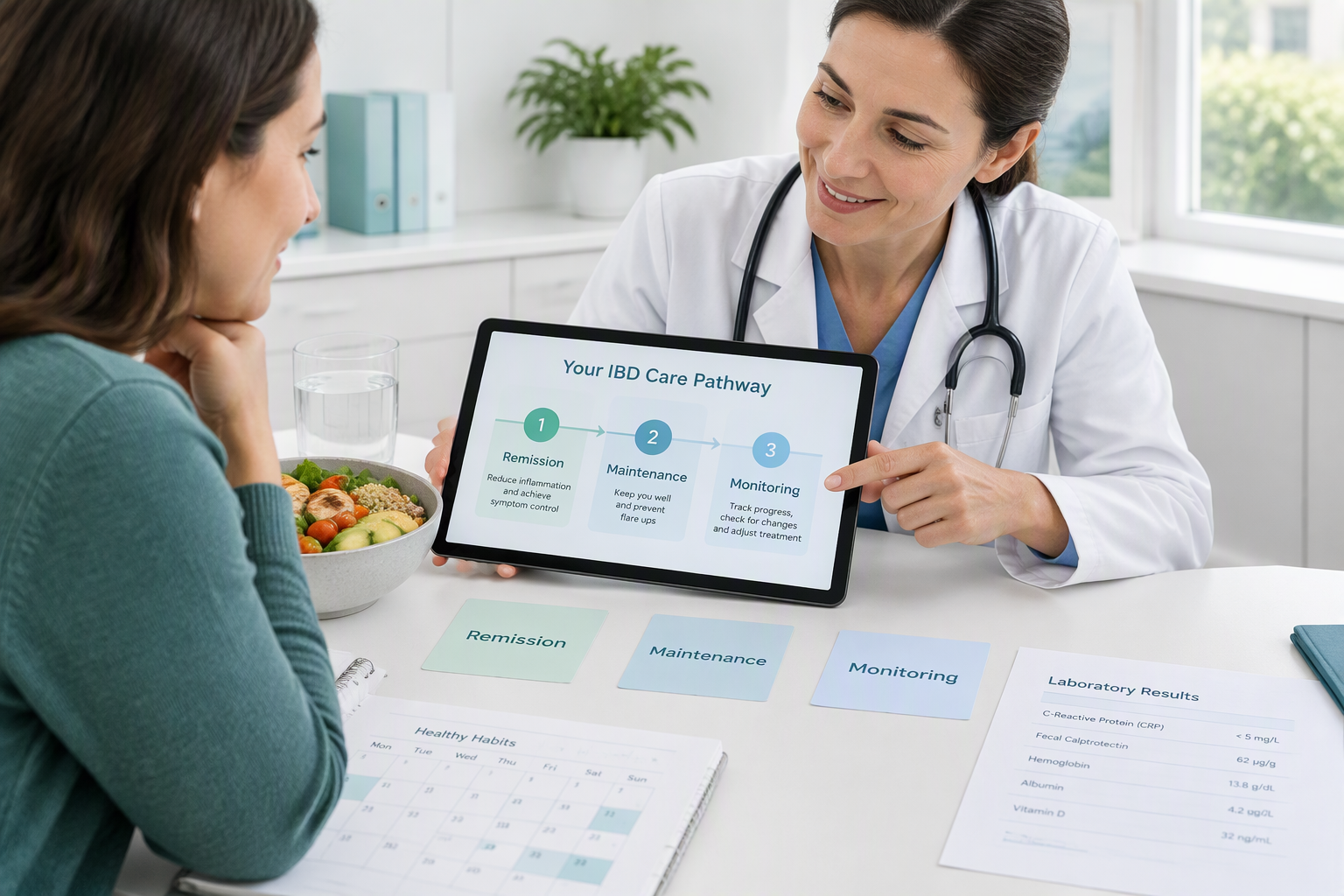
Inflammatory bowel disease (IBD), including Crohn’s disease and ulcerative colitis, causes ongoing inflammation in the digestive tract. IBD treatment manages that inflammation, but there is no universal cure for IBD. IBD, from causes to outlook explains why disease activity and symptoms can vary. Treatment goals and choices are individualized because these conditions can affect different digestive-tract areas and people differently.
Early inflammatory bowel disease treatment has two connected aims: calm inflammation and ease symptoms during a flare. Symptoms that treatment may reduce include:
- Abdominal pain or cramping: Pain can interfere with eating, sleep, and daily activities.
- Chronic diarrhea or bloody stool: These symptoms can affect hydration, nutrition, and confidence leaving home.
- Fatigue or unintended weight loss: Ongoing inflammation can drain energy and make it harder to maintain weight.
Feeling better is important, but symptom relief does not always mean inflammation is fully controlled. Blood or stool tests, imaging, and colonoscopy can show disease activity that is not obvious from symptoms alone.
IBD remission is the central goal. Treatment first brings active disease under control, then maintains remission by keeping inflammation quiet and reducing future flares. More sustained remission can support steadier eating, sleep, work, relationships, and daily routines.
A treat-to-target approach looks beyond symptoms alone and may focus on signs of bowel healing. Earlier control may help limit bowel damage and other complications.
A treatment plan may include:
- Prescription medicines: These are the cornerstone of treatment.
- Diet and lifestyle support: Food choices can support nutrition and symptom management.
- Objective monitoring: Testing helps guide treatment changes.
- IBD surgery: Surgery can protect your health when medicines cannot control inflammation or complications develop, and it is not treatment failure.
IBD medications and IBD medical therapies do the heavy lifting, with IBD symptom management and IBD dietary support alongside, and personalized IBD treatment means the mix is yours.
How Is Your IBD Treatment Plan Chosen?
To turn those goals into care choices, an IBD treatment plan reflects the type, location, and activity of disease, along with what fits your life. Getting the IBD diagnosis right first matters because Crohn's disease can affect any part of the digestive tract and deeper bowel-wall layers, while ulcerative colitis affects the colon and rectum’s inner lining. Disease location and extent shape Crohn's-specific treatment questions and ulcerative colitis care alike.
Mild, limited inflammation is treated differently from moderate-to-severe disease, repeated flares, or complications such as fistulas, abscesses, strictures, anemia, hospitalization, or trouble maintaining nutrition. The goal of inflammatory bowel disease treatment is to control inflammation, not only ease pain, diarrhea, or urgency. Complications may also call for support from surgeons, dietitians, or other specialists.
Flare care and maintenance serve different purposes. During active inflammation, treatment may need to bring symptoms and disease activity under control quickly, whereas once you improve, maintenance aims to prevent relapse and limit ongoing corticosteroid use. Treat-to-target care may use blood or stool tests, imaging, or endoscopy to assess healing even when you feel better.
Your past treatment experience helps guide the next step:
- No prior treatment: Disease severity and location help identify appropriate starting options.
- No response or loss of response: A dose change, closer monitoring, or a different medication class may be considered.
- IBD medication side effects: Past reactions, other health conditions, and current medicines can affect which options fit best.
Changing treatment is useful clinical information, not a personal failure. Biologics and other advanced therapies may be used early for moderate-to-severe disease. Options for Crohn's disease can include infliximab, adalimumab, ustekinumab, risankizumab, mirikizumab, guselkumab, and upadacitinib.
Treatment choices also account for infusion, injection, or oral dosing, work and travel routines, pregnancy plans, and how the medicine affects vaccines and infection risk. Share what feels manageable, including food concerns, because diet alongside IBD medicines can support symptoms without replacing medicine that controls inflammation.
IBD remission induction comes first, then maintenance, and mild to moderate ulcerative colitis treatment looks very different from moderate to severe ulcerative colitis treatment or surgical treatment of IBD.
When Are Aminosalicylates and Corticosteroids Used?
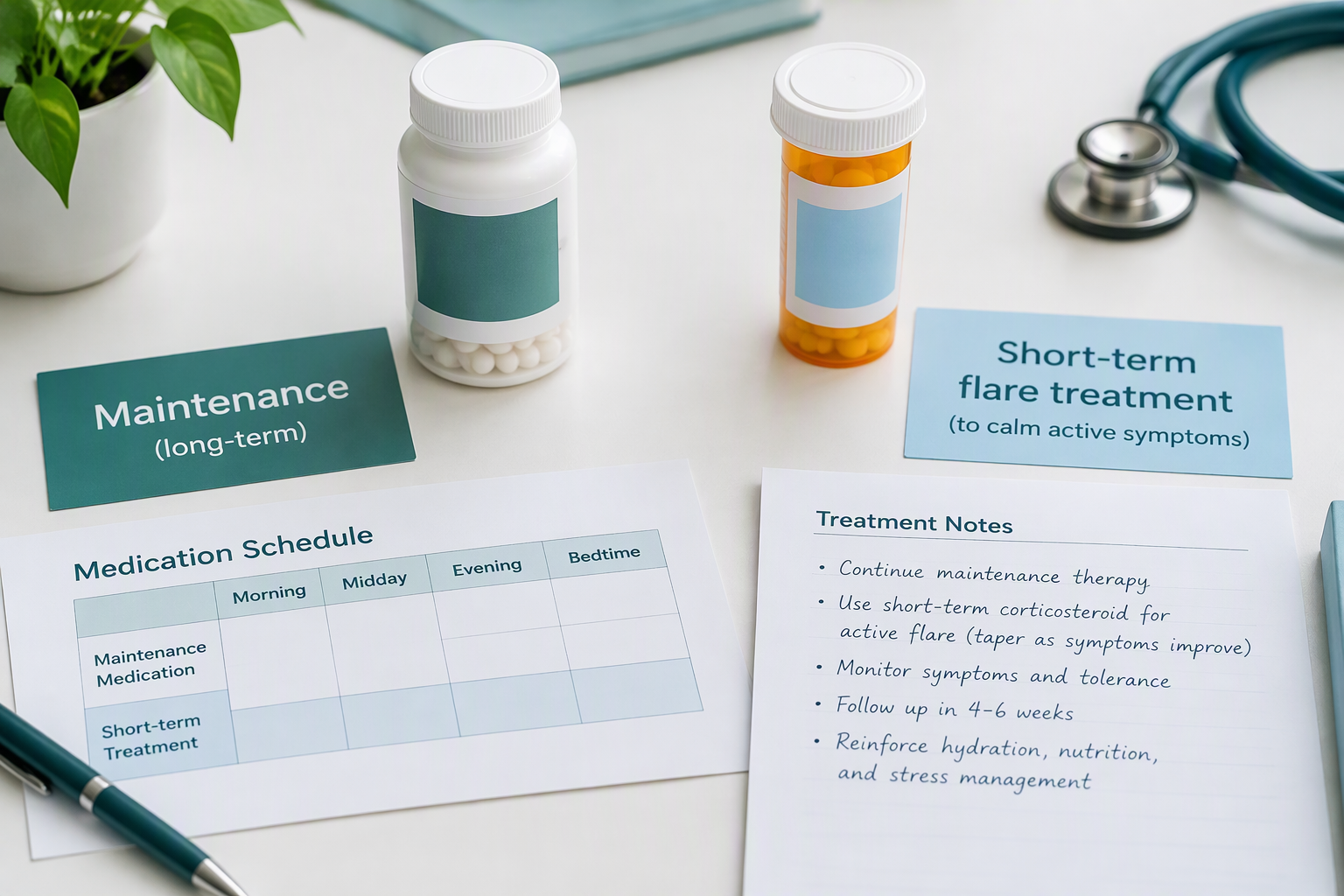
Aminosalicylates, including mesalamine, and corticosteroids for IBD serve different purposes. 5-ASA medications can control mild-to-moderate ulcerative colitis over time, while steroids provide short-term IBD flare treatment.
Aminosalicylates are also called 5-aminosalicylic acids, or 5-ASAs. They reduce inflammation mainly in the bowel lining, and mesalamine is commonly used to treat active ulcerative colitis and may continue after remission to help maintain control. Sulfasalazine and balsalazide are alternatives, depending on disease location, tolerance, and your treatment response. In Crohn's disease, aminosalicylates are generally less useful for starting or maintaining remission.
The form of mesalamine matters when inflammation involves the lower colon:
- Oral mesalamine: Treats more extensive inflammation throughout the colon.
- Suppositories: Target the rectum.
- Foams or enemas: Reach farther into the lower colon and may be combined with oral treatment.
Rectal mesalamine can be inconvenient, but it puts medicine where urgency, bleeding, and rectal discomfort may begin (source).
Prednisone and budesonide are used to treat flares (source). Prednisone acts throughout the body, while budesonide is formulated to work more locally in certain bowel areas. Hydrocortisone foam or enemas can also quickly treat inflammation in the rectum or lower colon. These medicines can bridge you to remission, but they are not long-term maintenance treatment (source).
After a longer or higher-dose course, prednisone or budesonide needs a gradual taper so your body can resume normal steroid production. Repeated or extended use raises the risk of:
- Infections
- High blood sugar, diabetes, or high blood pressure
- Bone loss, eye problems, and blood clots
Frequent steroid courses suggest that your longer-term treatment plan needs reassessment.
Mild-to-moderate ulcerative colitis treatment usually starts here, and budesonide for IBD is the steroid with the fewest whole-body effects.
Which Advanced Medicines Treat IBD?

When the treatment plan needs stronger control, advanced medicines are used for moderate-to-severe IBD when earlier treatment has not controlled inflammation or when disease features raise the risk of complications. In moderate-to-severe ulcerative colitis, an advanced therapy may be appropriate early rather than only after older medicines have been tried (source). Your gastroenterologist will consider disease type, test results, past treatment response, and what fits your daily life.
Immunomodulators reduce an overactive immune response. Azathioprine, mercaptopurine, also called 6-mercaptopurine, and methotrexate may help selected people stay in remission or reduce corticosteroid use. These medicines take weeks to months to reach their full effect, so they are not used for fast flare control.
Biologics for IBD target particular inflammatory pathways. Common options include:
- Anti-TNF therapy: Infliximab and adalimumab block tumor necrosis factor, a protein involved in inflammation. Anti-TNF medicines are chosen based on factors such as prior response and side effects.
- Anti-integrin therapy: Vedolizumab limits immune-cell movement into intestinal tissue and acts mainly in the gut.
- Interleukin-targeting medicines: Ustekinumab, risankizumab, mirikizumab, and guselkumab affect inflammatory signals called interleukins.
Biosimilars are highly similar versions of existing biologics that meet FDA standards for no clinically meaningful differences in effectiveness or safety. Infliximab-dyyb and adalimumab-adaz are examples. Insurance coverage and local availability can affect whether you receive a biosimilar or reference biologic, without meaning that one reflects lower-quality care.
Practical details matter, too. Some biologics are given through intravenous infusion at an infusion center, while others are self-injected under the skin, on a fixed schedule after more frequent starting doses. Disease severity, expected speed of benefit, medical history, monitoring needs, and comfort with infusion travel or injections all shape the decision.
Oral options include JAK inhibitors, such as upadacitinib and tofacitinib, plus the sphingosine-1-phosphate (S1P) modulator ozanimod. Their roles differ between Crohn’s disease and ulcerative colitis. For moderate-to-severe Crohn’s disease, infliximab, adalimumab, ustekinumab, risankizumab, mirikizumab, guselkumab, and upadacitinib have different mechanisms and monitoring needs (source).
Immunomodulators for IBD, biologic therapies for IBD, biosimilars for IBD, and the newer targeted IBD therapies together cover moderate to severe Crohn's disease treatment and advanced therapies for ulcerative colitis.
How Are IBD Treatments Monitored Safely?

As treatment choices continue, symptoms are only one sign of IBD activity. Track changes that affect daily life:
- Bowel symptoms: Frequency, urgency, bleeding, and abdominal pain.
- Whole-body symptoms: Fatigue, fever, and weight changes.
- Daily function: Effects on work, meals, sleep, and usual plans.
Objective testing adds context to symptom changes. Report new or returning symptoms promptly rather than assuming they are routine side effects, since handling an IBD flare on treatment starts with confirming it is one.
Blood tests can identify anemia, inflammation, dehydration, nutrition concerns, and medication effects. Stool inflammatory markers add evidence about intestinal inflammation, and together, these results can help distinguish active IBD from IBS, which can cause pain and bowel changes but does not cause intestinal inflammation.
Colonoscopy and imaging can confirm remission, assess mucosal healing, identify complications, or clarify conflicting symptoms and test results. Imaging may also detect disease beyond a scope’s reach, but these tests are not needed for every symptom change.
For certain biologics, therapeutic drug monitoring measures medication levels and antibodies in your blood. Results may point to low drug exposure, loss of response, ongoing inflammation, or a non-IBD cause instead of an automatic dose increase (source).
Safety follow-up varies by medicine. Tuberculosis and hepatitis screening are common before immune-suppressing treatment, and vaccines and infection precautions should be part of the discussion. Immunomodulators, including azathioprine, mercaptopurine, and methotrexate, require regular blood testing during treatment (source).
Contact your care team urgently for severe pain, heavy bleeding, fever, dehydration, or rapidly worsening symptoms. Ongoing inflammation may lead to dose or timing changes, another treatment class, drug testing, or checks for complications, while evidence of remission supports continuing the plan with follow-up.
Colonoscopy for IBD is the reference point that IBD diet and lifestyle management, nutrition for inflammatory bowel disease, and symptom relievers for IBD are all measured against, because none of them heal the lining on their own.
When Is Surgery Part of IBD Treatment?

When monitoring shows that medicines and other care cannot protect your health or daily functioning, surgery may be the clearest option. That is the case when inflammation, bowel damage, or complications continue to threaten your health, nutrition, daily functioning, or quality of life despite medicines, nutrition support, and other care.
Urgent medical care is needed for symptoms that may point to a serious complication:
- Severe or persistent rectal bleeding
- Dehydration or an inability to keep fluids down
- Possible bowel blockage, perforation, toxic megacolon, or abscess
- Severe systemic illness, including fever with extreme weakness
Hospital care can include IV fluids, imaging, antibiotics, nutrition support, and close monitoring. A feeding tube may provide temporary enteral nutrition when eating is difficult. This liquid nutrition can meet essential needs and give the bowel relative rest, but it does not treat the underlying inflammation or guarantee that surgery can be avoided. Some complications require immediate surgery.
Planned IBD surgery may become an option after repeated treatment failure, recurrent obstruction from bowel narrowing, fistulas, abscesses, perianal complications, or symptoms that substantially restrict daily life. Disease location and severity, prior treatments, nutritional status, personal goals, and an operation’s likely benefits and tradeoffs all matter. Prepare your questions for that conversation in advance.
A colectomy for ulcerative colitis may involve a proctocolectomy, which removes the colon and rectum. Some people receive a J-pouch so stool can still pass through the anus, while others choose or need an ileostomy. Because ulcerative colitis is confined to the colon and rectum, removing them removes the disease.
Resection for Crohn's disease usually removes or repairs only the damaged bowel segment, sometimes reconnecting healthy ends. Crohn's disease treatment continues afterward because disease can return near the connection or elsewhere in the digestive tract.
Enteral nutrition for IBD, meaning liquid formula feeding, is one of the supports a gastroenterologist may add before surgery.
What Happens When Treatment Stops Working?
Returning symptoms do not automatically mean your IBD treatment has failed. Before changing the plan, your IBD team may compare symptoms with blood tests, stool markers, imaging, or endoscopy to confirm active intestinal inflammation and check progress toward treatment targets.
A medication review can uncover missed or delayed doses, injection or infusion difficulties, side effects, interactions, or low drug levels. Therapeutic drug monitoring can show whether medication levels or antibodies are contributing to a loss of effect. Results can support a dose or schedule change or point to a different treatment.
Symptoms without matching test results may have another cause, such as infection, IBS-like symptoms, bile acid diarrhea, a narrowing or blockage, fistulas, abscesses, or medicine side effects. Care also differs based on Crohn’s disease or ulcerative colitis, disease location and severity, complications, past treatment response, other health conditions, and whether you are treating a flare or maintaining remission.
When inflammation is confirmed, treatment may be optimized, changed to a medicine with a different target, or supported with short-term flare treatment while maintenance care is adjusted. Biologics, including anti-TNF therapy, can lose effectiveness over time. Prepare for that conversation without stopping medicine on your own or blaming yourself.
Contact your IBD team promptly if symptoms worsen. Seek urgent care for:
- Severe or persistent abdominal pain
- Fever, repeated vomiting, or dehydration
- Heavy rectal bleeding
- A swollen abdomen or inability to pass stool or gas
Infection should be ruled out before increasing immune-suppressing treatment, and avoid nonsteroidal anti-inflammatory drugs unless a clinician advises otherwise. Stopping smoking matters especially with Crohn’s disease. Stress does not cause IBD, but it can worsen pain, diarrhea, and flares, so counseling, relaxation, sleep routines, and symptom tracking can support clearer care discussions.
IBD flare-up treatment at this point is a decision for your gastroenterologist, not a reason to add symptom relievers on your own.
Inflammatory Bowel Disease Treatment FAQs
These FAQs cover common questions about IBD treatment, including medicines, monitoring, symptoms, food, and changing treatment needs. They can help you prepare for a more informed conversation with your gastroenterology care team.
1. What Is the Best IBD Treatment?
There is no single best IBD treatment for everyone. The right plan controls inflammation, helps you reach and maintain remission, and balances risks you and your gastroenterology team can manage. Choices differ for Crohn's disease and ulcerative colitis based on inflammation’s location and severity, complications, past response, and other health conditions. Treatment for a flare may not match long-term maintenance. Medication is usually central, supported by diet, lifestyle changes, objective monitoring, and sometimes surgery when disease or complications remain uncontrolled.
2. Can Diet Help Treat IBD Symptoms?
Food does not cause IBD, and diet cannot control the underlying inflammation, so medical treatment remains essential. An IBD diet can support more comfortable meals, hydration, calories, and protein when symptoms, poor appetite, or malabsorption make eating harder. During a flare, some people temporarily limit high-fiber foods, spicy foods, caffeine, or alcohol. Although dairy restriction is most useful when lactose intolerance is involved, broad food avoidance can worsen nutrition. Ongoing diarrhea, unintentional weight loss, or concerns about iron, vitamin B12, vitamin D, or calcium warrant individualized guidance from a registered dietitian.
3. Can IBD Go Into Remission?
Yes. IBD remission means Crohn’s disease or ulcerative colitis symptoms are controlled and inflammation is reduced or absent on testing. Mucosal healing, when the intestinal lining heals, may be part of that goal. Feeling better is encouraging, but inflammation can continue without symptoms, so blood or stool tests, imaging, or endoscopy may guide follow-up. Maintenance treatment often continues during IBD remission, and a flare may require a treatment change.