


One bad day of cramps, loose stools, or exhaustion does not always mean an IBD flare-up. A flare occurs when Crohn's disease or ulcerative colitis inflammation becomes active or worsens, but symptoms that persist, intensify, or differ from your baseline need attention.
Diarrhea, urgency, pain, and fatigue can follow a stomach infection, missed medicine doses, stress, or food that irritates symptoms without proving inflammation is back. Stool testing and fecal calprotectin help a gastroenterology team distinguish a flare from C. diff or another cause.
Heavy or continuous rectal bleeding, severe or worsening abdominal pain, fever with significant illness, repeated vomiting, or dehydration are warning signs for urgent assessment. For new or worsening symptoms that don't require urgent care, keep taking prescribed IBD medicines, use fluids and WHO-formula ORS, track changes, and contact your care team promptly rather than changing treatment yourself.
IBD Flare-Ups Key Takeaways
- An IBD flare is a meaningful symptom change that may reflect active intestinal inflammation.
- Symptoms alone cannot distinguish a flare from infection, IBS, medication effects, or other digestive problems.
- Frequent bloody stools, severe pain, vomiting, fever, or dehydration need urgent assessment.
- Continue prescribed IBD medicines and contact your care team before changing treatment.
- Small sips of fluids and WHO-formula ORS can help replace losses from diarrhea.
- Stool testing and fecal calprotectin help assess inflammation and rule out infection.
- Tracking symptoms, meals, sleep, illnesses, and missed doses can reveal useful patterns.
What Is an IBD Flare-Up?
An inflammatory bowel disease (IBD) flare-up happens when inflammation from Crohn's disease or ulcerative colitis becomes active or more intense after remission or a calmer period. Symptoms may return gradually or worsen quickly. A flare can feel unpredictable, but it does not mean you caused it or did something wrong. What inflammatory bowel disease is explains the conditions behind these changing symptoms.
A flare is more than one episode of digestive discomfort. It is a meaningful change from your usual symptom pattern that may point to active disease, and patients and clinicians do not always define it the same way (source). Where inflammation occurs also affects how a flare feels.
Common IBD flare symptoms include:
- More frequent or urgent bowel movements
- Diarrhea or rectal bleeding
- Worsening abdominal pain or cramping
- Fatigue that is more intense than usual
- Fever
- Nausea or vomiting
A Crohn's disease flare and an ulcerative colitis flare can look different, including from one episode to the next for the same person. Crohn's flare symptoms may include bowel changes, pain, fatigue, fever, nausea, or vomiting, while bleeding and urgency may stand out more with ulcerative colitis. Keeping a short list of your own early red flags can help you notice a pattern sooner and describe it clearly to your gastroenterology team.
One difficult day of loose stools, cramps, or exhaustion does not automatically mean inflammation has returned. Food, stress, a stomach infection, poor sleep, or another illness can cause similar symptoms. Concern rises when symptoms persist, keep returning, intensify, or clearly differ from your usual baseline.
Inflammatory bowel disease flare-ups share a core set of common IBD symptoms, and IBD flare causes are usually a mix rather than one trigger.
Which Symptoms Signal a Severe Flare?
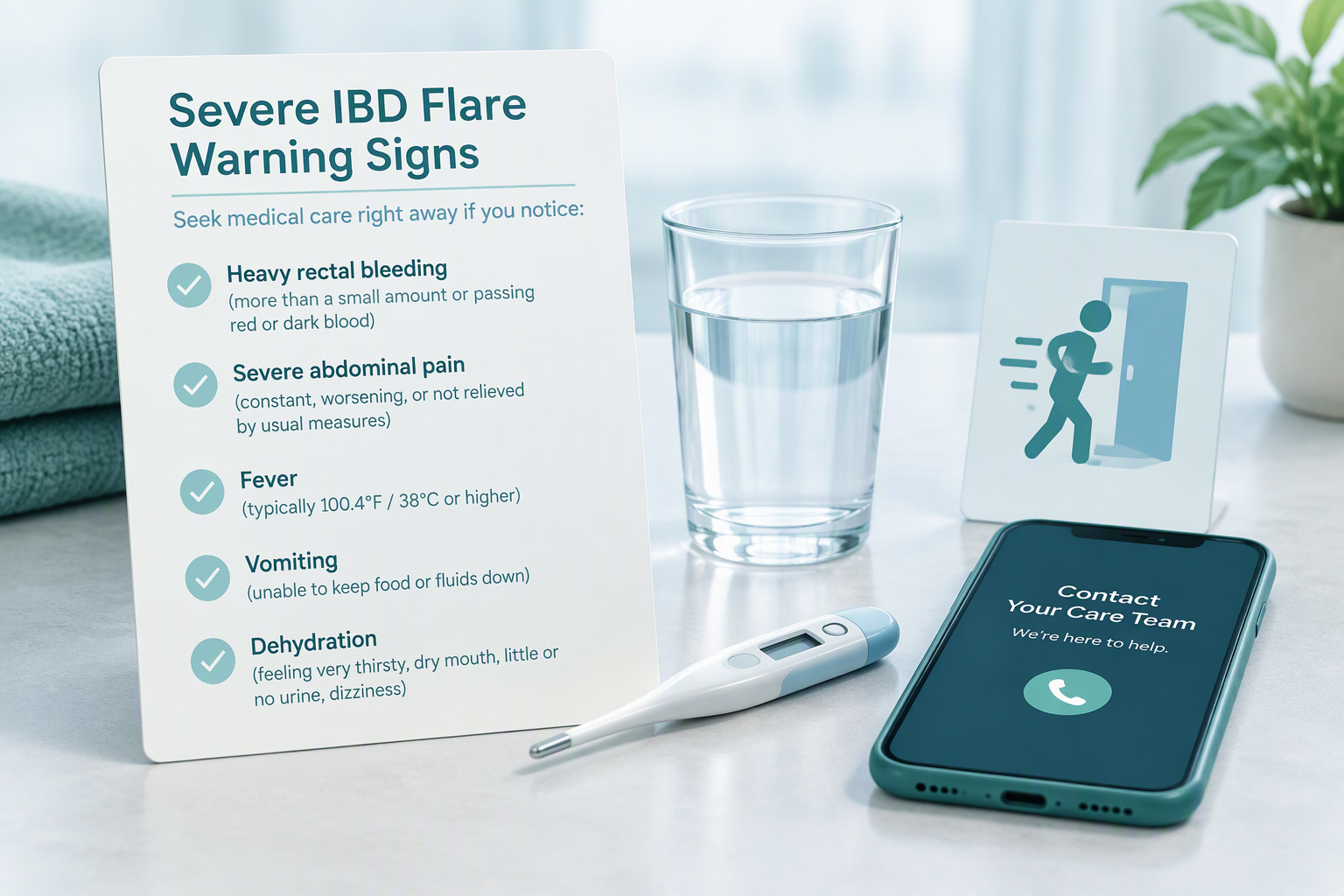
A severe inflammatory bowel disease (IBD) flare involves symptoms that last or worsen beyond one difficult day and begin to interfere with sleep, eating, work, leaving home, or daily routines. Common IBD flare symptoms include frequent diarrhea, bowel urgency, and tenesmus, the repeated feeling that you need to pass stool even when little or nothing comes out. Crohn's flare symptoms may also include abdominal pain, fatigue, nausea, and weight loss (source).
Stool changes deserve attention. Blood or mucus in stool, and sometimes pus, can occur with active inflammation. One small streak of blood is different from bleeding that returns or increases, but report what you see to your gastroenterology team rather than trying to identify the cause yourself. Frequent bloody stools need prompt evaluation. An ulcerative colitis flare may cause diarrhea, urgency, rectal bleeding, pain, fatigue, fever, and unintended weight loss (source).
Seek urgent or emergency care for:
- Heavy or continuous rectal bleeding, very frequent bloody bowel movements, or black, tarry stools.
- Severe, sharp, constant, or worsening abdominal pain, especially with a swollen abdomen.
- High fever or chills, persistent vomiting, or an inability to keep fluids down.
- Severe weakness, dizziness, very little urine, confusion, or other signs of dehydration.
Lower abdominal cramping, tenderness, pressure, and bloating can happen during a flare, but escalating pain needs urgent assessment. Fatigue and weakness may reflect inflammation, reduced food intake, or blood loss. Fever or vomiting can also signal an infection that needs medical evaluation, rather than an IBD flare alone. Reduced appetite or rapid, unintended weight loss warrants a prompt call to your gastroenterology team, particularly when pain, nausea, or diarrhea limits eating and drinking.
Common symptoms of an IBD flare are the ones above, and urgent medical care for IBD is for the list that follows.
What Should You Do in the First Days?
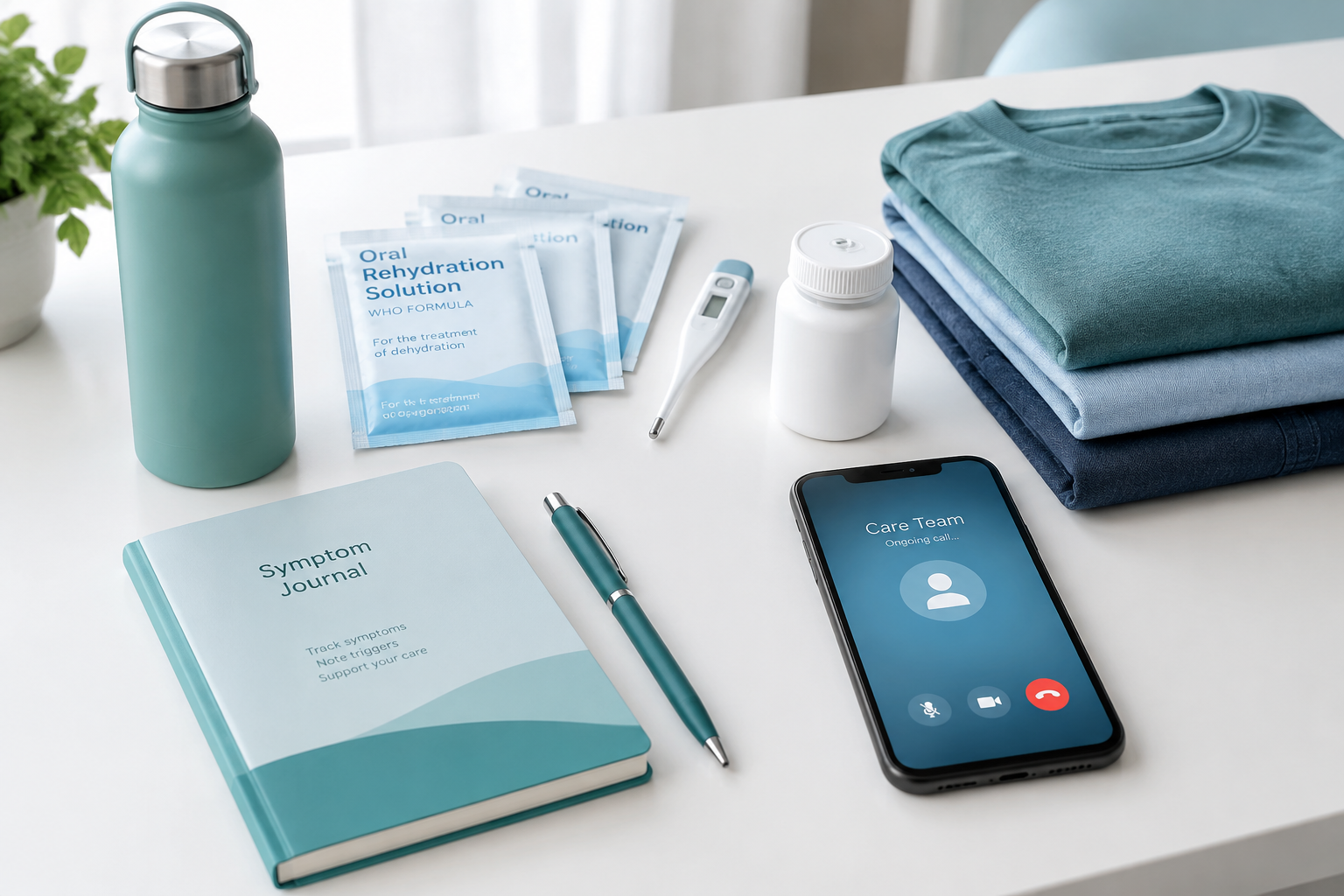
For symptoms that do not require urgent care, home care can ease discomfort, but it does not replace prescribed flare treatment or medical evaluation. In the first days, use three lanes:
- Manageable symptoms: Follow your existing IBD action plan and use comfort measures at home.
- New, persistent, or clearly worsening symptoms: Contact your gastroenterology or IBD team promptly.
- Severe warning signs: Seek urgent or emergency assessment.
Knowing how to calm an IBD flare starts with fluids, rest, and fewer demands. During frequent diarrhea, take small, regular sips of water and oral rehydration solution (ORS). Single-serve World Health Organization (WHO)-formula oral rehydration salts can replace fluids and electrolytes. Alcohol, caffeine, and sugary sodas may worsen diarrhea. Get care if you cannot keep fluids down or develop dehydration signs.
Smaller, more frequent meals may be easier than large meals. Temporarily choose tolerated lower-fiber foods, such as white rice, eggs, fish, soft fruit, and well-cooked vegetables. High-fiber foods can be harder on an irritated bowel during active diarrhea, but one food does not necessarily cause the inflammation. Guidance on eating with IBD during a flare can help you maintain intake.
Continue prescribed IBD medicines exactly as directed, and contact your care team before changing, skipping, or adding treatment. Acetaminophen may help abdominal pain or fever with clinician approval. NSAIDs can set off flares, so avoid ibuprofen and naproxen unless your clinician directs otherwise. Do not use anti-diarrheal medicines with fever, bloody or black stools, severe pain, or dehydration signs.
A discreet kit can reduce stress at work or while traveling:
- Water and WHO-formula ORS packets.
- Spare underwear, clothing, toilet paper, unscented wipes, and opaque disposal bags.
- A plan for nearby bathrooms.
Stay near a bathroom while symptoms are active, and bag used wipes unless restroom guidance permits flushing. Rest, sleep, and gentle relaxation may help when fatigue builds. Track bowel frequency, bleeding, pain, temperature, intake, medicines, and weight changes.
Knowing when to go to the ER with IBD matters: seek urgent care for heavy bleeding, escalating abdominal pain, a swollen or rigid abdomen, fever with significant illness, repeated vomiting, fainting, confusion, very little urine, or rapidly worsening weakness.
That is what to do during an IBD flare in the first days: IBD flare management is hydration during an IBD flare, rest, and contacting your gastroenterologist for an IBD flare that does not settle, with urgent medical care for the warning signs above.
What Can Trigger an IBD Flare-Up?
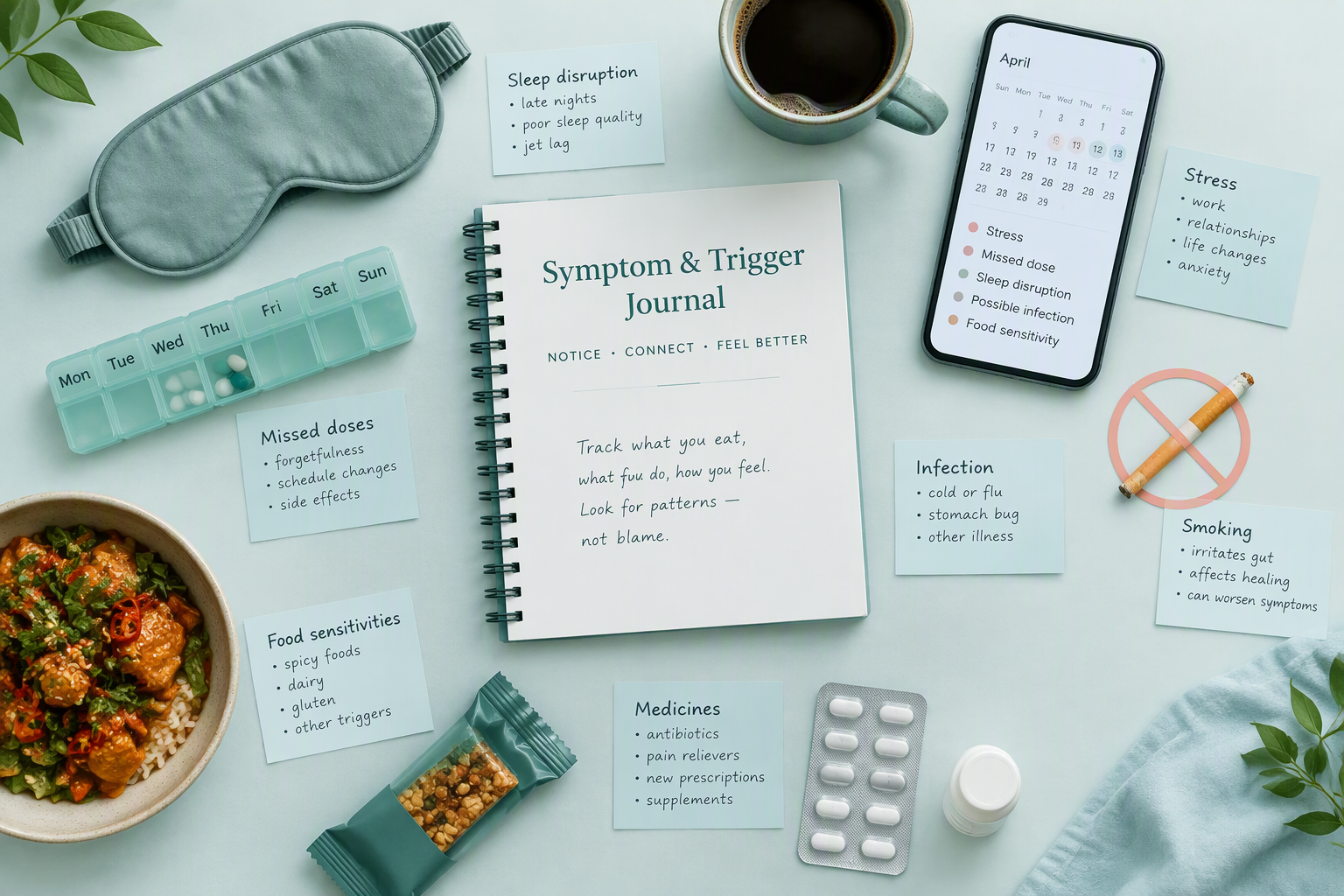
Beyond the first days of symptom management, an IBD flare involves more intestinal inflammation, but there is rarely one clear answer to what triggers an IBD flare. Diarrhea, cramps, and urgency can also worsen with an infection, a food response, stress, or a medicine without proving inflammation has returned. A difficult symptom day is not your fault. Track repeat patterns and share them with your gastroenterology team.
Stopping IBD medication, including 5-aminosalicylic acids (5-ASAs), immunomodulators, or biologic medicines, can allow inflammation to return. Treatment may also lose effectiveness over time. Contact your prescriber about missed doses, side effects, or returning symptoms instead of changing a prescription on your own.
Several factors can mimic a flare or make symptoms harder to manage:
- Infection: A bacterial or viral stomach infection, including Clostridioides difficile (C. diff), can cause diarrhea, pain, fever, and urgency alone or alongside active IBD. Symptoms after antibiotics, travel, or contact with someone sick may need stool testing.
- Pain medicines: NSAIDs can provoke flares, so discuss regular use of ibuprofen, naproxen, or aspirin with a clinician.
- Stress, sleep, and smoking: Stress and IBD flares are connected, but stress does not cause IBD. How stress feeds gut inflammation can help explain why symptoms may feel stronger during hard periods, while poor sleep can add to the burden. Smoking is linked to relapse and worse outcomes in Crohn's disease, and the NHS advises against it because it raises flare risk, so clinician-supported quitting help can matter (source).
Food does not cause IBD, and no single IBD flare diet works for everyone. Fatty or fried foods, alcohol, caffeine, spicy foods, sugary drinks, ultra-processed foods, and rough high-fiber foods such as raw produce or whole grains may worsen symptoms for some people. A simple food-and-symptom journal can identify repeat patterns without cutting out more foods than necessary.
IBD flare triggers, in other words, are usually several small things stacked together, and UC flare-up management starts the same way as Crohn's: confirm inflammation, then treat it.
How Do Clinicians Confirm a Flare?

Worsening bowel symptoms alone do not prove worsening intestinal inflammation. Your gastroenterology team weighs symptoms, examination findings, and test results because infection, medication side effects, IBS, and other digestive problems can mimic an IBD flare.
Report when symptoms began and changes in stools, bleeding, pain, appetite, weight, or fatigue. Recent illness, antibiotics, travel, and missed medicine doses also matter, and diarrhea from Clostridioides difficile (C. diff) can look much like a flare.
A clinician reviews your medical and family history and checks for dehydration, fever, weight loss, abdominal tenderness or swelling, and symptoms beyond the gut, including joint pain, skin changes, and eye irritation. Seek urgent care for:
- Severe abdominal pain with bloating or vomiting
- Heavy rectal bleeding
- High fever
- Marked weakness or inability to keep fluids down
These signs can point to an obstruction, serious bleeding, deep infection, or a severe ulcerative colitis flare that may require hospitalization.
Blood work can detect anemia, electrolyte imbalances, and low nutrition-related markers tied to bleeding, diarrhea, or poor intake. It cannot confirm or fully rule out active inflammation alone, but abnormal results help determine testing urgency and whether maintenance treatment needs review. Do not stop prescribed IBD medicines on your own.
Stool testing helps separate infection from intestinal inflammation. Fecal calprotectin measures a protein associated with gut inflammation, and a high result can support active inflammation when interpreted with your symptoms, blood work, and other findings, which is how the AGA recommends using it in established disease (source).
IBD tests that confirm a flare may include colonoscopy with biopsies or a limited scope to assess the bowel lining, disease location, severity, and other tissue changes. CT or MRI can assess small-bowel Crohn's disease and complications such as narrowing, abscesses, or fistulas. These findings guide treatment to regain inflammation control rather than blaming food alone.
Managing an IBD flare well means contacting your gastroenterologist for an IBD flare early, so the tests can run before symptoms escalate.
How Do Flares Settle Into Remission?

With test findings guiding treatment, a flare settles into remission when treatment controls intestinal inflammation and your gastroenterology team confirms that control over time. Calming a flare depends on whether you have Crohn's disease or ulcerative colitis, the inflammation’s location and severity, and how you have responded to treatment before.
Promptly report worsening symptoms so your clinician can tailor care. Treatment may include aminosalicylates, a short course of corticosteroids, immunosuppressants, biologic medicines, targeted small-molecule therapies, or surgery for some people. Adjusting IBD treatment after a flare can help you understand why treatment plans may change.
Less diarrhea, urgency, bleeding, or abdominal pain is encouraging, but symptom relief alone does not prove inflammation has resolved. A Crohn's disease flare may become less noticeable while inflammation remains active, and symptoms can persist for reasons other than active IBD. Follow-up testing, along with your symptom changes, helps show whether remission is taking hold.
Recovery support matters while treatment addresses inflammation. Focus on fluids, adequate calories and protein, and foods you can tolerate without blaming food for causing the flare. Ask about a registered dietitian if eating is difficult, weight is falling, or nutrient deficiencies are a concern. Rest and a gradual return to routine can help, but do not replace medical treatment.
Do not stop or change maintenance medicines based on one good or difficult day. Report symptoms that fail to improve, worsen, or return after improving.
Pain and fever need a separate plan. Acetaminophen is usually preferred, and NSAIDs belong only in a clinician-approved pain plan. Seek urgent medical advice for:
- Severe or new pain
- Fever
- Heavy bleeding
- Dehydration
- Rapidly worsening symptoms
IBD flare treatment and the IBD treatment goals behind it are the same for a UC flare-up as for Crohn's: control the inflammation, then hold remission.
How Can You Help Prevent Future Flares?
After a flare settles into remission, preventing future flares starts with protecting remission. Take your maintenance medicines exactly as prescribed, even when you feel well. A difficult food day is not a reason for stopping IBD medication, skipping doses, or changing treatment on your own. If side effects, cost, travel, or a busy routine get in the way, bring those barriers to your IBD team early.
A dated symptom-and-trigger journal can turn vague memories into useful appointment information. Track:
- Symptoms: Bowel changes, urgency, pain, bleeding, fatigue, and accidents.
- Daily factors: Meals, sleep, stress, illnesses, new medicines, and missed doses.
- Timing: The date and whether symptoms lasted, repeated, or resolved.
This record may help clarify what triggers an IBD flare for you, but one meal or stressful day does not prove it caused intestinal inflammation.
Stress can make daily symptoms harder to manage, and physical or emotional strain can aggravate them. Poor sleep is linked with symptom activity too. Consistent sleep, realistic pacing, breathing practices, gentle movement when tolerated, and counseling or support groups can help you manage stress-related symptoms.
Eating during a flare can focus on symptom-based choices instead of broad restrictions. Choose fluids and nourishing foods that fit your symptoms, then discuss repeatable patterns with a registered dietitian before making broad restrictions.
Smoking can worsen Crohn's disease and increase future disease activity. Counseling, nicotine replacement, or clinician-selected prescription treatment can support quitting, while guidance differs for ulcerative colitis.
Regular IBD follow-up can identify inflammation or treatment problems before symptoms become severe. Contact your gastroenterology team promptly when a symptom change persists.
Your IBD treatment plan should say when to contact a doctor for an IBD flare and when to seek emergency care for IBD, so ask for that in writing.
IBD Flare-Up FAQs
These FAQs can help you recognize changing IBD flare-up symptoms, consider possible causes, and know when it may be time to contact your care team.
1. How Long Can an IBD Flare Last?
There is no fixed timeline for an IBD flare. Crohn’s disease or ulcerative colitis symptoms can return or worsen after a calmer period and may last days, weeks, or longer. Duration depends on inflammation severity, possible triggers, response to treatment, and whether infection or a complication is involved. Contact your gastroenterologist or IBD care team promptly when symptoms are new, persistent, worsening, or not improving with your action plan.
2. Can IBD Flares Cause Joint Pain?
Yes. Joint pain can be an extraintestinal symptom of an IBD flare, meaning inflammation can affect areas beyond your digestive tract. It may occur alongside abdominal pain, diarrhea, urgency, rectal bleeding, fatigue, low energy, weakness, fever, nausea, or vomiting.
New joint pain does not automatically mean you are flaring or identify one cause. Tell your IBD team about pain that is new, severe, swollen, persistent, or getting worse, especially with changing bowel symptoms or fever, so they can assess the cause.
3. Can IBD Flares Affect Menstrual Cycles?
Yes. An active IBD flare can make periods less predictable or make cycle-related symptoms feel worse. Inflammation, physical and emotional stress, poor sleep, reduced food intake, weight changes, nutrition problems, and treatment changes can affect the hormonal signals that regulate bleeding. Fatigue, low energy, weakness, fever, nausea, and vomiting can add to that strain. A cycle change does not confirm a flare caused it, so discuss persistent missed periods, unusually heavy bleeding, new severe pelvic pain, pregnancy concerns, or worsening IBD symptoms with your gastroenterology and gynecology clinicians.
4. When Can You Return to Work?
Returning to work is usually reasonable when symptoms are controlled enough to stay hydrated, eat or drink as tolerated, manage urgency and pain, and complete your usual tasks. Frequent diarrhea can worsen dehydration, so water and electrolyte drinks may help before and during the workday. Bathroom access, your commute, and job demands matter, especially for driving, physical labor, long shifts, or limited breaks. Contact your gastroenterologist or IBD care team about new, persistent, or worsening symptoms, infection risk, treatment changes, or dehydration. Your flare action plan can guide whether to delay returning or request temporary work adjustments.