


A small streak of bright red blood on toilet paper may come from a hemorrhoid or anal fissure, but blood in stool should not be dismissed. Black, sticky, tar-like stool can be melena, which usually means digested blood from higher in the digestive tract and needs emergency care.
Beets, iron tablets, and bismuth subsalicylate can change stool color, yet they do not reliably rule out bleeding. Details such as whether blood is mixed into stool, whether it is maroon or bright red, and whether dizziness, pain, diarrhea, or weakness is present help determine the next step.
Heavy bleeding, large clots, fainting, or severe abdominal pain call for emergency care now. Even a small amount that returns deserves a prompt appointment, because color alone cannot confirm the cause.
Blood in Stool Key Takeaways
- Bright red blood often comes from the anus, rectum, or lower colon.
- Black, tarry stool may be melena from upper digestive bleeding and needs emergency care.
- Hemorrhoids and anal fissures commonly cause small amounts of bright red blood.
- Bloody diarrhea, maroon stool, fever, or worsening pain need same-day medical assessment.
- Heavy bleeding, fainting, weakness, or severe abdominal pain requires emergency care.
- Foods, iron tablets, and bismuth subsalicylate can change stool color without causing bleeding.
- Recurrent bleeding needs evaluation, even when a hemorrhoid or fissure seems likely.
What Does Blood in Stool Look Like?
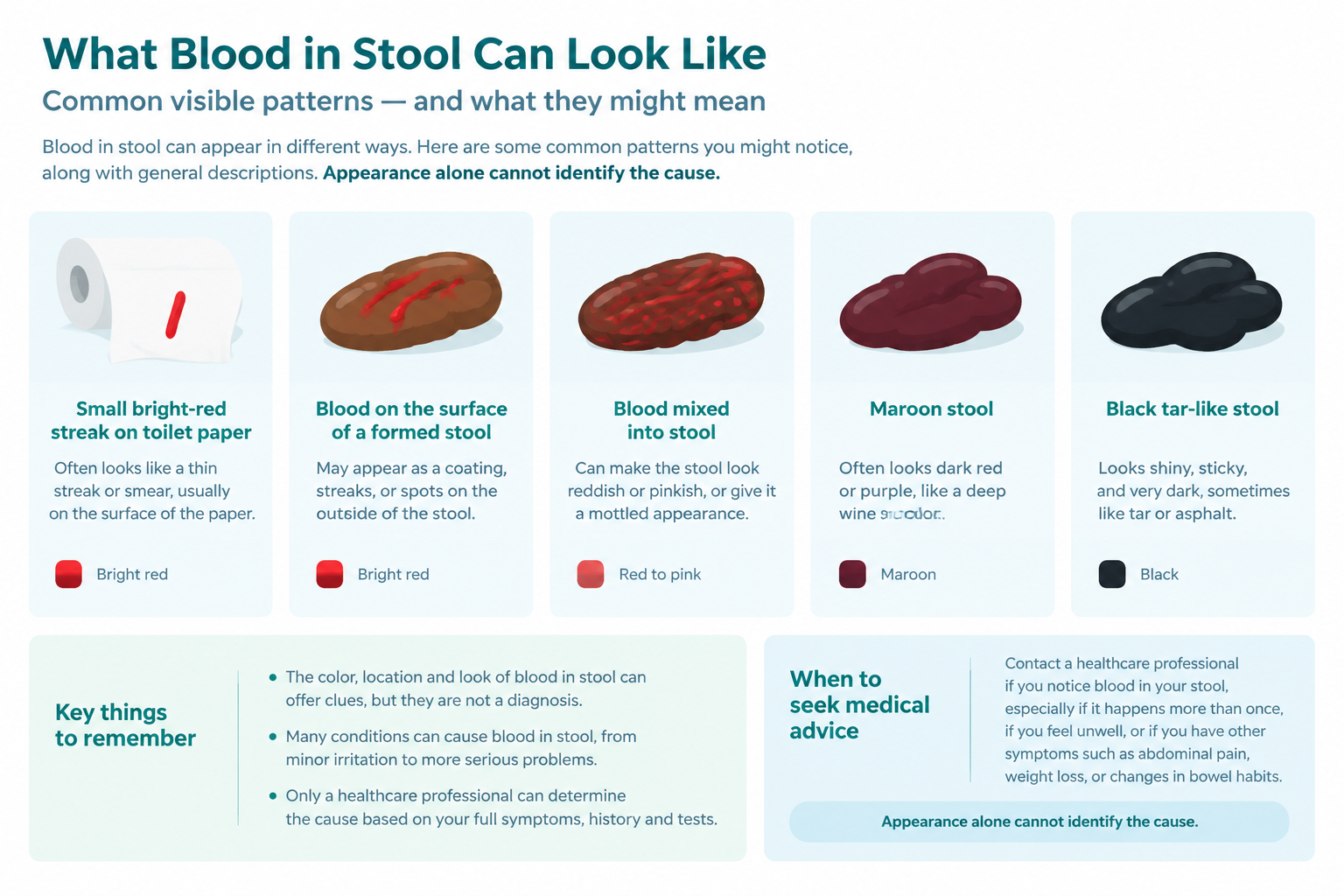
Blood in stool may show up as blood on toilet paper, a few drops in the bowl, a coating on a formed stool, or blood mixed into loose or formed stool. It can range from a small spot to a more noticeable amount, and appearance alone cannot identify the cause. Clinicians call visible red blood from the rectum hematochezia.
Appearance | What it may suggest |
|---|---|
Bright red blood in stool | Bleeding near the anus, rectum, or lower large intestine |
Dark red or maroon stool | Bleeding higher in the colon or small intestine, especially when mixed into stool |
Black tarry stool | Digested blood from higher in the digestive tract |
Black tarry stool, called melena, is usually sticky, very dark, and tar-like. It sits among many digestive symptoms beyond rectal bleeding that look alike at first. Stool that is simply darker than usual is not always melena, and black specks in stool versus digested blood can be hard to tell apart by sight.
A dated record helps your clinician assess the pattern more accurately. Include:
- Color and amount: Note whether blood was bright red, dark red, or maroon stool, and roughly how much you saw.
- Where it appeared: Record whether it was on paper, on the stool, mixed into stool, or in the bowl.
- Timing and other symptoms: Include when it started, whether it returns, and any abdominal pain, diarrhea, constipation, dizziness, weakness, or unexplained bowel-habit changes.
Bring this record to an appointment if the bleeding repeats, changes, or comes with other symptoms.
What Causes Blood in Stool?
Blood in stool is a sign of gastrointestinal bleeding, which can come from anywhere along the digestive tract, and its color or amount cannot confirm where bleeding started. Common causes include hemorrhoids, an anal fissure, inflammation, gastrointestinal infections, ulcers, polyps, and cancer. Clinicians use your symptoms, health history, medicines, and testing to identify the source (source).
Hemorrhoids and anal fissures are the most common sources of small amounts of bright-red blood. A bleeding hemorrhoid may leave blood on toilet paper or the outside of stool, often after constipation, straining, or hard stools.
Other possible sources include:
- Infection and inflammation: Gastroenteritis or infectious colitis may cause bloody diarrhea, cramps, fever, or urgency. Crohn’s disease and ulcerative colitis can damage the bowel lining. Mucus in stool with or without blood can occur with inflammation, but mucus alone cannot identify the cause.
- Diverticular disease: Diverticular bleeding occurs when small colon pouches bleed. Diverticulitis, an inflamed or infected pouch, may also bleed.
- Polyps or colorectal cancer: These are less common than hemorrhoids or fissures, but recurrent bleeding, lasting bowel-habit changes, unexplained weight loss, fatigue, or abdominal symptoms need evaluation. Colorectal cancer can occur in younger adults.
- Upper-digestive bleeding and medicines: Stomach or peptic ulcers can produce black, tarry stool after blood is digested. Blood thinners, including warfarin, and medicines that irritate the stomach lining can contribute to bleeding. Do not stop a prescribed blood thinner on your own.
Bright-red, dark-red, or black stool can offer clues, but pain, diarrhea, constipation, and blood amount cannot reliably diagnose the cause. An evaluation can determine why bleeding is happening.
How Do Clinicians Find the Cause?

Clinicians look for the cause of blood in stool by combining its color and pattern with your symptoms, medical history, and an examination. They may ask whether the blood is bright red, dark, or mixed with stool, how often it happens, and whether you have pain, constipation, diarrhea, fatigue, weight loss, or a change in bowel habits. Medicines that raise bleeding risk and a personal or family history of colon polyps, colorectal cancer, or digestive disease also affect which tests make sense.
The exam may include focused checks:
- Anal and rectal exam: A clinician may inspect the anal area and perform a digital rectal examination, gently checking the rectum with a gloved, lubricated finger.
- Anoscopy or proctoscopy: These short scopes view the anus and lower rectum.
- Flexible sigmoidoscopy: This scope reaches farther into the lower colon.
Stool tests, including fecal immunochemical tests, look for hidden blood and are screening tools for people without symptoms. Visible rectal bleeding needs a medical examination, and clinicians often use a scope to help find the source (source). A blood count can check for anemia caused by blood loss.
A colonoscopy for rectal bleeding examines the rectum and entire colon after bowel preparation, typically with sedation. It can find a bleeding source, detect cancer or colon polyps, and remove some polyps during the procedure. Black, tarry stool may point to bleeding higher in the digestive tract and can lead to an upper endoscopy (source).
Choose Care Based on Bleeding Severity
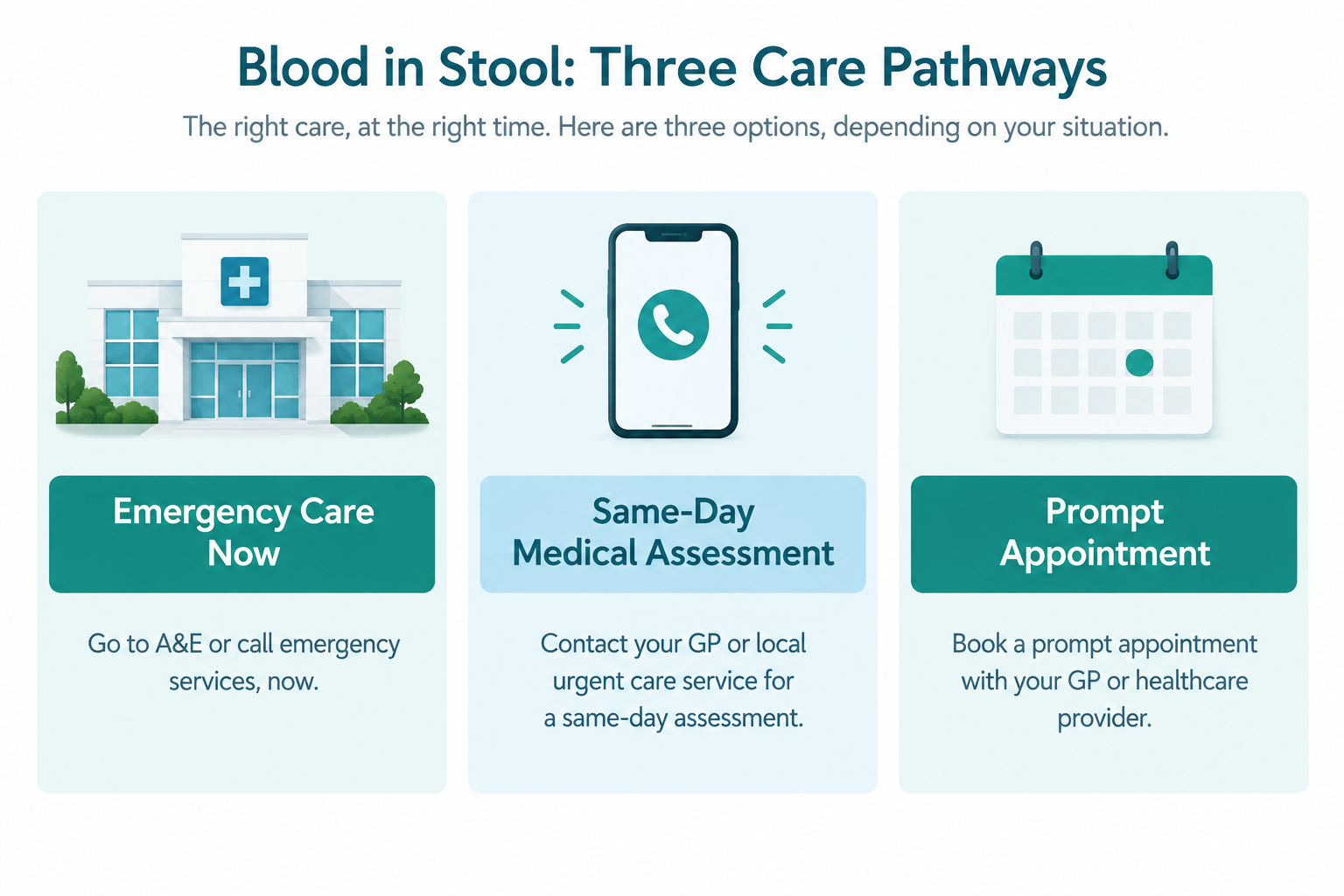
Bleeding fits into three timeframes: emergency care now, same-day medical advice, or a prompt appointment. True blood in stool needs medical guidance, even if it is painless or has stopped.
Call local emergency services or seek emergency care now for any of the following:
- Heavy bleeding: Red toilet water, a substantial amount of blood, or large clots.
- Black, tarry stool: Sticky-looking black stool may point to bleeding higher in the digestive tract.
- Possible blood loss or serious illness: Fainting, dizziness, light-headedness, weakness, confusion, shortness of breath, collapse, or severe abdominal pain.
Do not drive yourself if you feel faint or weak. Ask someone to help or use emergency transport. Digestive red flags beyond bleeding can also signal a need for fast care.
Same-day assessment is appropriate for dark red or maroon stool or bloody diarrhea, especially with fever, worsening pain, persistent vomiting, or dehydration. A maroon stool can reflect bleeding farther along the digestive tract, but its appearance alone does not identify the cause. Iron tablets, bismuth-containing medicines, and some foods can darken stool, yet they do not reliably explain tar-like stool or an uncertain color change. Do not take anti-diarrheal medicine if diarrhea comes with blood or black stool, and seek medical advice instead.
A small streak of bright-red blood on toilet paper or on the outside of stool still calls for a prompt appointment, particularly if bleeding returns or no clinician has confirmed its cause. Bring those details to your appointment.
Hydration, fiber-rich foods, regular movement, and avoiding straining may ease constipation while you arrange care. They do not explain unexplained bleeding, and a past hemorrhoid or fissure should not delay evaluation.
Foods and Medicines That Can Look Like Blood

Some foods and medicines can change stool color without causing bleeding, although color alone cannot confirm the cause. Looking closely may feel uncomfortable, but it can help you decide what to do next.
A red or purple tint can follow foods and drinks such as:
- Beets
- Red gelatin or drinks containing red dye
- Tomato skins
These changes can fade after the food or medicine passes, so it helps to think back over the previous 24 to 48 hours. If the timing matches a food or nonprescription medicine and your stool returns to its usual color after you stop using it, blood is less likely. Do not stop a prescribed medicine just to test this without speaking with the clinician who prescribed it.
Dark or black stool can also result from:
- Iron tablets
- Bismuth subsalicylate
- Activated charcoal
- Blueberries
- Black licorice
MedlinePlus lists black licorice, blueberries, iron pills, activated charcoal, and bismuth medicines among the causes of black stool that is not blood (source). Stool changed this way is usually not sticky or tar-like.
If you cannot tell what caused the change, treat it seriously rather than trying to judge by color alone. Black, sticky, tar-like stool should be treated as blood, and unexplained red stool needs medical evaluation, especially when it repeats or occurs with pain, weakness, dizziness, or other symptoms.
Hemorrhoids and Anal Fissures
Hemorrhoids and anal fissures are the most common causes of bright red blood in stool, particularly when it appears on toilet paper or the outside of a bowel movement. Both can feel embarrassing, but the bleeding pattern and any pain give a clinician useful clues.
Hemorrhoids are swollen veins in the anus or lower rectum. Internal hemorrhoids often cause painless bleeding after a bowel movement, leaving bright red blood in the bowl or on the paper. Straining, constipation, pregnancy, and spending a long time on the toilet can increase the chance of hemorrhoids (source).
An anal fissure is a small tear in the lining of the anus, usually after a hard stool. It often causes sharp pain during a bowel movement that may continue afterward, along with a small blood streak. Painless rectal bleeding fits internal hemorrhoids more often, while fissures are usually painful.
Gentler bowel habits can reduce repeat irritation:
- Add fiber and fluids: Softer stools place less pressure on the anal area.
- Avoid straining: Do not force a bowel movement.
- Keep toilet visits short: Long periods of sitting can increase pressure on hemorrhoidal veins.
Do not assume that bleeding from a known hemorrhoid is always harmless. Arrange an appointment if bleeding continues, changes in amount or appearance, or comes with a new change in bowel habits.
What Black, Tarry Stool Means
Black, sticky, tar-like, foul-smelling stool can be melena, a sign of bleeding that needs prompt emergency evaluation. Melena usually develops when blood from the esophagus, stomach, or upper small intestine is digested as it moves through the bowel.
Common causes include peptic ulcers, gastritis, and bleeding from the esophagus. Aspirin and other anti-inflammatory pain relievers can raise bleeding risk, as can blood-thinning medicines. Keep taking prescribed medication unless a clinician tells you otherwise, and bring a complete medication list for your evaluation.
Not every dark bowel movement is melena, because iron tablets and bismuth subsalicylate darken stool too, so list them for the clinician.
Call 911 or go to the emergency room for black tarry stool, especially if it occurs with any of these warning signs:
- Vomiting blood or material that looks like coffee grounds.
- Feeling lightheaded or faint.
- New weakness, confusion, shortness of breath, severe belly pain, or a racing heartbeat.
Prompt care helps clinicians locate the bleeding source and treat it before blood loss becomes more serious.
Colorectal Cancer, Age, and Screening From 45
Most visible rectal bleeding comes from hemorrhoids or anal fissures, but polyps and colorectal cancer can bleed too, often without pain. Color and appearance cannot tell these apart from harmless causes. Bleeding that keeps returning deserves medical attention rather than guesswork.
Age does not make recurring bleeding harmless. About 10.5 percent of new colorectal cancer cases occur in people under 50, and incidence among adults ages 40 to 49 rose almost 15 percent between 2000 to 2002 and 2014 to 2016. The USPSTF recommends routine colorectal cancer screening for average-risk adults ages 45 to 75 (source).
Symptoms call for an appointment now, not waiting until screening age. A colonoscopy may move higher on a clinician’s list when bleeding is mixed into the stool or occurs with any of the following:
- A lasting bowel change: Constipation, diarrhea, or narrower stools that do not settle.
- Iron-deficiency anemia: Low iron that can result from slow blood loss.
- Unplanned weight loss: Weight loss without a clear reason.
- Close family history: A parent or sibling with colorectal cancer.
These features do not mean cancer is the cause, but they help clinicians decide how quickly to investigate.
Blood in Stool FAQs
These are the questions people ask most about small streaks of blood, constipation, diarrhea, and one-off episodes.
1. Is a Little Blood on Toilet Paper Normal?
A small streak of bright red blood on toilet paper is common after a hard stool and may come from a hemorrhoid or small anal fissure, but it is not normal. If it happens once, has an obvious cause, and stops, mention it at your next visit, but repeated bleeding needs an appointment, even without pain.
2. Can Constipation Cause Blood in Stool?
Yes. Constipation can cause bright red blood when hard, dry stool or straining irritates the anus. It can contribute to hemorrhoids, swollen veins, or an anal fissure, a small tear that may cause sharp pain during a bowel movement and leave blood on toilet paper or the stool’s surface. These are common causes, but constipation does not explain every episode. Get medical advice if bleeding is persistent, recurrent, unexplained, heavy, or occurs with other concerning symptoms.
3. Can Diarrhea Cause Blood in Stool?
Yes. Gastrointestinal infections can inflame or damage the intestinal lining, leading to bright red blood with diarrhea, cramps, or abdominal pain, and bloody diarrhea is not something to dismiss as a routine stomach upset.
Inflammatory bowel disease, including Crohn’s disease and ulcerative colitis, may also cause repeated diarrhea, urgency, cramping, and bleeding. Arrange medical assessment for any bloody diarrhea, especially if it is severe, lasts beyond a short illness, keeps returning, or occurs with fever, severe pain, weakness, or dehydration signs.
4. Should You See a Doctor After One Episode?
Yes. Seek medical advice after even one episode of blood on toilet paper, in the toilet, or on the stool. A small amount is often not serious, but a clinician can tell whether you need an exam or monitoring instead of leaving you to guess. Color and appearance alone cannot confirm hemorrhoids, constipation, or another familiar cause. Get prompt care if bleeding returns or increases, or if it occurs with black, tarry stool, severe abdominal pain, dizziness, weakness, fever, or unexplained weight loss.