


One strange bathroom trip or a bloated afternoon doesn't automatically point to a serious illness. Common digestive symptoms often reflect what you ate, stress, gut movement, or gut sensitivity, and their timing and repetition usually matter more than one episode. IBS can cause real, disruptive symptoms even when tests do not show a structural problem.
Black specks from food or iron supplements differ from stool that is black throughout, sticky, and tar-like. Stool changes, bloating, diarrhea after meals, sulfur burps, and vomiting each have patterns that can suggest a short-term trigger, a condition worth discussing with a clinician, or a need for urgent care. The National Institute of Diabetes and Digestive and Kidney Diseases identifies bleeding, trouble swallowing, and unexplained weight loss as concerning symptoms.
Blood in stool, severe or worsening abdominal pain, dehydration signs, and stool-smelling vomit need prompt medical attention rather than more home treatment. Familiar symptoms that keep returning or disrupt daily life also deserve a routine medical conversation.
Digestive Symptoms Key Takeaways
- Digestive symptom patterns over time are more useful than a single unusual episode.
- IBS can cause disruptive symptoms without a structural problem appearing on tests.
- Black, tar-like stool may signal bleeding and needs prompt medical attention.
- Persistent greasy, pale, or floating stool can suggest fat malabsorption.
- Diarrhea after meals may reflect the gastrocolic reflex, IBS, or food intolerance.
- New or worsening abdominal swelling with weight loss requires medical assessment.
- Stool-smelling vomit can indicate bowel obstruction and is a medical emergency.
What Do Common Digestive Symptoms Mean?

A digestive symptom that keeps returning, or an unexpected stool change, rarely has just one explanation. Patterns in digestive symptoms are more informative than a single episode. Notice when the symptom began, how often it occurs, whether it follows meals or bowel movements, and whether it remains steady, comes and goes, or gets worse.
What healthy digestion looks like includes comfortable, regular bowel movements, little bloating after ordinary meals, and no pain that disrupts work, sleep, or family time. This baseline can help you spot changes in bowel movements without assuming every difference signals a serious condition.
Many common digestive symptoms are related to how the digestive tract functions rather than a structural problem that tests of the digestive tract can easily show. Symptoms can change based on:
- Gut movement: How quickly food and waste travel through the digestive tract.
- Gut sensitivity: How strongly the gut responds to normal stretching from food, stool, or gas.
- Gas production: How much gas forms during digestion and how easily it moves out.
- Bile and enzymes: How these digestive fluids affect stool color, texture, and appearance.
Functional symptoms are real and can interfere with daily life even when tests do not reveal an obvious disease, according to the American College of Gastroenterology (source).
How digestion normally works can clarify why shifts in digestion may affect stool texture, gas, or timing. Knowing the basic process can make a symptom pattern feel less mysterious, but it cannot diagnose its cause.
A loose-stool episode before a meeting, a tight belly after lunch, or an unfamiliar color in the toilet can be unsettling. These signs of digestive problems are most useful when considered over time, not judged from one uncomfortable day.
The sections that follow cover stool changes first, then bloating and a tight or hard belly, diarrhea, foul burps, and persistent vomiting patterns. Each offers a brief overview and a focused guide, followed by warning signs that need urgent medical care.
What Do Changes in Your Stool Mean?
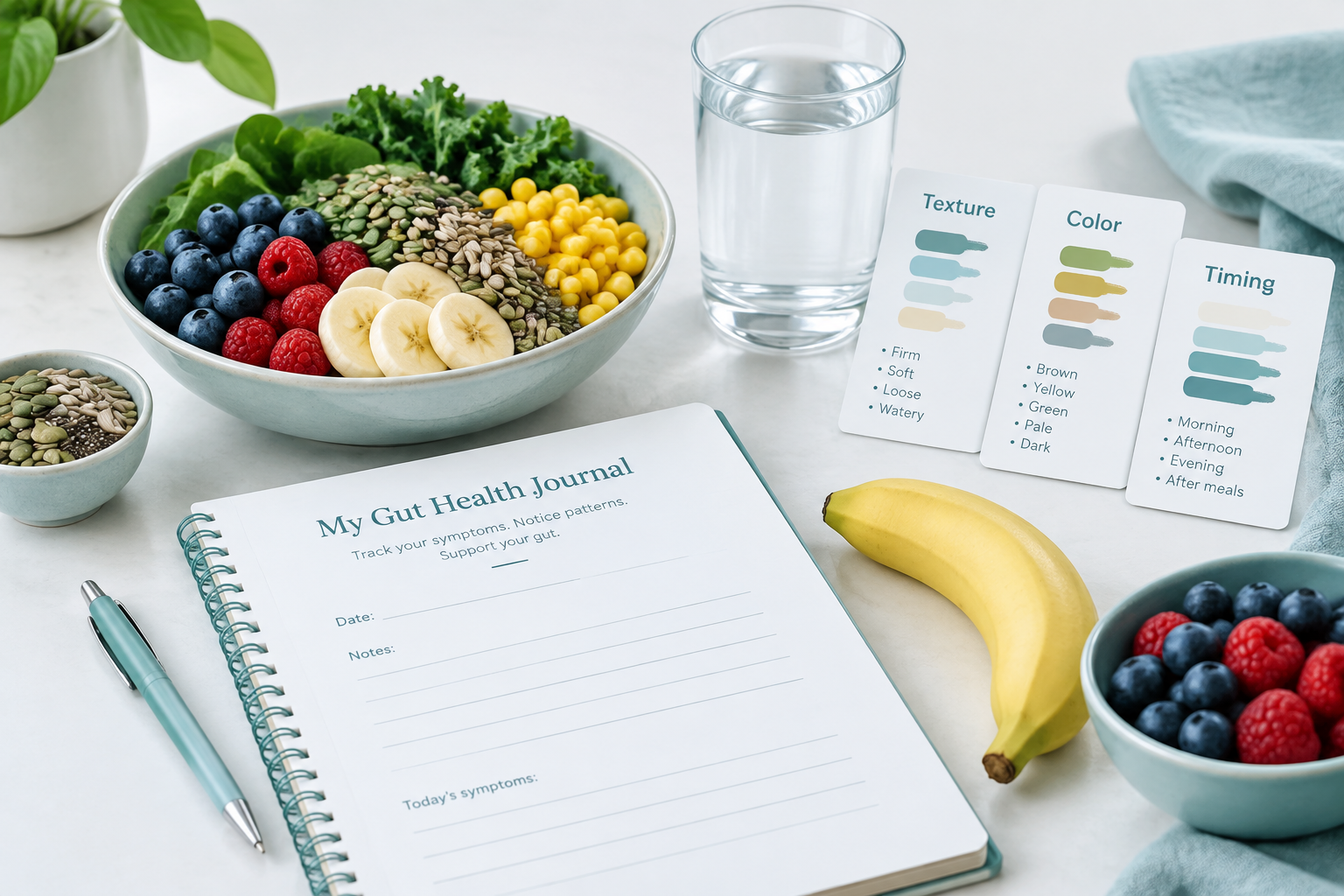
Turning first to stool patterns, stool changes are among the digestive symptoms people search for most often, and they usually reflect transit speed, bile, fat digestion, or what you ate rather than disease. Understanding how digestion works from mouth to colon makes those patterns easier to read.
A single unusual stool after a diet change is rarely meaningful, and what to eat for a settled gut is usually a slower lever than it looks, but changes in bowel movements lasting more than a week or occurring with pain, weight loss, or blood belong in the warning-signs section.
Mucus in Stool
Mucus in stool is often normal: the colon produces it to help stool pass, and a small amount may appear from time to time.
It is most often easier to notice with irritable bowel syndrome (IBS), particularly during a flare, or an intestinal infection. It may appear as clear, whitish, or yellowish strands or as a coating on stool, sometimes with cramping or changed bowel habits.
Medical assessment is important when mucus occurs with:
- Blood
- Fever
- Diarrhea that persists
This combination can point to intestinal inflammation rather than something to watch at home. Our guide to mucus in your stool offers more detail on possible patterns and how to prepare for a healthcare conversation.
Black Specks in Stool
Black specks in stool are most often harmless remnants of food or iron supplements. Common examples include:
- Berry seeds
- Stringy banana fibers
- Dark leafy greens
Small, scattered flecks differ from stool that is black throughout, sticky, and tar-like. Uniform black, tar-like stool can signal digested blood and needs prompt medical attention, especially if it occurs with:
- Weakness
- Dizziness
- Abdominal pain
- Vomiting
For a closer look at everyday causes and when to contact a clinician, black specks in stool offers calm, focused guidance.
Sticky Stool
Sticky stool often means there is extra fat in your stool. A rich or high-fat meal can cause this temporarily, especially if the change is isolated. Less often, it can happen when a condition affects how your body digests or absorbs fat.
Persistent changes deserve attention, particularly when stool is:
- Pale or clay-colored
- Greasy or difficult to flush
- Strong-smelling and floating
- Accompanied by unplanned weight loss
This pattern can suggest malabsorption, meaning your body is not absorbing nutrients as expected. Sticky stool that is hard to flush covers common causes and helpful details to discuss with a clinician.
Yellow Diarrhea
Yellow diarrhea often happens when stool passes through your digestive tract too quickly for bile to change it to its usual brown color. It can also signal that fat was not fully absorbed. A stomach bug or a rich, greasy, or unfamiliar meal are common short-term triggers, especially when symptoms start suddenly and settle within a day or two.
Seek medical assessment if it lasts longer than a few days or occurs with any of these signs:
- Greasy or oily-looking stool
- Unintended weight loss
- Pale stool with dark urine
These patterns can sometimes involve the pancreas, liver, or bile ducts. Yellow diarrhea covers possible causes and practical next steps.
Undigested Food in Stool
Undigested food in stool is often normal, particularly after corn, seeds, vegetable skins, or other high-fiber plant foods. Some fibers resist digestion, so visible pieces can pass through. This is more likely if you eat quickly and do not chew thoroughly or if stool moves through your digestive tract faster than usual.
Visible food needs more attention when it occurs with signs that nutrients may not be absorbed well:
- Ongoing diarrhea
- Unintended weight loss
- Greasy, oily, or unusually foul-smelling stool
This combination can be related to malabsorption or reduced digestive enzyme activity and warrants medical assessment. Undigested food in your stool covers common causes and useful points to discuss with a clinician.
Why Does Your Belly Feel Bloated or Tight?

Beyond stool changes, bloating can describe a feeling of fullness, pressure, or tightness, visible belly swelling, or both. These experiences do not always occur together, though either can be common after meals. Gas, gut sensitivity, and the way your abdominal wall responds often contribute rather than a structural problem. The guides below separate the pressure sensation from visible swelling.
Bloating and Abdominal Distension
Bloating can occur without visible swelling. Abdominal distension is a measurable increase in belly size, so your abdomen looks or feels visibly larger.
Two common contributors often overlap. Gas can build up when gut bacteria ferment certain carbohydrates, while distension can also result from an altered muscle reflex in which the diaphragm moves downward while the abdominal wall relaxes, making the belly protrude even without a large amount of extra gas.
Medical assessment matters when swelling is new, persistent, or progressively worsening, particularly alongside:
- Unintentional weight loss
- Abdominal pain
- A change in bowel habits
Dietary trial and error is not the right first step when these warning signs are present. For everyday context and focused guidance, bloating and a visibly swollen belly can help you sort through common patterns.
A Tight Feeling in Your Stomach
A tight feeling in the stomach often comes from trapped gas or indigestion, particularly after a large meal. The upper or middle belly may feel hard, knotted, or pressurized. Stress can also tighten the abdominal wall, so stomach problems may feel more noticeable during a rushed workday or difficult week, one of the clearest examples of how stress affects digestion.
A tight belly needs prompt medical attention rather than a wait-and-see approach when it is:
- Rigid to the touch
- Accompanied by severe pain
- Paired with fever or vomiting
These signs can suggest an acute medical problem. For likely causes, everyday comfort measures, and guidance on when to get care, read a tight feeling in your stomach.
What About Diarrhea After Meals, Foul Burps, and Unusual Vomiting?

Alongside changes in stool and belly pressure, gastrointestinal symptoms that begin after eating or have a strong, unpleasant odor often feel more alarming than other bowel changes. Diarrhea after meals and foul burps are common patterns that are usually harmless, though they can be uncomfortable and disruptive. Unusual vomiting is different: it can signal a medical emergency and needs immediate care.
Diarrhea After Eating
Diarrhea after eating often occurs because a meal signals your colon to contract. This normal process, called the gastrocolic reflex, can be strong enough to cause an urgent, loose bowel movement within an hour.
Common patterns include IBS and reactions to particular foods. Lactose can trigger symptoms for some people, while rich or high-fat meals may speed bowel activity for others. Keeping track of foods, meal sizes, and stressful days can help you describe the pattern to a healthcare professional, and eating for a calmer gut covers the meal-level changes that most often settle it.
Medical assessment is important when diarrhea:
- Occurs after most meals for more than two weeks
- Wakes you during the night
- Comes with unintentional weight loss or blood in the stool
Diarrhea soon after eating covers possible causes and practical next steps.
Sulfur Burps
Sulfur burps are burps with a rotten-egg odor caused by hydrogen sulfide gas. Gut bacteria produce this gas as they break down sulfur-containing foods, including eggs, meat, and cruciferous vegetables. A protein-heavy meal often triggers it, and slow stomach emptying can leave food in the stomach longer, allowing more fermentation.
Get medical assessment if sulfur burps occur with:
- Vomiting
- Fever
- Diarrhea lasting more than a couple of days
That combination can signal an infection, including giardia, rather than a simple food-related reaction. For a closer look at possible causes and practical next steps, read about burps that smell like rotten eggs.
Vomit That Smells Like Stool
Vomiting material that smells like stool can happen when a bowel obstruction makes intestinal contents back up. Often called throwing up poop, this material is not stool from the colon. Common causes include adhesions from prior surgery, hernias, and tumors.
Foul, stool-smelling vomit is always an emergency. Seek emergency care immediately, especially if it occurs with:
- A Swollen abdomen
- Severe cramping
- Inability to pass gas
- Inability to have a bowel movement
The National Institute of Diabetes and Kidney Diseases notes that intestinal obstruction can require urgent treatment (source). What throwing up poop means explains what evaluation and treatment in the emergency department may involve.
When Do Digestive Symptoms Need Urgent Care?

While foul, stool-smelling vomit requires emergency care, a mild, familiar digestive symptom that is improving can often be watched briefly. Symptoms that persist, return, worsen, disrupt daily life, or include digestive red flags deserve medical attention.
A practical three-route approach can help:
- Monitor briefly: A single episode of bloating, gas, indigestion, or loose stool may settle after a food change, stress, or a short stomach illness. Brief monitoring makes sense when you can eat and drink, the symptom is easing, and no warning signs are present. Repeated self-treatment is not a good substitute for care when a symptom keeps returning or no longer feels like your usual pattern.
- Make a routine appointment: Knowing when to see a doctor for digestive symptoms often comes down to persistence and impact. Arrange a visit for abdominal discomfort lasting days or weeks, repeated bowel-habit changes, nausea that does not settle, or heartburn that antacids do not relieve. Testing, when it is needed, is about what a clinician can rule out.
- Seek urgent or emergency care: Red flags need prompt assessment rather than more waiting or home treatment. MedlinePlus includes bleeding, severe pain, and serious vomiting among symptoms that need medical help (source).
Urgent warning signs include:
- Possible digestive bleeding: Bright red blood in stool, black tarry stool, vomiting blood, or vomit that resembles coffee grounds.
- Severe abdominal pain: Pain that starts suddenly, becomes intense or worsening, prevents you from standing upright, or occurs with a swollen or rigid belly, fever, fainting, repeated vomiting, or inability to pass stool or gas.
- Dehydration: Very little urine, dizziness, dry mouth, unusual weakness, or confusion.
- Symptoms needing timely evaluation: Persistent vomiting, ongoing diarrhea, unintended weight loss, new or worsening trouble swallowing, and new digestive symptoms starting after age 50 should be checked promptly. The National Institute of Diabetes and Digestive and Kidney Diseases also identifies bleeding, swallowing problems, and unexplained weight loss as concerning symptoms (source).
Do not take over-the-counter anti-diarrheal medicine when diarrhea occurs with blood, fever, severe pain, or dehydration signs. Children, older adults, pregnant people, and people with significant health conditions may need earlier advice because illness and dehydration can become more serious faster.
If extreme pain comes with collapse or confusion, call emergency services rather than driving yourself. When in doubt about a red flag, call, do not search.
Common Digestive Symptoms FAQs
These FAQs address common digestive symptoms, helping you make sense of what you notice in daily life and recognize when medical guidance may be appropriate.
1. Which Foods Commonly Trigger Digestive Symptoms?
Rich or high-fat meals may trigger indigestion or reflux-type symptoms. Lactose-containing dairy can cause bloating, gas, or diarrhea when lactose is poorly digested, while onion, garlic, wheat, and some fruits may increase gas and bloating because they contain fermentable carbohydrates. Caffeine and alcohol can also contribute to looser stools. Because digestive problems are personal, a single episode does not identify a trigger, so look for repeated patterns involving the food, portion size, and timing. Digestive diseases can have many causes, so a practical meal plan works better than blanket restrictions.
2. Can Stress Cause Digestive Symptoms?
Stress can contribute to digestive symptoms by changing how quickly your gut moves and how strongly your brain registers normal gut sensations. During a demanding week, that may mean more cramping, bloating, loose stools, constipation, or urgency. These symptoms are real, not imagined. The American College of Gastroenterology describes this brain-gut interaction among common GI symptoms.
IBS is one example where stress can trigger a flare without causing the condition itself. Food, medicines, hormones, and an infection can also contribute. Persistent or severe symptoms, or symptoms paired with any red flag mentioned above, should never be dismissed as stress.
3. Can Medicines Cause Digestive Symptoms?
Yes. Prescription medicines, over-the-counter products, and supplements can cause digestive problems or make existing symptoms more noticeable. Although antibiotics may lead to diarrhea, iron and some pain relievers can cause constipation, while iron may also darken stools. Metformin and magnesium can cause loose stools, and NSAIDs such as ibuprofen may trigger indigestion and increase bleeding risk (source). Note whether symptoms began or changed after a new medicine or dose adjustment, then raise the pattern with a pharmacist or clinician. They may suggest a different dose, timing, or alternative. Do not stop, skip, or reduce a prescribed medicine on your own because of digestive symptoms.