


Apple cider vinegar and IBS is a popular home remedy topic, but the promise often runs ahead of the evidence. For people managing bloating, reflux, constipation, or diarrhea, a well-meaning ACV trial can turn into more symptoms instead of clearer answers. IBS is a disorder of gut sensitivity and bowel pattern changes, and this overview shows where vinegar may fit, where it falls short, and what to try first.
Most of the attention around ACV comes from anecdotes, small studies, and theories about acetic acid, not from solid human IBS trials. The article breaks down the research, explains who may feel temporary relief and who may be more likely to worsen, and covers safe dilution, timing, and warning signs like reflux, nausea, and diarrhea. It also sets ACV beside better supported options such as a low-FODMAP plan, targeted probiotics, and soluble fiber so the next step is easier to judge.
Adults with IBS, along with caregivers and clinicians who field daily symptom questions, will find the clearest value here. The practical aim is to help separate a low-risk experiment from a choice that could aggravate heartburn or gas, especially when SIBO or loose stools are part of the picture. A short symptom log can show whether a diluted teaspoon before dinner changes anything or simply adds irritation, and that kind of detail makes the next conversation with a healthcare professional more useful.
IBS and ACV Key Takeaways
- ACV is not a proven IBS treatment.
- Most support for ACV comes from anecdotes, not controlled human trials.
- Some people with IBS-C may report mild relief, but responses vary.
- ACV can worsen reflux, nausea, bloating, or diarrhea.
- Always dilute ACV and avoid taking it undiluted.
- Low-FODMAP plans, soluble fiber, and probiotics have better support.
- Stop ACV if symptoms worsen and discuss ongoing problems with a clinician.
What Is The Evidence For ACV In IBS?
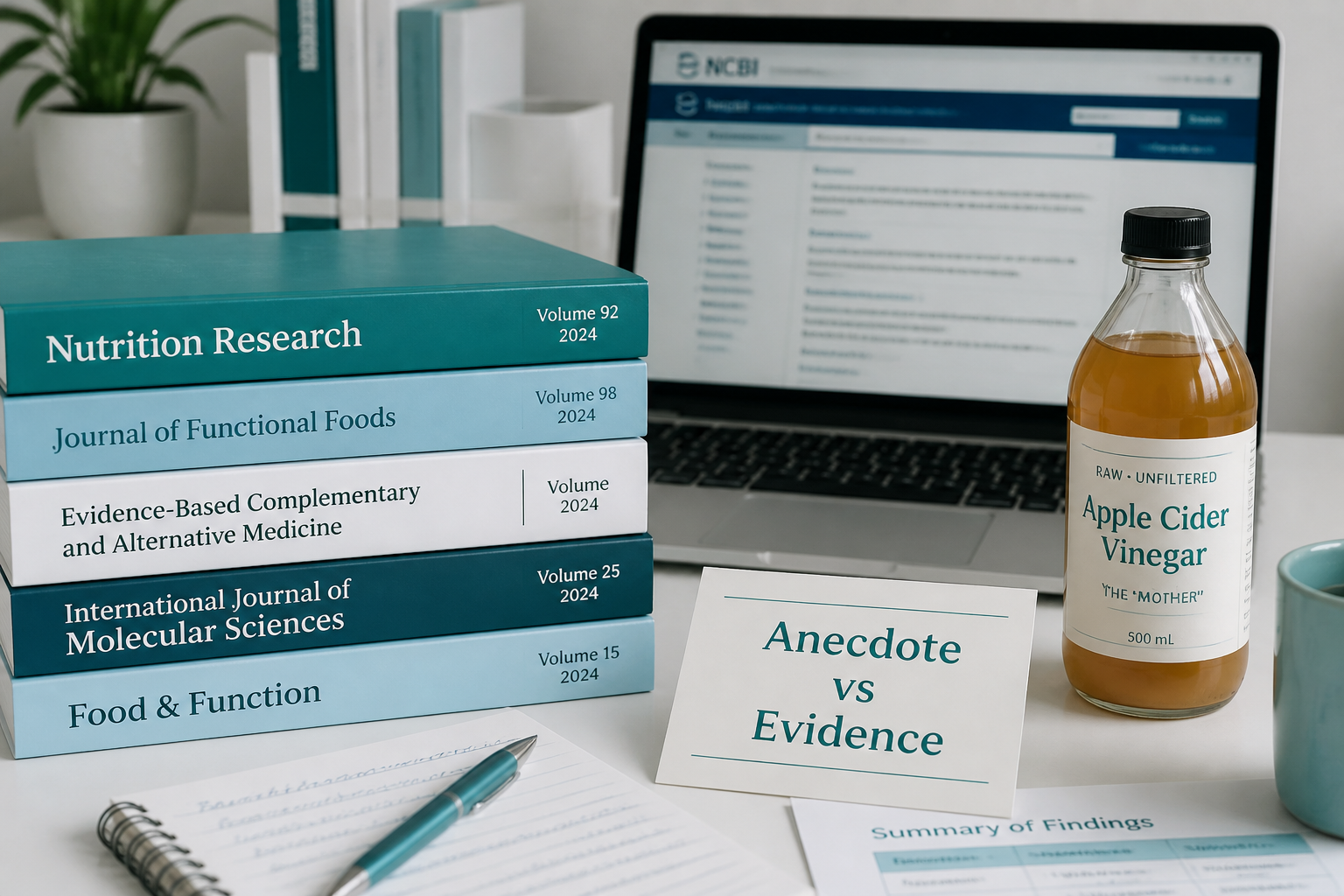
Apple Cider Vinegar gets a lot of attention in managing IBS through diet because it contains acetic acid, and raw or unfiltered versions may also contain “the mother” and other fermentation byproducts. That sounds persuasive online, but those ingredients do not prove benefit for irritable bowel syndrome (IBS). The phrase ACV for IBS shows up often in home-remedy posts, yet the apple cider vinegar evidence remains thin when you look at actual clinical results.
The evidence hierarchy matters here. Most of the positive talk comes from anecdotes and personal experiences, not from controlled human trials showing reliable IBS symptom relief. Small studies and animal research are sometimes cited, including work on digestion, delayed stomach emptying, and arthritis in rats, but those findings do not translate cleanly into day-to-day IBS care. One small human study often used to support vinegar claims looked at a different question and does not establish IBS treatment effects (source).
That gap is easy to miss because indirect evidence can sound convincing. A compound may affect digestion in a general way, or it may show a signal in animals, yet still miss the real drivers of IBS. Those drivers include food triggers, gut sensitivity, stress, and symptom swings from day to day. The acetic acid gut idea is part of the theory, but theory is not the same as dependable relief.
Evidence type | What it can suggest | What it cannot prove |
|---|---|---|
Anecdotes | A person felt better after trying ACV | That ACV caused the change |
Small or indirect studies | A signal worth studying further | Consistent benefit for IBS |
Animal research | A possible mechanism | Real-world symptom relief in people |
Controlled human IBS trials | The strongest test | This is mostly missing for ACV |
That is why ACV is not a core treatment. At most, it is an optional experiment for tolerability. Better-supported options include a low-FODMAP diet, probiotics and gut microbiome support, and other structured IBS strategies. Some people also compare it with fermented foods kimchi, but those foods and supplements are not interchangeable.
If you try ACV, dilute it for comfort and stop if it worsens reflux, burning, or bowel symptoms. For ongoing or worsening digestive problems, focus on proven options first and talk with a healthcare professional about next steps.
When Might ACV Help Or Worsen IBS?
ACV works best as a symptom-by-symptom experiment, not a universal IBS fix. Motility, gut-brain signaling, and gut sensitivity all vary, so the same sip can feel helpful for one person and harsh for another.
A small diluted amount may seem to help if meals leave you feeling heavy or sluggish. That is the part of apple cider vinegar and digestion that gets the most attention, because the acidity may act a little like ACV stomach acid and make a full stomach feel less stuck. Even so, the evidence is mostly anecdotal, and the pattern is more often reported in IBS-C constipation than in looser stool patterns.
It can also backfire. ACV bloating, gas, nausea, and reflux may worsen if vinegar slows gastric emptying, which keeps food in the stomach longer and can raise pressure. That can mean more belching and more acid backflow, especially if your upper GI tract is sensitive. For many people, manage IBS constipation with diet is a steadier first step than trial and error with vinegar.
A quick symptom check can help you judge the odds:
Symptom pattern | ACV may feel more tolerable when… | ACV may be a poor fit when… |
|---|---|---|
Fullness or bloating | You mainly feel heavy after meals and do not get reflux | You already burp often or feel upper-stomach pressure |
Constipation | IBS-C constipation is your main pattern and symptoms are mild | Acidic drinks trigger nausea or reflux |
Diarrhea | Rarely | Loose stools, urgency, or irritation are common |
Gas and distension | Less often | Small intestinal bacterial overgrowth or fermented-food sensitivity is common |
Diarrhea-predominant IBS can worsen if ACV irritates the gut, speeds transit, or pulls water into the bowel when it is taken undiluted or in excess. That is why loose stools and urgency are red flags for caution. The same warning applies to ACV and SIBO, since acidic or fermented products can intensify gas and pressure in sensitive people.
The constipation evidence is still preliminary. Animal studies suggest faster colon movement, but human trials have not tested direct IBS-C outcomes well enough to call ACV a treatment. If you keep testing it, use a small diluted trial only if you do not have frequent belching, reflux, IBS-D, or SIBO-like gas. Otherwise, a low-FODMAP diet or targeted probiotics deserves priority.
How Do You Try ACV Safely?

Treat ACV as a short test, not a daily fix. If you want to try it, the goal is to learn how your body responds, not to force a long-term habit. Evidence for IBS is limited, so the safest plan is to start low, keep the setup steady for a few days, and stop if your symptoms clearly worsen. An IBS diet is still a stronger starting point for most people than vinegar.
A simple way to approach how to take ACV is:
- Dilute ACV in a large glass of water.
- Time it 15 to 30 minutes before your largest meal if you want to see whether timing changes your response.
- Hold the dose steady for 3 to 7 days so you can judge the effect more clearly.
- Increase only if tolerated and only up to 1 tablespoon per day, which is a ceiling, not a target.
Protect your teeth and throat every time. Never take ACV undiluted. Regular use can contribute to ACV tooth enamel erosion, and the acid can irritate the throat. A straw can reduce contact with your teeth, and a plain-water rinse afterward helps wash away residue.
Timing matters too. Avoid ACV right before bed or lying down soon after, since that can raise reflux risk and irritate the esophagus. If you already have heartburn, reflux, or a sensitive esophagus, that is a strong reason to skip the trial or clear it with a clinician first. The acidity is also why some people feel a burning sensation similar to extra ACV stomach acid exposure.
Medication safety deserves a pause before you start. ACV may affect blood sugar, so people who use insulin or other diabetes medicines should check with a clinician before using it regularly. Safety review is also important for anyone who takes diuretics or other medicines that affect potassium levels (source).
A short symptom log keeps the experiment honest:
- Dose and dilution: how much ACV and how much water
- Timing: before breakfast, lunch, or dinner
- Meal size: light meal or large meal
- Symptoms: bloating, gas, abdominal pain, reflux, nausea, stool frequency, and stool form
Stop the trial if you notice burning, worse bloating, diarrhea, chest discomfort, trouble swallowing, or any new severe symptom. If ACV helps a little but not enough, or if it flares your gut, proven options like a low-FODMAP plan or targeted probiotics are usually a better next step than pushing through.
Which IBS Treatments Work Better?
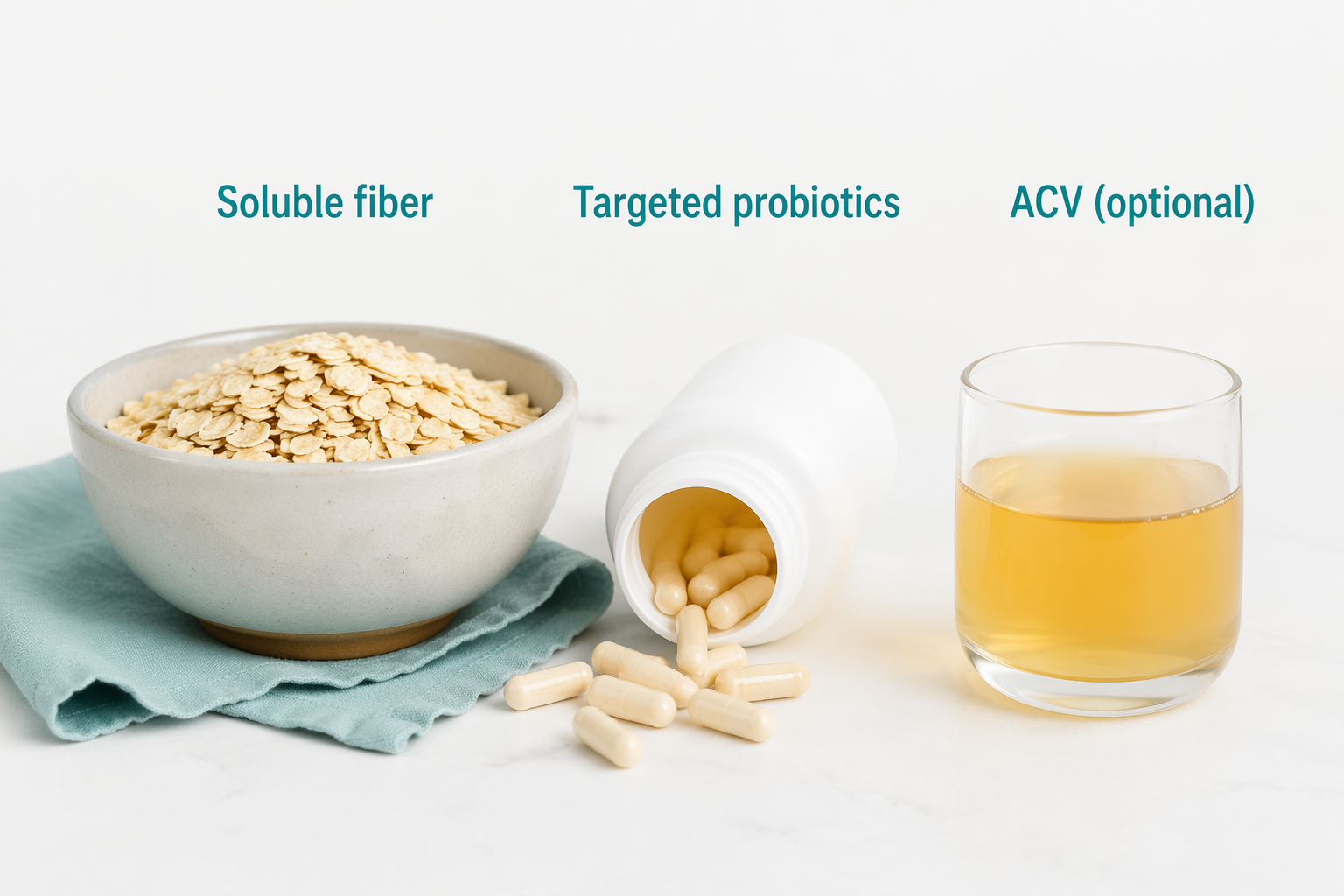
ACV is not a proven IBS treatment. The strongest reports are personal stories, and personal stories can feel convincing without being dependable for everyone. For abdominal pain, bloating, diarrhea, or constipation, the evidence is weak, so apple cider vinegar belongs in the "might help a few people" category, not the "trusted therapy" category.
Soluble fiber is a better first step for many people, especially when IBS-C constipation is part of your pattern. It can support bowel regularity, and it is easier to track than a vinegar trial because stool changes are usually clearer. For many readers, prebiotic fiber and other fiber-rich choices are a more practical starting point than ACV.
A temporary low-FODMAP diet is also better supported for finding food triggers, and the low fodmap diet for IBS program can give that process some structure. A low-FODMAP plan should be based on serving size and the specific food item, so any ACV guidance should follow Monash University or another qualified low-FODMAP reference rather than a general assumption (source). Even so, low FODMAP is not the same as a full low-FODMAP diet, and ACV cannot replace a structured plan.
Option | What it may help | Why it often beats ACV |
|---|---|---|
Soluble fiber | Regularity, especially for IBS-C constipation | More direct support for bowel habits |
low-FODMAP diet | Food-trigger identification | Better for pattern-finding and symptom control |
Strain-specific probiotics | Some gas, stool changes, or discomfort | Results from probiotics can vary by strain, and some people may need several weeks before they notice a change (source) |
Peppermint oil | Cramping and spasm-related symptoms | Better supported for IBS symptom relief |
Among probiotics and gut microbiome options, targeted products make more sense than random blends. Lactobacillus acidophilus and Bifidobacteria are commonly discussed, but the strain matters more than the label. Peppermint oil is also worth considering for cramping, and peppermint tea can be a gentler everyday option, even if it is usually milder than capsules.
ACV may feel mildly helpful for some people, especially in IBS-C constipation anecdotes about "waking up" digestion. But responses are unpredictable, and vinegar can worsen reflux or irritate the stomach. For most readers, safer and better-supported choices usually come first for steady IBS symptom relief.
When Should You Stop And Get Help?
Stop the trial if ACV clearly makes you feel worse. Increased burning, sharp abdominal pain, stronger cramping, marked bloating, nausea, new diarrhea, or a sudden change in bowel habits are warning signs that your digestive tract is reacting badly. Those are ACV side effects, not a signal to push through.
Worsening reflux, fuller meals, extra gas, or more nausea also deserve clinician review. ACV may slow gastric emptying in some people, which can make bloating and acid reflux feel more noticeable. If you already track symptoms for diet for IBS diarrhea, adding a new trigger like ACV can muddy the picture fast.
Get medical help promptly if any of these show up:
- Bleeding: New blood in stool, black stools, or vomiting blood
- Ongoing diarrhea: Loose stools that do not settle and may lead to dehydration
- Swallowing problems: Pain when swallowing, chest burning, throat pain, or food feeling stuck
- Upper stomach pain: Repeated reflux, worsening upper abdominal pain, or ulcer-like burning
- Medicine concerns: Insulin, other diabetes drugs, diuretics, or medicines that affect potassium levels
These symptoms can point to more than simple IBS irritation. Severe or persistent digestive problems can have many causes, and some need quick treatment before they get worse. ACV safety matters even more if you use it often, because its acidity can irritate the esophagus or stomach lining, especially when it is undiluted or overused.
A practical stop rule is simple. If ACV causes burning, pain, or repeat reflux, stop using it and get evaluated rather than increasing the dose (source). That is the safer path when you are deciding whether apple cider vinegar is helping, harming, or just adding noise to your symptoms.
IBS and Apple Cider Vinegar FAQs
These FAQs cover the most common questions about ACV for IBS, including symptom fit, safety, and timing, so you can sort through Apple Cider Vinegar without guesswork. If you're also checking the IBS trigger foods list, the apple cider vinegar evidence helps put it in context.
1. Is apple cider vinegar safe for IBS?
ACV is not a proven IBS treatment, and it may be a poor fit if you have reflux, gastritis, ulcers, or a sensitive throat or esophagus. Because it’s highly acidic, undiluted ACV can irritate the stomach and esophagus, worsen cramping or abdominal pain, and in rare cases cause chemical burns, so dilution matters if you test it. If you try it, dilute it well, never take it straight, and be mindful of ACV side effects, ACV tooth enamel erosion, and medicines that affect blood sugar or potassium (source).
2. When should you take ACV for IBS?
If you want to try ACV, treat it as a short, careful experiment: start low, dilute ACV well, and track how your gut responds. A common ACV dosage is 1 teaspoon mixed into 8 to 12 oz of water once a day, then slowly increase to 1 tablespoon if you tolerate it, with some people using up to 1 to 2 tablespoons daily. For how to take ACV, many people drink it 15 to 30 minutes before a meal, often the largest one, and warm or room-temperature water may feel gentler. Stop if it worsens heartburn, nausea, cramping, or diarrhea, and don’t use it as a substitute for medical care.
3. Can ACV pills trigger IBS symptoms?
Yes, ACV pills can still trigger IBS symptoms because the active ingredient is acetic acid, and your response can vary by brand and dose. Some people notice cramping, nausea, diarrhea, reflux, or ACV bloating, while others with IBS-C feel mild support from apple cider vinegar and digestion. Capsules are usually gentler on teeth and the esophagus than liquid ACV, but liquid gives you more precise dilution and dose control, and raw or unfiltered ACV with “the mother” is still not a probiotic in any helpful colonizing sense.
4. Can you mix collagen with ACV?
Yes, you can usually mix collagen with diluted ACV, and there’s no well-known direct interaction for most people with IBS. The bigger issue is the vinegar itself, since its acidity can still trigger reflux, nausea, bloating, or bowel changes even when the collagen is harmless. If you try it, keep the ACV well diluted and watch your symptoms, because IBS-related motility differences can make one person feel fine and another feel worse. Flavored collagen powders and added sweeteners can also be a problem, much like fermented foods kimchi can bother sensitive guts.
5. Can berberine and ACV be taken together?
Berberine and ACV can be used together, but that pairing is better treated as a supplement stack that needs caution, not a routine IBS fix. ACV can affect potassium and may interact with insulin, diabetes medicines, and diuretics, while berberine can also lower blood sugar, so the mix matters even more if you already take glucose-lowering medication or want to monitor ACV blood sugar changes. If you notice burning, severe pain, cramping, marked bloating, nausea, diarrhea, or a bowel pattern change, stop ACV and don’t keep experimenting, especially if ACV and SIBO or Small Intestinal Bacterial Overgrowth is a concern, and review both with a clinician first.