


IBS and apples can be a frustrating food mismatch, especially when a fruit that seems healthy keeps leading to bloating, cramps, gas, or sudden urgency. FODMAPs are fermentable carbohydrates that the small intestine may not absorb well, and apples are a common source because of fructose and sorbitol. The practical payoff here is a clearer way to tell whether apples are the problem and which forms are more likely to sit well.
The sections ahead cover why whole apples, juice, sauce, dried apples, and even peel can affect symptoms differently, plus how portion size changes the response. It also lays out simple ways to test tolerance, spot signs of fructose or sorbitol sensitivity, and compare safer fruit swaps such as berries, citrus, and kiwi. Expect a small decision framework, a symptom log approach, and portion ideas that make trial and error more manageable.
For adults living with IBS, and for caregivers trying to make food choices less chaotic, the goal is to turn mixed signals into a workable pattern. A reader who feels fine with a few peeled slices but reacts to a full apple or a glass of juice gets a useful clue about dose and form. My Good Gut keeps the focus on clear next steps so the next fruit choice feels informed rather than guessed.
IBS and Apples Key Takeaways
- Apples can trigger IBS because of fructose and sorbitol.
- FODMAPs in apples can draw water into the bowel and increase gas.
- Portion size matters more than the fruit alone.
- Juice and dried apples are usually harder to tolerate than small fresh portions.
- Peeled or cooked apples may feel easier, but they still contain FODMAPs.
- A food and symptom log helps identify your personal apple threshold.
- Lower-FODMAP swaps include berries, oranges, grapes, kiwi, and melons.
Why Can Apples Trigger IBS Symptoms?
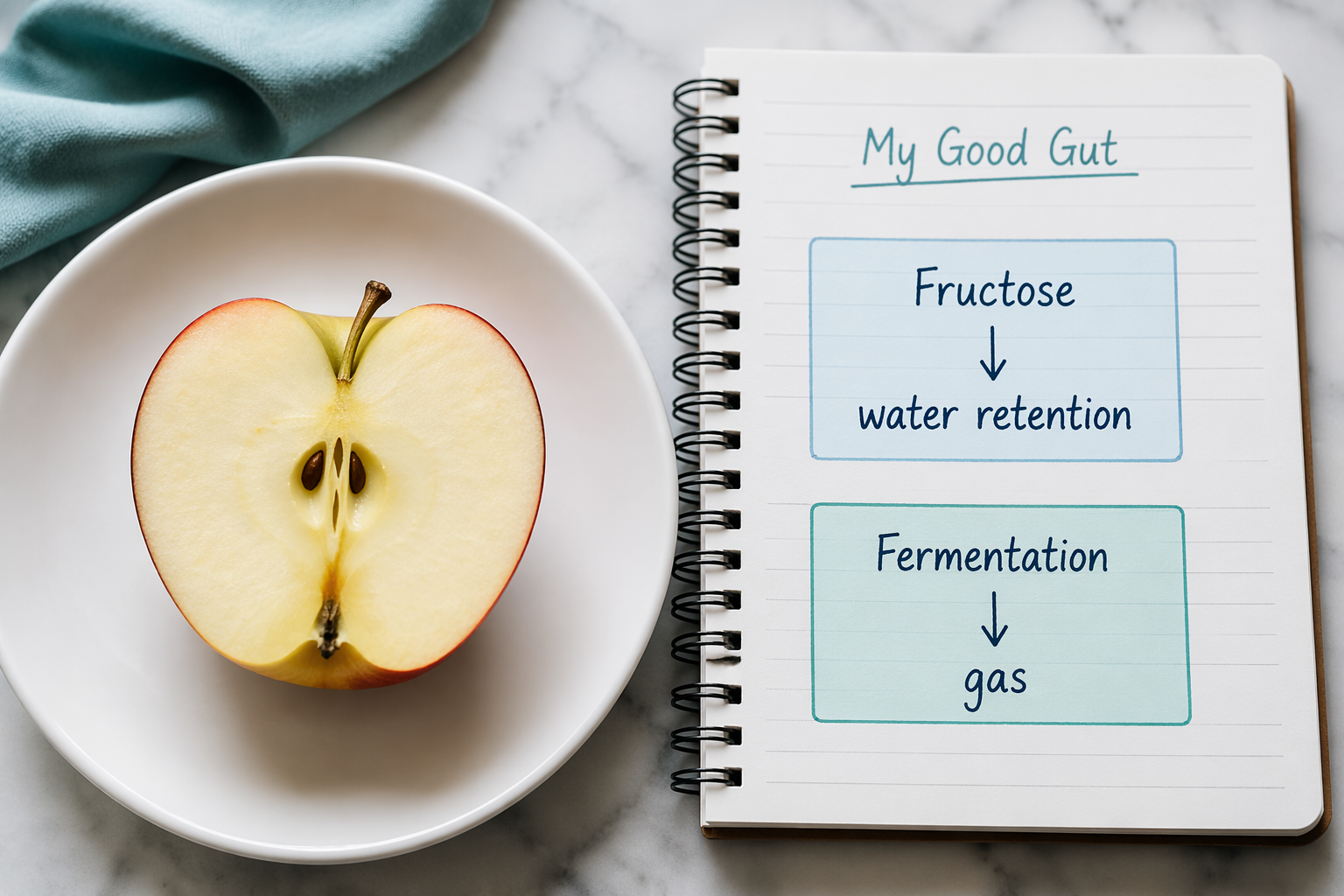
Apples can bother your gut because they’re one of the more common high FODMAP foods. FODMAP means fermentable oligo-, di-, monosaccharides and polyols. In plain terms, these are carbohydrates that the small intestine may not absorb well, which is why IBS and apples are often linked. The FODMAPs in apples are especially tied to fructose and sorbitol.
When those sugars stay partly unabsorbed, they can pull water into the small intestine. That water effect can add to bloating, loose stools, and a sudden urge to go. Apples can also create a second problem. Unabsorbed carbs move into the colon, where gut bacteria ferment them and make gas. That gas can stretch the bowel and lead to pressure, cramping, and abdominal pain.
The same fruit may still feel different from person to person. Portion size, ripeness, and your own sensitivity all shape whether you notice apple-triggered IBS symptoms. Some people react more to larger, sweeter fruit, including apple varieties Boskoop, while others do fine with a few slices.
A few clues can help sort out apples and IBS from something else:
- Portion size: A few slices may sit better than a full apple.
- Ripeness: Riper fruit can taste sweeter and may feel different in your gut.
- Other symptoms: Itching, mouth discomfort, or swelling can point to oral allergy syndrome apples rather than IBS alone.
For many people, the issue is the apple’s FODMAP load and the mix of water and gas, not fruit in general.
Which Apple Compounds Cause The Problem?
Apples can bother your gut because of how their sugars are built, not because the fruit itself is "bad." In irritable bowel syndrome (IBS), the main troublemakers are fructose and sorbitol, two of the FODMAPs in apples that can lead to bloating, gas, loose stools, and diarrhea.
The sugar mix matters a lot. Apples usually contain more fructose than glucose, and glucose helps fructose absorb in the small intestine. When fructose is in excess, more may stay unabsorbed, reach the colon, and ferment. That helps explain fructose malabsorption, which is one reason apples can feel fine on one day and harsh on another.
Sorbitol adds a different problem. Sorbitol in apples belongs to the group called sugar alcohols polyols, and it can act like a natural laxative in sensitive people. It pulls water into the small intestine, which may cause cramping, urgent bowel movements, and loose stools. For diarrhea-predominant IBS, that effect can be especially disruptive.
The two compounds can be rough together:
Apple compound | What it can do |
|---|---|
Fructose | Ferments if it is not absorbed well |
Sorbitol | Pulls water into the bowel and may speed stool flow |
Fructose and sorbitol | Can trigger more symptoms together than either one alone |
Some low-FODMAP guidance treats a very small apple portion as the safer range, and apples are still a source of fructose and sorbitol that can trigger symptoms in sensitive people (source). That is why testing a tiny amount is usually safer than assuming a normal serving will sit well. If apples have been a trigger, start small and track your own pattern before deciding how much, if any, works for you.
How Do Apple Form And Portion Change Tolerance?
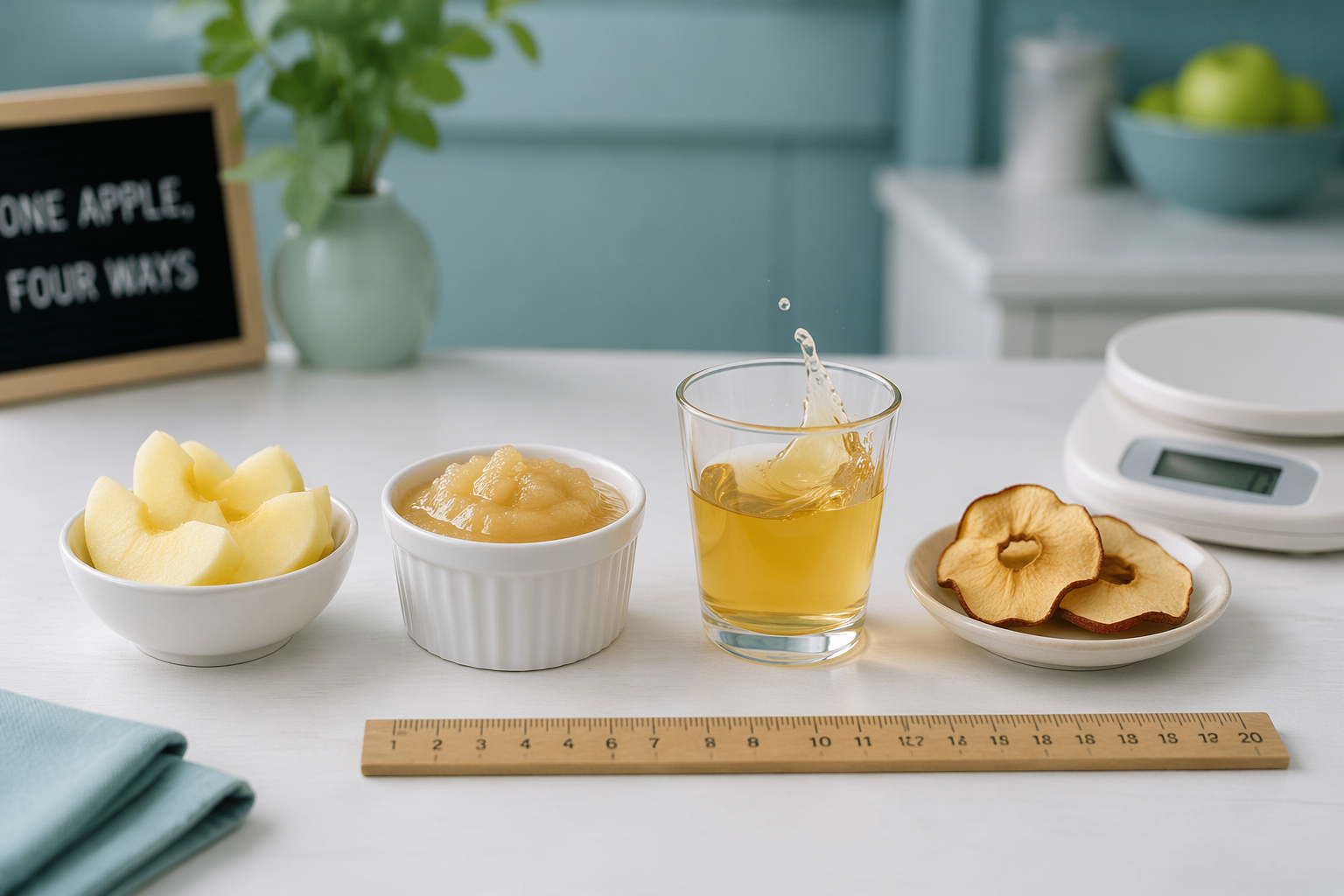
Apple tolerance usually comes down to dose. A small serving may stay under your personal limit, while a larger one raises fructose and sorbitol exposure and makes bloating, pain, gas, or bowel changes more likely.
Monash University's guidance gives you a useful starting point for low-FODMAP apples. A very small apple serving, around 20 to 25 grams or about 1/8 of an apple, is commonly used as a low-FODMAP trial portion, but individual tolerance can vary (source). That does not mean it works for everyone, because sensitivity varies a lot.
Different forms can change how apples feel in your gut:
- Whole raw apples: These deliver the full sugar load at once, so they are more likely to trigger symptoms if you react to fructose or sorbitol.
- Peeled apples: The peel can change texture, but it does not remove the FODMAPs.
- Cooked apples and applesauce: cooked apples for IBS and applesauce for IBS may feel easier to digest in small amounts, but they still count as apple. Bigger portions can still cause trouble.
- Apple juice: This form is usually higher risk because it is more concentrated. One competitor source notes that 100 milliliters is high-FODMAP, and juice may also loosen stools for some people with constipation.
- Dried apples: Dehydration packs the fruit into a smaller bite, so it is easy to overdo. Even a little can bother very sensitive people.
For portion control apples IBS, a food and symptom log helps you spot your own threshold. That matters even more if you are testing IBS-C and apples, since juice and larger servings may shift stools faster than you expect. If you are asking, Are apples low FODMAP, the answer is yes, but only in a very small serving and only if your body tolerates it.
When Are Whole Apples More Likely To Trigger Symptoms?
Whole apples are more likely to bother you when a few factors pile up at once.
Raw fruit can feel harder on a sensitive gut because the skin and insoluble fiber add a rougher texture. That is why apple peel and IBS often come up together, and peeling can help some people. Cooked apples are often easier to tolerate than fresh ones because heat softens the fruit and makes it easier to break down.
A few clues can change how you react:
- Fructose balance: If the apple has more fructose than you absorb well, bloating, gas, or loose stools can follow.
- Variety: Some apple varieties Boskoop, along with Alkmene and Ontario, may affect you differently.
- Ripeness: Firmer, less-ripe apples can feel tougher to digest.
- Storage: Apples kept in cold storage may be more likely to trigger symptoms for some people.
When whole apples reliably cause trouble, the problem is often the mix of skin, insoluble fiber IBS irritation, and fermentable sugars. If you want to test your tolerance, try peeled apples IBS style, choose a softer cooked apple, keep the portion small, and compare different varieties one at a time.
Are Juice, Sauce, And Dried Apples Different?
Processed apple foods can hit your gut differently, even when they all come from the same fruit. Juicing, cooking, pureeing, and drying change how much sugar and fermentable carbohydrate you get in each serving, so IBS reactions can vary a lot.
Form | Typical IBS pattern |
|---|---|
Apple juice | Most concentrated. Often higher in free fructose and sorbitol, even around 100 ml. |
Applesauce | Sometimes easier to tolerate, but still concentrated enough to cause symptoms in a large portion. |
Dried apples | Very sugar-dense. Removing water raises the FODMAP load. |
Fresh apples | Not automatically safer. Small amounts may work better, but peel, fructose, and sorbitol can still be a problem. |
Apple juice is usually the biggest trigger. Poorly absorbed fructose and sorbitol can pull water into the bowel and ferment in the colon. That can worsen bloating, cramping, and diarrhea. It may also soften stool, so some people notice short-term constipation relief.
Applesauce for IBS can feel gentler than a whole apple, and stewed apples IBS recipes may be easier too. Soft texture does not remove the sugar load, though.
Dried apples often act like one of the worst fruits for IBS because the water is gone and the sugars are packed in. For many people, they land close to other high FODMAP foods.
How Do You Tell Fructose And Sorbitol Apart?
Fructose and sorbitol both belong to the FODMAP group. These are short-chain carbohydrates that can be poorly absorbed and then ferment in your gut. That can lead to bloating, gas, cramping, or loose stools.
The pattern often gives the best clue:
Clue | Fructose is more likely | Sorbitol is more likely |
|---|---|---|
Common trigger | Higher-fructose foods or larger servings | Sorbitol-sweetened foods or fruits with polyols |
Symptom pattern | Symptoms after a bigger fructose load | Symptoms after even a small amount |
Quick food test | Fructose-only fruit feels worse | Fructose-only fruit feels better |
Apples can be harder to read because they contain both. Apples have more fructose than glucose, and glucose helps fructose absorption. So if a larger serving sets off symptoms, excess fructose may be the issue. Sorbitol in apples can also play a role, since sorbitol is only partly absorbed. If fructose-only foods sit well but foods with sugar alcohols polyols do not, sorbitol becomes more likely.
Fructose malabsorption can affect some people, but individual response matters most when apple symptoms appear after eating fruit that contains both fructose and sorbitol (source). Try a fructose-only fruit first, then a sorbitol-only fruit, and save apple for last. If apples reliably bring on bloating, diarrhea, or extra gas while similar fruits do not, the combined fructose and sorbitol load is probably the bigger trigger.
How Do You Test Apple Tolerance? A 3-Phase Plan
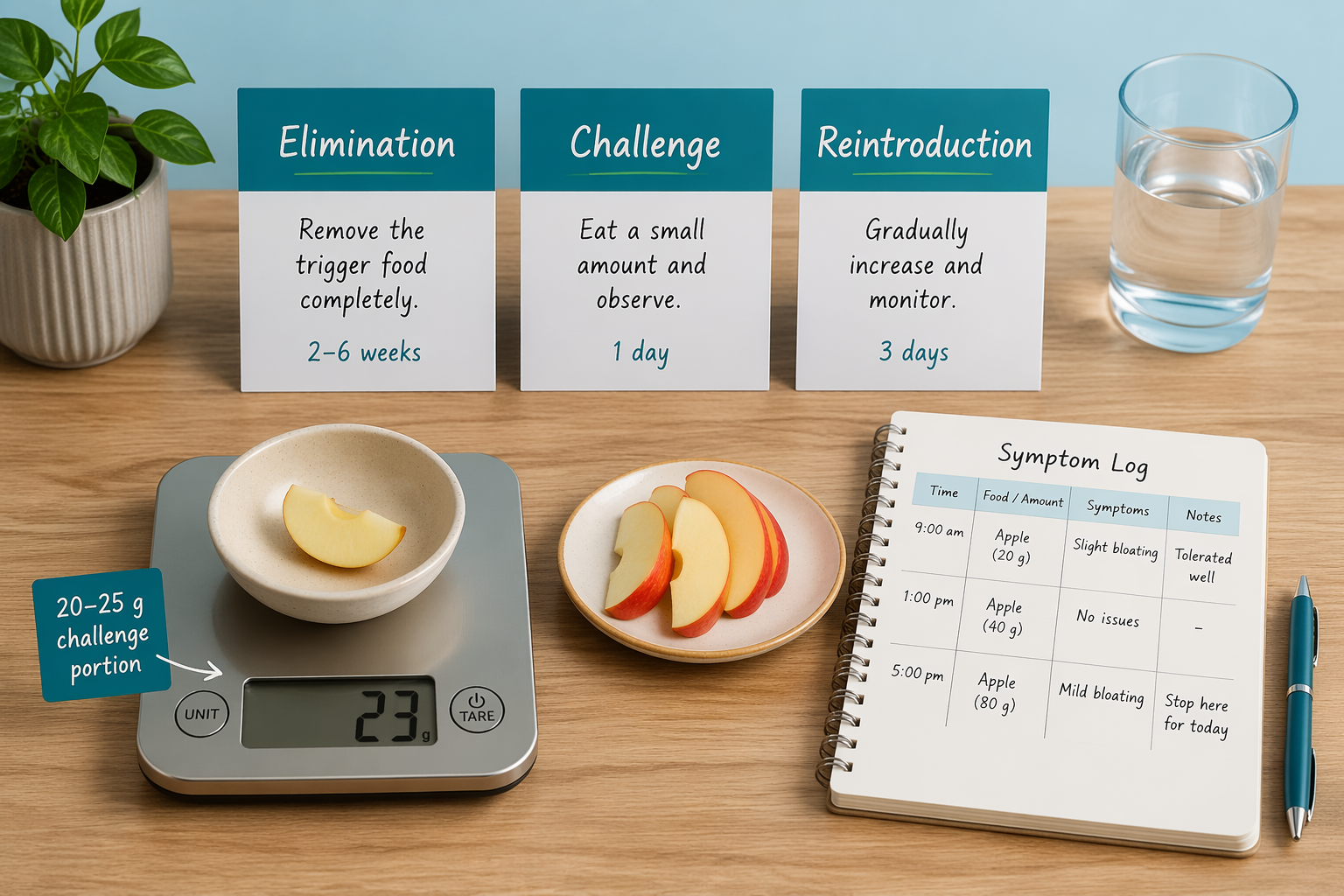
A simple three-phase test can help you tell whether apples are driving your symptoms or just adding to a bigger IBS pattern.
Start with a short elimination phase. Skip apples for a few days so your baseline symptoms can settle. During that pause, note your usual bowel pattern, bloating, pain, and urgency. This gives you a clear comparison point, and it helps you track food triggers IBS without jumping to conclusions. This step is for pattern-spotting, not a cure. Persistent or worsening symptoms still need medical review.
Then move into a controlled challenge. FODMAP tolerance is dose-dependent, so the safest way to test sensitivity to apples is to start very small and increase slowly. Keep the order simple so the results are easier to read:
- Test one apple form at a time: Try whole apple, applesauce, juice, or dried apple on separate days.
- Start with a tiny portion: Some people react to very little, while others need a larger amount before symptoms show up.
- Keep other triggers out of the picture: Separate apples from other fructose-heavy foods and sorbitol-rich foods.
Apples and IBS can be tricky because apples contain both fructose and sorbitol. That mix can make reactions harder to sort out than a single-FODMAP food. Some people with IBS-C even find a small amount of apple or apple juice helpful for constipation. Others get apple-triggered IBS symptoms from as little as one-eighth of an apple.
Use clear stop-and-go rules while you test:
- Stop: if bloating, cramping, gas, diarrhea, worsening constipation, or urgency follows the test food.
- Continue: only if symptoms stay mild and short-lived.
- Wait: long enough between steps so one reaction does not blur into the next.
Keep a simple log each time. Record the apple form, portion size, ripeness if it matters, time eaten, when symptoms began, and how long they lasted. That record can help you test whether apples are a full trigger, a dose issue, or only a problem in certain forms.
Finish with a reintroduction or retest phase. Keep your largest comfortable portion in rotation, skip the forms that clearly bother you, and consult a registered dietitian IBS if you want help making sense of the pattern. That final step gives you practical coping strategies for IBS you can actually use day to day.
What Should You Check Before Testing?
A clean apple test starts before the first bite. A few checks make the result safer and much easier to read.
Before you test, note these points:
- Medicines and supplements: Write down anything you started, stopped, or changed in dose. Some can change bowel habits or blur the effect of apples.
- IBS type: IBS-C, IBS-D, or mixed IBS can change how you interpret symptoms after an apple challenge.
- Recent food intake: Record the last 24 hours, including the apple form you plan to try later, such as fresh apple, juice, sauce, or cooked apple.
- Baseline symptoms: Track pain, bloating, gas, stool frequency, and stool form for several days. That helps you track food triggers IBS with less guesswork.
- Red flags: Blood in stool, unexplained weight loss, fever, ongoing vomiting, anemia, or symptoms that feel different from your usual IBS need medical review first.
If your symptoms are unstable, or you’re not sure whether the reaction points to fructose, sorbitol, or something else, talk with a doctor before you test. It also makes sense to consult registered dietitian IBS support so your low-FODMAP plan fits your needs.
What Portions Should You Try First?
Start with the smallest apple portion that still feels realistic. A small trial portion, around 20 to 25 grams or about 1/8 of an apple, is a reasonable starting point for testing tolerance, but the right limit can differ from person to person (source). That small amount matters because FODMAP tolerance is dose-dependent, so a tiny serving may sit well even if a larger one does not.
The cleanest way to test sensitivity apples is to keep the fruit simple and the rest of the meal calm. A few peeled slices of fresh apple are easier to judge than a mixed snack. The peel can muddy the picture if your gut is already sensitive.
A simple step-up plan looks like this:
- First try: 1/8 apple, plain and peeled if possible
- Second try: repeat the same portion on another day if symptoms stay mild or absent
- Third try: move to about 1/4 apple
- Fourth try: test a small half-serving only if the earlier doses felt fine
If cooked fruit feels easier, try a small cooked portion next. Softening the apple may make it gentler for some people, but keep the serving modest so you are testing form and amount together.
For portion control apples IBS, note the exact amount, whether it was peeled or cooked, and how you felt after. Pause if bloating, pain, urgency, or looser stools show up. Persistent or worsening symptoms deserve a check-in with a qualified healthcare professional.
When Should You Stop Or Continue?
Your stop-or-continue rule is simple. Stop the test if apple brings on symptoms fast, even after a small bite. That usually means the serving is too much for your gut that day, so pause, note the reaction, and do not raise the amount.
Continue only when symptoms stay mild, fade quickly, and fit your usual IBS pattern. If cramping, urgent diarrhea, marked bloating, nausea, or pain starts to affect eating, work, or sleep, end the challenge. Seek medical advice if symptoms persist or worsen.
A sensible repeat pattern looks like this:
- First trial feels fine: Repeat the same small amount on another day before increasing.
- Whole apple is the problem: Wait until symptoms fully settle, then try applesauce or juice only if you want to compare forms.
- Tiny amounts trigger symptoms: That points more toward fructose, sorbitol, or total FODMAP load.
- Apple is the only issue: That suggests apple-specific sensitivity, especially if other low-FODMAP fruit are easier to tolerate.
Tracking each trial helps you find your personal limit with more confidence.
What Fruit Swaps Work Better For IBS?
If apples keep triggering bloating, pain, or urgency, the better move is to switch to lower-FODMAP alternatives instead of cutting fruit out completely. That keeps fruit in your diet and gives you practical coping strategies for IBS when you still want something sweet and easy.
Good low-FODMAP alternatives in modest portions include:
- Firm, unripe bananas
- Strawberries
- Blueberries
- Oranges
- Grapes
- Kiwifruit
- Cantaloupe
- Honeydew
- Lemon
- Lime
A quick guide to IBS-friendly fruits can make those swaps feel less random, and bananas in IBS diet is helpful if you want to compare ripeness and serving size.
Start with one fruit at a time and keep the portion modest. Even lower-FODMAP choices can cause symptoms in larger amounts, so testing your tolerance matters more than the fruit name alone.
Kiwifruit can be especially useful if constipation is part of your pattern. For some people with IBS-C, it supports regular bowel movements better than apples because the goal is gentle support, not more bulk. IBS-C and apples can still overlap in tricky ways, though. Some people do better with a small serving of apple or apple juice when constipation is the main issue, while others react to a quarter of an apple or even less.
A simple symptom log helps you spot which fruit feels safest after meals. That makes it easier to avoid the worst fruits for IBS and choose what works for your body.
When Might Apples Not Be The Real Trigger?
Apples are not always the real trigger. If raw apples make your mouth or throat itch, tingle, or feel puffy within minutes, oral allergy syndrome apples may fit better than IBS. That pattern is often linked to pollen-food cross-reactivity. IBS usually shows up later with cramping, gas, or diarrhea.
The form of the apple matters too. Fresh, juice, sauce, cooked, peeled, and unpeeled apples can all affect you differently. IBS-C, IBS-D, and mixed IBS can also change what you tolerate. A meal diary can help you spot whether apples are the issue or just part of a broader pattern.
A few other clues can point elsewhere:
- Meal mix: Apples with other high-FODMAP foods, large portions, or richer foods can cause bloating on their own.
- Medication timing: Iron, magnesium, antibiotics, and sugar-free products can upset your gut and make apples seem guilty.
- Preparation: Peeled versus unpeeled fruit, cooked versus raw fruit, and even cold-stored fruit can change your response.
If symptoms are immediate, involve itching or swelling, happen with multiple fruits, or keep getting worse, get medical advice. Persistent digestive symptoms deserve a closer look so you can rule out allergy or another non-IBS cause.
Apple And IBS FAQs
These FAQs cover the most common questions about IBS and apples, from why they can bother some people to what to try next. If apples seem tricky, you’ll also find simple low-FODMAP alternatives that can make fruit choices easier.
1. Are Peeled Apples Easier For IBS?
Yes, peeled apples IBS may be easier for some people because the skin adds insoluble fiber IBS can react to. Peeling can help with that apple peel and IBS issue, but it does not remove the fructose or sorbitol that may still trigger symptoms. Cooked apples for IBS, including stewed apples IBS, can also feel gentler for some people, so small test portions can help you tell skin-related irritation apart from FODMAP sensitivity.
2. Are Green Apples Better For IBS?
Green apples are not automatically better for IBS. What matters more is the fructose-to-glucose balance, since apples with more fructose than glucose can be harder to absorb and may trigger bloating, gas, or loose stools. Tolerance also varies by cultivar and ripeness, so Boskoop, Alkmene, and Ontario may feel different, and cold-stored apples can change over time as fructans build up.
3. Is Apple Juice Worse Than Whole Apples?
Yes, apple juice is usually harder on IBS than whole apples because the sugars are more concentrated and absorbed faster. A small glass may be enough to cause trouble, since apple juice is often high-FODMAP and sorbitol can act like a natural laxative. Whole apples can still trigger bloating or pain, but their fiber slows absorption, and juice may sometimes help IBS-C constipation while still worsening urgency or diarrhea.
4. What Apple Serving Fits Low-FODMAP Limits?
A Monash-sized low-FODMAP apple serve is very small, about 2 tablespoons or 20 to 25 g, which is close to 1/8 of a medium apple. So, when people ask are apples low FODMAP, the answer is yes, but only in a tiny measured portion rather than a full piece of fruit. Tolerance is dose-dependent, and apples are high in fructose and sorbitol, so symptoms can build as the serving gets bigger. Because your response may be different from someone else’s, start with the smallest amount, track how you feel, and treat the limit as a starting point, not a guarantee.