


Are bananas good for IBS is a practical breakdown of ripeness, FODMAPs, and serving size. For adults living with IBS, a banana can feel safe one day and trigger bloating, cramps, or stool changes the next. FODMAPs are fermentable carbs that can draw water into the gut and feed gas-producing bacteria. By the end, the answer is less about a blanket yes or no and more about which banana, how much, and when it fits your symptoms.
The next sections cover how green, firm fruit compares with very ripe bananas, what low-FODMAP serving sizes look like, and why resistant starch matters. They also show how to test tolerance step by step, track gas, bloating, and bowel changes, and compare bananas with other fruit options when they do not sit well. Clear checklists and practical portion tips make it easier to turn food labels into a simple trial plan.
That kind of guidance is especially useful for people with IBS, caregivers planning family meals, and anyone trying to sort out constipation, diarrhea, or mixed symptoms without guesswork. A busy parent might find that half a firm banana works in the morning, while a teacher notices a very ripe one brings on afternoon bloating. The goal is a calmer decision process and a better sense of when to keep testing at home and when to ask a clinician or RDN for personal support.
Bananas for IBS Key Takeaways
- Bananas can be IBS-friendly, but tolerance depends on ripeness, portion size, and your symptom pattern.
- Firm, greener bananas are usually lower FODMAP than very ripe, soft bananas.
- Resistant starch is higher in unripe bananas and may cause gas in some people.
- A medium firm banana is a common low-FODMAP starting point.
- Very ripe bananas may trigger bloating, cramps, or diarrhea in sensitive people.
- Track symptoms after small servings before increasing the amount.
- Seek an RDN or clinician if symptoms stay unpredictable or multiple foods trigger flares.
Are Bananas Good For IBS?
Bananas and IBS are not a simple yes or no. For many people, a banana feels gentle, takes the edge off hunger, and sits well. For others, the same fruit can lead to bloating, cramps, or stool changes. Ripeness, portion size, and your own symptom pattern make the difference.
Bananas also bring a few features that can support digestion. They contain soluble fiber, especially pectin soluble fiber, plus potassium. That is why people sometimes describe pectin as helping with digestive regulation pectin in everyday terms. Potassium can also matter for potassium for diarrhea recovery, since diarrhea can leave you depleted. Low-FODMAP guidance does not treat bananas as an automatic no, and that matches what many dietitians teach.
Ripeness changes the picture. Firmer, greener bananas are usually lower in FODMAPs and higher in resistant starch, which some people tolerate better. Very ripe bananas are more likely to trigger symptoms in sensitive people. That is often where bananas and bloating become a real issue. It is also why banana tolerance can look very different from one person to the next.
If you live with constipation, bananas may help in some cases. The fiber, pectin, and potassium can support softer stools for some people with IBS-C bananas. Still, the effect is not guaranteed, and your own response matters more than any food rule.
A careful trial is usually the smartest next step:
- Start with a small portion instead of a large banana.
- Choose a firmer banana first, then compare it with a riper one.
- Track gas, bloating, cramps, stool changes, and hunger.
- Pair the banana with foods you already know you tolerate.
- Ask a clinician or registered dietitian nutritionist if symptoms stay unpredictable.
For many readers, the answer to Are bananas good for IBS is simply this: sometimes yes, sometimes no. The fruit can be helpful, but only in the amount and ripeness your gut handles well.
How Does Ripeness Change Banana FODMAPs?
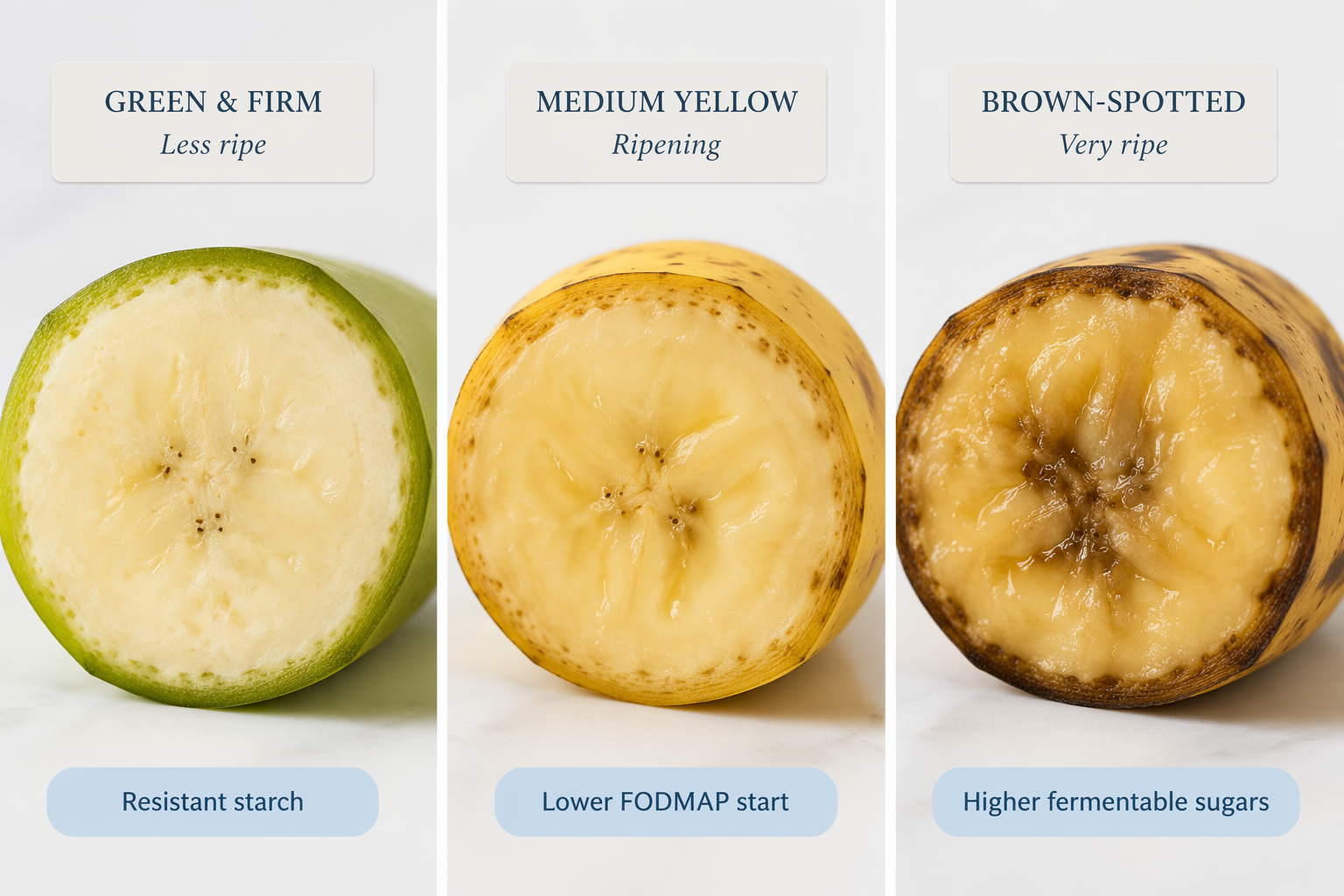
Ripeness changes how banana ripeness and FODMAPs line up for your gut. Green, firm fruit is usually the safer bet, especially if you live with irritable bowel syndrome (IBS). As a banana softens and sweetens, it often moves toward a more fermentable profile. That is why unripe bananas low FODMAP choices are often easier to tolerate, while ripe bananas high FODMAP fruit can bother sensitive stomachs.
The shift starts with starch. Green bananas resistant starch is the main feature at the unripe stage. Resistant starch is a type of carbohydrate your small intestine cannot fully break down. It passes into the large intestine, where bacteria ferment it. For some people, that means more resistant starch gas. As ripening continues, resistant starch and other complex starches break down into simpler sugars, and fructans can rise too. That makes the fruit easier to ferment and more likely to cause symptoms.
A simple visual check can help you judge ripeness:
Ripeness cue | What it usually means | IBS takeaway |
|---|---|---|
Green peel, very firm flesh | More resistant starch, less sweetness | Often a lower-FODMAP choice |
Yellow peel with brown speckles | More starch has turned into sugars | More likely to be harder to tolerate |
Very soft, very sweet banana | More fermentable carbohydrates | More likely to trigger symptoms |
That pattern explains why bananas FODMAP status can change from one day to the next. Your own food tolerance by ripeness matters just as much as the fruit itself. A riper banana may be more likely to cause bloating, gas, abdominal pain, or diarrhea because fructans and simple sugars ferment more easily in the colon.
Ripeness is only one part of the picture. Portion size, your recent symptom pattern, and your own low-FODMAP testing also matter. If bananas bother you, try a smaller serving of a firmer one and track how your body responds.
Are Certain Ripeness Levels And Serving Sizes Low FODMAP?
A firm, medium yellow banana is usually the safest starting point for IBS. Monash University lists a firm common banana serving of about 100 g, or roughly one medium banana, as low FODMAP for many people (source, source). That makes bananas FODMAP-friendly for a lot of readers, but only at the right amount.
Banana ripeness and FODMAPs matter because the fruit changes as it softens. As bananas ripen, fructans can rise, and your tolerance may drop. If fructans tend to bother you, about one-third of a ripe banana may sit better. Very soft, brown-spotted fruit is more likely to cause trouble, and ripe bananas high FODMAP can trigger bloating, gas, cramping, or diarrhea in sensitive people.
Banana portion control for IBS still matters even when a food is low FODMAP. A low FODMAP label does not mean unlimited servings. Your own symptom threshold matters too.
Use this simple guide:
- Firm, medium yellow banana: a good baseline for many people
- One-third of a ripe banana: often easier if you react to fructans
- Very ripe, brown-spotted banana: more likely to cause symptoms
- Sugar bananas, like Lady Finger bananas: can be low FODMAP when ripe at up to about one medium banana, but may become higher FODMAP when green
- Unripe bananas low FODMAP: not a blanket rule, since variety and tolerance both matter
When you test bananas FODMAP tolerance, start with one serving, wait and watch your symptoms, and change only one variable at a time. The Monash app can help you compare options, including plantain low FODMAP entries, so your trial stays consistent. Reduce the amount if symptoms flare, and bring any persistent changes to a clinician or dietitian.
How Do Bananas Fit IBS-C, IBS-D, And IBS-M?
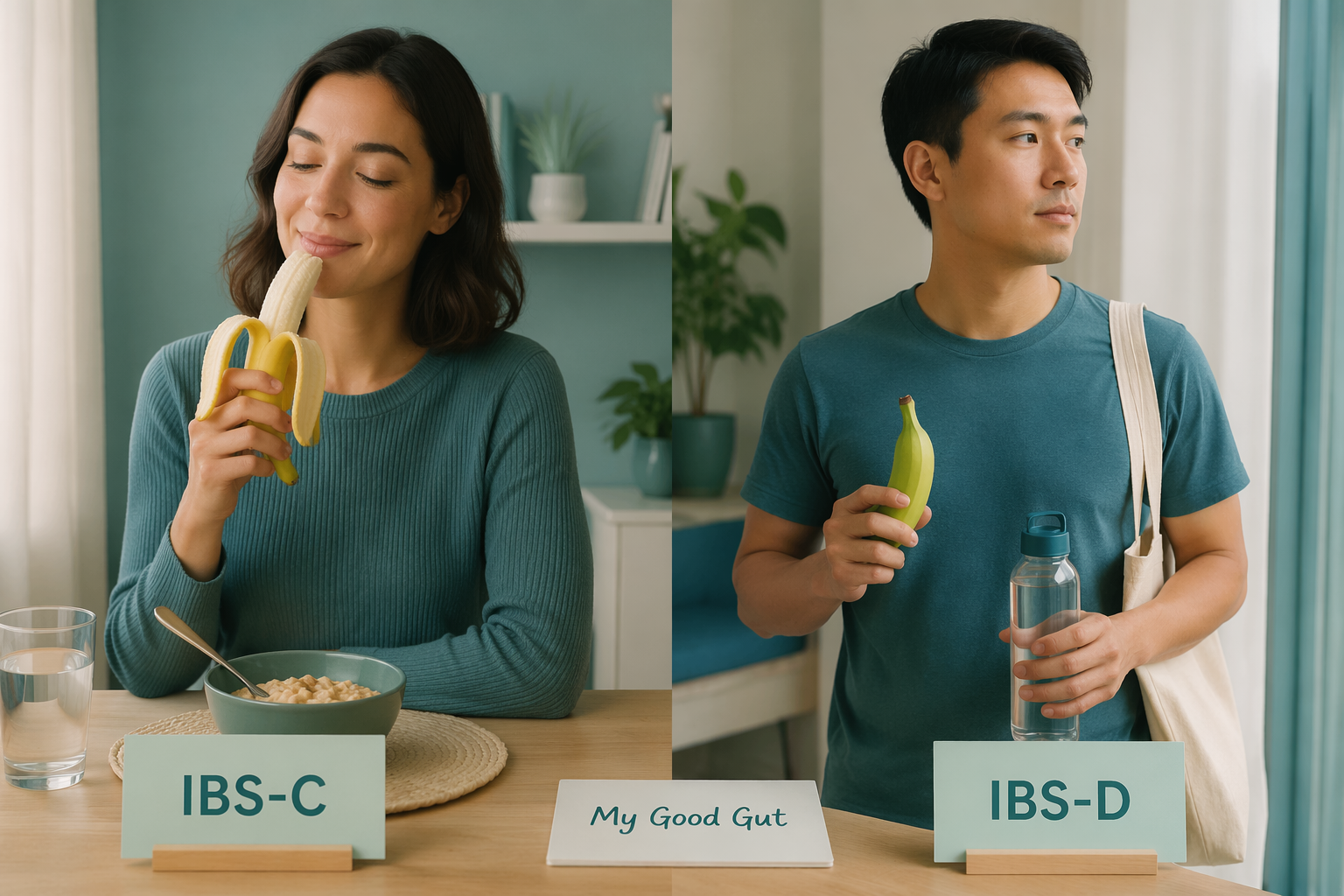
Bananas can fit IBS, but the best choice depends on your subtype and the ripeness of the fruit. The same banana can act differently because texture, sugar level, and starch content change as it ripens.
For IBS-C bananas, riper fruit is often the better place to start. Soft bananas are easier to chew and digest. Their pectin soluble fiber may help soften stool, and the gentler sugars in ripe fruit can make bowel movements feel a little easier for some people.
For IBS-D bananas, firm or slightly green fruit is usually the safer first try. Green bananas resistant starch is higher, and the sugar load is lower than in very ripe fruit. That can help add structure to loose stool and make it less watery. Resistant starch can also act like a prebiotic, which means it feeds beneficial gut bacteria. For some people, that may improve stool form. For others, resistant starch gas can mean bloating or extra pressure, so your own response matters.
Mixed IBS usually calls for a symptom-led approach. On diarrhea-prone days, firmer fruit often makes more sense. On constipation-prone days, a riper banana may feel more helpful. The best ripeness can change from one day to the next, which is why a fixed rule rarely works well.
A simple way to test banana tolerance is:
- Start small: Try half a banana before moving to a full serving.
- Keep it plain: Eat it on its own or with other low-FODMAP foods.
- Watch the mix: Skip very ripe bananas with other likely triggers while you learn your tolerance.
- Track symptoms: Note gas, bloating, urgency, stool form, and timing after eating.
Bananas are not automatically soothing for everyone. Larger servings or very ripe fruit can still trigger gas, bloating, urgency, or stool changes. If patterns stay unclear, a registered dietitian nutritionist can help you sort out whether the issue is ripeness, serving size, or the rest of your meal.
How Should You Test Your Banana Tolerance?
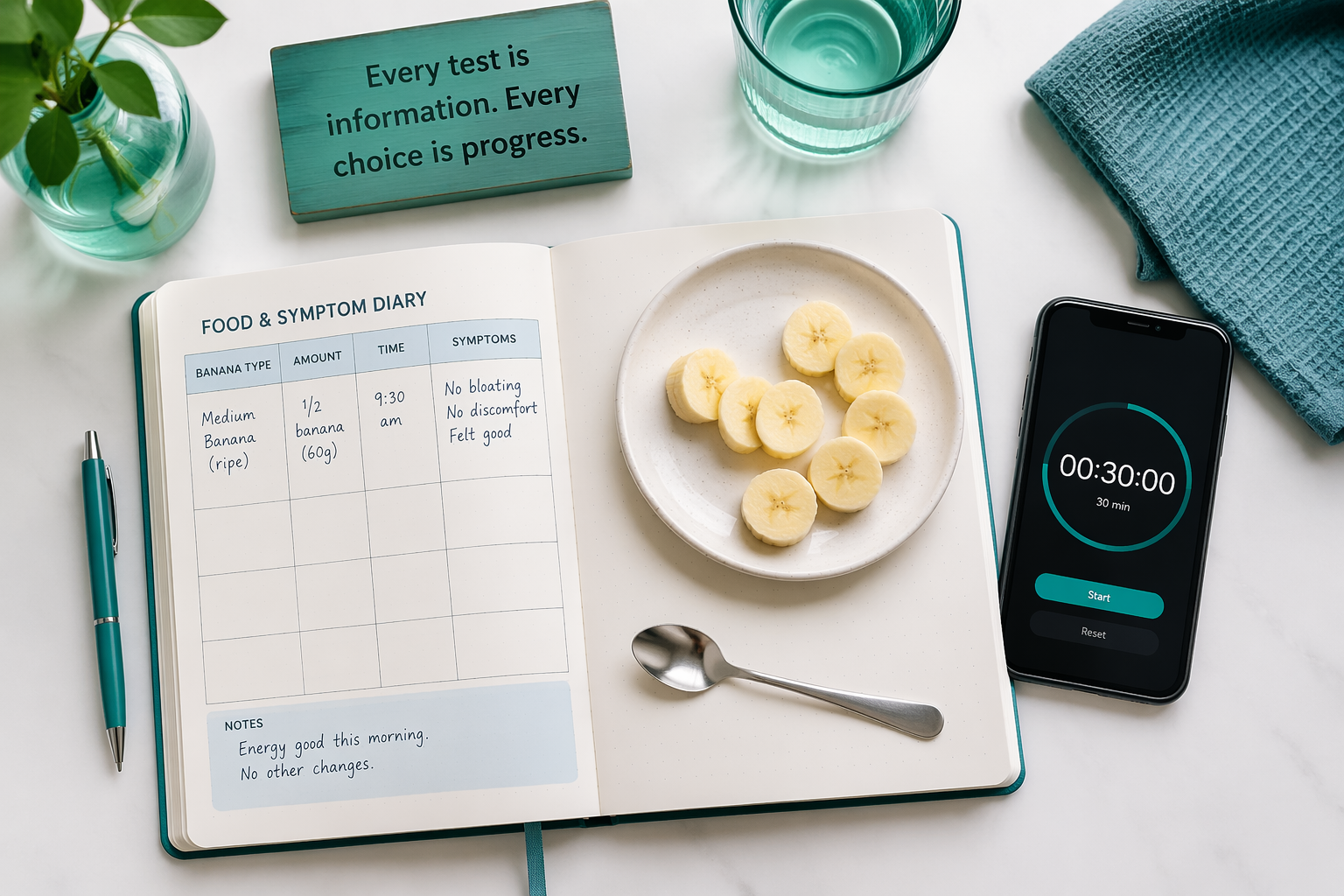
A careful test works better than a big guess. Start when your IBS symptoms are calm, and keep caffeine, alcohol, and other high-FODMAP foods steady for a few days so the banana is the only new variable. That makes banana digestion tips easier to trust and keeps the results clean.
Use a step-up trial instead of eating a full serving on day one. Begin with a few bites of one banana type and one ripeness level, such as a firm yellow banana or a small unripe portion. Start with a small portion and keep the rest of your diet steady while you track symptoms over the next day or two. Increase the amount only if the smaller serving stays comfortable (source).
Ripeness and portion size both matter, which is why food tolerance by ripeness can look different from person to person. One medium unripe banana may sit well for some people, while others only do well with a small amount of ripe banana. Banana portion control for IBS is usually about finding the smallest amount that feels safe, then building from there only if needed.
A simple diary helps you spot patterns faster. Write down the test like this:
- Banana type: ripe, firm yellow, or unripe
- Amount eaten: a few bites, half a banana, or a full portion
- Time eaten: breakfast, snack, or with a meal
- Symptoms: bloating, gas, pain, diarrhea, or constipation over the next 24 to 48 hours
If the same flare shows up more than once after banana exposure, stop the trial and try again later instead of pushing through a clear reaction. Repeating the test during a flare usually gives noisy results, not useful ones.
Your notes may show that bananas stay fine, need a smaller portion, or work only during calmer stretches. IBS triggers can change over time, so it helps to recheck your personal threshold after a flare or when your routine shifts. If the pattern still feels unclear, a registered dietitian nutritionist can help you turn your notes into a plan that fits your symptoms and meals.
What Can You Eat If Bananas Trigger Symptoms?
If bananas trigger symptoms, you can still keep fruit in your meals without giving up variety. A good first step is to try modest portions of best fruit choices for IBS so you can see what your body handles best.
Good swaps often include these low FODMAP fruits:
- Choose other fruits in low-FODMAP portions.
If bananas trigger symptoms, choose other fruits in low-FODMAP portions that are listed in a validated low-FODMAP guide, and confirm the serving size in a trusted app or clinician-reviewed chart before using it as a regular swap (source).
Cooking can also change tolerance. Some people do better with baked, mashed, or blended fruit than with a whole banana. Test only one change at a time. That makes symptom tracking much clearer, especially when you are sorting out ripeness, texture, and portion size.
If you are avoiding bananas for nutrients, you still have solid options. Potatoes, spinach, citrus, oats, and chicken can help cover potassium, magnesium and gut health, and protein needs. Kiwi, berries, and other low FODMAP fruits can add fiber without the same trigger risk. Soluble fiber and resistant starch may still help bowel regularity, so you do not have to skip fiber just because bananas are off your plate. That can matter for potassium for diarrhea recovery, too.
If several fruit choices still bother you, individualized guidance from a qualified healthcare professional or registered dietitian nutritionist can help. This content is for educational purposes only and is not a substitute for personalized medical advice. Apples for IBS relief can be another useful comparison when you are ready.
When Should You Get Personalized IBS Advice?
If your symptoms keep coming back, get worse, or do not improve after basic changes like portion control and food-symptom tracking, personalized IBS advice is the next smart step. Banana tolerance is highly individual. One person may feel steadier with bananas, while another notices more gas, bloating, or bowel changes after the same fruit.
A small trial can help, especially when you keep a simple food diary. That record can show whether bananas feel better on calm days or are harder to tolerate during flare-ups. It also helps you compare ripeness, serving size, and timing with other foods. The Monash FODMAP banana serving size should guide that trial, since portion size can change how your body responds.
Clinical or dietitian support matters most when your pattern is more complicated:
- Low-FODMAP planning: You are trying a low-FODMAP approach and want clearer guidance.
- Multiple triggers: Several foods seem to set off symptoms, not just bananas.
- Serving tweaks: You need help matching banana servings to flare-ups and calmer periods.
- Mixed signals: You want to separate food effects from stress, meds, or other triggers.
My Good Gut can help turn vague banana advice into a dietitian-reviewed plan with serving guidance, symptom tracking, and meal ideas that fit your routine. That can be especially helpful if you are also weighing questions like magnesium and gut health.
Persistent, severe, or worsening digestive symptoms can have many causes. A qualified healthcare professional should evaluate them instead of relying on self-testing alone.
IBS and Bananas FAQs
These FAQs cover the most common questions about bananas and IBS, including how ripeness and portion size can change tolerance. They also touch on low FODMAP fruits so you can make calmer, more informed choices at meals.
1. Can Bananas Calm An IBS Flare?
Bananas may calm an IBS flare for some people, but they are not a sure fix, and tolerance can change from day to day. Their soluble fiber, especially pectin, may help steady digestion, while firmer or slightly green bananas are often easier to handle than very ripe ones. Start with a small serving and watch for changes in pain, bloating, stool form, or urgency, since bananas may feel more helpful for IBS-C than for IBS-D or IBS-M.
2. Do Bananas Cause Gas Or Bloating?
Bananas do not cause gas or bloating for everyone, but they can trigger symptoms in some people with IBS, especially when your gut reacts strongly to fermentable carbs. Green or firm bananas are higher in resistant starch, which can reach the large intestine and ferment there, while very ripe bananas have more fermentable sugars. If you notice bananas causing gas, try a smaller portion and compare green, just-ripe, and very ripe bananas to see what your body tolerates best.
3. Are Banana Chips IBS-Friendly?
Banana chips are not automatically IBS-friendly. Drying concentrates the banana’s sugars and starches, so they’re easier to overeat and often harder to tolerate than fresh bananas. Portion size matters a lot, and if you’re sensitive to fructans, even a very small serving may cause symptoms, so banana chips are better saved for an occasional snack than used as a daily swap.
4. Are Banana Smoothies Easier For IBS?
Banana smoothies may feel easier on your gut because blending breaks the fruit down. Portion size still matters, though, because too much banana can push the drink past a low-FODMAP serving, and ripe bananas may ferment faster, which can mean more gas or loose stool for some people. Keep the recipe simple if you’re testing tolerance, since milk, yogurt, honey, and extra fruit can raise the FODMAP load quickly, and a medium banana still adds about 3 grams of soluble fiber that may support regularity without guaranteeing comfort.