


IBS and vegetables can be a balancing act between getting enough fiber and avoiding bloating, gas, or cramps. For adults and families trying to make sense of symptoms, the hard part is that one vegetable can be fine on a calm day and irritating during a flare. FODMAPs are fermentable carbs that can pull water into the bowel and feed gut fermentation, so the right choice often comes down to the vegetable, the portion, and how it is prepared. Clearer vegetable swaps and a practical way to test tolerance can make everyday meals feel more predictable.
That is why this article focuses on the vegetables that usually sit better with IBS, the common triggers that tend to cause problems, and the prep methods that often make a difference. It also covers low-FODMAP portions, cooked versus raw texture, and a simple reintroduction approach so you can compare foods without cutting out more than needed. Expect specific examples such as carrots, zucchini, spinach, onions, garlic, broccoli, cauliflower, and mushrooms, plus a quick framework for tracking what works.
My Good Gut keeps this especially useful for busy adults, parents, and anyone trying to plan meals without setting off symptoms at work or at home. A small test like swapping raw broccoli for cooked zucchini, or using peeled potatoes instead of onion-heavy sides, can be the kind of change that keeps dinner steady. The next sections give you a practical way to build a safer vegetable routine and keep moving with more confidence.
IBS and Vegetables Key Takeaways
- Fiber type, FODMAP content, and portion size all affect IBS tolerance.
- Cooked, peeled, and softer vegetables are often easier to digest.
- Carrots, zucchini, spinach, and peeled potatoes are common starting points.
- Onions, garlic, mushrooms, cauliflower, and Brussels sprouts often trigger symptoms.
- Small servings matter more than a vegetable's label alone.
- Raw salads and rough stems can be harder during flares.
- Track vegetables, portions, and preparation to find personal patterns.
Why Can Vegetables Help Or Trigger IBS?
Vegetables can help you manage irritable bowel syndrome (IBS) and are central to IBS diet and food choices because they bring fiber, vitamins, and minerals to your plate. They can also trigger symptoms when the fiber type, the fermentable carbs, or the portion size goes past your current limit. A vegetable that feels fine at lunch may feel rough at dinner if your symptoms are already active or the rest of the meal was heavy.
Fiber is a big part of the story. Insoluble fiber is the tougher, less-digested type found in parts of vegetables like kale stems and broccoli stalks. It can move through the gut quickly, which may feel harsher during diarrhea flares. Soluble fiber works differently. It absorbs water and forms a softer gel, which is why foods like oats, carrots, and peeled potatoes are often easier to tolerate.
FODMAPS are another major piece of the puzzle. FODMAPS stands for fermentable oligosaccharides, disaccharides, monosaccharides, and polyols. These short-chain carbohydrates can reach the large intestine mostly intact, where gut bacteria ferment them. That process can create gas, bloating, abdominal pain, and changes in bowel habits. In some people, it also pulls extra water into the bowel, which can make stools looser.
Raw vegetables can be harder to handle because their cellulose structure is tougher to break down. That does not mean raw vegetables are always bad for IBS. It does mean the same food often feels easier after cooking, peeling, chopping small, or softening. In practical terms, cooking reduces FODMAP in some vegetables and lowers the work your digestive system has to do.
That’s why IBS is so individual. The same vegetable can feel different from one person to the next, and even from one day to the next. Stress, sleep, recent meals, and whether you are in a flare can all change your tolerance.
A simple way to think about vegetables is to focus on three things:
What changes | Why it matters |
|---|---|
Fiber type | Soluble fiber is usually gentler, while insoluble fiber can feel rougher |
FODMAP content | More fermentable carbs can mean more gas, bloating, and pain |
Preparation | Cooking, peeling, and softening often make vegetables easier to tolerate |
Portion size | A safe vegetable can still become a problem in a larger serving |
Your current symptoms | The same food may feel different during a flare than on a calmer day |
That table is the reason there usually is not one perfect vegetable list for everyone with IBS. One person may eat a small serving of cooked broccoli with no issue, while another may react to even a modest amount. A food can also be tolerated most days and still bother you when your gut is more sensitive.
The goal is not a blanket ban. The goal is to notice patterns and build a personal list of vegetables that feel steadier for your body. That usually means choosing gentler vegetables more often, using preparation methods that are easier to digest, and paying attention to how much you eat at one time.
For a busy week, that approach can stay very simple:
- Choose softer options often: Cooked carrots, zucchini, spinach, peeled potatoes, and small portions of oats-based sides tend to be easier starting points.
- Treat raw vegetables carefully: Salads and crunchy crudités can work for some people, but they may be harder during IBS flares.
- Keep servings modest: Even a tolerated vegetable can cause trouble if the portion is too large.
- Change the texture first: Steaming, roasting, simmering, and peeling can make meals gentler without changing the whole dish.
- Track your pattern, not just the food: Note the vegetable, the amount, the preparation method, and what else you ate.
This guide is built around that kind of individualized approach. Instead of sorting vegetables into a strict good-or-bad list, it helps you spot what tends to work, what tends to backfire, and how to adjust from there. If you live with IBS, that flexibility matters more than perfect rules.
Start with the vegetables your body handles best, keep an eye on portion size, and use preparation to lower the digestive load when needed. That gives you a calmer way to eat vegetables without guessing every time.
Which Vegetables Are Usually Easier To Tolerate?
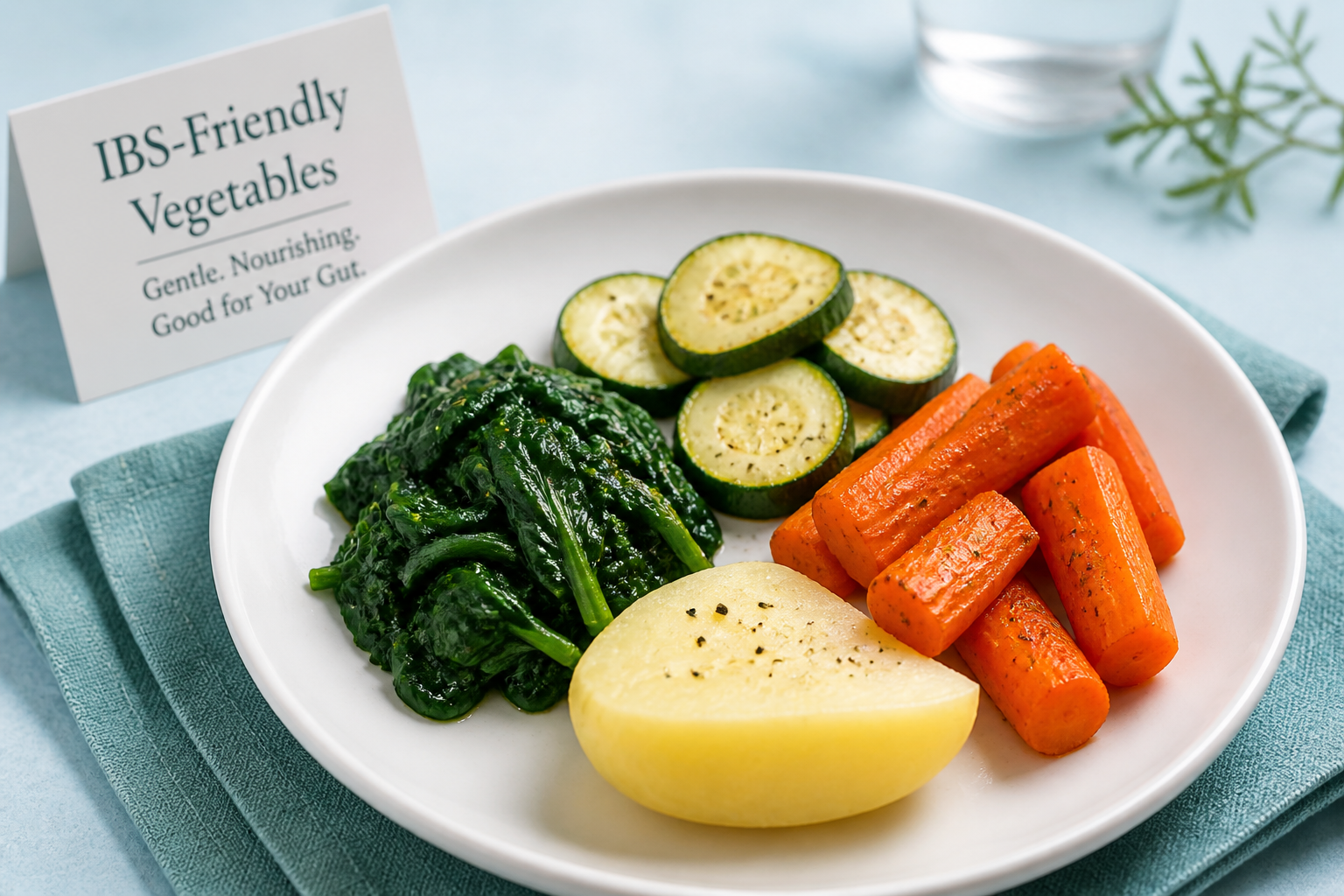
The safest place to start is with vegetables that are often easier on IBS symptoms, not with a total veggie ban. Many people do well with carrots, peeled potatoes, sweet potatoes in small portions, spinach, zucchini, cucumbers, eggplant, bell peppers, tomatoes, green beans, and small servings of squash. These are common low-FODMAP vegetables, and they can help you build meals that feel filling without a lot of bloating or gas.
Portion size often decides whether a food sits well. avocado for IBS is a good example: it can fit the low-FODMAP framework in one serving and still trigger symptoms in a larger one. Sweet potatoes, green beans, and squash can fit a low-FODMAP plan in moderate portions, but the best serving size depends on the specific vegetable and the individual's tolerance (source). That is why portion sizes low-FODMAP guidance matters more than guessing whether a food fits every serving.
A simple way to build vegetables for IBS relief is to start with the easiest swaps first:
- Root and staple swaps: carrots, peeled potatoes, parsnips, and ginger for IBS can replace onion-heavy or heavily seasoned side dishes.
- Quick lunch and dinner add-ins: spinach, zucchini, tomatoes for IBS, and eggplant work well in wraps, bowls, and pasta dishes.
- Cool, low-effort sides: cucumbers and bell peppers can stand in for raw cruciferous sides when your gut feels sensitive.
- Gentler greens: leafy greens for IBS, especially spinach for IBS, are often a solid starting point when salads feel too rough.
Busy routines usually need low-friction food choices, not perfect meal prep. A low-FODMAP meal plan can be as simple as swapping spinach or zucchini for onion and garlic in a skillet, using cucumbers or green bell peppers instead of cauliflower on the side, or adding tomatoes and eggplant to a pasta bowl for more volume while staying with more IBS-friendly vegetables (source). For many readers, zucchini for IBS becomes a go-to because it cooks fast, blends into familiar meals, and is easy to portion.
The low fodmap diet for IBS food list and Monash University serving sizes are the reference points many people use when testing tolerance. The same logic applies to vegetables. Measured portions matter more than broad rules, since one serving can feel fine while a larger serving does not.
One helpful mindset shift is to treat vegetables as test foods, not permanent labels. If your symptoms stay unpredictable, or if you are starting a low-FODMAP elimination and rechallenge plan, a registered dietitian or gastrointestinal specialist can help you personalize the process. That same careful approach also applies when you are building a broader fruits for IBS sufferers plan, since tolerance often changes from one food group to another.
This content is for educational purposes only and is not a substitute for personalized medical advice. Digestive symptoms can have many causes, so you should seek qualified care for persistent, severe, or worsening symptoms. Results vary by person, and any dietary advice should fit your own symptoms, routines, and medical history.
Which Vegetables Commonly Trigger IBS Symptoms?
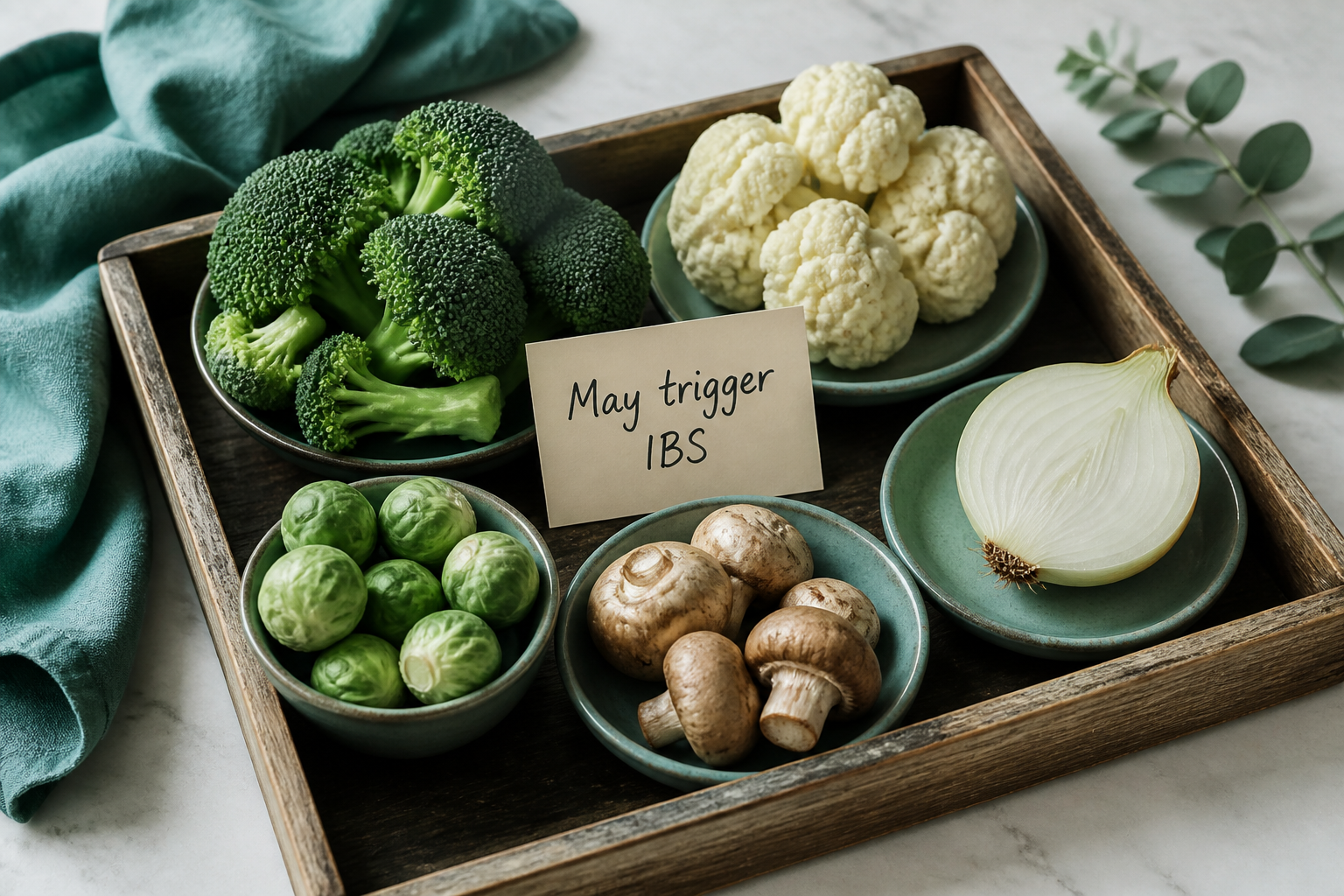
Onions and garlic are common IBS triggers because they are high in fructans, a FODMAP that can cause gas, bloating, and cramping in sensitive people (source). They're high in FODMAPS, especially fructans, which can pull water into the bowel and ferment quickly in the gut. That combination often leads to bloating, gas, and cramping.
Other common triggers include cauliflower, broccoli, Brussels sprouts, cabbage, artichokes, asparagus, mushrooms, sugar snap peas, beans, lentils, chickpeas, and soybeans. These high-FODMAP vegetables can be harder to handle when your gut is sensitive. The exact issue is often the type of carbohydrate inside the food, not just the food itself.
Cruciferous vegetables and IBS are a rough pairing for many people because these foods combine fermentable carbs with firmer fiber. Broccoli and IBS symptoms often show up together for this reason, and the same pattern can happen with cauliflower, cabbage, and Brussels sprouts. When a flare hits, gentler swaps usually feel easier:
- Zucchini
- Carrots
- Spinach
- Bell peppers
- Cucumber
- Lettuce
Those options are not perfect for everyone. They're simply easier starting points when your gut is already reactive.
Broccoli needs a closer look because the part you eat matters. Florets are often easier to tolerate than the thick stalks, which can feel more fibrous and irritating. The same idea applies to rougher parts of cabbage or Brussels sprouts, especially when they're raw or only lightly cooked.
Brussels sprouts and IBS can be a tough match during symptom flares. Raw slaws and large roasted portions often cause more trouble than a few soft, well-cooked sprouts. If you want to test them, start with a small portion and keep the rest of the meal simple.
Mushrooms are a special case because button and portobello mushrooms contain polyols, a low-FODMAP carbohydrate that can act like a laxative or trigger gas in sensitive people. If mushrooms bother you, use herbs, infused oil, or a small portion of a better-tolerated vegetable for flavor instead. That swap gives you taste without as much risk.
Here's a simple way to think about common triggers and easier substitutes:
Vegetable group | Why it may trigger IBS | Gentler swap |
|---|---|---|
Onions and garlic | High in fructans | Chives, garlic-infused oil |
Broccoli, cauliflower, cabbage, Brussels sprouts | Fermentable carbs and tougher fiber | Zucchini, spinach, carrots |
Mushrooms | Polyols | Herbs, infused oil, cucumber |
Beans, lentils, chickpeas, soybeans | FODMAPS and gas-producing fiber | Peeled potatoes, green beans |
When symptoms are active, short-term avoidance can help you settle things down without overthinking every meal. If you're bloated, crampy, or dealing with urgent bowel changes, pause onions, garlic, cruciferous vegetables, mushrooms, and legumes for a bit. Use quick substitutes like peeled potatoes, carrots, green beans, spinach, or canned low-FODMAP vegetables in small portions.
Preparation matters, but the trigger list matters more during sensitive periods. Raw vegetables are often harder to handle than cooked ones, yet cooking does not make every problem food safe. Focus on the specific vegetable, the part you eat, and the portion size.
A slow reintroduction pattern can help identify personal limits. Start with one vegetable at a time, keep the portion small and cooked, watch for bloating, pain, or stool changes, and test another vegetable only after symptoms settle (source).
That approach helps you separate a one-time flare from a true trigger. If a vegetable keeps causing symptoms, treat it as a temporary no and revisit it later when your gut is steadier. This content is for educational purposes only and is not a substitute for personalized medical advice. Digestive symptoms can have many causes, so you should consult a qualified healthcare professional for persistent, severe, or worsening symptoms. Results vary by person, and food choices should be individualized to your own tolerance and symptom pattern.
How Do Portion Size And Cooking Change Tolerance?
Portion size matters in every serving. A food can sit well in a small serving and still trigger IBS symptoms once the amount grows, even if it fits low-FODMAP limits at a smaller dose.
A practical starting point is to begin with a small serving, because low-FODMAP portions vary by vegetable and by person (source). That fits the idea behind portion sizes low-FODMAP guidance, where tolerance depends on dose rather than an all-or-nothing label. Monash University-style serving guidance also varies by vegetable, and some foods stay low-FODMAP only within a narrow serving window.
A few examples make that easier to picture:
- Broccoli and IBS: broccoli can be easier to tolerate in a small serving, while a larger portion may bring on symptoms.
- Broccoli florets: small servings of broccoli florets can fit a low-FODMAP plan, while larger servings of sugar snap peas may move out of the low-FODMAP range, so portion size matters more than the vegetable name alone (source).
- Cruciferous vegetables and IBS: foods in this group often need closer attention because the response can change quickly with the serving size.
- Zucchini for IBS: this is often better tolerated in modest portions, especially when it is cooked well.
The same vegetable can move from comfortable to irritating based on how much ends up on the plate. That is why the label alone does not tell the full story. The dose does.
Cooking also changes texture in a real way. Raw vegetables are often harder to digest because their structure and fiber stay firm. Steaming, boiling, roasting, and sautéing soften plant cell walls, so digestion is often easier.
Pureeing can help some people even more. A blended soup or sauce may feel gentler than a crisp salad or raw side dish. Texture can matter almost as much as the ingredient list.
Cooking reduces FODMAP for some foods, but it does not make every serving automatically safe. Recent guidance still places vegetables such as cauliflower, red cabbage, savoy cabbage, Brussels sprouts, and beetroot around 80 gram portions for many people. That makes Brussels sprouts and IBS a useful example of why the amount matters as much as the vegetable itself.
A simple testing rule works well when you are unsure:
- Start with a smaller serving.
- Try the vegetable cooked before raw.
- Track the portion, texture, and the rest of the meal.
- Repeat the test on a different day if symptoms were mixed.
That approach helps you spot patterns without guessing. If symptoms keep getting worse, or if bloating, pain, or bowel changes persist, get personalized guidance from a qualified healthcare professional.
How Do You Personalize Vegetable Choices For IBS?
Personalizing vegetables for IBS works best when you treat food like a pattern, not a guess. The goal is to find the vegetables for IBS relief that fit your body, your schedule, and your usual symptom pattern.
Start with a simple food and symptom diary. Write down the vegetable, the portion, and whether it was raw or cooked. Add the time you ate it, when symptoms began, and what happened next. Track bloating, gas, pain, urgency, diarrhea, and constipation so the pattern is easier to spot.
A salad with raw cabbage may feel very different from a small serving of roasted carrots. That detail matters because the same food can land differently depending on portion size and prep. A good diary also gives you a clearer path toward a better best IBS diet.
A structured elimination and reintroduction plan usually works better than cutting out vegetables forever. A low-FODMAP elimination phase is usually short-term, and many plans use a few weeks before reintroduction begins (source). After that, you bring foods back one at a time so you can see what actually drives symptoms.
The process has two jobs:
- Calm symptoms: A short reset can lower irritation while you get a cleaner read on triggers.
- Find tolerance: Testing one vegetable or one FODMAP group at a time helps you learn your personal limit.
- Avoid overrestriction: Reintroduction keeps one bad day from turning into a permanent food ban.
A simple framework can keep the process organized:
Step | What to do | Why it helps |
|---|---|---|
Track | Record vegetables, portions, prep methods, and symptoms | Helps you spot patterns |
Eliminate | Use a short low-FODMAP phase | Gives your gut a calmer baseline |
Reintroduce | Test one vegetable or one FODMAP group at a time | Finds your personal threshold |
Adjust | Keep what works and limit what does not | Supports a flexible low-FODMAP meal plan |
Your bowel pattern should shape the way you test vegetables. If you tend toward constipation, a slow increase in fiber from vegetables may help. If you are more diarrhea-prone or bloated, smaller portions and cooked vegetables are often easier during a flare.
Portion size matters in testing vegetables. A food that feels hard to digest in a full serving may work fine in a smaller amount. Mixed meals can help too. A smaller serving of vegetables with protein, rice, or potatoes is often easier than a big bowl of raw produce.
Gentler cooking methods usually make vegetables easier to compare in your diary. Steaming, boiling, roasting, sautéing, and pureeing can soften texture and make meals easier on your gut. Raw versus cooked is worth comparing in your diary because your body may handle one much better than the other.
This is especially helpful on busy weeknights. Roasted zucchini, carrots, or bell peppers can be easier to tolerate than a raw side salad. Spinach for IBS is another practical choice because it cooks down fast and fits into eggs, soups, and grain bowls.
Leafy greens for IBS can be a smart starting point when you want more variety without a big symptom jump. Tender greens often fit better than large raw servings of harder-to-digest vegetables. In practice, that can mean sautéed greens instead of a giant salad or blended soups instead of crunchy crudités.
A stepwise reintroduction helps you find your personal threshold instead of labeling foods as permanently bad. High-FODMAP vegetables may need to stay limited during a flare or elimination phase. Later, many people can bring them back in controlled portions and see what works.
A practical reintroduction order is to start with one vegetable or one FODMAP group, test it in a small portion first, wait for a full symptom pattern, and increase only if the smaller amount stays stable (source).
That kind of testing gives you a more realistic picture of what your gut can handle. It also helps you expand your list of low-FODMAP vegetables without turning meals into a guessing game.
If your diet has become very narrow, the risk is not just missing nutrients. Meals can get harder to plan, and fear around food can grow fast. That is where a registered dietitian or gastrointestinal specialist can make the process easier and safer.
Professional support is especially useful if you are trying elimination and reintroduction for the first time. It also matters if symptoms keep going, if your diet has become overly limited, or if you are not sure how to fit your results into a low-FODMAP meal plan. Digestive symptoms can have many causes, and persistent, severe, or worsening symptoms deserve medical attention.
This content is for educational purposes only and is not a substitute for personalized medical advice. Results vary by person, and any dietary advice should be individualized. The best next step is to keep the process simple and steady. Track, test, and adjust one change at a time, then build your regular meals around the vegetables your gut handles well.
IBS and Vegetables FAQs
These FAQs cover the questions that come up most when you're sorting out [vegetables to avoid with IBS] and figuring out how portion size can change tolerance. If grains are part of the picture too, IBS with grains can help you see the larger food pattern.
1. Are canned vegetables okay for IBS?
Yes, canned vegetables can fit an IBS plan when the vegetable itself is low-FODMAP and the portion stays moderate. Canning often softens texture, which can make vegetables easier to digest if raw or firmer ones leave you bloated or crampy. Check labels for added onion, garlic, sugar, or a lot of salt, and rinse canned vegetables to reduce sodium. Canned, peeled, well-cooked, or pureed vegetables can be a handy low-risk backup, but your tolerance still depends on the specific vegetable and your own IBS pattern.
2. Do peeled vegetables help IBS symptoms?
Yes, peeling can help some people with IBS because it removes part of the tough outer skin, which lowers insoluble fiber and can make vegetables easier to digest. Taking out seeds, stems, and other stringy parts can also reduce the digestive load, especially with raw vegetables. Potatoes, cucumbers, and zucchini often do better when peeled, and trimming kale stems can help too, but portion size still matters because results vary from person to person.
3. Can salad vegetables worsen IBS symptoms?
Yes, raw salad vegetables can worsen IBS symptoms for some people because their tough fiber is harder to break down and may trigger bloating, gas, or cramping. If raw veg bothers you, keep portions small, use fewer types in one meal, and build up slowly, while finely chopping, peeling, or choosing softer options like lettuce, cucumber, or grated carrots. Cooking methods such as steaming, boiling, roasting, sautéing, or pureeing usually make vegetables easier to digest, and lighter dressings are usually gentler than heavy cream-based or very garlicky ones.
4. Which vegetable fibers are easiest to digest?
Soluble fiber is usually gentler because it absorbs water and forms a soft gel, which can be easier on your gut than coarse insoluble fiber. Well-cooked carrots, peeled potatoes, and soft squash are often easier to digest, while rough parts like kale stems or broccoli stalks can be harder to tolerate, especially during diarrhea flares. The fiber and IBS symptoms can help you match fiber choices to IBS-C or IBS-D, since soluble-fiber vegetables are often the safer bet and bulky insoluble fiber may worsen bloating or urgency. Increase fiber slowly, because a sudden jump in higher-fiber vegetables can bring on gas and bloating.