


Cutting out dairy, gluten, and half your usual groceries at once rarely identifies what is causing digestive symptoms. An elimination diet works best as a short, structured trial that removes one likely trigger, then brings it back in a planned reintroduction phase.
Wheat can seem like the problem when fructans are driving IBS symptoms, while removing gluten before celiac disease testing can make blood work less accurate. A focused lactose trial may fit symptoms after milk or ice cream, whereas a low-FODMAP plan is better suited to mixed bloating, pain, diarrhea, or constipation. Dated food and symptom notes, including Bristol Stool Chart types, help separate a repeatable response from a stressful week or a change in routine.
Restriction is only the first step. Reintroducing foods in gradually larger portions helps identify the amount you tolerate and supports a broader, more practical long-term diet.
Elimination Diet Key Takeaways
- Use short, targeted food trials instead of removing many foods at once.
- Complete celiac disease testing before removing gluten from your diet.
- Keep meals and routines steady while testing one suspected trigger.
- Record portions, symptoms, timing, and Bristol Stool Chart types.
- Most targeted trials last 2 to 6 weeks before reintroduction.
- Low-FODMAP restriction usually lasts 2 to 4 weeks for IBS.
- Reintroduce foods gradually to find tolerable portions and avoid unnecessary restriction.
What Is an Elimination Diet?
An elimination diet is a structured, short-term food trial that investigates recurring gastrointestinal symptoms. It is not a weight-loss plan, a permanent lifestyle diet, or a way to help manage every gut concern. This approach can help identify links between foods and bloating, gas, abdominal pain, diarrhea, constipation, or reflux, although stress, infections, medications, and medical conditions can cause similar symptoms.
A complete elimination diet protocol has three phases:
- Elimination: Temporarily remove selected elimination diet food triggers.
- Reintroduction: Add one food or food group back at a time while tracking symptom changes.
- Personalized maintenance: Use your results to build the broadest practical diet that fits your tolerances.
Skipping reintroduction leaves an elimination diet incomplete. The aim is to learn what your body tolerates, not to avoid foods indefinitely.
An elimination diet for digestive symptoms works best when it matches your pattern. If symptoms reliably follow milk or a particular fruit, a focused short-term elimination diet is usually easier to interpret than cutting many foods at once. A broader low-fermentable oligosaccharides, disaccharides, monosaccharides, and polyols (FODMAP) approach may suit a more mixed pattern, such as suspected irritable bowel syndrome (IBS).
An elimination diet can offer useful clues, but it cannot diagnose every digestive condition or confirm a food allergy. Persistent, severe, or medically complex symptoms may need a gastroenterologist, registered dietitian, or testing options beyond diet trials. Symptoms worth testing first matter before removing gluten, because celiac disease testing is most useful while gluten remains in your diet.
Elimination diets for digestive symptoms work as a structured elimination diet: a start date, a review point, and a reintroduction. How to start an elimination diet is covered step by step below.
Decide Whether a Diet Trial Fits

A diet trial is most useful when it tests a clear food-and-symptom pattern instead of cutting out many foods at once. If bloating, gas, pain, or bowel changes repeatedly follow lactose-containing dairy, test lactose first rather than starting with a broad dairy elimination trial. A breath test for lactose or fructose may help clarify a suspected intolerance.
How to do an elimination diet begins with changing one suspected food or food group while keeping your usual meals and routine as steady as possible. An elimination diet for bloating is hard to interpret if you also change fiber supplements, meal timing, and several food categories. When triggers are broad or unclear, a structured low-fermentable oligosaccharides, disaccharides, monosaccharides, and polyols (FODMAP) approach may fit.
Recurring symptoms still need medical assessment. A clinician can check for celiac disease and inflammatory bowel disease, and determine whether irritable bowel syndrome (IBS) or small intestinal bacterial overgrowth (SIBO) is present. Celiac testing can inform the next steps in a diet trial.
Food restriction is a poor starting point in these situations:
- Unexplained weight loss, blood in stool, persistent vomiting, fever, severe or worsening pain, or symptoms that wake you from sleep.
- Poor nutrition, an eating disorder, disordered eating, or a psychiatric condition that affects food intake.
Symptoms that rule out a diet trial call for prompt evaluation instead of a food experiment. A gastroenterologist or gastrointestinal registered dietitian can help protect nutritional adequacy for adults and children while sorting out a true trigger from coincidence.
Medical evaluation before an elimination diet matters most when symptoms are new, severe, or come with any red flag. A targeted elimination diet is for stable, recurring symptoms with a plausible food pattern.
Test for Celiac Disease Before Removing Gluten

When your symptom pattern points to wheat or gluten, keep eating gluten until your celiac disease evaluation is finished. Gluten elimination before celiac testing can reduce the accuracy of blood work and any later evaluation, making it harder to get a clear diagnosis when symptoms keep returning.
Possible signs worth discussing with a physician include:
- Bloating, diarrhea, constipation, or abdominal pain
- Ongoing fatigue or low energy
- Symptoms that continue despite avoiding foods you suspect
- A close relative with celiac disease
Share your symptom pattern and family history with your physician before changing your diet. Celiac blood tests are most useful when gluten remains part of your usual meals, and the results help determine whether an intestinal biopsy is appropriate. The National Institute of Diabetes and Digestive and Kidney Diseases describes the testing process and how dietary changes can affect results (source).
Feeling better after cutting out wheat does not confirm celiac disease. Celiac disease is an immune condition that requires strict, lifelong gluten avoidance, including avoiding cross-contact, to allow intestinal healing. With irritable bowel syndrome, wheat may trigger symptoms because it contains fructans, which are fermentable carbohydrates, rather than because of gluten itself.
A physician can also consider inflammatory bowel disease, lactose or fructose intolerance, and SIBO before multiple foods are removed at once. After evaluation, choose the narrowest time-limited trial that fits your pattern. Symptoms after milk, ice cream, or soft cheeses may support a lactose-focused trial, followed by structured reintroduction instead of an indefinite gluten-free diet.
Choose the Least Restrictive Trial
After celiac disease evaluation rules out the need to keep eating gluten, start with the smallest food change that fits your symptom pattern. Keeping the rest of your usual diet stable makes the results easier to interpret, like changing one ingredient in a recipe instead of several at once.
A single-food trial can fit when the same food reliably precedes symptoms:
- Lactose: Milk, ice cream, and soft cheeses followed by gas, bloating, cramps, or loose stools can point to lactose. A dairy elimination trial removes many foods beyond lactose, so it is usually too broad for a first test.
- Wheat or gluten: Gluten elimination before celiac testing can affect test accuracy. Complete celiac disease testing while you are still eating gluten, then consider a focused wheat or gluten trial if the pattern continues.
- Other repeatable triggers: Soy, eggs, caffeine, fructose, and certain sweeteners can each be tested separately when your symptom record shows a consistent connection.
A low-FODMAP diet is a better fit for broader IBS patterns, such as recurring bloating, abdominal pain, diarrhea, constipation, or shifting bowel habits without one clear trigger. It temporarily reduces fermentable oligosaccharides, disaccharides, monosaccharides, and polyols, carbohydrates that may be poorly absorbed and fermented in the gut. Because this approach is more demanding than a one-food trial, structured reintroduction is essential so your diet does not stay more limited than necessary.
Multi-food plans are generally reserved for specialist-guided care, especially for eosinophilic esophagitis or severe suspected food sensitivities. A four-food elimination diet removes dairy, wheat, soy, and eggs, while the six-food elimination diet (SFED) also removes nuts and fish or shellfish. For eosinophilic esophagitis, milk-only removal can be an effective first step for some patients, and a step-up elimination diet may spare people from a broader diet when a narrower one is enough (source).
A gluten-free elimination diet belongs after celiac testing. A dairy-free elimination diet is the usual first trial for milk symptoms. The autoimmune protocol diet is too restrictive to run without a dietitian, and an eosinophilic esophagitis diet is always specialist-led.
Set Up a Single-Variable Experiment

A single-variable elimination diet protocol helps you spot patterns by changing only one food or food category at a time. A few days of dated baseline notes give you a more reliable comparison than trying to remember symptoms after a hard week.
- Track your usual pattern: Record meals, portions, meal timing, bowel habits, and symptom severity on both better and worse days. Your daily food-and-symptom journal should also capture symptom timing, sleep, stress, hydration, and any notable changes.
- Remove one likely trigger completely: Choose a food or category that matches your symptom pattern, then avoid it without exceptions. Hidden ingredients, occasional bites, and removing several foods at once can make the results hard to interpret. Symptoms can linger for up to two weeks after an exposure, so one difficult day does not settle the question.
- Keep the rest steady: Similar portions, meal schedules, caffeine and alcohol intake, activity, sleep, and stress routines keep food as the main changing factor. Note disruptions such as illness, travel, deadlines, poor sleep, or unusually large meals so they are not mistaken for a food reaction.
Most targeted trials last 2 to 6 weeks. For the low-FODMAP diet for IBS, the restrictive phase that reduces FODMAP carbohydrates, also called fermentable carbohydrates, usually lasts 2 to 6 weeks before foods are reintroduced. A low-FODMAP diet should not become more restrictive if symptoms do not meaningfully improve. Instead, reassess the suspected trigger with a healthcare professional.
A paper log, notes app, or printable tracker can work if entries stay dated and specific. Knowing how to do an elimination diet means changing less, observing carefully, and using your notes to guide the next reintroduction.
That is how an elimination diet works as a test: one variable, a fixed window, then a planned challenge.
Follow the Low-FODMAP Three-Phase Plan
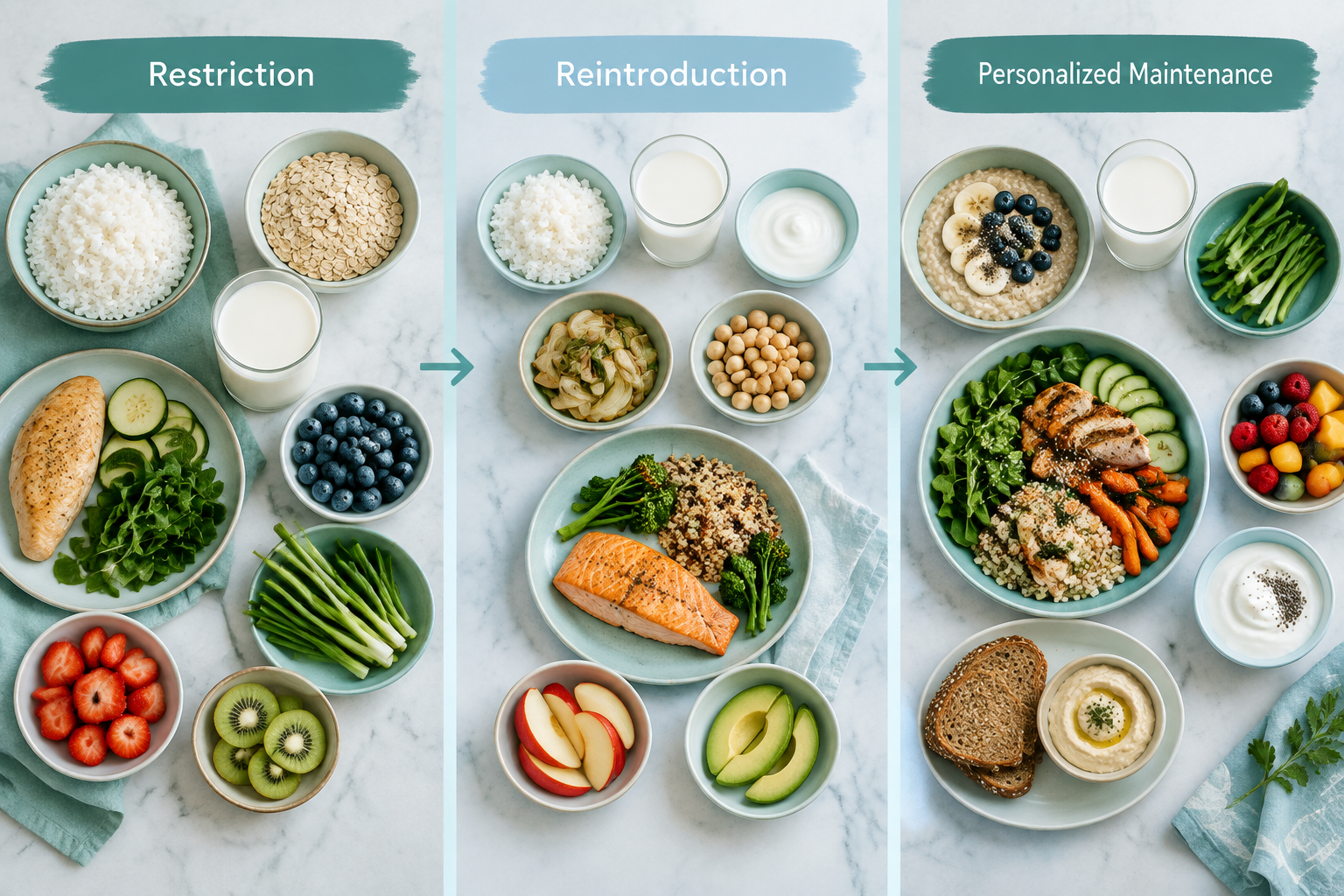
A low-FODMAP diet for IBS is a temporary, structured elimination approach that can help identify whether certain foods worsen bloating, abdominal pain, gas, diarrhea, or other bowel changes. It is among the better-studied dietary approaches for functional digestive symptoms, but it cannot diagnose SIBO or food intolerances by itself.
FODMAPs are fermentable carbohydrates, including short-chain sugars and sugar alcohols that may not absorb fully in the small intestine. In sensitive people, they can draw water into the bowel and ferment quickly, contributing to gas, pressure, discomfort, and changed stools. Keeping other diet and routine changes limited makes potential elimination diet food triggers easier to spot.
The three phases provide a clear path from restriction to a more flexible eating pattern:
- Short-term restriction: Temporarily replace high-FODMAP foods such as onion, garlic, wheat-heavy foods, beans, cow's milk, apples, and watermelon. Useful swaps include garlic-infused oil, scallion greens, rice or oats, lactose-free milk or a suitable plant milk, and lower-FODMAP fruit portions. The Monash University FODMAP App can help you check foods and serving sizes (source). For most short-term elimination trials, a planned review after a few weeks is more useful than open-ended restriction (source).
- Reintroduction: Keep your lower-FODMAP baseline while testing one FODMAP group or food in gradually larger portions over several days. This elimination diet reintroduction process helps identify both a symptom response and the portion you tolerate. A reaction may signal a personal threshold, not a food you must avoid forever.
- Personalized maintenance: Restore tolerated foods and portions to create the broadest, most enjoyable, nutritionally varied diet possible. If restriction has not meaningfully helped, continuing it can add stress without providing clearer answers.
A simple diary makes the results easier to interpret. Track portions, meal timing, symptoms, bowel movements and Bristol Stool Chart types, sleep, stress, illness, alcohol, and new supplements. Celiac disease testing needs to happen before you remove gluten-containing foods because dietary changes can affect the test (source).
A gastroenterologist or registered dietitian can help you reassess a trial that feels confusing, ineffective, or too limiting.
The low-FODMAP elimination phase is step one of three. The elimination diet phases end with a personalized low-FODMAP diet that keeps only the groups that caused symptoms.
Challenge Foods and Find Your Tolerance

After the restrictive phase has clarified whether symptoms improve, start elimination diet reintroduction only after your symptoms have improved clearly and remained calmer. Keep your usual meals, medications, supplements, activity, and sleep routine as steady as possible. This single-variable approach makes it easier to connect returning gastrointestinal symptoms to the food being tested.
Use a consistent, stepwise low-FODMAP reintroduction plan, or the same plan for a single food, for each challenge:
- Day one: Eat a small serving of one previously removed food or one FODMAP group.
- Day two: Increase to a medium serving if bloating, gas, abdominal pain, diarrhea, and bowel changes remain manageable.
- Day three: Try a larger serving if day two went well. Return to the elimination pattern afterward, then monitor symptoms for three to four days before testing another food or group.
A food and symptom diary turns each challenge into useful information rather than a guess. Note the food, portion, meal time, bowel changes, bloating, pain, and other symptoms. Delayed reactions can matter, especially when digestion varies naturally from one day to the next.
The aim is to identify your personal threshold, not label a food as simply "good" or "bad." A small amount of garlic in a family meal may feel fine while a larger amount causes gas. Similarly, lower-lactose Greek yogurt may be comfortable even when a larger serving of ice cream is not. NIDDK notes that many people with lactose intolerance can include some lactose-containing foods based on individual tolerance (source).
Test FODMAP groups separately rather than treating every high-FODMAP food as a permanent trigger. Sensitivity may apply to one group, a larger portion, or several trigger foods eaten together.
Long-term eating should include the foods and portions that fit your body. A practical maintenance pattern includes:
- Restoring tolerated foods: Keep meals varied and nutritionally adequate.
- Limiting repeat triggers: Reduce foods that consistently cause meaningful symptoms.
- Retesting when appropriate: Tolerance can shift over time, and a registered dietitian can help when results are unclear or your diet remains very limited.
This food reintroduction protocol is the part most people skip. It is also the only part that can identify food triggers rather than just avoid them.
Record Symptoms That Show a Real Pattern
A dated daily log can show whether a food is a real trigger or a frustrating coincidence. During the elimination phase, record every meal, snack, drink, condiment, and supplement exactly as eaten. Include portions, brands or key ingredients, and preparation method. Complete avoidance of the suspected food creates a usable symptom baseline, while even small inconsistent exposures can blur the results.
Use the same snapshot after meals and at the end of each day:
- Symptoms: Rate bloating, gas, abdominal pain, nausea, urgency, constipation, and diarrhea on a 0 to 10 scale. Note when each symptom began and how long it lasted.
- Bowel movements: Record frequency, urgency, and Bristol Stool Form Scale type separately. This makes changes in hard, loose, or urgent stools easier to spot than a general note about an upset stomach.
- Other variables: Track sleep duration and quality, stress, hydration, exercise or unusual movement, illness, medications, and menstrual-cycle timing when relevant.
A flare after a meal is less convincing after poor sleep, dehydration, high stress, or a stomach bug. The stronger signal is the same symptom returning after the same food under similar conditions.
Keep the log through food sensitivity testing through elimination and reintroduction, documenting each eliminated food or food group as you test it while other meals and routines stay stable. Use your notes to decide when to try another item.
The aim is to find practical tolerance, not create permanent all-or-nothing rules. Record the food, amount, preparation, and symptom timing, such as tolerating a small serving of lower-lactose yogurt but reacting to a larger serving of ice cream. This record can also guide conversations about food allergies, a six-food elimination diet, or eosinophilic esophagitis.
A food diary for digestive symptoms needs five columns: time, food and portion, symptoms with a 0 to 10 score, stool type, and anything unusual about the day. Food and symptom tracking on paper beats memory every time.
Know When to Involve a Dietitian
When your food and symptom record still does not show a clear pattern, a registered dietitian (RD) with gastrointestinal expertise can make an elimination diet for digestive symptoms clearer, more practical, and less restrictive. Dietitian support is especially helpful when results change from day to day, symptoms continue after a careful trial, or your food and symptom diary does not show a clear pattern. An RD can help separate normal symptom variation from likely triggers, adjust portions, and find family-friendly swaps without cutting several food groups at once.
Extra support is important in these situations:
- Broadening restrictions: Removing grains, dairy, or other major food groups may lower fiber, calcium, B vitamins, iron, vitamin D, or protein intake. A strict low FODMAP phase should be temporary, followed by planned reintroduction to support nutrition and microbiome diversity (source).
- Unclear or persistent symptoms: A gastroenterologist can help interpret results when a targeted trial does not ease troublesome symptoms or point to a likely trigger.
- Medically managed conditions: Eosinophilic esophagitis is an immune-related condition of the esophagus that needs specialist-led care. Elemental diets and broad multi-food elimination diets need professional guidance.
- Children or pregnancy: Growth and pregnancy raise nutritional needs, so individualized dietitian planning matters.
Celiac disease testing can help guide a gluten-focused diet trial.
A dietitian-guided elimination diet is usually shorter and broader than a self-run one. Elimination diet safety, meaning enough calories, calcium, and fiber during the trial, is part of that brief.
Elimination Diet FAQs
These FAQs cover common concerns before, during, and after an elimination diet, helping you make sense of symptoms, food changes, and what may come next without making meals feel more stressful.
1. Can an Elimination Diet Help Gastritis?
A short, structured elimination trial can show which foods or drinks seem to worsen upper-abdominal discomfort, nausea, bloating, or reflux-like symptoms. It is a symptom-tracking tool, not a treatment for gastritis, food allergies, or food intolerances, and avoiding a personal trigger may make meals more comfortable.
Ongoing pain, vomiting, bleeding, black stools, or unexplained symptoms need prompt medical assessment. Discuss evaluation for celiac disease or inflammatory bowel disease before making major dietary restrictions.
2. Can Children Try an Elimination Diet Safely?
Children should not start a broad elimination diet on their own. A food intolerance can cause digestive symptoms when a food is hard to process, while an allergy involves the immune system and may cause hives, breathing problems, or anaphylaxis that needs prompt evaluation, according to MedlinePlus (source). A pediatric clinician and GI-focused registered dietitian can decide whether a short, targeted trial fits, interpret reintroduction results, and protect calcium, fiber, B vitamins, growth, and everyday eating at school or social events.
Elimination diets for kids need a clinician or dietitian from the start, since growth is at stake.
3. Is an Elimination Diet Safe During Pregnancy?
Pregnancy is not the time for a broad, self-directed elimination diet. Without a clear medical reason, cutting grains can reduce fiber, iron, and B vitamins, while avoiding dairy or lactose-containing foods may lower calcium, vitamin D, and protein. Discuss persistent digestive symptoms and any proposed food trial with your obstetric clinician first.
When a trial is needed, a gastroenterologist and GI-focused registered dietitian can keep it targeted, brief, and nutritionally complete while guiding reintroduction at the right time.
4. Can Elimination Diets Cause Nutrient Deficiencies?
Yes. Elimination diets can cause nutrient deficiencies when broad food groups stay off your plate for too long. Dairy-free eating may lower calcium, vitamin D, and protein, while gluten-free or grain-free plans can reduce fiber, iron, and B vitamins. Multiple restrictions can also make family meals and social eating difficult to sustain. Keep the strict phase temporary, then reintroduce tolerated foods promptly to broaden nutrition and support microbiome diversity. A gastrointestinal registered dietitian or gastroenterologist can help tailor a nutritionally complete plan.
Long elimination also changes the gut microbiome, since fiber-rich foods often go out with the suspected trigger. That is one more reason to keep the trial short.