


Buying a gut health test isn't usually the best first move for recurring bloating, gas, constipation, or diarrhea. A two-week symptom record often provides more useful answers, while clinician-ordered testing is most helpful when symptoms persist, change, or point to a specific condition.
A microbiome report may list bacteria and assign a wellness score, but it can't diagnose IBS, IBD, celiac disease, infection, or bleeding. Track meals, bowel changes, stress, travel, medications, and symptom timing for 14 days, then use that pattern to decide whether a stool test, breath test, or clinical visit fits.
Blood in stool, black tarry stools, severe or worsening abdominal pain, persistent fever, unexplained weight loss, or anemia need clinician-first care. Targeted testing can answer a focused question without treating a broad bacterial profile as a diagnosis.
Gut Health Testing Key Takeaways
- Start with a two-week symptom record for new or mild digestive symptoms.
- Track meals, bowel patterns, stress, travel, medications, and symptom timing.
- Seek clinician-first care for bleeding, black stools, severe pain, fever, weight loss, or anemia.
- Clinician-ordered tests should match symptoms, duration, exposures, and medical history.
- Stool markers such as fecal calprotectin can help distinguish IBS from inflammatory causes.
- Breath testing may help assess lactose malabsorption, SIBO, or H. pylori when clinically indicated.
- Home microbiome tests offer limited context and cannot diagnose digestive diseases or symptom causes.
When Should You Consider Gut Health Testing?

Gut health testing is most useful when symptoms keep returning, lack a clear cause, or disrupt daily life despite practical lifestyle changes and gut health adjustments. Occasional bloating, gas, constipation, or diarrhea is common. Persistent cramping, urgency, stool changes, or alternating constipation and diarrhea may point to chronic digestive issues that deserve clinical evaluation.
For new or mild gut health test symptoms, a two-week food-and-symptom record is usually a more useful first step than a commercial test. Track the details that can reveal a short-term trigger:
- Meals and drinks: Include major food changes, fluid intake, and fiber changes.
- Bowel patterns: Note frequency, consistency, urgency, and changes from your usual routine.
- Possible influences: Add stress, illness, travel, medications, and recent antibiotic use.
This record can make a primary care visit more productive if symptoms continue. It also helps distinguish a brief disruption from patterns that may need further assessment.
The signs you need gut testing are different from simple curiosity about your microbiome. Clinician-ordered stool or digestive tests can help answer a focused question when recurrent symptoms, frequent antibiotic use, a past digestive infection, or unexplained bowel changes suggest a specific cause. Seek clinician care first if you have warning signs discussed next.
What gut health testing covers includes the difference between symptom-directed diagnostic tests and wellness-oriented microbiome profiles. If you’re asking, “should I get my gut tested,” start with the symptom or clinical question rather than a broad report.
People who feel well and have comfortable, regular bowel habits generally do not need routine microbiome testing. When to get gut health testing depends on the clinical question and symptom pattern.
Which Red Flags Need a Clinician First?

Recurring digestive symptoms can be frustrating, but rectal bleeding or black, tarry stools need prompt medical attention. They can signal bleeding in the digestive tract, and an at-home microbiome profile cannot identify the cause or replace timely evaluation.
The full set of red flags that need a clinician first is short, and the ones below cover most cases:
- Severe or worsening abdominal pain: Persistent pain, pain that wakes you from sleep, or intense stomach cramping needs assessment. These patterns are different from familiar, mild day-to-day discomfort.
- High or persistent fever: Fever with diarrhea, abdominal pain, or other digestive symptoms can occur with inflammation, infection, or another condition that needs direct evaluation.
- Unexplained weight loss, appetite loss, or anemia: Reduced appetite, low-iron fatigue, or weight loss with ongoing constipation, diarrhea, or abdominal discomfort deserves prompt attention. The National Institute of Diabetes and Digestive and Kidney Diseases includes weight loss, rectal bleeding, and anemia among symptoms needing evaluation beyond irritable bowel syndrome (source).
- A new bowel-pattern change: New constipation, new diarrhea, urgency, narrower stools, or a marked departure from your usual pattern merits clinician contact, especially after age 50. This differs from a mild, familiar change after a stressful week or unusual meal. Persistent diarrhea also needs evaluation for its specific cause (source).
These are signs you need gut testing that matches your symptoms and clinical question, not a commercial report that lists microbes. Home microbiome tests cannot diagnose a specific disease, prove that a particular microbe causes symptoms, or measure overall gut health in a validated way.
When inflammatory bowel disease, celiac disease, or another significant gastrointestinal condition is possible, a clinician can assess the full symptom pattern and order diagnostic tests aimed at likely causes. This is also when to see a gastroenterologist, particularly if symptoms persist or initial testing does not provide answers.
What Can a Two-Week Symptom Record Show?

Once urgent warning signs have been addressed, a two-week symptom record can turn a vague feeling of constant bloating into a pattern that helps you and your clinician decide on a sensible next step. Dietary tracking works best when every entry is dated and notes symptom onset, duration, intensity, and timing around meals, waking, overnight symptoms, or stressful days. Meal timing can be more useful than one isolated episode.
Keep the record simple enough to complete on busy days. Include:
- Food and timing: Record meals, snacks, drinks, portions, and notable ingredients. A large late dinner may matter more than a single food.
- Symptoms: Track bloating, gas, abdominal discomfort, nausea, or reflux, including when each symptom started and how severe it felt.
- Bowel habits: Note frequency, urgency, straining, incomplete emptying, and whether stools are loose or hard. Track constipation and diarrhea separately so alternating irregular bowel movements are not missed.
- Life changes: Include sleep, stress, travel, recent illness, new medications or supplements, antibiotics, and meaningful diet or schedule changes.
One difficult day does not prove that a food caused your symptoms. A possible connection is more meaningful when it appears repeatedly, such as discomfort after dairy, legumes, newly introduced foods, or large evening meals. When the record points at one food group, a diet trial before testing can confirm or clear it in a few weeks.
This context matters for diet and gut health questions, including post-antibiotic recovery. Recent meals, stress, sleep, travel, medications, and lifestyle changes can affect microbiome composition, so a commercial microbiome test may reflect a temporary snapshot rather than your usual baseline.
When symptoms persist or follow a consistent pattern, your record gives a clinician clearer information about duration, history, and possible triggers. That helps determine whether a stool, breath, food-intolerance, or other diagnostic test fits your symptoms instead of using the same test for every digestive concern.
Which Tests Should a Clinician Order?
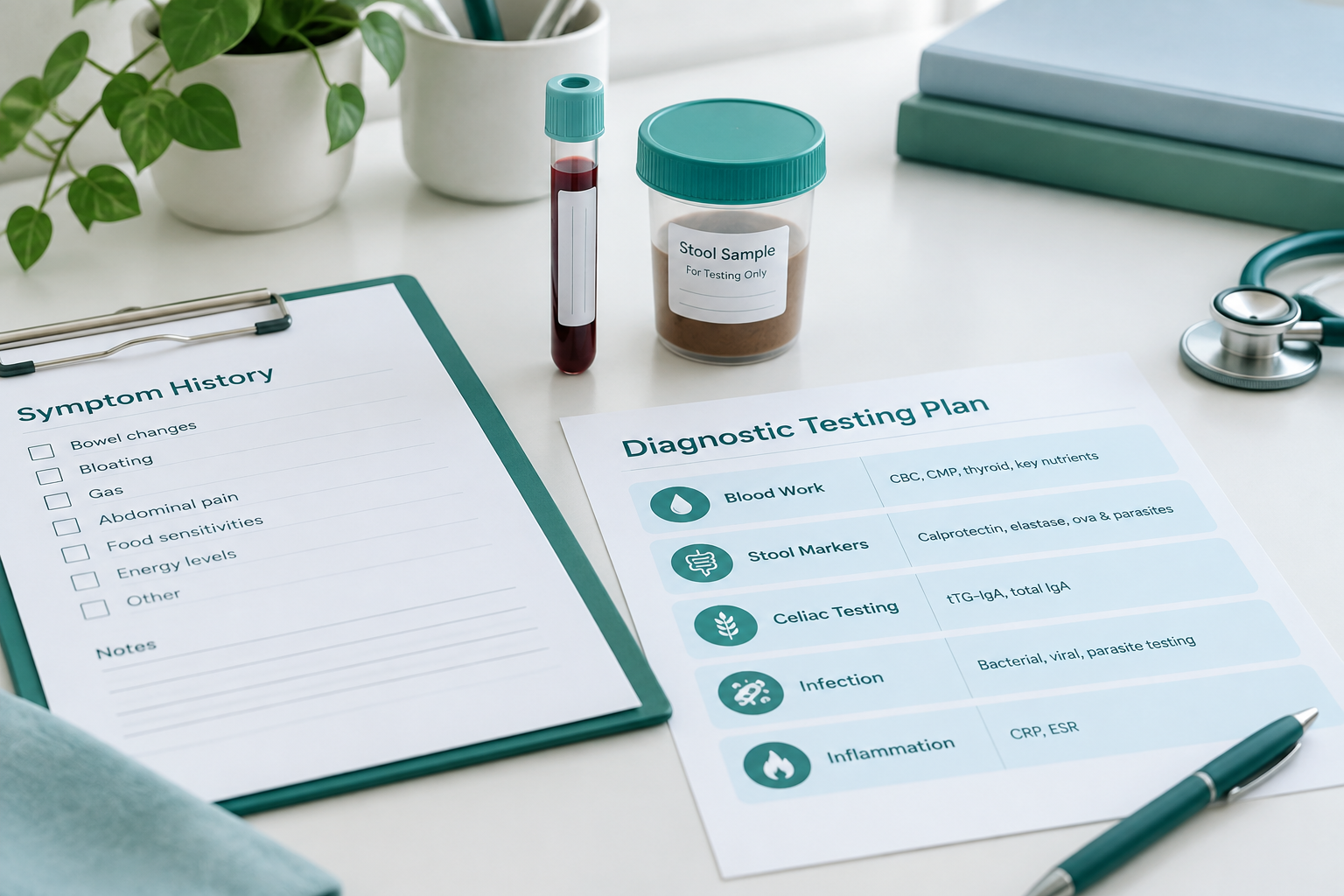
When a symptom record shows that symptoms last, worsen, or raise a specific medical concern, clinician-ordered testing is usually more useful than gut microbiome testing. Chronic diarrhea lasting four or more weeks, constipation without clear cause, recurring abdominal pain, or ongoing bloating deserves clinical assessment, especially alongside unexplained weight change, abnormal blood work, or a close family history of celiac disease, inflammatory bowel disease (IBD), or colorectal cancer.
Test choices should reflect your symptom pattern, duration, recent exposures, and warning signs. Gut testing for IBS or gut testing for bloating should not rely on a broad consumer bacterial profile when there is a need to check for an underlying condition.
Initial blood work may look for anemia or signs of inflammation. Previous abnormal results can also help a clinician decide whether celiac blood testing or another evaluation fits, moving the focus beyond symptom management toward a possible cause.
Celiac testing may be appropriate for anyone with possible celiac disease symptoms such as chronic diarrhea, persistent bloating, or unexplained weight loss, or with a first-degree relative who has celiac disease. Keep eating gluten until testing is complete unless your clinician advises otherwise. Starting a gluten-free diet beforehand can alter results and make celiac disease harder to identify. Positive or unclear results may lead to further evaluation, according to the National Institute of Diabetes and Digestive and Kidney Diseases (source).
Targeted stool studies can answer questions that consumer microbiome profiles and 16S ribosomal ribonucleic acid sequencing cannot reliably address. The stool tests a clinician orders may check for infection after foodborne illness, travel, contaminated-water exposure, or contact with someone who was sick. They can also look for hidden blood and intestinal inflammation.
Two inflammation-related stool markers may help clarify the picture:
- Fecal calprotectin and fecal lactoferrin: These markers can help distinguish Irritable bowel syndrome (IBS), a functional condition, from inflammatory causes such as Crohn's disease or ulcerative colitis. They are especially useful with diarrhea, pain, blood in stool, abnormal blood work, or relevant family history. An elevated result supports follow-up but does not diagnose IBD on its own.
- Fecal elastase-1: This test checks for exocrine pancreatic insufficiency, when the pancreas does not release enough digestive enzymes. Fecal elastase values above 200 mcg/g are generally read as normal or borderline. Values from 100 to 200 mcg/g may suggest mild to moderate pancreatic insufficiency, while values below 100 mcg/g are consistent with severe insufficiency (source).
A watery diarrhea sample can dilute fecal elastase-1 and produce a falsely low result. During a flare, clinicians may interpret the result cautiously or repeat the test rather than treating one low number as a diagnosis.
When Can Breath Testing Help Bloating?

Breath testing can help with gut testing for bloating when it answers a focused question raised by your symptoms. It cannot provide a complete map of your gut health. By noting meals, symptom timing, bowel changes, recent food poisoning or severe gastrointestinal illness, and substantial antibiotic or medication exposure, a two-week symptom record often makes the next step clearer.
A clinician may consider hydrogen breath testing for bloating in a few situations:
- Dairy-linked symptoms: Milk, ice cream, or other dairy reliably causes bloating, persistent gas, stomach cramping, or loose stools. A lactose hydrogen breath test can help identify lactose malabsorption rather than assuming all dairy foods are the issue.
- Possible small intestinal bacterial overgrowth (SIBO): Ongoing bloating with excess gas, abdominal discomfort, diarrhea, constipation, or mixed bowel changes may warrant hydrogen and methane testing after a clinical review. Methane results can be especially useful when constipation is part of the pattern, but they need to be considered alongside your symptoms and medical history.
- Suspected H. pylori infection: Helicobacter pylori, or H. pylori, is checked with a different type of breath test. It does not answer questions about lactose digestion or SIBO.
Commercial stool microbiome sequencing serves a different purpose. It may identify microbes through culture, quantitative polymerase chain reaction, or 16S ribosomal ribonucleic acid sequencing, but it is less likely to explain one person’s bloating in a way that changes care. The limits of home microbiome tests become clear when a broad microbial profile is expected to answer a focused symptom question.
A sudden, lasting change in food tolerance after an illness or medication exposure merits clinician discussion, but neither exposure automatically makes breath or microbiome testing the best choice. Persistent or worsening symptoms without a clear food-related pattern are a reason to speak with a gastroenterologist.
A SIBO test is the usual reason for breath testing when bloating dominates.
Are Home Microbiome Kits Worth It?
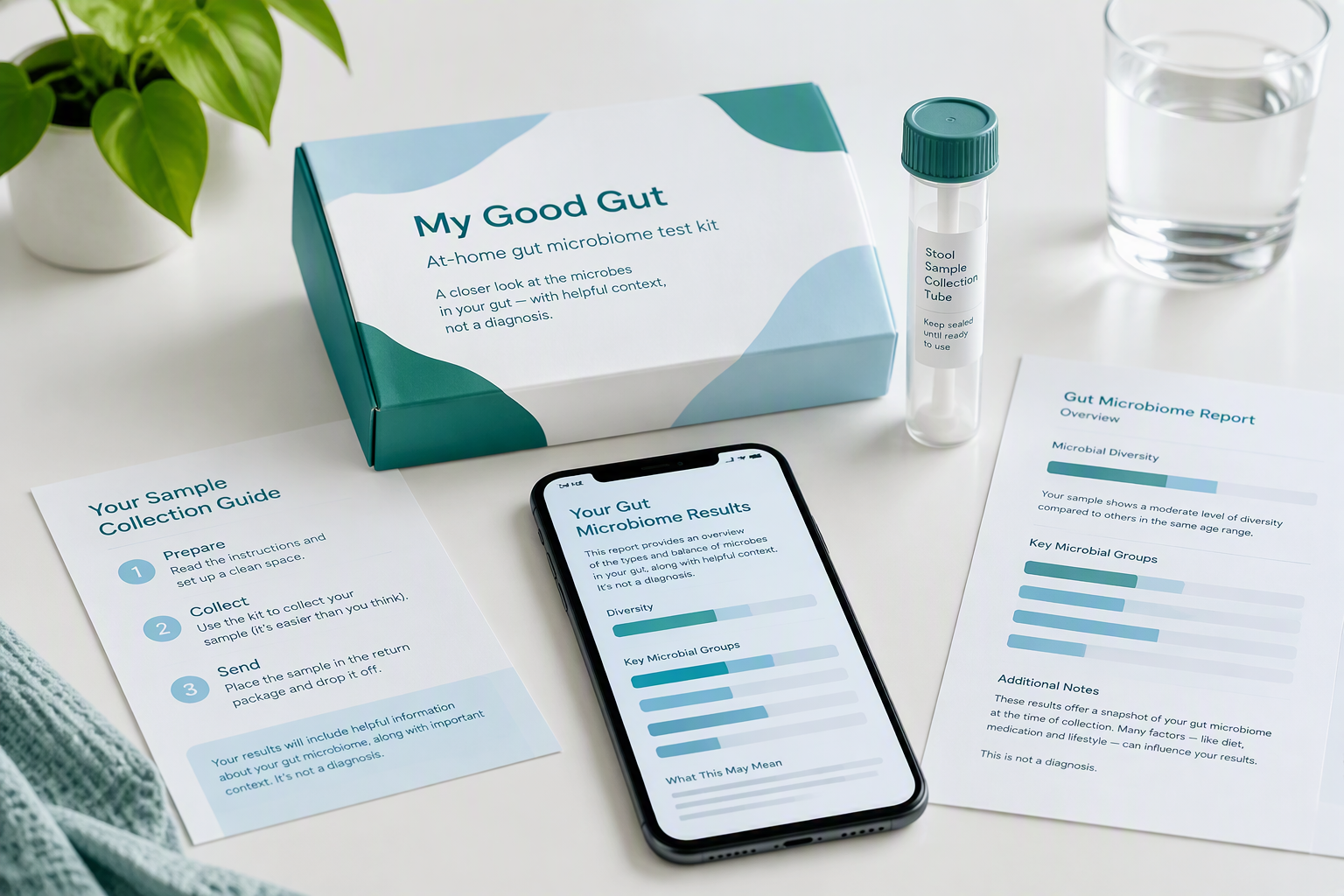
Given the limits of using broad sequencing to explain bloating, an at-home gut microbiome kit may satisfy curiosity or add limited context when mild to moderate symptoms continue after basic diet and lifestyle adjustments. It is optional, and gut microbiome testing does not replace a symptom-focused clinical evaluation.
You collect a stool sample, mail it to a lab, and receive DNA sequencing results that estimate which microorganisms are present, their relative amounts, and diversity. Although an at-home gut microbiome kit offers limited context for food-pattern discussions, it does not directly show the intestinal lining, your entire gut microbiome, or the cause of your symptoms.
Reports can differ because companies use different sequencing methods, reference databases, scoring systems, and interpretation rules. There is no universally accepted definition of a normal microbiome or one definitive measure of gut health. Diet and gut health are connected, but illness, travel, and medications can also shift the microbes found in a sample.
Consumer tests are not standardized or validated to diagnose specific diseases, Irritable bowel syndrome (IBS), or food allergies. They also cannot prove that a particular microbe causes bloating, diarrhea, constipation, or abdominal discomfort. These tests are not FDA-approved to evaluate general gut health, so a wellness score should be treated as informational rather than clinical.
Before considering gut testing for IBS, use this practical filter:
- Would the result change a reasonable next step, such as a food-pattern discussion?
- Does the report suggest broad prebiotic, probiotic, or supplement changes without strong clinical evidence?
- Would a two-week symptom record, your medical history, or clinician-ordered testing answer the question more directly?
Most insurance plans do not cover home microbiome kits, so verify your benefits before testing. Lifestyle changes and gut health habits can still be useful to discuss, but a report rarely replaces individualized care.
If you choose a kit, treat its report as supplementary information alongside your symptoms, medications, health history, and any needed clinical testing. That approach can support a useful conversation about food patterns without turning a wellness score into self-diagnosis or self-treatment.
An at-home gut health test or commercial gut microbiome test is a wellness product. A functional medicine gut test adds markers with no agreed ranges. Interpreting microbiome test results is where most of the confusion starts, so bring any report to a clinician instead of acting on it. If fiber and hydration for gut health settle the symptom within two weeks, no test was needed.
No kit can tell you whether your gut is healthy. Digestive health is judged on symptoms, not a score. Gut diversity testing is the usual headline number in those reports, and it has no agreed healthy range.
When Should You See a Gastroenterologist?
Beyond the limited context a home microbiome kit can provide, primary care is a good starting point for common, non-urgent digestive symptoms. A clinician can review your history and order initial blood work or stool tests. When symptoms persist, results are abnormal, or the cause remains unclear, it may be time to consider when to see a gastroenterologist.
Medical assessment is especially helpful in these situations:
- Symptoms that persist or worsen: Chronic diarrhea lasting four or more weeks, chronic or worsening constipation, constipation without clear cause, recurring abdominal pain, or ongoing bloating deserve a closer look.
- Abnormal results or family history: Abnormal blood work or a strong family history of celiac disease, IBD, or colorectal cancer calls for clinical guidance instead of a commercial microbiome test.
- Chronic digestive issues without an explanation: A gastroenterologist can assess symptoms that do not match a clear food trigger or short-term illness and select testing based on the pattern.
Bring a two-week symptom record and prior test results to the appointment. Notes about pain, bloating, stool frequency and consistency, meals, possible triggers, urgency, and missed work or activities can help make a brief visit more productive.
A referral does not mean a serious condition is likely, but it means your symptoms may need a more specific answer. Commercial microbiome reports describe bacterial patterns, but they cannot diagnose celiac disease, IBD, infections, or structural problems in the digestive tract.
When inflammation or a structural condition is possible, a gastroenterologist may recommend an endoscopy or colonoscopy. These procedures allow the specialist to inspect the digestive tract lining and take small tissue samples, called biopsies, to check for inflammation or other changes. Follow-up testing can also confirm that a specific infection has cleared after targeted antimicrobial treatment when appropriate.
A clinical gut health evaluation covers blood tests for gut health (celiac disease testing, anemia, inflammation), stool tests, and gut inflammation testing with calprotectin before any scope. Functional gut issues such as IBS have no confirming test, so irritable bowel syndrome testing is really testing to rule other things out. Chronic diarrhea testing follows a set path: infection, inflammation, celiac disease, then a scope. A primary care clinician is usually the first gut health doctor you see, and gastrointestinal testing beyond that point is the specialist's call. Inflammatory bowel disease testing follows a raised calprotectin or red-flag symptoms.
Gut Health Testing FAQs
These FAQs cover common questions about gut health testing, including symptom-based medical evaluation and at-home microbiome profiles. They can help you weigh which next step fits your symptoms.
1. Does Insurance Cover Gut Health Testing?
Insurance is more likely to cover a diagnostic test ordered by a clinician for specific symptoms or a suspected condition. Coverage still depends on medical necessity, the test, in-network requirements, and your deductible, so check benefits and expected out-of-pocket costs with your insurer and clinician before testing.
An at-home gut microbiome kit is usually excluded. These tests are not fully standardized or validated to diagnose IBS or food allergies, and they do not give a definitive measure of overall gut health, so private payment may not lead to an actionable medical answer.
2. Should You Stop Probiotics Before Testing?
Follow the laboratory’s collection instructions, since preparation varies by test. Some at-home kits ask you to keep your usual diet for a week and pause probiotics for three days, but use the timing provided with your own kit. If a clinician recommended your probiotic for a medical reason, check with them before stopping it. Meals, stress, sleep, travel, and medications can shift a microbiome sample, so one result is a snapshot rather than a permanent baseline (source).
3. Can Antibiotics Affect Gut Test Results?
Antibiotics can temporarily shift gut organisms, so a microbiome or targeted stool test soon after treatment may not reflect your usual baseline. This matters after substantial or repeated antibiotic use, or when new symptoms follow food poisoning or a severe gastrointestinal illness. During post-antibiotic recovery, share the antibiotic name and last-dose date with your clinician. Whether a gut health test before or after symptoms is useful depends on the question: optional microbiome testing may be better delayed, while targeted testing can confirm pathogen clearance.
4. Can Children Get Gut Health Testing?
Children may need digestive testing when a pediatric clinician finds concerning symptoms or medical history. A direct-to-consumer microbiome score cannot diagnose disease or replace a pediatric evaluation. Focus first on appetite, hydration, energy, bowel changes, and expected growth and weight gain.
Severe or worsening belly pain, nighttime pain, blood or black stools, persistent fever, dehydration, poor intake, unusual fatigue or suspected anemia, weight loss, or slowed growth need prompt medical assessment, not bacterial-pattern results. If celiac disease, IBD, infection, or another condition is possible, a pediatrician or pediatric gastroenterologist can select validated tests and appropriate treatment.
5. How Often Should Gut Testing Be Repeated?
Repeat microbiome testing only when it can answer a clear question, such as whether a sustained change in fiber, prebiotics, or probiotics lines up with a different report. One result is a snapshot, because diet, stress, medications, and daily routines can affect the microbiome.
Several months of symptom tracking may be more useful for recurring bloating, gas, constipation, or diarrhea. A three- to six-month retest may make sense after a consistent dietary change, but routine retesting has limited clinical value because testing methods and interpretations vary between companies, and microbiome profiles cannot diagnose symptom causes.
Routine gut health testing without symptoms has no evidence behind it. Gut health symptoms that change, or gut health red flags, decide when to retest, not the calendar.