


Buying a mail-in kit after weeks of bloating can seem like the fastest way to get answers. At-home gut health testing fits curiosity about stool-microbe patterns, while clinical tests fit ongoing symptoms or a defined question such as infection, inflammation, or celiac disease.
That distinction matters because a microbiome report cannot identify why you have constipation, diarrhea, pain, or gas. NIST sent identical stool samples from one donor to seven commercial companies and received different reports. Stool tests, breath tests, and symptom patterns each answer different questions, including Giardia after travel and SIBO.
Blood in stool, black tar-like stool, severe pain, fever, or dehydration need prompt medical care rather than a consumer report. For symptoms that continue or disrupt daily life, a two-week record of meals, bowel changes, pain, urgency, and medicines can help match testing to the question that needs an answer.
Gut Health Testing Key Takeaways
- At-home microbiome kits estimate stool microbes but cannot diagnose digestive symptoms or overall gut health.
- Clinical tests investigate defined concerns such as infection, inflammation, bleeding, celiac disease, or malabsorption.
- Breath tests can assess SIBO, lactose intolerance, fructose intolerance, or H. PYLORI infection.
- NIST received different microbiome reports after sending identical donor samples to seven commercial companies.
- Diversity scores and favorable or unfavorable labels are descriptive clues, not personal health grades.
- Persistent or changing symptoms are better evaluated with targeted clinician-ordered testing than consumer microbiome reports.
- Blood in stool, black stool, severe pain, fever, or dehydration need prompt medical care.
What Does Gut Health Testing Actually Measure?
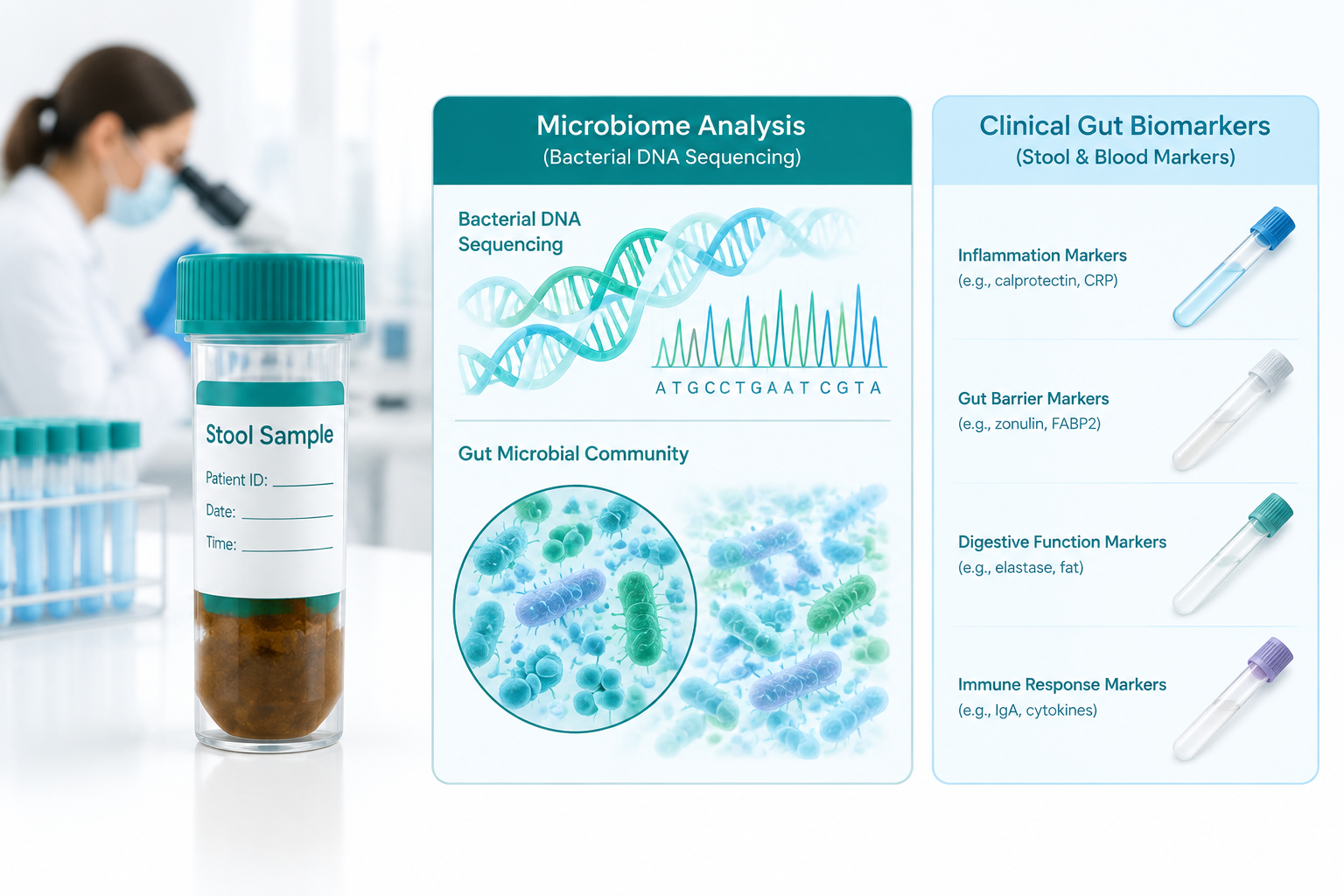
Gut health testing is not one test. Many consumer options use stool sample analysis to estimate microorganisms or microbial material, but a gut microbiome test cannot identify the cause of bloating, constipation, diarrhea, or abdominal pain. A broad score cannot outweigh your symptom pattern.
A gut health test offers a limited snapshot. Gut health as a whole also involves digestion, immune activity, food tolerance, and symptoms. Consumer gut microbiome analysis commonly reports bacterial types, relative amounts, and diversity. Because one sample mostly reflects the changing large-bowel ecosystem, it cannot prove that a particular microbe causes your symptoms.
Methods vary, so microbiome testing results are not automatically interchangeable:
- Bacterial DNA sequencing: Estimates bacteria present in a stool sample.
- Metagenomic or deep shotgun sequencing: Assesses broader microbial genetic material, including potential fungi, viruses, and archaea.
- Quantitative polymerase chain reaction (qPCR): Targets selected organisms or genes.
- RNA-based testing: Assesses gene activity rather than genetic material alone.
Some panels add functional markers that assess microbial short-chain fatty acid production, digestion efficiency, inflammation, or pancreatic elastase, an indicator of digestive-enzyme output. An abnormal result raises a question rather than a diagnosis, since stool consistency, collection quality, symptoms, and medical history affect interpretation. A test captures only part of what the digestive system does with food, not every reason symptoms occur.
Clinician-directed stool or blood tests fit better when symptoms point to bacterial, parasitic, or viral infection, inflammation, celiac disease, or malabsorption. A fecal occult blood test detects blood that cannot be seen with the eye (source). These tests answer a defined medical question rather than assign a broad score.
Gut health testing splits into two kinds. Gut microbiome testing, the stool microbiome test in a mail-in kit, describes gut bacteria and sometimes gut fungi and virus testing. Doctor-ordered gut testing answers a question: is there an intestinal infection, inflammation, bleeding, or a digestion problem. A digestive health test that does not name its question is a wellness product, not a diagnostic one.
A few plain terms help. A gut bacteria test and a stool microbiome analysis are the same thing: DNA from a stool sample. RNA microbiome testing reads gene activity instead of gene presence. Gut biomarkers such as calprotectin are different. They measure the gut, not the microbes.
Are At-Home Microbiome Tests Worth It?
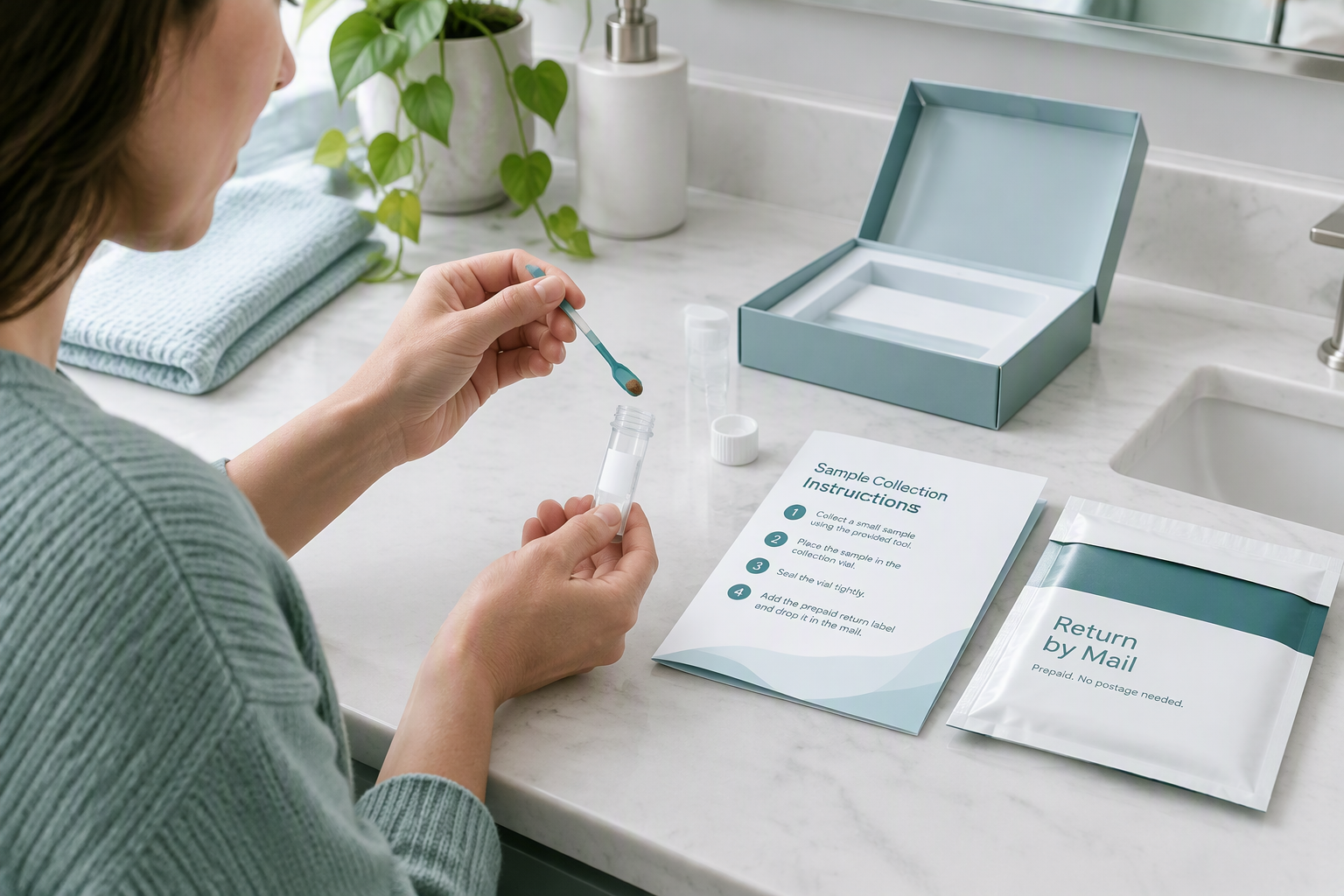
Because defined medical questions call for clinician-directed testing, an at-home gut microbiome test may be worth buying if you want a broad view of gut patterns and treat the report as educational, not diagnostic or a personalized treatment plan. A direct-to-consumer at-home gut health test offers wellness insights, while a clinician-directed gut microbiome test is chosen for a specific medical concern. Persistent, severe, or concerning digestive symptoms need medical evaluation rather than a mail-in microbiome test.
At-home stool sample collection instructions vary by company, but most at-home stool collection kit packages include:
- Collection tool: A Paper stool-collection shield or similar device.
- Sample container: A Swab or small sampling tool and a preservative-filled vial.
- Return materials: A Prepaid biohazard package for mailing the sample to a specialized laboratory.
After you place a small stool sample in the vial and seal it, the laboratory processes it and sends an online report. Gut microbiome health differs from person to person, so a report may estimate detected microbes, microbial groups, diversity scores, and food suggestions. Those findings can start a useful conversation about diet and symptoms.
Clinical interpretation remains limited. There is no single healthy microbiome baseline because diet, medicines, geography, and individual biology affect results. A 2025 international consensus statement found insufficient evidence for broad clinical use of consumer microbiome testing (source).
Costly recommendations deserve extra caution. The National Institute of Standards and Technology sent identical stool samples from one donor to seven commercial companies and received different reports, including one that labeled the microbiome unhealthy while the others did not (source). Differences in sample preparation, laboratory handling, and measurement methods mean results from separate companies are not interchangeable. What a microbiome test can tell you can help you decide whether a report fits your goals.
Direct-to-consumer microbiome tests are sold as general wellness gut tests, and no FDA-approved gut test exists for that purpose. The FDA reviews direct-to-consumer tests only when they claim to diagnose or guide treatment (source). So a gut health score, a gut diversity index, or a microbiome health index on a results dashboard is the company's own scale, not a standardized microbiome testing result. Microbiome test accuracy is the open question the consensus statement raised, and microbiome test interpretation is where most of the cost lands.
Commercial gut microbiome tests share one gap. Healthy microbiome standards do not exist yet, so a bacterial imbalance test has nothing agreed to compare you against. That is a microbiome science problem, not a lab error.
Which Test Fits Your Digestive Symptoms?

The everyday digestive symptoms hub sorts complaints by cause, and this section sorts them by test.
Once you know the limits of an at-home report, the right gut health test depends on the symptoms you have, how long they have lasted, and the question that needs answering. Direct-to-consumer kits sequence an at-home stool sample for wellness exploration, but their organism lists and diversity scores cannot diagnose a condition, identify the treatment you need, or measure overall gut health in a validated way. Gut health test accuracy depends on whether a test is designed for your specific concern.
A clinical gut health test follows your medical history and examination to investigate a defined problem. Broad gut health testing is not the best first step when symptoms are new, ongoing, or interfering with daily life. Clinical evaluation is more appropriate for:
- Persistent diarrhea or recurrent urgency.
- New constipation or worsening abdominal pain.
- Blood or black stool.
- Possible infection, inflammation, bleeding, or parasites in stool.
Targeted stool or blood tests can look for a suspected cause instead of offering a general picture of gut health. Symptom pattern and duration should guide whether a gut health test for wellness or clinician-directed testing fits best.
Gut health tests based on symptoms are the worthwhile gut health tests. A bloating gut health test does not exist as a single product. Bloating points toward SIBO testing or a food record. Diarrhea points toward targeted stool pathogen testing. Weight loss or anemia points toward celiac and malabsorption workups.
Two more fits. Weight loss and gut testing go together only when a clinician orders the workup. A food sensitivities gut test sold online does not diagnose intolerance. H. pylori testing and intestinal infection testing are doctor-ordered and cheap by comparison.
Stool Testing
Clinician-ordered stool tests answer specific medical questions. Pathogen panels can check for bacteria, viruses, or parasites when an infection is possible, including Giardia after travel or untreated-water exposure. Fecal occult blood testing can be included when bleeding is a concern. Calprotectin or lactoferrin can help show whether diarrhea or abdominal pain may involve intestinal inflammation, including Crohn’s disease or ulcerative colitis (source).
Fecal elastase checks pancreatic enzyme output related to fat digestion. Laboratories report it against a cutoff for pancreatic insufficiency, though watery diarrhea can produce a falsely low result. Celiac blood tests often accompany this workup when malabsorption is a concern (source). Unlike a consumer microbiome report that describes organisms, stool testing for gut health can match a test to your symptoms.
Comprehensive stool panels can also include an ova and parasite test when recent travel or untreated water is part of the story (source).
Breath Testing
Breath tests can answer focused symptom questions, but they cannot explain every cause of bloating. For suspected small intestinal bacterial overgrowth (SIBO) or lactose and fructose intolerance, you drink a test sugar and provide timed breath samples that measure hydrogen and methane from bacterial fermentation (source). An H. PYLORI urea breath test checks for a stomach infection after a urea drink, especially with upper-abdominal symptoms, ulcers, or related risk factors (source).
Preparation rules matter because diet, recent medications, smoking, and sample timing can change gas readings. Results should fit your symptoms and medical history, while persistent concerns may call for endoscopy or colonoscopy with biopsies to examine the digestive tract directly. Whether hydrogen and methane breath testing fits your symptoms depends on the pattern of bloating and the foods behind it.
When to Get Tested
Testing is most useful when symptoms last, change from your usual pattern, or include warning signs. A two-week symptom record of meals, bowel changes, pain, urgency, and medicines often gives a clinician more useful context than a consumer kit. Red flags that need clinician-ordered testing first include:
- Blood in your stool
- Unintentional weight loss
- Unexplained anemia
- Ongoing diarrhea
Chronic diarrhea, bloating, anemia, or weight loss may prompt IGA tissue-transglutaminase testing for celiac disease, with another celiac-related test if IGA is low. Endoscopy or colonoscopy can directly view the digestive tract and collect biopsies to help identify celiac disease, inflammatory bowel disease, or chronic gastritis. A consumer microbiome kit makes the most sense when curiosity, rather than an unexplained symptom, is the honest reason. The full picture of when to get gut health testing comes down to symptom, duration, and what you would do with the answer. Whatever fits, digestive red flags mean a clinician before any kit.
How Should You Compare Gut Test Results?

After testing is chosen for a specific concern, a gut test report is most useful when it answers a specific medical question, not when it assigns a headline score. Clinician-interpreted testing for infection, inflammation, bleeding, or malabsorption can guide follow-up when it fits your symptoms. Inflammation markers may be part of a Crohn’s disease evaluation along with other tests and imaging, according to the National Institute of Diabetes and Digestive and Kidney Diseases (source). Consumer microbiome profiles offer a broad stool-microbe snapshot, but they cannot diagnose or rule out bloating, constipation, diarrhea, or abdominal pain.
Personalized diet, probiotic, supplement, prebiotic, postbiotic, and lifestyle suggestions are hypotheses, not treatment plans. Focus on symptoms and a gut health diet after testing before committing to restrictive diets or costly supplement plans based on a microbiome score alone. If a food seems to be the trigger, elimination diets as a test are a more disciplined way to check than a kit's food list.
The laboratory method matters as much as the result:
- Culture: Grows selected organisms and can miss microbes that do not grow well in a lab.
- Targeted molecular testing: Looks for specific genetic material connected to a defined concern, such as an infection.
- DNA sequencing: Detects microbial DNA across a wider group of organisms but cannot establish whether those organisms are alive or active.
Stool also may not reflect microbes attached to the bowel wall. Check what a laboratory’s reference range represents, since it may reflect its own comparison group rather than a universal standard.
Diversity scores and labels such as beneficial, unfavorable, high, or low are descriptive clues, not a personal health grade. A diversity index estimates the variety of microbes detected. A disease association for one organism does not prove your personal risk or show that changing its level will improve symptoms.
Reports from different companies and repeat kits require cautious interpretation. Sample preparation, lab processing, sequencing methods, databases, and reference populations can produce conflicting findings from the same stool sample.
Gut health test results from a physician-ordered test come with a reference range and a person to explain it. Online gut health test results come with a dashboard. Read the second kind as a conversation starter about gut microbial balance, not as a verdict on evidence-based gut health.
When Should You See a Clinician Urgently?
Regardless of test results, digestive red flags call for prompt medical care rather than an at-home gut microbiome test:
- Blood in your stool or black, tar-like stool
- Severe or worsening abdominal pain or cramping
- Fever or signs of dehydration
- Diarrhea that does not settle
These symptoms can signal bleeding, infection, or inflammation that needs medical assessment.
Make an appointment when diarrhea or constipation continues or keeps returning, or when bloating, unexplained fatigue, or new food-related symptoms interfere with work, sleep, meals, or daily life. These concerns do not automatically point to a serious condition, but a commercial microbiome test cannot measure overall gut health or rule out medical causes.
Possible malabsorption, meaning trouble absorbing nutrients, also deserves evaluation. Unintended weight loss, chronic diarrhea, bloating, unexplained anemia, and greasy stools that are difficult to flush can fit this pattern. When celiac disease is suspected, testing often includes an immunoglobulin A (IGA) tissue transglutaminase antibody test and another celiac-related test if IGA deficiency may affect the result. Keep eating gluten before testing because starting a gluten-free diet first can make results harder to interpret.
Persistent diarrhea or abdominal symptoms may also lead to stool calprotectin or lactoferrin testing. These markers help assess intestinal inflammation linked to inflammatory bowel disease, including Crohn’s disease and ulcerative colitis, although a microbiome report cannot diagnose inflammatory bowel disease, malabsorption, or the cause of persistent pain.
Gut Health Testing FAQs
The FAQs below address what gut health tests measure, their limits, and how symptoms may shape the choice between consumer testing and clinician-ordered evaluation.
1. Should You Stop Probiotics Before Testing?
There is no universal rule about stopping probiotics before gut testing. Follow the preparation instructions from the laboratory or clinician handling your test. Some stool microbiome services request a pause because supplements can temporarily affect the organisms found in your sample, while other tests have different requirements.
Your result is a temporary snapshot, shaped by recent meals, medications including antibiotics, genetics, environment, culture, and geography. Note probiotic use when you collect the sample. One hospital advises pausing probiotics, laxatives, and antacids for at least one week, but confirm any change to prescribed treatment with your clinician or laboratory.
2. Do Antibiotics Affect Gut Test Results?
Antibiotics can temporarily shift the bacteria in your stool, so microbiome results may reflect a recent medication effect rather than your usual pattern. Diet, recent meals, environment, genetics, geography, and culture also influence this time-specific snapshot. Share any recent antibiotic use when discussing a clinical gut health test, and follow the laboratory’s collection instructions. Some labs recommend waiting at least four weeks after antibiotics, but the ordering lab’s timing guidance takes priority.
3. Does Insurance Cover Gut Health Testing?
Coverage usually depends on whether a clinician orders a diagnostic stool, blood, breath, or other test because your symptoms and medical history make it medically necessary. Your plan’s benefits, network rules, deductible, and prior authorization requirements can still affect coverage, so confirm the specific test before scheduling.
Direct-to-consumer microbiome kits are commonly paid for out of pocket because they support wellness exploration rather than diagnosis. Microbiome test results may list organisms found in stool, but they do not necessarily identify the treatment you need. These kits are not FDA-approved to assess general gut health, which may limit insurance recognition.
4. How Often Should You Repeat Gut Testing?
There’s no evidence-based schedule for repeating a consumer microbiome test. Recent meals, diet changes, antibiotics, travel, environment, and normal daily variation can shift gut microbes, making each stool sample a temporary snapshot rather than a lasting gut-health score. Companies may also interpret similar samples differently. A varied diet with fiber-rich vegetables, fruits, legumes, and whole grains feeds beneficial microbes that produce short-chain fatty acids, which help support the gut lining.
Repeat testing may help when persistent or changing bloating, constipation, diarrhea, pain, or a suspected condition could affect care. Discuss it with a clinician who knows your diagnosis, treatment changes, symptom duration, and recent antibiotic use. Chasing a diversity score or product recommendation can add cost without measuring overall gut health. Bring prior results, focus on symptoms and the question needing an answer, and choose clinical testing when it could change medical care.
5. Are At-Home Gut Microbiome Tests Accurate?
Not in the way a blood test is. When NIST sent identical stool samples to several commercial gut microbiome tests, the reports disagreed, and one called the same sample unhealthy. Microbiome test clinical usefulness is limited for now, so treat a microbiome testing kit as a snapshot, not a diagnosis.
6. When Is Gut Testing Warranted?
When gut testing is warranted comes down to three things: symptoms that persist or change, a warning sign such as blood or weight loss, or a specific question a clinician wants answered. Routine gut microbiome testing without symptoms is not recommended, and a gut health assessment starts with a symptom record rather than a kit.
7. What Tests Do Gastroenterologists Use?
Gastroenterologist gut tests are clinical gastrointestinal diagnostics. The common ones: a comprehensive stool panel, celiac disease testing by blood, breath tests for small intestinal bacterial overgrowth diagnosis, and endoscopy or colonoscopy for gut health when the lining needs a direct look. GI diagnostics answer one question at a time. A home microbiome testing kit answers none of them, though it can start a useful conversation about gut health symptoms and how to improve gut health day to day.