


Finding diverticula on a scan does not mean you have diverticulitis. Diverticular disease includes diverticulosis, recurring symptoms without active inflammation, diverticulitis, and diverticular bleeding, so the right explanation depends on what is happening in the colon. Diverticulosis describes the pouches themselves, which often cause no symptoms and may be discovered by chance.
Bloating, constipation, diarrhea, and lower-abdominal discomfort can occur without acute inflammation, while diverticulitis more often causes persistent pain and may involve fever, nausea, or vomiting. Diverticular bleeding can be sudden and painless, with bright-red or maroon blood, which makes symptom patterns alone unreliable. Studies suggest about 1% of people with diverticulosis develop acute diverticulitis over 11 years, so finding pouches does not make a serious flare inevitable.
Diagnosis usually combines your symptom history and examination with appropriate testing, often including CT imaging when active diverticulitis is suspected. Knowing which disease state fits your symptoms helps separate routine follow-up from same-day assessment and emergency warning signs, while also clarifying when diet changes, observation, antibiotics, hospitalization, or surgery may be considered.
Diverticular Disease Key Takeaways
- Diverticulosis means colon pouches are present without inflammation or infection.
- Diverticular disease includes symptoms, inflammation, bleeding, or other complications involving diverticula.
- Symptomatic uncomplicated disease can cause recurring discomfort without active diverticulitis.
- Diverticulitis commonly causes persistent abdominal pain and may include fever or vomiting.
- Diverticular bleeding can be sudden, painless, and substantial.
- CT imaging often helps assess suspected active diverticulitis and its complications.
- Severe pain, heavy bleeding, faintness, vomiting, or inability to pass stool requires emergency care.
What Is Diverticular Disease?
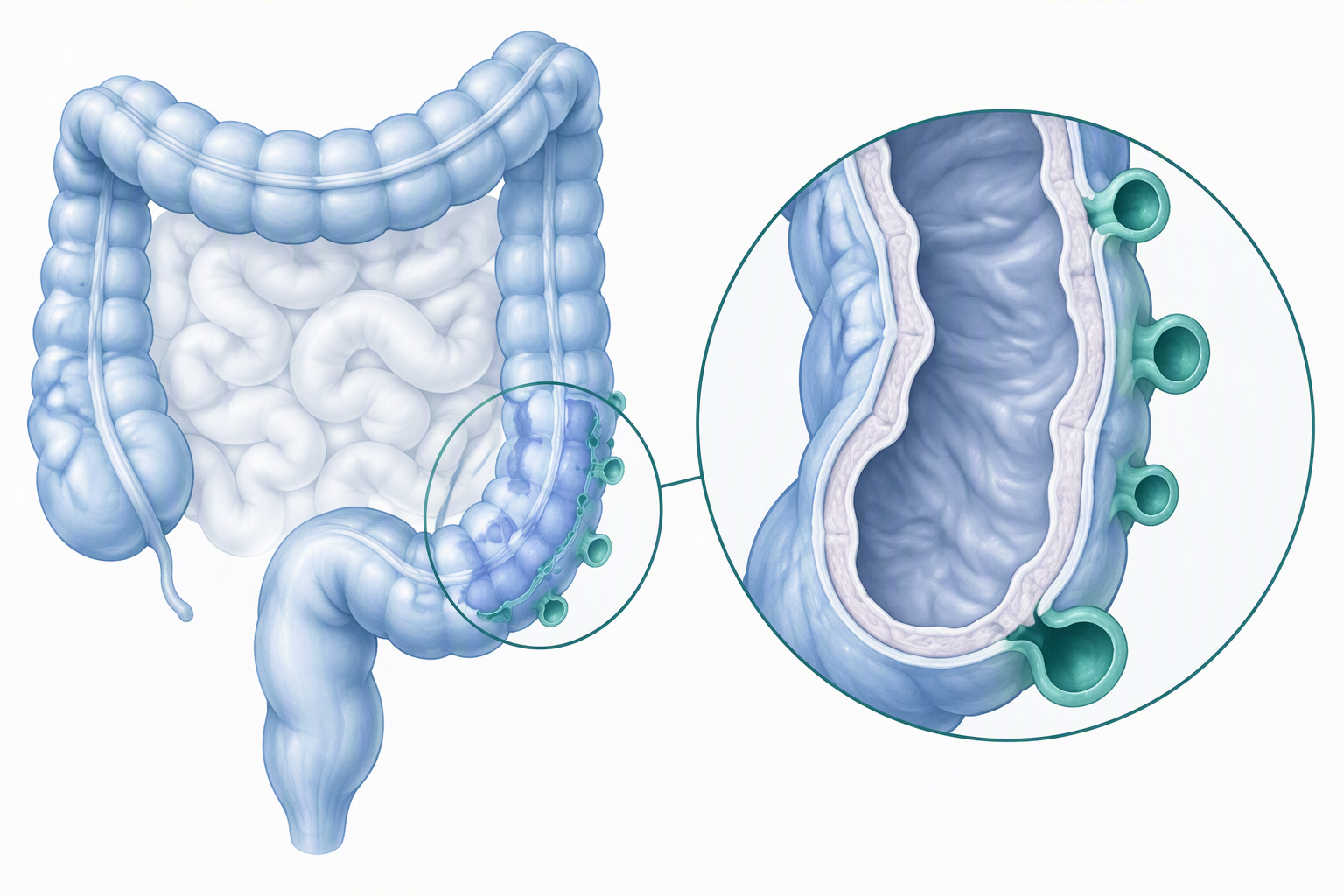
Diverticular disease refers to colon pouches called diverticula when they cause symptoms, bleeding, inflammation, or another complication. These pouches can form anywhere in the colon, or large intestine, but they most often develop in the sigmoid colon, the lower S-shaped section near the rectum. The pouches themselves are usually described as diverticulosis.
Pressure inside the colon can push its inner lining through naturally weak areas in the muscle wall. Stool movement and consistency may influence that pressure, and there is no single cause because the process differs from person to person. Other digestive conditions beyond diverticulitis can produce similar symptoms, which is why an incidental finding or recurring discomfort still needs context.
These terms describe different situations:
Term | Meaning |
|---|---|
Diverticulosis | Diverticula are present without inflammation or infection. Imaging or a colon examination may find them by chance. |
Symptomatic uncomplicated diverticular disease | The pouches are associated with ongoing digestive symptoms but show no active inflammation or infection. |
Diverticulitis | One or more diverticula become inflamed and may also become infected. |
The distinction between the two matters. Most people with diverticulosis have no symptoms or complications, and only a minority develop diverticulitis. Finding colon pouches does not mean inflammation, serious complications, or steadily worsening disease is inevitable.
Diverticulosis becomes more common with age. More than 30% of U.S. adults aged 50 to 59 and more than 70% of those over 80 have it, although many never know because it causes no symptoms (source).
Age and pressure appear to matter, while other factors may contribute without proving individual causation:
- Lifestyle factors: Diet, inactivity, smoking, and obesity may affect risk.
- Medicines: Certain medicines may also play a role.
- Individual differences: Experts cannot yet explain why some people develop symptoms or inflammation and others do not.
Diet sits at the center of most of these factors, and fiber and the colon wall is where the long-term prevention advice starts.
That is the diverticular disease definition in short: colonic diverticular disease is the umbrella, and aging and diverticular disease go together, which is why age tops the list of diverticular disease risk factors.
How Do the Three Disease States Differ?
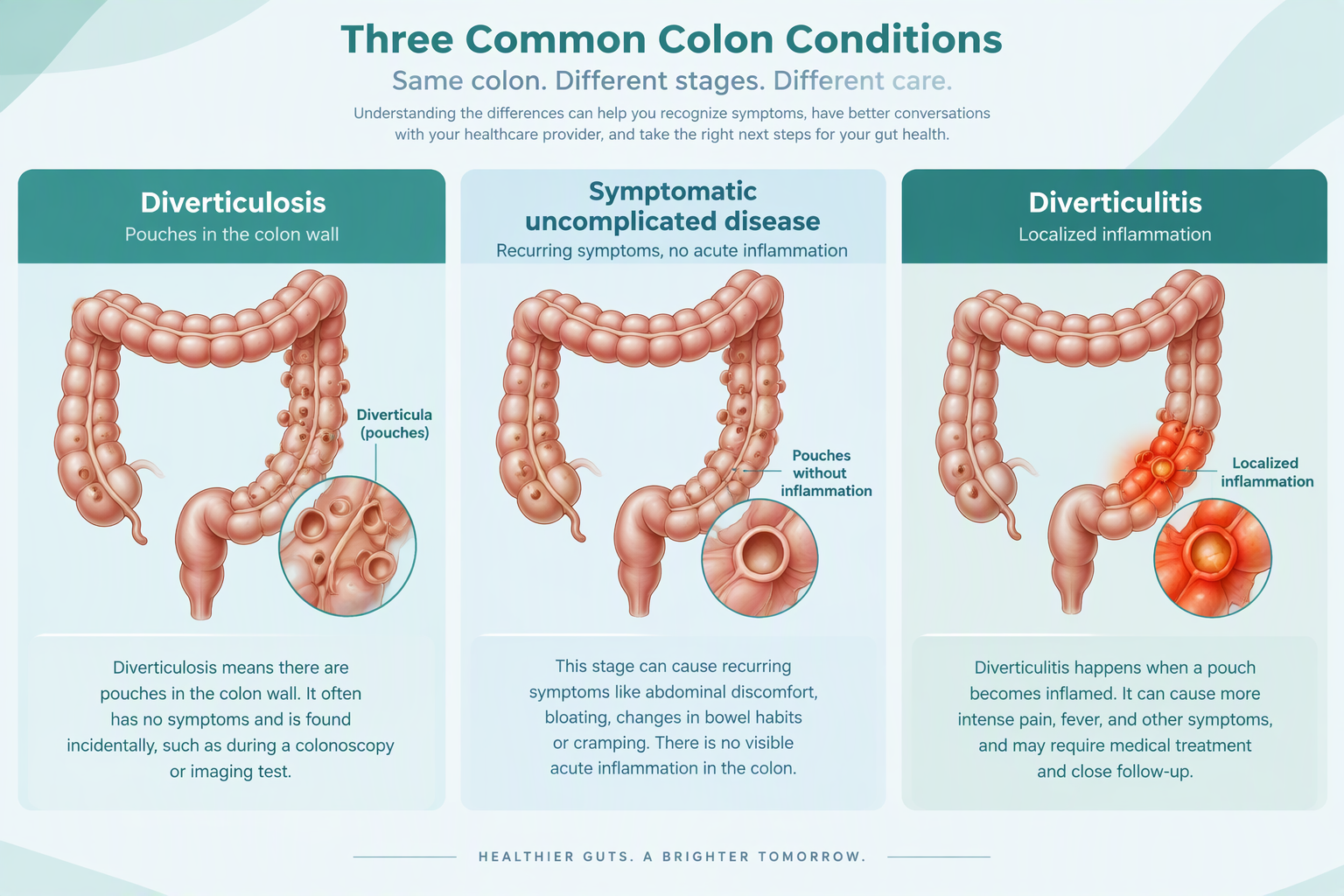
State | What is happening and typical symptoms | Inflammation and usual course | When to seek assessment |
|---|---|---|---|
Asymptomatic diverticulosis | Small pouches, called diverticula, are present without symptoms. They’re often found during imaging or another examination. | No active inflammation. Many people develop them with age, and progression is uncommon. | Routine follow-up is usually appropriate unless new symptoms appear. |
Symptomatic uncomplicated diverticular disease | Diverticula are associated with recurring lower-abdominal discomfort, bloating, cramping, constipation, diarrhea, or post-meal discomfort. Symptoms may ease after a bowel movement or passing gas. | No clear acute inflammation. Symptoms may persist or recur. | Arrange an assessment for ongoing or disruptive symptoms. |
Acute diverticulitis | One or more diverticula become suddenly inflamed or infected. Diverticulitis symptoms can include constant lower-left pain and tenderness, fever, chills, nausea, vomiting, constipation, or diarrhea. | Active inflammation is present, often with a sharper onset and whole-body symptoms. | Seek prompt clinical assessment, especially for worsening pain, fever, or vomiting. |
Diverticular bleeding | A blood vessel near or within a diverticulum breaks, causing bright-red or maroon blood in the stool. Bleeding may be substantial and painless. | Bleeding can occur without inflammatory pain. | Seek prompt assessment because painless bleeding can still be serious. |
These states may overlap, but they aren’t interchangeable. The first state has no symptoms, while symptomatic uncomplicated diverticular disease involves recurring symptoms without clear acute inflammation. One study found that approximately 25% of participants with diverticulosis developed this symptomatic pattern.
Progression to acute diverticulitis is uncommon. One study found that about 1% of people with diverticulosis developed acute diverticulitis over 11 years. The National Institute of Diabetes and Digestive and Kidney Diseases also describes diverticulosis and diverticulitis as distinct conditions (source).
Symptoms alone cannot identify the disease state. Diverticular disease symptoms can resemble those of other conditions, and diverticulosis may be an incidental finding. Medical history, symptom timing, physical examination, and appropriate testing help clinicians distinguish among them. Pain location alone cannot establish diverticulitis, as Cleveland Clinic explains (source). This is why knowing the difference still cannot replace clinical assessment.
These are sometimes called the stages of diverticular disease, though symptomatic diverticular disease does not always progress to the next stage.
Which Symptoms Need Same-Day or Emergency Care?

Symptoms can suggest how quickly you need care, but they cannot confirm a diverticulitis diagnosis. Stable, familiar discomfort may fit routine follow-up, while new pain, fever, vomiting, or bleeding needs faster attention. Knowing what sets off a diverticulitis flare helps you tell a familiar pattern from a new one.
Use this three-level framework:
- Routine follow-up: Mild discomfort that stays familiar and stable can usually be discussed at a regular appointment.
- Same-day assessment: Seek medical advice for new, persistent, or worsening abdominal pain, especially with fever, chills, nausea, constipation, diarrhea, blood, or mucus in stool. Repeated vomiting, prolonged diarrhea, dehydration signs, or difficulty keeping fluids down also need prompt assessment.
- Emergency care: Severe infection, obstruction, or major blood loss can become dangerous quickly. Do not monitor these symptoms at home or attempt symptom-based treatment while waiting.
Diverticulitis symptoms vary in location and intensity, so do not wait for every typical feature before seeking care (source).
Call emergency services rather than driving if you feel faint, unstable, or too ill to travel. Warning signs include:
- Severe pain: Rapidly worsening abdominal pain with repeated vomiting or visible swelling.
- Possible blockage: Inability to pass stool or gas.
- Significant bleeding: Heavy or ongoing rectal bleeding, even without pain.
- Instability: Fainting, confusion, marked weakness, or difficulty staying awake.
These patterns may signal obstruction, stricture, abscess, bowel perforation, peritonitis, sepsis, or dangerous blood loss.
Chronic discomfort, sudden pain with fever, and painless bleeding can reflect different diverticular conditions. Similar digestive, urinary, or gynecologic problems may require examination, laboratory tests, imaging, or later bowel evaluation to establish the cause.
Diverticulitis warning signs like these are the same ones the NHS lists in its diverticulitis guidance.
What Does Diverticular Bleeding Look Like?
Diverticular bleeding can start suddenly and may occur without pain or inflammation. Unlike diverticulitis, it can still cause substantial blood loss (source).
The blood may appear in several ways:
- Bright-red or maroon blood may fill the toilet bowl, coat the stool, or mix with it.
- Blood and clots may pass with very little stool.
- Bright red often suggests a lower digestive-tract source, while maroon may indicate that blood traveled farther or that bleeding is heavier.
- Black, sticky, tar-like stool more often points to bleeding higher in the digestive tract.
Color alone cannot confirm the source. Hemorrhoids, intestinal inflammation, growths, and other conditions can look similar, so a photograph or one bowel movement cannot establish diverticular bleeding.
Contact a healthcare professional promptly about any new blood in your stool, especially when it persists, returns, increases, or occurs with worsening abdominal pain, fever, chills, or persistent vomiting, and a clinician needs to assess blood loss and distinguish the cause. MedlinePlus also identifies rectal bleeding and these symptoms as reasons to seek medical care (source).
Seek emergency care for:
- Heavy rectal bleeding.
- Dizziness, fainting, marked weakness, confusion, shortness of breath, or a racing heartbeat.
- Severe abdominal pain with vomiting or abdominal swelling.
- Inability to pass stool or gas.
Painless bleeding is not automatically minor. The amount of blood and its effects on your body matter more than discomfort alone.
How Do Doctors Diagnose Diverticular Disease?
After bleeding or other warning symptoms prompt assessment, a diverticulitis diagnosis usually begins with your symptoms and a physical exam, followed by tests that assess inflammation and rule out other causes. Your clinician may ask when the pain started, whether it returns, and whether you have fever, bowel changes, nausea, vomiting, or rectal bleeding, while previous episodes, medicines, diet, and other health conditions also help shape the evaluation.
During the exam, the clinician checks vital signs, hydration, and how unwell you appear. Gentle abdominal pressure may reveal tenderness, swelling, or guarding, but these findings cannot confirm diverticulitis by themselves, so further testing is often needed.
Common tests include:
- Blood tests: White blood cell counts and C-reactive protein (CRP) may suggest infection or inflammation. Other results can point to anemia, dehydration, or kidney and liver problems.
- Other tests: Urine, pregnancy, or stool testing may help exclude conditions with similar symptoms.
- CT imaging: CT is generally preferred when active diverticulitis is suspected. It can show inflammation, identify alternatives such as appendicitis, kidney stones, or inflammatory bowel disease, and detect an abscess, perforation, obstruction, or fistula that could change treatment urgency. Ultrasound or MRI may be used when CT is unsuitable or unavailable, depending on local expertise and your circumstances (source).
A CT scan or colonoscopy may reveal diverticula incidentally, so clinicians interpret the finding alongside your symptoms and the reason for testing. Bloating, cramping, constipation, and diarrhea can occur with diverticulosis, but they do not prove the pouches caused them, and other digestive conditions, including pain that mimics IBS, may need evaluation.
A colonoscopy is done after recovery rather than during a flare, usually about 6 to 8 weeks later, and the American College of Physicians recommends one after complicated diverticulitis or when you have not had a recent colonoscopy (source). It checks for bowel cancer, inflammatory disease, or another bleeding source. Once the picture is clear, diverticulitis treatment from rest to surgery is matched to how severe the episode is.
Diverticular disease diagnosis rests on this combination, and the NIDDK and MedlinePlus pages on diverticulitis describe the same steps.
How Is Each Disease State Managed?

Once testing clarifies whether you have asymptomatic diverticulosis, ongoing symptoms without acute inflammation, active diverticulitis, or a complication, management follows that state, and new, persistent, or worsening abdominal pain needs medical assessment rather than assumed self-treatment. Food runs through every stage, and eating with diverticular disease covers the flare and recovery phases in detail.
- Asymptomatic diverticulosis: Acute treatment or medication is usually unnecessary. Regular activity, a healthy weight, gradual fiber increases, and adequate hydration support bowel health. Many adults use about 2 liters, or 8 to 10 cups, of fluid daily unless fluids are restricted, but that is general guidance rather than a universal target. Nuts, seeds, popcorn, and corn do not generally cause diverticulitis, so avoid them only if they consistently trigger symptoms.
- Symptomatic uncomplicated diverticular disease: After a clinician rules out acute diverticulitis and other digestive conditions, care targets your specific symptoms. Options may include dietary adjustments, a bulk-forming laxative for constipation, an antispasmodic for cramping, or appropriate pain relief. Recurring pain, bloating, constipation, or diarrhea needs follow-up, especially when symptoms suggest diverticulitis has returned.
- Selected mild diverticulitis: Some uncomplicated episodes can be managed at home with clinical guidance, physical rest, pain relief, and a brief clear-liquid or low-fiber phase. As pain and appetite improve, reintroduce tolerated foods and gradually restore fiber.
Oral antibiotics are not automatic for every mild episode. Clinicians consider evidence of infection, symptom severity, immune status, and medical history before recommending them. Seek reassessment for worsening pain or fever, repeated vomiting, poor fluid intake, abdominal swelling, or inability to pass stool or gas.
- Complicated disease or significant bleeding: Complications such as an abscess, perforation, widespread infection, fistula, stricture, obstruction, severe illness, or failed outpatient treatment may require hospitalization, intravenous fluids, antibiotics, drainage, or surgery. Significant diverticular bleeding also needs urgent assessment and may require endoscopic, radiologic, transfusion, or surgical treatment.
Diverticular disease treatment and diet for diverticular disease go together: dietary fiber for diverticulitis prevention, fruits and vegetables for diverticular disease, and fibre, as UK guidance spells it, all come back after a flare settles.
What Complications Can Diverticulitis Cause?
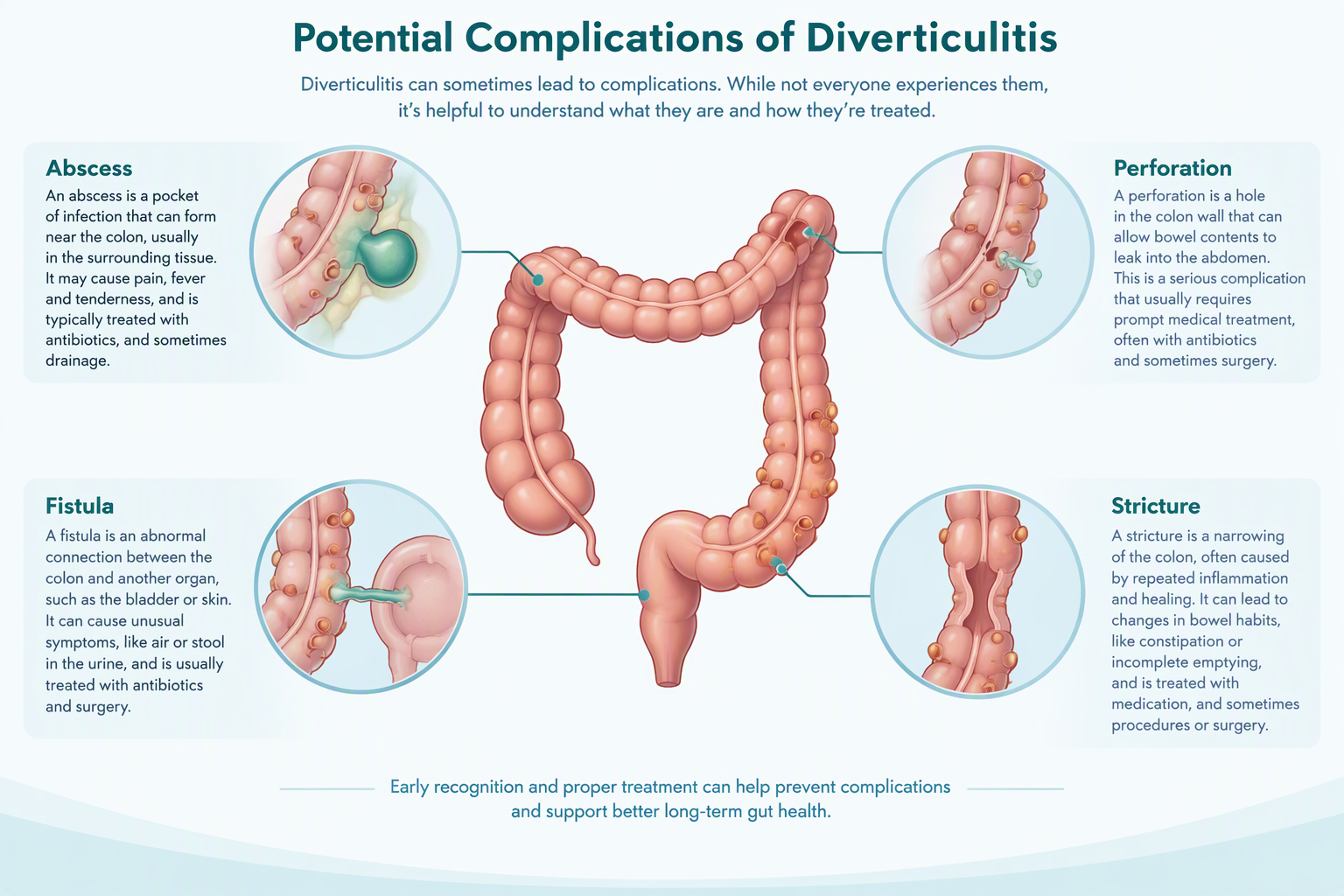
When diverticulitis is complicated or fails to improve with management, complications can affect the colon, nearby organs, or bloodstream, although most cases are uncomplicated. About 80% of episodes are uncomplicated. Approximately 12% of people who present with diverticulitis develop a complication (source).
An abscess is a localized, pus-filled infection that may cause persistent pain, fever, or tenderness, and treatment can include antibiotics, image-guided drainage, or surgery when infection cannot be controlled another way.
Bowel perforation is a tear in the colon that can release intestinal contents into the abdomen, causing peritonitis, a dangerous infection or inflammation of the abdominal lining. Seek emergency care for:
- Sudden, severe, or spreading abdominal pain
- A rigid or very tender abdomen, fever, or repeated vomiting
- Confusion, rapid breathing, a racing heart, clammy skin, very little urine, marked weakness, or heavy rectal bleeding with dizziness
These warning signs can indicate peritonitis or sepsis. Urgent colectomy, which removes the damaged colon segment, may be necessary. A temporary or permanent colostomy may divert stool while the bowel heals.
A fistula is an abnormal passage between the colon and the bladder, vagina, or skin. Recurrent urinary infections, air or stool in urine, unusual vaginal discharge, or skin drainage need prompt evaluation. Treatment often involves removing the damaged colon segment and repairing the affected organ.
Repeated inflammation can cause a stricture, or narrowed bowel, leading to cramps, bloating, constipation, vomiting, or inability to pass stool or gas. Complete obstruction requires emergency assessment. Persistent narrowing may require colectomy after other causes are excluded.
Diverticulitis returns in about one in five people after a first episode. Repeat attacks alone do not automatically require surgery. Elective surgery is individualized according to severity, complications, immune status, overall health, persistent symptoms, quality-of-life impact, and surgical risks. Continued or worsening symptoms should prompt timely medical review.
Risk factors for diverticulitis complications overlap with the risk factors for diverticulitis itself, which the causes page covers.
Diverticular Disease FAQs
These diverticular disease FAQs clarify common concerns without adding to the confusion. The answers that follow cover symptoms, diagnosis, treatment, food choices, and when to seek medical care so you can make informed decisions about your next step.
1. Can Diverticulosis Go Away?
Diverticulosis usually does not go away. Once the small pouches form in your colon, they generally remain, but most people never develop diverticulitis or ongoing symptoms. Treatment focuses on keeping bowel habits comfortable and watching for changes rather than removing the pouches. A care plan can include practical food and lifestyle choices that fit your health and routine. New or severe pain, fever, vomiting, or rectal bleeding needs prompt medical evaluation because these symptoms may signal a separate problem.
2. Can You Eat Nuts and Seeds With Diverticulosis?
Yes. If you have diverticulosis, you generally don’t need to avoid nuts, seeds, corn, or popcorn. Older advice suggested these foods could become trapped, but a large 2008 cohort found no increased risk of diverticulitis among people who ate them (source). Unless a healthcare professional has given you a specific restriction, include these foods based on your comfort and overall eating pattern. If they worsen bloating or bowel symptoms, adjust portions or preparation rather than assuming they are unsafe.
3. Does Diverticulitis Come Back?
Yes, diverticulitis can come back, so clinicians often discuss prevention after a first attack. Recurrence does not mean you will need surgery, and most people do not. Practical steps may include keeping bowel habits regular, adding fiber gradually when appropriate, staying active, and addressing smoking or other personal risk factors with your healthcare professional.
Contact your care team if symptoms recur or change, especially persistent pain, fever, vomiting, or bowel changes. Sudden severe abdominal pain, heavy rectal bleeding, or faintness requires urgent medical attention.
4. Is Diverticular Bleeding an Emergency?
Yes, diverticular bleeding can be an emergency. Sudden, painless rectal bleeding that fills the toilet bowl, returns repeatedly, or causes dizziness, faintness, weakness, or a racing heartbeat needs immediate emergency assessment. Although many episodes stop on their own, you can’t judge at home whether blood loss is becoming dangerous. Call 911 for heavy or ongoing bleeding, fainting, confusion, or severe weakness. Bleeding that stops still warrants prompt contact with a healthcare professional, particularly if it returns or you take blood thinners.