


If you live with IBS and something suddenly feels different, the question is hard to answer alone: is this a bad flare, or is it diverticulitis? The symptoms overlap enough that guessing is genuinely difficult, and being told "it's probably just IBS" doesn't help when this episode doesn't feel like your usual one.
This guide is built to make that call easier. It compares IBS and diverticulitis on the details that actually separate them: where the pain sits, whether it comes in waves or stays constant, whether it eases after a bowel movement, and whether fever or tenderness is involved. You'll find a red-flag checklist that maps symptom combinations to a specific action, a walk-through of what a clinician workup involves, and a daily tracker you can start today so your next appointment begins with evidence rather than recall.
The medical guidance here reflects current recommendations, including the 2021 AGA Clinical Practice Update on managing colonic diverticulitis, which has changed how antibiotics are used and is worth understanding before you assume treatment is automatic. None of this replaces an examination. It is here so you can recognize the difference between watching and acting, and so you know which symptoms mean stop reading and call someone.
IBS vs Diverticulitis Key Takeaways
- IBS pain often comes and goes and may improve after a bowel movement.
- Diverticulitis usually causes persistent, focused pain, often in the lower-left abdomen.
- Fever, chills, vomiting, and marked tenderness can signal diverticulitis or another urgent condition.
- A new or worsening symptom pattern should not be assumed to be an IBS flare.
- Clinicians may use history, examination, blood tests, urine tests, and CT imaging.
- Antibiotics for diverticulitis depend on severity, complications, and individual health risks.
- Tracking pain, temperature, bowel changes, and triggers can improve medical conversations.
How Do IBS and Diverticulitis Differ?
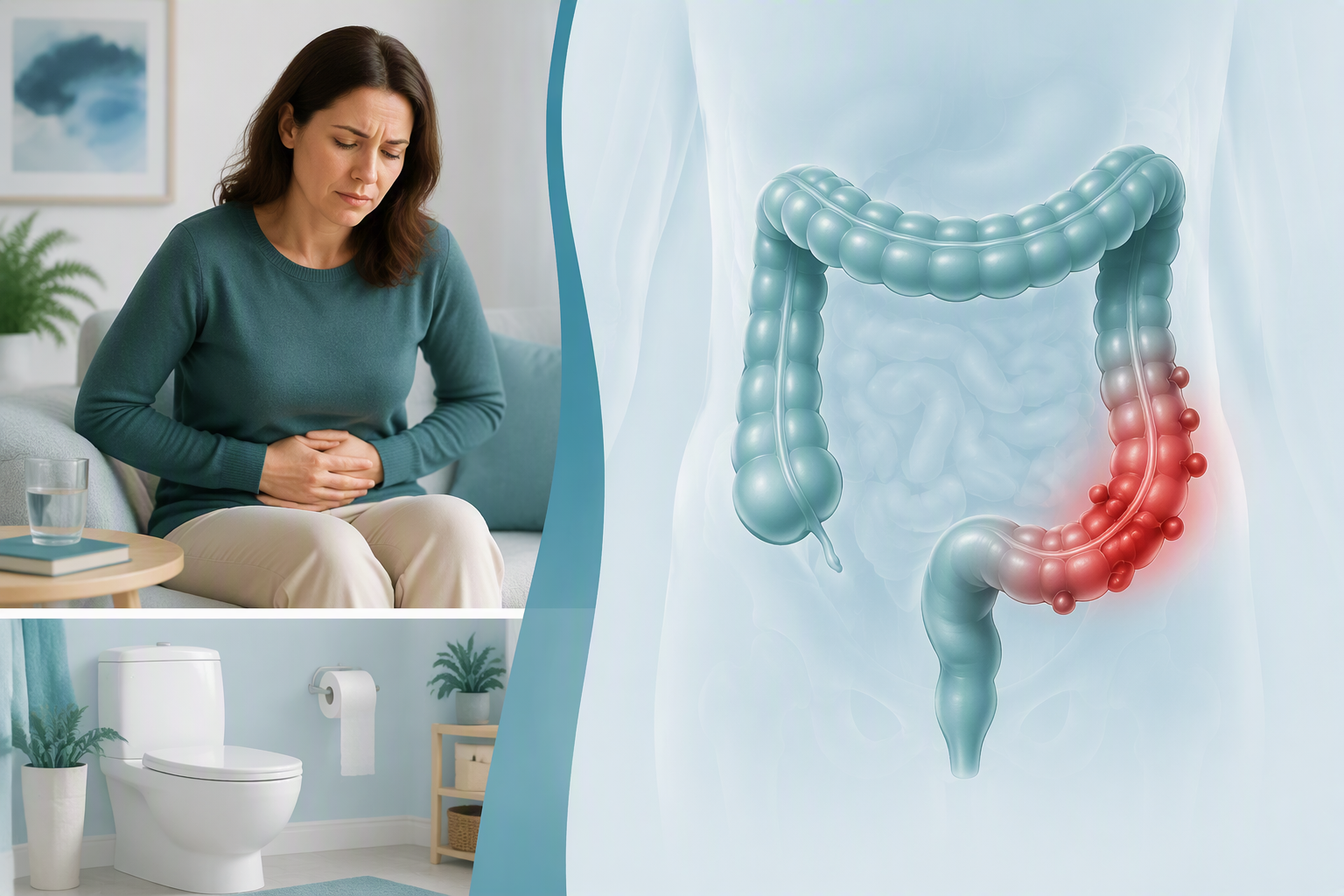
The clearest way to think about IBS vs diverticulitis is through symptom patterns, not self-diagnosis. Irritable bowel syndrome (IBS) is a recurring disorder of gut-brain interaction, while diverticulitis is an episode of inflammation or infection in the colon. Symptoms can overlap, so use this comparison and the broader IBS diagnosis and tests overview to prepare for a healthcare visit, not to delay care for severe, worsening, or unusual symptoms.
IBS is a functional disorder, meaning bowel signaling and coordination can cause real pain, bloating, and stool changes even when scans and tissue look normal. Routine imaging and tissue evaluation generally do not show structural damage or active inflammation (source). A detailed review of typical IBS symptoms can help you compare a new episode with your usual pattern.
Diverticulitis is an inflammatory condition involving small pouches in the colon wall called diverticula. Diverticulosis usually comes first, when those pouches are present without active inflammation. A pouch can later become blocked or irritated, then inflamed or infected, creating an acute episode that may feel more sudden and intense than a familiar IBS flare.
Feature | IBS | Diverticulitis |
|---|---|---|
What it is | Functional gut-brain disorder | Inflamed or infected colon pouches |
Course over time | Chronic, with cycles over days or weeks | Acute episode that feels different from usual |
Pain character | Crampy and wave-like | Persistent and steady |
Pain location | May shift around the abdomen | Usually stays in one place, often lower-left |
Relief after a bowel movement | Often improves | Usually does not |
Fever or chills | Not typical | Can occur |
Tenderness when pressed | Not typical | Common |
What tests show | Imaging and tissue often appear normal | Inflammation may appear on labs or CT |
Lower-left pain does not automatically indicate diverticulitis, because IBS can cause pain in that area too. Likewise, pain that eases after a bowel movement supports an IBS pattern, but that relief is a tendency rather than a rule.
No single feature confirms either condition. The more useful question is whether the pain feels familiar or distinctly different, whether it comes and goes or stays constant, and whether fever, chills, or marked tenderness are present. That overall pattern tells you far more than any single symptom.
If your symptoms do not match your typical pattern, or they are severe or worsening, seek prompt medical evaluation rather than working through the table again.
How Do You Triage Diverticulitis Red Flags?

If symptoms match your usual IBS pattern, brief home monitoring may be reasonable. Cramping that comes and goes, eases after a bowel movement, and occurs without fever differs from persistent inflammation. When an episode feels unfamiliar or several warning signs appear together, don't wait for it to settle as an assumed IBS flare.
What you are feeling | What to do now |
|---|---|
Lower-left pain that stays constant, does not ease after a bowel movement, and lasts more than about 24 hours | Call your clinician today |
Lower abdominal pain plus fever or chills, or a temperature of 100.4°F (38°C) or higher | Seek urgent care or contact a clinician the same day |
Lower abdominal pain plus nausea or vomiting, or an inability to keep fluids down | Seek urgent evaluation |
Marked tenderness when you press the area plus feeling generally unwell | Seek urgent evaluation |
Severe or rapidly worsening pain, or an inability to stand up straight or function | Seek emergency care |
Crampy pain that comes and goes, eases after a bowel movement, has no fever, and matches your usual IBS pattern | Monitor at home and track symptoms |
Fever and chills matter because IBS does not cause infection or inflammation. A temperature of 100.4°F (38°C) or higher alongside lower abdominal pain warrants prompt medical attention. Nausea, vomiting, marked tenderness, and feeling generally ill can also signal more than your usual bowel sensitivity.
Tenderness when you press the abdomen may indicate irritation in or around the abdominal lining, rather than only the altered gut signaling associated with IBS. Pain that stays intense and constant without easing after a bowel movement also behaves differently from typical IBS. Pain fixed in the lower-left abdomen, especially when it continues beyond a day, should be assessed instead of repeatedly observed at home.
An existing IBS diagnosis does not prevent diverticulitis. Assuming every new episode is IBS can delay care, so treat symptoms that differ from your usual pattern as a new problem until a healthcare professional evaluates them. The broader IBS red flags guidance can help you identify symptoms that need medical review.
Treatment does not automatically mean antibiotics for diverticulitis. The American Gastroenterological Association's 2021 Clinical Practice Update advises selective rather than routine antibiotic use for immunocompetent adults with mild, uncomplicated diverticulitis. Antibiotics may still be appropriate for people with significant medical conditions or frailty, symptoms that do not respond, vomiting, complicated diverticulitis, or a fluid collection. Severe complications, including an abscess, blockage, or perforation, may require hospitalization, antibiotics, or surgery. The full range, from rest at home to surgery, is laid out in how diverticulitis is treated today.
A clinician may recommend clear liquids during the acute phase, followed by a gradual return to food as symptoms improve. Because treatment depends on examination findings, hydration, severity, and sometimes imaging, prompt assessment is useful even when antibiotics aren't automatic.
What Should You Expect From a Clinician Workup?

A clinician workup for IBS-like symptoms first checks for urgent or dangerous causes, then assesses whether your longer-term pattern fits IBS. Triage comes before reassurance, especially when symptoms are new, worsening, or paired with fever, vomiting, bleeding, or marked weakness. Because IBS and diverticulitis can mimic each other, proper evaluation helps guide a safer next step.
The pathway commonly includes:
- Step 1: Review your history. Expect questions about constipation, diarrhea, or alternating patterns, including IBS-C, IBS-D, and IBS-M. Your clinician may ask whether pain comes and goes, improves after a bowel movement, follows certain foods or medications, or differs from your usual symptoms. A long-running cycle may support IBS, which can involve visceral hypersensitivity and changes in gut motility. A sudden episode with steadily worsening pain points more toward diverticulitis. The IBS diagnosis process often starts with this pattern-based history.
- Step 2: Complete a physical exam. The clinician presses different areas of your abdomen to check for localized, reproducible tenderness. Diverticulitis often causes lower-left abdominal pain, although location can vary. A fast heart rate, dehydration, or an acutely ill appearance may suggest an active inflammatory or infectious problem. IBS can cause significant discomfort without the same focal tenderness or outward signs of illness.
- Step 3: Check blood and urine. Blood counts and inflammatory markers can support the assessment, while urine testing may point to other causes of abdominal pain. Blood tests can reveal signs of infection or inflammation that make diverticulitis more likely, but lab results rarely settle the diagnosis alone. Normal inflammatory markers make diverticulitis less likely, not impossible, so results must be considered alongside your symptoms and exam.
- Step 4: Use imaging when needed. When diverticulitis is suspected and the diagnosis remains unclear, a CT scan can show colon inflammation and complications such as an abscess. Imaging is often used during an acute episode because symptoms alone can be misleading. Typical IBS with a reassuring exam may not require it.
- Step 5: Plan follow-up after recovery. Evaluation may continue after the pain settles. The 2021 AGA Clinical Practice Update on Medical Management of Colonic Diverticulitis advises colonoscopy after complicated diverticulitis and after a first uncomplicated episode, unless you had a high-quality colonoscopy within the previous year. This is different from routine bowel cancer screening, and the timing depends on the episode, your history, age, and prior testing. Information about colonoscopy and IBS can clarify why colonoscopy isn't automatically needed to diagnose IBS.
When the history, exam, tests, and follow-up plan show no other cause and your symptoms fit accepted criteria for diagnosing IBS, normal results are meaningful. They support an IBS diagnosis rather than marking the end of care, while new or changing symptoms still deserve reassessment.
If diverticulitis is ruled out and symptoms persist, the question shifts to what else fits. Immune-driven conditions are the ones most often missed, since several of them resemble IBS early on, and whether IBS is autoimmune covers the specific clues and tests involved. You may also run into yeast-based explanations while searching, and candida overgrowth and IBS weighs how much evidence actually sits behind them.
How Do You Choose the Safest Treatment Path?
The safest treatment path depends on whether your symptoms match your usual IBS pattern or signal something new. If the timing, intensity, and triggers feel familiar, with no warning signs, cautious self-care and close monitoring may be reasonable. Clearly different, steadily worsening, or unusually severe symptoms call for triage before home treatment.
IBS and diverticulitis are separate conditions, and they may need different medical management. You can have IBS and later develop diverticulitis, while a history of diverticular disease or diverticulitis is associated with a higher likelihood of IBS. Pain behavior offers one helpful clue:
- More consistent with IBS: Pain is crampy and intermittent, may follow stress, anxiety, poor sleep, or certain foods, and often eases after a bowel movement.
- More concerning for diverticulitis: Pain is persistent, focused in one area, often the lower-left abdomen, does not reliably improve after a bowel movement, and grows more intense over time.
- Not enough to identify the cause: Bloating, constipation, and diarrhea can occur with either condition, so bowel changes alone are not a safe basis for diagnosis.
Risk context matters before you choose home care. Low fiber intake, physical inactivity, obesity, smoking, and nonsteroidal anti-inflammatory drugs (NSAIDs) are linked with higher diverticulitis risk. New or worsening lower abdominal pain deserves clinician input when these risks are part of the picture.
Treatment triage | Likely IBS flare | Suspected diverticulitis |
|---|---|---|
First move | Use familiar, previously tolerated IBS measures and watch the pattern closely. | Contact a healthcare professional about evaluation. |
Role of diet | Keep meals simple and avoid known triggers without making sudden, restrictive changes. | Clear liquids may be advised during the acute phase, followed by gradual food advancement as symptoms improve. |
Role of medication | Use only treatments already considered appropriate for your IBS and health history. | Treatment depends on examination, test results, severity, and health risks. |
Who decides | Self-care may fit mild, familiar symptoms without warning signs. | A clinician determines whether testing, prescription treatment, or monitoring is needed. |
What escalation looks like | Arrange medical review if symptoms persist, recur often, or change from your usual pattern. | Seek urgent evaluation for fever, worsening pain, vomiting, marked weakness, or other red flags. |
Antibiotics for diverticulitis are not automatic. The American Gastroenterological Association advises selective rather than routine antibiotic use for immunocompetent adults with mild, uncomplicated disease. Antibiotics may be advised for people with major health conditions or frailty, vomiting or symptoms that do not improve, complicated diverticulitis, or a fluid collection. A clinician should make that decision rather than a symptom search.
A past episode can affect later bowel symptoms. In a retrospective matched study, 1,102 people with chart-confirmed diverticulitis were compared with 1,102 matched controls over a mean of 6.3 years. Twenty people in the diverticulitis group were later diagnosed with IBS, compared with four of the controls, giving an adjusted hazard ratio of 4.7 (95% confidence interval 1.6 to 14.0) (source).
That ratio sounds dramatic, but the underlying numbers are small. In absolute terms, new IBS affected about 1.8% of the diverticulitis group and about 0.4% of controls, a difference of roughly 1.4 percentage points over six years. Most people who recover from diverticulitis do not go on to develop IBS.
Broader functional bowel disorders were also more common, occurring in 95 people after diverticulitis compared with 51 controls, with an adjusted hazard ratio of 2.4. The study relied on diagnostic codes and included few new IBS cases, so it points to a real but modest association rather than a forecast for you. Post-diverticulitis IBS and other lingering symptoms warrant reassessment instead of self-labeling. A postinfectious IBS explanation describes one possible pathway for ongoing bowel changes.
Seek urgent evaluation for lower abdominal pain with fever or pain that keeps worsening despite your usual IBS strategies. Short-term self-care with close monitoring is reasonable only when pain is crampy, intermittent, trigger-linked, improves after bowel movements, and occurs without systemic symptoms.
How Do You Track Symptoms to Avoid Mislabeling?
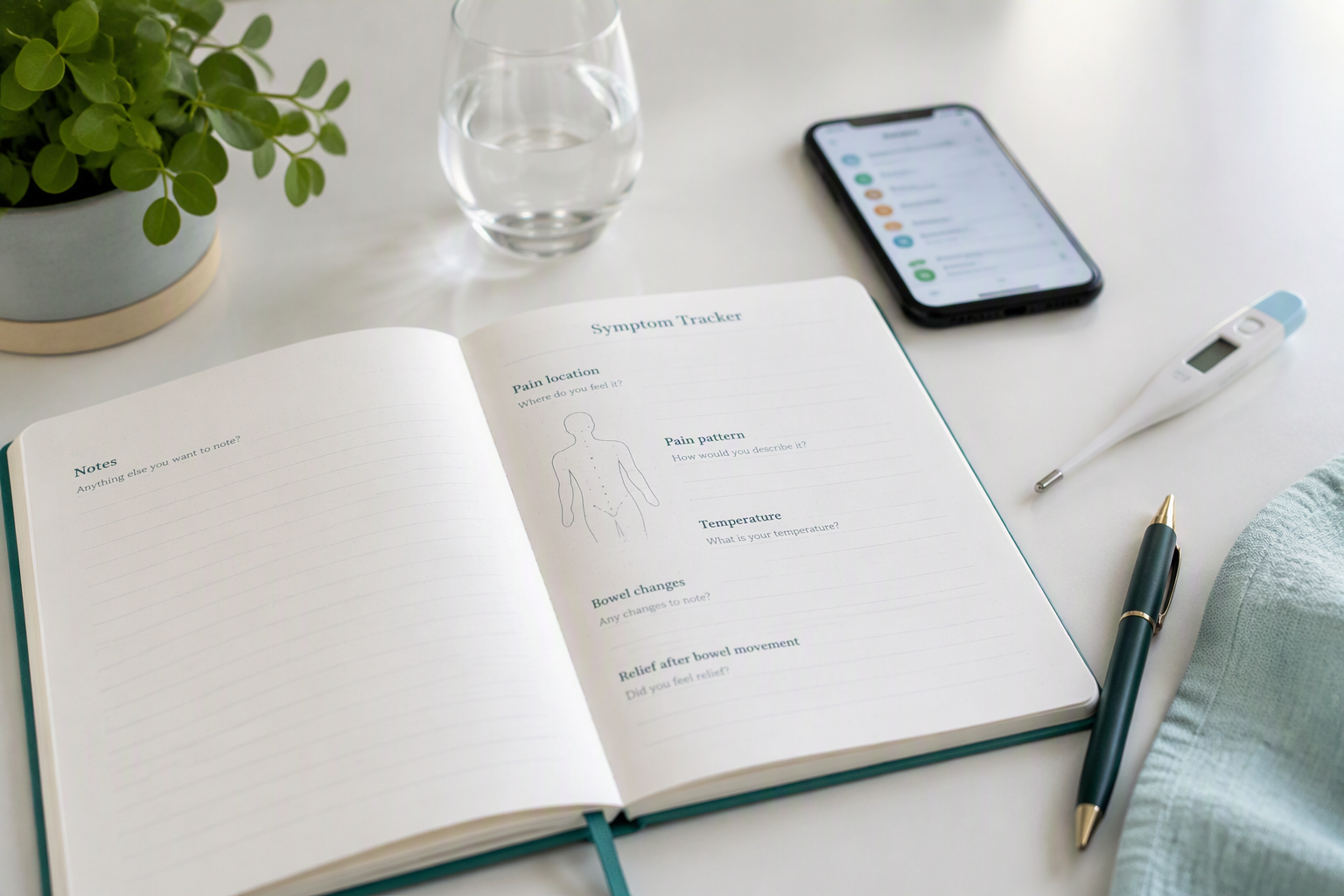
IBS and diverticulitis can both cause abdominal pain, cramping, bloating, nausea, and changes in bowel habits, including diarrhea or constipation. Since the symptoms can overlap, assuming "it feels like an IBS flare" may delay care for an acute episode. A structured log gives your clinician a clearer pattern to assess.
Complete one row each day using this tracker:
Date | Pain location (lower-left, lower-right, central, all over) | Pain shape (waves vs. constant) | Pain score 1–10 | Eased after a bowel movement? (Y/N) | Stool form and frequency | Temperature | Nausea or vomiting? | Tender when pressed? | Meals, alcohol, stress, sleep | Medications, including NSAIDs |
|---|---|---|---|---|---|---|---|---|---|---|
Three fields usually provide especially useful context. Pain that improves after passing stool fits the typical IBS pattern, though that relief does not rule out another condition. Watery, urgent stools with little pain point a different way, and that is often when bile acids cause diarrhea. Pain that comes in waves may differ from pain that stays constant or steadily builds. Temperature can affect what a clinician recommends that day, so use a thermometer and record the actual number instead of writing "felt feverish."
Review the pattern over two or three days rather than judging one difficult afternoon. IBS may look like a sawtooth, with symptoms worsening, easing, and then returning. An acute inflammatory episode may show a rising pattern as pain or feeling unwell becomes more persistent. Intensity alone cannot confirm inflammation, because meals, alcohol, stress, and poor sleep can affect symptoms through visceral hypersensitivity, gut motility, and the gut-brain axis. The explainer on visceral hypersensitivity and IBS triggers can help put trigger-related symptoms in context, but a familiar trigger does not prove an episode is harmless.
A clinician-ready summary can fit in six lines:
- Last 24 to 72 hours:
- Top symptoms:
- Timeline:
- Where the pain sits, and whether it stayed in one place:
- Highest temperature:
- Bowel changes, and whether anything eased after a bowel movement:
Bring the completed log and medication list to your appointment, especially if you use NSAIDs. Persistent, severe, or worsening symptoms, repeated vomiting, a measured fever, or marked tenderness require prompt medical guidance rather than home tracking alone.
IBS vs Diverticulitis FAQs
These IBS vs diverticulitis FAQs address common questions about symptom overlap, pain patterns, warning signs, and when to seek medical guidance. They can help you organize your concerns before a conversation with a healthcare professional.
1. Can you have IBS and diverticulitis together?
Yes. You can have IBS and later develop diverticulitis, an inflammatory episode involving diverticula. IBS usually follows a long-term pattern of recurring cramps and bowel changes, while diverticulitis is more likely to cause new, focused pain that persists or worsens. Post-diverticulitis symptoms may overlap with post-diverticulitis IBS, making self-assessment difficult.
Even with an IBS diagnosis, contact a clinician if pain feels different, intensifies, or comes with fever, nausea, or other warning signs. Don’t assume a new pattern is “just IBS,” especially when symptoms are escalating.
2. Can diverticulosis mimic IBS symptoms?
Yes. Diverticulosis can sometimes cause abdominal pain, bloating, nausea, and bowel changes that resemble IBS, but its small pouches often stay silent and are found by chance. Diverticulitis, infected pouches in the colon, involves inflamed or infected diverticula and is more likely to cause constant, focused pain, often in the lower-left abdomen, along with fever, chills, or feeling unwell. IBS typically comes and goes, may shift location, and can improve after a bowel movement. Persistent pain, fever, or worsening symptoms need prompt medical advice.
3. Does diverticulitis always change bowel habits?
No. Diverticulitis can cause constipation or diarrhea, but bowel changes aren’t required. Both diverticulitis and IBS may involve abdominal pain, cramping, bloating, nausea, and altered stools, so stool pattern alone can mislead you. IBS is a functional gut-brain disorder without measurable tissue inflammation, and symptoms often come and go or improve after a bowel movement. Diverticulitis is usually more acute, causing steady lower-left abdominal pain with fever, chills, or feeling generally ill. A new, persistent, or worsening pattern needs medical evaluation instead of being assumed to be an IBS flare.
4. How does pain timing differ after eating?
After eating, both IBS and diverticulitis may worsen, so the pattern over time matters more than one episode. IBS pain often comes in crampy waves, shifts or spreads, and may improve after a bowel movement. Diverticulitis pain is more likely to stay focused in the lower-left abdomen, persist, and continue regardless of whether you have passed stool. When pain is intense and constant, or comes with fever, chills, feeling ill, or increasing tenderness, seek urgent medical evaluation rather than waiting for symptoms to pass.
5. If symptoms improve, do I still need testing?
No. Feeling better doesn't always mean testing can be skipped. Symptoms may settle while the question of diverticulitis versus an IBS flare remains unanswered. Blood tests and other markers of inflammation can guide evaluation, and a CT scan may be needed when the diagnosis is uncertain.
The 2021 AGA Clinical Practice Update advises colonoscopy after complicated diverticulitis and after a first uncomplicated episode, unless you had a high-quality colonoscopy within the past year. This is a diagnostic follow-up rather than routine bowel cancer screening. If testing ruled out diverticulitis, improvement supports an IBS pattern. Without evaluation, schedule follow-up rather than waiting for another flare.
The bottom line
If you take three things from this guide, make them these:
- Compare this episode with your own baseline, not with a symptom list. Pain that is familiar, crampy, and eases after a bowel movement behaves like IBS. Pain that is new, steady, stays in one spot, or comes with fever does not.
- Start the tracker today, not during the next flare. Two or three days of pain location, pain shape, temperature, and bowel changes turns "I've been feeling awful" into something a clinician can act on quickly.
- Let fever, vomiting, or escalating pain override everything else. Those combinations are the point at which pattern-matching stops and same-day assessment starts.
This content is for educational purposes only and is not a substitute for personalized medical advice. Digestive symptoms can have many causes, so consult a qualified healthcare professional for persistent, severe, or worsening symptoms, and treat any red flag described above as a reason to seek care promptly.