


Nuts, seeds, and popcorn do not cause diverticulitis, and no single food or habit explains every flare. Diverticulosis means pouches have formed in the colon, while diverticulitis occurs when one or more become inflamed, sometimes with infection or a small tear.
Pressure in the colon may help diverticula form, especially alongside hard stools and repeated straining, but age, genetics, activity, body weight, smoking, medications, and intestinal changes can also affect risk. Diverticulosis becomes more common with age, affecting more than 30% of U.S. adults ages 50 to 59 and more than 70% of adults over 80.
A flare can cause lower-left abdominal pain, fever, nausea, vomiting, constipation, or diarrhea, and severe symptoms may signal complications. Clear distinctions between risk factors, possible mechanisms, and persistent myths make it easier to discuss recurring symptoms with a healthcare professional without blaming yourself or eliminating foods unnecessarily.
Diverticulitis Causes Key Takeaways
- Diverticulosis involves colon pouches, while diverticulitis involves inflammation or infection in one or more pouches.
- No single confirmed cause explains every diverticulitis flare.
- Nuts, seeds, corn, and popcorn are not established causes of diverticulitis.
- Age, genetics, constipation, smoking, obesity, inactivity, and certain medications may affect risk.
- Stress may worsen bowel symptoms but is not a proven direct cause of diverticulitis.
- NSAIDs and steroids may increase risk and should be reviewed with a healthcare professional.
- Severe pain, fever, repeated vomiting, swelling, or rectal bleeding requires prompt assessment.
How Do Diverticulosis, Diverticulitis, and Diverticular Disease Differ?
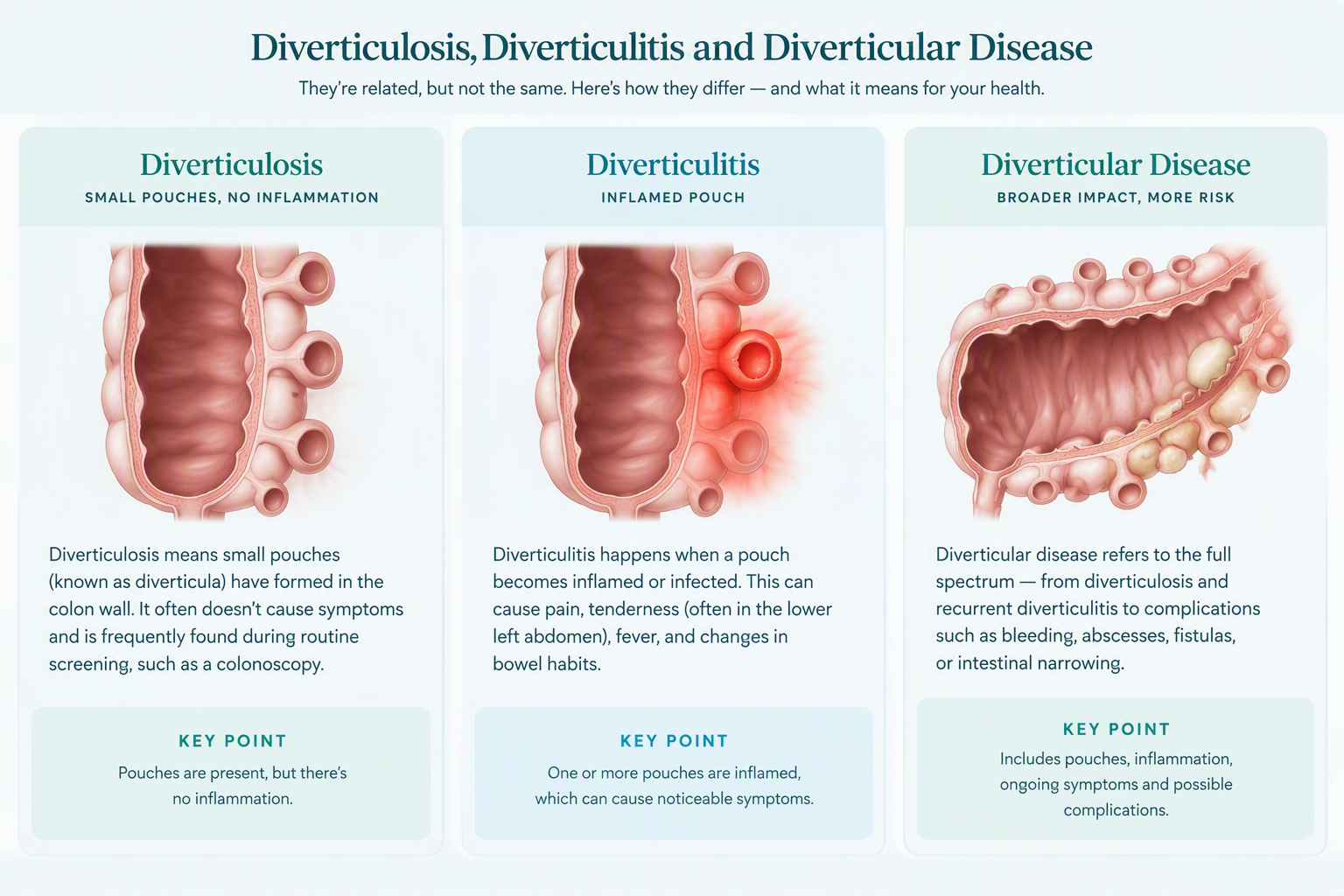
Diverticulosis, diverticulitis, and diverticular disease describe related but different conditions. Diverticula are small pouches that push outward through weak areas in the colon’s muscular wall, often where blood vessels pass through. Their presence alone does not mean inflammation or infection. The National Institute of Diabetes and Digestive and Kidney Diseases explains these distinctions (source).
- Diverticulosis: One or more diverticula are present without active inflammation. Many people have no symptoms or complications. Others may experience bloating, constipation, diarrhea, cramping, or lower-abdominal discomfort. Symptoms alone do not show that inflammation is occurring.
- Diverticulitis: One or more diverticula become inflamed and may also become infected. A severe episode can include a small tear, called a micro-perforation, although this does not happen in every case. Diverticulosis does not inevitably progress to diverticulitis.
- Diverticular disease: This broader term is used in different ways. It may describe diverticulosis linked with ongoing symptoms, bleeding, inflammation, or another complication, and it can include diverticulitis. Uncomplicated pouches, persistent symptoms, and an acute inflammatory episode are separate clinical situations.
No single cause of diverticulitis has been proven. Possible explanations include inflammation, changes in intestinal bacteria or infection, and microscopic tears in a diverticulum. These proposed mechanisms do not prove that a particular food, habit, or lifestyle choice caused your flare. Such factors may affect susceptibility without identifying one personal trigger.
That distinction helps you interpret diverticular disease as a whole. A symptom can signal a need for evaluation, but it cannot identify the cause by itself.
How Do Diverticula Form in the Colon Wall?
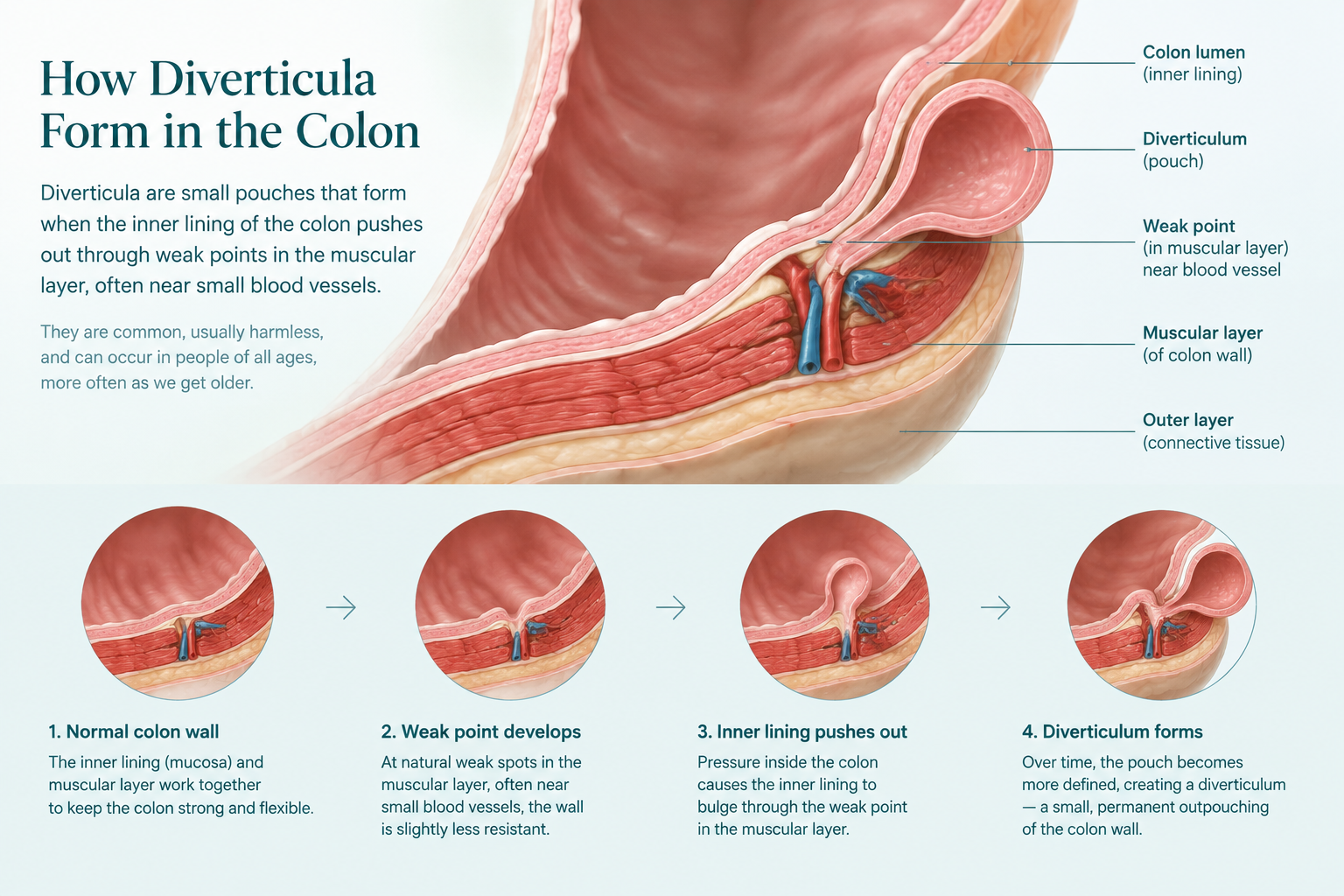
With those distinctions in mind, diverticula form when pressure inside the colon pushes the inner lining and nearby tissue through natural weak points in the muscle. Because small blood vessels pass through the muscular layer, the weak spots often sit there, and the lining bulges outward into pouches rather than growing inward. This structural model most clearly explains the formation of diverticula.
Forceful contractions, hard or dry stools, chronic constipation, and repeated straining can increase pressure inside the colon. That pressure may encourage pouch formation or irritation, but it does not explain every case. Diverticula can develop without constipation, and no single definitive cause has been established.
Diverticulosis can remain symptom-free even when the pouches are present. Diverticulitis can develop when local irritation progresses to inflammation or infection. A narrow opening, reduced local blood flow, or a small tissue injury may increase vulnerability, but inflammation is not inevitable. If symptoms suggest a flare, learning how a diverticulitis flare is treated can help you prepare for a healthcare conversation.
Material trapped inside a pouch may contribute to irritation or infection:
- Stool or undigested food: Material may lodge in a diverticulum and allow bacteria to multiply, although blockage has not been shown to cause every flare.
- Food myths: Nuts, seeds, and popcorn are not proven triggers.
- Other influences: Age, genetics, lifestyle, medications, constipation, tissue injury, and gut microbiome changes may interact.
Microbiome changes could affect colon contractions or immune activity, but those effects remain under investigation rather than serving as confirmed causes. Treat a suspected risk factor as a clue, not proof that one food or habit caused your symptoms. Tracking stool texture, bowel movements, straining, and pain gives you more useful information than banning foods without a clear reason.
So the answer to what causes diverticulitis starts with what causes diverticulosis: pouches first, inflammation later, and only in some people.
What Happens During a Diverticulitis Flare?
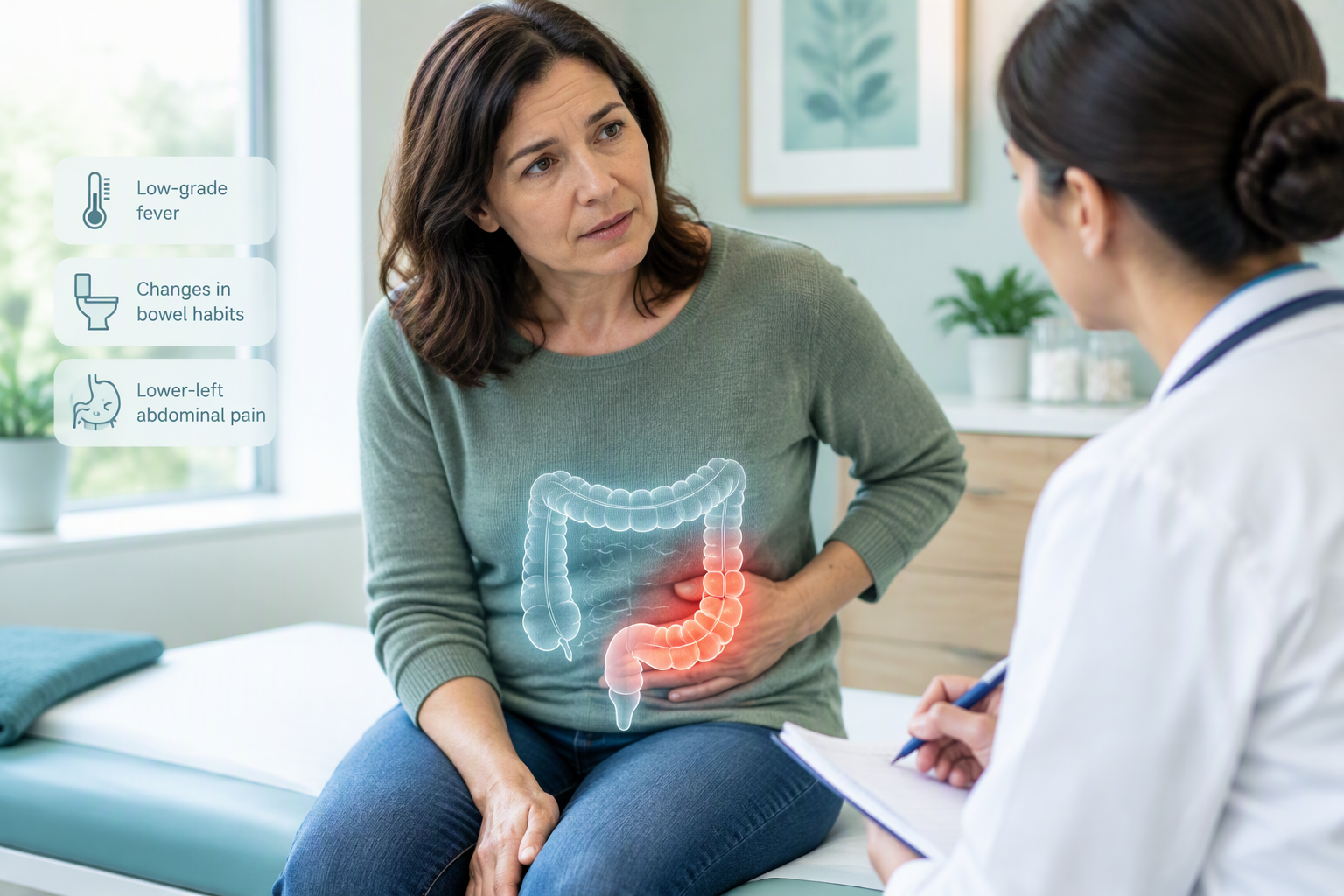
Diverticulitis has several possible mechanisms rather than one confirmed explanation. Inflammation may stay near one pouch or spread into nearby colon tissue, causing significant pain and possible complications. The NIDDK explains these differences and related symptoms (source).
The evidence on diverticulitis causes remains unsettled. Fecal material or undigested food may become trapped in a pouch, allowing bacteria to multiply. Prolonged pressure, irritation, or stretching may also create a microscopic tear called a micro-perforation. Reduced blood flow near the pouch’s narrow opening could leave the tissue more vulnerable to bacterial invasion. These are proposed mechanisms, not proven explanations for every attack. Nuts, seeds, and popcorn are not established causes of diverticulitis.
That uncertainty matters because a possible risk factor is not necessarily your personal trigger, and the symptoms can resemble other conditions:
- Pain: Moderate-to-severe pain often affects the lower-left abdomen because the sigmoid colon is commonly involved, although right-sided or upper abdominal pain can occur.
- Whole-body and abdominal symptoms: Fever, swelling, nausea, and vomiting may develop.
- Bowel changes: Constipation or diarrhea can occur, along with occasional rectal bleeding.
Contact a clinician instead of trying to diagnose yourself. Severe or worsening pain, fever, repeated vomiting, marked swelling, or rectal bleeding needs prompt assessment because complications can include an abscess, blockage, perforation, peritonitis, or widespread infection. Evaluation may include CT imaging and blood, urine, or stool tests. Because the sigmoid colon sits on the lower left, that is where most people feel the pain (source). Escalating pain or pain paired with fever warrants timely medical assessment.
Diverticulitis symptoms like these, rather than any single food, are what should prompt a call to your clinician when a diverticulitis attack starts.
Which Diverticulitis Risk Factors Can You Change?

Risk factors can shape susceptibility without identifying what caused one person's flare. Across large groups, research can link diet, activity, body weight, smoking, or certain medicines with diverticulitis, but it cannot explain one person's flare. Even perfect habits cannot guarantee that every episode will be prevented.
A low-fiber diet may play a part, especially when eating patterns include many refined grains or large amounts of red meat. Harder stools, straining, and increased pressure in the colon may contribute to inflammation. Add tolerated fiber-rich foods gradually instead of following rigid bans. Nuts, seeds, and popcorn can remain part of an individualized eating pattern, while one meal still does not explain a flare. To lower the chance of a recurrence, the AGA advises a high-quality diet, a normal body weight, regular activity, not smoking, and avoiding NSAIDs other than aspirin a doctor has prescribed (source).
Several potentially changeable factors may shape risk:
- Movement: Low physical activity is associated with higher risk. Regular movement may support bowel function and reduce pressure in the colon.
- Body weight: Obesity is linked with a higher chance of disease, more severe inflammation, and complications. Abdominal pressure may play a role, but weight-supportive habits should focus on overall health rather than shame or guaranteed prevention.
- Smoking: Smoking is associated with a greater likelihood of disease and possibly complicated or ruptured diverticulitis. Quitting can support digestive and overall health, although nicotine dependence can make that difficult.
- Medications: NSAIDs are associated with higher risk, and steroids may also affect it. Review these medicines with a healthcare professional instead of stopping a prescribed treatment independently.
Age is different because you cannot change it. Diverticulosis becomes more common with age, and more than 30% of U.S. adults ages 50 to 59 and more than 70% of adults over 80 have it. Bring recurring pain, bowel changes, diet, activity, weight concerns, smoking, and medications into one healthcare conversation rather than searching for a single confirmed trigger.
Refined grains in place of whole grains, low activity, and smoking are the diverticulitis risk factors most within reach, which makes them the core of preventing diverticulitis.
Do Stress or Constipation Cause Diverticulitis?
Constipation may still matter when it causes hard stools or repeated straining. Hard, dry stools and repeated straining may worsen bowel discomfort in some people. Still, many people with constipation never develop diverticulitis. Guidance on constipation with straining and hard stools can support a useful conversation with a healthcare professional.
Constipation, diarrhea, abdominal pain, and bloating can all occur with diverticular disease, but constipation during a flare does not prove it caused the inflammation. Genetic, lifestyle, medication-related, and intestinal factors may interact, and no single definitive cause has been established.
The brain-gut connection allows stress to change colon contractions, bowel habits, and pain sensitivity. Stress may worsen constipation, urgency, bloating, or discomfort, but evidence does not establish emotional stress as a direct cause of diverticulitis. In other words, stress has not been shown to cause diverticulitis, and a flare during a stressful period does not mean you caused it.
Changes in the gut microbiome may also affect colon contractions and possibly influence susceptibility to inflammation or flare-ups. Research is still developing, so a possible contributor is not a confirmed personal trigger. Persistent constipation or repeated straining deserves medical discussion, especially alongside:
- Severe or worsening abdominal pain
- Fever or vomiting
- Marked changes in bowel habits
Do not dismiss these signs as stress. Record symptom timing, stool changes, medications, and routine changes before your clinical visit.
Do Nuts, Seeds, or Popcorn Trigger Flares?
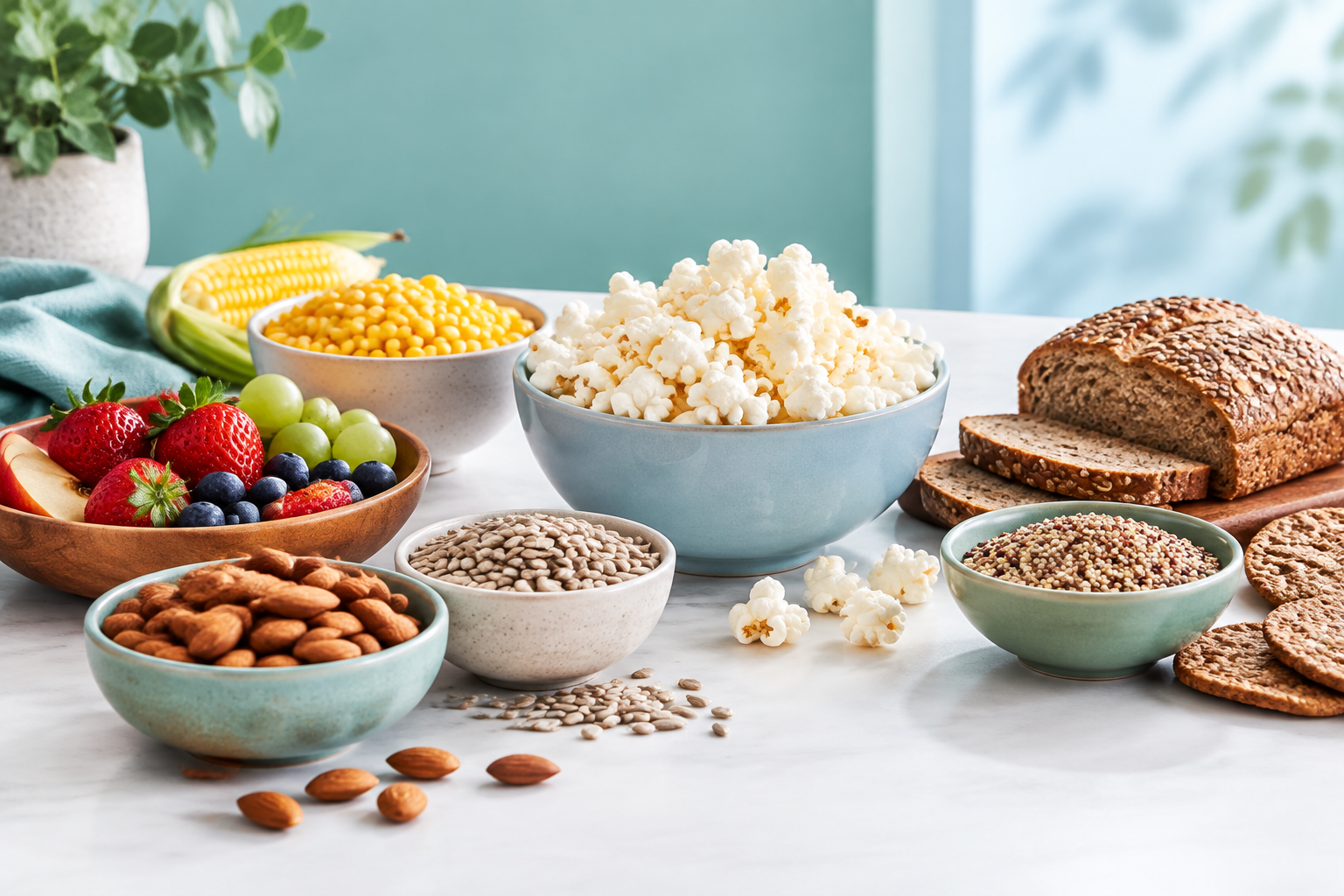
After separating stress and constipation from confirmed causes, nuts, seeds, corn, and popcorn can generally remain in the diet when tolerated. Older advice claimed that food particles could lodge in diverticula, small pouches that form in the colon, but research has not supported that theory (source).
The myth is worth retiring. When tolerated, nuts and seeds fit a balanced, fiber-inclusive diet and do not need to be removed automatically.
Individual tolerance still matters. One uncomfortable meal does not prove inflammation or identify a personal trigger. A brief record can help reveal patterns:
- Food and portion: Note what you ate and roughly how much.
- Preparation and timing: Record whether it was raw, roasted, ground, or eaten with other foods.
- Symptoms: Track pain, bloating, bowel changes, fever, and symptom duration.
Persistent patterns merit discussion with a doctor or registered dietitian. Symptoms alone cannot confirm diverticulitis, and a suspected food trigger differs from an established diverticulitis risk factor.
During an active flare, a healthcare professional may recommend temporary dietary changes. That does not make permanent avoidance necessary. Guidance on the diverticulitis diet once a flare settles should reflect symptom severity, medical history, and tolerance. Reintroduce fiber gradually rather than adopting rigid lifelong rules.
Diverticulitis Causes FAQs
These FAQs cover common questions about diverticulitis causes, including how diverticulosis and diverticulitis differ, which risk factors matter, and why popular food myths can be misleading.
1. Can Genetics Increase Diverticulitis Risk?
Yes. A family history of diverticular disease may modestly increase your baseline risk because relatives can share inherited features that affect colon structure or the bowel’s response to pressure and inflammation. This points to susceptibility, not certainty. Researchers have not found a single gene that causes diverticulosis or diverticulitis. Risk likely reflects genetics alongside lifestyle, medications, intestinal factors, and age. An affected parent or sibling does not make a flare inevitable, and developing the condition is not your fault.
Genetic risk factors for diverticulitis are one reason two people with similar habits can have very different histories.
2. Why Does Diverticulitis Become More Common With Age?
Diverticulosis becomes more common with age because the colon wall can gradually weaken and lose elasticity, allowing pouches to form more easily under pressure. In the United States it affects more than 30% of adults aged 50 to 59 and more than 70% of those over 80. Aging and having diverticula raise susceptibility, but most people never develop diverticulitis.
Age-related diverticulitis risk rises with the number of pouches, not with any change you made.
3. Can Certain Medications Contribute to Diverticulitis?
Regular use of nonsteroidal anti-inflammatory drugs (NSAIDs), including ibuprofen and naproxen, is associated with greater risk of diverticulitis, inflammation, and complications. These medicines may irritate or weaken the gut lining, but they are risk factors rather than proven direct causes. Steroids can affect immune responses and gut-lining protection, while opioids may increase complication risk and hide early warning signs.
Review prescription and over-the-counter medicines with your clinician, especially when symptoms recur. Don’t stop prescribed treatment or change a dose on your own. A medication review can help identify possible contributors without mistaking them for confirmed personal triggers.
4. Why Do Some People Have Recurrent Diverticulitis?
Recurrent diverticulitis can result from several interacting factors, not one failed habit or food choice. Age, genetics, bowel changes, lifestyle, medication exposure, and the severity of the first episode may all affect susceptibility. Prevention is best personalized with a healthcare professional rather than reduced to avoiding nuts, seeds, or one specific food.
New or returning left-sided abdominal pain, fever, nausea, vomiting, or bowel changes need medical attention. A clinician can review prevention and medications and assess possible complications, including an abscess, obstruction, fistula, perforation, or bleeding. Specialist evaluation may help when episodes are frequent, severe, complicated, or difficult to distinguish from another condition.