


A diverticulitis diagnosis does not automatically mean antibiotics, a hospital stay, or surgery. Uncomplicated disease may improve at home with fluids, rest, symptom monitoring, and selective antibiotic use, while complicated diverticulitis may require hospital treatment, drainage, or an operation. Uncomplicated diverticulitis involves localized inflammation without an abscess, perforation, obstruction, fistula, or peritonitis.
Computed tomography, or CT, helps confirm the diagnosis and show whether complications are present, especially during a first episode, severe symptoms, or poor recovery. The American Gastroenterological Association recommends antibiotics for complicated disease and selected higher-risk cases, including some people with weakened immunity or concerning blood-test results.
Treatment also changes as recovery progresses, from pain control and hydration to food reintroduction, activity, colonoscopy, and recurrence prevention. A colonoscopy is often considered 6 to 8 weeks after recovery, while worsening pain, fever, repeated vomiting, dehydration, rigid abdominal muscles, or significant bleeding can require urgent evaluation.
Diverticulitis Treatment Key Takeaways
- CT imaging helps distinguish uncomplicated diverticulitis from abscess, perforation, obstruction, fistula, or peritonitis.
- Stable uncomplicated diverticulitis may be treated at home with fluids, rest, monitoring, and follow-up.
- Antibiotics are selective for uncomplicated disease but recommended for complicated or higher-risk cases.
- Acetaminophen is generally preferred, while NSAIDs are usually avoided unless a clinician advises otherwise.
- Hospital care may include intravenous fluids, antibiotics, bowel rest, monitoring, and nutritional support.
- Abscesses may need CT-guided drainage, while perforation, obstruction, or uncontrolled infection may require surgery.
- Colonoscopy is often considered 6 to 8 weeks after recovery, followed by gradual fiber and activity progression.
When Does Diverticulitis Need Urgent Care?
New or unexplained abdominal pain needs professional assessment because several serious conditions can feel alike. Acute diverticulitis is judged by symptom severity, progression, complications, and your overall health, not by pain location alone. Frailty or a weakened immune system lowers the threshold for care.
Seek emergency evaluation for any of these warning signs:
- Severe, spreading, or worsening abdominal pain
- A swollen, hard, or rigid abdomen
- High fever, chills, confusion, fainting, marked weakness, or feeling seriously ill
- Repeated vomiting, inability to keep fluids down, very little urination, or dizziness
- Significant rectal bleeding
These symptoms may signal an abscess, perforation, peritonitis, bowel obstruction, fistula, or sepsis, and hospital care may include intravenous fluids, CT imaging, monitoring, and treatment of the complication. Background on diverticular disease from pouches to flares explains the condition, but only an assessment can tell how urgently you need help.
Any rectal bleeding needs prompt medical attention, even if the amount seems small, and significant bleeding requires urgent evaluation. Contact a clinician the same day for persistent moderate pain, fever, nausea, reduced intake, or symptoms that are not improving. The guidance on when the pain is not diverticulitis can help you prepare questions when the cause is unclear.
Mild, stable, or improving symptoms without bleeding, rigidity, fainting, persistent vomiting, dehydration, or systemic illness may follow a clinician’s home-care plan. Pain relief should follow that plan too. Arrange reassessment if pain, fever, hydration, vomiting, or your overall condition worsens or fails to improve.
Urgent medical care for diverticulitis is for these signs. Everything else starts with a same-day call.
How Is Diverticulitis Diagnosed and Classified?
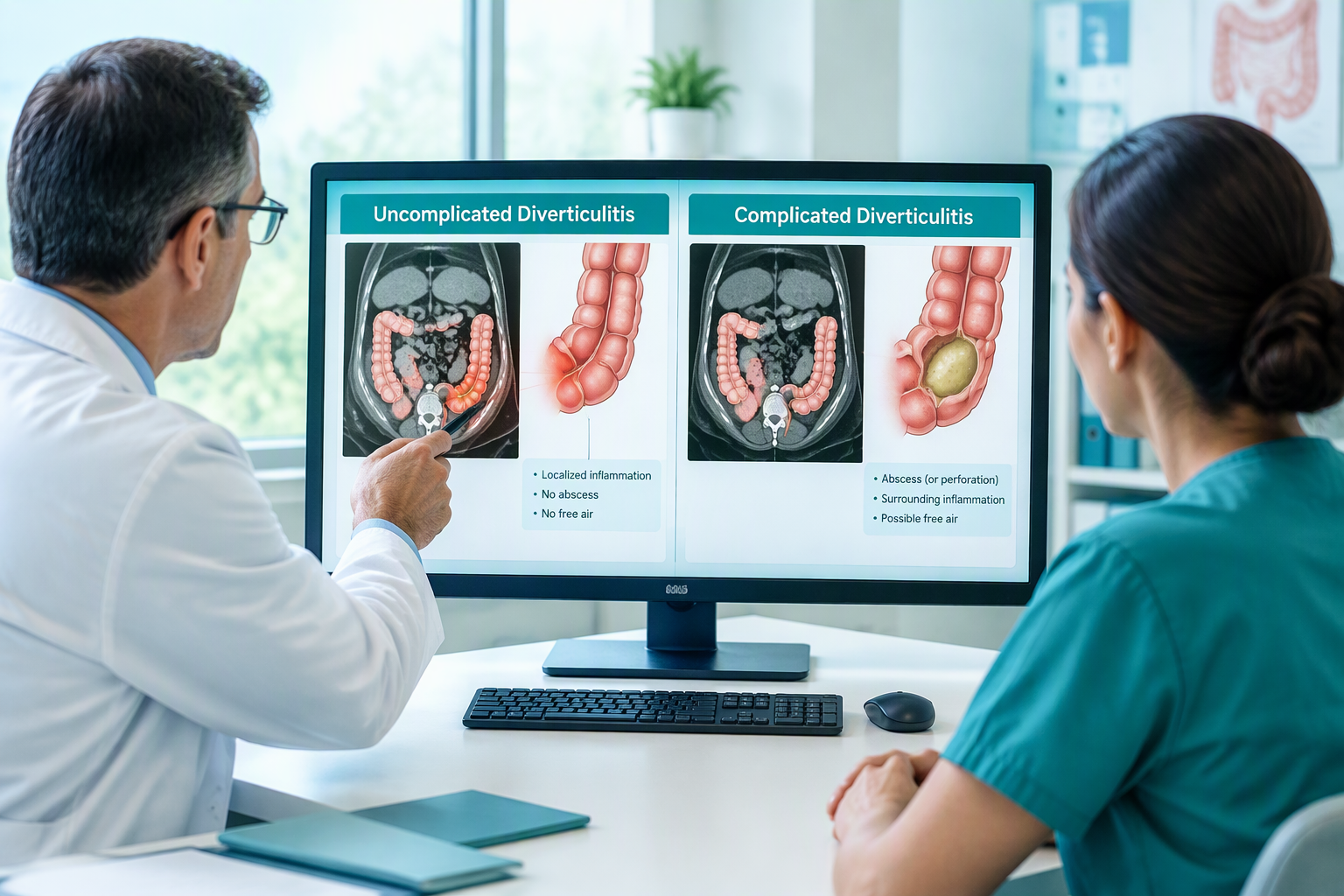
After urgent symptoms are assessed, diagnosis combines your symptom history, physical examination, laboratory tests, and imaging. Clinicians review pain location and progression, digestive or urinary symptoms, previous attacks, and related conditions. Because other serious conditions can cause similar abdominal pain, the examination looks for tenderness, guarding, dehydration, or widespread inflammation. Blood tests may show inflammation, infection, anemia, dehydration, or reduced kidney function. Urine, stool, or pregnancy testing can help exclude other causes, but no test confirms diverticulitis alone (source).
Contrast-enhanced computed tomography (CT) of the abdomen and pelvis is the main way to confirm suspected diverticulitis and identify complications. CT is particularly useful during a first confirmed episode, unusually severe or atypical symptoms, poor response to treatment, weakened immunity, or planning for possible preventive surgery. It can also distinguish diverticulitis from diverticulosis, in which colon pouches are present without active inflammation.
The findings generally place the illness into one of two categories:
- Uncomplicated diverticulitis: Localized inflammation without an abscess, perforation, obstruction, fistula, or peritonitis, which is inflammation or infection involving the abdominal lining.
- Complicated diverticulitis: One or more of those findings is present. A diverticular abscess is a pus-filled pocket that may be drained with a needle or catheter guided by CT. Free perforation, obstruction, fistula, an undrainable abscess, frequent recurrences, or selected high-risk conditions may require surgical assessment.
Severe or worsening pain, high fever, dehydration, repeated vomiting, or weakened immunity can warrant hospitalization before classification is complete. Recurrence and the diverticulitis risk factors behind a flare also influence specialist decisions. Bring your complete symptom history to the evaluation.
That split decides diverticulitis management: uncomplicated diverticulitis treatment usually happens at home, and complicated diverticulitis treatment usually happens in hospital.
How Is Uncomplicated Diverticulitis Treated at Home?

Once diverticulitis is classified as stable and uncomplicated, home treatment can be appropriate after a healthcare professional reviews your symptoms, examines you, and uses computed tomography (CT) imaging when needed. Treatment at home usually includes rest, hydration, symptom monitoring, and a clear follow-up plan. Not everyone with diverticulitis needs antibiotics, and some people recover at home without them when their clinician confirms that approach is safe (source).
Outpatient care generally requires:
- Stable vital signs and manageable pain.
- Little or no nausea, with the ability to keep fluids down.
- Normal urination without signs of dehydration.
- Reliable support and a practical way to contact your treating clinician.
Take frequent small sips rather than forcing a large drink. If your clinician recommends a brief clear-liquid phase, options may include water, clear broth, clear juice, gelatin, or ice chips. These liquids offer temporary support, not enough nourishment for prolonged use.
When fluids stay down and pain, nausea, and tenderness improve, add small portions of low-fiber foods such as eggs, yogurt, white rice, or poultry. Then gradually return to your fiber-rich pattern, as the diverticulitis diet after recovery explains. Advancing too quickly may worsen symptoms, so increase food only as your body tolerates it.
Contact your clinician if symptoms fail to improve or worsen. Stop home care and seek urgent medical guidance for:
- Severe or increasing pain.
- Fever or repeated vomiting.
- Inability to drink, reduced urination, dizziness, faintness, or marked weakness.
Immunosuppression, serious medical conditions, or a possible complication such as an abscess may make hospital care safer than home monitoring. Keep the follow-up plan available so worsening symptoms are addressed promptly.
For most people, treatment for diverticulitis is this simple: rest, fluids, a short step down in diet, and a clear plan if things change.
When Are Antibiotics Used for Diverticulitis?

Antibiotics are not automatic. If you're otherwise healthy with mild, uncomplicated disease, can drink fluids, control pain, attend close follow-up, and seek prompt care if symptoms worsen, a clinician may recommend managing it without antibiotics.
Antibiotics become more likely when risk factors suggest a harder recovery:
- Overall health: Frailty, significant medical conditions, or immune suppression can increase complication risk.
- Symptoms: Persistent or worsening pain, repeated vomiting, dehydration, or an inability to keep fluids down may require more active treatment.
- Blood tests: A C-reactive protein (CRP) level above 140 milligrams per liter or a white blood cell count above 15 × 10⁹ per liter can support antibiotic treatment in selected higher-risk cases (source).
- CT findings: CT showing a fluid collection, abscess, or longer inflamed section of colon can indicate higher-risk disease.
The American Gastroenterological Association recommends antibiotics for complicated disease and selected higher-risk cases of uncomplicated disease (source). CT imaging helps distinguish uncomplicated from complicated diverticulitis, but your symptoms, examination, health history, and test results guide the decision. People with weakened immune systems may need earlier imaging and input from a gastroenterologist or colorectal surgeon.
Hospital care may be needed for severe or worsening pain, high fever, dehydration, inability to drink, perforation, obstruction, fistula, peritonitis, or an abscess. Treatment can include fasting or bowel rest, intravenous fluids or nutrition, and broad-spectrum intravenous antibiotics.
If you're prescribed oral antibiotics, take them exactly as directed and complete the course unless your clinician changes the plan.
Selective antibiotic use for diverticulitis, rather than routine use, is what the AGA advises for people with mild, uncomplicated disease and a healthy immune system.
How Can You Manage Diverticulitis Pain Safely?
Acetaminophen is generally preferred because it does not have the same stomach irritation and bleeding risks as common anti-inflammatory medicines.
Unless a clinician recommends them, ibuprofen, naproxen, aspirin, and other nonsteroidal anti-inflammatory drugs (NSAIDs) are usually avoided. The concerns include digestive tract irritation, ulcers, bleeding, kidney injury, and bowel complications. Dehydration, kidney disease, blood thinners, and high doses can increase these risks. Cleveland Clinic advises avoiding NSAIDs with diverticulitis because they raise bleeding risk (source).
Never stop prescribed aspirin used to prevent a heart attack or stroke without medical guidance. Have a doctor or pharmacist review any combination of pain medicines before you take them.
A clinician may prescribe an antispasmodic when bowel spasms cause cramping, but you should not borrow or self-start one. These medicines can ease symptoms but cannot treat an abscess, perforation, obstruction, or another complication.
Seek prompt evaluation for severe, persistent, or worsening pain, especially with:
- Fever
- Repeated vomiting
- Abdominal swelling
- Inability to pass stool or gas
- Dizziness
- Black stool or rectal bleeding
These warning signs may require urgent assessment rather than stronger pain relief at home (source).
Good diverticulitis pain management means using the safest drug that works and treating worsening pain as a signal, not a nuisance.
How Is Complicated Diverticulitis Treated in Hospital?

Complicated diverticulitis may need hospital treatment when infection or inflammation cannot be safely managed at home. Severe pain, high fever, repeated vomiting, dehydration, a rigid abdomen, or inability to keep fluids down can signal a serious problem. Abscess, perforation, obstruction, fistula, peritonitis, or sepsis also require urgent assessment.
Hospital care begins by addressing immediate fluid, infection, and nutrition needs:
- Bowel rest may mean limiting food or fasting briefly.
- Intravenous fluids replace losses from vomiting, fever, dehydration, or poor intake.
- Intravenous or other nutritional support may be needed if eating remains impossible, followed by a gradual return to fluids and food.
- Broad-spectrum intravenous antibiotics may treat complicated diverticulitis or a more aggressive infection.
Antibiotics are chosen using your examination, CT imaging, blood tests, treatment response, allergies, kidney function, and immune status. Monitoring includes pain, vital signs, urine output, hydration, abdominal findings, and blood tests for sepsis or organ dysfunction.
An abscess may need drainage with CT or ultrasound guidance, usually alongside antibiotics. Perforation or uncontrolled infection calls for urgent colorectal-surgery evaluation. If you are immunocompromised, clinicians may use a lower threshold for CT imaging, intravenous antibiotics, hospital monitoring, and surgical consultation because complications can progress quickly with fewer clear warning signs.
Inpatient treatment for diverticulitis usually lasts until pain, fever, and eating have all improved enough to finish recovering at home.
When Are Drainage or Surgery Needed?
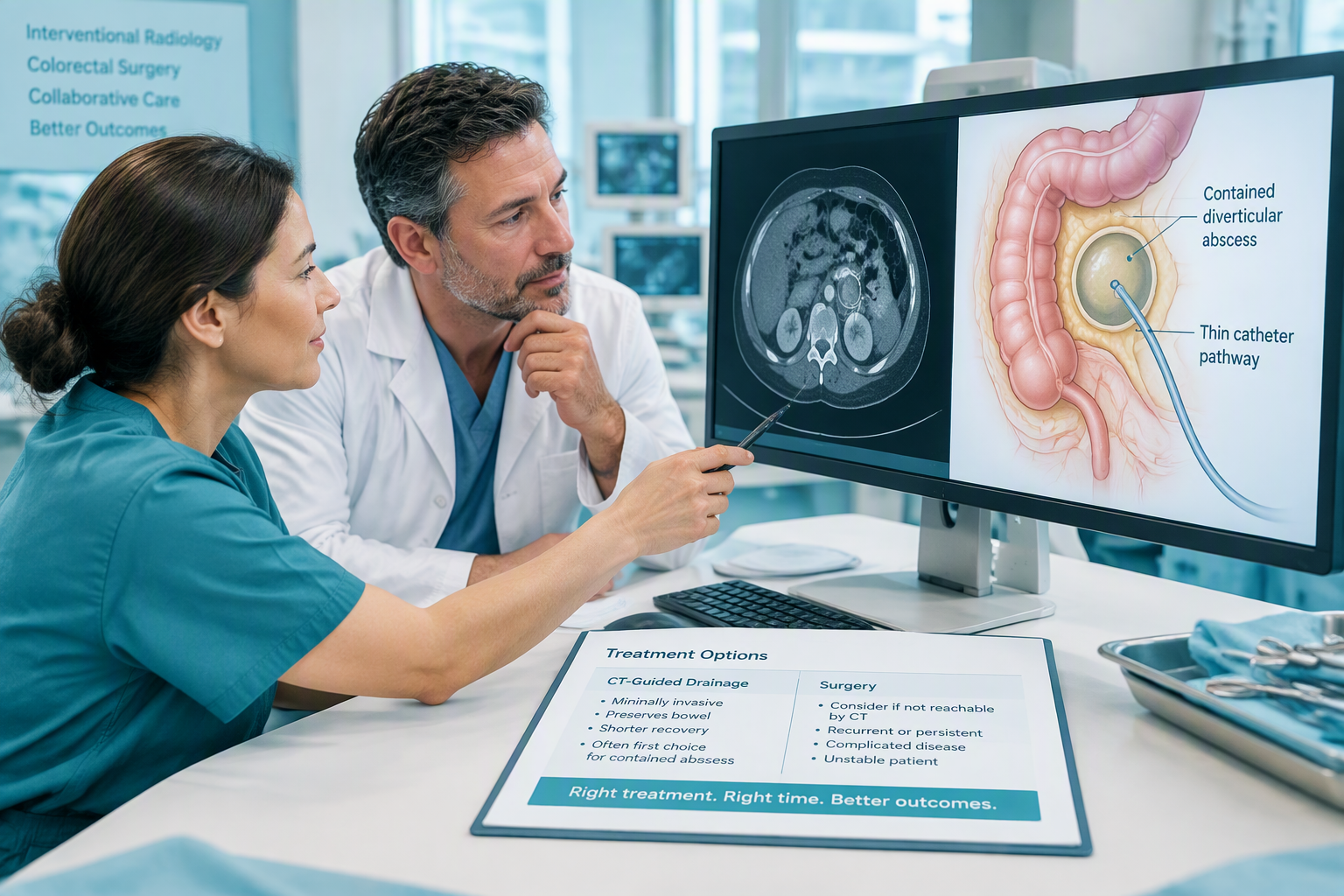
For these complications, drainage or surgery may be needed when diverticulitis causes an abscess, uncontrolled infection, a blocked bowel, or a hole in the colon. The choice depends on the collection’s size and location, your symptoms, and your response to antibiotics.
Small, contained abscesses may improve with antibiotics and close monitoring, while larger or persistent collections often need drainage once CT shows a safe route.
During image-guided drainage, an interventional radiologist guides a needle or thin catheter through the skin into the pus-filled pocket. Infected fluid drains while antibiotics treat surrounding infection. This approach may avoid emergency surgery, but an inaccessible abscess, persistent infection, or recurrence can still require an operation.
Urgent surgery for diverticulitis may be necessary when:
- Free bowel perforation: A hole allows intestinal contents to leak into the abdomen.
- Peritonitis: Widespread infection inflames the abdominal lining.
- Bowel obstruction: Swelling or scar-related narrowing blocks stool and gas.
- Fistula: An abnormal passage connects the colon with another organ.
- Failed treatment: Antibiotics and catheter drainage do not control the infection.
A colectomy, also called colon resection, removes the diseased section and reconnects healthy bowel when conditions permit. Severe contamination, fragile tissue, or unstable health may require a temporary or permanent colostomy.
After recovery, elective colon resection may be discussed for persistent complicated disease, repeated abscesses, frequent disruptive attacks, narrowing, or a fistula. Weakened immunity may support earlier surgical review, but recurrence alone does not automatically require surgery. Monitoring after abscess drainage is important because ongoing infection can change the treatment plan.
What Should You Expect During Recovery?
Recovery from mild, uncomplicated diverticulitis often begins at home with clinician guidance, rest, fluids, and temporary food changes. Home care is more suitable when vital signs are stable, pain and nausea are controlled, liquids stay down, and reliable support is available. Symptoms should trend better during the first few days, even if they do not disappear immediately.
Let tolerance guide food progression rather than a fixed schedule:
- Continue clear liquids: Keep them down without worsening pain or nausea.
- Add soft foods: Try small portions of eggs, yogurt, white rice, or poultry.
- Broaden the diet: Increase portions and variety, then return to higher-fiber foods after the flare fully resolves.
Pause dietary changes and contact a clinician if vomiting, worsening symptoms, or dehydration develops. Temporary constipation, diarrhea, bloating, or irregular stools can occur as food intake and activity change. After recovery, gradually add fruits, vegetables, whole grains, beans, and legumes with enough fluids to soften stool and lower the chance of a recurrence.
Begin with rest and light movement, increasing walking, work, exercise, and usual activities as pain, energy, hydration, and food tolerance improve. Physical activity may support bowel function and reduce pressure in the colon, but strenuous exercise should wait until symptoms settle and a clinician clears restrictions after hospitalization, drainage, or surgery.
The right response depends on the symptoms:
- Seek emergency care: Severe or escalating pain, a rigid abdomen, fainting, significant rectal bleeding, confusion, or signs of systemic illness.
- Contact your clinician the same day: Returning fever, repeated vomiting, inability to hydrate, worsening pain, or no clear improvement.
- Use routine follow-up: Lingering bowel changes, food concerns, or questions about resuming normal activity.
A realistic diverticulitis recovery timeline runs in days for a mild flare and weeks after drainage or surgery, and what to eat and drink with diverticulitis changes at each stage.
When Are Colonoscopy and Prevention Discussed?
After recovery, a colonoscopy is often considered after a first uncomplicated episode or complicated disease, such as an abscess. It helps inspect the colon and rule out other conditions, including colorectal cancer. A high-quality colonoscopy completed within the past year may make repeat testing unnecessary.
The examination is generally delayed 6 to 8 weeks after the flare, or until symptoms fully resolve, because active inflammation can raise procedure risk (source). Inflamed tissue can make the procedure harder and may increase injury risk. Earlier evaluation may be needed with:
- Rectal bleeding
- Unexplained weight loss
- Anemia
- Worsening abdominal pain
- Fever
- Persistent changes in bowel habits
Preventing a recurrence is a gradual goal. Once normal eating is appropriate, slowly increase fiber through fruits, vegetables, whole grains, beans, and other legumes. Drink enough fluid to help fiber soften stool and prevent constipation. If gas or discomfort worsens, reduce the pace instead of abandoning fiber.
Regular physical activity may support bowel function and reduce pressure inside the colon. A plant-forward eating pattern with plenty of fiber and less excess red meat is usually more practical than strict food rules. Routine avoidance of nuts, seeds, or popcorn is unnecessary unless a specific food repeatedly worsens symptoms.
With recurrent diverticulitis, prevention choices should match your symptoms, medical history, and tolerance rather than follow a universal meal plan. Revisit the plan if symptoms change or recovery does not follow the expected course.
Preventing diverticulitis recurrence comes down to dietary fiber after diverticulitis, regular activity, not smoking, and avoiding regular NSAID use.
Diverticulitis Treatment FAQs
These FAQs cover common questions about diverticulitis treatment, recovery, and follow-up care. They help you sort through conflicting information and prepare for informed conversations with your healthcare professional.
1. Can Probiotics Help Treat Diverticulitis?
Probiotics aren’t an established treatment for active diverticulitis. Although gut bacteria may influence diverticular disease, supplements haven’t reliably reduced acute inflammation, eased an attack, or prevented complications. Mild, uncomplicated diverticulitis may improve at home with clinician guidance, rest, hydration, and temporary diet changes. More serious disease can require antibiotics, hospital care, abscess drainage, or surgery. Don’t use a probiotic instead of these measures. Ask your clinician before taking one, especially during an acute attack.
2. Can You Take Laxatives During Diverticulitis Treatment?
Do not start a laxative during an acute diverticulitis flare without guidance from your clinician. Significant pain, vomiting, a swollen or rigid abdomen, dehydration, or possible obstruction can make laxatives unsafe because inflammation or blockage may slow stool movement. A clinician can advise whether hydration, diet changes, or a specific bowel treatment is appropriate. Seek urgent medical care for worsening pain, fever or chills, repeated vomiting, inability to keep fluids down, fainting, rectal bleeding, or feeling very ill, as these may signal complicated diverticulitis requiring hospital care.
3. Is Mesalamine Effective for Recurrent Diverticulitis?
Mesalamine has not reliably prevented recurrent diverticulitis in studies, and the American College of Physicians recommends against using it to prevent recurrence (source). Follow-up should confirm the diagnosis, review your risk of another episode, and shape prevention steps around your health. Treatment depends on whether diverticulitis is uncomplicated or complicated, symptom severity, complications, and underlying conditions. New or worsening abdominal pain needs prompt assessment because other serious problems can look similar. Antibiotics may be prescribed selectively according to clinical risk, rather than routinely for every mild, uncomplicated episode.
4. How Is Diverticulitis Treated During Pregnancy?
New or worsening abdominal pain during pregnancy needs prompt assessment because diverticulitis can resemble obstetric emergencies and other serious conditions. Treatment depends on whether the disease is uncomplicated or complicated, symptom severity, overall health, and pregnancy stage. Obstetric and gastrointestinal clinicians coordinate decisions about imaging, outpatient care, or hospitalization. Avoid leftover antibiotics, laxatives, supplements, or pain medicines. Acetaminophen is generally preferred for pain, while ibuprofen, naproxen, aspirin, and other NSAIDs are usually avoided. The concerns include gastrointestinal irritation, bleeding, bowel complications, and pregnancy-related risks.