What Stomach Acid Does for Digestion, Nutrients, and Reflux
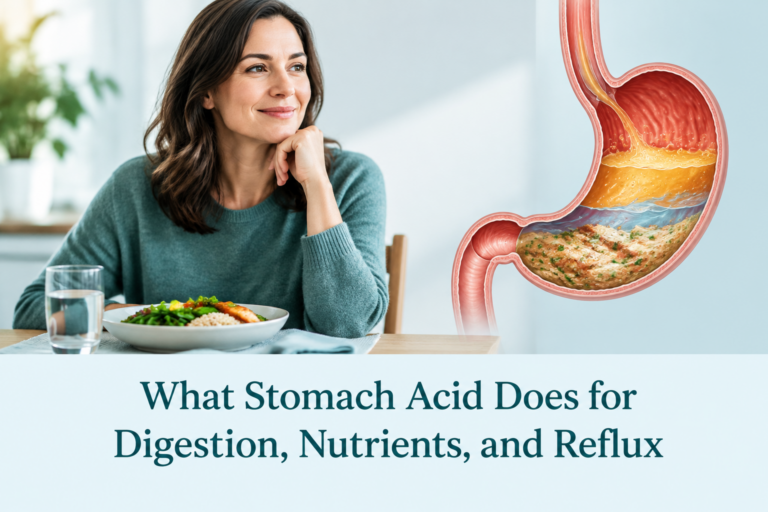
Learn how stomach acid supports protein digestion, nutrient availability, and microbial defense, plus what low acid or reflux can feel like.

 Chelsea Cleary, RDN
Learn how stomach acid supports protein digestion, nutrient availability, and microbial defense, plus what low acid or reflux can feel like.

Learn how skipped meals may affect stomach acid, gut motility, bloating, reflux, and bowel habits, plus practical ways to reset your meal timing.
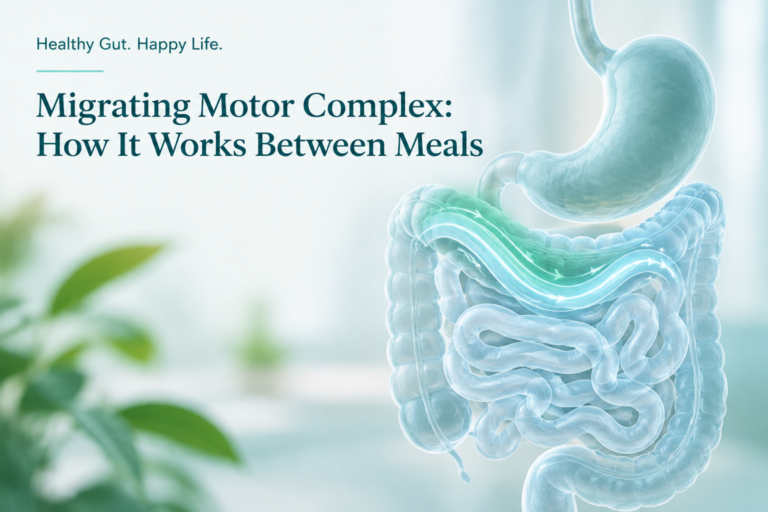
Learn how the migrating motor complex works between meals, why grazing can interrupt it, and how to space meals realistically.

Learn how late-night eating can affect digestion, reflux, sleep, and bowel habits, plus practical meal timing and late-meal choices.
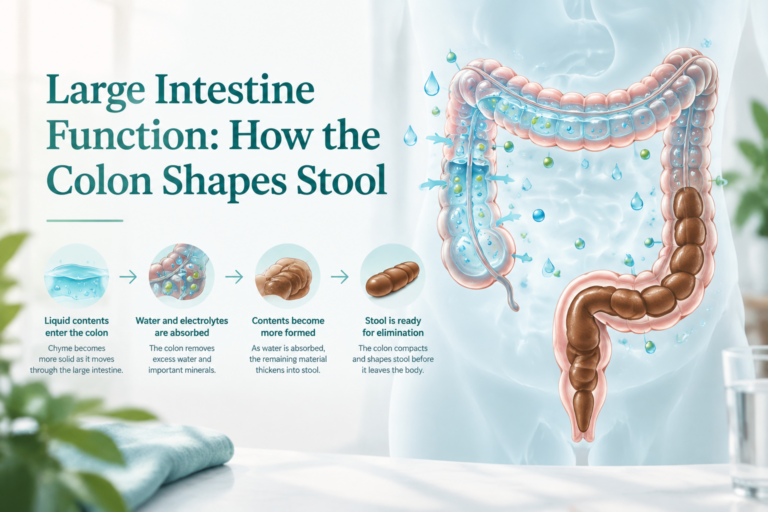
Learn how large intestine function includes water and electrolyte absorption, gut bacteria, stool formation, storage, and elimination.
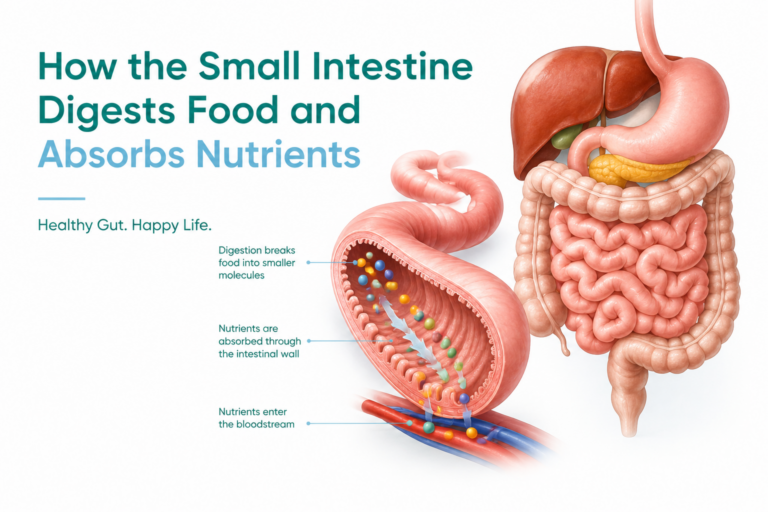
Learn small intestine function, from the duodenum, jejunum, and ileum to enzymes, bile, villi, nutrient absorption, and food movement.
Learn how gut barrier function works, what increased intestinal permeability means, and how fiber, diverse plants, and sleep may support it.
Learn what the gastrocolic reflex is, why eating triggers bowel activity, what intensifies it, and practical ways to calm post-meal urgency.
Learn how digestive enzymes break down food, where each is made, how lactase deficiency and pancreatic insufficiency differ, and when supplements help.
Learn what bowel transit time means, what can speed or slow digestion, and how to observe your transit pattern at home or discuss clinical testing.