


Bloating after a heavy meal doesn't automatically mean you need a broad digestive enzyme supplement. Digestive enzymes are proteins that break food into absorbable nutrients, and the body normally makes them in the mouth, stomach, pancreas, and small intestine. Amylase works on starches, proteases break down protein, and lipase helps digest fats.
Supplement labels can make amylase, lipase, and protease sound like an answer for every kind of gas or indigestion, but symptoms are more useful when they follow a specific food pattern. Lactase may help when dairy repeatedly causes discomfort, while alpha-galactosidase may suit gas after beans or certain vegetables. Persistent greasy or floating stools, ongoing diarrhea, weight loss, or a history of pancreatic disease can point to EPI, which requires medical evaluation and may involve a fecal elastase stool test.
Digestive Enzymes Key Takeaways
- Digestive enzymes break carbohydrates, proteins, and fats into absorbable nutrients.
- The mouth, stomach, pancreas, and small intestine each contribute digestive enzymes.
- Amylase digests starches, proteases digest proteins, and lipase digests fats.
- Bile supports fat digestion by helping lipase reach small fat droplets.
- Lactase can help with symptoms that consistently follow lactose-containing dairy foods.
- Alpha-galactosidase may reduce gas from beans, legumes, and some cruciferous vegetables.
- Greasy stools, weight loss, or persistent diarrhea can signal EPI and need evaluation.
What Are Digestive Enzymes?
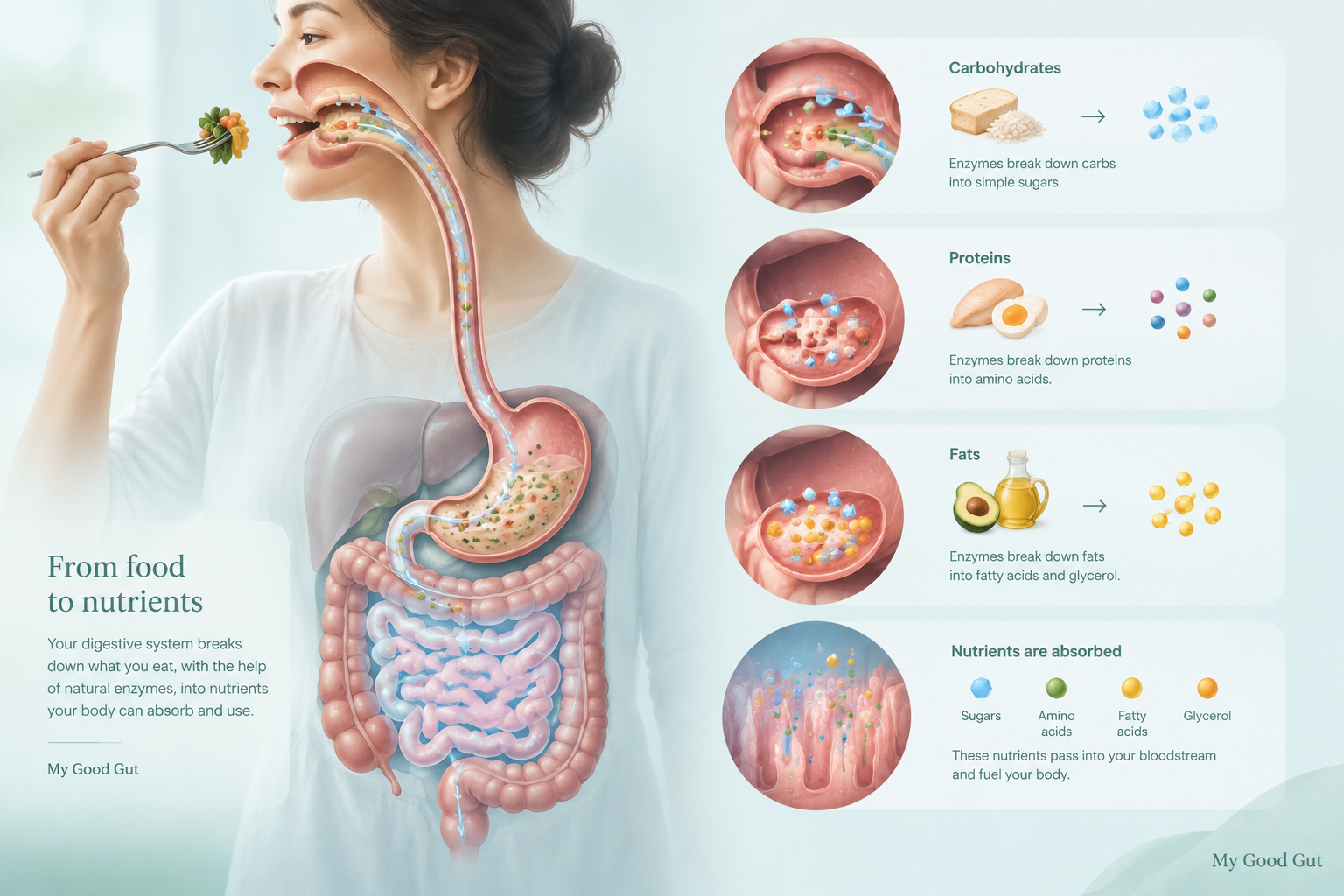
Digestive enzymes are proteins that speed the chemical breakdown of food into absorbable parts. They change carbohydrates into simple sugars, proteins into amino acids, and fats into fatty acids and glycerol. Put simply, what do digestive enzymes do? They are biological catalysts, speeding a reaction without being used up, and they make nutrients from meals available for energy, growth, and cell repair, as StatPearls explains (source).
Chewing and stomach churning reduce food to smaller pieces, but mechanical digestion cannot make nutrients small enough to cross the intestinal lining. Most enzyme activity occurs in the small intestine, where digestive fluids mix with food. The digestive system and its organs work together to move food, add digestive juices, absorb nutrients, and remove waste.
Where are digestive enzymes produced? The salivary glands, stomach, pancreas, and small-intestinal lining all contribute. The pancreas supplies many enzymes needed to digest a meal, while enzymes on the intestinal lining complete certain carbohydrate-digestion steps. The National Institute of Diabetes and Digestive and Kidney Diseases describes how these organs coordinate digestion (source).
Common examples include amylase, lipase, and protease. Amylase breaks down carbohydrates, lipase helps digest fats, and protease breaks proteins into amino acids. Knowing where digestive enzymes are produced and what digestive enzymes do can help you notice whether symptoms seem tied to a specific food rather than assuming bloating or gas always calls for a supplement. The next sections explain enzyme types, possible deficiencies, and when food-specific support or medical treatment may be appropriate.
Where Are Digestive Enzymes Made?
To link those digestive roles to their sources, digestive enzymes are made at several points along your digestive tract, each handling a different stage of a meal. The process begins in the mouth, continues in the stomach, and depends most heavily on the pancreas and small intestine.
- Mouth: Saliva contains amylase, sometimes called ptyalin, for starch digestion, so the breakdown of starches and other complex carbohydrates begins as you chew. Lingual lipase also starts digesting fat before food reaches the stomach.
- Stomach: Chief cells in the stomach release pepsinogen, which stomach acid changes into pepsin to start protein digestion. This conversion is part of how stomach acid starts digestion.
- Pancreas: The pancreas is the main source of digestive enzymes. It releases amylase, lipase, and protease for protein digestion into the duodenum, the first part of the small intestine, along with bicarbonate that reduces the acidity of food arriving from the stomach. Trypsin and chymotrypsin are pancreatic protease enzymes that break proteins into smaller peptides and amino acids. StatPearls on the physiology of digestion describes this coordinated release of pancreatic enzymes and bicarbonate.
- Small intestine lining: Cells on the intestinal lining make brush-border enzymes, which finish breaking down certain carbohydrates and other nutrients near the place where absorption occurs.
Because digestion is a handoff between several organs, bloating or gas after one food does not automatically mean that a single enzyme is missing. The food involved, the timing of symptoms, and whether discomfort continues between meals usually offer more useful clues.
How Do Pancreatic Enzymes and Bile Work Together?
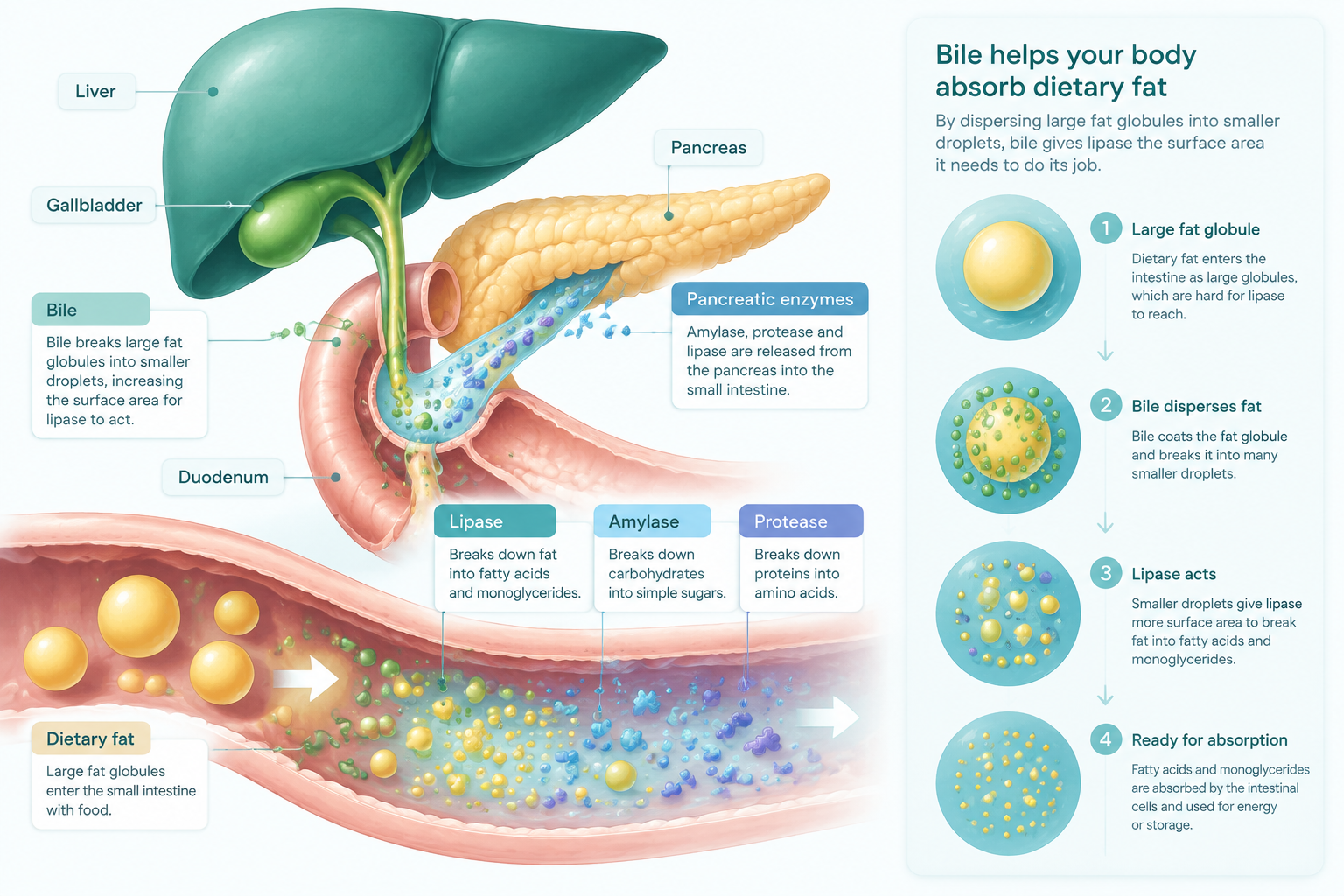
When chyme, the semi-liquid mixture of food and stomach acid, enters the duodenum, pancreatic juice and bile join the digestive process. The pancreas supplies amylase, lipase, and protease enzymes, while the liver makes bile and the gallbladder releases it into the small intestine. NIDDK describes this coordinated response in its overview of digestion.
Although bile is not an enzyme, it breaks large fat globules into small droplets, creating more surface area for lipase for fat digestion. Lipase then releases fatty acids and glycerol from dietary fats. Problems with bile flow or pancreatic lipase can make fat digestion less effective and may contribute to poor nutrient absorption.
The pancreatic enzymes each handle a different nutrient:
- Amylase: Completes the breakdown of starch into maltose, a smaller sugar.
- Trypsin and chymotrypsin: These protease enzymes cut proteins into shorter chains called peptides.
- Lipase: Splits fats after bile has dispersed them into droplets.
Together, amylase, lipase, and protease prepare carbohydrates, fats, and proteins for the next phase. Lactase and sucrase also act later in the small intestine to help digest specific sugars. The usual sequence of pancreatic enzyme activity and carbohydrate digestion is described in StatPearls.
After food has been broken into smaller components, digestion in the small intestine carries the process forward. Persistent trouble digesting fatty foods deserves attention because it can affect how well your body uses nutrients.
Which Enzymes Live on the Gut Lining?
Brush-border enzymes finish digestion on the surface of your small intestine, where nutrients are prepared for absorption. Unlike pancreatic enzymes, they stay attached to intestinal lining cells.
The key brush-border enzymes are:
- Lactase: Breaks down lactose, the sugar in milk and dairy foods.
- Sucrase-isomaltase: Breaks down sucrose, or table sugar, and some starch fragments. The rare inherited condition congenital sucrase-isomaltase deficiency causes symptoms after sugary and starchy foods.
- Maltase: Breaks down maltose, which forms as starch is digested.
- Peptidases: Split small protein fragments into amino acids.
The intestinal surface supports digestion while also acting as a protective barrier. How the gut lining protects you explains why that barrier matters beyond nutrient absorption.
Damage or inflammation in this lining can lower brush-border enzyme activity. Celiac disease, a stomach or intestinal infection, and an inflammatory bowel disease flare can affect these cells. Lactase may drop first, which helps explain why dairy can trigger gas, bloating, loose stools, or abdominal discomfort after a stomach bug. This change may improve as the lining heals and does not automatically mean lifelong lactose intolerance.
Reduced enzyme activity can also contribute to indigestion, poor nutrient absorption, excess fullness after small meals, or undigested food in stool. These symptoms have many possible causes, so a food-specific pattern offers a more useful clue than assuming an enzyme deficiency.
Which Enzymes Digest Common Foods?
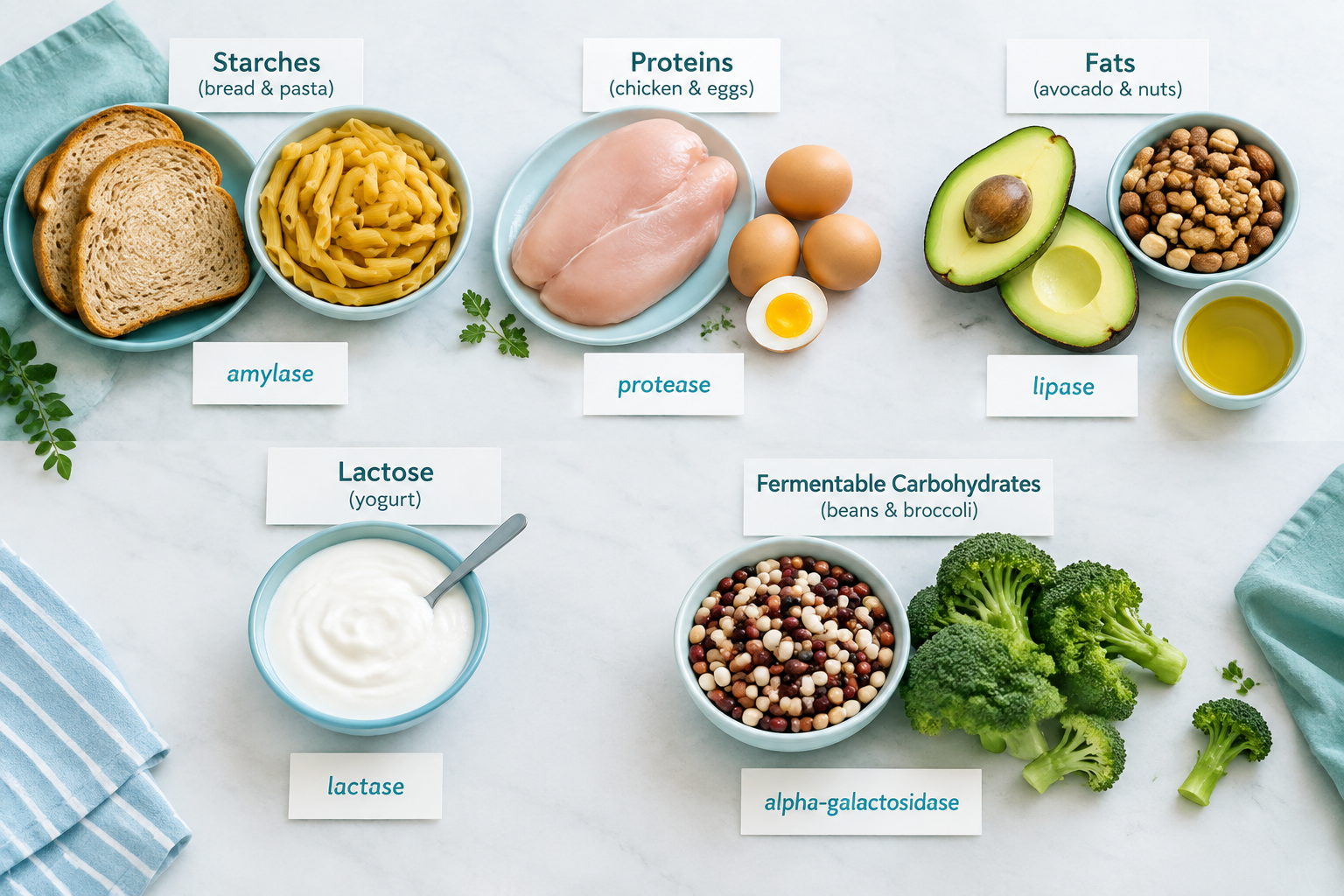
To put the effects of reduced enzyme activity into everyday food terms, digestive enzymes act on specific parts of food, not on vague symptoms alone. The main types of digestive enzymes include amylase for starch digestion, protease for protein digestion, and lipase for fat digestion. They help process foods such as toast, pasta, chicken, eggs, oils, and cheese. Because your body normally makes these digestive enzymes, an enzyme-heavy supplement label does not by itself show that you need one. Humans do not make cellulase, which is why plant fiber passes to the colon for bacteria to ferment.
Food component | Main enzyme or enzymes | Digestive role |
|---|---|---|
Starches | Amylase | Breaks starch into sugars that are ultimately absorbed as glucose. |
Protein | Pepsin and proteases | Splits protein into peptides and amino acids. |
Fats | Lipase | Separates fat into fatty acids and glycerol. |
Lactose in dairy | Lactase | Breaks milk sugar into simple sugars. |
Sucrose in table sugar | Sucrase | Digests sugar in sweets and sweetened drinks. |
As saliva mixes with bread, rice, potatoes, cereal, or pasta, amylase begins working in the mouth, and pancreatic amylase carries on in the small intestine. Fiber is different from starch because human enzymes cannot fully digest plant fiber. That is useful rather than harmful, since intact fiber supports regular bowel habits and feeds the gut microbiome.
Protein digestion starts in the stomach, where acid allows pepsin to begin breaking food into smaller peptides. Pancreatic proteases, including trypsin and chymotrypsin, continue that work in the small intestine. Papain from papaya and bromelain from pineapple are plant-derived proteases found in some supplements, but they do not replace enzymes made by your stomach and pancreas.
Most fat digestion takes place in the small intestine, where pancreatic lipase acts on fats from avocado, nuts, meat, full-fat dairy, and fried foods. Bile made by the liver spreads fat into smaller droplets so lipase can work more effectively, though bile is not an enzyme.
Lactase, sucrase, and maltase work along the small-intestinal lining. Low lactase activity can leave lactose from dairy undigested and contribute to discomfort after those foods. Alpha-galactosidase can break down galacto-oligosaccharides in beans, lentils, some nuts, and cruciferous vegetables before bacterial fermentation adds gas or bloating. It does not digest cellulose, and plant fiber remains valuable for digestive health.
What Does Lactase Deficiency Look Like?
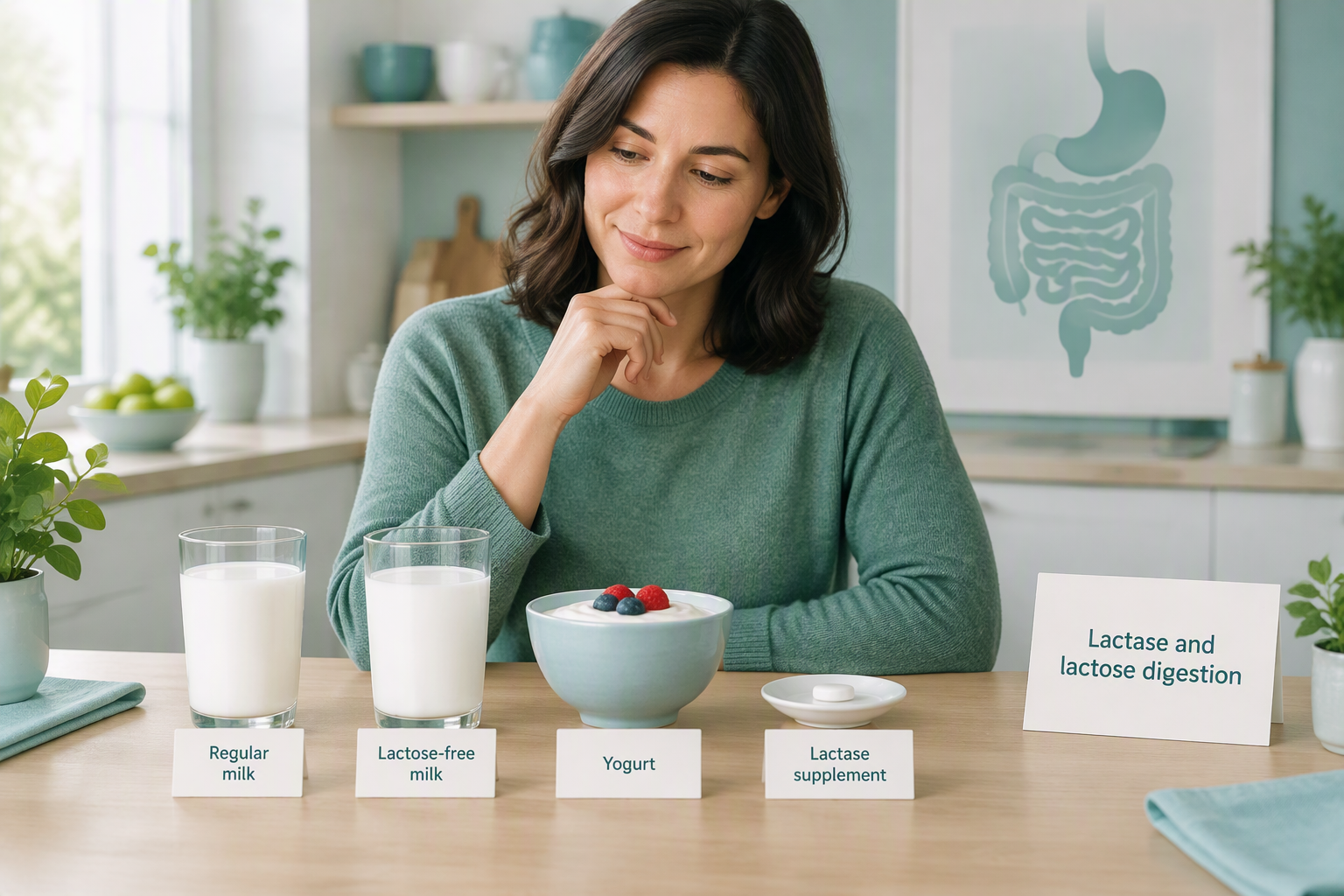
Lactase deficiency means your small intestine produces too little lactase, the enzyme that breaks lactose, the sugar in milk, into glucose and galactose so it can be absorbed. Lactose that remains undigested passes into the colon, where bacteria ferment it. This can lead to gas and bloating, rumbling, cramps, and sometimes loose stools or diarrhea.
Lactose intolerance usually follows a dairy-related pattern rather than causing discomfort after every meal. Milk, ice cream, soft cheese, and other lactose-containing foods may trigger symptoms, though the response can vary with the portion, the foods eaten alongside it, and your remaining lactase activity. Feeling unwell after dairy does not confirm the cause or mean you need to avoid all dairy.
When dairy is a consistent trigger, a focused lactase trial can be more informative than a broad digestive-enzyme blend. Lactase tablets can be taken before you eat or drink milk products, and lactase drops can be added to milk before you drink it. These products can lower the chance of lactose intolerance symptoms (source). They do not treat irritable bowel syndrome (IBS) or every cause of bloating.
Food patterns can help match the enzyme to the trigger:
- Dairy-linked symptoms: Lactase helps digest lactose in milk and other dairy foods.
- Bean- or vegetable-linked gas: Alpha-galactosidase helps digest certain carbohydrates in beans, legumes, and cruciferous vegetables. It is not a replacement for lactase.
- Mixed or unpredictable symptoms: A single-enzyme trial offers less useful information when symptoms follow many unrelated foods.
Symptoms that occur with or without dairy, continue after reducing lactose or trying lactase, or include ongoing diarrhea, unintentional weight loss, blood in stool, or severe pain need medical evaluation. A clinician can consider lactose testing and other digestive conditions, including exocrine pancreatic insufficiency, according to NIDDK (source).
What Is Exocrine Pancreatic Insufficiency?
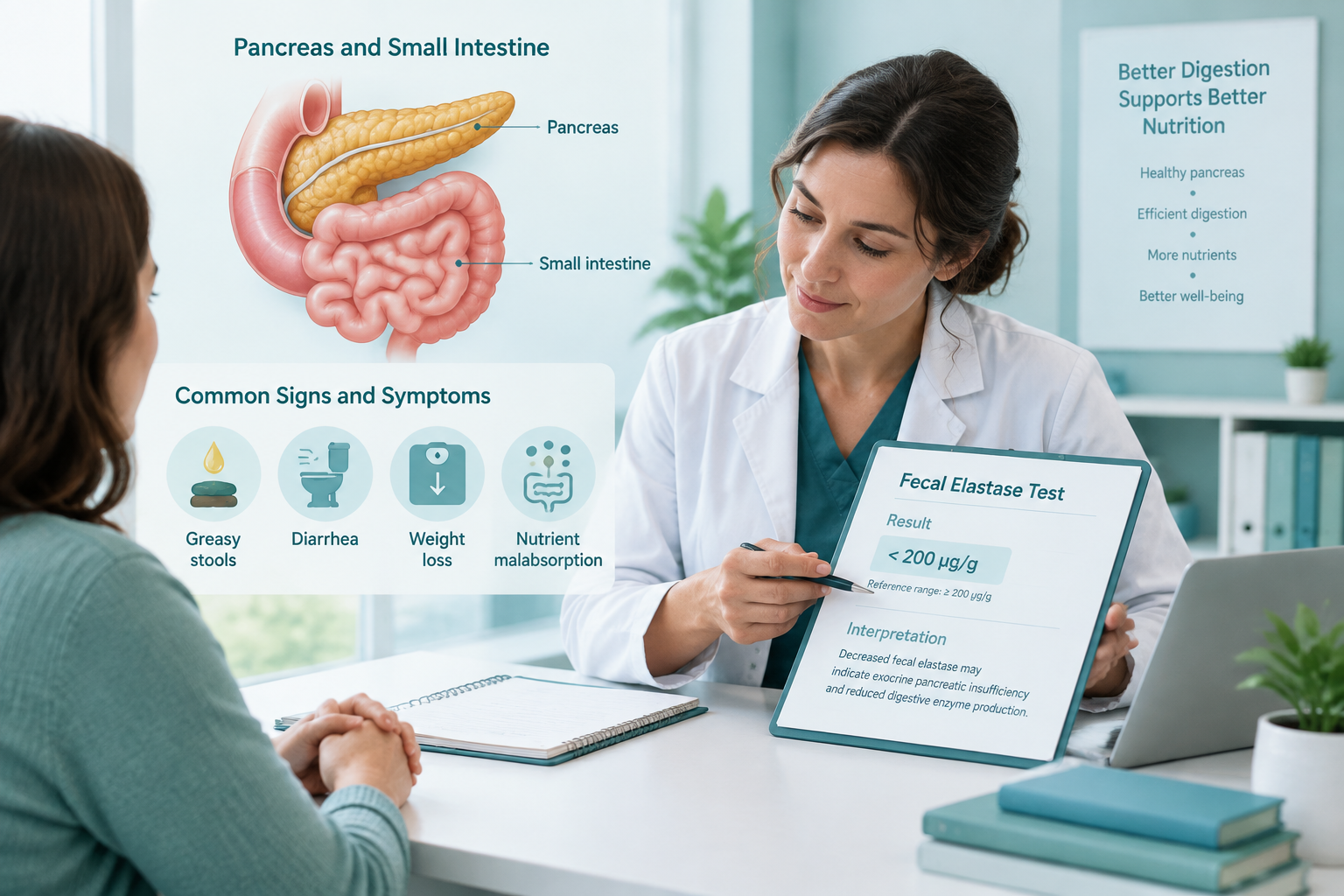
Exocrine pancreatic insufficiency (EPI) is a digestive enzyme deficiency in which the pancreas makes too few enzymes, or does not release enough of them into the small intestine. This can cause malabsorption, poor nutrient absorption, especially of fat, even if you eat a nutritious diet. EPI is a medical condition, not the occasional bloating that can follow a rich meal.
Fat that is not absorbed can alter stool appearance and bowel habits. One floating stool alone does not mean you have EPI, but a persistent pattern needs medical attention:
- Greasy, oily, pale, foul-smelling, floating, or hard-to-flush stools
- Chronic diarrhea or frequent loose stools
- Gas, bloating, cramps, or abdominal discomfort
- Unintended weight loss or signs of vitamin and nutrient deficiencies
Chronic pancreatitis, cystic fibrosis, prior pancreatic surgery, and blockage of the pancreatic or biliary ducts can raise concern for EPI. Pancreatic cysts, tumors, pancreatic cancer, and some cases of diabetes may also matter. For people searching where are digestive enzymes produced, pancreatic disease is especially relevant to EPI. Knowing where digestive enzymes are produced helps explain why pancreatic disease can affect digestion so broadly.
Persistent oily stools, worsening diarrhea, severe abdominal pain, or unexplained weight loss need prompt medical evaluation rather than a self-directed enzyme supplement trial. Clinicians may use blood work, pancreatic-function testing, and a fecal elastase-1 stool test. Results above 200 micrograms per gram are generally normal, while 100 to 200 micrograms per gram may suggest mild-to-moderate insufficiency and need follow-up. A result below 100 micrograms per gram is consistent with severe EPI. Because watery stool can dilute the sample and cause a falsely low result, symptoms and health history remain important when interpreting the test.
Confirmed EPI may require clinician-directed treatment with prescription pancreatic enzyme replacement therapy containing pancrelipase. Over-the-counter enzyme products marketed for occasional food-related discomfort are not a substitute for treatment of this condition.
When Are Targeted Enzymes Considered?
Targeted enzymes make the most sense when a specific food repeatedly triggers symptoms rather than a pattern that suggests EPI. Gas and bloating by themselves do not point to an enzyme deficiency, so a food-and-symptom pattern matters more than choosing a broad blend.
Lactase is a targeted option when milk, ice cream, or other lactose-containing dairy consistently causes cramping, gas, or loose stools. It helps break down lactose, but it does not treat every cause of dairy discomfort or IBS. Trying smaller portions or lactose-free dairy alongside lactase can help clarify whether lactose is the problem.
Alpha-galactosidase may help with gas and bloating after beans, lentils, chickpeas, and some cruciferous vegetables. These foods contain galacto-oligosaccharides (GOS), carbohydrates that gut bacteria ferment. In a small randomized crossover trial, 21 of 31 people with IBS were GOS-sensitive, and the full dose reduced overall symptoms and bloating during three-day test periods (source). Benefit is not expected for everyone with IBS or vegetable-related symptoms.
A focused approach is easier to interpret:
- Match the trigger: Use lactase for dairy-related symptoms and alpha-galactosidase for GOS-rich foods.
- Be cautious with broad blends: Digestive enzyme supplements containing protease, lipase, and amylase, usually plant-based or fungal digestive enzymes rather than animal pancreatin, are marketed for heavy meals, but evidence for routine use is mixed. The best time to take digestive enzymes is with the first bites of the meal they are meant for.
- Look beyond enzymes: Diet, medicines, intolerances, and medical conditions can better explain persistent symptoms.
Do digestive enzyme supplements work for general post-meal heaviness? Broad-spectrum products do not broadly repair digestion, improve metabolism, or solve ongoing bloating. Digestive enzymes and probiotics are different products: enzymes are proteins that act on food, while probiotics are live microbes. Newer FODMAP enzymes such as fructan hydrolase target specific fermentable carbohydrates and have limited evidence so far. Digestive enzyme supplement safety is generally good at label doses, but the FDA regulates them as dietary supplements, so potency claims are not verified before sale.
Prescription pancreatic enzyme replacement therapy (PERT) is clinician-managed pancrelipase for confirmed exocrine pancreatic insufficiency. Persistent diarrhea, greasy or floating stools, unintentional weight loss, fat-soluble vitamin deficiencies, or pancreatic disease history need medical evaluation. Fecal elastase-1 testing can support evaluation for suspected EPI. Sample quality can affect result interpretation.
Digestive Enzyme FAQs
These FAQs cover common questions about digestive enzymes, including food-related symptoms and signs that may call for medical testing. They can help you make sense of patterns you notice after meals.
1. Do Most People Need Enzyme Supplements?
Most healthy people make enough enzymes in the mouth, stomach, pancreas, and small intestine, so digestive enzyme supplements are usually unnecessary. Broad blends containing amylase, protease, and lipase have mixed evidence for general post-meal heaviness. Do digestive enzyme supplements work? They can help when they match a specific food trigger, but bloating, gas, indigestion, or fullness alone does not point to an enzyme deficiency. Track patterns and discuss persistent, worsening, or disruptive symptoms with a healthcare professional.
2. When Should You Take Digestive Enzymes?
Take a targeted digestive enzyme immediately before eating, with your meal, or with the first few bites so it can mix with the food it targets. With dairy, take lactase, and with foods containing the carbohydrates it breaks down, take alpha-galactosidase. For a broad enzyme blend, follow the label’s directions for dose and meal use.
Take PERT exactly as prescribed, starting with food. For longer meals, your clinician may recommend dividing the dose between the beginning and middle of the meal. Enzymes taken well after eating or on an empty stomach are usually less useful for meal-related symptoms.
3. Are Digestive Enzymes Safe Daily?
Daily digestive enzyme supplements are not a good daily fit for everyone. Formulas, ingredient sources, and strengths differ, and a single enzyme for a known food trigger may be easier to assess than a broad blend. Taking more than directed can irritate your digestive tract or cause nausea, so persistent symptoms need medical evaluation instead of a higher dose.
Talk with a healthcare professional or registered dietitian before daily use if you are pregnant, have an ulcer or chronic digestive condition, or take regular medicines. Bromelain and some protease enzymes may interact with blood thinners.
4. Can Enzymes Cause Digestive Side Effects?
Digestive enzyme supplements can cause nausea, abdominal cramps, diarrhea, or irritation. The dose, enzyme blend, or added ingredients may be responsible. Pork-derived and plant-derived enzymes can also trigger allergic reactions in people sensitive to their source. Stop using the product and seek prompt medical care for hives, swelling, trouble breathing, or other allergy symptoms.
Persistent or worsening bloating, abdominal discomfort, diarrhea, excessive gas, reflux, constipation, or post-meal heaviness needs evaluation instead of repeated enzyme trials. Oily stools, unexplained weight loss, or significant pain deserve particular attention.
5. How Do You Choose an Enzyme Blend?
Choose an enzyme based on a consistent food trigger, not as a general answer for IBS or unexplained bloating. Lactase may fit symptoms after dairy, while alpha-galactosidase is intended for beans, legumes, and other high-GOS foods. Check the Supplement Facts panel for activity units, such as FCC units or GALU, rather than milligrams, and look for NSF, USP, or ConsumerLab testing for label accuracy and purity.
OTC blends may use microbial enzymes, including Aspergillus oryzae, which can work across varying acidity, or animal-derived pancreatin. Neither is the same as prescription pancrelipase for diagnosed exocrine pancreatic insufficiency. A broad blend can obscure the trigger, and persistent symptoms need an underlying-cause evaluation.