


A burning feeling after a late meal can make it seem as though your stomach is producing too much acid. Stomach acid does far more than cause reflux: HCL helps prepare proteins for digestion, limits many swallowed microbes, and triggers the next steps of digestion in the small intestine. Reflux usually means stomach contents have moved into the esophagus, not that acid production is excessive.
Online claims that bloating or indigestion point to low acid leave out the roles of the lower esophageal sphincter, meal size, body position, and stomach emptying. NIDDK notes that reflux and GERD involve stomach contents moving upward, while hypochlorhydria means unusually low acid and cannot be identified from symptoms alone. Acid also helps make iron available from food and activates pepsin, an enzyme that begins protein breakdown.
Stomach Acid Key Takeaways
- HCL creates stomach conditions that prepare dietary proteins for pepsin.
- Pepsin starts protein digestion, while intestinal enzymes complete most breakdown.
- Gastric acid helps limit many microbes swallowed with food and drinks.
- Acid helps release iron from food for later absorption.
- Acidic chyme signals bicarbonate, pancreatic enzymes, and bile responses in the small intestine.
- Reflux can occur with normal acid production when contents move into the esophagus.
- Bloating and indigestion alone cannot diagnose hypochlorhydria.
What Does Stomach Acid Do?
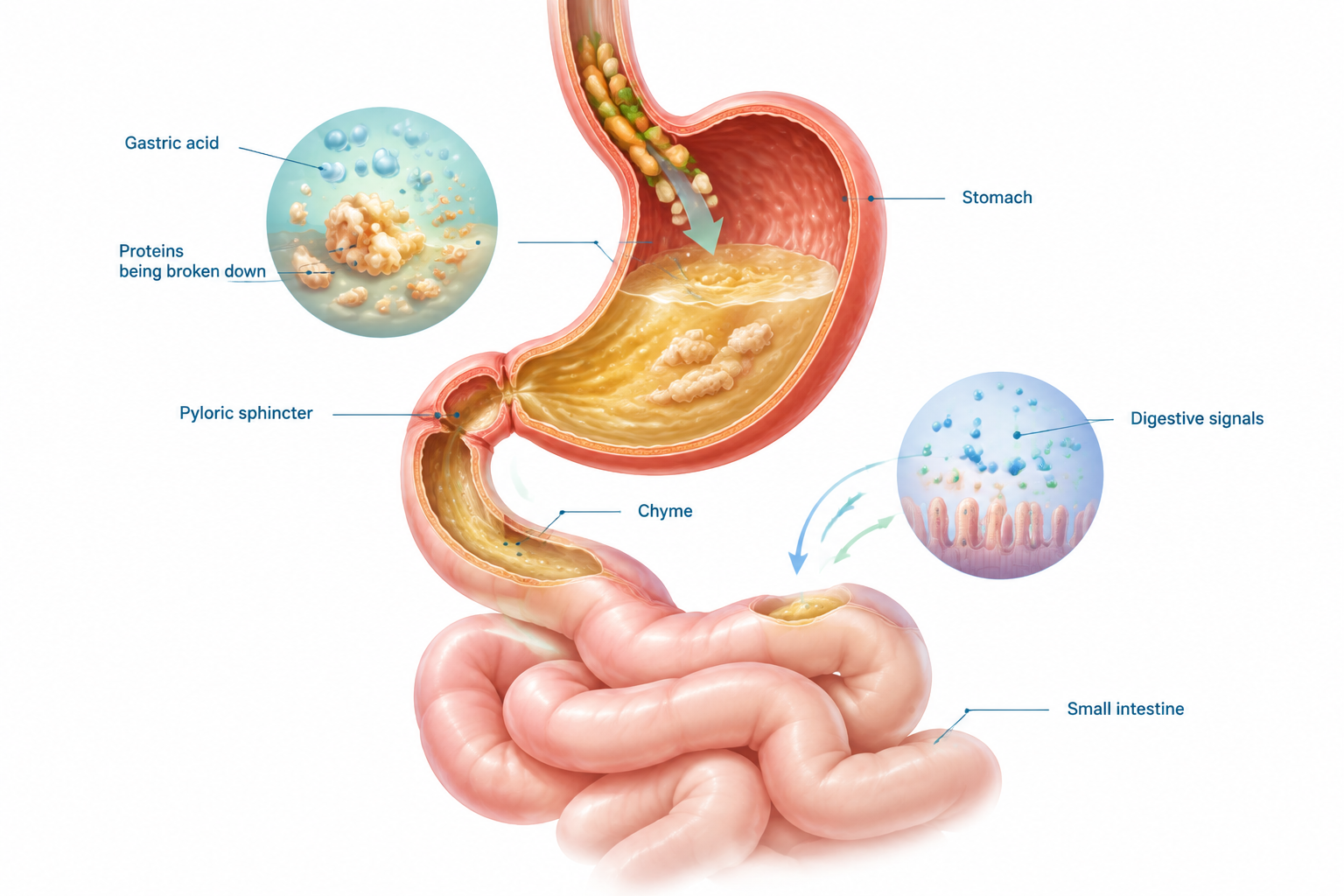
Stomach acid is the hydrochloric-acid-rich portion of gastric juice, a fluid that mixes with food in your stomach. Its pH is usually about 1.5 to 3.5, though it shifts with meals and digestion. This acidity is a normal part of stomach acid function, not proof that you have too much stomach acid.
Gastric glands produce roughly three to four liters of gastric juice each day, according to InformedHealth. As the stomach churns food with this fluid, it begins mechanical and chemical digestion and forms chyme, a thick, semi-liquid mixture. How digestion works places this early stage in the context of the full digestive process.
The main functions of stomach acid include:
- Preparing proteins: Acid unfolds proteins from foods such as meat, beans, eggs, and dairy. This exposes peptide bonds, which digestive enzymes can then break apart. Acid supports this process, but it does not perform most protein digestion itself.
- Limiting swallowed microbes: The acidic stomach environment helps reduce many microbes that enter through food, drinks, and saliva.
- Supporting nutrient handling: Acidity helps create the conditions needed for your body to make use of nutrients such as iron and vitamin B12 later in digestion.
The digestive function of stomach acid continues after chyme reaches the pyloric sphincter, the muscular valve at the stomach’s exit. Its acidity helps control how quickly the stomach empties and signals the small intestine and pancreas to release digestive enzymes, bile, and bicarbonate.
Bicarbonate neutralizes chyme so the small intestine has conditions better suited to digestion. That sequence shows how stomach acid works as part of a coordinated system rather than as an isolated substance.
So, what does stomach acid do? It prepares food for later breakdown, provides a layer of defense against swallowed microbes, and helps time the next phase of digestion. Bloating or reflux alone cannot tell you whether your stomach acid level is unusually high or low.
What Is Stomach Acid Made Of?
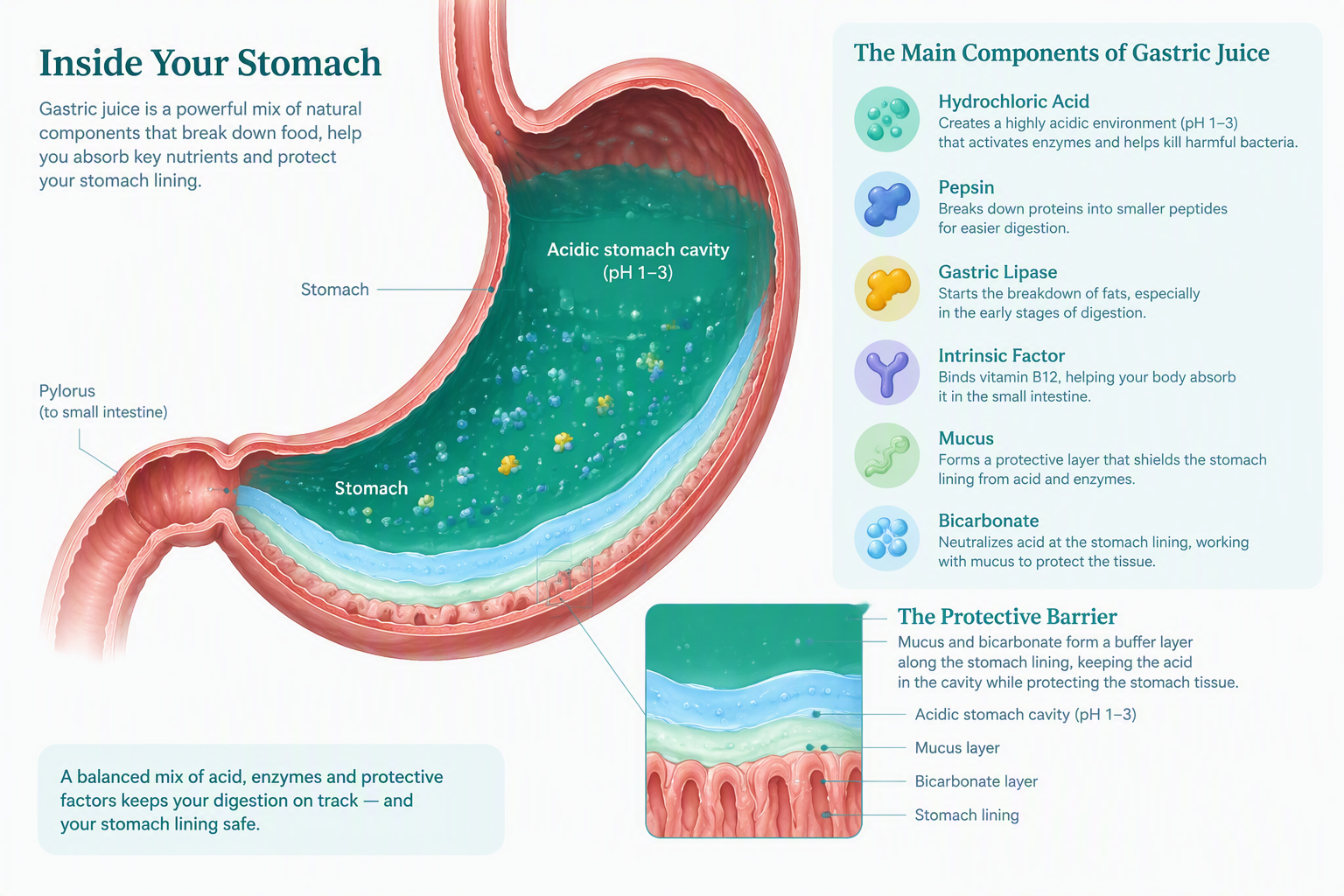
To carry out those functions, stomach acid, also called gastric acid, refers mainly to hydrochloric acid in the stomach, or HCl. Gastric juice is the complete digestive fluid, and hydrochloric acid is only one component. Gastric juice usually has a pH of about 1 to 4, most often 1.5 to 3.5, creating a strongly acidic environment before food moves into the small intestine.
Most gastric juice is water. It also contains electrolytes, including sodium, potassium, and chloride, which help maintain the fluid and chemical conditions that allow stomach secretions to mix effectively with food. Acid does not dissolve everything you eat, instead creating the conditions that support several digestive processes.
The main parts of gastric juice include:
- Hydrochloric acid: Creates the acidic conditions that support digestion and limit many microbes that enter with food.
- Pepsinogen and pepsin: Chief cells release inactive pepsinogen. The low pH changes it into pepsin, an enzyme that begins protein digestion by cutting dietary proteins into shorter peptide chains.
- Gastric lipase: Starts digesting some dietary fat before food reaches the small intestine.
- Intrinsic factor: Supports later vitamin B12 absorption in the small intestine.
- Mucus and bicarbonate: Form a protective barrier along the stomach wall. Bicarbonate neutralizes acid immediately beside the lining, even while food remains in a highly acidic environment.
This system allows pepsin to act on food while helping protect stomach tissue. Indigestion or reflux can be disruptive, and eating late at night is a common trigger, but these symptoms alone do not show whether stomach acid is unusually high or low.
How Do Parietal Cells Control Acid?
Within that gastric juice, parietal cells regulate gastric acid production in response to meals, so acid output rises and falls rather than staying fixed. These specialized cells in the stomach lining use proton pumps to send hydrogen ions into the stomach cavity, where they combine with chloride to make hydrochloric acid in the stomach. This creates an acidic pH, with a pH commonly measuring about 1 to 4 (source).
Before eating, stomach contents may be around pH 5 to 6. As your body expects food and digestion begins, the pH can fall toward 1 to 2. Food and drinks may briefly dilute acid, which is why a single measurement does not show how stomach acid works across an entire day. Changes in routine, including skipping meals, can alter meal timing without showing that acid is unusually high or low.
Several signals work together to increase acid release:
- Vagus nerve: Sight, smell, taste, or even expecting food can prepare the stomach before a meal begins.
- Gastrin: This hormone rises when food enters the stomach, particularly when the meal contains protein.
- Histamine: This local chemical messenger strengthens the response of parietal cells.
As the stomach fills, stretching of its wall adds to these signals. Protein and stretching help match secretion to the amount of food present. Acid production declines as food moves into the small intestine and those signals fade.
The stomach mucus lining protects the stomach wall separately from the acid-filled central cavity. Mucus and bicarbonate form a less acidic layer beside the tissue, helping limit damage (source). Problems can develop when this defense weakens or when acid reaches the esophagus.
How Does Acid Digest Protein And Block Microbes?
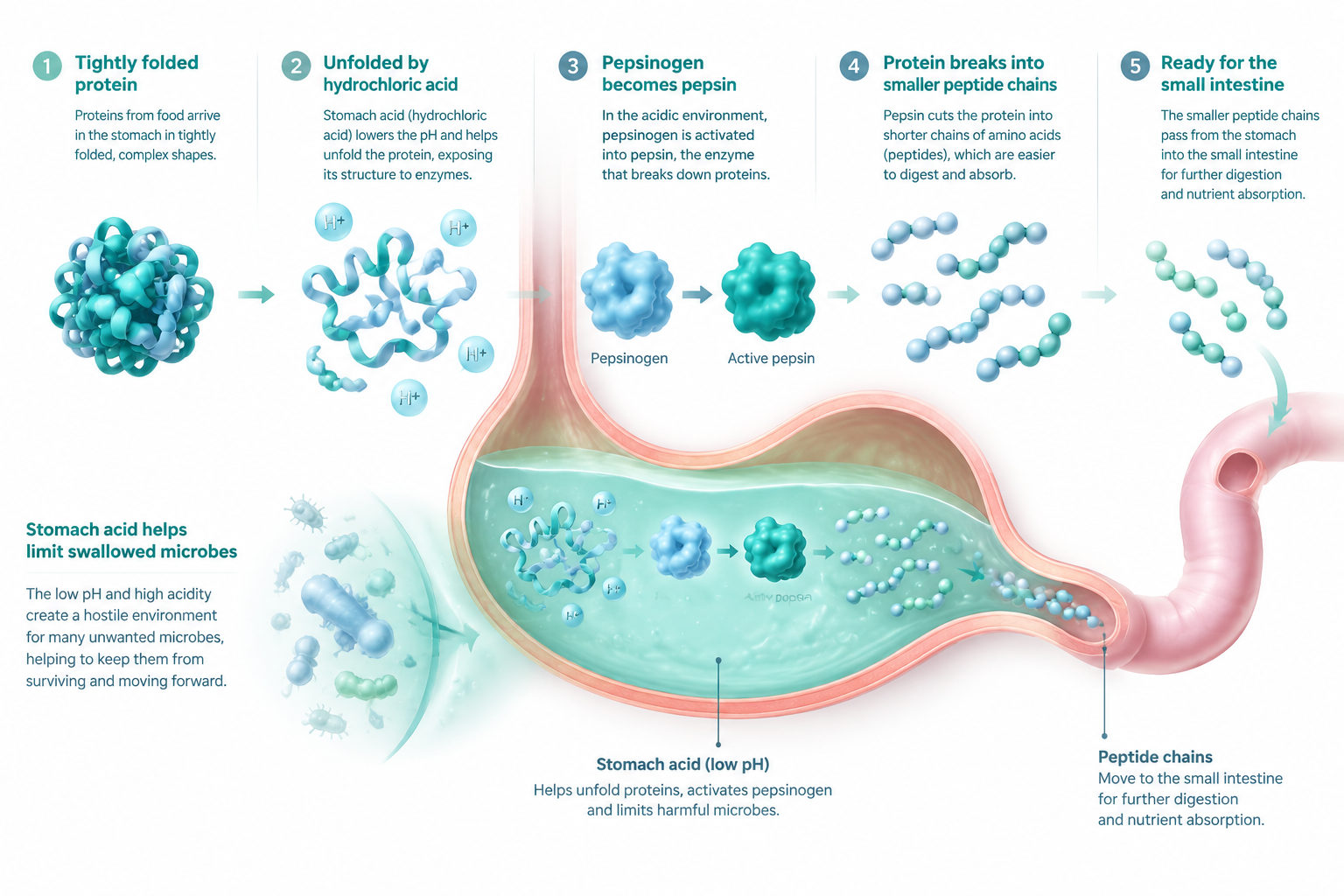
Stomach acid starts protein digestion by preparing food for enzymes, rather than doing most of the cutting itself. Hydrochloric acid (HCl) creates an acidic pH that unfolds, or denatures, tightly packed dietary proteins and exposes peptide bonds, the connections digestive enzymes need to reach. Think of it as loosening a knotted ball of yarn before cutting it into shorter pieces.
Chief cells release pepsinogen, an inactive form of a protein-digesting enzyme. This inactive form helps protect the cells that produce it. At approximately pH 1.0 to 3.0, stomach acid converts pepsinogen into pepsin, an activation step that begins splitting unfolded proteins into shorter peptide chains before digestion continues in the small intestine.
This first stage of protein digestion follows a connected sequence:
- HCl changes protein shape: Acid makes dietary proteins less tightly folded, giving pepsin access to peptide bonds.
- Pepsin begins protein breakdown: This enzyme cuts exposed proteins into smaller peptide chains but does not complete digestion on its own.
- The small intestine continues digestion: The enzymes that break food down further break peptides down so the body can absorb amino acids.
The same acidic environment also serves as a chemical barrier against pathogens. It can kill or inhibit many microbes swallowed in food and water, including bacteria and some viruses, fungi, and parasites. This immune defense in the stomach lowers the chance of foodborne infection, though it cannot remove the risk entirely.
Hypochlorhydria means unusually low stomach acid. It may weaken both early protein digestion and the stomach’s chemical barrier against pathogens. Bloating, reflux, or indigestion alone do not show that you have low acid, since each symptom can have many causes. A pattern of symptoms and your broader medical context offer more useful clues than one uncomfortable meal.
How Does Acid Support Nutrient Availability?
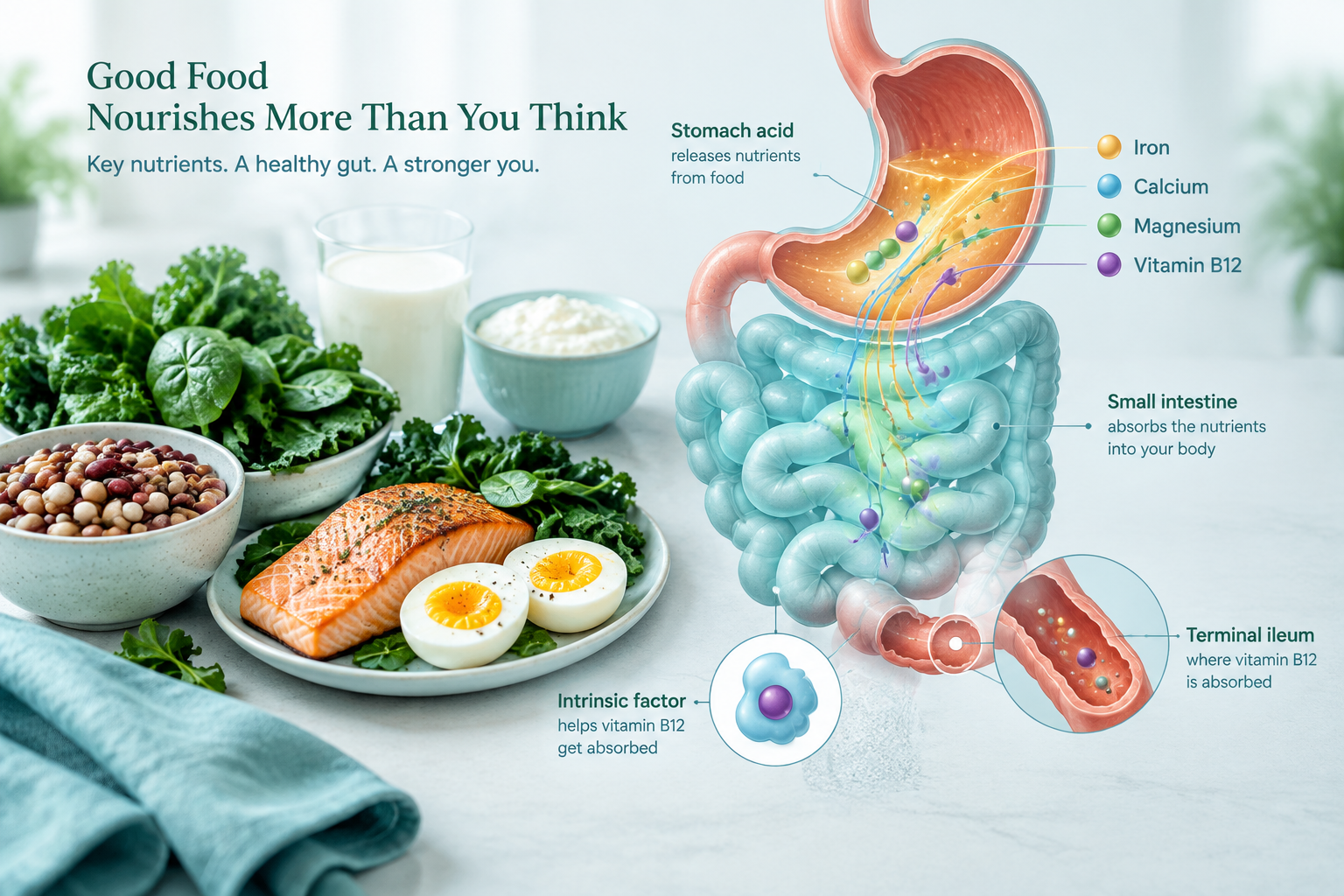
Beyond protein digestion and microbial defense, stomach acid helps prepare nutrients for uptake by releasing them from food and keeping some minerals in forms the small intestine can absorb. This early preparation supports nutrient absorption, but it does not guarantee it. The food source, your overall diet, intestinal health, and your body's needs all influence what reaches the bloodstream.
For minerals, the stomach's acidic environment works somewhat like soaking dried beans before cooking. It helps separate nutrients from the food's structure before they continue through digestion. This role can matter more when dietary intake is limited or the intestine is not absorbing nutrients well.
- Iron absorption: Acid helps release iron from food and keeps it soluble as digestion continues, making it easier to take up in the small intestine.
- Calcium absorption: Stomach acid can help calcium dissolve and separate from some food compounds, which may improve the amount available for later absorption (source, source).
- Magnesium: Acid also helps dissolve magnesium and free it from the foods that contain it, supporting mineral absorption.
The stomach prepares much of the material that reaches the intestine, while the intestine performs most absorption. How the small intestine absorbs nutrients explains how these connected jobs work along the digestive tract.
Vitamin B12 absorption follows a more specialized route. Stomach acid releases vitamin B12 from proteins in foods such as meat, fish, eggs, and dairy. The freed vitamin first attaches to protective proteins during digestion, then transfers to intrinsic factor, a protein made by the stomach, which carries B12 to the terminal ileum, the last part of the small intestine, where absorption takes place.
Hypochlorhydria may make it harder to release B12 and certain minerals from food and may affect digestion more broadly. Indigestion, fatigue, or bloating alone do not confirm low stomach acid, so persistent symptoms or nutrient concerns are worth discussing with a healthcare professional.
How Does Acid Guide Digestion After The Stomach?
After this early nutrient preparation, acidic, partly digested food leaves the stomach as chyme and enters the duodenum, the first part of the small intestine, in small portions. The digestive function of stomach acid continues after this handoff because chyme’s acidity helps coordinate the stomach, intestines, pancreas, and gallbladder.
Acid in the duodenum slows the pyloric sphincter, the muscular valve at the stomach’s outlet. This measured release gives the small intestine time to process each portion before more arrives. A slower pace is usually a normal digestive control system, not a sign that food is stuck in the stomach.
Several responses begin as chyme enters the duodenum:
- Bicarbonate response: Acid triggers secretin, a hormone that prompts the pancreas to release bicarbonate-rich fluid. Bicarbonate lowers acidity, helps protect the small-intestinal lining, and creates the conditions digestive enzymes need to work.
- Enzyme response: Pancreatic enzymes further break food into components the intestine can absorb. Stomach acid function begins protein digestion, but intestinal and pancreatic enzymes carry that work forward.
- Bile response: Fats and proteins stimulate cholecystokinin, a hormone that promotes pancreatic enzyme release and causes the gallbladder to contract. The gallbladder sends bile into the intestine, where it helps digest fats.
This is a coordinated relay, not a simple shift from acid digestion to intestinal digestion. Timing matters because acid, enzymes, and bile need to arrive in an order that lets the intestine handle a meal efficiently.
Hypochlorhydria may affect digestive timing because chyme acidity helps start these downstream signals, so altered acid levels may affect digestive timing. Still, bloating, fullness, and indigestion do not identify low acid on their own, since indigestion has several possible causes, according to NIDDK (source).
Persistent burning or regurgitation may fit the symptom pattern NIDDK describes for acid reflux and GERD (source).
What Can Low Acid Or Reflux Feel Like?
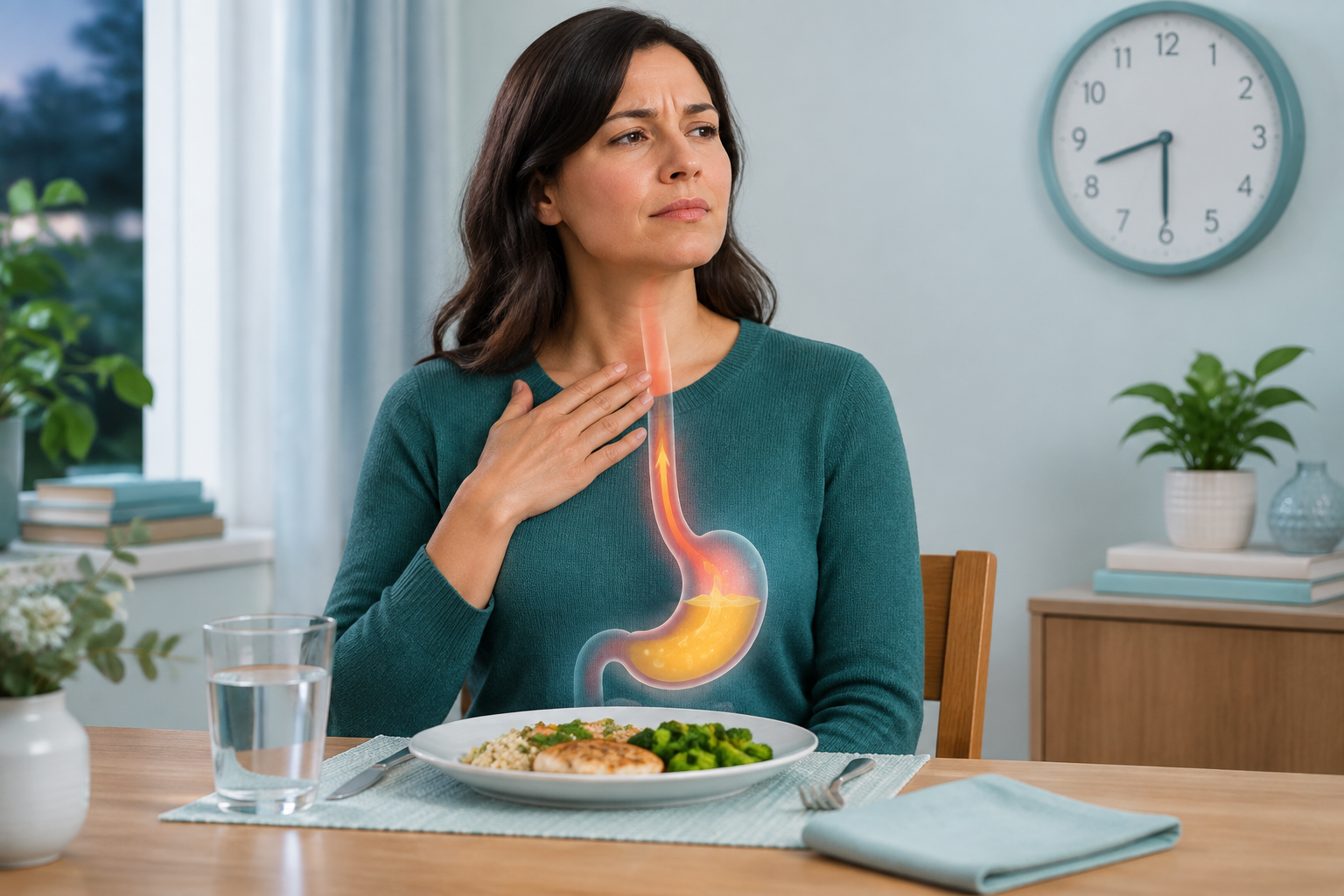
Reflux, bloating, belching, early fullness, nausea, indigestion, and discomfort after meals can be disruptive, but symptoms alone cannot identify hypochlorhydria.
Reflux occurs when stomach contents move back into the esophagus, the tube between your mouth and stomach. It can cause burning behind the breastbone, a sour taste, or regurgitation, when food or liquid comes back up. Large or late meals followed by lying down can make symptoms more likely, which helps explain why late meals may feel uncomfortable.
Reflux can occur without acid overproduction. The lower esophageal sphincter, a muscle ring at the bottom of the esophagus, may not close tightly enough. Stomach emptying, meal size, body position, and eating patterns can also contribute. Even a typical amount of acid can irritate the esophagus once it moves upward.
Possible low stomach acid symptoms can include:
- Bloating: A swollen or pressured feeling in the upper abdomen.
- Early fullness: Feeling full sooner than expected during a meal.
- Nausea or indigestion: Queasiness, discomfort, or difficulty tolerating meals.
Older age, stomach surgery, Helicobacter pylori infection, chronic illness, and acid-suppressing medicines can be relevant, but none confirms hypochlorhydria without clinical assessment.
The stomach's protective barrier can weaken. Its mucus barrier contains bicarbonate, which neutralizes acid close to the stomach wall, while the lining's defense system helps limit injury and ulcers. Persistent burning or pain may result from refluxed contents, irritation, or weakened defenses rather than acid production alone.
Seek medical advice when symptoms are frequent, worsening, persistent, or interfere with eating or daily life. Get urgent care for:
- Swallowing problems: Trouble swallowing or pain with swallowing.
- Bleeding signs: Vomiting blood or passing black stools.
- Other serious symptoms: Unexplained weight loss, severe chest pain, persistent vomiting, or dehydration.
A clinician can assess the cause without using symptoms alone to label stomach acid as high or low.
Stomach Acid Function FAQs
These FAQs cover common questions about stomach acid function, including its role in digestion and why reflux, bloating, or indigestion can leave you wondering what is happening.
1. Can You Live Without Stomach Acid?
People can live with very little or no stomach acid, though it is not an ideal digestive state and usually occurs in a medical context. Low stomach acid, called hypochlorhydria, can make protein digestion less efficient and reduce vitamin B12 and iron availability. Acid also provides immune defense in the stomach as a chemical barrier against pathogens, slowing bacteria in food and water, along with many viruses, fungi, and parasites. Persistent concerns about low acid merit a conversation with a healthcare professional.
2. Can Drinking Water Reduce Stomach Acid?
Water can briefly dilute what is in your stomach, which may lessen a burning or sour feeling for a short time. It does not remove acid, stop acid production, or reliably treat reflux. Feeling relief after drinking water does not mean you have too much stomach acid. Reflux often occurs when acidic stomach contents move into the esophagus, even without acid overproduction. Frequent, persistent, or disruptive symptoms warrant a conversation with a healthcare professional.
3. Can Stomach Acid Damage Your Stomach?
Healthy stomach acid does not burn through the stomach wall. The stomach mucus lining forms a mucus barrier that contains bicarbonate, which neutralizes acid near the surface. Protective cells, ongoing cell renewal, and prostaglandins help maintain this defense. Inflammation, ulcers, and some medicines can weaken it, making injury more likely. Persistent upper-abdominal pain, vomiting blood, or black stools need prompt medical care.
4. How Quickly Is Stomach Acid Replaced?
Stomach acid is made continuously rather than replaced on a fixed schedule. Parietal cells regulate gastric acid production in response to food, nerve signals, and hormones, with output usually rising during and after meals and falling between them. This helps keep the stomach highly acidic, generally at a pH of 1 to 4. Meal size and composition, fasting, medications, and individual physiology all affect how quickly secretion changes.