


Loose or hard stool is not made in the stomach. Large intestine function shapes stool by reclaiming water and salts from the liquid material that remains after the small intestine has absorbed most nutrients. The colon is the middle portion of the large intestine, which also includes the cecum, rectum, and anal canal.
Bowel habits can change when material moves through the colon faster or slower, because water continues to be absorbed along the way. That is why stool may become firmer after a slow few days or looser when things move quickly.
Colon bacteria also ferment certain fibers into short-chain fatty acids and help support the mucus-protected gut lining. The rectum stores formed stool until nerve signals and sphincter muscles coordinate a bowel movement.
Large Intestine Function Key Takeaways
- The large intestine turns liquid digestive leftovers into formed stool.
- The colon absorbs water and electrolytes, including sodium and chloride.
- Faster movement leaves less time for water absorption and can cause looser stool.
- Slower movement allows more water removal and can make stool firmer.
- Colon bacteria ferment certain fibers into short-chain fatty acids.
- Haustral contractions mix stool, while mass movements push it toward the rectum.
- The rectum stores stool until sphincter muscles allow a bowel movement.
What Does the Large Intestine Do?
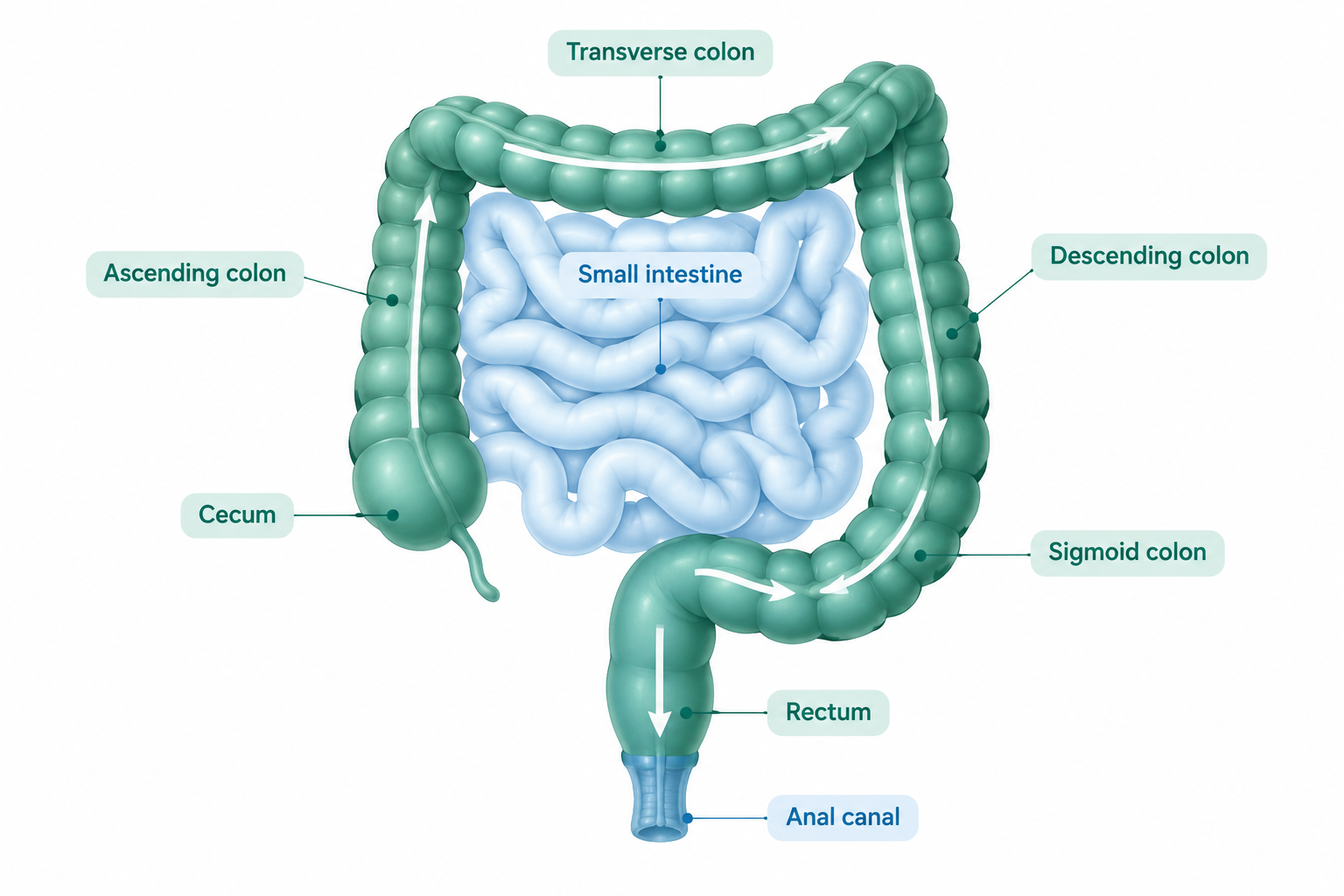
The large intestine is the last part of your digestive tract. It turns liquid leftovers into stool and prepares waste to leave your body. Most food digestion and nutrient absorption happen earlier, which is the main difference between the large intestine vs small intestine. The organs of the digestive system shows how each organ handles a different step. Material enters through the ileocecal junction from the ileum, the last part of the small intestine, and the appendix hangs off the cecum just below it.
The large intestine is about 5 to 6 feet long in adults and includes the cecum, colon, rectum, and anal canal (source). These are the main parts of the large intestine, while the colon is the middle portion rather than another name for the whole structure. Cleveland Clinic outlines this large intestine anatomy and its role in processing waste (source).
Material arrives from the small intestine in the pouch-like cecum, where the appendix extends. It then follows this route:
- Ascending colon: Moves upward through the right side of your abdomen.
- Transverse colon: Crosses the upper abdomen.
- Descending colon: Travels down the left side.
- Sigmoid colon: Forms an S-shaped curve that connects to the rectum.
The rectum holds stool until a bowel movement, and the anus is the opening where stool leaves your body. This coordinated pathway is a normal part of digestion.
Large intestine function includes reclaiming water and salts, forming stool, briefly storing it, and removing waste. How the colon absorbs water affects stool consistency, so less fluid absorption can lead to looser stool while more absorption can make it firmer. What the large intestine does can help you make better sense of changes in your usual bowel habits.
What Arrives From the Small Intestine?
To begin the large intestine's waste-processing role, watery chyme enters the colon after the small intestine has absorbed most digestible nutrients and up to 90% of the water you consume (StatPearls). This normal handoff does not mean digestion failed. The remaining liquid food waste still contains water and material the body has not absorbed, including:
- Indigestible food residue
- Microbes
- Mucus
- Salts and other unabsorbed substances
In the large intestine vs small intestine, the small intestine leaves the colon to manage the remaining fluid and salts. Water absorption in the large intestine works alongside electrolyte absorption, especially of sodium and chloride. As these electrolytes move into the body, water follows by osmosis. Potassium may be absorbed or released.
This fluid removal drives stool formation. As contents move through the colon, they thicken from watery chyme into solid or semisolid stool. Less water absorption can leave stool loose, while greater fluid removal supports solid stool formation and helps explain everyday changes in bowel habits.
How Does the Colon Absorb Water and Electrolytes?
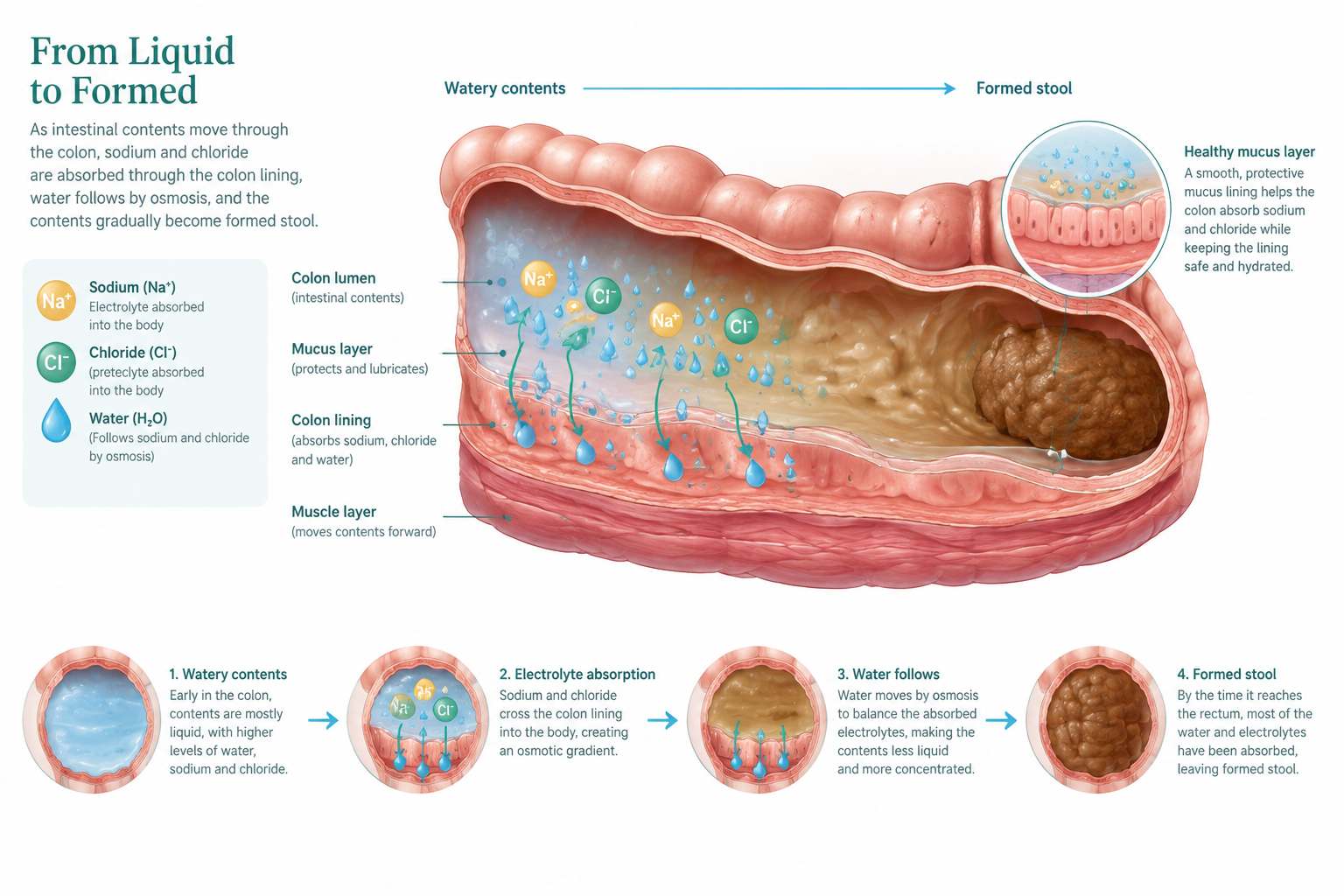
Material entering your colon from the small intestine is still mostly liquid. How the colon absorbs water starts when the colon lining moves electrolytes, charged minerals such as sodium and chloride, from intestinal contents into your body. Sodium absorption draws water along with it through osmosis, the movement of water toward a higher concentration of dissolved particles. This water and electrolyte reabsorption, tuned partly by the hormone aldosterone, continues as material moves through the colon (source).
The ascending colon is about 8 inches, or 20 centimeters, long, according to Cleveland Clinic. It takes up water and electrolytes actively, while water absorption in the large intestine continues through the remaining sections. Rather than turning liquid into a solid all at once, the contents gradually thicken as they travel.
By the time material reaches the rectum, its consistency usually allows storage and passage. Healthy stool still holds some moisture, so it should not be completely dry, crumbly, or difficult to pass.
Feces contain more than food your body did not digest:
- Indigestible food components: Plant fiber and other materials the body cannot break down.
- Bacteria: Living and dead bacteria from the colon.
- Body materials: Mucus, shed intestinal-lining cells, inorganic salts, and unabsorbed substances.
- Remaining water: Moisture that helps stool move out comfortably.
Changes in how long material remains in the colon can affect its consistency. If it moves through quickly, less electrolyte absorption and water removal can leave stool loose or watery. More time allows greater water removal, which makes stool firmer and can make it harder to pass. Ongoing diarrhea or constipation, especially when it is new or persistent, warrants medical guidance.
What Do the Bacteria in Your Colon Do?
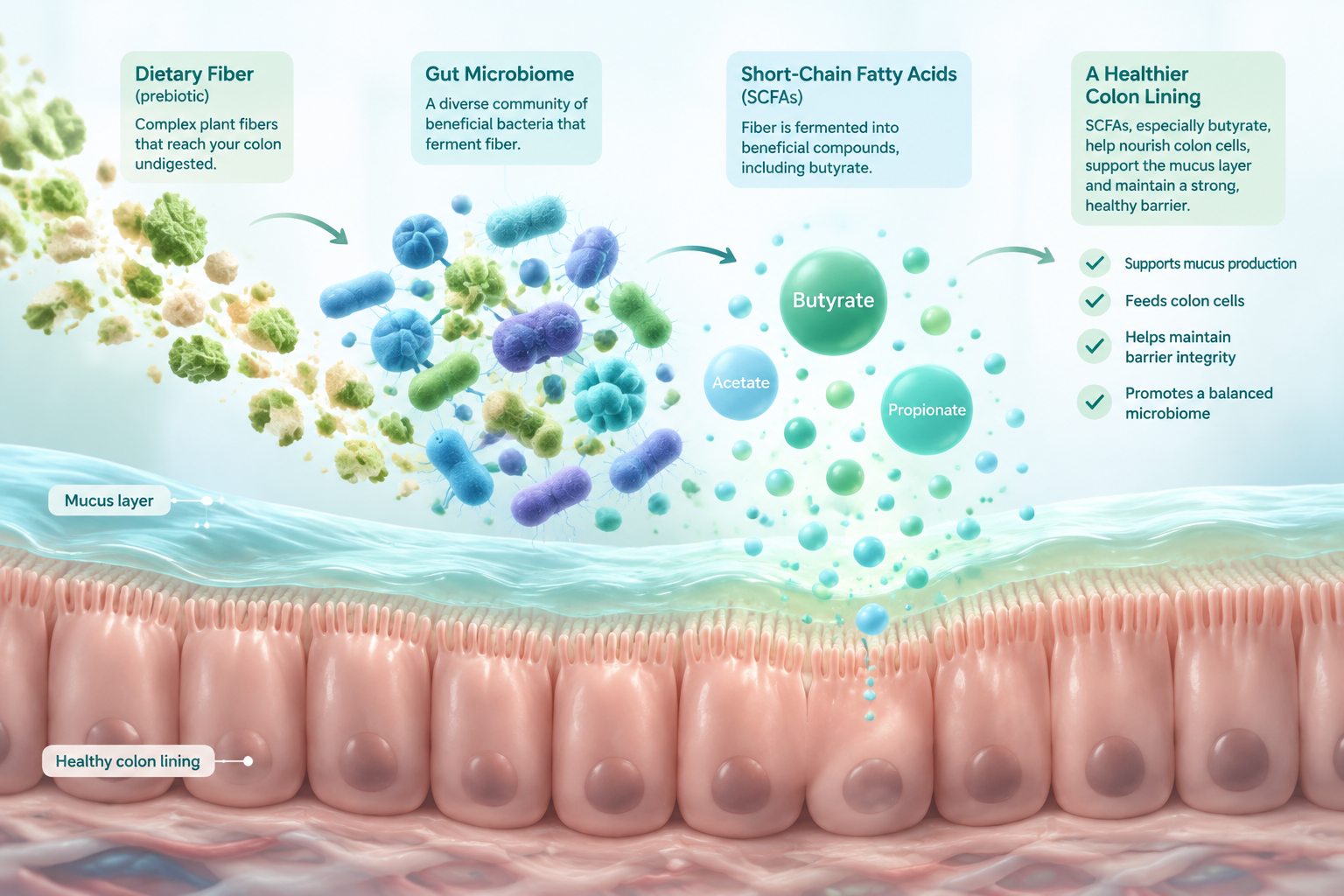
Beyond water absorption and stool formation, your colon contains a large community of gut bacteria, often called the gut microbiome or gut flora. Many are commensal bacteria, harmless or beneficial gut bacteria that process material left after digestion in your small intestine. Their presence is a normal part of how the colon works.
A major part of colon bacteria and digestion is dietary fiber fermentation. Dietary fiber and other carbohydrates that are not fully digested higher in the digestive tract reach the colon, where bacteria ferment them. This creates short-chain fatty acids, including butyrate, which colon cells can absorb and use for energy. That connection helps explain why fiber and colon health are closely linked, though increasing fiber too quickly can bring on gas or bloating.
Gut bacteria also contribute in a few limited ways:
- Vitamin K production: Colon bacteria can produce vitamin K, although the amount absorbed varies.
- Some B vitamins: Bacteria may make biotin and certain other B vitamins in the colon.
- Important limits: This contribution does not reliably provide enough vitamin B12, thiamin, or riboflavin, so a nutrient-rich diet remains important.
The colon’s mucus secretion coats both its wall and stool. This slippery layer reduces friction as stool passes and helps protect delicate tissue from irritating contents. The microbiome and its fermentation products can support this mucus-protected surface, an important part of normal gut barrier function.
A gradual fiber increase gives your colon bacteria time to adjust, which may make bloating less likely.
How Does Time in the Colon Change Stool?
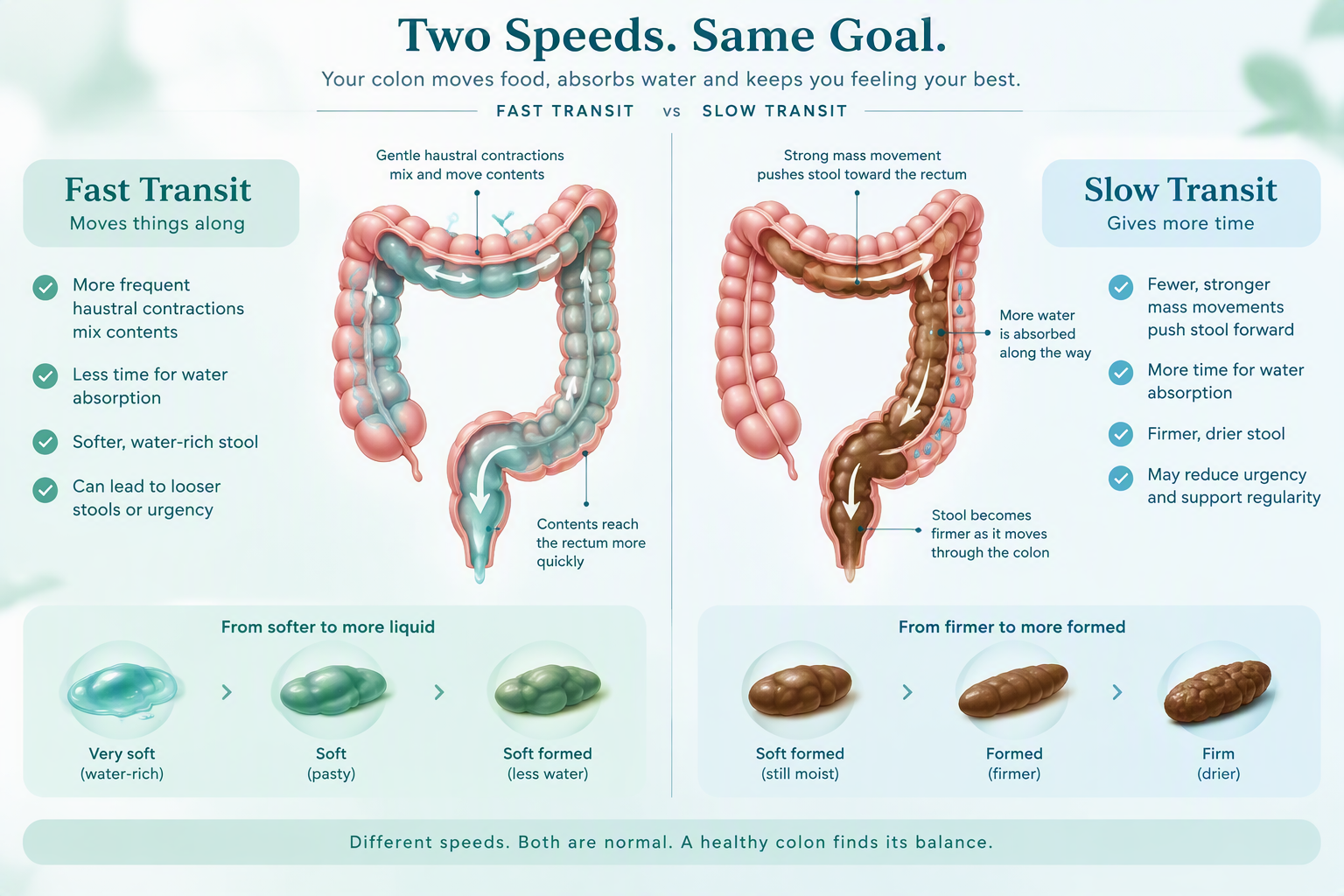
Beyond the effects of bacterial fermentation, Colon transit time helps determine stool consistency because the colon keeps absorbing water. Longer transit usually produces drier, firmer stool, while faster passage leaves more water and can result in softer or looser stool. Day-to-day variation in waste movement through the body does not automatically signal a problem.
Haustral contractions, driven by the teniae coli muscle bands and coordinated by the myenteric (Auerbach's) plexus, are the gentle, segment-by-segment squeezes that make up much of colonic motility. They that mix stool and move it forward bit by bit. By keeping stool against the colon wall, they allow continued water absorption rather than pushing everything out at once. Stronger mass movements are wave-like muscular contractions that move a longer stretch of waste toward the rectum and anus.
Different parts of the colon have related roles:
- Ascending colon: Absorbs remaining water.
- Descending colon: Takes on increasing stool storage as waste becomes more formed.
- Sigmoid colon: Builds pressure that guides stool into the rectum.
Rectum function includes sensing stool’s arrival and helping trigger the urge for a bowel movement. Slower movement can contribute to constipation, while faster movement may lead to loose stool. Medical evaluation is important for persistent changes or diarrhea with fever, blood or black stool, severe pain, or dehydration signs.
How Do the Rectum and Anus Finish the Job?
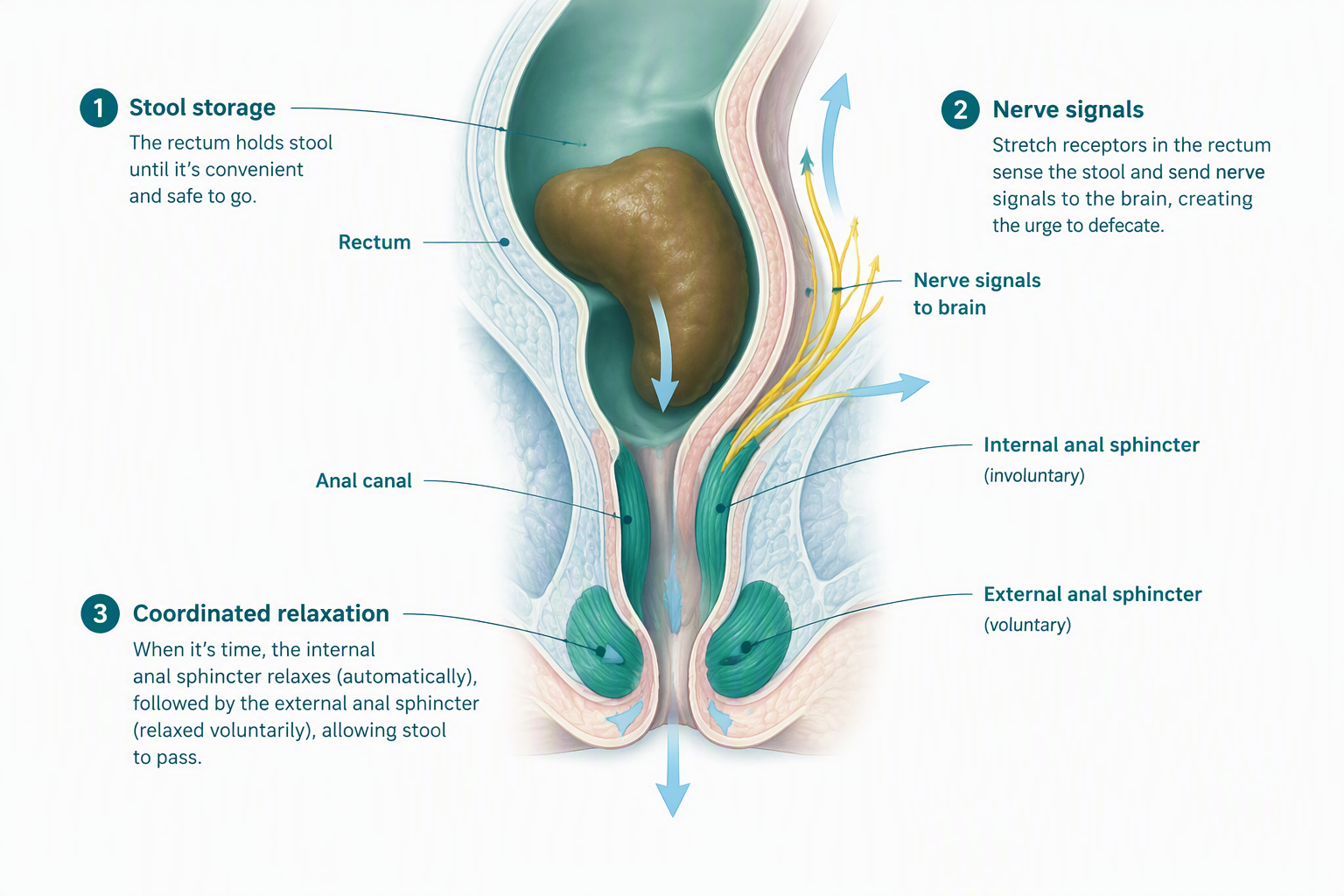
As transit moves formed stool toward the end of the colon, the rectum temporarily holds formed stool until you are ready to pass it, rather than releasing it continuously from the colon. This stool-storage role is central to rectum function because the rectum links the colon to the anal canal. The rectum is about 5 to 6 inches long, and the anus is about 2 inches long, according to Cleveland Clinic.
As stool fills the rectum, its walls stretch and nerve signals create the urge for a bowel movement. Although an urge can feel sudden, the automatic defecation reflex prompts the rectum and lower colon to contract, shifting stool closer to the anal canal without automatically causing stool to pass.
Two sphincter muscles regulate the final stage of waste movement through the body:
- Internal anal sphincter: This inner ring relaxes automatically as the rectum fills.
- External anal sphincter: The external anal sphincter is under voluntary control, which can help a person delay a bowel movement briefly until a toilet is available.
When you choose to have a bowel movement, the external sphincter relaxes. Pressure from the rectum and colon then pushes stool through the anal canal and out through the anus. How a bowel movement happens depends on this coordination between automatic reflexes and voluntary muscle control.
Large Intestine Function FAQs
These FAQs cover common questions about large intestine function, including its role in absorbing water, forming stool, and changes that can affect your bowel habits.
1. What Are the Five Functions of the Large Intestine?
The large intestine has five jobs: it absorbs remaining water and electrolytes, supports bacteria that ferment leftover material and make certain vitamins, forms stool, briefly stores it in the rectum, and moves it toward elimination. In other words, what does the large intestine do? Water removal makes indigestible material, bacteria, shed cells, and mucus into more solid feces before the colon pushes it to the rectum. Bowel-habit changes can occur with IBS, according to NIDDK (source). Gas may also affect comfort (source).
2. What Happens When the Large Intestine Malfunctions?
When the large intestine absorbs too much or too little water, or moves stool unusually slowly or quickly, bowel habits can shift toward hard, infrequent stools or loose, urgent ones. Changes in bacterial fermentation may increase gas and bloating, while inflammation can cause abdominal discomfort. Constipation often involves slower movement and harder stool, whereas irritable bowel syndrome (IBS) may cause recurring abdominal pain with constipation, diarrhea, or both. Colitis is inflammation of the colon, while diverticulitis occurs when small pouches in the colon become inflamed or infected. Persistent, severe, or concerning symptoms need medical attention.
3. Does a Colonoscopy Examine the Large Intestine?
Yes. During a colonoscopy, a clinician passes a flexible, lighted tube through your rectum and into the colon to examine the large intestine’s lining. The rectum connects to the end of the colon and temporarily holds stool before elimination. This common test can help assess rectal bleeding, lasting changes in bowel habits, or ongoing abdominal symptoms, and it can screen for polyps and colorectal cancer before symptoms appear.
4. How Does Fiber Affect Large Intestine Function?
Fiber reaches your colon partly undigested, where gut bacteria ferment certain fibers and other carbohydrates. This fiber fermentation produces short-chain fatty acids the colon can absorb, though it can also cause gas. That role of colon bacteria and digestion helps explain the connection between diet and colon health, as well as fiber and colon health. Fiber also adds bulk and helps stool retain water, which may support regularity. Increase high-fiber foods gradually and drink adequate fluids to limit bloating. Persistent bowel changes or significant symptoms merit a healthcare conversation.
5. Which Disorders Affect the Large Intestine?
Constipation, IBS, colitis, diverticulitis, and colorectal conditions can affect the large intestine. They may cause hard or infrequent stools, recurring cramps with altered bowel habits, diarrhea, bleeding, or pain in one area, but symptoms alone cannot identify the cause. Bloating and stool changes can also relate to diet and colon health in many ways. Speak with a healthcare professional when symptoms persist, disrupt daily life, become severe, or include blood or black stool, fever, unexplained weight loss, dehydration, or intense abdominal pain.