


A bowel movement soon after lunch does not mean lunch went straight through you. The gastrocolic reflex is a normal response in which a full stomach signals the colon to contract and move stool already farther along. It can cause rumbling, mild cramping, or an urge to go, especially after a larger or richer meal.
IBS can make those ordinary contractions feel painful or urgent, while repeated loose stools, blood or black stool, fever, or severe pain point to something beyond a typical reflex. Post-meal timing is often misleading, because the food you just ate is still hours from the colon, and normal bowel movement frequency varies more than many people expect.
Smaller meals, a food-and-symptom record, and regular eating times can make urgency easier to anticipate without cutting out foods unnecessarily. Predictable routines, including not skipping meals, give the gut a rhythm to work with.
Gastrocolic Reflex Key Takeaways
- The gastrocolic reflex increases colon movement after the stomach fills.
- Post-meal bowel movements usually pass stool already in the colon.
- Larger, richer meals can make the reflex feel stronger.
- IBS can heighten urgency, cramping, and pain from normal contractions.
- Food and symptom records can identify repeatable triggers without broad restrictions.
- Regular meals and unhurried bathroom time may support more predictable bowel habits.
- Blood in stool, fever, severe pain, or persistent diarrhea need medical evaluation.
What Is the Gastrocolic Reflex?
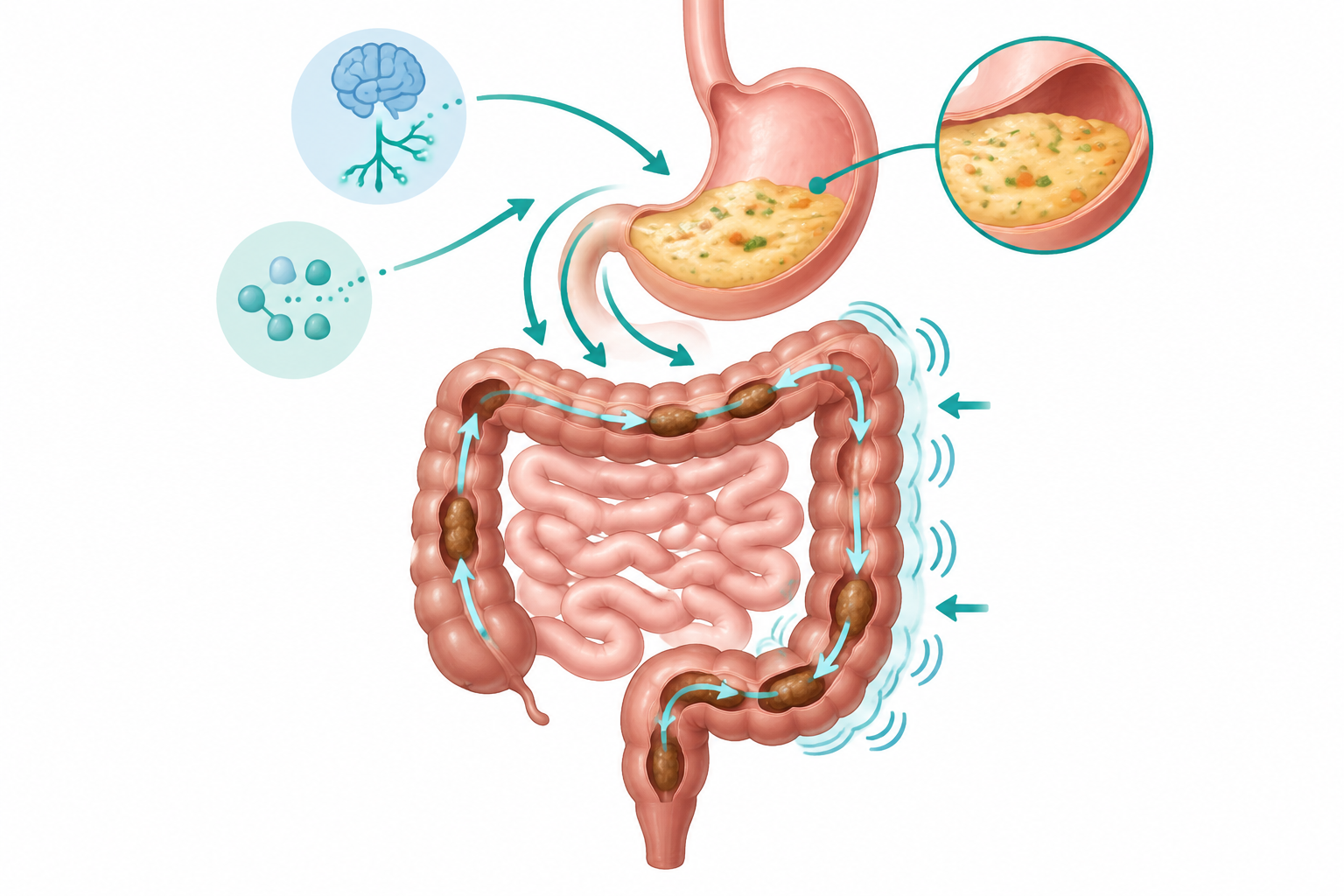
What is the gastrocolic reflex? It is a normal body response after eating or drinking, when stomach stretching sends nerve and hormone signals, including neuropeptides such as gastrin and cholecystokinin, that increase large intestine movement and peristalsis. Those signals create colon contractions that support waste movement toward the rectum. By itself, this automatic response does not mean anything is wrong.
Rumbling, mild cramping, pressure, or a sudden urge to have a bowel movement can occur when the colon becomes more active. The urge may come soon after a meal because your stomach has filled, not because the food has finished digesting (source).
A post-meal bowel movement does not usually mean food “went right through you.” Think of a line of people: adding someone at the back can prompt movement near the front. The stool you pass was already in your colon, while the new meal continues through digestion. How your digestive system moves food along helps put that timing in context.
Related digestive reflexes have different roles:
- Gastrocolic reflex: Increases colon contractions after the stomach fills.
- Gastroileal reflex: Moves contents farther along the small intestine.
- Enterogastric reflex: Slows stomach activity when the small intestine needs more time.
These digestive reflexes coordinate digestion but are not interchangeable. Gastrocolic reflex physiology is well established, which can help you recognize a typical post-meal urge without assuming the meal itself caused immediate stool passage.
How Does Eating Trigger a Bowel Movement?
This normal gastrocolic reflex helps explain why a meal can precede a bowel movement. As food fills the stomach, stomach stretch receptors detect the expansion and send signals that increase colon activity. This is why food causes a bowel movement for some people, although the stool was already in the large intestine. A meal does not travel through your whole digestive tract within minutes.
Stomach stretching works alongside nerve signals carried through the enteric nervous system, with the interstitial cells of Cajal acting as the gut's pacemaker cells, and gut hormones. Related reflexes work the same way: the gastroileal reflex opens the ileocecal valve so the small intestine can empty into the colon, while the enterogastric reflex slows the stomach when the duodenum is busy. Larger, higher-calorie meals, especially those higher in fat or protein, may produce stronger chemical and nerve signaling after you eat. Gastrin, cholecystokinin (CCK), and serotonin can contribute to this response, but they do not act as a single on-off switch. Cleveland Clinic describes this coordinated process as the gastrocolic reflex.
Much of this activity happens without conscious effort. The enteric nervous system, the digestive tract’s built-in nerve network, interprets messages from the stomach and chemicals released after eating. Its myenteric plexus, a layer of nerves that helps direct intestinal muscles, works with autonomic nerve pathways to organize colon contractions.
Coordinated peristaltic waves move existing stool through the colon and sigmoid colon, the curved section before the rectum. Stronger high-amplitude mass movements can sometimes speed waste movement toward the rectum. When the rectum stretches, it creates the urge to have a bowel movement.
The response can feel stronger or weaker depending on several factors:
- Meal size: A fuller stomach can trigger more noticeable colon activity.
- Food composition: Higher-fat, higher-protein, and higher-calorie meals may intensify digestive signaling.
- Gut sensitivity: Irritable bowel syndrome (IBS) can make ordinary contractions feel urgent, painful, or crampy.
If you wonder why you poop right after eating, the answer is usually that your colon is moving stool already waiting farther along, not that digestion is unusually fast.
When Is a Post Meal Urge Normal?
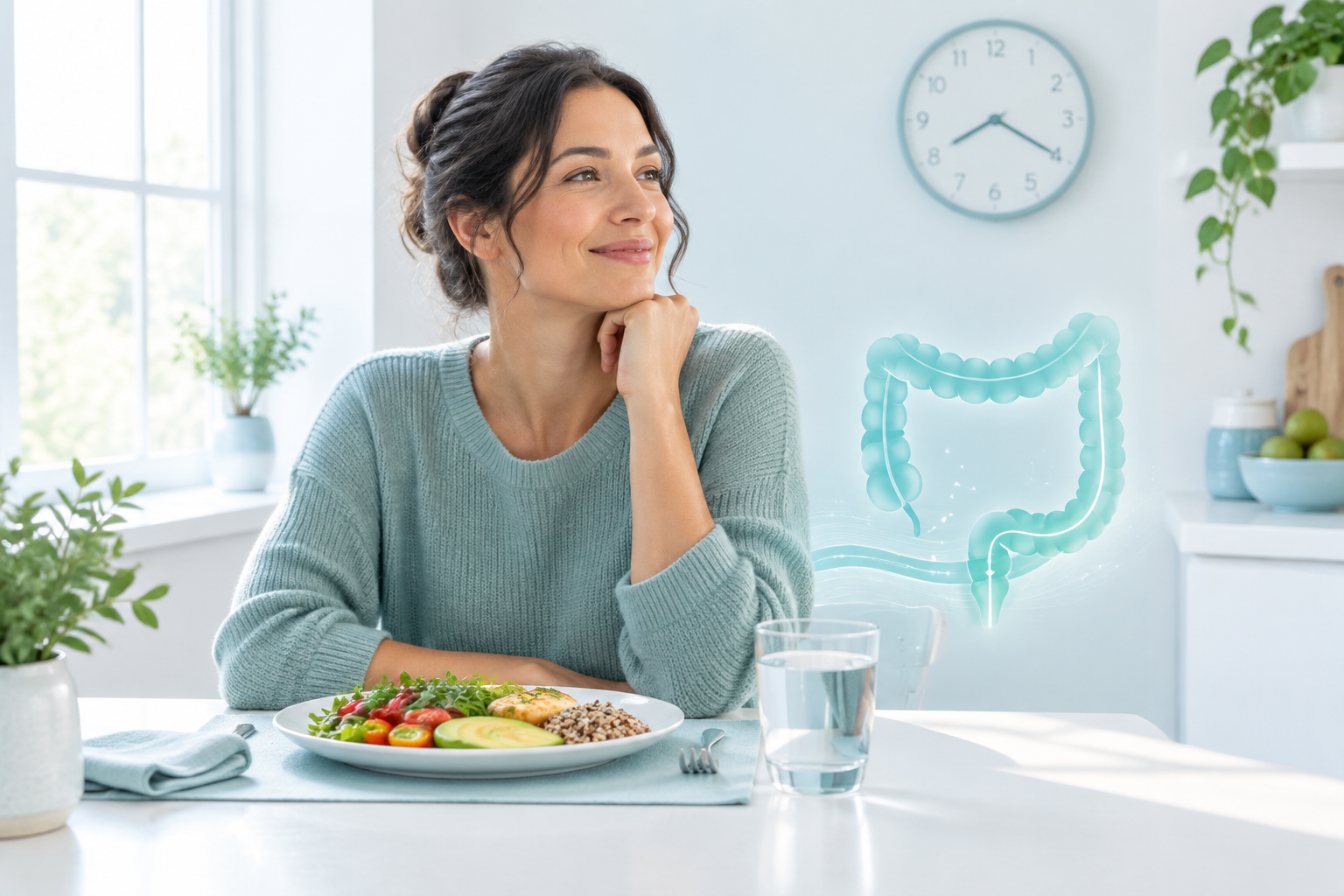
Because the reflex moves stool already in the colon rather than the new meal, a mild urge to poop after eating is usually a normal body response after eating. The gastrocolic reflex can feel mild or more urgent depending on meal size, food composition, and individual sensitivity. Although everyone has this reflex, meal size, food composition, and individual sensitivity can make it feel mild or more urgent.
Post-meal bowel urgency can begin within minutes or within an hour of eating. Colon activity also follows circadian rhythms, which is why the morning meal is the strongest trigger for many people. It does not mean the meal has passed straight through your system. A bowel movement after breakfast usually reflects food eaten earlier, because whole-gut transit time is far longer than the time between breakfast and the bathroom. Capsule-based transit research reports that whole-gut transit can range from 10 to 73 hours (source).
Morning bowel activity is especially common because the colon becomes more active after you wake, and your first meal can strengthen that signal. A predictable bowel movement after breakfast is generally normal when the urge resolves after you go and the stool is formed or otherwise typical for you. Normal bowel movement frequency differs from person to person.
A strong reflex needs closer attention when it is new, disruptive, or paired with other symptoms. Watch for:
- New or worsening post-meal bowel urgency.
- Repeated loose or watery stools.
- Constipation, accidents, or pooping after every meal that continues beyond a brief stomach upset.
- Blood or black stool, fever, unexplained weight loss, severe or worsening abdominal pain, or signs of dehydration.
If you wonder why you poop right after eating, consider whether the pattern has changed. A lasting change in your usual bowel habits, especially with warning signs, calls for contact with a healthcare professional.
What Can Make the Reflex Feel Stronger?
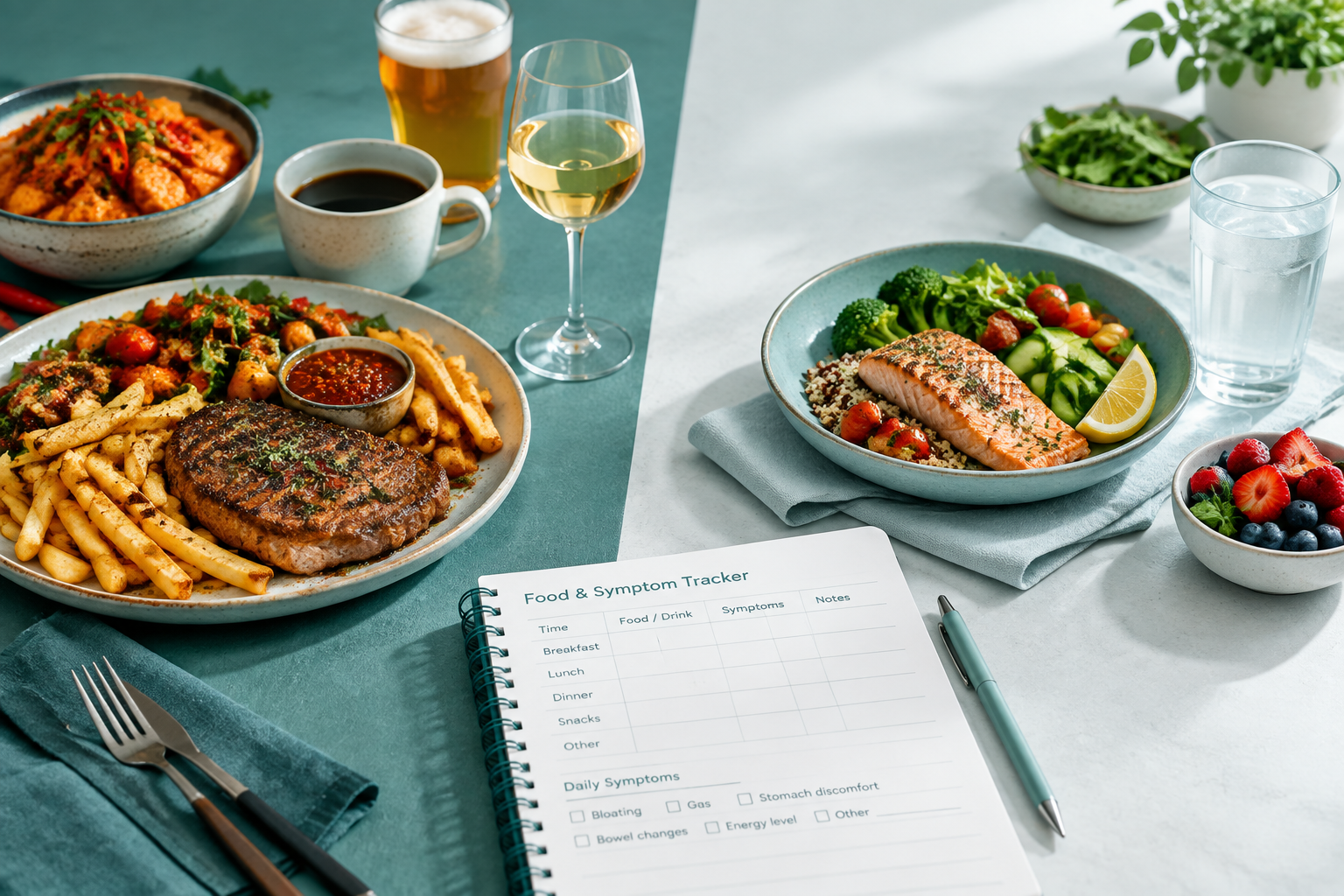
An intense urge after a meal can reflect a hyperactive, or hypersensitive, gastrocolic reflex, the pattern a gastroenterologist often sees with IBS. A larger meal stretches the stomach more, prompting stronger colon activity. High-fat or heavy meals can increase the post-meal bowel response, so cramps or a sudden bathroom trip may happen even when the gastrocolic reflex is working normally (source, source).
Certain foods and drinks can make the response feel stronger when your gut is sensitive:
- Caffeine and alcohol: These may stimulate digestive activity and lead to urgency or loose stools.
- Heavily spicy foods: Spicy meals can irritate a sensitive digestive tract and contribute to belly pain after eating.
- Very cold liquids: A large cold drink on an empty stomach can cause discomfort or urgency for some people.
Repeatable patterns matter more than broad restrictions. If coffee brings on symptoms several times while spicy foods do not, coffee is the more useful clue for your routine.
Food intolerances can add bloating and gas, cramping, or diarrhea to the usual post-meal reflex. Lactose intolerance is one example. With gastrocolic reflex IBS, dairy, wheat, citrus, beans, cabbage, and other high-fiber foods may seem connected to symptoms, but eliminating entire food groups is not always necessary. A short food-and-symptom record can help distinguish a consistent trigger from a one-time flare.
IBS, especially diarrhea-predominant IBS, can make normal intestinal contractions feel unusually urgent or painful. This visceral hypersensitivity means the gut-brain connection registers ordinary movement more strongly. Higher-pressure colon contractions after meals may feel like an overactive gastrocolic reflex, but the reflex itself is not a disease. NIDDK notes that IBS can involve abdominal pain and changes in bowel habits (source).
Crohn's disease and ulcerative colitis can also cause post-meal urgency, sometimes with IBS-like symptoms, but the gastrocolic reflex does not cause inflammatory bowel disease. Medical evaluation is important for new or persistent urgency, especially with:
- Blood or black stool
- Fever
- Unintentional weight loss
- Severe pain
- Signs of dehydration
How Can You Calm an Overactive Reflex?
When a sensitive gastrocolic reflex makes post-meal bowel urgency hard to ignore, practical routine changes can help calm the response. It may include cramps after eating, belly pain after eating, bloating and gas, spasms, loose stools, constipation, or a feeling of incomplete emptying. Although these symptoms can disrupt your day, they do not automatically signal a serious condition.
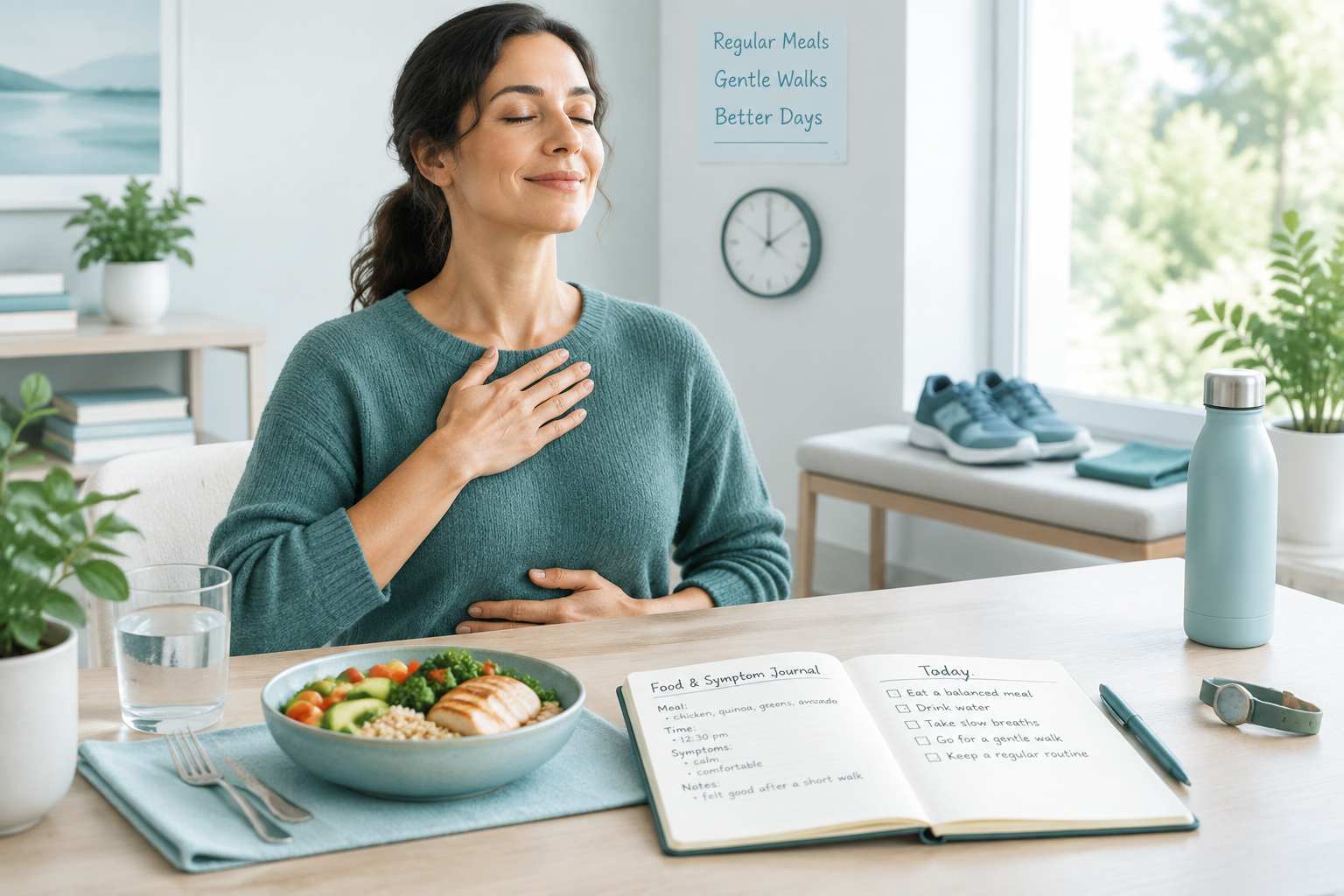
Learning how to calm the gastrocolic reflex starts with noticing what makes urgency stronger. Keep a food-and-symptom record before cutting out several foods, since meal size or timing may be the issue rather than one ingredient. Patterns worth watching include:
- Meal size: Large or rich meals may create a stronger response than smaller, evenly spaced meals.
- Eating pace: Slower meals can reduce swallowed air and discomfort.
- Foods and drinks: Caffeine, alcohol, deep-fried or spicy foods, dairy, wheat, beans, cabbage, and citrus may trigger symptoms for some people.
Regular routines can make bowel activity more predictable. Avoid skipping food, since long gaps between meals may not reduce urgency. What happens when you skip a meal explains why consistent meals can matter.
- Eat at regular times, drink enough fluids, and make gradual changes.
- Include enjoyable movement, steady sleep, and unhurried bathroom time.
- Avoid routinely ignoring the urge to go, which can add discomfort.
How your gut cleans itself between meals also shows why your digestive system benefits from a predictable eating pattern.
Stress and anxiety can heighten gut sensitivity, so post-meal cramping or urgency can feel more intense without being imagined. Slow breathing, relaxation exercises, or a short walk around meals may help, while structured psychological support can be useful when digestive symptoms and worry reinforce each other.
IBS, especially diarrhea-predominant IBS, lactose sensitivity, and other food intolerances can contribute to an exaggerated response after eating. Seek medical evaluation for new, severe, worsening, unexplained symptoms or persistent diarrhea, particularly if Crohn’s disease or ulcerative colitis may be involved. Diabetic nerve damage, gastroparesis, and spinal cord injury can also affect the nerve signals behind this reflex.
If specific foods drive the urgency, a supervised low-FODMAP diet is one structured way to find them, and the Bristol stool chart helps you describe what follows. Inflammatory bowel disease (IBD) can also amplify the reflex during a flare, so urgency with blood, fever, or weight loss needs evaluation rather than routine changes.
How Can You Use the Reflex for Constipation?

On the other hand, a blunted or less noticeable gastrocolic reflex, which can occur with diabetic neuropathy, spinal cord injury, or some medications, can contribute to functional or chronic constipation because the colon becomes less active after meals. Constipation rarely has one cause, and gastrointestinal motility can also be affected by:
- Diet and fluid intake
- Medications
- Pelvic floor function
- Stress and daily routines
Using the body’s meal-related bowel activity can support a more predictable routine, but it is not a cure or a promise of a daily bowel movement.
Colonic activity can increase within minutes of eating and is often strongest in the morning, particularly after breakfast. Daily body rhythms help shape this pattern. The reflex is especially pronounced in newborns and infants, who may pass stool during or soon after feeding. As an adult, a consistent morning meal can give you a useful cue to notice an urge instead of repeatedly holding it in.
A gentle post-breakfast routine can look like this:
- Eat breakfast at a similar time on most days when your schedule allows.
- When an urge for a bowel movement after breakfast appears, sit on the toilet without rushing.
- Avoid forcing, breath-holding, or straining. A footstool may make the position more comfortable.
- Try not to delay the urge repeatedly. Stool loses water as it remains in the colon, which can make it firmer and harder to pass.
A warm morning beverage alongside breakfast and adequate fluids may help some people establish a regular pattern, though it is not an instant treatment. Tracking meal and drink timing, urges, stool consistency, and discomfort can reveal patterns to discuss with a clinician or dietitian.
A clinician may sometimes time stimulant laxatives around the natural post-meal reflex, depending on the cause and pattern of constipation. Seek medical care for new, persistent, or worsening constipation, especially with:
- Severe abdominal pain
- Vomiting
- Blood in the stool
- Unexplained weight loss
- A major change in bowel habits
Regular, low-pressure timing helps you work with your body’s cues without turning bathroom trips into another source of stress.
Gastrocolic Reflex FAQs
These FAQs address common questions about post-meal bowel urges, the gastrocolic reflex, and why symptoms may feel stronger with IBS. The answers can help you make sense of what you notice after eating.
1. When Is the Gastrocolic Reflex Strongest?
The gastrocolic reflex is often strongest in the morning, especially after breakfast, when overnight fasting and body rhythms can increase colon activity. A consistent morning meal may make the urge more predictable, while a sensitive gastrocolic reflex in IBS can cause stronger urgency. The urge may occur within minutes or up to an hour after eating, though not everyone feels it each time. It is also especially active in newborns and infants, who may poop during or soon after feeding.
2. Can IBS Affect the Gastrocolic Reflex?
IBS does not create the gastrocolic reflex, which is the normal signal that prompts colon movement after you eat. With IBS, especially IBS-D, that response may feel amplified and trigger stronger contractions, a sudden need for the bathroom, cramping, bloating, gas, painful spasms, or urgent diarrhea.
Visceral hypersensitivity means your gut is unusually sensitive to normal stretching and movement. As a result, ordinary post-meal contractions can feel painful or urgent, even though the food has not moved straight through your digestive system.
3. Does Anxiety Worsen the Gastrocolic Reflex?
Yes. Anxiety and stress can make the gut-brain connection more reactive, causing normal intestinal contractions after a meal to feel stronger, more painful, or harder to ignore. If you have IBS and a sensitive gastrocolic reflex, this can bring on cramping, bloating, gas, spasms, or urgent diarrhea.
These flares are physical, not imagined. Concern about locating a bathroom can heighten your awareness of urgency and keep the cycle going. Calming routines may help, while persistent or disruptive symptoms warrant medical guidance.
4. Do Babies Have a Gastrocolic Reflex?
Yes. In newborns and young infants, the gastrocolic reflex can be especially active, so feeding may trigger a bowel movement during or soon afterward. This is often noticeable after morning feeds and in breastfed babies, and stooling after a feed alone is usually a normal part of digestion.
Contact your pediatrician if bowel changes occur with feeding problems, dehydration, poor growth, unusual vomiting, or other concerning symptoms. A typical post-feed poop does not usually need treatment.
5. When Should You See a Doctor?
An occasional urge after eating can be normal, but pooping after every meal or having new, worsening, or frequent urgency, cramping, bloating, or diarrhea that affects work, meals, sleep, travel, or daily activities warrants medical evaluation. Symptoms can stem from more than an active gastrocolic reflex, including inflammatory bowel disease such as Crohn’s disease or ulcerative colitis.
Contact a healthcare professional promptly for blood in the stool or black stool, unexplained weight loss, severe or ongoing diarrhea, pain that repeatedly wakes you at night, fever, dehydration signs like very dark urine or dizziness, inability to keep fluids down, or feeling generally unwell.