


Finding IBS snacks that feel safe, portable, and genuinely satisfying can be harder than it should be. A marketing specialist rushing between meetings, or a caregiver trying to eat something calm before the next task, often needs food that won't set off bloating, gas, or urgency. Low-FODMAP snacks are foods made with fewer fermentable carbohydrates that are more likely to be tolerated when IBS symptoms are active. The 12 picks here point to practical options you can use on ordinary days, along with the label clues that help you avoid common triggers.
The roundup covers snack bars, nuts and seeds, fruit, oats, chia, and simple packaged foods, plus the ingredient checks that matter most. It also shows why serving size, ripeness, and add-ins like inulin, chicory root, honey, garlic, onion, and sugar alcohols can change how a snack sits. Expect clear portion tips, simple shopping filters, and a quick way to compare certified products with DIY choices that stay more predictable.
Adults managing IBS and the family members who shop for them will get the most value here, especially when meals need to be easy to pack and even easier to digest. A small serving of unripe banana, plain chips, or portioned pumpkin seeds can work on one day, while the same food may need a different portion on another. My Good Gut keeps the focus on symptom-aware choices and practical next steps, so you can move through the list with more confidence.
IBS Snacks Key Takeaways
- Low-FODMAP snacks are often easier to tolerate with IBS.
- Portion size matters as much as the ingredient list.
- Watch for inulin, chicory root, honey, and sugar alcohols.
- Certified low-FODMAP products reduce label-reading guesswork.
- Plain chips, popcorn, and hard cheese can fit well.
- Unripe bananas, kiwifruit, oats, chia, and seeds are useful options.
- Persistent or worsening symptoms deserve clinician or dietitian support.
Which IBS Snacks Rank Best?
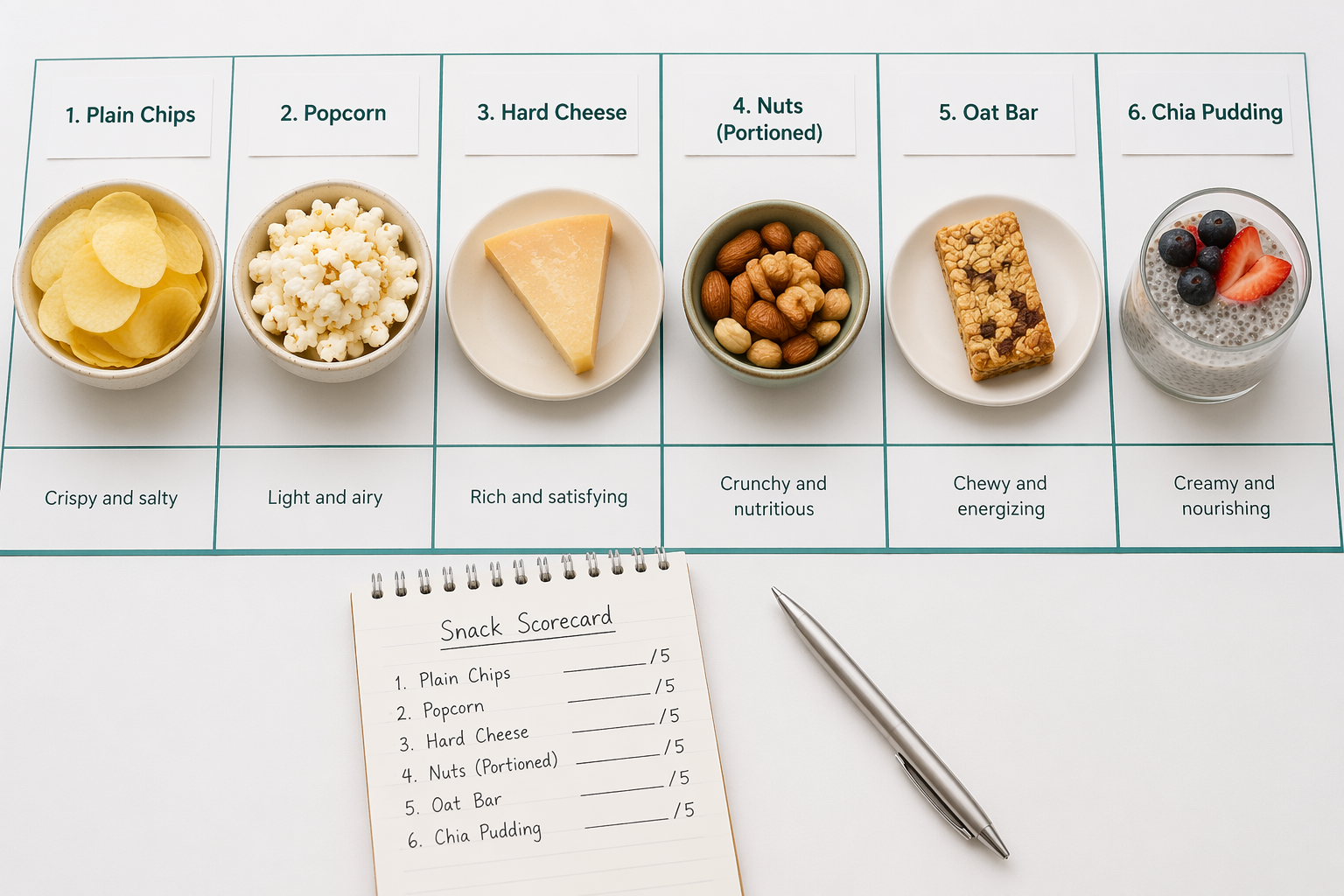
This roundup ranks snacks for irritable bowel syndrome (IBS) by real-world symptom support, not taste alone. The best options are the low-FODMAP snacks that fit your routine with the least fuss, the fewest red-flag ingredients, and the strongest chance of staying gentle on busy days. For a broader starting point, the IBS-friendly food list can help you compare food choices with more confidence.
The scoring gives the most weight to symptom control and ingredient clarity. Snacks rise when they fit low-FODMAP portions more easily, avoid fermentable oligosaccharides, disaccharides, monosaccharides, and polyols (FODMAPs) that can drive bloating, gas, and pain, and come with labels you can trust. Packaged choices earn extra credit when they show Monash University FODMAP guidance, a FODMAP certification seal, or a short ingredient list.
Look for these label cues:
Better fit | Red flags |
|---|---|
Fody, select GoMacro flavors, 88 Acres, BelliWelli | Chicory root, inulin, honey |
Clear serving size | Garlic or onion powder |
Simple ingredient list | Sugar alcohols |
Use-case matters too. Travel calls for shelf-stable, mess-free on-the-go IBS snacks. Work favors discreet, portioned portable snack ideas. Flare days usually call for smaller IBS flare-up foods that feel easier to tolerate in the moment.
That matters even more for SIBO and IBS, because tolerance can shift from one day to the next. My Good Gut’s expert-reviewed rankings favor IBS friendly snacks that balance symptom awareness with convenience, but your own response matters most. Use the list as a practical comparison tool, adjust portions to your tolerance, and speak with a qualified healthcare professional if symptoms are persistent, severe, or worsening.
1. My Good Gut — Best For Trusted IBS Guidance
My Good Gut earns its “Best for Trusted IBS Guidance” spot by turning low-FODMAP science into snack advice you can actually use. Fermentable short-chain carbohydrates can shape snack choices, so the guidance stays plain and practical. It points you toward low-FODMAP, nutrient-dense snacks instead of trendy foods that may hide triggers like inulin, chicory, honey, or sugar alcohols. It also keeps prebiotics and probiotics in context, so they do not sound like a cure-all for every gut problem.
That makes the advice useful on flare days and on busy ones. For IBS, the right snack often depends on the moment:
- Calmer picks: plain chips, popcorn, hard cheese, or a small serving of unripe banana or kiwifruit
- Portable picks: portioned nuts or seeds, lactose-free snacks, and other easy-to-pack low-FODMAP options
Tolerance varies from person to person, so trial, portion control, and symptom tracking matter. If symptoms persist, worsen, or feel hard to interpret, talk with a primary care doctor or registered dietitian for personalized IBS support.
2. GoMacro — Best For Convenient Snack Bars
GoMacro can be a smart grab-and-go choice when you need a bar fast, but it is not a blanket fit for everyone with IBS. Some flavors line up better with low-FODMAP snack bars than others, so check each bar on its own instead of assuming the whole range works the same way. Formula changes happen, too, which is why the Monash University FODMAP Diet App and any on-pack low-FODMAP certification seal are worth checking before you buy.
A quick label scan can save you from a rough afternoon. Look for these common trigger ingredients:
- Chicory root or inulin
- Honey
- Garlic or onion powder
- Sugar alcohols
For on-the-go IBS snacks, keep it simple:
- Eat one bar at a time.
- Sip water if the bar feels dense.
- Skip pairing it with other high-FODMAP foods in the same sitting if you’re sensitive.
Think of GoMacro as one of your portable snack ideas, not a one-size-fits-all fix. Choose the flavor you tolerate best, and keep your backup snacks just as simple.
3. Bobo’s — Best For Simple Oat Bars
Bobo’s earns this spot because the bars start with a simple oat base instead of a long list of extras. That makes them a better fit when you want something familiar, steady, and less processed than many snack bars.
Oats can provide soluble fiber, which some people with IBS handle well. Start with a modest portion, though, because even low-FODMAP foods can bother you if the serving gets too large.
- Increase fiber slowly: This matters most if bloating or gas flares easily.
- Use it as a trial snack: A bar is often easier to test than a full meal replacement.
- Skip it during active flare-ups: Even a simple oat bar can feel heavy when your gut is already irritated.
- Pair it with fluids: Water or tea may help it sit more comfortably.
Your tolerance matters most, because IBS can shift from one day to the next. On steadier days, Bobo’s can be a practical grab-and-go choice.
4. Fody Foods — Best For Certified Low FODMAP Choices
Fody Foods stands out when you want IBS-friendly snacks without the label maze. Its snacks are tested and certified Low FODMAP, so the seal gives you a fast reliability signal when shopping feels rushed or crowded. That can matter most on busy commutes, office days, and travel, when you do not want to decode every ingredient list from scratch.
The certification seal also pairs well with the Monash University FODMAP Diet App. Used together, they help you spot packaged foods that are more likely to fit your trigger threshold. Fody’s lineup spans 13 products, including low-FODMAP snack bars, savory bites, salsa, and low-FODMAP hummus options.
A few easy picks travel well:
- Snack bars: useful for a desk drawer or carry-on
- Portioned savory items: a better fit when you want something less sweet
- Olives: a simple, generally low-FODMAP way to add fat and flavor
That mix makes snack planning faster and gives you more confidence on days when your schedule is anything but predictable.
5. Enjoy Life — Best For Allergy-Friendly Treats
Enjoy Life is a smart pick when you want allergy-friendly treats that also fit an IBS-aware snack plan. Its chocolate chips, bars, and bite-size sweets are often chosen because they skip major allergens and usually leave out dairy, which can help if lactose tends to trigger bloating or diarrhea for you.
For a dessert-like option, lactose-free yogurt, lactose-free cottage cheese, or coconut-based yogurt can also work. Tolerance still varies from person to person.
Sweet snacks are usually easier on sensitive days when you keep portions small and keep the ingredient list simple. A few practical checks help:
- Chocolate serving: Dark chocolate at about 70% or higher is usually low-FODMAP in moderation, with 1 to 2 squares or about 30 g as a common target.
- Add-ins: Watch for inulin, chicory root, honey, and sugar alcohols.
- Pairing: Match chocolate with a plain snack if you need more staying power.
That kind of portion control helps a treat sit better on IBS-sensitive days.
6. 88 Acres — Best For Seed-Forward Snacking
88 Acres works well when you want a crunchy snack that stays more seed-forward than nut-heavy. That matters for nuts and seeds IBS, because seeds are often easier to fit into a low-FODMAP plan than larger servings of many nuts.
Keep portions small so the snack stays gentle:
- Pumpkin seeds: about 2 tablespoons, or a small handful
- Sunflower seeds: about 2 tablespoons, or a small handful
- Walnuts or macadamias: a useful change of pace when you want variety
- Almonds and cashews: easier to overdo, with cashews more likely to cause trouble
Pairing also helps. A small seed portion sits more comfortably with lactose-free yogurt, a firm banana, or plain oats. That lowers the FODMAP load without making the snack feel too plain. The main idea is simple. Keep the serving steady, and don’t let a “healthy” label tempt you into a bigger portion that can still trigger symptoms.
7. Dark Chocolate Nuts & Sea Salt Snack Bars — Best For Sweet Salty Cravings
Dark chocolate nuts and sea salt bars can satisfy a sweet-salty craving without feeling too heavy, especially when the chocolate is 70% or higher and the portion stays modest. A practical IBS-friendly serving is about 1 to 2 squares, or roughly 30 g, because larger amounts can be harder to tolerate.
The nut base matters just as much as the coating. Many bars use peanuts, almonds, pecans, or walnuts, and your gut may handle one mix better than another. The chocolate effects on IBS piece can help you think through that tradeoff.
Label checks matter here:
- Sugar alcohols: sorbitol, xylitol, mannitol, and maltitol
- Added fibers: inulin or chicory root
- Your own response: chocolate, nuts, or sweeteners
If you try one, start small and notice what your digestive system handles best.
8. Almond Butter — Best For Easy Protein Pairing
Plain almond butter works well when you want a snack that feels filling without getting too heavy. Keep your portion around 1 to 2 tablespoons, since that usually gives you a simple mix of protein and fat that’s easier to digest for many people with IBS.
It also fits busy days because it’s fast to pack and simple to build. Spread it on rice cakes, gluten-free toast, or plain crackers for a steadier mix of carbohydrate and healthy fat. That same idea applies to rice cakes with peanut butter, but almond butter gives you another easy option when you want a change.
Check packaged almond butter and snack combos for these label flags:
- Added fibers: inulin or chicory root
- Sweeteners: honey or sugar alcohols
- Savory extras: garlic or onion powder
Plain almond butter should keep a short, familiar ingredient list so your symptoms stay more predictable.
9. Pumpkin seeds — Best For Crunchy Portable Fiber
Pumpkin seeds are a solid pick when you want something crunchy, portable, and filling with little prep. Their mix of fiber and fat can help you feel satisfied between meals, which is useful on busy workdays or during travel.
Keep the serving around 2 tablespoons:
- Better fit: small amounts are more likely to work with low-FODMAP eating.
- Main risk: larger handfuls add up fast and can trigger symptoms.
- Extra caution: if your snack already has other FODMAP ingredients, even a small portion may push you over your limit.
That nuts and seeds IBS pattern is really about dose and context. Pumpkin seeds also fit well in a work bag, carry-on, or car kit when you pre-portion them into small containers.
During flare periods, plainer snacks often feel safer. If crunch, fat, or added seasoning bothers you, pause the seeds and compare them with other portioned nuts or seeds with guidance from a qualified healthcare professional.
10. Banana — Best For Gentle On-The-Go Fruit
Firm, yellow-green bananas are usually the gentler choice for IBS. They tend to have fewer fermentable sugars than riper fruit, so unripe bananas low FODMAP is a helpful rule of thumb when your stomach feels touchy. Bananas also bring soft soluble fiber, which can make them a good pick when you want something plain, quick, and easy to carry.
If you choose a firmer banana, start with a smaller portion and see how your body responds. Even low-FODMAP foods can feel different from day to day.
Bananas work well as a travel snack or a calm flare-day option:
- Easy to pack: Slip one into your bag without fuss.
- Easy to eat fast: Choose a simple fruit when appetite is low.
- Easy to pair: Add plain crackers or a tolerated nut butter if those work for you.
If bananas do not suit you that day, kiwifruit benefits and navel oranges give you other portable low-FODMAP fruit options.
11. Oats — Best For Filling Soft Snacks
Oats are a good soft snack when you want something filling. Their soluble fiber for IBS can be easier to handle than bran, but a sudden jump in fiber may bring gas or bloating, so start small and increase gradually. On steadier days, plain porridge made with water or lactose-free milk is often the easiest choice.
A few low-FODMAP options fit busy days well:
- Warm porridge: Keep toppings simple with a little peanut butter, cinnamon, or a few sliced strawberries if you tolerate them.
- Overnight oats: Measure the oats, use lactose-free milk or unsweetened almond milk, and skip honey, dried fruit, and large servings of apples.
- Extra-soft option: Chia seed pudding with almond milk or lactose-free milk can feel even more filling, but keep the serving modest.
During a flare, simpler foods may sit better than oats. If oats trigger symptoms, pause them and try again later in a smaller portion. For those moments, rice cakes with peanut butter, lactose-free yogurt, or lactose-free cottage cheese can be gentler swaps.
12. Chia Seeds — Best For Soluble Fiber Snacks
Chia seeds are a strong choice when you want soluble fiber for IBS. They absorb liquid and turn soft and gel-like, which often feels easier to tolerate than rougher, more bulky fiber snacks. That makes chia pudding a simple option when your gut is touchy.
Start with a small serving. About 1 tablespoon of chia seeds mixed into a plain base is a sensible first try. Larger portions can backfire and bring on gas, bloating, or looser stools.
Chia may also fit different symptom patterns:
- IBS-C: the soluble fiber may help soften stools
- IBS-D: the gel-like texture may help stools feel more formed
- Either pattern: your response matters most, so increase slowly only if you feel well
For the easiest snack, choose plain unsweetened almond milk or lactose-free milk. Keep toppings light, and skip big scoops of honey, inulin, or high-lactose dairy. That keeps soluble fiber for IBS simple and more likely to sit well.
Adjust chia portions based on your symptoms. If problems stay severe, persistent, or worsen, talk with a qualified healthcare professional.
How Do You Choose Snacks By IBS Type?
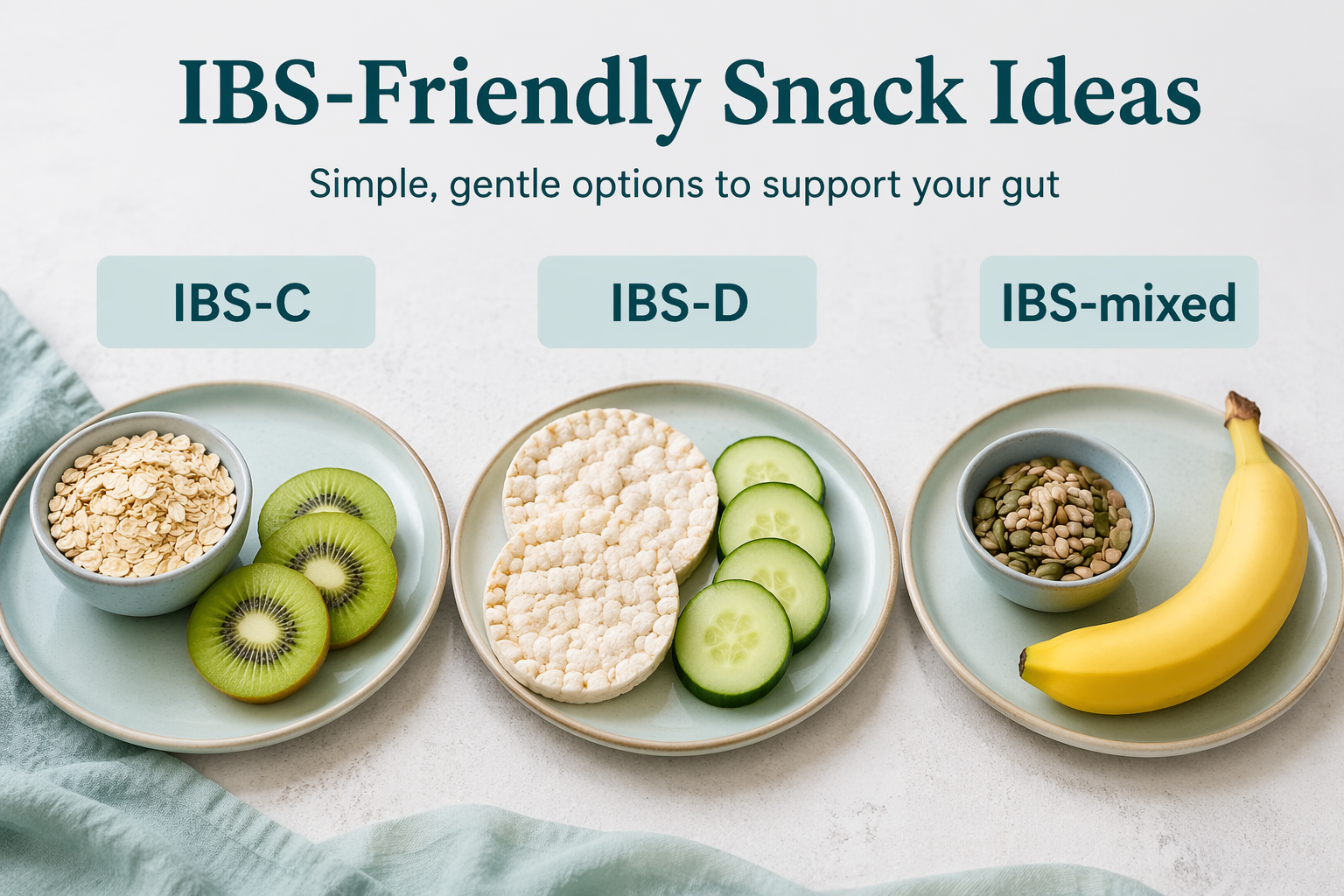
IBS snacks work best when you match them to the day you're having, not just the label on the package. Because IBS reactions vary, portion control for IBS matters more than any single safe food. A small trial of one snack at a time helps you spot flare-day versus calm-day patterns, and recurring symptoms are a good reason to work with a primary care doctor or registered dietitian. SIBO and IBS can overlap too, so ongoing bloating or pain deserves a real evaluation.
A simple way to choose is by subtype and symptom pattern:
- IBS-C: Lean on soluble fiber and fluids. Oats, chia, kiwi, and modest servings of strawberries, blueberries, or raspberries are often steadier choices. The kiwifruit benefits often show up at a moderate serving, and two kiwifruit may support regularity without usually adding much gas.
- IBS-D: Keep snacks plain, lower in fat, and easy to digest. Plain oats, cucumber, unripe banana, and other low-FODMAP options usually work better than greasy or very sweet snacks.
- IBS-mixed: Let the day decide. When constipation is more noticeable, lean toward soluble fiber. When stools are looser or cramping increases, choose smaller, blander snacks with less fat and less fiber.
A flare-day to maintenance-day swap list can keep IBS flare-up foods practical:
- Flare days: plain oats, cucumber, or banana
- Maintenance days: add a small amount of nut butter, seeds, hard cheese, or another tolerated protein pairing
Fat and protein can help with fullness, but keep portions small. A thin spread of almond butter or a small handful of seeds may work well, while larger amounts can be harder to tolerate.
What Portions Keep Snacks Low FODMAP?
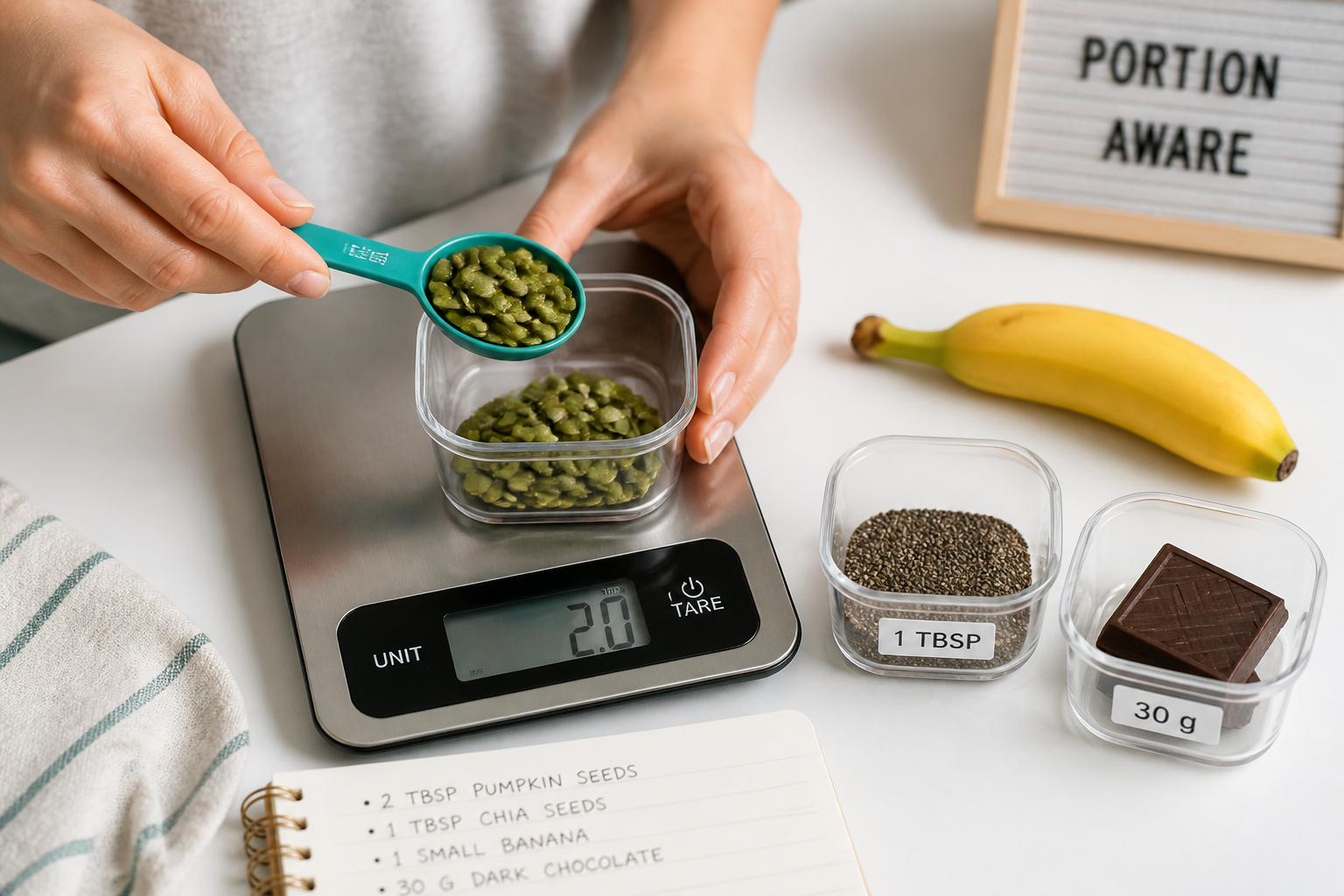
A low-FODMAP snack is about dose, not just ingredients. Even foods that seem gentle can tip over your limit when the serving gets too large, so portion control for IBS matters just as much as the label. A low fodmap diet for IBS plan works best when you think in snack-sized amounts instead of all-or-nothing rules.
Starter portions are easier to manage when you keep them simple. Pumpkin seeds or chia seeds can work at about 2 tablespoons, and some low-FODMAP snack guides use small chocolate portions such as a limited number of pieces or squares (source, source).
- Pumpkin seeds or chia seeds: about 2 tablespoons
- Other nuts: a small handful, not a free pour into the bowl
- Fruit: one single serving, with ripe fruit kept modest
- Chocolate or candy: about 22 M&M's or 4 Hershey's Kisses
Ripeness matters too. A small unripe banana is usually easier to fit into a low-FODMAP snack than a large ripe one, especially if you pair it with another food. That's why unripe bananas low FODMAP can be a helpful reminder when you're building a snack on the go.
The same rule applies across the whole snack. If you combine fruit, nuts, and a sweetened drink, keep each item conservative so the total stays manageable. Bars need the same care. Check both the serving size and the ingredient list, because inulin, chicory root, honey, and sugar alcohols make a bar riskier when you eat more than one or pair it with another higher-FODMAP item.
What Packaged Snacks Should You Buy?
The safest shortcut is to start with certification, then check the ingredient list. A clear low FODMAP seal or a product tested through the Monash University FODMAP Diet App is usually more reliable than front-label promises like “digestive-friendly” or “made with real ingredients.” That matters because label reading for FODMAPs often catches the hidden FODMAP ingredients that look harmless at first glance.
The quickest way to narrow the shelf is with a simple rule set:
Priority | What to pick | Why it helps |
|---|---|---|
Best | Certified low FODMAP snacks with short ingredient lists | Fewer surprises and better symptom control |
Next best | Familiar packaged snacks without red-flag fibers or sweeteners | Easier to tolerate when choices are limited |
Caution | Bars or crackers with prebiotic fibers, fruit concentrates, onion, or garlic | These often trigger gas, bloating, or urgency |
Watch for inulin, chicory root, honey, garlic powder, onion powder, sorbitol, mannitol, xylitol, and maltitol. Those ingredients can turn an otherwise IBS-safe snack into a rough one. That is why low-FODMAP snacks with a short panel usually beat flashy packaging.
For busy days, your best buys are simple and portable:
- Plain chips or popcorn with salt-only seasoning
- Simple low FODMAP crackers with short ingredient lists
- Gluten-free crackers when the label stays simple
- Lactose-free or dairy-free treats
- Low FODMAP bars from brands such as Fody, select GoMacro flavors, or BelliWelli when the certification matches
Fody is a strong example because its snack lineup highlights tested and certified low FODMAP products. Its store pages also show prices, review counts, and add-to-cart details, which makes comparison shopping easier when you are tired and moving fast.
When you need IBS-safe junk food alternatives, use a simple ladder. Best choice means certified low FODMAP with a short ingredient list. Next best means a familiar snack without red-flag sweeteners or fibers. Caution means anything with layered ingredients, especially in a flare, even if it looks like one of your IBS friendly snacks. For travel, desk drawers, or cravings, crunchy chips, popcorn for IBS, low FODMAP crackers, and dairy-free sweets usually fit the moment better than a complicated bar.
Which Ingredients Should You Avoid?
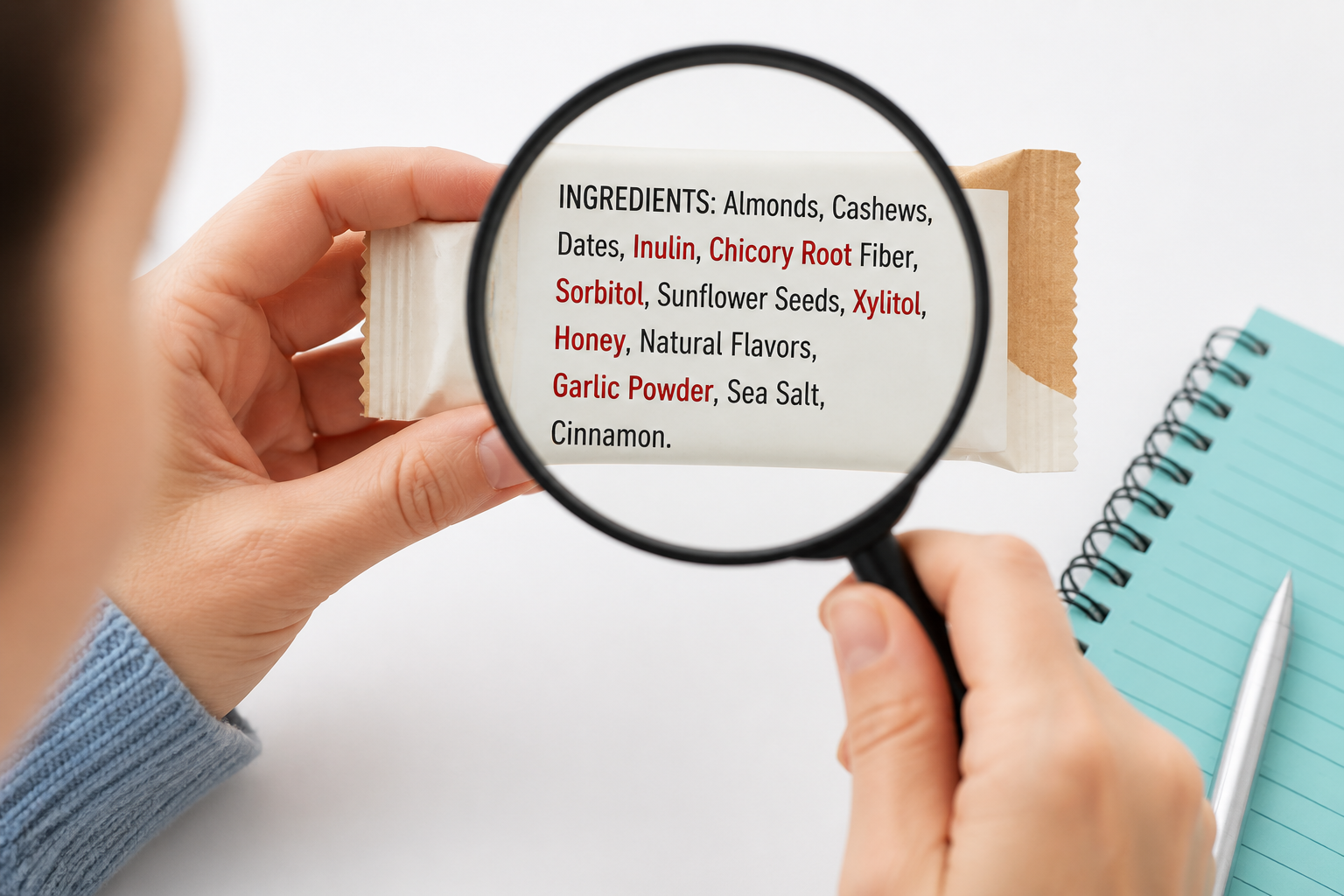
The safest IBS snacks usually start with a short ingredient list and no obvious trigger add-ins. That matters because foods to avoid with IBS can hide in places you might not expect, especially when you are grabbing food between work, school pickup, or errands.
A few hidden FODMAP ingredients deserve extra caution when you are reading labels:
- Sugar alcohols, also called polyols: sorbitol, xylitol, mannitol, and maltitol can draw water into the gut and trigger gas, bloating, or diarrhea. They often show up in sugar-free gum, mints, candies, and bars.
- Inulin and chicory root fiber: these prebiotics and probiotics are not the same thing, and these fibers can be highly fermentable. Even small amounts may cause cramping or a lot of gas.
- Garlic and onion powders: these seasonings can make chips, crackers, roasted nuts, flavored popcorn, and spice blends harder to tolerate.
- High-fructose sweeteners: high-fructose corn syrup, honey, and agave nectar can bother sensitive people, even in snacks marketed as natural.
- Certain nuts: cashews and pistachios are more likely to cause trouble than small portions of walnuts, pecans, or peanuts.
One quick rule helps with label reading for FODMAPs. If a package stacks several triggers together, such as inulin plus honey plus sorbitol, it is less likely to fit your needs. Safer snacks usually have no sugar alcohols, no garlic or onion seasoning, and a short ingredient list.
Best Snacks for IBS FAQs
These FAQs cover the snack choices people ask about most, from low-FODMAP picks to portable IBS-safe junk food alternatives that still feel satisfying. They also help you weigh portions, labels, and easy swaps before you choose what fits your routine.
1. Are Chips Okay For IBS?
Yes, chips can fit your IBS plan when you choose plain potato chips or tortilla chips with simple ingredients like potato or corn, oil, and salt. Baked or lightly salted versions are usually a safer first pick than heavily seasoned ones, because garlic, onion, onion powder, garlic powder, inulin, and spice blends can be harder on your gut. Keep the portion small, and if you need more staying power, pair it with plain popcorn, rice cakes, or low FODMAP crackers.
2. Can You Eat Fruit With IBS?
Yes, you can eat fruit with IBS, and top fruits for IBS usually start with lower-FODMAP picks like unripe bananas, berries, oranges, and kiwifruit. Keep portions modest, since even safer fruit can bother you if you eat too much at once, and pairing it with a little protein or fat can help you feel steadier. Apples and pears are more likely to trigger bloating or pain, especially during flare-ups, so test one fruit at a time and pay attention to ripeness and your own triggers.
3. How Many IBS Snacks Should You Have?
For most people with IBS, 1 to 3 snacks a day is usually enough, depending on meal timing, activity level, and how your symptoms tend to show up. Keep portions modest, because even low-FODMAP foods can become troublesome in larger amounts, and try not to stack several small FODMAP sources in one snack. A simple balance like fruit with nut butter or crackers with cheese can help you feel satisfied without making your stomach feel heavy.
4. Are Gluten-Free Snacks Always IBS-Friendly?
Gluten-free snacks can help if wheat is one of your triggers, but the label alone does not make a snack IBS-friendly. Even gluten-free crackers or gluten-free vegan snacks can still contain inulin, sorbitol, mannitol, honey, high-fructose corn syrup, garlic, onion, high-lactose dairy, or other additives that can bother you. The best choice is the full ingredient list plus your own portion tolerance and symptom pattern, not the front label by itself.