


Yes, IBS can cause temporary loss of appetite, usually because pain, bloating, nausea, constipation, or fear of food makes eating uncomfortable. IBS is a functional disorder, meaning the intestines may work differently without usually showing structural damage or ongoing inflammation. Appetite often improves as the flare settles, but persistent restriction or weight change needs attention.
Smaller meals, steady fluids, familiar foods, and a brief food-and-symptom diary may help you maintain nutrition without forcing large portions. A strict Low-FODMAP diet is a short-term tool, not a permanent way of eating, so narrow your diet further only with professional guidance. Keep in mind that conditions such as inflammatory bowel disease (IBD), celiac disease, infection, or exocrine pancreatic insufficiency (EPI) can resemble IBS.
Arrange medical care when appetite loss lasts more than two weeks, has no clear cause, or differs from your usual symptoms. Unintentional weight loss, blood in the stool, fever, repeated vomiting, dehydration, or severe or worsening abdominal pain are red flags that should not be attributed to IBS alone.
IBS and Loss of Appetite Key Takeaways
- IBS can temporarily reduce appetite through pain, bloating, nausea, constipation, stress, or food avoidance.
- Appetite usually improves as an uncomplicated IBS flare settles.
- Smaller meals and regular fluids can help maintain energy during short flares.
- Choose familiar, tolerated foods instead of following a rigid universal diet.
- A strict Low-FODMAP diet requires guidance when restrictions continue.
- Persistent appetite loss may reflect IBD, celiac disease, infection, or EPI.
- Seek prompt care for weight loss, bleeding, fever, vomiting, dehydration, or severe pain.
Can IBS Cause Loss Of Appetite?
Yes, irritable bowel syndrome (IBS) can sometimes cause temporary loss of appetite, but it's usually a secondary symptom rather than a defining feature. During a flare, IBS gut symptoms such as abdominal cramps, gas, bloating and nausea, fullness, diarrhea, constipation, or alternating bowel habits can make food less appealing.
Pain, constipation-related fullness, nausea and appetite changes, or fear that food will trigger symptoms may cause you to eat less. This can be especially difficult during a busy workday or family routine. With uncomplicated IBS, appetite and eating patterns should generally improve as symptoms settle, rather than remain restricted indefinitely.
Classic IBS is a functional disorder, meaning the intestines may work differently without usually showing structural damage or ongoing inflammation (source). IBS and appetite loss can occur together, but severe wasting and substantial unintentional weight loss are not typical of IBS alone. A brief change in appetite is different from irritable bowel syndrome appetite loss that affects your energy, nutrition, clothing fit, or daily activities.
Sudden, persistent, or significant loss of appetite deserves medical evaluation, especially with weight loss, bleeding, fever, vomiting, or severe pain. The medical care section below covers the full list of warning signs.
Inflammatory bowel disease, infection, or another condition can resemble IBS and may require different testing, and many celiac disease symptoms overlap with IBS too. Exocrine pancreatic insufficiency, which occurs when the pancreas doesn't release enough digestive enzymes, is another possible cause of ongoing digestive symptoms. A clinician may consider a fecal elastase-1 stool test when typical IBS symptoms don't explain persistent appetite loss.
Why Can IBS Reduce Your Appetite?
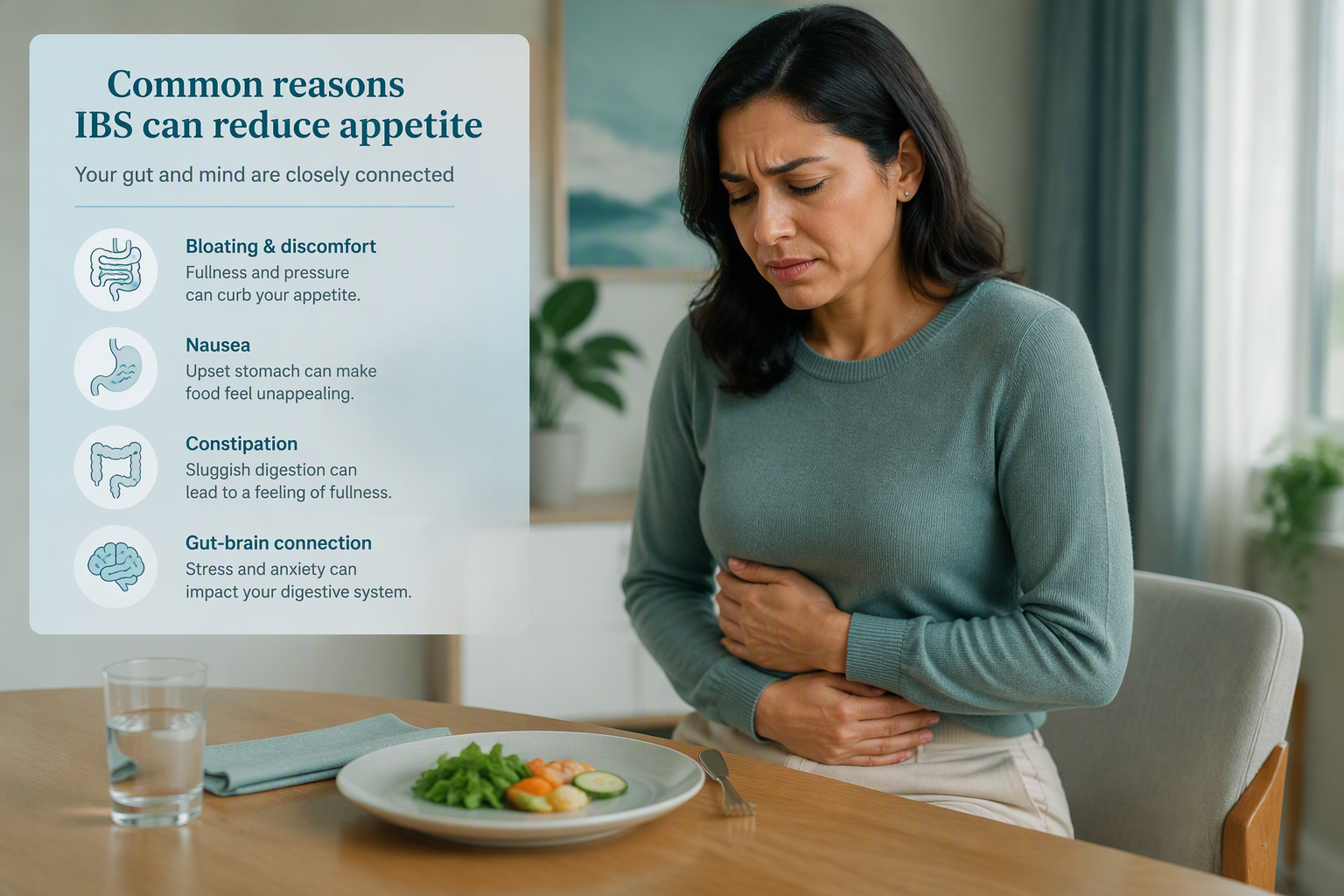
IBS can reduce your appetite when pain, nausea, bloating, constipation, or stress make eating uncomfortable. During a flare, several symptoms may act together, so short-term appetite loss does not always have one clear cause.
Common patterns include:
- Pain and urgency: Abdominal cramps, reflux, indigestion, nausea, or an urgent bowel movement may occur after eating. Repeated discomfort can create fear of food triggering pain, anticipatory nausea, or food avoidance. This link between nausea and appetite can make regular meals difficult, even when your body needs nourishment.
- Gas and bloating: Trapped gas and abdominal distension can make your stomach feel crowded or overly full. Early fullness means feeling satisfied after only a small amount of food, sometimes before you have eaten enough. Food intolerance or indigestion may add to post-meal discomfort, especially when bloating and nausea occur together.
- Slower digestion: Altered gastrointestinal motility, meaning changes in how food and stool move through the digestive tract, is common during constipation-predominant IBS flares. Pressure, constipation, and the feeling that digestion has stalled can make irritable bowel syndrome appetite loss more noticeable.
- Gut-brain stress: Stress, anxiety, and low mood can heighten digestive sensitivity, change motility, worsen nausea, and blunt hunger cues. These physical symptoms are not imaginary. A stressful day can intensify a flare, while worrying about symptoms can reinforce food avoidance.
Which pattern dominates varies from person to person, and how IBS symptoms differ in women includes appetite and bloating changes that can track with the menstrual cycle.
A simple symptom record may help you notice whether pain, nausea, bloating, constipation, stress, medication side effects, or another trigger comes first. If appetite loss persists or comes with warning signs such as weight loss, bleeding, fever, or vomiting, see the medical care section below.
How Can You Eat And Hydrate During An IBS Flare?

During a short IBS flare-up, smaller meals and steady fluids can help you maintain energy without forcing large amounts of food. Replace one or two large meals with modest portions, eat slowly, chew thoroughly, and sit down rather than eating on the move. Skipping food entirely can leave you more depleted, so a small snack may be enough when your appetite is low.
Choose familiar, nutrient-dense foods with textures you already tolerate. Options may include:
- Oatmeal, rice, or potatoes
- Cooked vegetables
- Eggs or plain lean proteins
- Yogurt, if dairy sits well
The aim is to maintain carbohydrates, protein, and calories, not to follow a universal bland-food diet. A food that feels gentle for one person may worsen symptoms for another, so your usual tolerance matters more than a rigid food list.
High-FODMAP foods, fatty meals, caffeine, alcohol, fizzy drinks, and some dairy or wheat products can worsen symptoms for some people. Change one suspected trigger at a time and adjust gradually. As symptoms settle, widen your food choices, and consider a registered dietitian if restrictions keep growing.
Hydration is usually easier when fluids are spread across the day:
- Sip water or another tolerated drink regularly instead of drinking a large amount at once.
- Drink more between meals if fluids with food increase fullness or bloating.
- Use thirst and pale urine as practical reminders to drink.
- Limit excessive tea, coffee, alcohol, and fizzy drinks when they worsen symptoms.
Nausea may ease with cool or room-temperature fluids, slow sipping, fresh air, and eating away from strong cooking smells. Ginger or peppermint tea may help if tolerated, although peppermint can worsen reflux. Crackers or toast may be easier than waiting until hunger disappears completely.
A food-and-symptom diary can reveal repeat patterns more reliably than blaming one ingredient after a single episode. For several days, record meal size, ingredients, drinks, bowel changes, pain, and appetite. Broader dietary changes may need about 3-4 weeks to assess. Persistent or severe vomiting, or ongoing poor intake, needs prompt medical evaluation.
How Do You Prevent Food Fear And Nutritional Decline?
Repeated abdominal pain with IBS, bloating, nausea, or urgency can teach your brain to associate eating with danger. That fear of food triggering pain may cause anticipatory nausea, subconscious food aversion, and less willingness to eat. Your symptoms are real, but continued restriction deserves a healthcare professional's input before you assume every avoided food is harmful.
A short appetite dip doesn't have to become nutritional decline. Keep a predictable eating rhythm with small meals or snacks at regular times, even when strong hunger cues are missing. Pair familiar, tolerated foods with adequate fluids, then broaden variety gradually as symptoms settle. A registered dietitian can tailor this approach, especially after you've removed several foods.
The gut-brain connection can also shape appetite during an IBS flare. Stress, anxiety, and depression may affect gut movement, reduce hunger signals, and contribute to stress and appetite loss without meaning your symptoms are psychological. Calming practices that may support regular eating include:
- Diaphragmatic breathing
- Mindfulness or meditation
- Gentle walking or movement
- Yoga
- Cognitive behavioral therapy, which may reduce food-related fear and support eating
A brief food and symptom diary can help identify repeatable patterns when it includes meals, symptoms, stress, bowel changes, and appetite. One uncomfortable episode doesn't prove a food caused harm. Stop tracking if it increases anxiety or leads to skipped meals, then ask a dietitian to help interpret the pattern.
Self-management is no longer enough when restriction continues or eating becomes frightening. Seek medical, dietetic, and qualified mental health support for:
- Fear of most foods
- Unintentional weight loss
- Weakness or dehydration
- Increasing distress around meals
Prompt medical care is needed for severe or worsening pain, persistent vomiting, bleeding, or fever because these signs may point to something other than IBS.
What Else Can Cause Appetite Loss Besides IBS?
Appetite loss can happen during an IBS flare, usually because pain, bloating, nausea, constipation, diarrhea, anxiety, or fear of triggers makes eating uncomfortable. IBS is generally a functional disorder, so it does not usually cause inflammation, structural damage, severe wasting, or substantial unintentional weight loss. Persistent appetite changes need broader evaluation.
Most appetite loss with IBS is not one of the conditions below. This table is a guide for conversations with your clinician, not a self-diagnosis tool.
Condition | How it differs from IBS | Possible tests | When to escalate |
|---|---|---|---|
IBS | Appetite falls when symptoms make eating unpleasant. | History and exam | Review appetite loss that persists. |
Inflammatory bowel disease (IBD) | Crohn's disease and ulcerative colitis involve inflammation, fatigue, nighttime symptoms, anemia, or blood in stool. | Blood and stool tests, colonoscopy | Seek prompt care for bleeding, fever, or weight loss. |
Coeliac disease | Wheat, rye, or barley may relate to diarrhea, fatigue, and poor nutrient absorption. | Blood tests, sometimes biopsy | Get assessed before starting a gluten-free diet. |
Intestinal infection | Symptoms often begin suddenly with diarrhea, vomiting, or fever. | Clinical assessment, stool testing | Get advice for dehydration, fever, or repeated vomiting. |
Delayed gastric emptying or functional dyspepsia | Upper-gut symptoms bring early fullness and nausea despite stable bowel habits. | History, selected motility or upper-GI tests | Seek review if meals become difficult. |
SIBO | Bloating and gas may dominate, and treatment differs from IBS care. | Breath testing in selected cases | Discuss ongoing symptoms with a clinician. |
Eating disorders, including ARFID-type restriction | Fear-based avoidance needs nutrition and mental-health support, not more elimination. | Nutrition and mental-health assessment | Get help for falling intake or weight change. |
Malignancy | Steadily progressive appetite loss with weight loss, bleeding, or anemia can rarely signal serious disease. | Clinician-directed testing | Do not attribute worsening symptoms to IBS. |
Exocrine pancreatic insufficiency (EPI) | Low digestive enzyme output can mimic IBS. | Fecal elastase-1 stool test | Ask about this when IBS does not explain symptoms. |
Stress, anxiety, and medication effects may also cause nausea, dry mouth, constipation, or altered taste. Persistent, sudden, severe, or worsening appetite loss warrants medical review.
When Should You Seek Medical Care For Appetite Loss?

Arrange medical care for a significant loss of appetite when it lasts more than two weeks, keeps worsening, or does not fit your usual IBS pattern. IBS can involve nausea, bloating, pain, constipation, or diarrhea, but it does not explain every digestive symptom. Persistent low appetite deserves attention even when other symptoms seem familiar.
Seek prompt medical advice for appetite loss with any of these warning signs, none of which are normal features of IBS (source):
- Unintentional weight loss: Rapid weight loss or losing more than 5% of your body weight over 6-12 months without trying is generally significant.
- Bleeding: Blood in stool, rectal bleeding, or black, tar-like stools needs medical evaluation.
- Systemic symptoms: Persistent fever, night sweats, unusual fatigue, weakness, dizziness, or possible anemia can point to a problem beyond IBS. Our guide to IBS fatigue covers how tiredness links with digestive symptoms, but new or worsening fatigue still deserves attention.
- Vomiting or dehydration: Seek urgent care for persistent or severe vomiting, inability to keep fluids down, very dark urine, faintness, or marked weakness.
- Severe or disruptive pain: Arrange prompt assessment for severe or worsening abdominal pain, pain that wakes you at night, or diarrhea and other symptoms that repeatedly interrupt sleep.
A sudden loss of appetite, new symptoms later in life, or several warning signs together calls for earlier evaluation instead of watchful waiting. Bring notes on when symptoms began, what you eat and drink, weight changes, and bowel symptoms so your clinician can assess the pattern efficiently. If common causes are ruled out and appetite loss continues, the fecal elastase-1 section below explains one further test your clinician may consider.
How Do Clinicians Evaluate Persistent Appetite Loss?

Persistent low appetite deserves medical review when it is sudden, worsening, or not clearly linked to a brief IBS flare. Your clinician may ask whether you're skipping meals, feeling full unusually quickly, finding food unappealing, feeling nauseated while eating, or losing weight without trying.
The timing and pattern help shape the evaluation. Expect questions about:
- Symptoms: Abdominal pain, bloating, nausea, vomiting, fever, bleeding, and severe or worsening pain.
- Daily intake: Typical food and fluid intake, bowel patterns, and unintended weight change.
- Possible influences: Prescriptions, over-the-counter medicines, supplements, and recent dose changes.
Persistent appetite loss should not automatically be blamed on IBS. IBD symptoms, celiac disease, an intestinal infection, malabsorption, or another condition can look similar. New digestive symptoms after age 50, especially without a previous history, warrant medical assessment rather than self-management alone.
Testing depends on your history and physical examination (source). Blood tests may check for inflammation, infection, anemia, or vitamin deficiencies. Stool tests can assess inflammation, malabsorption, infection, or hidden blood. When findings raise concern, endoscopy or colonoscopy can examine the digestive tract, while imaging may identify structural changes or blockages.
A fecal elastase-1 test may be considered when symptoms suggest pancreatic digestive problems. Watery stool can dilute the sample and produce a falsely low result, particularly during an IBS-D flare. Persistent or significant appetite loss needs individualized medical attention.
What Is Fecal Elastase-1 Testing For EPI?
Fecal elastase-1 testing may help investigate exocrine pancreatic insufficiency (EPI) when appetite loss and digestive symptoms don't fit a typical IBS pattern. EPI occurs when the pancreas doesn't release enough enzymes to digest food. It isn't an IBS diagnosis, but it may be considered when symptoms remain unexplained.
Persistent appetite loss alongside digestive changes deserves medical review, especially with:
- Ongoing diarrhea, particularly greasy or difficult-to-flush stools
- Bloating or abdominal discomfort
- Unintentional or rapid weight loss
- Signs of poor nutrient absorption or other nutrition problems
Fecal elastase-1 is a noninvasive stool test that estimates whether the pancreas produces enough digestive enzymes. A clinician may consider it when appetite changes, weight loss, or digestive symptoms continue without a clear explanation. Evaluation may also include other possibilities, such as inflammatory bowel disease, celiac disease, infection, anemia, medication effects, or another condition.
Reference ranges are interpreted with your symptoms, medical history, weight, nutrition, and other findings (source):
- Above 200 mcg/g: Generally considered normal
- 100-200 mcg/g: May suggest mild-to-moderate pancreatic insufficiency and needs follow-up
- Below 100 mcg/g: Consistent with severe EPI
These ranges don't confirm EPI by themselves. A result that seems abnormal may need context from bowel patterns, changes in weight or nutrition, and additional testing.
Watery diarrhea can make the test appear more abnormal than it is, particularly during an IBS-D flare. Excess water may dilute the sample and produce a falsely low fecal elastase-1 result. Report the stool consistency to your clinician and ask whether a repeat sample from a more formed stool or further evaluation is appropriate.
Sudden, persistent, or significant appetite loss warrants prompt evaluation, especially when it occurs with rapid or unintentional weight loss. Fever, nausea, vomiting, bleeding, severe pain, or a major bowel-pattern change may lead to blood tests, stool tests, imaging, or endoscopy.
How Is IBS-Related Appetite Loss Treated?
IBS-related appetite loss is usually treated by addressing the symptoms that make eating difficult (source) while checking for other causes when appetite changes persist. Pain, cramping, bloating, nausea, gas, and urgent bowel movements after meals can lead to food avoidance. A clinician first identifies whether constipation, diarrhea, or mixed symptoms are driving your IBS symptoms.
Persistent or unexplained appetite loss needs medical evaluation rather than an automatic IBS label. Exocrine pancreatic insufficiency is one possible alternative. The fecal elastase-1 section above explains the test and how results are read.
Food support should make meals easier without creating a narrow diet. During a short flare, smaller, more frequent meals may be easier to tolerate than large portions, and regular fluids remain important. With a clinician or registered dietitian, test possible triggers separately:
- Potential triggers: High-FODMAP foods, heavy fats, and caffeine can worsen symptoms for some people, but tolerance varies.
- Diet changes: A Low-FODMAP diet may help some adults when guided by a qualified professional. Broad restriction can worsen inadequate intake.
- Adjustment pace: Allow about 3-4 weeks for gradual dietary changes before judging the pattern.
The gut-brain connection also affects appetite. Stress, anxiety, and depression can change gut movement, dampen hunger cues, and intensify discomfort without making those symptoms imaginary. Diaphragmatic breathing, mindfulness, yoga, gentle walking, or another calming routine may fit a busy work or caregiving day. When fear of eating, persistent worry, or low mood limits meals, cognitive behavioral therapy and other talking therapies can complement medical and dietary care.
A clinician or pharmacist should review medication and supplement changes, particularly when appetite loss follows a treatment change or occurs with nausea, constipation, or diarrhea. Never stop prescribed medicine without professional advice, and don't assume supplements treat IBS. No randomized controlled trial has tested collagen in people with diagnosed IBS. The digestive-symptom study behind most marketing claims enrolled healthy women without an IBS diagnosis.
Seek prompt care for bleeding, fever, vomiting, severe pain, worsening symptoms, declining intake, or unintentional weight loss. This content is for educational purposes only and is not a substitute for personalized medical advice. Digestive symptoms can have many causes, so consult a qualified healthcare professional for persistent, severe, or worsening symptoms.
IBS And Loss Of Appetite FAQs
These FAQs address common concerns about IBS and loss of appetite, including how appetite changes relate to digestive symptoms, which patterns may need closer attention, and when medical guidance can help.
1. Can IBS Cause Appetite Loss Without Nausea?
Yes. IBS can reduce your appetite even without nausea. Pain, cramping, gas and bloating, bowel changes, and stress can make eating unpleasant. Severe bloating, abdominal distension, or trapped gas may also cause early fullness, so you feel overly full after a small amount of food and skip meals.
Appetite loss is usually a secondary IBS symptom, not a defining feature. Persistent or worsening appetite loss, ongoing symptoms, or unintended weight loss should be evaluated by a healthcare professional.
2. Does IBS-Related Appetite Loss Affect Weight?
IBS-related appetite loss can affect your weight when pain, bloating, nausea, or fear of symptoms leads you to eat less over time. A temporary change may improve as your appetite returns, and classic IBS generally doesn't cause structural damage, severe unexplained wasting, or substantial unintentional weight loss. Still, unintentional or rapid weight loss shouldn't be blamed on IBS. If symptoms persist, or pain-relief strategies aren't helping, seek prompt medical evaluation.
3. Can Constipation Make IBS Appetite Loss Worse?
Yes. Constipation-predominant IBS can slow digestive movement, allowing stool and gas to collect. Bloating, abdominal distension, and pressure may make you feel full after only a few bites, causing early fullness and reduced appetite even when hunger hasn't disappeared.
Contact a healthcare professional if constipation or poor appetite persists, worsens, or limits eating and drinking. Inability to pass stool or gas alongside severe pain or repeated vomiting needs urgent care, and the warning signs above apply here too.
4. Can IBS Medications Change Your Appetite?
Yes, some IBS medications and other medicines can affect appetite indirectly. Nausea, constipation, diarrhea, bloating, or feeling full sooner may make eating less appealing, although appetite loss is usually a secondary symptom rather than a typical IBS feature. Note when it started, any medication changes, how long it lasts, your bowel pattern, and any unintended weight change, then discuss these details with a clinician or pharmacist instead of stopping treatment yourself. Persistent appetite loss, fever, vomiting, bleeding, or severe pain needs medical evaluation.
5. Does Appetite Return After An IBS Flare?
Yes, appetite often returns as an IBS flare settles and pain, bloating, nausea, or stress-related food avoidance ease. Gradually resume regular meals and fluids you tolerate instead of forcing large portions. Recovery varies, so focus on steady intake rather than a quick return to normal.
Contact a healthcare professional if appetite loss is sudden, significant, lasts more than about two weeks, or continues after other symptoms improve. Weight loss, bleeding, fever, worsening symptoms, severe pain, or persistent vomiting may signal inflammatory bowel disease, celiac disease, infection, or another condition and require prompt evaluation.