


When burning in your chest, a sour taste, or coughing after meals keeps returning, it may be more than occasional heartburn. Acid reflux is the backflow of stomach contents into the esophagus, while GERD is the persistent form that causes frequent symptoms or esophageal damage. Heartburn or regurgitation occurring two or more times a week can point to GERD.
Coffee, late meals, large portions, and lying down may worsen symptoms, but they do not affect everyone the same way. Keeping a one- to two-week record of meals, timing, body position, symptoms, and medicines can reveal patterns without requiring a restrictive diet. Treatment may include smaller meals, finishing food 2 to 3 hours before bed, calcium carbonate antacids, H2 blockers, or PPIs depending on the symptom pattern.
Difficulty swallowing, food feeling stuck, vomiting blood, black stools, unexplained weight loss, or chest pain with shortness of breath need prompt assessment. Persistent reflux may require testing such as upper endoscopy or pH monitoring to check for GERD complications or another cause.
Acid Reflux and GERD Key Takeaways
- Acid reflux is backflow into the esophagus, while GERD is persistent reflux causing frequent symptoms or damage.
- Heartburn and regurgitation two or more times weekly can suggest GERD.
- Large meals, late eating, lying down, nicotine, and some medicines can worsen reflux.
- Track meals, timing, position, symptoms, and medicines to identify personal reflux patterns.
- Antacids neutralize acid, while H2 blockers and PPIs reduce acid production.
- Upper endoscopy, pH monitoring, and manometry help evaluate persistent or unclear symptoms.
- Seek prompt care for swallowing problems, bleeding, weight loss, persistent vomiting, or concerning chest pain.
What Are Acid Reflux, Heartburn, and GERD?
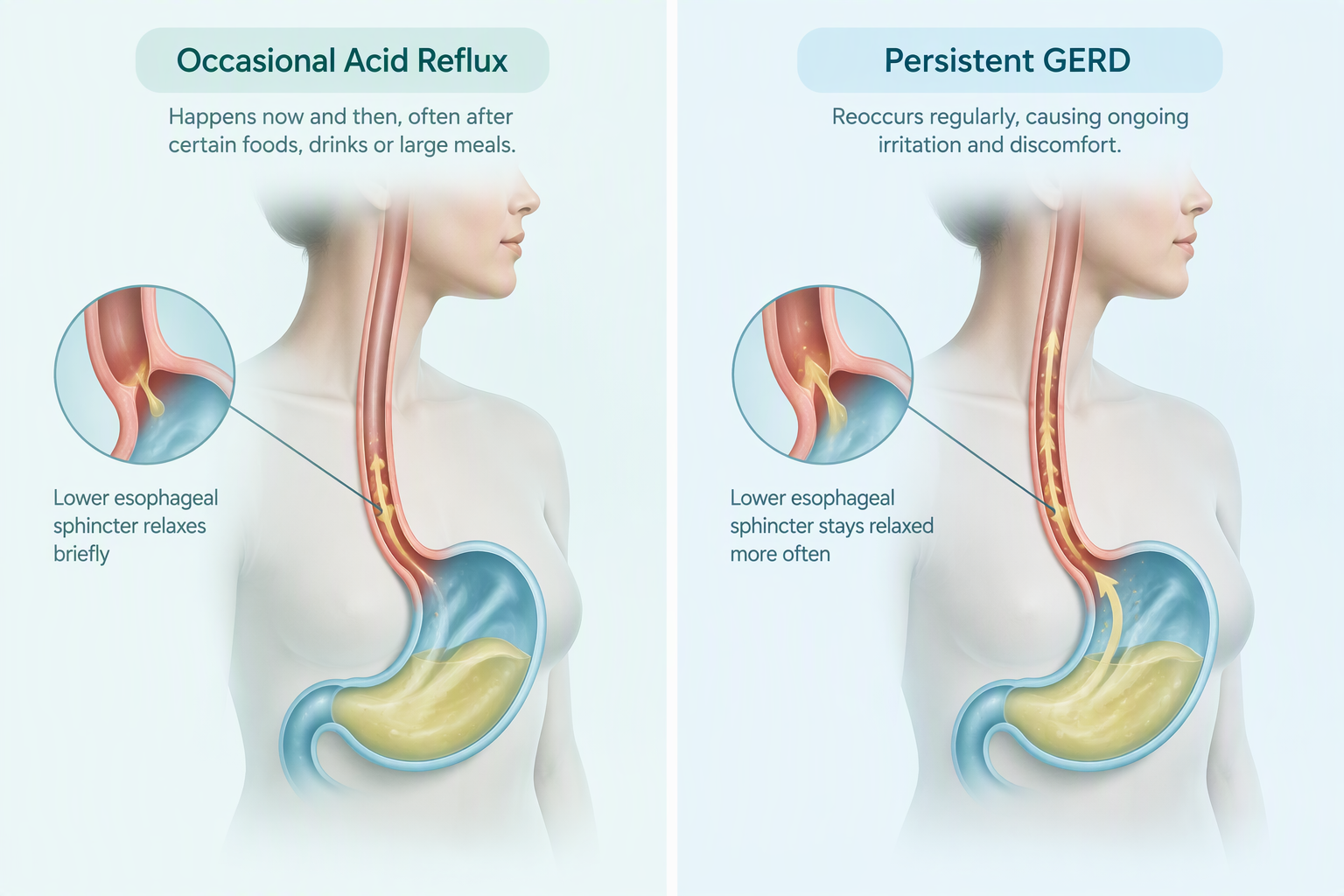
Acid reflux is the backward movement of stomach contents into the esophagus, the tube that carries food from your mouth to your stomach. The material may contain stomach acid, but it is not always acidic. An occasional episode is common and does not by itself mean you have a medical condition.
The three terms describe different things. Acid reflux is the physical backflow, while heartburn is a symptom that can feel like burning or pain behind the breastbone. It often occurs after eating and may feel worse when you bend over, lie down, or try to sleep.
Chest discomfort should not automatically be treated as heartburn. Reflux is one possible cause, but other conditions can also cause chest pain, and some need prompt assessment.
Gastroesophageal reflux disease (GERD) is the more persistent condition in which reflux causes frequent symptoms or damages the esophagus. Reflux episodes twice a week for several weeks straight are the usual threshold for GERD, although a clinician considers your full symptom pattern before making that diagnosis (source). The National Institute of Diabetes and Digestive and Kidney Diseases draws the same line between occasional reflux and the chronic condition (source).
GERD does not always cause the familiar burning sensation. Symptoms can include:
- Regurgitation: Food or sour- or bitter-tasting liquid rises into your throat or mouth.
- Sour taste: An acidic, sour, or bitter flavor lingers in your mouth.
- No obvious heartburn: Reflux-related symptoms can occur even when you do not feel burning behind the breastbone.
Over time, repeated exposure to refluxed stomach contents can irritate or injure the esophageal lining. Other digestive disorders beyond reflux can cause similar symptoms, so the timing, frequency, and pattern of your symptoms help clarify what needs attention.
Why Does Acid Reflux Happen?
Acid reflux usually begins when the barrier between the stomach and esophagus does not close as it should. The lower esophageal sphincter (LES) is a muscle ring at the bottom of the esophagus that normally closes after you swallow. When it relaxes at the wrong time, weakens, or does not seal fully, stomach acid, food, and fluid can move upward. This mechanical problem, rather than excess acid production alone, explains most reflux (source).
Several factors can make that upward flow more likely:
- Hiatal hernia: With a hiatal hernia, part of the stomach moves upward through an opening in the diaphragm, which can interfere with how well the LES works.
- Abdominal pressure: Pregnancy and excess body weight can increase pressure on the stomach. Reflux affects people at many body sizes, though weight loss may reduce pressure and ease symptoms for people with excess weight.
- Meal size: Large meals can stretch the stomach and make reflux more likely if you already tend to reflux.
Body position and clothing can also affect symptoms, although these patterns are individual. Lying down or going to bed soon after eating can make upward flow easier, especially if you have reflux that wakes you at night. Tight waistbands or restrictive clothing may add abdominal pressure. Noticing how meal timing, portion size, and clothing affect your symptoms can help you spot your own patterns.
Smoking and nicotine can weaken the LES, so quitting may help manage reflux while supporting overall health. Some medicines may also contribute by affecting the LES or irritating the upper digestive tract. Nonsteroidal anti-inflammatory drugs (NSAIDs) and calcium channel blockers are among the possible contributors.
Do not stop prescribed medicine on your own. A clear symptom history, including new medicines, meal routines, and nicotine use, gives your clinician useful context for deciding what may be contributing.
Frequent acid reflux, or stomach acid reflux that keeps recurring, usually has one of these mechanical drivers behind it, and acidic foods and acid reflux are linked more through irritation than cause.
Which Symptoms Can Acid Reflux Cause?
When the upward flow described above occurs, acid reflux symptoms often include heartburn and regurgitation, though they can also involve the chest, throat, and airways. Heartburn often appears after meals or when you lie down, while regurgitation can leave an acidic taste.
Symptoms vary widely. Some people have occasional discomfort, while others find that reflux disrupts sleep, meals, or work. Noticing patterns around foods and drinks that trigger reflux can help identify possible triggers without cutting out many foods all at once.
Reflux can also cause chest discomfort or upper-abdominal symptoms that feel like pressure, burning, or pain. Indigestion without reflux can feel similar but may have different causes. Burning chest pain may come from reflux, yet reflux-related pain can resemble a heart problem. New, severe, or otherwise concerning chest symptoms need prompt medical assessment.
Gastroesophageal reflux disease (GERD) can affect swallowing and irritate tissues above the stomach. Possible symptoms include:
- Difficulty swallowing: Food may seem slow to move down or feel stuck in your throat or chest.
- Pain when swallowing: Swallowing can feel sore, sharp, or painful rather than simply uncomfortable.
- Throat symptoms: A sore throat from acid reflux, hoarseness, frequent throat clearing, or a lump-in-the-throat feeling can occur.
- Breathing symptoms: Chronic dry cough, wheezing, or shortness of breath may occur alongside reflux.
Throat and breathing symptoms have many possible causes, so they should not automatically be blamed on reflux. Persistent, worsening, or eating-limiting swallowing changes warrant clinical assessment.
How Is GERD Diagnosed?

When symptoms suggest persistent reflux or possible complications, GERD diagnosis usually starts with your symptom pattern, medical history, medicines, and a physical exam. A clinician may ask how often heartburn or regurgitation occurs, whether it disrupts sleep or daily life, which foods or habits trigger it, and whether lifestyle changes or treatment have helped. This helps distinguish occasional acid reflux from persistent GERD and assess whether reflux may be irritating the esophagus, according to the National Institute of Diabetes and Digestive and Kidney Diseases (source).
Medical assessment is appropriate when symptoms continue despite routine changes or medicine, or when you need nonprescription heartburn medicine more than twice a week. If your symptoms fit GERD and no warning signs are present, a clinician may use a PPI trial to see whether acid suppression improves them.
Some symptoms need prompt evaluation because they can signal inflammation, narrowing, bleeding, or another condition:
- Painful or difficult swallowing: Swallowing may hurt or feel harder than usual.
- Food feeling stuck: Food may seem to stop in your throat or chest after you swallow.
- Unexplained weight loss: Weight loss without a change in eating or activity needs assessment.
- Bleeding or anemia: Vomiting blood, black stools, or anemia can indicate bleeding in the digestive tract.
An upper endoscopy uses a flexible camera to examine the esophagus, stomach, and first part of the small intestine, and it can identify esophagitis, ulcers, strictures, and Barrett’s esophagus. Tissue samples may be collected, including when the lining appears normal.
When the diagnosis remains unclear, pH monitoring measures reflux episodes and whether they line up with your symptoms. A wireless capsule or thin catheter can perform the test, while impedance testing can detect non-acid reflux. Esophageal manometry measures swallowing-muscle pressure and coordination, which can help evaluate swallowing symptoms and plan certain procedures. ACG clinical guidelines reserve these tests for persistent symptoms, uncertain cases, and procedure planning rather than routine heartburn (source).
Untreated GERD can contribute to esophagitis and, in some people, Barrett’s esophagus, so what untreated reflux can lead to is part of the decision, but testing is not needed for everyone with heartburn. Your symptoms, treatment response, and warning signs guide the next step.
Acid reflux diagnosis, then, is mostly a GERD medical evaluation built on the history, with tests reserved for the unclear cases.
How Is Acid Reflux Treated?

After symptom patterns and warning signs help guide the next step, treatment usually starts with routine changes that reduce reflux opportunities. Home remedies that calm reflux can help you choose approaches that work with your meals, workday, and family schedule without following a universal restrictive diet.
Practical changes include:
- Meals: Choose smaller portions and reduce foods or drinks that repeatedly bring on symptoms.
- Habits: Limit alcohol and tobacco, and consider weight loss when it is appropriate for your health.
- Timing and position: Finish eating 2 to 3 hours before lying down or bedtime, remain upright after meals, and raise the head of your bed 6 to 8 inches for nighttime symptoms (source).
A one- to two-week log can reveal repeatable patterns without diagnosing reflux. Include meals, portions, timing, body position, symptoms, nighttime waking, and medicines, and note long drives, since reflux on the road follows its own pattern.
For occasional heartburn, calcium carbonate antacids neutralize acid already in the stomach but do not stop reflux from happening. Alginates create a floating barrier over stomach contents and may help with after-meal symptoms or reflux that reaches the throat. Follow package directions, and ask a pharmacist about possible medicine interactions.
Antacids, H2 blockers, and PPIs compared can help clarify which option fits your symptoms. H2 blockers, such as famotidine, reduce acid production and generally last longer than antacids. PPIs, including omeprazole, lansoprazole, and esomeprazole, suppress acid more strongly and can help heal acid-related irritation in the esophagus. A clinician may suggest a PPI trial for persistent symptoms, while over-the-counter products should only be used as directed.
Recurring symptoms or repeated use of reflux medicines merit a routine clinician visit. Prescription treatment, fundoplication, or another minimally invasive procedure may help selected people whose symptoms continue despite lifestyle changes and medicines.
Prompt assessment is needed for:
- Trouble swallowing
- Bleeding or black stools
- Unexplained weight loss
- Persistent vomiting
- Chest pain with shortness of breath or arm or jaw pain
These symptoms can signal reflux complications or a condition other than acid reflux.
Acid reflux treatment and GERD treatment follow the same ladder: lifestyle changes for GERD first (the same acid reflux lifestyle changes cover diet and GERD nutrition, sleep position, and smoking), then acid reflux remedies you can do at home, then PPIs for GERD when reflux esophagitis or frequent symptoms call for them.
What Is the Outlook for Acid Reflux?
With the practical changes and treatment options above, occasional acid reflux often improves when you identify personal triggers and make practical changes to meals, sleep, or daily routines. Gastroesophageal reflux disease (GERD) may need long-term management with lifestyle changes and, for some people, ongoing treatment. Symptoms can come and go, affecting heartburn, regurgitation, sleep, and throat comfort.
Whether acid reflux is serious depends on its frequency, severity, and effect on the esophagus. Symptoms often return after an effective treatment is stopped, especially when inflammation also returns. A clinician can help determine whether a maintenance plan fits your pattern of symptoms.
Losing excess weight, when applicable, can reduce pressure on the stomach and ease reflux symptoms. Meaningful progress may look like fewer or milder flares, more comfortable meals, better sleep, and less reliance on rescue medication rather than permanent relief from one change. The NHS includes weight management among lifestyle measures that may reduce reflux symptoms (source).
Reflux does not have to stop commutes, long drives, or family trips. Planning meal timing and breaks around your usual symptom pattern makes trips easier without treating every food as a trigger.
Repeated acid exposure can inflame the esophageal lining, causing esophagitis that, if untreated, can lead to ulcers, bleeding, or a peptic stricture, a scar-related narrowing that makes swallowing difficult. Long-term reflux can also lead to Barrett’s esophagus, in which chronic irritation changes the lower esophageal lining.
Barrett’s esophagus can raise the risk of esophageal adenocarcinoma, but most people with reflux do not develop cancer. MedlinePlus identifies esophagitis, strictures, bleeding, and Barrett’s esophagus as possible GERD-related complications (source). Persistent or concerning symptoms deserve prompt medical assessment.
Reflux esophagitis is the earliest sign that acid reflux causes are winning, and protecting esophageal health is the point of every lifestyle modification for GERD listed above.
When Should You Seek Care for Reflux?

Is acid reflux serious? Occasional heartburn often is not, but some symptoms need urgent assessment because reflux and heart problems can feel alike.
Seek emergency care or call emergency services for new, severe, persistent, or unexplained chest discomfort, especially with any of the following:
- Shortness of breath, sweating, faintness, or severe weakness.
- Pain spreading to an arm, jaw, back, or shoulder.
- Burning chest pain that feels different from your usual reflux or does not ease.
Acid reflux can cause chest or upper-abdominal pain, but heart-related symptoms can be mistaken for heartburn. The cause of chest pain cannot be safely determined at home.
Contact a healthcare professional promptly for symptoms that are not routine reflux symptoms:
- Vomiting blood or material that looks like coffee grounds.
- Black, tarry stools or unusual weakness and dizziness, which may occur with anemia.
- Difficulty swallowing, food feeling stuck, pain with swallowing, or an ongoing lump-in-the-throat sensation.
- Persistent vomiting, unexplained weight loss, or trouble keeping fluids down.
- Reflux that is severe, becoming more frequent, or disrupting meals, sleep, or daily activities.
Swallowing symptoms may result from inflammation, an ulcer, or a narrowed area of the esophagus. A clinician can determine whether upper endoscopy, a procedure that examines the upper digestive tract, is appropriate.
Routine care also matters when symptoms keep returning. Discuss reflux with a clinician if nonprescription heartburn medicine does not provide lasting relief. Frequent self-treatment can mask GERD or another cause that needs a more appropriate management plan.
Knowing when to see a doctor for acid reflux comes down to those two lists: emergency signs now, and everything else at a routine visit.
That is also the answer to when to see a doctor for GERD: GERD lifestyle changes and lifestyle modifications for GERD are the first step, but not a reason to wait through warning signs.
Acid Reflux Disease FAQs
These FAQs cover common concerns about acid reflux disease, from symptoms and triggers to testing and treatment, so you can better understand what may need attention.
1. Which Foods Trigger Acid Reflux?
Large, heavy, fried, or high-fat meals are the most common triggers, especially if you lie down soon after eating. Spicy foods, chocolate, mint, coffee and other caffeinated drinks, alcohol, citrus, tomatoes, and tomato-based foods can also bring on symptoms. These are possible triggers, not automatic exclusions. Track meals, drinks, portion sizes, timing, and symptoms to find your own repeat patterns without making your diet overly restrictive. Persistent symptoms warrant a conversation with a healthcare professional.
2. Which Foods Help Acid Reflux?
No single food prevents acid reflux for everyone. Build meals around foods and drinks you tolerate well, and watch for patterns when symptoms return. Smaller, less filling meals may ease stomach pressure and reduce GERD symptoms. Avoid late-night snacks when possible, and leave about 2 to 3 hours between eating and lying down or going to bed. If excess weight increases abdominal pressure, gradual weight loss may help manage reflux, though it is not needed or appropriate for everyone.
3. Can Acid Reflux Cause Bad Breath?
Yes. Acid reflux, including gastroesophageal reflux disease (GERD), can contribute to bad breath when stomach contents rise into the throat or mouth, leaving a sour taste or bitter odor, often after meals. Silent reflux can also cause hoarseness, frequent throat clearing, a lump sensation, or a sore throat from acid reflux. Because persistent bad breath may also stem from dental or other health issues, seek dental or medical assessment if it continues as reflux symptoms improve.
4. Does Sleeping Position Affect Acid Reflux?
Yes. Acid reflux often worsens at night because lying flat makes it easier for stomach contents to flow into the esophagus, the tube between your mouth and stomach. Sleeping on your left side may keep acid lower and reduce nighttime symptoms for some people.
Raising the head of your bed 6 to 8 inches with bed risers or a foam wedge can help by lifting your upper torso. Stacked pillows are usually less effective because they bend your body at the waist instead of creating a steady incline.