


Heartburn that settles after an occasional heavy meal usually does not cause lasting damage. Acid reflux becomes more concerning when it occurs about twice a week for several weeks, especially with regurgitation or nighttime symptoms, because repeated exposure can injure the esophagus. GERD is a chronic reflux pattern that can cause inflammation and other complications over time.
A painful flare does not reliably show how much irritation is present, and throat symptoms, cough, or dental erosion can have causes besides reflux. Upper endoscopy can identify esophagitis, ulcers, bleeding, scar-related strictures, and Barrett's esophagus, while biopsies check for dysplasia, or abnormal cell changes.
Most people with GERD will not develop esophageal cancer, but ongoing irritation can lead to problems that are easier to address early. Trouble swallowing, food sticking, vomiting blood, black stools, unexplained weight loss, or severe chest pain need prompt medical attention.
Acid Reflux Complications Key Takeaways
- Occasional acid reflux rarely causes lasting esophageal damage.
- Reflux occurring about twice weekly for several weeks may indicate GERD.
- Repeated reflux can cause esophagitis, ulcers, bleeding, and scar-related strictures.
- Barrett's esophagus is precancerous, but most people with it do not develop cancer.
- Reflux can contribute to cough, hoarseness, asthma symptoms, and dental erosion.
- Trouble swallowing, food sticking, bleeding, or weight loss needs prompt evaluation.
- Upper endoscopy and biopsies can identify damage, Barrett's changes, and dysplasia.
When Can Acid Reflux Cause Lasting Damage?
A single episode of heartburn or regurgitation after a heavy meal is usually temporary and unlikely to harm the esophagus. Acid reflux and GERD as a whole become more concerning when symptoms occur about twice a week for several weeks, repeatedly bother you, or lead to complications.
Esophageal damage usually results from repeated exposure, not one especially painful episode. Stomach acid and other contents irritate the esophageal lining, and frequent reflux leaves less time for that tissue to recover. Symptoms that persist for months or years deserve attention, even when they feel familiar or manageable, and so do the habits that keep reflux going, from late dinners to long drives that set off reflux.
Nighttime reflux and esophageal damage can be a greater concern because lying down may keep refluxed material in the esophagus longer. Swallowing also slows during sleep, reducing acid clearance. Waking with burning, sour fluid in your throat, coughing, chest discomfort, or disrupted sleep is worth discussing with a clinician rather than accepting as normal.
A clinician can use these details to assess your symptoms:
- How many days each week reflux occurs.
- Whether symptoms include regurgitation, trouble swallowing, persistent cough, or severe pain.
- Whether over-the-counter remedies offer only brief relief or you increasingly rely on antacids.
- Whether symptoms are becoming more frequent, intense, or disruptive.
These patterns are what separate ordinary reflux from GERD that is doing damage. Untreated GERD does not automatically lead to serious disease, and most people with GERD will not develop cancer, but chronic irritation can change the esophageal lining into a precancerous condition, so the cancer question is reasonable to raise without assuming the worst.
Early evaluation, practical lifestyle changes, and acid-suppressing treatment when appropriate can support healing and lower the chance of serious long-term complications.
Gastroesophageal reflux (GER) becomes gastroesophageal reflux disease (GERD) when it is frequent or damaging, and the long-term effects of acid reflux described below are the GERD complications that follow from that.
How Can Reflux Damage the Esophagus?
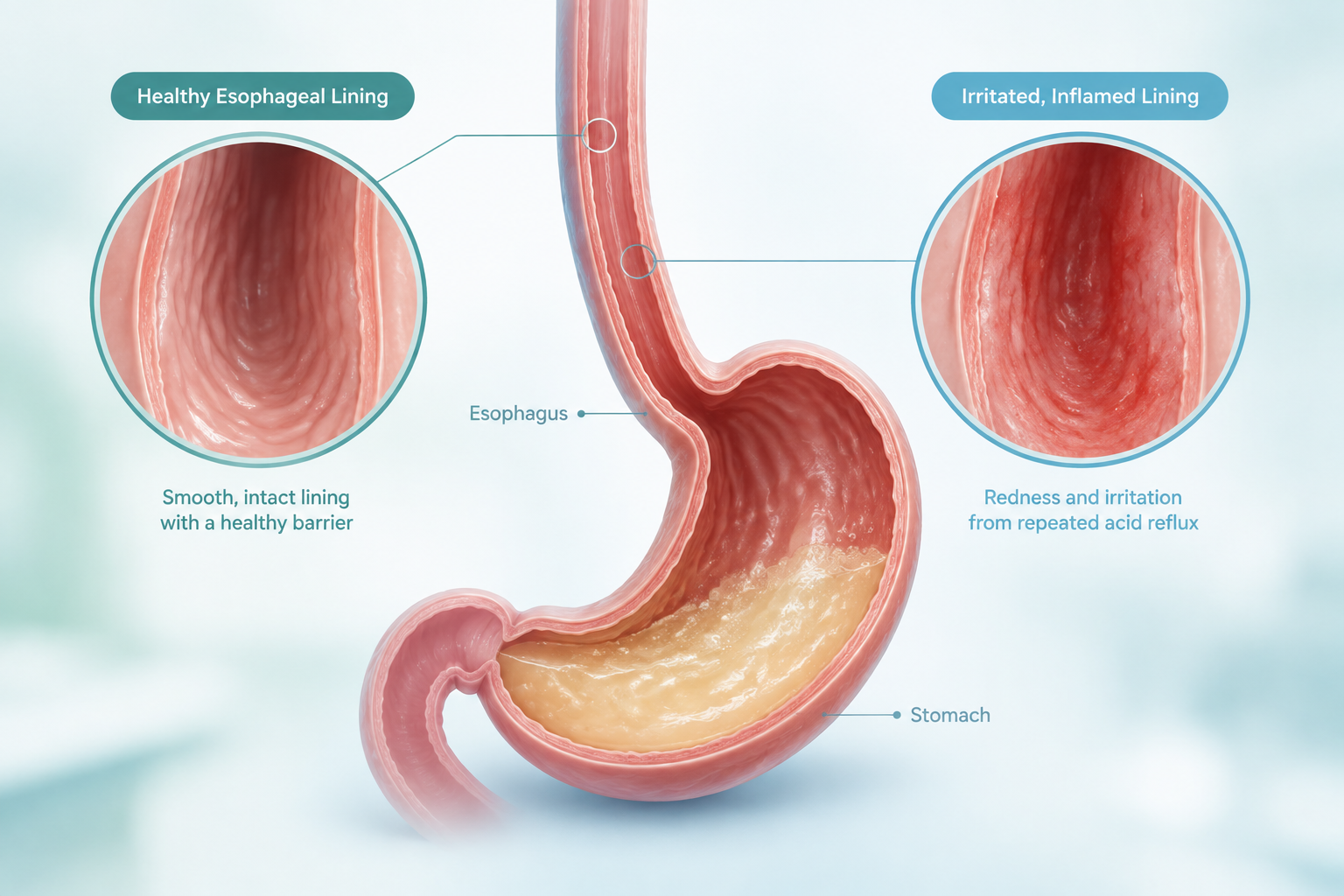
The esophagus is less protected from digestive fluids than the stomach. Occasional reflux rarely causes lasting harm, but repeated backflow of stomach acid, pepsin, and sometimes bile can overwhelm its defenses and lead to esophageal damage (source).
Repeated exposure can cause esophagitis, meaning esophageal inflammation and swelling, which may bring burning chest discomfort, pain with swallowing, or difficulty swallowing. Symptom severity does not reliably reflect the degree of irritation, since some people develop damage with few noticeable symptoms.
Over time, inflamed tissue can wear away, causing erosive esophagitis, erosions, or esophageal ulcers, and chronic esophagitis can leave scarring and precancerous change behind (source). Ulcers may bleed slowly enough to contribute to iron-deficiency anemia or cause more visible bleeding.
Urgent medical care is needed for:
- Vomiting blood or material that resembles coffee grounds.
- Black, tar-like stools.
- New chest pain, fainting, or severe weakness.
- Food that feels stuck and will not pass.
Repeated injury and healing can leave scar tissue. An esophageal stricture is a narrowed area caused by scarring, and it may make swallowing progressively harder, especially with solid foods. Long-term GERD also raises the likelihood of Barrett’s esophagus, which needs separate evaluation and follow-up.
Early evaluation of recurring reflux or any swallowing change can help identify injury before it worsens. Lifestyle changes and reflux medicines that heal esophagitis can support healing when appropriate.
Esophageal complications like reflux esophagitis and strictures are the stages of GERD most people picture, and acid reflux and esophagus damage go together only when reflux stays uncontrolled.
What Does Barrett’s Esophagus Mean?

Among the long-term changes reflux can cause, Barrett's esophagus is a change in the lower esophagus that can follow years of acid reflux, but it is not cancer. Repeated acid exposure and inflammation can replace the usual squamous cells with intestinal-like cells that resist acid better but are not normal in the esophagus.
GERD is linked with Barrett's esophagus, yet frequent heartburn does not mean you have it. Barrett’s may cause no distinct symptoms, and symptom severity cannot identify the condition. An upper endoscopy with small tissue samples examined in a lab confirms the diagnosis, according to the National Institute of Diabetes and Digestive and Kidney Diseases (source).
Barrett’s is a precancerous condition because it raises the risk of adenocarcinoma, a gland-cell cancer near the bottom of the esophagus. That cancer risk remains small for most people with Barrett’s, and most never develop cancer, though persistent GERD symptoms still warrant evaluation.
Tissue results also check for dysplasia, meaning cells look abnormal under a microscope. The findings help guide follow-up:
- No dysplasia: Barrett’s changes are present without concerning precancerous abnormalities.
- Low-grade dysplasia: Some abnormal cell changes are present and may need closer specialist follow-up.
- High-grade dysplasia: Cell changes are more advanced, making prompt digestive-specialist guidance important.
The ACG Barrett’s guideline uses the dysplasia grade to set surveillance intervals and decide when treatment is needed (source).
Discuss evaluation with a healthcare professional if persistent reflux occurs with any of the following:
- Trouble swallowing
- Unintentional weight loss
- Gastrointestinal bleeding
- Anemia
Recognizing Barrett’s allows monitoring based on tissue findings rather than symptoms alone.
Barrett's esophagus and cancer risk are the long-term effects of GERD that a GERD specialist watches for, and esophagitis symptoms that persist are the earliest cue that oesophageal complications, to use the British spelling, are building.
How Can Reflux Affect the Throat and Teeth?
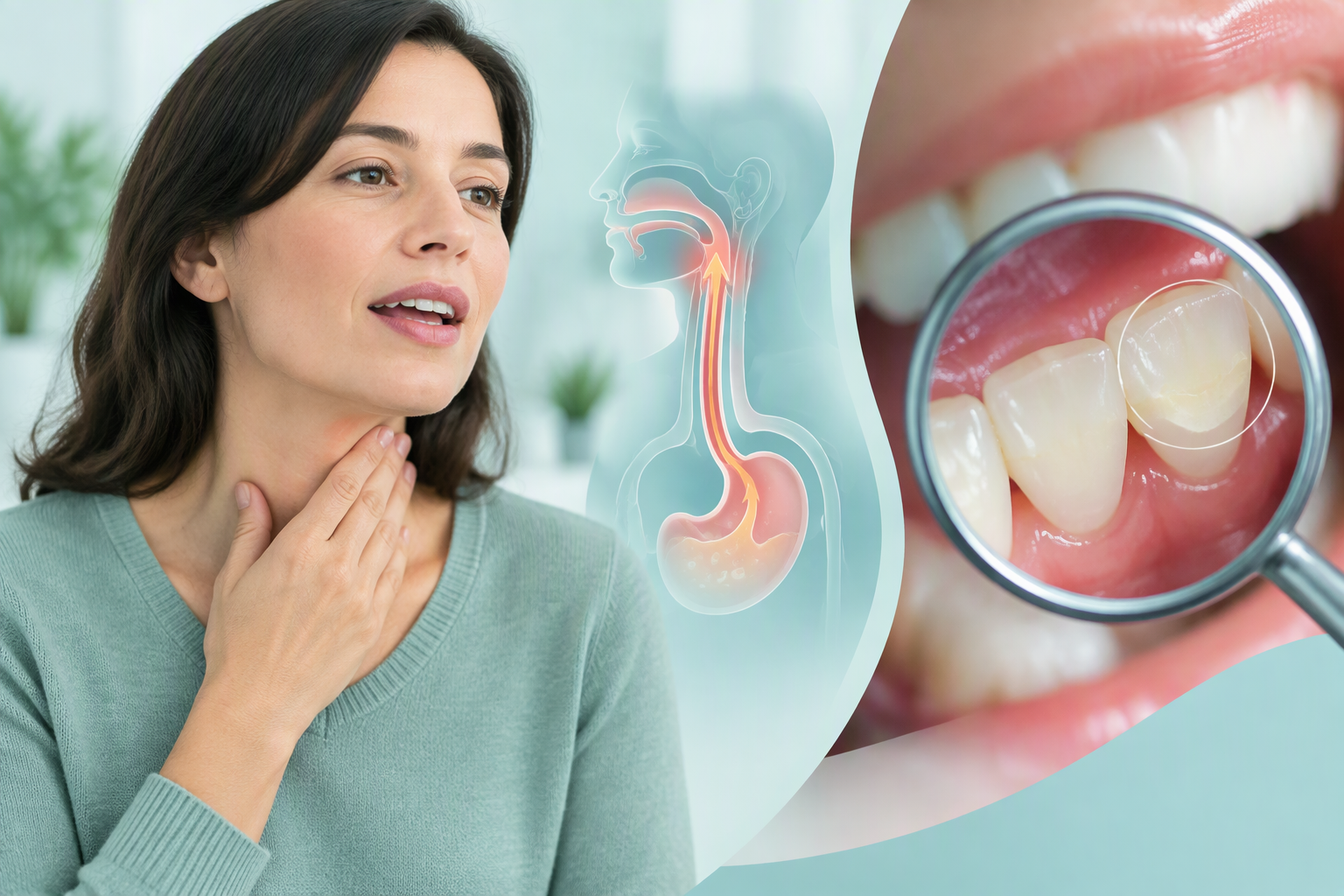
Beyond changes within the esophagus, acid reflux can irritate your throat, airways, and teeth, even when heartburn is mild or absent. These symptoms do not confirm GERD by themselves, since allergies, infections, asthma, and other conditions can cause similar changes.
Laryngopharyngeal reflux occurs when stomach contents reach the throat or voice box. Hoarseness may come with frequent throat clearing, a chronic dry cough, throat soreness, laryngitis, voice changes, or a persistent lump-in-the-throat feeling. A chronic cough can develop without typical heartburn, so persistent symptoms need medical assessment rather than self-diagnosis.
GERD and asthma can overlap. Reflux may trigger or worsen coughing, wheezing, chest tightness, or shortness of breath, making asthma harder to control. Reflux can also cause micro-aspiration, in which small amounts of refluxed fluid enter the airway instead of staying in the esophagus. Reflux can sometimes irritate the airways and lungs and may contribute to coughing, wheezing, bronchial irritation, or recurrent respiratory problems (source).
Breathing changes and recurring chest infections need attention:
- Seek prompt care for new, severe, or worsening breathing difficulty.
- Arrange an evaluation if coughing repeatedly follows regurgitation or chest infections keep returning.
- Mention asthma symptoms that are harder to control, especially at night or after meals.
Dental erosion is separate from throat and airway effects. Acid that reaches the mouth repeatedly can erode tooth enamel, often on the back teeth. Signs include tooth or gum sensitivity, a sour taste after regurgitation, cavities, and teeth that look smoother, thinner, or more discolored. Tell your clinician and dentist about frequent reflux and dental sensitivity before further enamel loss occurs.
Respiratory complications of GERD and dental complications of acid reflux are the two groups that show up outside the esophagus.
Respiratory complications of acid reflux, sometimes listed as acid reflux respiratory complications, are the reason a GERD diagnosis is worth confirming when a cough or asthma will not settle, and GERD risk factors such as smoking make them likelier.
When Do Reflux Symptoms Need Urgent Care?

New, severe, or changing symptoms need a clear next step, not an assumption that they are heartburn. Acid reflux is common, but these signs help you choose the right level of care rather than identify the cause.
Use this triage pathway:
- Act now: Seek emergency help for severe, new, or unexplained chest pain, especially if it comes with shortness of breath, faintness, sweating, or pain that spreads to the arm, shoulder, back, neck, or jaw. A heart problem can feel like severe indigestion, and breathing distress should not be assumed to be reflux.
- Act now: Vomiting blood or coffee-ground-like material, or passing black, tarry stools, may signal bleeding in the upper digestive tract. Acid-related ulcers can sometimes cause esophageal bleeding, and ongoing blood loss may contribute to anemia. Immediate assessment matters more than judging the amount of blood at home.
- Book prompt medical care: Difficulty swallowing, pain with swallowing, food that seems stuck, persistent vomiting, or unexplained weight loss can point to an esophageal complication or another condition that needs evaluation (source).
- Book prompt medical care: Recurrent cough, choking, wheezing, fever, or repeated chest infections with regurgitation should be assessed. Respiratory symptoms can have several causes and should not automatically be treated as reflux irritation.
- Discuss at a routine visit: Reflux more than twice a week, worsening or frequent symptoms, no improvement with over-the-counter treatment, or regular antacid use may fit GERD. Not everyone with GERD has classic heartburn, so discuss persistent symptoms before long-term self-treatment becomes the plan.
Digestive red flags that need same-day care can help you recognize other warning signs that need faster care.
GERD warning signs are also the cue for when to see a specialist for GERD rather than continuing over-the-counter treatment.
That triage is the practical answer to when to see a doctor for acid reflux.
Who Needs an Endoscopy for Reflux?

For persistent or concerning symptoms that need evaluation, upper endoscopy is not usually needed for occasional, uncomplicated heartburn. A clinician may recommend it when gastroesophageal reflux disease causes frequent or troublesome symptoms despite treatment, has continued for years, or begins to follow a concerning pattern. Keeping track of symptoms can make the appointment more useful, including:
- Burning or regurgitation
- Persistent cough
- Severe chest or upper-abdominal pain
- Changes in swallowing
Prompt medical evaluation is important if you have any of the following:
- Difficulty or pain with swallowing
- Food that feels stuck after swallowing
- Persistent vomiting
- Unexplained weight loss
- Vomiting blood
- Black, tarry stools
These signs do not prove cancer or another serious complication. They can point to bleeding, a narrowed area, or another condition that should not be managed by continuing over-the-counter reflux remedies alone.
During an upper endoscopy, clinicians can look for esophageal inflammation, erosions, ulcers, bleeding, and scar-related strictures that make swallowing difficult. Persistent symptoms without visible damage may call for esophageal pH monitoring, impedance testing, or a barium swallow, depending on the question being evaluated.
Endoscopy can also identify possible Barrett’s esophagus. Small tissue samples, called biopsies, can confirm intestinal-like lining changes and classify them as no dysplasia, low-grade dysplasia, or high-grade dysplasia. Untreated GERD can contribute to Barrett’s changes, but Barrett’s may be silent or feel much like uncomplicated reflux, and most people with it do not develop esophageal cancer.
Screening and follow-up decisions weigh symptom duration and pattern, alarm symptoms, risk factors, and endoscopy or biopsy findings. Recurring heartburn alone does not mean cancer.
How Can You Control GERD and Prevent Damage?

Alongside evaluation for complications, GERD is often manageable, and early evaluation, sustainable routine changes, and treatment can help reduce reflux symptoms and support healing of esophageal inflammation. The goal is to head off ulcers, narrowing, and Barrett's esophagus. Although the cancer risk is relatively small, new or changing symptoms still need attention.
A short symptom record can make a clinical visit more useful. Note:
- Frequency: How often heartburn or regurgitation occurs, including nighttime episodes.
- Regurgitation details: Whether fluid or recently eaten food comes back up.
- Related symptoms: Trouble swallowing, food sticking, persistent cough, hoarseness, or severe pain.
These details help separate occasional reflux from the patterns that lead to damage. NIDDK notes that frequent symptoms may signal GERD rather than occasional reflux (source).
Daily habits should fit your own triggers:
- Meals: Avoid foods that reliably cause symptoms, choose smaller meals if large ones worsen reflux, and avoid lying down soon after eating.
- Smoke exposure: Address smoking and regular secondhand-smoke exposure.
- Contributors: Pregnancy, some medicines, and weight can contribute, so gradual clinician-supported weight management may help when relevant.
Arrange an evaluation if symptoms persist despite over-the-counter treatment or you need frequent antacids. A clinician may recommend acid suppression with PPIs or H2 blockers. Follow up promptly if treatment stops working, swallowing becomes difficult, food sticks, unexplained weight loss occurs, or vomiting continues.
Barrett's esophagus and acid reflux are linked, but the way to prevent GERD complications is the same at every stage: keep reflux controlled.
Acid Reflux Complications FAQs
These FAQs address common acid reflux complications and the symptoms that may warrant medical evaluation. They can help you distinguish occasional discomfort from changes worth discussing with a healthcare professional.
1. Can Acid Reflux Cause Esophageal Strictures?
Yes. Ongoing acid reflux can sometimes cause an esophageal stricture, a narrowing linked to chronic, untreated erosive esophagitis. Repeated inflammation and healing can leave scar tissue in the esophagus, making swallowing difficult or painful or causing food to feel stuck in your chest or throat. This is a possible complication, not an expected result of reflux. Because these symptoms can have other causes, seek medical evaluation rather than assuming reflux is responsible.
2. Can GERD Cause Anemia?
GERD can occasionally contribute to iron-deficiency anemia when esophagitis or esophageal ulcers cause slow esophageal bleeding that lowers iron stores over time. Anemia is not a usual result of occasional heartburn, but fatigue, weakness, lightheadedness, or shortness of breath with ongoing reflux needs assessment.
Vomiting blood or passing very dark, tarry stools needs prompt medical care. Trouble or pain swallowing, food feeling stuck, persistent vomiting, unexplained weight loss, or worsening weakness should not be blamed on reflux alone.
3. Can Reflux Trigger Asthma Symptoms?
GERD and asthma can be connected, with acid reflux sometimes contributing to coughing, wheezing, shortness of breath, or harder-to-control asthma flare-ups. A reflux cough is possible, but chronic cough and breathing changes can also have airway, lung, or heart-related causes. Seek medical assessment for new, ongoing, worsening, or severe symptoms so asthma control and other causes can be evaluated. Get prompt care for significant breathing trouble.
4. Can Acid Reflux Cause Aspiration Pneumonia?
Acid reflux can occasionally lead to micro-aspiration, when small amounts of refluxed stomach contents enter the upper airway. This may irritate the airways, cause bronchial spasms or inflammation, and with repeated episodes contribute to bronchitis, recurrent lung infections, or aspiration pneumonia, though these lung problems do not affect most people with heartburn. Seek medical assessment for repeated pneumonia or bronchitis, a lasting cough, breathing trouble, or suspected aspiration. Get emergency help for severe or unexplained chest pain, especially with shortness of breath or pain in the arm or jaw, because heart attack symptoms can resemble severe heartburn.