


A late dinner followed by burning in your chest or a sour taste can make you want relief immediately. Home remedies can help occasional symptoms by keeping you upright, reducing stomach pressure, and avoiding personal triggers. The reflux itself is the backward flow of stomach contents into the esophagus.
Apple cider vinegar and baking soda often appear in quick-fix advice, yet vinegar can intensify burning and baking soda adds substantial sodium. More reliable first steps include staying upright, loosening tight clothing, and chewing sugar-free non-mint gum if you tolerate it. For nighttime symptoms, finishing dinner earlier, raising the head of the bed 6 to 8 inches, and sleeping on your left side can reduce flares.
Frequent heartburn, symptoms that disrupt sleep, or repeated reliance on OTC medicine may point to GERD rather than an isolated episode. Trouble swallowing, persistent vomiting, vomiting blood, or black stools require prompt medical evaluation.
Acid Reflux Home Remedies Key Takeaways
- Stay upright after meals to reduce reflux.
- Avoid lying down for 2 to 3 hours after eating.
- Smaller meals and earlier dinners can reduce stomach pressure and nighttime flares.
- Track foods, portions, and timing to identify your personal reflux triggers.
- Use sugar-free non-mint gum if tolerated, since mint may worsen reflux.
- Raise the head of the bed 6 to 8 inches for nighttime reflux.
- Frequent symptoms or warning signs need medical evaluation rather than repeated self-treatment.
Why Home Remedies Work for Acid Reflux
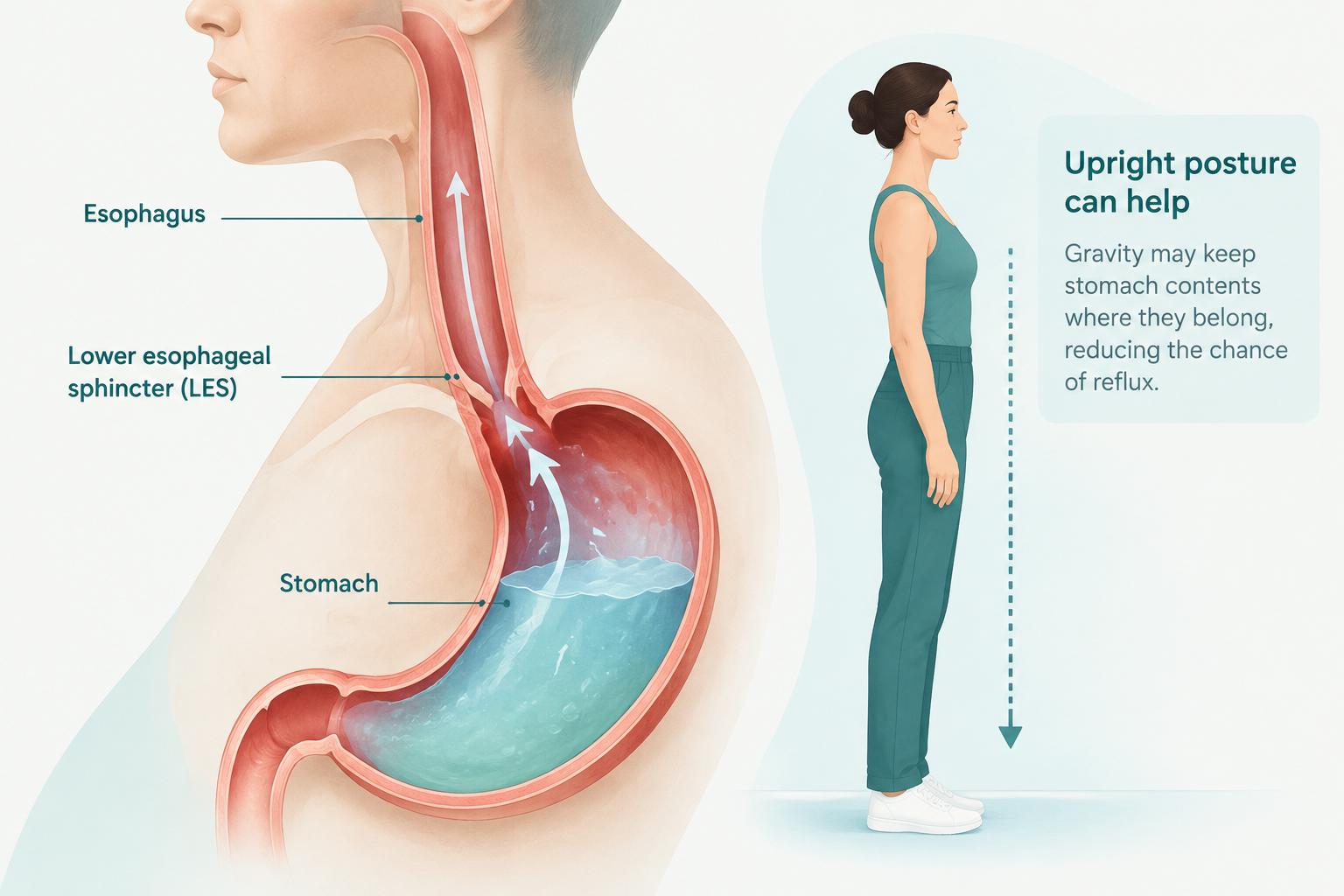
Home remedies can help occasional acid reflux by reducing abdominal pressure and using gravity to keep stomach contents where they belong. Acid reflux is the backward flow of stomach contents, including acid, into the esophagus, the tube that carries food from your mouth to your stomach.
This can happen when the lower esophageal sphincter, a valve-like muscle at the stomach entrance, relaxes or weakens when it should stay closed. Heartburn is the burning feeling behind the breastbone, but reflux can occur without burning.
Common symptoms include:
- Sour or bitter taste in the mouth
- Food or liquid coming back up
- Nausea, sore throat, or hoarseness
- Chest discomfort not caused by the heart
Large meals, late-night eating, and lying flat after a meal can make occasional symptoms more likely. Smaller meals, earlier dinners, staying upright after eating, and avoiding extra pressure around the abdomen all help because they work with what acid reflux actually is: a problem of pressure and a valve, not simply too much acid.
GERD is the chronic form, with frequent, ongoing symptoms rather than an isolated episode. Chronic cough, wheezing, or shortness of breath can occur, but chest symptoms should never automatically be blamed on reflux. The NHS notes that ongoing heartburn and acid reflux may need assessment (source).
Prompt medical evaluation is needed for:
- Difficulty swallowing
- Persistent vomiting
- Unexplained weight loss
- Vomiting blood
- Black, tarry stools
Reflux that is frequent, severe, untreated, or unresponsive to over-the-counter medicine can lead to complications, and when reflux causes real damage it deserves medical attention rather than another remedy. Self-care measures are best suited to occasional symptoms without warning signs.
Home remedies for acid reflux and home remedies for heartburn are the same set of moves: lifestyle remedies for acid reflux that lower pressure and keep acid down, plus a few natural acid reflux remedies worth testing.
What Should You Do During a Flare?

During an occasional flare, start with posture and comfort measures before medicine. There is no guaranteed way to get rid of heartburn fast, but these steps may help quickly ease acid reflux while symptoms settle:
- Sit or stand upright: Stay upright after eating rather than slumping or lying flat. Do not lie down after eating for 2 to 3 hours, especially after a larger meal or near bedtime. Gravity may help keep stomach contents from moving upward.
- Reduce pressure around your stomach: Loosen a belt or tight waistband, or change out of restrictive pants or shapewear. Less pressure on your abdomen may reduce the force that pushes acid upward, whether you are at home, at work, or out after a meal.
- Chew gum if you tolerate it: Chewing gum may stimulate saliva, which can help dilute and clear acid from the esophagus. Try sugar-free, non-mint gum for about 30 minutes. Peppermint and other mint flavors can worsen reflux for some people.
These measures can offer heartburn relief, though they may not stop symptoms immediately. Skip anything that aggravates your flare, including mint gum or bending forward soon after a meal.
If posture, clothing changes, and gum do not provide enough relief, over-the-counter (OTC) options may help. Antacids, alginates, histamine-2 blockers, and proton pump inhibitors work differently, so the following comparison can help match an option to your symptom pattern. Frequent, persistent, or worsening flares deserve a conversation with a healthcare professional.
That is how to relieve acid reflux fast at home without a pill, and how to relieve heartburn the same way: posture, pressure, and saliva.
How to stop an acid reflux attack, then, is the same short list, and occasional acid reflux relief rarely needs more than that.
Quick-acting home remedies for acid reflux and home remedies for acidity are the same three moves, and over-the-counter acid reflux remedies come after them.
Where Over-the-Counter Medicines Fit
Match OTC acid reflux relief to the pattern: antacids can quickly ease acid reflux when you need immediate heartburn relief, while an H2 blocker may fit predictable symptoms, such as reflux after a particular meal.
A short PPI course may help frequent symptoms, including heartburn on two or more days a week, but it should include a plan to stop rather than become a daily default.
OTC medicine buys temporary relief but cannot tell you why the reflux keeps happening.
The National Institute of Diabetes and Digestive and Kidney Diseases recommends healthcare evaluation for persistent or worsening symptoms (source).
How Can You Adjust Meals to Prevent Reflux?
Alongside OTC relief, smaller meals can lessen the stomach pressure that pushes contents upward. Aim for comfortable fullness rather than undereating, grazing all day, or following a rigid schedule. It helps to avoid large portions while still eating satisfying meals spaced across the day.
Evening timing matters when heartburn tends to strike at night. Meal timing earlier in the evening may help when late dinners reliably set off symptoms. A lighter dinner is often easier to tolerate than a heavy meal close to bed.
Acid reflux trigger foods are personal patterns, not a permanent avoid list. Which foods set reflux off differs from person to person, including people with GERD. Common possibilities include:
- Spicy foods: Spices may bother some people, but not everyone.
- Fatty foods: Fried foods, fast foods, fatty meats, and cheese can be troublesome for some.
- Other possible triggers: Tomato sauce, citrus, chocolate, peppermint, alcohol, carbonated drinks, and caffeine can also worsen symptoms.
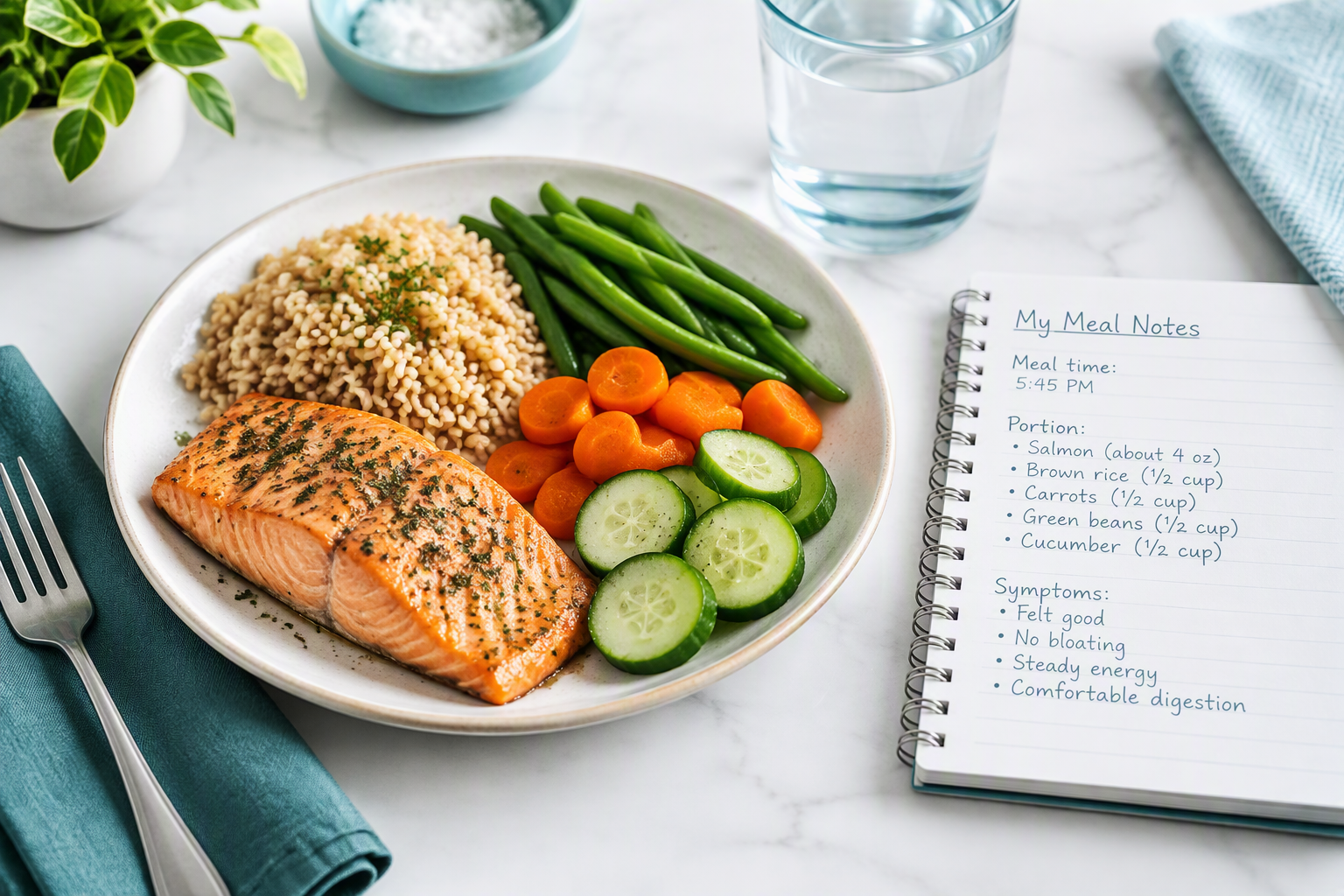
A simple food-and-symptom record can show whether symptoms follow one food or a combination:
- Note meals and drinks: Record approximate portions, meal times, and symptoms such as burning, burping, or a sour taste.
- Watch for patterns: Pizza late at night may cause symptoms even when a smaller lunch serving does not.
- Test one change at a time: Caffeine may be a factor for you, especially if coffee on an empty stomach causes symptoms.
Build satisfying meals around baked, grilled, or broth-based foods and a tolerated protein. Oatmeal, brown rice, sweet potatoes, carrots, broccoli, green beans, bananas, melon, cucumber, lettuce, and water may feel gentler for some people. Targeted swaps preserve more food variety than a one-size-fits-all GERD meal plan.
Diet and lifestyle changes for acid reflux are how to prevent acid reflux naturally, and foods that help acid reflux are simply the ones that leave you comfortable.
Low-acid foods for reflux and other foods for acid reflux are worth testing, and a healthy weight and acid reflux tend to go together over the long run.
How Do You Set Up Nighttime Reflux Relief?

When reflux is most troublesome after dinner, relief at night often comes down to three changes: finish dinner earlier, create a steady upper-body incline, and sleep on your left side. Together, these steps can reduce the chance of stomach contents moving upward after you lie down.
- Finish dinner and stay upright. Late eating and reflux go together because lying flat makes reflux more likely. Stay upright after eating, and do not lie down after eating for about 2 to 3 hours. If nighttime heartburn keeps returning, make dinner smaller and work toward finishing food three to four hours before bed without going to sleep uncomfortably hungry.
- Use a stable incline. To elevate the head of the bed, place secure risers under the bedposts to raise it 6 to 8 inches, or use a firm foam wedge that supports your torso from the waist upward (source). This position uses gravity to help keep acid lower overnight. Ordinary stacked pillows can slip, bend your body at the waist, and raise abdominal pressure, so they are a poor substitute.
- Sleep on your left side. This position may keep the junction between the stomach and esophagus above pooled acid. Pair it with an elevated sleep surface, and adjust gradually if shoulder, hip, or neck discomfort affects sleep.
Recurring nighttime heartburn that continues despite these changes should be discussed with a healthcare professional.
How Do You Reduce Reflux Pressure?
Reflux can flare when pressure in your abdomen pushes stomach contents upward as the lower esophageal sphincter, the valve between the esophagus and stomach, relaxes. Reducing that pressure can help manage recurring heartburn, while frequent or concerning symptoms warrant medical evaluation.
A few practical changes can reduce strain on your stomach:
- Portion size: Keep dinner small as a routine when fullness brings on burning or regurgitation.
- Food and posture: Higher-fat meals worsen symptoms for some people. Remain upright after eating, and avoid bending deeply or lying down soon afterward. Finishing dinner two to three hours before bed can help reduce reflux when you recline, and the ACG guideline suggests the same 2 to 3 hour gap (source).
- Clothing: Keep clothing comfortable during and after meals, while recognizing that external pressure is not the only cause of reflux.
Long car rides can combine sitting, a snug seatbelt, and roadside meals that trigger symptoms. Keeping reflux quiet while traveling can help you plan around those pressures.
Excess body weight can increase abdominal pressure, and weight loss measurably reduces acid exposure in trials (source). If weight is relevant, gradual eating and activity changes are usually more sustainable than rapid dieting, with healthcare support available when either weight loss or symptoms feel difficult to manage.
Nicotine can relax the valve, while alcohol may relax it, increase acid production, and irritate the esophagus. Smoking-cessation support and cutting back on drinks or amounts that reliably cause heartburn may lessen symptoms over time.
How Should You Assess Popular Home Remedies?
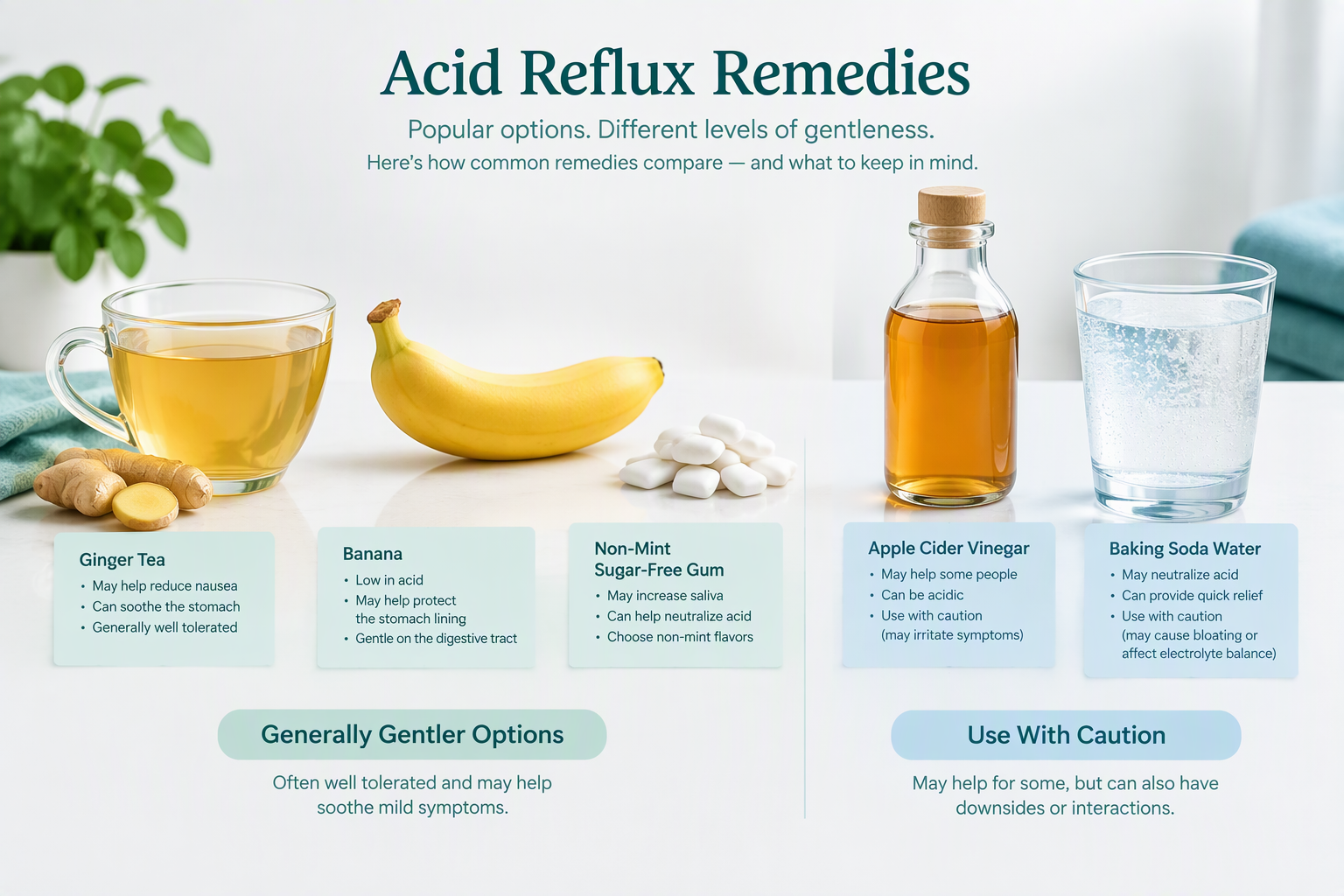
Beyond reducing reflux pressure, popular acid reflux home remedies deserve an evidence-and-risk check, not blind trust because they are natural. A food or drink may feel soothing, have limited research behind it, or make reflux worse. Stop anything that repeatedly increases burning, regurgitation, bloating, or nausea, and return to the flare-relief measures that help you.
Natural remedies for acid reflux fit into three practical groups:
- Low-risk personal trials: Warm ginger tea or a small amount of fresh ginger may feel gentle when nausea comes with stomach upset. Ginger is not a proven reflux treatment, since its digestive and anti-inflammatory reputation does not mean it stops acid from reaching the esophagus. Skip heavily sweetened drinks, large amounts, and concentrated ginger products unless you have checked for medication interactions.
- Foods that may be tolerable: Ripe bananas are low-acid foods that some people handle well during a flare, but they do not neutralize reflux. A small serving of low-fat milk or yogurt may buffer acid briefly, while higher-fat dairy can worsen symptoms. Your symptom pattern matters more than treating either option as a standard remedy.
- A plausible after-meal option: Chew sugar-free non-mint gum after meals if it helps you. Avoid peppermint and other mint flavors, which may relax the lower esophageal sphincter, the muscle that helps limit backflow. Stop if gum causes bloating, jaw discomfort, or worse reflux.
Apple cider vinegar claims rest on anecdotes rather than research, and even diluted vinegar can intensify burning or irritate your throat. It may be discussed for perceived bloating or digestion, but it is not a first choice for reflux.
Aloe vera juice also lacks clear evidence, reliable dosing guidance, and interaction information. Baking soda dissolved in water neutralizes acid for a short time, but its sodium makes it unsuitable with high blood pressure or a low-sodium diet. Reserve it for occasional, cautious use.
Natural remedies for heartburn, natural neutralizers for stomach acid, and other at-home acid reflux treatment ideas belong in this same evidence-and-risk sorting.
Ginger tea for acid reflux, baking soda for acid reflux, and apple cider vinegar for acid reflux are the three heartburn home remedies people ask about most, and only the first is a reasonable trial.
When Are Home Remedies Not Enough?
Given the limits of popular remedies, occasional, mild heartburn that settles with short-term self-care and does not keep returning can often be managed at home. Symptoms that grow stronger, disrupt sleep or daily activities, or feel different from your usual reflux deserve medical advice. Food changes and nonprescription relief may ease discomfort, but they cannot identify esophageal damage or a hiatal hernia.
The NHS advises making an appointment when symptoms persist despite self-care. This pattern may point to GERD, and repeated untreated reflux is how the esophagus gets damaged. Recurring symptoms are not automatically an emergency, but they should not become a routine managed only with antacids.
Prompt medical evaluation is needed for these warning signs:
- Pain with swallowing or food feeling stuck.
- Vomiting that persists despite self-care.
- Material that looks like coffee grounds in vomit.
- New changes in stool color or appearance.
These symptoms should not be managed with food remedies, supplements, or repeated antacid use.
Severe or unfamiliar chest pain needs immediate emergency care, especially with shortness of breath, sweating, dizziness, nausea, or pain spreading to an arm, shoulder, back, neck, or jaw. Do not assume chest pain is reflux simply because you have had heartburn before.
A brief symptom record can make a healthcare conversation more useful. Note meal timing, symptoms, treatments tried, response to nonprescription relief, and any new warning signs. Seek care sooner when symptoms worsen, medication is needed repeatedly each week, or reflux occurs alongside pregnancy, smoking, excess weight, certain medicines, or a known hiatal hernia.
How to get rid of acid reflux for good is a question home measures for heartburn cannot answer on their own once symptoms are frequent.
When to seek medical attention for acid reflux is the one question natural acid reflux relief cannot settle for you.
Acid Reflux Home Remedies FAQs
Common questions about acid reflux home remedies can help you separate practical first steps from approaches with limited support. These FAQs also explain when recurring symptoms, nighttime discomfort, or trouble swallowing may need more than home care.
1. Are Home Remedies Safe During Pregnancy?
Pregnancy can make acid reflux more likely, but home remedies are not automatically appropriate for every pregnancy. Discuss persistent symptoms and any supplement, herbal product, or over-the-counter option with your obstetric clinician or pharmacist before using it. Avoid unreviewed supplements and sodium-containing remedies, including baking soda water. Even a small dose adds sodium, which can be a concern with high blood pressure or a low-sodium diet.
Seek prompt medical advice for reflux that occurs more than twice a week, feels severe, does not improve with over-the-counter treatment, or keeps returning despite repeated self-treatment.
2. Can Acid Reflux Damage Your Teeth?
Repeated acid reflux can wear away tooth enamel, the hard outer layer that does not grow back. Possible signs include sensitivity to hot, cold, or sweet foods, smoother or more transparent tooth edges, discoloration, and a sour taste or mouth irritation after episodes. GERD has been linked with dental erosion.
Reduce acid exposure with meal-timing, posture, and nighttime habits, and arrange a dental visit if sensitivity or enamel changes persist. Medical evaluation is appropriate when reflux occurs more than twice weekly for several weeks, does not improve with over-the-counter treatment, or is accompanied by trouble swallowing, persistent vomiting, unexplained weight loss, vomiting blood, or black, tarry stools.
3. Can Reflux Home Remedies Interact With Medications?
Yes. “Natural” remedies can still cause side effects or interact with medicines. Evidence for aloe vera is limited, and ginger may not suit every medication or health condition. Baking soda adds sodium and may not fit a low-sodium diet or high blood pressure. Antacids can also affect medicine absorption. Ginger tea may feel soothing, but check labels and ask a pharmacist or clinician before combining remedies with regular medicines.