


The strongest acid reflux medication isn't always the right one. Antacids and alginates can help occasional post-meal burning quickly, H2 blockers such as famotidine fit predictable symptoms, and PPIs are usually used for frequent or disruptive reflux. Choosing by timing and frequency can prevent days of taking a medicine that cannot provide the relief you expect.
That difference matters when heartburn follows late meals one week but wakes you at night the next. PPIs need regular use and usually work best 30 to 60 minutes before a meal, while an antacid is intended for quick relief. The American College of Gastroenterology recommends reviewing response, timing, and continued need for PPI therapy rather than automatically increasing treatment.
Repeated quick-relief use, symptoms that return after a few weeks, or reflux despite correctly used medicine call for reassessment rather than a stronger dose. Difficulty swallowing, food sticking, vomiting blood, black stools, unexplained weight loss, or persistent vomiting need timely medical assessment. Upper endoscopy or reflux monitoring can help distinguish GERD from other causes and check for esophagitis or a stricture.
Acid Reflux Medication Key Takeaways
- Match reflux medicine to symptom frequency, timing, and severity rather than choosing the strongest option.
- Antacids neutralize existing acid and can relieve occasional heartburn within minutes.
- Alginates form a temporary barrier after meals to limit reflux into the esophagus.
- H2 blockers such as famotidine suit predictable reflux and take longer to work than antacids.
- PPIs work best before meals and may take several days for full effect.
- Review ongoing PPI use instead of increasing doses when symptoms persist or return.
- Swallowing trouble, bleeding signs, weight loss, or persistent vomiting require timely medical assessment.
Which Medicine Fits Your Reflux Pattern?
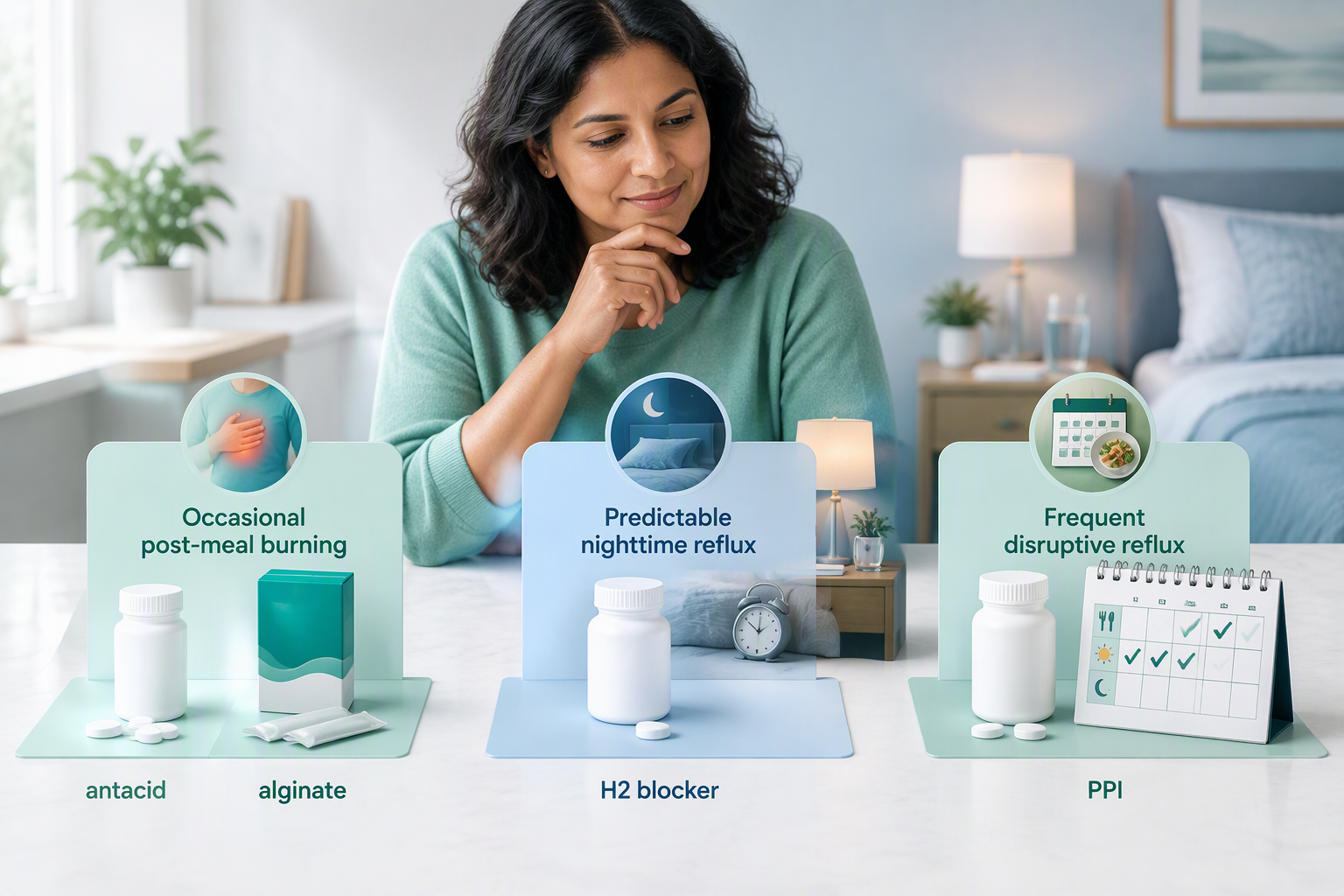
Medication choice starts with your reflux pattern, not the strongest option. Lifestyle changes and acid reflux medications can work together, especially when meal timing or certain foods make symptoms predictable.
A practical heartburn treatment pathway includes:
- Occasional post-meal burning: Mild symptoms after a heavy meal or familiar trigger may respond to antacids, which neutralize acid already present. Alginates can form a temporary barrier after eating when reflux is the main issue. Both may bring quick relief, but repeated reliance deserves a closer look.
- Predictable evening or nighttime symptoms: Histamine-2 receptor blockers (H2 blockers) such as famotidine reduce acid production instead of neutralizing acid already in the stomach. They take longer to start working than an antacid, so they fit planned relief better than sudden symptoms.
- Frequent or disruptive reflux: Proton pump inhibitors (PPIs) provide stronger acid suppression when symptoms keep returning or interfere with daily life. PPIs build up over days of regular use, so they are not designed for immediate relief (source).
Choosing between them is less about finding one best medicine and more about matching treatment to symptom timing, frequency, and response. If symptoms last beyond a few weeks, worsen, or change in unexpected ways, avoid simply increasing medication. How GERD is diagnosed and treated can clarify when GERD treatment, medication review, or testing may be appropriate.
GERD medications, anti-reflux medications, heartburn medication: the names overlap, and the best medication for GERD is the one matched to your pattern.
Gastroesophageal reflux disease (GERD) is the diagnosis behind most long-term prescriptions here.
When Do Antacids and Alginates Help?

Antacids and alginates can ease occasional acid reflux quickly, but they work in different ways. Antacids neutralize acid already in your stomach and may relieve mild heartburn within minutes after a one-off meal-related flare. A calcium carbonate antacid is one common option. These medicines do not prevent frequent reflux or treat its underlying cause.
An alginate forms a floating barrier over stomach contents after a meal, helping limit backflow into the esophagus, the tube that carries food to your stomach. Some alginate products also contain an antacid. Follow the label’s dosing and timing instructions because formulations differ. The National Health Service lists both options as short-term heartburn treatments (source).
Medication works best alongside habits that reduce reflux pressure:
- Choose smaller meals: Large meals can make reflux more likely.
- Notice personal triggers: Acidic foods, coffee, alcohol, and particular meals may matter when symptoms repeatedly follow them.
- Stay upright after eating: Lying down soon after a meal can make backflow more likely.
Non-drug ways to ease reflux can support these changes without making family meals overly restrictive.
Ingredient choice matters if bloating, constipation, or loose stools are already part of your routine. Calcium carbonate and aluminum hydroxide can contribute to constipation, while magnesium hydroxide may cause diarrhea. Combination products may balance these effects, but check the label and ask a pharmacist about medication interactions and an option that fits your bowel habits.
Speak with a pharmacist or clinician if any of the following apply:
- Frequent use: You need antacids or alginates often.
- Increasing doses: The labeled amount no longer gives enough relief.
- Brief benefit: Symptoms return soon after treatment.
- Sleep disruption: Reflux wakes you at night.
- Persistent symptoms: Meal changes have not reduced your reflux.
Ongoing reflux may need testing or a different treatment approach rather than a stronger over-the-counter medicine.
Over-the-counter GERD medicine starts here, and an over-the-counter GERD medication is fine for occasional symptoms.
When Do H2 Blockers Like Famotidine Help?
When predictable reflux needs planned relief beyond quick-acting antacids or alginates, famotidine can help when a trigger is predictable and you can take it before symptoms build. H2 blockers reduce the stomach’s acid production rather than neutralizing acid already present, and the ACG guideline keeps them behind PPIs for healing an inflamed esophagus (source). Famotidine is the most common option, while cimetidine and nizatidine are alternatives.
Timing can follow your usual symptom pattern:
- With meals: Take it with your first or evening meal if reflux often follows eating.
- At bedtime: A bedtime dose may fit heartburn that regularly disrupts sleep.
- Before a known trigger: Follow the product label or a clinician’s directions when a rich meal, alcohol, or a travel day tends to bring symptoms on. Reflux medicine for travel days can help you plan for irregular meals and long periods of sitting.
Medical review is appropriate if you need an H2 blocker most days for weeks on end, symptoms do not improve, or reflux repeatedly wakes you from sleep. Raising the dose without identifying the cause can delay useful testing.
Known or suspected esophagitis, esophageal stricture, or Barrett’s esophagus needs clinician-guided evaluation because these conditions can involve esophageal injury or structural change. Seek prompt care for:
- Difficulty swallowing or food sticking
- Vomiting blood or black stools
- Unexplained weight loss
- Persistent vomiting
A symptom record that notes meals, timing, and nighttime symptoms can make the next treatment or testing discussion more useful.
How Should You Use and Step Down PPIs?

For frequent or disruptive reflux that needs stronger control than H2 blockers, PPIs are the strongest common medicines for reducing stomach acid. They fit frequent acid reflux, symptoms that disrupt daily life, or GERD-related esophageal injury. Omeprazole, lansoprazole, esomeprazole, and pantoprazole reduce acid production over time and can support healing. For an isolated flare, omeprazole is not a rescue option, and an antacid or alginate will work faster.
PPIs suppress acid more effectively than H2 blockers, but they work best when taken on an empty stomach, 30 to 60 minutes before a meal, usually breakfast. This timing lets the medicine work as meal-related acid pumps switch on. For a clinician-prescribed twice-daily regimen, take the second dose before the evening meal (source).
A routine that supports effective use includes:
- Take the PPI before your planned meal, not after symptoms begin.
- Follow the label or prescription directions rather than doubling a missed dose.
- Review triggers such as large late meals, alcohol, coffee, and foods that reliably cause symptoms.
- Reassess ongoing symptoms instead of automatically increasing the dose.
Symptoms that continue after an appropriate trial may reflect poor dose timing, reflux triggers, or a condition that needs testing rather than stronger acid suppression. Upper-abdominal discomfort without classic reflux can follow a different path, as the functional dyspepsia treatment ladder explains.
Stopping PPIs after sustained use can cause a short spell of rebound acid symptoms, which the AGA advises warning people about in advance (source). How long to stay on a PPI depends on why treatment began and whether esophageal damage or another high-risk condition is present. With clinician guidance, treatment may move toward the lowest effective dose, less frequent use, or an H2 blocker, with an occasional antacid or alginate used for breakthrough symptoms (source). Long-term PPI therapy remains appropriate when continued acid control is needed.
When Do Reflux Medicines Need Reassessment?
As treatment moves toward the lowest effective dose or step-down use, reassessment is warranted when acid reflux medications do not relieve symptoms as expected, symptoms return quickly after treatment ends, or you need quick relief often. Antacids and alginates may help manage breakthrough symptoms, while PPIs require regular use. Instead of increasing a dose on your own, review the pattern and use the lowest effective dose that controls symptoms.
A treatment may seem ineffective for fixable reasons:
- Inconsistent use: Missed doses make it difficult to judge whether a medicine is helping.
- Poor PPI timing: PPIs usually work best before a meal, rather than only after heartburn begins.
- Mismatched medicine: Quick-relief products are not a long-term answer for frequent GERD treatment.
- Ongoing triggers: Large late meals, alcohol, smoking, and lying down soon after eating can keep reflux active.
Lifestyle changes can reduce aggravators, but they should not delay care when symptoms continue. If heartburn lasts after a few weeks of over-the-counter treatment and routine changes, a clinician may consider prescription treatment, a different medication class, or a plan based on your symptom pattern. H2 blockers, PPIs, and antacids work differently, so combining them without guidance can make it harder to tell what is helping.
A PPI plan should include a clear review date, and any step-down should track symptoms as it goes. The AGA’s personalized-approach update recommends reviewing response, timing, and the ongoing need for PPI therapy rather than simply escalating treatment (source).
A diagnosis review matters when discomfort changes, does not improve, or repeatedly returns despite treatment. Some medicines can worsen reflux, and heartburn-like symptoms do not always fit GERD. the reflux complications medication aims to prevent are one reason persistent symptoms may need testing or specialist care.
When Do You Need Testing or Specialist Care?

When reassessment shows that reflux medicine fails, alarm symptoms appear, or complications are possible, testing or specialist care is appropriate. Knowing the threshold prevents repeated over-the-counter trials that delay the right evaluation.
Seek timely medical assessment for:
- Swallowing problems: Painful or difficult swallowing, or food that feels stuck.
- Bleeding signs: Vomiting blood or passing black, tar-like stools.
- Concerning changes: Unexplained weight loss, persistent vomiting, or anemia symptoms such as unusual fatigue, dizziness, or shortness of breath.
- Chest pain: New or severe chest pain, especially with sweating, shortness of breath, or arm or jaw pain, needs urgent evaluation because it may not be reflux.
Frequent GERD symptoms despite correctly used medicine also need a closer look. This includes symptoms that return while stepping down a PPI, along with ongoing nighttime regurgitation, cough, or swallowing trouble. A clinician can review medication timing, interactions, and non-reflux causes instead of simply increasing acid suppression.
Upper endoscopy checks the esophageal lining for esophagitis, including acid-related erosive esophagitis, and for a stricture, a narrowing that can make swallowing difficult. Reflux monitoring can help determine whether reflux is causing persistent cough, throat symptoms, or chest discomfort, which may prevent unnecessary long-term PPI therapy.
Barrett’s esophagus is a lining change that needs monitoring. Although H2 blockers may help mild symptoms, they are not appropriate treatment for erosive esophagitis, stricture, or Barrett’s esophagus, while PPIs heal erosions more effectively, including severe erosive damage.
Before higher-dose or prolonged PPI use, review allergies, current medicines, iron supplements, mineral deficiencies, osteoporosis, autoimmune disease, pregnancy, and breastfeeding with a pharmacist or prescriber. Seek prompt care for PPI side effects such as severe rash or allergic symptoms, persistent watery diarrhea, irregular heartbeat, seizures, markedly reduced urination, or swelling.
Prescription acid reflux medication and gastroesophageal reflux disease treatment more broadly follow from what that evaluation finds.
Acid Reflux Medication FAQs
These FAQs cover common questions about acid reflux medication, including treatment choices and when ongoing symptoms may need closer attention. The answers can help you plan practical next steps around meals, routines, and care.
1. What Side Effects Can Omeprazole Cause?
Common PPI side effects from omeprazole include headache, nausea, vomiting, gas, diarrhea, dizziness, and joint pain. They may ease with time, but contact a clinician or pharmacist if symptoms persist, disrupt daily life, or start after a dose change (source).
Seek prompt medical care for signs of a severe allergic or skin reaction, severe or ongoing watery diarrhea, an irregular heartbeat, seizures, or possible kidney problems such as sharply reduced urination, blood in your urine, or swelling.
2. Do Reflux Medicines Interact With Other Drugs?
Yes. Antacids, H2 blockers, and PPIs can change how other medicines are absorbed or work. Have a pharmacist or clinician review your full medication list before starting, combining, stopping, or changing treatment. Include prescription drugs, over-the-counter products, vitamins, iron supplements, and minerals, along with osteoporosis, allergies, autoimmune disease, pregnancy, or breastfeeding. Combination treatment may suit certain symptom patterns, but an over-the-counter reflux medicine is not automatically compatible with your health needs.
3. Are Reflux Medicines Safe During Pregnancy?
Reflux is common during pregnancy, but the best medicine depends on your symptoms, health history, and other medicines. Antacids, H2 blockers such as famotidine, and PPIs may all be options, yet an over-the-counter product is not automatically appropriate during pregnancy.
Review any new or regular reflux medicines, supplements, and prescriptions with your obstetric clinician or pharmacist. Avoid starting, switching, or abruptly stopping treatment on your own, since specific ingredients and the lowest effective approach matter.
4. Can PPIs Cause Nutrient Deficiencies?
PPIs lower stomach acid, so long-term use can affect absorption of certain nutrients, though deficiencies do not occur in everyone. These medicines can be effective when there is a clear reason to use them, and ongoing treatment benefits from periodic review rather than fear-driven stopping. Persistent fatigue, weakness, iron or other mineral deficiencies, dietary limits, or osteoporosis risk warrant a discussion with your clinician. Avoid starting iron or mineral supplements automatically, since blood testing and treatment changes should reflect your symptoms, diet, medical history, and PPI duration.