


New gas, bloating, or softer stools after starting a probiotic can be unsettling, especially when you already manage IBS or unpredictable digestion. Most probiotic side effects are mild and temporary, but symptoms that worsen, persist, or interfere with daily life deserve a closer look.
A few days of digestive change can reflect an adjustment, while some people need up to two weeks to see a clear trend toward improvement. A three-day symptom baseline and a daily record of doses, meals, stool changes, and symptom severity can help distinguish a product reaction from an IBS flare. The full ingredient list matters too, since inulin, lactulose, lactose, sweeteners, or capsule ingredients can cause symptoms separate from the probiotic strains or CFU count.
Pause the product and arrange medical advice for persistent diarrhea, constipation, new or stronger abdominal pain, repeated vomiting, or hives. Severe pain, blood or black stool, fever, dehydration, facial swelling, or trouble breathing require prompt medical care, and people with weakened immunity or a central line should seek medical guidance before using probiotics.
Probiotic Side Effects Key Takeaways
- Mild gas, bloating, cramps, and stool changes can occur when starting a probiotic.
- Symptoms should become less frequent or intense within days to two weeks.
- Track symptoms, doses, meals, medications, and usual IBS patterns before changing multiple variables.
- Added inulin, lactulose, lactose, sweeteners, or allergens may cause symptoms separate from probiotic strains.
- Stop the probiotic and seek advice for persistent, worsening, or activity-limiting digestive symptoms.
- Seek prompt care for severe pain, blood or black stool, fever, dehydration, or allergic-reaction symptoms.
- People with weakened immunity, serious illness, or central lines need medical guidance before using probiotics.
What Probiotic Side Effects Are Common At First?

Most probiotic side effects when first starting are mild digestive changes like gas, bloating, or temporary stool changes (source). Probiotics are generally well tolerated by most healthy adults, but natural products can affect each person differently. New symptoms during the first few days do not automatically mean a product is harmful, or that it is right for you to continue. The wider probiotics guide explains why the label matters beyond the number of live organisms.
Common mild probiotic side effects include:
- Gas from probiotics: More frequent burping or passing gas can occur as your digestive system adjusts.
- Bloating from probiotics: You may notice abdominal fullness, pressure, or visible distention.
- Stomach symptoms: Mild cramps, stomach discomfort, and nausea are possible.
- Changes in bowel movements: Stools may become softer or more frequent, and some people have mild diarrhea or constipation.
These symptoms often ease with time. Still, probiotic-related diarrhea, cramps, or bloating that disrupt sleep, work, meals, or daily activities should not be brushed off as an adjustment period.
Ingredients besides the probiotic can also cause trouble. Review the Supplement Facts panel and the full ingredient list, especially if discomfort began after changing products. Added prebiotics, such as inulin or lactulose, may increase gas or loose stools.
Lactose, soy, egg, sweeteners, and other ingredients you do not tolerate may also explain why one formulation feels worse.
Thirst is less typical but has occasionally been reported with high-dose probiotic formulations. Some yeast-based products have also been associated with constipation and thirst. Persistent thirst or ongoing bowel changes may have another cause, so do not assume the supplement is responsible.
A gradual approach may improve tolerability:
- Follow the label directions and do not take more than the stated amount.
- Consider starting with a lower-dose product or fewer colony-forming units (CFUs), which measure live microorganisms in a serving.
- If symptoms are mild and improving, work toward the labeled dose over one to two weeks.
- Do not increase the dose while discomfort, gas, bloating, or stool changes are worsening.
Irritable bowel syndrome (IBS) can make it harder to tell whether a supplement is causing a reaction or whether symptoms are part of your usual pattern. Probiotics matched to a specific condition should be judged by the exact strain and full ingredient list, not only the species name or CFU count. A simple record of your usual pain, bloating, stool pattern, meals, and start date can help you notice a pattern, although it cannot diagnose the cause.
Short-lived symptoms do not show that a probiotic is treating an underlying digestive problem.
How Long Do Probiotic Side Effects Last?

Mild digestive changes after starting a probiotic may improve within a few days, and some people may need up to two weeks to see whether symptoms settle (source). For how long probiotic side effects last, look for a clear trend toward symptoms that are less frequent, less intense, or easier to tolerate, rather than expecting them to disappear at once.
These symptoms can be monitored for a clear trend toward improvement, and otherwise healthy adults can usually monitor mild probiotic side effects if symptoms remain stable or begin to improve. Symptoms that do not change at all or steadily worsen are less typical of a brief gut adjustment to probiotics.
A lower starting amount may feel easier for some people. Common approaches vary, but follow the product label or speak with a qualified healthcare professional before changing your regimen. Individual responses to dose changes still vary.
Timing can offer a clue, but it does not prove the probiotic caused your symptoms. Consider the full pattern:
- Review the product: Check the strain combination, colony-forming unit (CFU) count, serving size, and any added prebiotics, sweeteners, or other ingredients.
- Compare symptoms with changes: Note whether symptoms began after the first dose or a dose increase, and whether they ease on days you do not take the product.
- Consider other causes: New foods, medications, illness, stress, menstrual-cycle changes, and an IBS flare can also affect digestion.
If mild symptoms have not begun to improve after about two weeks, review the serving size, strains, and added ingredients with a qualified healthcare professional. Do not keep increasing the dose to push through discomfort, especially when the symptoms that led you to try a probiotic are worsening.
Prompt medical advice is more appropriate than continued monitoring when you have:
- Severe or rapidly worsening abdominal pain
- Repeated vomiting or signs of dehydration
- Blood in your stool or black, tar-like stool
- Fever or fainting
- Hives, facial swelling, or trouble breathing
- New symptoms if you are immunocompromised or have a serious underlying illness
How Can You Track Probiotic Symptoms And Triggers?
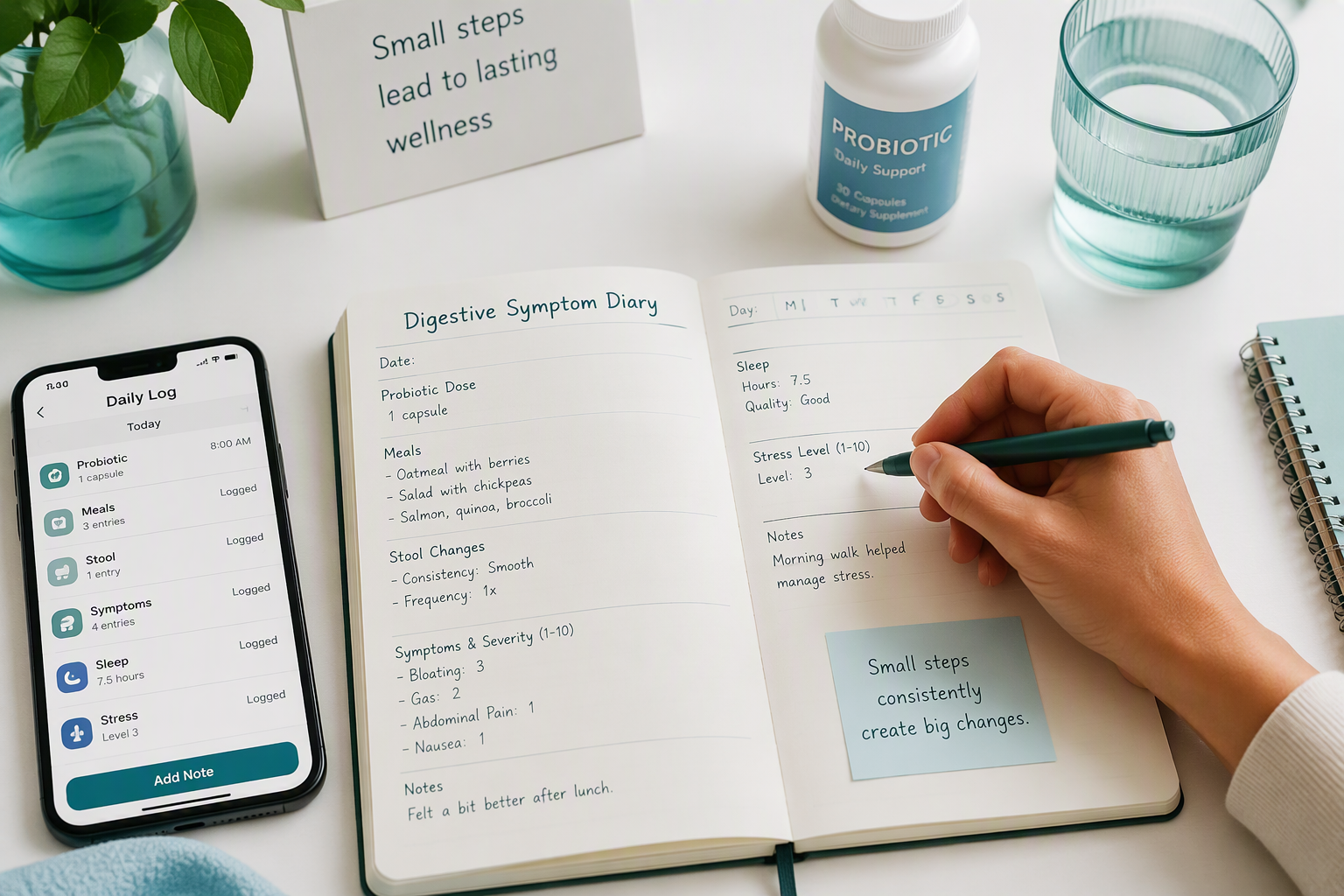
To distinguish a possible probiotic reaction from the symptom patterns just described, start with a three-day baseline before changing your probiotic, diet, or routine. This record captures your usual IBS or digestive symptoms, so a familiar flare is less likely to be mistaken for a supplement reaction.
Track these details each day:
- Symptoms: Rate gas, bloating or visible abdominal distention, cramps, abdominal discomfort, nausea, constipation, diarrhea, urgency, stool frequency, and stool consistency separately from 0, meaning none, to 10, meaning severe.
- Context: Note recent antibiotics, illness, diet changes, stressful days, relevant medical conditions, poor sleep, and familiar IBS patterns.
A dated baseline helps separate a new symptom pattern from one that was already present, although it cannot identify the cause. Alcohol is one of the more common confounders here, and whether a drink cancels your probiotic works through what the evidence does and does not support.
Once you start the product, use the same routine each day:
- Set a clear goal: Record why you are taking it, whether for IBS symptoms, recovery after antibiotics, or general digestive support. Different probiotic strains may have different intended uses, effects on bowel habits, and tolerability. A high colony-forming unit (CFU) count alone does not show that a product suits your goal.
- Record every dose: Include the product name, serving size, CFU amount, formulation, and lot number if it changes. Copy the exact strain name or code from the label. Lactobacillus rhamnosus and Lactobacillus acidophilus are broad species names, not interchangeable products.
- Note timing and nearby exposures: Record whether you took the dose before, with, or after food, along with nearby drinks and medicines. Include antibiotics, acid-reducing medicines, laxatives, antidiarrheals, and other supplements. Add symptom start and end times, such as gas within two hours or softer stool the following morning.
- Keep measurements consistent: Use the same symptom scale and record bowel movements, urgency, cramping, and nighttime symptoms daily. Use these daily entries to see whether your symptoms are improving.
When symptoms follow a dose, consider whether food, stress, sleep, a medication change, or a usual IBS trigger also occurred. Symptoms that repeatedly appear after doses and ease when a dose is missed make a probiotic-related reaction more plausible, whereas improvement with continued use may point to an early adjustment effect.
Review your log after several days and again after two to four weeks, without changing several foods or products at once. Bring the dated log and product label to a qualified healthcare professional if symptoms are persistent, severe, worsening, or unclear.
Which Ingredients And Strains Can Trigger Reactions?

Because tracking can reveal a product-specific pattern, reactions are often tied to a particular product, not probiotics as a whole. The cause may be one of the probiotic strains, the dose, capsule materials, carrier ingredients, fillers, or the manufacturing process. Before trying a supplement, consider whether your goal is IBS symptom support, recovery after antibiotics, or general gut health, and discuss relevant medical conditions with a qualified healthcare professional.
Biogenic amines are natural chemicals created during fermentation. Fermented foods, including yogurt, sauerkraut, and kimchi, can contain histamine, tyramine, tryptamine, and phenylethylamine. Some organisms, such as Lactobacillus buchneri, L. helveticus, L. hilgardii, and Streptococcus thermophilus, may also make histamine during fermentation. Research on dietary amines and symptoms is mixed, so a reaction alone does not prove histamine intolerance.
Headaches from probiotics are different from the mild gas or bloating that can occur early on. Headache, flushing, a runny nose, or itchy skin after fermented foods or a probiotic may point to sensitivity to biogenic amines or another ingredient, but the reason is not always clear. Persistent, severe, or unusual headaches deserve medical advice rather than repeated testing of the same product.
The full formula can matter as much as the live organisms. Allergic reactions to probiotics may come from dairy, soy, egg, gluten, yeast, or cross-contact during manufacturing instead of the bacteria themselves. Compare the complete ingredient panel, including the capsule and other inactive ingredients, if symptoms start after switching products.
Common formulation concerns include:
- Dairy allergy in probiotic supplements: Milk proteins can cause an immune reaction in people with a milk-protein allergy.
- Lactose intolerance: Lactose is a milk sugar, not an allergen. If it is poorly digested, it can cause dose-related gas, cramps, bloating, or diarrhea.
- Soy sensitivity in probiotics: Soy-derived ingredients and possible cross-contact may matter when you have a soy allergy or sensitivity.
- Added fibers: Inulin, fructooligosaccharides, and lactulose feed gut bacteria. For people with IBS or FODMAP sensitivity, they may worsen gas, cramping, bloating, or diarrhea. This response is often called prebiotic sensitivity.
A lactose-free or dairy-free label does not necessarily rule out milk-protein cross-contact. People with diagnosed food allergies need strict avoidance, so review the full label and contact the manufacturer or a clinician if an ingredient statement is unclear.
For IBS, strain codes matter more than a species name or total colony-forming unit (CFU) count. Evidence for Lactobacillus 35624, L. plantarum 299v, Lactobacillus acidophilus DDS-1, and Bifidobacterium bifidum MIMBb75 applies only to those exact probiotic strains. It does not extend to every product that uses the same species. Labels may use older or newer genus names, making the code, such as 35624 or 299v, the more useful detail to match.
When IBS symptoms are unpredictable, add only one new formulation at a time and record the product, serving, timing, foods, alcohol, and symptom changes. This can help separate a possible product reaction from an ordinary IBS flare and give a healthcare professional useful context.
Who Should Use Probiotics Only With Medical Guidance?
Beyond product-specific reactions, probiotics are not a self-start option for everyone. Because probiotics contain live bacteria or yeasts, rare bloodstream infections can occur, including sepsis or fungemia, especially in people with serious illness or weakened immunity. This risk differs from expected short-term gas, bloating, or changes in bowel habits.
If you are asking, are probiotics safe, the answer depends greatly on your health, treatments, and medical devices. Probiotics and weakened immune systems require particular caution because disease or treatment can reduce the body’s ability to keep organisms contained in the digestive tract. A qualified healthcare professional can help determine whether you should avoid probiotics, use a specific product, or monitor for possible infection.
Medical guidance is especially important before taking a probiotic in these situations:
- Severely weakened immunity: This includes HIV/AIDS, chemotherapy, and medicines that suppress the immune system. Lower immune defenses can raise risk, even if you have used a probiotic without trouble before.
- Serious illness, hospitalization, or major surgery: Critical illness, intensive care, a long hospital stay, recent major surgery, and changes in gut function can make over-the-counter supplements less straightforward than they are for healthy adults.
- Organ transplantation: Anti-rejection medicines suppress immune activity, while recovery may involve procedures and digestive changes that need individualized consideration.
- A central venous catheter: Also called a central line, this device provides direct access to the bloodstream. The catheter does not itself cause infection, but a rare bloodstream infection is more concerning while it is in place. Your treating team can advise whether probiotics are appropriate.
- Structural heart disease: Some heart or valve conditions may slightly increase concern about endocarditis, an infection of the heart’s inner lining or valves, if microorganisms move beyond the intestine. This does not mean probiotics will cause a heart infection, but it does warrant a personal risk discussion.
- Severe short bowel syndrome or major intestinal damage: Reduced bowel length or altered intestinal anatomy can affect nutrition, digestion, and exposure to microbes. Specialist input is appropriate before adding live organisms.
- Premature or medically vulnerable infants and children: A pediatrician should explicitly recommend any probiotic. Adult products and self-selected doses are not appropriate for babies or children with added medical risk.
- Pregnancy: Safety during pregnancy turns on a different evidence base than immune risk does, so read probiotics in pregnancy and raise it with your prenatal team instead of assuming general adult guidance applies.
Probiotic safety for vulnerable populations also includes anyone who has had a serious supplement reaction or an unexplained infection while taking one. “Natural” does not always mean low risk, particularly during active treatment or recovery from a major health event.
Bring the product label, or a clear photo of it, to a clinician. The exact strain, dose, and added ingredients matter because products sharing a species name can contain different strains and additives. That information supports an individualized conversation about probiotics safety and your specific risks.
Seek urgent medical care for fever, chills, confusion, fainting, shortness of breath, rapid heartbeat, or suddenly feeling much sicker after starting a probiotic. These symptoms do not prove the supplement caused the problem, but they need prompt evaluation.
When Should You Stop Probiotics And Seek Care?
For otherwise healthy adults outside the higher-risk groups above, mild probiotic side effects, such as stable gas, bloating, or a small change in bowel habits, can often be monitored briefly. These adjustment effects may ease within a few days, and it can be reasonable to watch for improvement over one to two weeks if symptoms stay mild and stable. Keep track of when symptoms start, how strong they are, and whether they affect work, sleep, meals, or daily routines.
IBS symptoms can also change with food, stress, menstrual cycles, or an unrelated illness, so a new symptom is not automatically caused by a probiotic. Stop monitoring on your own if symptoms do not begin to improve, become more frequent or intense, or interfere with normal activities.
Pause the probiotic and arrange non-urgent advice from a qualified healthcare professional if a new symptom persists, returns after doses, or worsens. Reasons to pause include:
- Diarrhea or constipation: A meaningful bowel-pattern change that does not settle.
- Abdominal discomfort: New cramps, pressure, or pain that is stronger than your usual IBS symptoms.
- Vomiting: Repeated nausea or vomiting after starting the supplement.
- Skin symptoms: Itching, hives, or a rash, which can be allergic reactions to probiotics.
Taking a probiotic with food, lowering the dose, or adjusting meals may reduce minor discomfort, but these steps cannot rule out illness or show whether the supplement caused the symptoms. For mild but troublesome symptoms, pausing the product is safer than repeatedly stopping and restarting it without guidance.
Seek prompt medical care if any of these warning signs occur:
- Severe or escalating abdominal pain.
- Persistent vomiting or profuse diarrhea.
- Fever, chills, or rapidly worsening illness.
- Blood in the stool or black, tar-like stool.
- Faintness, confusion, unusual weakness, or dehydration, such as very little urine.
- A marked decline in how you feel overall.
Rarely, live bacteria or yeasts can enter the bloodstream and cause probiotic infections, including sepsis or fungemia. These symptoms after starting a probiotic need prompt evaluation. Bring the product’s brand, strain, dose, start date, medicines, and other supplements to the appointment.
Probiotics safety needs closer attention for people at higher risk. Do not self-monitor a new reaction without medical advice if you have a weakened immune system, are critically ill, have significant gastrointestinal disease, severe short bowel syndrome, or a central line, because probiotics and weakened immune systems can be a risky combination. Rare adverse metabolic effects also require individualized assessment for people with severe short bowel syndrome or serious digestive disease.
Probiotic safety for vulnerable populations includes clinician-directed care before a premature infant receives a probiotic.
Before contacting a clinician, note your usual bowel pattern, symptom onset, dose changes, stool appearance, fever, vomiting, hydration, foods, and other products used. These details can help distinguish a possible supplement reaction from an IBS flare, but they are not a diagnosis. Probiotics never replace diagnosis, prescribed treatment, or urgent care.
Probiotic Side Effects FAQs
These FAQs address common probiotic side effects and help you tell temporary digestive changes from symptoms that warrant medical advice.
1. Can Probiotics Interact With Medications?
Probiotics differ by strain, formulation, dose, and intended use, so medication considerations are not the same for IBS, antibiotic recovery, or general digestive health. Timing matters most around antimicrobials, and taking probiotics with antibiotics is covered separately, along with antifungals, warfarin, and immune-lowering medicines.
Bring the exact product label and your complete medication and supplement list to a pharmacist or clinician, especially if you have an underlying condition or new symptoms. They can assess whether the probiotic may be involved and whether you need separate medical evaluation.
2. Should You Take Probiotics Every Day?
Daily probiotics are not automatically necessary. For most healthy people, probiotics are generally well tolerated, and your gut microbiome already contains beneficial microorganisms. Whether are probiotics safe for you depends on your health and the reason for trying one, such as IBS symptoms, antibiotic recovery, or general digestive support.
Dose and duration should match the specific strain, your goal, and your symptom response. Stop and speak with a qualified healthcare professional if gas, bloating, bowel changes, or pain persists or worsens. Clinical guidance is especially important if you are seriously ill, immunocompromised, or otherwise medically vulnerable.
3. Can Probiotics Affect Bowel Movement Frequency?
Probiotics can cause temporary changes in bowel movements, including softer stools, probiotic-related diarrhea, constipation from probiotics, or more or fewer bathroom trips. Gas from probiotics, bloating from probiotics, and probiotics and stomach pain may occur as your digestive system adjusts, often within a few days to two weeks. How long probiotic side effects last varies, so track timing and severity. Stop the supplement and contact a qualified healthcare professional for persistent or worsening symptoms, blood or black stools, severe pain, fever, vomiting, dehydration, or unexplained weight loss.
4. What Should You Avoid Mixing With Probiotics?
Take a probiotic with water and follow its label rather than starting several supplements together. Check the full ingredient list for dairy, soy, gluten, inulin, lactulose, or other added prebiotics that may trigger gas, bloating, or allergic reactions. Fermented foods, including yogurt, kefir, miso, kombucha, sauerkraut, kimchi, and pickles, may contain live cultures, but processing affects whether they remain active.
Ask a pharmacist or clinician about medicines, fiber, digestive enzymes, or other supplements. Some strains are monitored for possible transfer of antibiotic resistance genes, and serious illness or weakened immunity calls for individualized medical advice.