


Not every fermented food on the shelf still contains live cultures. Probiotic foods contain living microorganisms in amounts associated with a health benefit, while fermentation alone does not prove either point. Plain yogurt labeled "live and active cultures" is often a practical first food to try.
Package wording matters because pasteurization, canning, and baking can inactivate cultures after fermentation. Refrigerated, unpasteurized sauerkraut and naturally fermented pickles are more likely to retain live microbes than shelf-stable, vinegar-based versions, but labels still provide the best clue. Named organisms offer more detail, though most foods do not list the specific strain codes used in research.
For IBS or frequent bloating, start with a small serving of one new food and keep the rest of your meals familiar for several days. Stop if it consistently worsens pain, gas, urgency, or bowel changes, and seek clinical advice for symptoms such as rectal bleeding, unexplained weight loss, fever, or persistent diarrhea. A gradual trial helps separate personal tolerance from marketing claims.
Probiotic Foods Key Takeaways
- Fermented foods are not automatically probiotic foods with live cultures.
- Look for "live and active cultures," named organisms, and refrigeration instructions.
- Pasteurization, canning, baking, and high heat can inactivate live microorganisms.
- Plain yogurt or kefir can be simple first choices when dairy is tolerated.
- Start one fermented food at a time with a small, consistent serving.
- Pair tolerated live-culture foods with modest amounts of fiber-rich foods.
- Persistent, severe, or worsening digestive symptoms need evaluation from a qualified healthcare professional.
What Makes a Food Probiotic?
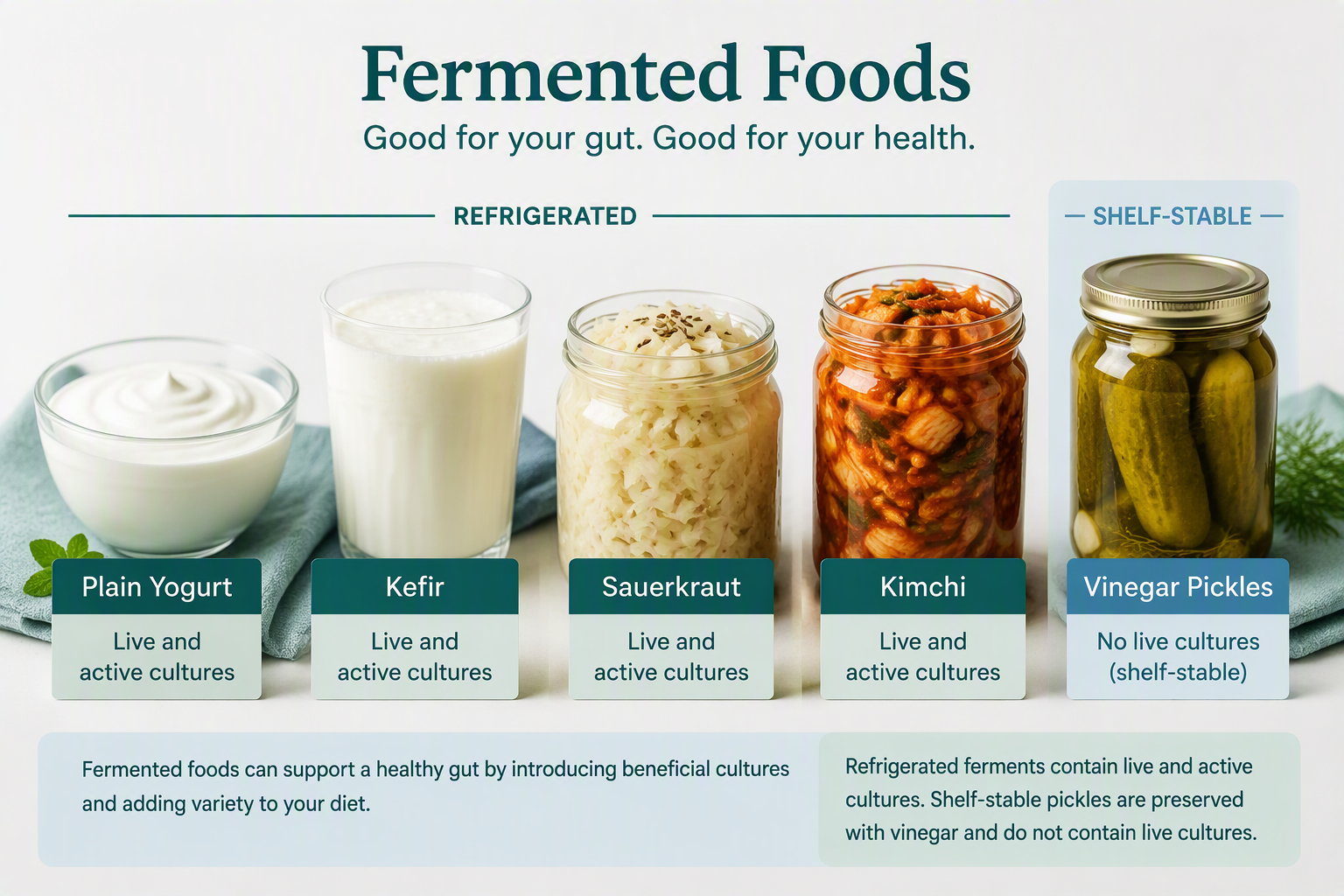
Probiotic foods contain living microorganisms, including beneficial bacteria or yeasts, at amounts linked to a health benefit (source). They may support gut health, digestion, or immune function, but the result can vary with the product, your symptoms, and your individual response. Our guide to probiotic supplements explains the broader basics without suggesting that one food works the same way for everyone.
Fermented foods and probiotic foods overlap, but they are not the same. Fermentation happens when microorganisms consume sugars or starches, producing acids that change a food’s flavor and help preserve it. That process alone does not show that the final product contains live bacteria or that its cultures have a demonstrated health benefit.
What happens after fermentation also matters. Baking and canning can kill or inactivate cultures, and beer or wine may have no active probiotic organisms left by the time you drink them. Check the package when you buy it instead of assuming a fermented product still contains useful live cultures.
Three label signals can help you assess a product:
- Live and active cultures: This wording indicates that living microorganisms were present when the product was packaged, although it does not promise a particular benefit.
- Named microorganisms: Yogurt or kefir may name Lactobacillus or another genus and species. That offers more information than a label with no culture details, but it is still broad.
- A strain code: The most specific labels include a genus, species, and strain identifier. Findings for one strain do not automatically apply to every member of that species.
Different strains may be studied for general digestive support, constipation, or other bowel-habit concerns. Many cultured foods do not name strains, which makes it hard to match yogurt, kefir, or similar products to a specific goal. Supplements are where which strains a supplement names becomes a check you can actually run. Think of these foods as individual options to test for tolerance, not interchangeable symptom treatments.
Think of prebiotics as gut-feeding fibers, nondigestible fibers that feed helpful gut microbes. Fiber-rich foods can complement foods with live cultures, but probiotics are only one part of digestive support. Introduce one new food at a time and begin with a small, consistent serving, especially when bloating or gas is already bothering you.
Persistent, severe, or worsening digestive symptoms deserve guidance from a qualified healthcare professional.
Which Probiotic Foods Should You Try?
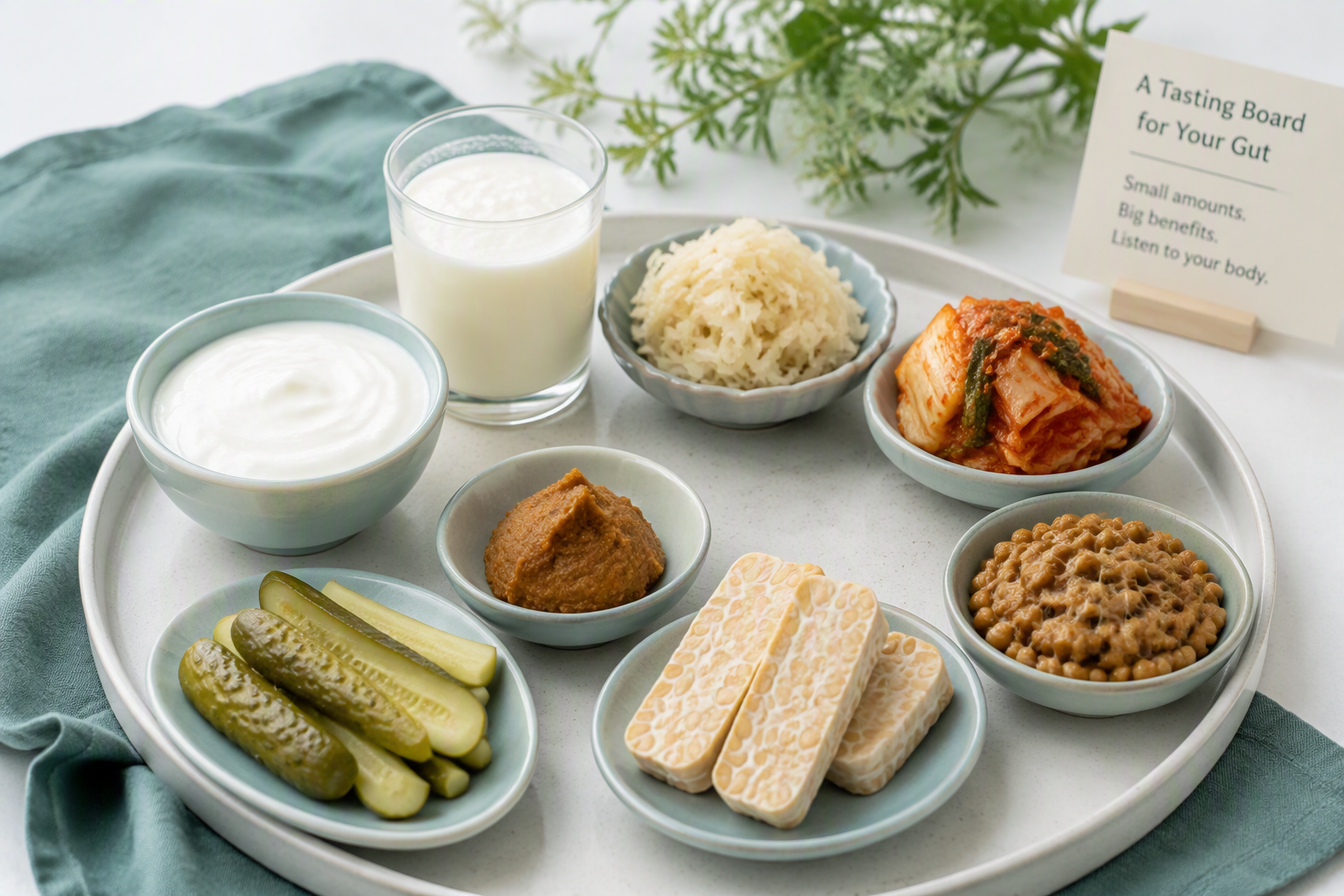
With those label distinctions in mind, the best probiotic foods are foods you can enjoy regularly without worsening your symptoms. Fermented foods may add live microorganisms to meals, but they do not guarantee relief from bloating, gas, constipation, or irritable bowel syndrome (IBS)-like symptoms. Start small and give your body time to respond.
Plain, unsweetened yogurt labeled “live and active cultures” is often a simple first choice. Yogurt probiotics come from milk cultured with lactic acid bacteria, commonly Lactobacillus and Bifidobacterium species. It also provides protein and calcium, while flavored varieties may add sugar or sugar alcohols that can be harder to tolerate.
Kefir is a tart, drinkable kefir made from milk fermented with kefir grains. Those grains contain bacteria and yeasts, so kefir often has a broader mix of microorganisms than yogurt, although that variety is not automatically a better fit for your digestion, especially if dairy causes cramping, loose stools, or gas. Lactose-free yogurt or kefir can be worth trying when lactose is a concern.
Fermented vegetables offer dairy-free options, although sodium, spice, and ingredients can affect comfort:
- Sauerkraut: Raw cabbage fermented into sauerkraut by lactic acid bacteria provides fiber, vitamin C, vitamin K, and iron. Refrigerated, unpasteurized sauerkraut is more likely to contain live microbes than a shelf-stable jar.
- Kimchi: Traditional Korean kimchi usually contains napa cabbage, radish, chili, garlic, ginger, and scallions. Kimchi may provide live microbes and plant compounds, but its heat, garlic, and onion can trigger symptoms for some people.
- Naturally fermented pickles: Cucumbers fermented in saltwater brine may contain live cultures. Vinegar-preserved pickles should not be assumed to contain them, so look in the refrigerated case for “fermented,” “raw,” or “live cultures.”
A spoonful or small side serving with a familiar meal is easier to assess than a large bowl of sauerkraut, kimchi, or pickles. Salt can add up quickly, particularly if you follow a lower-sodium eating pattern.
Kombucha, miso, tempeh, and natto provide other fermented food choices. Bottled kombucha may be pasteurized and can contain added sugar, caffeine, or small amounts of alcohol. Miso paste, fermented soybean tempeh, and natto provide plant protein, though heating tempeh or natto reduces living microbes. If live cultures matter to you, stir miso into a warm dish after cooking rather than boiling it.
Aged cheddar, Gouda, and mozzarella may retain live cultures after processing, but that varies by product. Cheese is not a reliable replacement for foods clearly labeled with live cultures, and lactose, sodium, and saturated fat still matter. Pairing a tolerated cheese with a balanced meal is usually more practical than treating it as a probiotic food on its own.
A gradual trial helps you spot personal triggers without changing too many things at once:
- Choose one new fermented food and eat a small portion for several days.
- Keep other meals and snacks familiar while you test it.
- Add only one new food at a time, since several changes can make a symptom flare hard to trace.
- Reduce or stop the food if it clearly worsens bloating, pain, gas, or bowel changes.
Fermented foods work best as part of an overall eating pattern that includes fiber-rich plants you tolerate, such as oatmeal, lentils, chickpeas, or berries. Increase fiber gradually as well, because a rapid increase can cause gas even when the food itself is nutritious.
Food labels and supplement labels offer different levels of detail. A yogurt container rarely identifies a specific microorganism strain, while supplement research depends on the exact genus, species, and strain. How to choose a probiotic can help you compare supplement labels without assuming that more strains or a higher count will suit everyone.
How Do You Find Live Cultures?
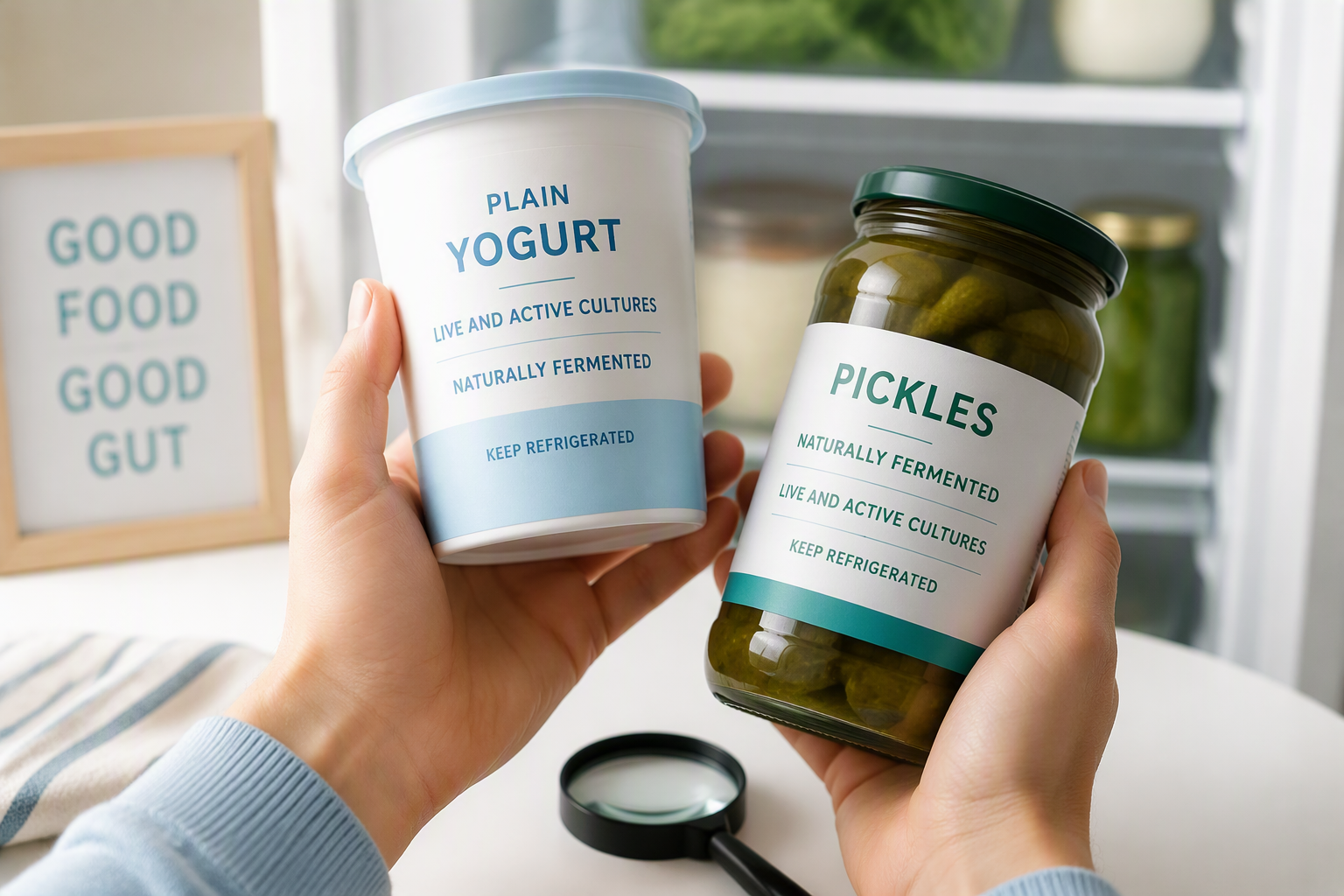
Because food labels rarely provide strain-level detail, “Probiotic” or “fermented” on a package does not confirm that live bacteria remain at purchase or that the food will relieve a specific digestive symptom.
A few label details offer useful clues:
- Culture statement: Look for “live and active cultures,” “contains live cultures,” or named organisms in the ingredients.
- Storage: Refrigeration can point to live cultures in yogurt, drinkable kefir, kimchi, pickles, and refrigerated sauerkraut, but it is not proof. A product may be chilled for freshness after its cultures have been inactivated.
- Heat processing: Unpasteurized sauerkraut and other raw or minimally heated fermented foods are more likely to retain live cultures. Pasteurization, baking, canning, and other high-heat steps can inactivate microorganisms, so “fermented” describes how a food was made, not necessarily what is still alive.
Pickles deserve a closer read. Naturally fermented pickles are cucumbers fermented in a salt-and-water brine, where lactic acid bacteria develop. “Naturally fermented” or “cultured,” paired with refrigeration, is a stronger sign than tangy flavor alone. Vinegar-based and quick pickles should not be assumed to contain live bacteria unless the label specifically confirms it.
Buttermilk can be confusing for the same reason. Traditional buttermilk is the liquid left after churning butter and may contain live cultures. Most commercial buttermilk is milk cultured with lactic acid bacteria, often including Lactobacillus. Check the carton for a live-culture statement and for any indication that it was heat-treated after culturing.
A colony-forming unit (CFU) count estimates the number of live microorganisms a product claims to contain. A species name, such as Lactobacillus acidophilus, identifies the organism broadly, while a strain code is more precise. Food labels often omit both CFUs and strain codes, which makes it harder to connect a product with research on a particular benefit.
Claims such as “probiotic,” “contains cultures,” or “supports digestive health” do not establish relief for bloating, constipation, or IBS. Start with a small serving, keep the rest of the meal familiar, and increase gradually only if it agrees with you.
Digestive symptoms can have many causes. Consult a qualified healthcare professional for persistent, severe, or worsening symptoms.
Results vary by person, and any dietary or supplement advice should be individualized.
How Should You Store and Serve Them?
Live cultures are more likely to remain viable when fermented foods stay refrigerated, avoid unnecessary heat, and are used by the package date. A “probiotic” claim alone does not show how storage has affected live microorganisms.
Raw or lightly heated fermented foods may keep more live cultures than foods that have been pasteurized or exposed to extended high heat. Look for refrigeration instructions and language such as “live and active cultures.” Shelf-stable pickles are often made with vinegar rather than fermentation, and some yogurt is heat-treated after culturing.
Storage habits that help preserve quality include:
- Keep yogurt, kefir, refrigerated sauerkraut, kimchi, fermented vegetables, and kombucha chilled.
- Reseal containers soon after serving, rather than leaving them out while you prepare a meal.
- Use foods by the package date for the best chance of the intended flavor and culture survival.
- Do not judge live culture amounts by extra tanginess, fizz, or cloudy liquid. Those changes do not reveal how many microorganisms remain.
Heat can reduce or eliminate live cultures. Have yogurt and kefir cold, or mix them into oatmeal, smoothies, or other foods after they have cooled, then add kimchi, sauerkraut, and refrigerated fermented vegetables after cooking. Stir miso into warm, rather than boiling, soup, sauces, or grains. Cooling food later cannot restore cultures lost during high-heat cooking.
A gradual routine is often easier on a sensitive digestive system:
- Try a small serving of yogurt or kefir at breakfast if dairy agrees with you.
- Serve a spoonful of kimchi or sauerkraut alongside lunch or dinner instead of making it a large part of the meal.
- Use kombucha and fermented-vegetable brine as the package directs. Cloudy brine does not automatically need to be discarded because it may contain fermentation bacteria.
- Increase portions slowly, especially if bloating, gas, or bowel changes become difficult to manage.
Storage history, portion size, and your individual tolerance all affect the experience. Small, consistent trials usually provide clearer feedback than a large serving of several fermented foods at once.
How Can You Pair Probiotics With Fiber?
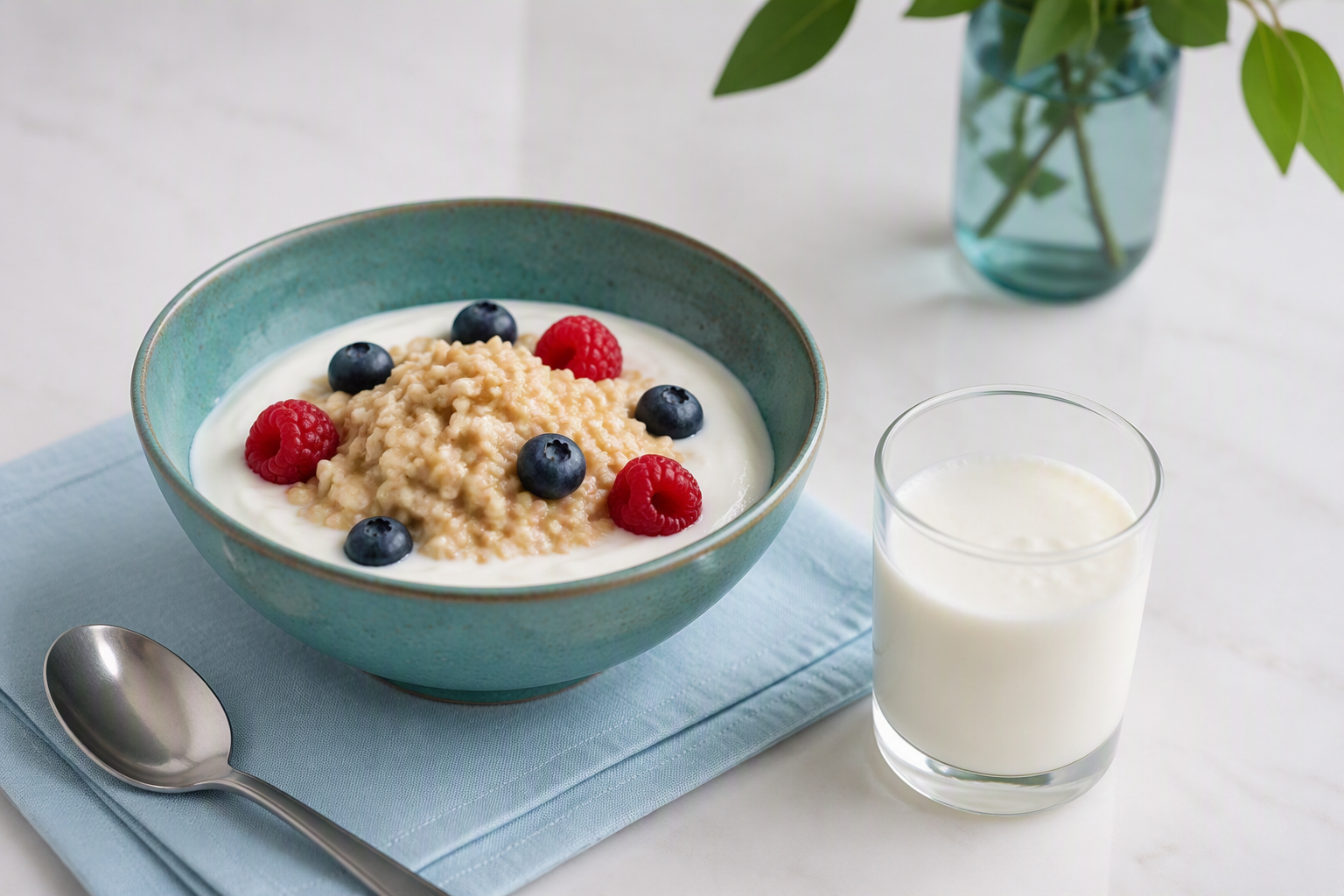
Pairing a live-culture food with a modest fiber serving can support digestive health while making it easier to spot what agrees with you. Your body does not completely break down certain carbohydrates, so beneficial bacteria in the colon ferment them. This may support gut health and digestive system balance, but it does not treat IBS or promise symptom relief.
Breakfast offers an easy starting point. Combine live-culture plain yogurt or kefir with 1/3 cup of plain cooked oatmeal, which provides about 2.7 grams of fiber. Yogurt probiotics work well in this simple meal. If it feels comfortable, add a few banana slices or 3/4 cup blackberries, which provide about 6 grams of fiber.
Keep the first bowl simple. Adding oats, fruit, seeds, and high-fiber cereal at once can make it hard to tell whether symptoms come from one food, the overall amount, or the combination.
Savory meals can use kimchi or sauerkraut as a salty condiment beside one measured fiber food:
- A small spoonful of kimchi or sauerkraut with 1/2 cup lentils, about 5.2 grams of fiber.
- A small spoonful of kimchi or sauerkraut with 1/2 cup chickpeas, about 4.3 grams of fiber.
- A small spoonful of kimchi or sauerkraut with 1/2 cup cooked asparagus, about 2.8 grams of fiber.
Keep the fermented vegetable portion small at first, then increase only if it sits well.
Garlic, onions, leeks, asparagus, oats, and bananas contain fibers that can feed gut bacteria. For some people, the fermentable carbohydrates in garlic, onions, and leeks can bring on gas, pain, or bloating. Start with a small cooked amount, or choose oats or a less-ripe banana when trying yogurt or kefir.
A gradual approach helps separate a food reaction from a serving-size issue:
- Pair one probiotic food with one modest fiber portion for several days.
- Increase either the portion or the variety only when you feel comfortable.
- If gas or bloating becomes disruptive, return to the last amount you tolerated.
Bacteria ferment fibers from oats, beans, lentils, onions, and garlic into short-chain fatty acids, including butyrate, which helps nourish colon-lining cells. Fermented foods are not interchangeable, and they do not confirm the specific probiotic strains found in probiotic supplements.
Probiotic benefits vary by person and situation, which our review of probiotic benefits covers in more detail. Seek care from a qualified healthcare professional if digestive symptoms are persistent, severe, or worsening.
What Should You Expect With IBS?
Even when paired thoughtfully with fiber, fermented foods may support a diverse gut microbiota, but their effects on IBS are individual and not predictable. When tolerated, foods with friendly bacteria may ease gas, bloating, or irregular bowel habits for some people. They are not a cure for IBS or a replacement for medical care.
Live cultures are only one part of the food. Yogurt and kefir may contain lactose, while kimchi and sauerkraut can also bring fermentable carbohydrates, fiber, spice, or carbonation. A food that helps one person stay regular may trigger cramping, urgency, or bloating in someone else, so it is not possible to credit symptom changes to the cultures alone.
IBS tolerance can shift from person to person and over time. Keep a fermented food that fits comfortably into your meals, but stop it if it consistently makes symptoms worse.
Probiotic foods may support intestinal barrier function, immune activity, natural antibody activity, and resistance to harmful microbes. Diet and gut microbes may also affect the gut-brain axis, the two-way connection between the digestive system and brain. These possible effects do not establish that fermented foods prevent illness, treat inflammatory digestive disease, or reliably improve mood or concentration in people with IBS.
A food-first approach can be a useful part of general digestive health, but foods cannot offer the strain-level precision of supplements. No single microbiome balance, culture count, or multi-strain product has been shown to work best for everyone. Constipation, diarrhea, and abdominal pain may need different approaches, which is why taking probiotics involves more than selecting a product labeled “probiotic.”
If you are considering a targeted supplement, the full strain code matters more than a species name or a high colony-forming unit (CFU) count. Research on one strain does not automatically apply to another product from the same species. Bifidobacterium longum 35624 and Lactiplantibacillus plantarum 299v are examples with IBS research. Labels may use older genus names, so confirm the number, 35624 or 299v, with a qualified clinician rather than relying on the species name alone.
Persistent, severe, or worsening symptoms need clinical advice rather than another food trial. Timely evaluation is important for:
- Rectal bleeding, unexplained weight loss, fever, or anemia.
- Diarrhea that persists or becomes worse.
- Symptoms that wake you during the night.
- A strong family history of inflammatory bowel disease (IBD).
Crohn’s disease requires different care from IBS, and fermented foods should never delay assessment or replace prescribed treatment. Speak with a qualified clinician or dietitian when symptoms disrupt daily life, before trying a strain-targeted supplement, or when you need help distinguishing IBS from another cause.
How Can You Trial Foods Safely?

Because IBS responses to fermented foods are individual, a probiotic-food trial can help you identify personal tolerance, not treat IBS or another digestive condition. Choose one goal, such as general gut health, fewer episodes of bloating and gas, constipation support, or more regular bowel habits. Probiotic foods may support a balanced gut microbiota, but food labels rarely name strains precisely enough to tie one fermented food to a specific symptom outcome.
Keep the trial simple by changing one variable at a time:
- Choose one plainly prepared food, such as plain yogurt, kefir, sauerkraut, kimchi, or kombucha, and start with a small portion.
- Keep your usual meals, supplements, fiber products, and routine steady for several days. Several changes at once can make a reaction impossible to trace.
- Increase the serving size or frequency only if you feel comfortable. New fermented foods can cause temporary gas, bloating, or mild cramping.
- Pause the trial if symptoms become more than mild or interfere with eating, hydration, sleep, work, or daily activities.
A dated food-and-symptom record is more reliable than memory. Note the food, brand or preparation, portion, and time eaten, along with pain, bloating, gas, urgency, constipation, and stool changes. Also record sleep, stress, illness, alcohol, travel, menstrual-cycle timing when relevant, and unusually rich meals. These details can reveal a pattern that the food alone does not explain.
The whole recipe matters, not only the live cultures. Kombucha can contain substantial added sugar, so check the Nutrition Facts label. Yogurt and kefir may trigger symptoms when lactose is a problem. Garlic, onion, spice, salt, and a larger fiber load in kimchi, sauerkraut, or other fermented vegetables can also affect digestion. Before ruling out a category, try a plain, lower-intensity version.
Seek prompt medical advice for any of these warning signs:
- Severe or worsening abdominal pain
- Blood in the stool or black stools
- Persistent vomiting or fever
- Unexplained weight loss
- Signs of dehydration
- A new bowel-habit change that does not settle
Digestive symptoms can have many causes, and persistent, severe, or worsening symptoms need evaluation by a qualified healthcare professional. Results vary by person.
Probiotic Foods FAQs
These FAQs cover common questions about probiotic foods, from choosing products with live cultures to adding them to meals while considering your digestive symptoms and tolerance.
1. Are Any Fruits Naturally Probiotic?
Fresh, intact fruit is not considered a probiotic food. Apples, berries, and bananas may carry surface microbes, but they do not reliably supply identified live cultures in amounts linked to a health benefit. Instead, fruit can provide fiber that feeds beneficial bacteria. Pair berries, an apple with skin, or a banana with a labeled live-culture food, and adjust portions if IBS-like symptoms flare.
Fermented fruit products may contain live microorganisms, but fermentation alone is not enough. As with kimchi, sauerkraut, fermented cabbage, or another Korean fermented food, check for named live cultures and proper storage.
2. Which Vegetables Contain Probiotics?
Fresh vegetables usually are not probiotic foods. Their fiber can nourish the microbes already in your gut. The main exception is naturally fermented vegetables, including sauerkraut, kimchi, and some pickles. Sauerkraut is raw shredded cabbage fermented by lactic acid bacteria, and it also provides fiber, vitamin C, vitamin K, and iron.
Look for pickles fermented in a salt-and-water brine. Vinegar-based or quick pickles usually lack live cultures unless labeled naturally fermented or live and active cultures. Refrigerated, unpasteurized products are more likely to retain live microbes. Start with a small portion if fermented vegetables worsen gas or bloating.
3. Can Children Eat Probiotic Foods?
Children can usually eat age-appropriate probiotic foods, starting with yogurt without added sugar labeled “live and active cultures.” This milk-based food is fermented with lactic acid bacteria and may contain Lactobacillus and Bifidobacteria, live microorganisms that may support digestion and a balanced gut microbiome but do not treat illness or ongoing symptoms.
Start with a small serving of yogurt or soft, finely chopped fermented vegetables. Gas, bloating, or mild cramping can occur, so avoid choking hazards, check for allergies, and watch sodium. Ask a pediatrician before changing the diet of a child with persistent symptoms, medical conditions, or dietary restrictions.
4. Are Probiotic Foods Safe During Pregnancy?
Commercially prepared, pasteurized probiotic foods from reputable retailers are generally the lower-risk choice during pregnancy (source). Keep refrigerated products cold, follow storage and use-by instructions, and skip items with damaged packaging, off smells, or spoilage. Clean utensils also reduce cross-contamination when serving fermented foods.
Kombucha is tea fermented with bacteria and yeast, often using a SCOBY, but its probiotic benefits are less established than those of some fermented foods. Check the nutrition label for added sugar, avoid unpasteurized or home-brewed versions, and treat it as an occasional drink, not a remedy. Consult your obstetric clinician before trying unusual fermented products, especially with a medical condition, immune concerns, pregnancy complications, or ongoing digestive symptoms.