


Recurring diarrhea, greasy stools, bloating, or unexplained weight loss can point to malabsorption, but symptoms alone cannot confirm it. Malabsorption means the small intestine isn't taking in enough nutrients from food, and the cause may involve digestion, the gut lining, bile, or pancreatic enzymes.
IBS can cause bloating and loose stools, yet it doesn't explain fatty stools, anemia, unintended weight loss, or poor growth in a child. Testing usually begins with blood work and stool tests, then may include hydrogen breath testing, endoscopy, or imaging depending on the suspected cause. A fecal elastase result below 100 micrograms per gram is considered good evidence of pancreatic insufficiency by the American Gastroenterological Association.
The right treatment depends on what is preventing absorption. Celiac disease may require a strict gluten-free diet, pancreatic insufficiency may require prescription enzymes, and lactose or fructose malabsorption may improve with targeted food changes. Recognizing the pattern of symptoms and deficiency signs can make the next healthcare conversation more focused.
Malabsorption Signs and Tests Key Takeaways
- Malabsorption occurs when the small intestine fails to absorb enough nutrients from food.
- Greasy stools, unexplained weight loss, anemia, and poor growth may signal nutrient absorption problems.
- Causes include celiac disease, pancreatic insufficiency, Crohn's disease, infections, and intestinal surgery.
- Lactose and fructose malabsorption affect specific sugars rather than all nutrient absorption.
- Blood work and stool tests usually begin the evaluation for malabsorption.
- Hydrogen breath tests, endoscopy, and imaging help investigate specific suspected causes.
- Treatment targets the cause and may include nutrient replacement, dietary changes, or prescription enzymes.
What Malabsorption Means
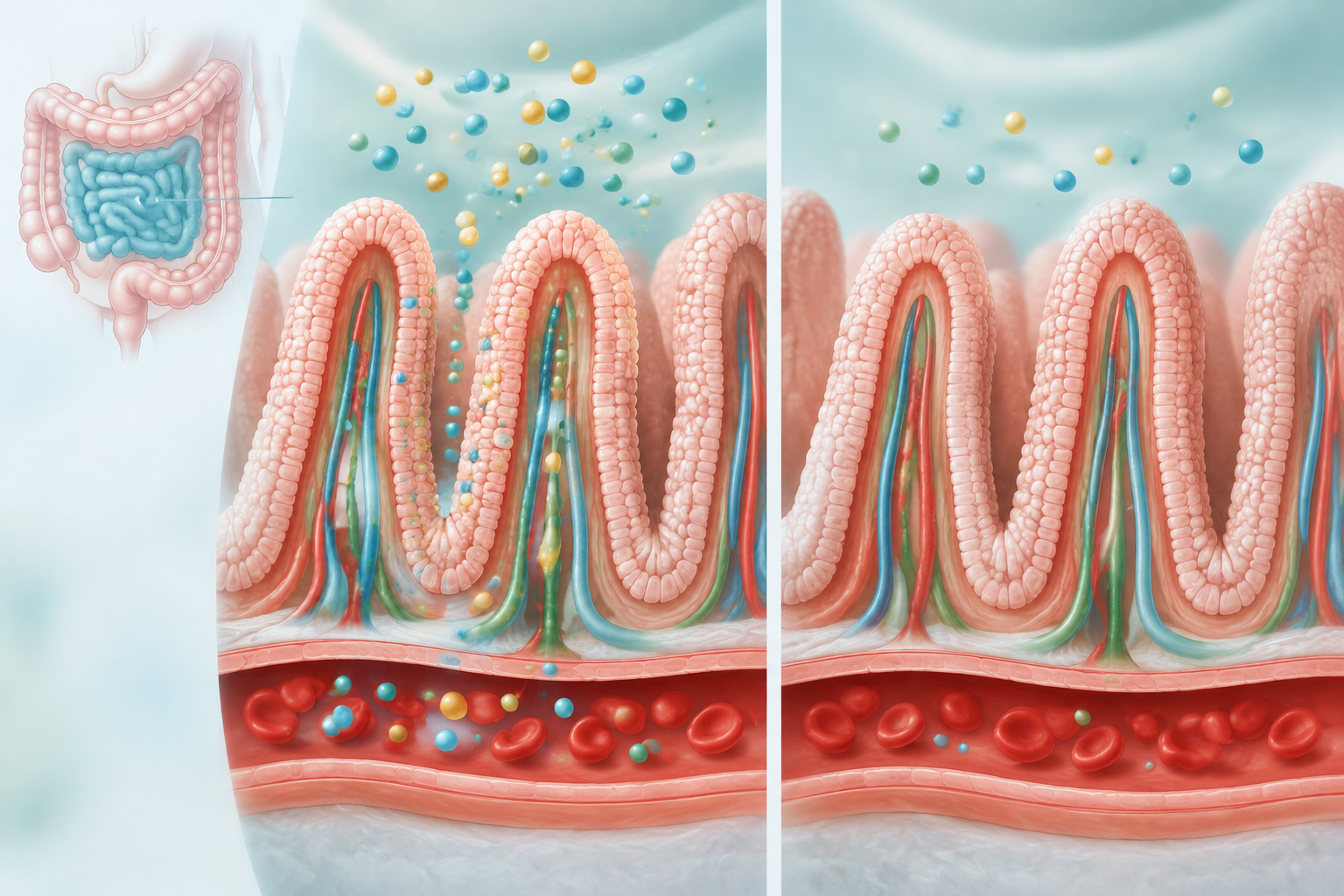
Malabsorption, sometimes called malabsorption syndrome, means your small intestine does not take in enough nutrients from food. Ongoing loose or greasy stools, bloating, or weight loss without trying can raise questions about whether your body is absorbing what it needs. The missing nutrients may include fat, protein, carbohydrates, vitamins, or minerals, according to MedlinePlus (source).
Food must first be broken down before nutrient absorption can occur. Maldigestion means that breakdown is incomplete, sometimes because the body makes too few pancreatic enzymes or too little bile, while malabsorption occurs when nutrients have been broken down but do not cross the gut lining. Either problem can leave the body short of nutrients, although the cause and treatment may differ.
Malabsorption symptoms depend on which nutrients are affected. One problem may involve lactose or vitamin B12, while another affects several nutrients at once. Fat malabsorption can lead to greasy stools, and broader nutrient deficiencies may contribute to weight loss or other changes. Many digestive conditions beyond malabsorption look similar, so symptoms alone cannot identify the cause.
A single symptom does not show whether nutrient absorption is reduced. The pattern matters, including stool changes, unplanned weight loss, and signs that more than one nutrient may be missing.
What Causes Malabsorption
The cause may lie in how food is broken down or in how the small intestine absorbs nutrients, and treatment depends on where the process fails. A 2021 Nutrients review groups causes by the affected part of the process (source).
The main problem areas are:
- Pancreas: Too few digestive enzymes reach food, often because of chronic pancreatitis, cystic fibrosis, or pancreatic surgery.
- Liver and bile ducts: Bile may not reach the intestine properly, limiting the digestion and absorption of fat.
- Small-intestine lining: Celiac disease, Crohn’s disease, Giardia infection, Whipple’s disease, radiation therapy, and some medicines can harm the surface that absorbs nutrients.
- Gut bacteria: Excess bacteria in the small intestine can consume nutrients such as vitamin B12 and alter bile.
- Surgery: Removing part of the small intestine can cause short bowel syndrome. Some weight-loss operations bypass part of the gut, leaving less absorptive surface.
The location of the problem can narrow the possible causes. With exocrine pancreatic insufficiency and enzyme loss, the pancreas produces too few enzymes to digest food. In celiac disease, an immune reaction to gluten flattens the villi, the tiny structures that absorb nutrients, and celiac disease damage to the gut lining can leave several nutrients short at once. In small intestinal bacterial overgrowth (SIBO), bacteria multiply where they are normally sparse, which makes SIBO as a cause of malabsorption easy to miss when vitamin B12 runs low.
Cleveland Clinic lists the tests clinicians choose from, including hydrogen breath tests, stool tests for fat and infection, blood tests for deficiencies and celiac disease, and imaging (source). The suspected cause, not the symptom alone, determines which test is useful.
Sugar Absorption Problems: Lactose and Fructose
Lactose and fructose malabsorption are forms of carbohydrate malabsorption that affect one sugar, not your ability to absorb every nutrient. When the unabsorbed sugar reaches the colon, bacteria ferment it. Gas, bloating, and loose stools may follow within hours, although the meal that triggered symptoms is not always easy to identify.
Lactose is the sugar in milk, and your small intestine uses lactase, an enzyme that breaks lactose down. Inherited traits can lead to low lactase production. Lactase levels can also fall when an infection, Crohn’s disease, or celiac disease injures the gut lining, which is how lactose intolerance after intestinal damage develops, according to the National Institute of Diabetes and Digestive and Kidney Diseases (source).
Fructose occurs naturally in fruit and other foods. Its transporter in the small intestine has limited capacity, so foods containing more fructose than glucose can cause symptoms more easily. Apples, pears, and honey are common examples, and fructose malabsorption and its food triggers can help explain why.
Hydrogen breath tests assess both sugars by measuring gas after you drink a test solution. The North American consensus uses a 25-gram dose of lactose and a separate 25-gram dose of fructose (source). A brief record of meals, timing, and symptoms can make the testing discussion more useful without requiring broad food restrictions.
Symptoms and the Deficiency Signs That Point to a Cause

Malabsorption can cause digestive symptoms and signs that your body isn’t getting enough nutrients. Bloating and loose stools may feel familiar if you have irritable bowel syndrome (IBS), but changes in weight, strength, or a child’s growth deserve a closer look.
Digestive symptoms may include:
- Chronic diarrhea that keeps coming back.
- Bulky, pale, greasy, foul-smelling stools that float or are hard to flush. This type of fatty stool is called steatorrhea.
- Bloating, gas, and abdominal cramps.
You may also lose weight without trying, feel unusually tired, or notice muscle loss, while in children, poor weight gain or slower growth can be a sign. MedlinePlus includes fatty stools, weight loss, and poor growth among the possible signs of malabsorption (source).
Certain changes can offer clues about which nutrients may be low:
Nutrient that may be low | Possible signs |
|---|---|
Iron, folate, or vitamin B12 | Anemia, meaning too few healthy red blood cells, with tiredness or pale skin |
Vitamin D and calcium | Bone pain, thin bones, or fractures |
Vitamin K | Easy bruising or bleeding |
Vitamin A | Trouble seeing in low light |
Protein | Swelling in the legs |
These signs don’t identify a deficiency on their own. IBS can cause bloating and loose stools, but it does not explain unintended weight loss, anemia, or fatty stools. IBS can also occur alongside another condition, so a familiar pattern of digestive symptoms should not rule out testing.
How Malabsorption Is Tested

Testing for malabsorption usually starts with blood work and stool tests. Your symptoms and those results help your clinician decide whether you need a breath test, endoscopy, or imaging.
The first tests look for nutrient deficiencies and possible causes:
- Blood tests: A complete blood count can reveal anemia. Iron, vitamin B12, folate, vitamin D, and albumin levels offer clues about nutrient status. Celiac antibody tests look for an immune response to gluten. Keep eating gluten until celiac testing is complete, since avoiding it can affect the result.
- Stool tests: Fecal elastase checks pancreatic enzyme output using a solid or semisolid sample. Other stool tests can detect infections such as Giardia. Fecal fat testing is rarely needed.
The American Gastroenterological Association considers a fecal elastase result below 100 micrograms per gram good evidence of pancreatic insufficiency, while 100 to 200 micrograms per gram is indeterminate (source). Watery stool can dilute the sample and make the result look falsely low.
When the first results don’t explain your symptoms, more focused tests can help:
- Breath tests: Hydrogen and methane breath tests can help assess lactose or fructose malabsorption and small intestinal bacterial overgrowth (SIBO).
- Endoscopy: If celiac disease or another problem with the intestinal lining is suspected, a clinician may take small-intestine biopsies, or tiny tissue samples.
- Imaging: A CT scan or MRI can help a clinician examine the pancreas and bowel.
Treating Malabsorption

Once testing identifies the cause, treatment for malabsorption addresses the cause, replaces missing nutrients, and adjusts your diet when certain foods are hard to digest. A restrictive diet alone won't treat every cause.
Your test results help determine which treatments fit:
- Celiac disease: A gluten-free diet removes the trigger that damages the gut lining.
- Infections and bacterial overgrowth: Antibiotics can treat Giardia or small intestinal bacterial overgrowth (SIBO).
- Pancreatic insufficiency: Prescription pancreatic enzymes taken with meals help the body digest food.
- Bile acid malabsorption: Medicines that bind bile acids can reduce the diarrhea it causes.
- Crohn's disease: Anti-inflammatory treatment helps control the inflammation affecting the gut.
Blood tests can show whether you need iron, vitamin B12, vitamin D, calcium, or fat-soluble vitamins. If the gut cannot absorb enough B12 from food or oral supplements, injections may be needed. Replacing nutrients matters even if your digestive symptoms start to ease.
Food changes depend on what is poorly absorbed. Limiting lactose or excess fructose can help with sugar malabsorption, while smaller, more frequent meals may be easier when fat is hard to digest. The goal is to adjust what causes trouble, not cut out foods without a reason.
Recovery follows different timelines. Sugar malabsorption should settle within days of a diet change, but healing the gut lining in celiac disease takes months.
When to Get Checked
Make an appointment if diarrhea lasts more than a few weeks, your stools look greasy, or you lose weight without trying. A child who has stopped growing or gaining weight also needs a medical check. These changes matter even if symptoms come and go or seem tied to certain meals. You don’t need to know the cause before making an appointment, and a short note about stool changes, appetite, and weight can help you explain what’s been happening.
Get prompt care if you notice blood in your stool, diarrhea wakes you from sleep, or belly pain becomes severe. Dizziness or passing very little urine can signal dehydration, particularly if diarrhea makes it hard to replace lost fluids. If a child has any of these symptoms, seek care promptly rather than waiting to see if a meal or change in routine helps.
Malabsorption FAQs
Malabsorption raises practical questions about stools, weight, and whether it lasts. These are the ones people ask most.
Can You Have Malabsorption Without Diarrhea?
Yes. You can have malabsorption without diarrhea. Some conditions cause loose stools, but malabsorption symptoms vary, and your stools may look normal even when your body has trouble absorbing nutrients. Unexplained weight loss may be the first clue. In other cases, routine blood work may show anemia or low vitamin D before you notice any change in your bowel habits. Normal-looking stools alone cannot rule out a problem with nutrient absorption.
Can Malabsorption Cause Weight Gain?
Weight gain is not the usual pattern with malabsorption. Adults more often lose weight because their bodies absorb too few nutrients from food. For children, poor weight gain or slower growth may be the first sign you notice. Bloating can make your belly look bigger even while your weight falls, so appearance can be misleading. The effects vary with the cause, and a change on the scale alone cannot confirm or rule out malabsorption.
What Do Fatty Stools Look Like?
Fatty stools, or steatorrhea, may be loose, greasy, light-colored, unusually foul-smelling, difficult to flush, or likely to float. An oily film on the water is another common description. These changes can occur with fat malabsorption, when the body does not fully absorb dietary fat, a process that may also limit absorption of the fat-soluble vitamins A, D, E, and K. Still, appearance alone cannot confirm a malabsorption stool or identify the cause.
Can Malabsorption Go Away?
Malabsorption can improve or go away when its cause is identified and treated, but the outcome depends on the condition. Malabsorption treatment may mean adjusting foods that contain lactose or fructose. In celiac disease, a strict gluten-free diet allows the small intestine to heal, though healing takes time, while pancreatic insufficiency usually requires lifelong prescription enzymes to help digest food. If nutrient absorption remains low, follow-up tests or ongoing nutritional support may still be needed.