


Bloating, gas, or bowel habits that switch between constipation and diarrhea can make you wonder whether your gut bacteria are out of balance. Gut microbiome health supports digestion, immune activity, and signaling between the gut and brain, but it is only one part of digestive health. The gut microbiome is a community of bacteria, fungi, viruses, and archaea that lives mainly in your colon.
Fiber-rich plant foods help microbes produce short-chain fatty acids that support the intestinal lining, while antibiotics can temporarily reduce helpful bacteria along with harmful ones. Symptoms alone cannot confirm a microbiome problem because IBS, lactose intolerance, stress, meal patterns, and infections can cause similar changes. Clostridioides difficile is one reason antibiotic-related diarrhea deserves attention, while everyday recovery usually depends more on regular meals, gradual fiber changes, sleep, and movement than on a quick supplement fix.
A healthy microbiome is not defined by one "good" bacterium, a score from gut testing, or a restrictive diet. Variety and consistency are more useful goals than chasing dramatic gut resets.
Gut Microbiome Health Key Takeaways
- The gut microbiome lives mainly in the colon and includes bacteria, fungi, viruses, and archaea.
- Microbes ferment certain fibers into short-chain fatty acids that support the intestinal environment.
- A healthy microbiome is generally diverse, stable, and able to adapt to normal changes.
- Bloating, gas, constipation, and diarrhea do not confirm an unhealthy microbiome.
- Plant-food variety supports different microbes without requiring a restrictive diet.
- Antibiotics can disrupt gut microbes and may temporarily change bowel habits.
- Probiotic benefits depend on the specific strain, product, and condition studied.
What Is the Gut Microbiome?
The gut microbiome is the community of trillions of bacteria, fungi, viruses, and archaea that live mainly in your colon. Cleveland Clinic notes that these microorganisms help your body in ways human cells cannot manage alone (source).
Often called gut flora or native gut flora, this community is one part of your overall digestive health, and researchers now study the gut microbiome in health and disease as a system that touches metabolism, blood sugar, heart health, and the intestinal mucosal lining. What gut health means day to day places the microbiome alongside digestion, bowel habits, symptoms, and everyday influences on how you feel.
The gut microbiome’s work includes more than digesting food. Gut microbes help with several essential tasks:
- Fermenting fiber: Certain plant fibers reach the colon without being digested. Microbes ferment them into short-chain fatty acids, which feed the intestinal lining and may help regulate inflammation.
- Supporting immune defenses: Regular contact with microbes helps train the immune system to recognize harmful germs.
- Making vitamins: Some microbes contribute to the production of vitamins your body uses.
- Signaling the brain: The gut and brain communicate through nerves and chemical signals, which can influence digestion, bowel movements, and mood.
Gut microbiome health does not depend on having one perfect set of “good” bacteria. A healthy microbiome is generally diverse and stable, yet able to adapt to normal changes. Diet, antibiotics, sleep, stress, and age can all affect that balance, which helps explain why the next sections cover both what this community does and what can shift it. The biggest everyday lever is a gut health diet built around fiber, and the most underrated is how stress changes digestion.
What Does a Healthy Microbiome Do?
Beyond the microbiome's basic tasks, a healthy microbiome plays an active part in everyday digestive health. Its role in gut bacteria and health appears in four connected jobs, each discussed in more detail below:
- Fermenting dietary fiber
- Training immune responses
- Sending signals between the gut and brain
- Supporting normal gut motility, or movement through the digestive tract
When microbes ferment certain fibers, they make short-chain fatty acids that help support the intestinal environment, according to a 2015 World Journal of Gastroenterology review (source).
Diet, medications, environmental exposures, physical activity, stress, and sleep can all influence this system, which is why exercise and gut health, stress management and gut health, and gut-friendly eating keep coming up together. A balanced gut microbiome is one whose composition stays diverse and stable through those pressures. Regular exercise, steady sleep, and stress-relief habits such as walking or mindfulness may support motility and gut-brain signaling, while ongoing stress and poor sleep can interfere with both. What alcohol does to gut microbes and smoking’s effect on gut bacteria push the other way.
Microbiome Diversity
A healthy microbiome usually includes many species that share different jobs, rather than a few dominant microbes doing most of the work. This microbiome diversity is a consistent sign of a resilient gut ecosystem, although no single test score defines gut health for every person.
Plant-food variety is the most practical daily way to support that mix. Different plant foods provide fibers and natural compounds that nourish different microbes:
- Fruits and vegetables
- Beans and whole grains
- Nuts, seeds, herbs, and spices
Add new fiber-rich foods gradually if a sudden increase tends to worsen gas or bloating. Regular variety across ordinary meals can support your gut health without a restrictive diet, which helps explain why microbiome diversity matters.
Signs of an Unhealthy Microbiome
An off-balance microbiome can occur alongside several digestive symptoms, including:
- Bloating or gas
- Constipation or diarrhea
- Stools that feel unpredictable
- Food intolerance
None of these signs can confirm that your microbiome is unhealthy. The same symptoms can stem from meal patterns, stress, medication, infection, lactose intolerance, IBS, or other digestive conditions.
The signs of a healthy gut microbiome are not simply the absence of occasional discomfort. Patterns over time matter more, especially if symptoms shift after travel that unsettles the gut, antibiotics, or major diet changes. Signs of an unhealthy microbiome explains which symptoms may be meaningful and which are not reliable signals.
Immune Health
Gut bacteria and health are closely connected to immune function because much of the body’s immune tissue sits along the digestive tract. Resident microbes help immune cells recognize what to tolerate, such as food and helpful organisms, and what may require a response. A World Journal of Gastroenterology review describes this early training as an important part of immune development, which is why early microbial exposures and antibiotic use can matter.
Digestive symptoms do not automatically signal an immune problem, but they do show why quick supplement claims deserve caution. Those claims make more sense once you understand how the microbiome shapes immunity in the first place.
Mental Health
The gut brain axis is a two-way communication network linking your digestive tract and brain. Gut microbes may affect those signals through the vagus nerve, immune activity, and metabolites, which are small compounds produced when microbes break down parts of your food.
Studies associate shifts in the microbiome with mood and stress responses, though an association does not show that a specific food or probiotic can treat anxiety or depression. For a clear look at what research supports, where uncertainty remains, and which claims deserve caution, read the microbiome and mental health.
Serotonin
As part of the gut-brain signaling just described, most of the body’s serotonin is made in the gut lining, where gut bacteria can influence how much is produced. This locally made serotonin helps regulate gut motility rather than traveling into the brain.
That distinction keeps gut bacteria and serotonin research focused on digestive signaling. A fuller look at this mechanism is available in how gut bacteria influence serotonin.
What Changes Your Microbiome?
Even as gut bacteria influence serotonin, antibiotics are the biggest short-term disruptor of what affects gut bacteria because they can reduce helpful microbes along with harmful ones. To improve your gut microbiome day to day, fiber is the strongest lever. A varied mix of plant foods supplies fermentable fibers, prebiotics, and polyphenols that help support microbial diversity, including beans, lentils, barley, and oats alongside fruits and vegetables, berries, olive oil, and coffee or green tea. Highly processed foods and artificial sweeteners such as stevia and sucralose are still being studied for the opposite effect.
Fermented foods such as yogurt with live cultures, kefir, sauerkraut, kimchi, miso, or tempeh may introduce live Lactobacillus and Bifidobacterium species, though pasteurization removes them, while pairing fiber changes with enough water can support comfortable bowel habits. Fiber supplements offer a middle path when food changes are difficult, but some ferment and may aggravate symptoms. Probiotics are a separate, condition-specific question, according to NCCIH (source).
Antibiotics
Antibiotics can thin parts of your gut microbial community while treating a bacterial infection. The microbiome after antibiotics may take weeks to recover, and you may notice looser stools, constipation, or extra gas during that time.
Most people regain much of their usual microbial mix, though recovery varies. Repeated antibiotic courses or digestive symptoms that were present before treatment can make the process less predictable.
A steadier approach usually helps more than extreme diet changes or rushed supplement shopping:
- Food and fluids: Regular meals and adequate hydration can support comfortable bowel habits.
- Symptom patterns: Notice changes over time rather than judging recovery by a single day.
- Simple routines: Consistency can be easier on your digestion than frequent, major changes.
Rebuilding the microbiome after antibiotics covers practical ways to support recovery and what may not be worth your effort.
Fiber Supplement Side Effects
Fermentable fiber supplements feed gut bacteria, and that process can cause extra gas or bloating when you first add them. The dose and pace of increase often shape your experience more than the specific supplement, so starting with a smaller amount and giving your digestion time to adjust may make the change easier to manage.
Monitor symptoms during adjustment, but intense, persistent discomfort or other worrying symptoms are reasons to stop and seek guidance. For a clearer look at expected reactions, when to reduce your dose, and signs that mean you should stop, read about fiber supplement side effects.
Methylcellulose
Methylcellulose is a non-fermentable fiber that adds bulk to stool without serving as fuel for gut bacteria. It can be a practical choice if other fiber powders leave you with more gas or bloating.
Unlike psyllium and inulin, methylcellulose may be better tolerated when gas is a concern. The trade-off is that it does not support the microbiome in the way fermentable fibers can, which may matter less when symptom comfort is your main priority.
Whether that balance fits your bowel habits comes down to methylcellulose as a fiber supplement versus a fermentable one, and what each does for your bowel habits.
Where the Microbiome Fits in Digestion
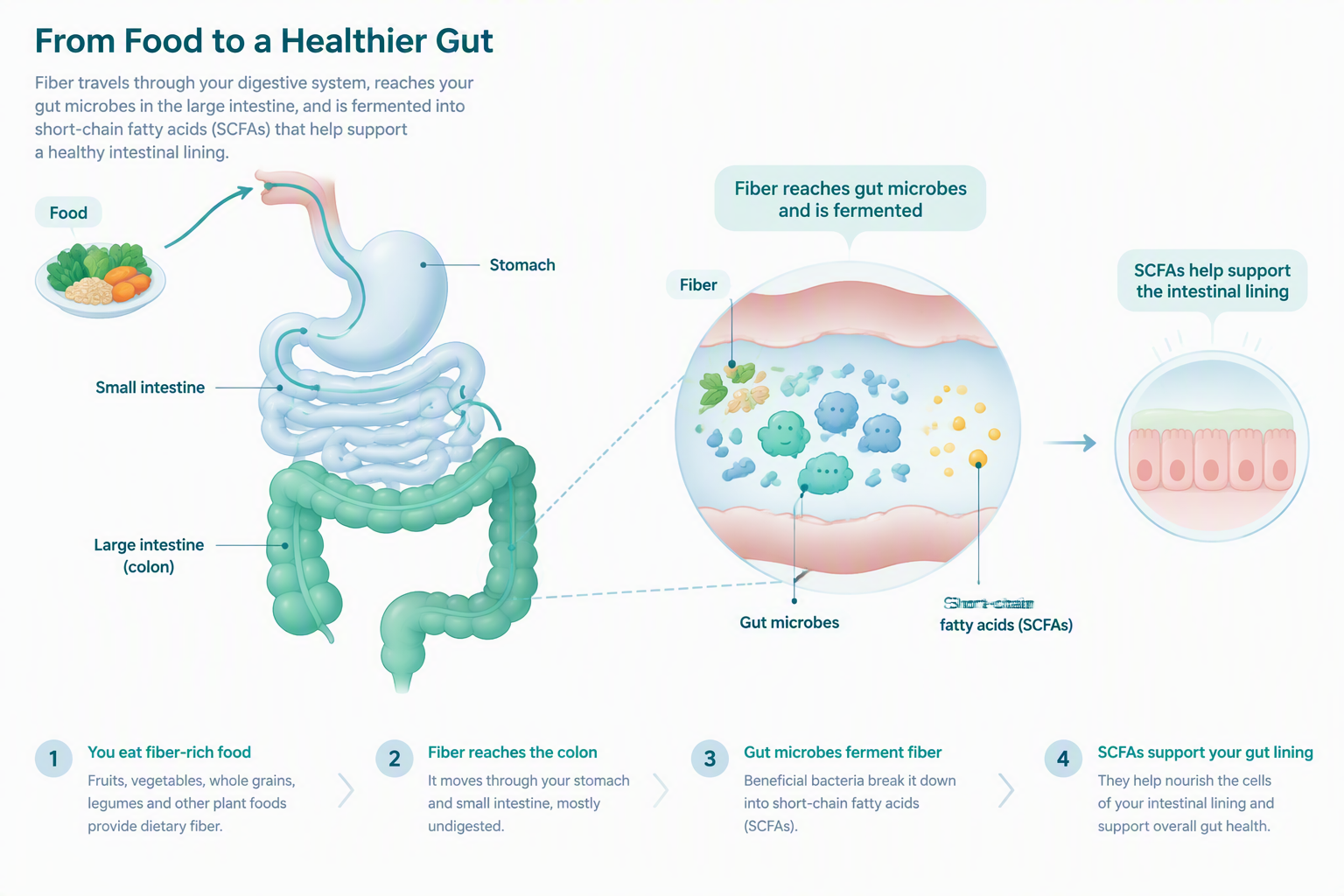
To place those fiber choices in the digestive process, the microbiome is part of your digestive system, with much of its activity happening in the large intestine near the end of food’s journey. By then, the stomach and small intestine have broken down food and absorbed many nutrients. Material that remains, including fiber the body cannot digest, moves into the large intestine.
There, gut microbes use some of those leftovers and produce compounds, mainly short-chain fatty acids (SCFAs), that support the gut lining, its barrier against intestinal permeability, and other body functions. The digestive system your microbes live in is a connected pathway, so microbiome-focused food changes may support long-term gut health without necessarily affecting symptoms that begin higher up, such as reflux or nausea.
This food-to-large-intestine pipeline helps explain why fiber matters and why the microbiome is one part of digestion rather than the whole process.
Gut Microbiome Health FAQs
Common questions about gut microbiome health can help you separate practical habits from supplement claims when bloating, bowel changes, or IBS leave you looking for clear answers.
1. What Are Signs of a Healthy Gut Microbiome?
No single symptom, stool test, or “good” bacterium confirms signs of a healthy gut microbiome. A healthy gut microbiome is diverse and resilient, with digestion and bowel habits that are comfortable and predictable for you through routine changes. Normal frequency ranges from about three bowel movements a day to one every three days, so a lasting change from your usual pattern matters most. Persistent bloating, gas, diarrhea, constipation, reflux, or abdominal pain needs medical evaluation. More fiber can worsen discomfort for some people, making individualized guidance from a healthcare professional or registered dietitian useful.
2. Can Probiotics Improve Gut Microbiome Health?
Probiotics are live microorganisms, but benefits depend on the exact strain and the symptom studied. A high count, broad claim, or strong reviews do not show a formula will help your goal, especially if its label lacks clinical strain codes. The National Center for Complementary and Integrative Health notes that effects vary by product and condition. Prebiotics feed beneficial gut bacteria, while synbiotics combine both. For most healthy people, varied fiber-rich meals are a stronger foundation than generic probiotic marketing.
3. How Quickly Can Your Gut Microbiome Change?
Food and lifestyle changes can influence microbial activity fairly quickly, but lasting shifts in which microbes are most common, or improvements in bloating and bowel regularity, often take longer and may not occur. Your microbiome is as individual as a fingerprint. What affects gut bacteria includes baseline health, medications, illness, sleep, stress, physical activity, and environment, not willpower alone. Consistent variety across your overall diet matters more than chasing one superfood or probiotic, according to gut microbiome and health, Gut 2022 (source).
4. Do Antibiotics Harm the Gut Microbiome?
Antibiotics can disrupt gut health by reducing helpful bacteria along with the bacteria causing an infection. This shift, called dysbiosis, may allow Clostridioides difficile to grow, leading to toxin-related diarrhea that can become serious. When antibiotics are medically needed, take them exactly as prescribed and finish the course unless your prescriber advises otherwise. A clinician can help you consider food choices and whether a targeted probiotic fits your situation.
5. What Is a Seven-Day Gut Reset?
A seven-day gut reset is a gentle return to regular meals, hydration, sleep, movement, and symptom tracking, not a restrictive cleanse or a way to fix your gut. To improve gut microbiome health, add a wider range of plant foods gradually and drink enough water, since a sudden fiber increase can worsen gas and bloating. Ongoing bloating, constipation, diarrhea, reflux, or abdominal pain may need tailored medical or dietitian guidance because high-fiber foods can aggravate some conditions.