


A bowel movement soon after breakfast does not mean that meal rushed through your body. The digestive system moves food through a coordinated path, breaking it down, absorbing nutrients, reclaiming water, and removing what remains as waste. From chewing to the final bowel movement, muscles, acid, enzymes, and bile each have a distinct job.
Food travels through the GI tract from the mouth to the esophagus, stomach, small intestine, colon, rectum, and anus, while the liver, gallbladder, and pancreas add digestive fluids. Most nutrient absorption happens in the small intestine, and the colon shapes stool by absorbing remaining water. The Bristol stool form scale can help put changes in stool consistency into context.
Meal timing, rushed eating, stress, fluids, exercise and physical activity, and certain foods can all affect how this process feels day to day. Persistent bowel changes, blood in stool, unexplained weight loss, trouble swallowing, or pain that wakes you from sleep deserve attention.
Digestive System Basics Key Takeaways
- The GI tract moves food from the mouth to the anus.
- Chewing, acid, enzymes, bile, and muscle contractions break food down.
- The small intestine absorbs most nutrients and much of a meal's water.
- The colon absorbs remaining water and helps form stool.
- Peristalsis moves food forward, while the rectum stores stool before a bowel movement.
- Meal timing, stress, fluids, activity, and food choices can affect digestive comfort.
- Persistent bowel changes, blood in stool, weight loss, swallowing trouble, or nighttime pain need attention.
How Does Your Digestive System Work?
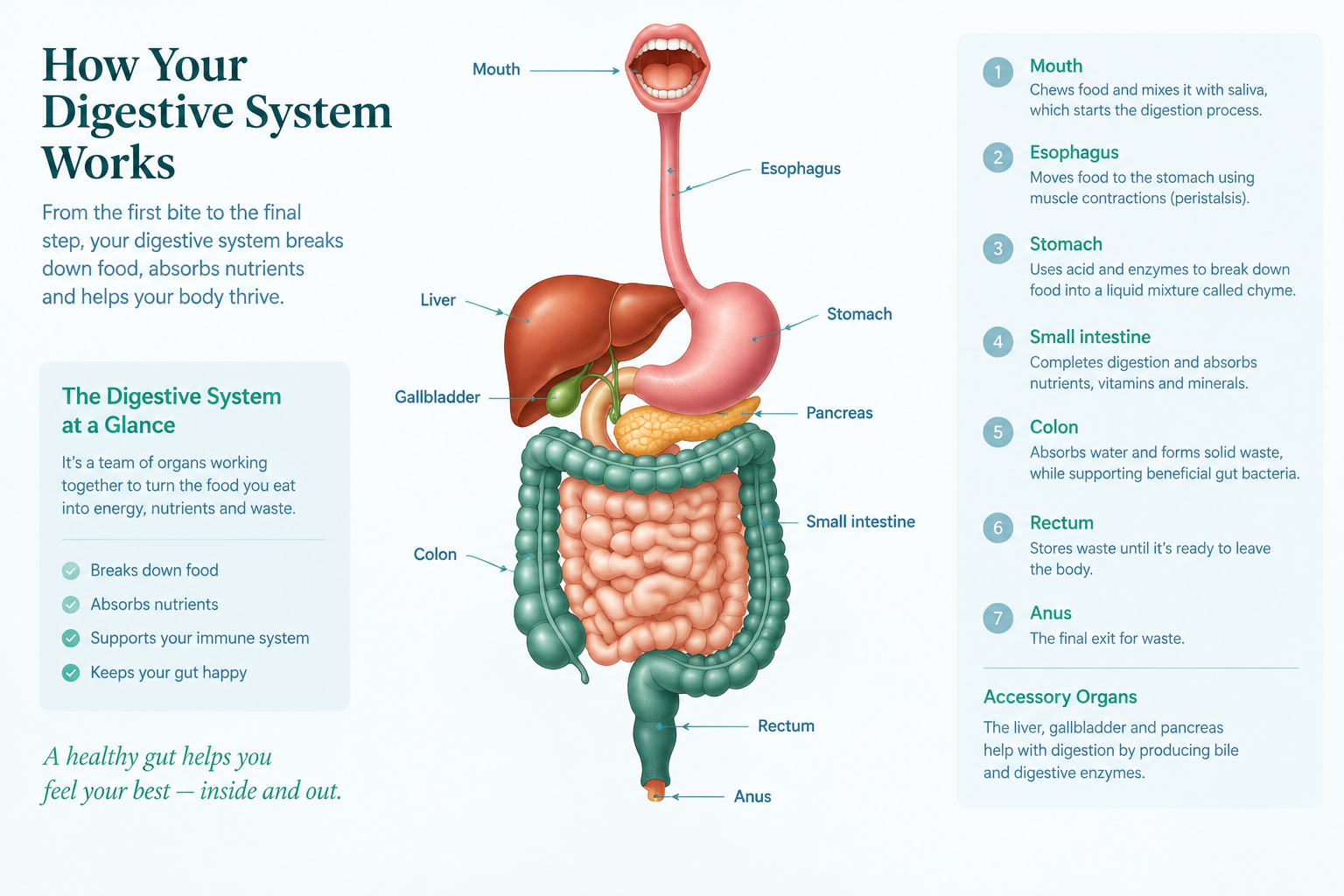
Your digestive system breaks food into nutrients your body can use and moves the leftovers out as waste. This page gives you a map of the digestive system, the role of each organ, the path food takes, and the ways meal habits can affect digestion. Each topic has a deeper page when you need more detail.
The digestive tract, also called the gastrointestinal (GI) tract or alimentary canal, is one continuous tube. Food travels from the mouth through the esophagus, stomach, small intestine, large intestine or colon, rectum, and anus. The liver, gallbladder, and pancreas, the accessory digestive organs, add digestive fluids, but food does not pass through them (source).
These digestive system basics are part of the bigger picture of gut health, including the factors that influence symptoms, food tolerance, and bowel habits. This context can help you connect anatomy with bloating, reflux, constipation, diarrhea, or gas, and judge which digestive symptoms mean something.
How the digestive system works relies on physical and chemical digestion working together. Mechanical digestion (chewing, stomach churning, and muscle contractions called peristalsis) breaks food into smaller pieces. Chemical digestion (gastric acid, enzymes such as pepsin and trypsin, and bile) then breaks it down further so nutrients can be absorbed.
The parts of the digestive system fit into three practical groups:
- Food pathway: The organs that receive food, move it along, absorb nutrients, and remove waste.
- Helper organs: The liver, gallbladder, and pancreas, which supply fluids that aid digestion.
- Muscles and fluids: The coordinated contractions and digestive secretions that keep food moving and processing.
What Does Each Organ Do?
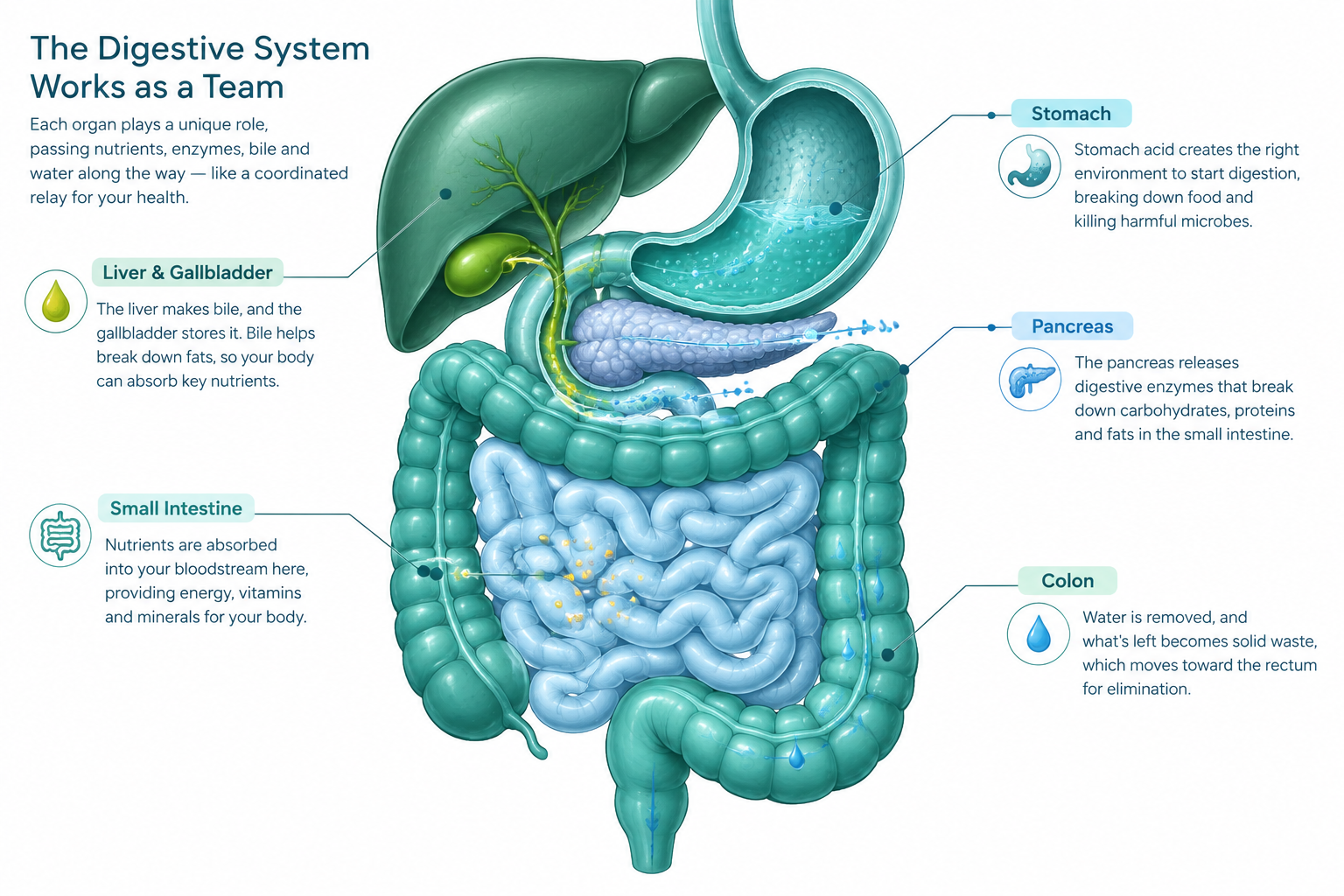
From the food pathway outlined above, the digestive system works as a relay, and digestive system organs and what they do become clearer when you follow food from one handoff to the next. Chewing breaks food into smaller pieces, while saliva moistens it and starts starch digestion. In the stomach, muscular mixing combines food with acid and enzymes, beginning protein digestion and turning the meal into a thick liquid called chyme.
The pancreas and small intestine add enzymes that break down fats, proteins, and carbohydrates, while bile from the liver and gallbladder helps digest fats. Most digestion and nutrient absorption occur in the small intestine, according to StatPearls (source). Its lining regulates what passes into the body, and the large intestine absorbs remaining water before waste leaves the body.
Stomach Acid
Stomach acid function starts when your stomach churns food with acid and enzymes. Stomach acid function also destroys many swallowed microbes and helps release iron and vitamin B12 from food for absorption later in digestion, according to the National Institute of Diabetes and Digestive and Kidney Diseases.
Stomach acid’s role reaches well beyond heartburn. Both low and high acid levels can be associated with digestive symptoms, but symptoms alone cannot identify the cause. Acid regulation and the possible signs of each help explain why stomach acid matters.
Digestive Enzymes
Digestive enzymes are proteins that break food into building blocks small enough to absorb.
Saliva begins carbohydrate digestion with amylase, while protease enzymes in the stomach, pancreas, and small intestine lining break down proteins and lipase helps digest fats. The pancreas provides most digestive enzymes, and the small intestine lining supplies enzymes for the final steps. When too few enzymes are available, fats may not digest well and stools can become greasy or difficult to flush. That shortfall is easier to spot once you know digestive enzymes and where they come from.
The Small Intestine
The small intestine is the main place where food is broken down and nutrients move into your body. Its folded lining is covered with tiny, fingerlike villi that create a broad surface for nutrient absorption in the small intestine and for absorbing much of a meal’s water. This small intestine function helps explain why trouble here can affect energy levels, bowel movements, and how you feel after eating.
Its three connected sections are the duodenum, jejunum, and ileum. As food moves through them, it mixes with digestive juices and nutrients enter circulation. What the small intestine does explains each section’s role and what may happen when absorption falters.
The Large Intestine
The large intestine’s job is to complete digestion by taking back water and salts from material your small intestine did not absorb. In its main section, the colon, resident bacteria ferment some fiber, and the remaining material becomes stool that stays there until a bowel movement.
Colon function affects stool consistency. Too little water removal can leave stool loose, while more water removal or slower movement can make it hard and difficult to pass. Food, fluids, routine changes, and illness can all shift this balance. Learn how the large intestine finishes the job.
The Gut Barrier
Your intestinal barrier acts as a selective filter, allowing digested nutrients to enter the body while helping keep microbes and unwanted particles inside the digestive tract. Gut barrier function relies on a protective mucus layer, a single layer of lining cells sealed by tight junctions, and immune cells beneath the lining.
A healthy intestinal barrier supports normal digestion. Bloating or changes in bowel habits do not automatically mean the barrier is damaged, and the term “leaky gut” is often used online more broadly than evidence supports. Learn what can weaken this system, what research says about the term, and practical ways to support the gut barrier and what it protects.
How Does Food Move Through Your Gut?
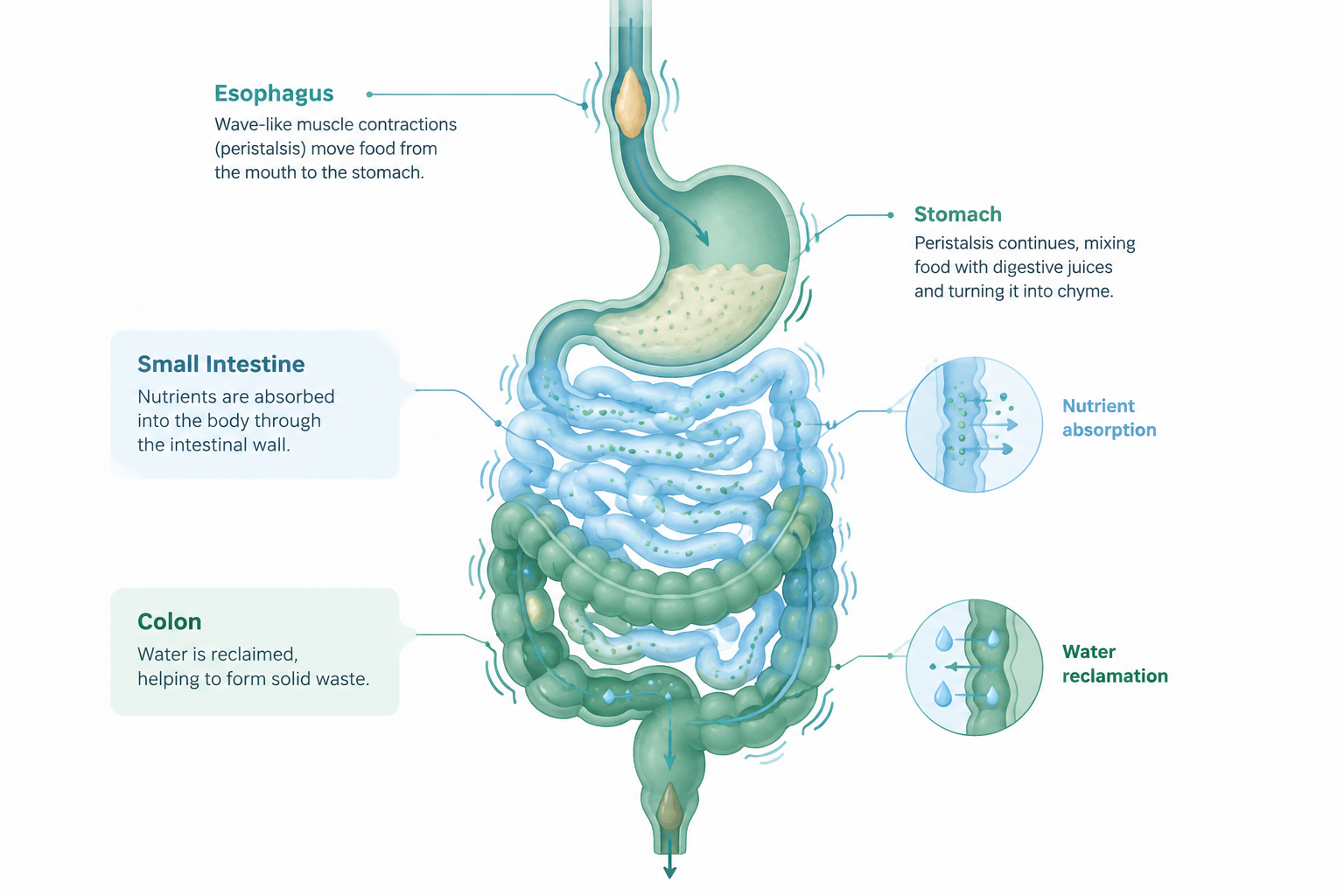
Beyond the gut barrier’s filtering role, food moves through your digestive tract by peristalsis, rhythmic, wave-like muscle contractions that propel food forward, even when you are lying down. Along the way, the colon absorbs remaining water, salts, and some minerals, and the rectum holds stool until elimination, the bowel movement that ends the trip.
Step by step, the stomach matters because it releases partly digested food gradually rather than all at once. Your gut also alternates between meal-time activity and between-meal housekeeping. That rhythm helps explain why transit time, bowel movements, the gastrocolic reflex after eating, and the migrating motor complex between meals can affect bloating, urgency, constipation, or irregularity.
Transit Time
Bowel transit time is the time food needs to travel from your mouth to the toilet, including time in the stomach, small intestine, and colon. If you have wondered, “how long does digestion take,” the answer can shift with fiber, fluids, physical activity, medications, and stress. A faster or slower pattern is not always a concern, but a noticeable change may help explain constipation, loose stools, or urgency. Typical ranges and a simple at-home check can help you learn your own transit time.
Bowel Movements
A bowel movement is digestion’s final step, when your body passes waste it no longer needs. What is a normal bowel movement can vary widely in frequency, form, and color. Meals, fluid intake, stress, travel, and changes to your routine can all affect it, so one unusual day rarely tells you much.
A healthy bowel movement is best judged by your usual pattern and whether passing stool feels comfortable, rather than by a perfect schedule. Persistent changes or symptoms that interrupt daily life are worth noting because they can make conversations about food and symptoms more useful. The Bristol stool form scale, usual frequency patterns, and habit changes worth tracking are covered in what a normal bowel movement looks like.
The Gastrocolic Reflex
The gastrocolic reflex is a normal response that can create an urge to poop after eating, especially following breakfast. When a meal fills and stretches your stomach, nerves prompt the colon to contract and push existing stool forward. Food has not traveled through your entire digestive tract within minutes. Instead, the meal signals your colon to make room.
A larger or high-fat meal, a cold drink, or an IBS flare can make this response feel stronger. If the urge is frequent, urgent, or disruptive, it may help to know what an overactive response feels like and what can calm the gastrocolic reflex.
The Migrating Motor Complex
Between meals, your stomach and small intestine create a slow, repeating sweep called the migrating motor complex. This pattern helps move leftover food particles and bacteria toward the colon, where waste continues through the digestive tract. Eating pauses the pattern, so frequent grazing can reduce the time available for these between-meal contractions.
Stomach growling between meals often comes from this normal activity rather than a problem. If bloating or irregular bowel habits are a concern, notice whether ongoing snacking seems to line up with symptoms. The movement’s phases, the effect of grazing, and meal-spacing basics are covered in the migrating motor complex.
How Does Meal Timing Affect Digestion?

Meal timing and digestion are closely connected because your digestive system follows a daily rhythm. Stomach acid and digestive enzymes may begin preparing for expected meals, digestive hormones such as gastrin and cholecystokinin rise and fall with food, and intestinal movement, run largely by the enteric nervous system, changes over the course of the day.
During this daily rhythm, the small intestine, including the duodenum, jejunum, and ileum, works with the liver, gallbladder, and pancreas as nutrients move into the blood or lymph, according to Cleveland Clinic (source).
Long gaps between meals and late, heavy dinners may affect comfort, hunger, reflux, and sleep in different ways, and digestion on night shifts suffers from both. Research on meal timing suggests that eating close to bedtime is best limited when possible (source). Your routine can matter as much as the foods you choose.
Skipping Meals
Skipping meals and digestion can turn into an uncomfortable pattern. Your stomach continues making acid even when no food is present, which can leave some people with nausea, burning, or reflux, while long gaps between meals may also disrupt the gut’s usual movement, making gas and bloating more noticeable.
What happens when you skip meals can become clearer when hunger leads to a large, fast catch-up meal. A very full stomach can empty more slowly and make reflux more likely. Who may need to avoid skipped meals, and how meal timing can fit symptoms, medications, and daily needs, is covered in what skipping meals does to digestion.
Eating Late at Night
Late night eating and digestion can feel different because the stomach may empty more slowly overnight. A large meal close to bedtime can feel heavy, and lying down with a full stomach makes it easier for stomach acid to move into the esophagus, the tube that carries food to your stomach. This can contribute to reflux, disrupted sleep, or an uncomfortable heavy feeling the next morning.
When eating before bed cannot be avoided, a smaller meal and time upright afterward may help. Meal size and the gap before lying down decide how late-night eating affects digestion.
When Is a Digestive Change Worth Looking Into?
Although meal timing can affect comfort, most changes in digestion are short-lived. Gas after a rich meal, a single loose stool, or a skipped morning bowel movement can reflect food, fluids, activity, stress, or a temporary change in how quickly food moves through your digestive tract.
A change deserves a closer look when it continues, differs from your usual pattern, or gets in the way of daily life. Changes that warrant attention include:
- A bowel habit that remains noticeably different
- Blood in your stool
- Weight loss without a clear reason
- Pain that wakes you from sleep
- Trouble swallowing
These digestive symptoms can have many causes, from common digestive disorders such as irritable bowel syndrome (IBS), GERD, celiac disease, and inflammatory bowel disease to a simple change in routine, but they are signals not to brush aside. Sorting a passing upset from a pattern is the first step.
Match the change you notice to its guide so you can better understand what may be behind it.
Digestive System Basics FAQs
Common digestive system basics questions can help you connect symptoms, food choices, and everyday body changes to how your body processes food. These FAQs offer clear context for digestion and the habits that may affect your routine.
1. What Does the Gut Microbiome Do?
The gut microbiome, sometimes called gut flora, is a community of millions of microorganisms living mainly in your intestines. It helps break down food components your body cannot fully digest, supports normal stool formation, and interacts with your immune system, and although it can affect digestive health, it is not a diagnosis or cure for symptoms.
Your digestive system handles food intake, physical and chemical digestion, movement through the gastrointestinal tract, nutrient absorption, and waste removal. Most chemical digestion and absorption occur in the small intestine, including the duodenum, jejunum, and ileum, while the microbiome supports rather than replaces these organ functions, according to Cleveland Clinic.
2. Where Are Nutrients Absorbed?
Nutrient absorption occurs mainly in your small intestine, where the duodenum, jejunum, and ileum complete chemical digestion. Its several-meter length, folds, and finger-like villi create a large surface that moves sugars, amino acids, fatty acids, vitamins, and minerals across the intestinal wall. Most enter the bloodstream through tiny capillaries, while many fats first enter the lymphatic system. These nutrients help supply energy and support growth, maintenance, and cell repair.
3. What Causes Indigestion?
Indigestion is a catch-all term for upper-digestive discomfort, not a diagnosis. Bloating, gas, nausea, fullness, burning behind the breastbone, and upper-abdominal discomfort can follow rushed eating, large or rich meals, alcohol, or foods that trigger symptoms for you. Reflux occurs when stomach contents move back toward the esophagus, as NIDDK explains. Constipation and diarrhea describe bowel-habit changes, while recurring pain with those changes can occur with IBS. Frequent heartburn or acid reflux may be associated with GERD, but the cause requires clinical evaluation.
4. How Long Does Digestion Take?
Digestion does not follow one fixed timeline because stomach emptying, small-intestine movement, and colon transit are separate stages, and the colon usually takes the longest. The whole trip spans somewhere between a day and a few days for most people, and it shifts with the meal, your eating pattern, fiber, fluids, and activity. MedlinePlus explains the organs involved in the MedlinePlus digestive system overview (source), and the transit time page above covers the typical ranges.