


Bloating, gas, cramps, or loose stools after a latte or ice cream don't automatically mean you need to give up dairy. Lactose intolerance happens when the small intestine makes too little lactase, the enzyme that digests the natural sugar in milk, and many people can still tolerate certain foods or portions.
Symptoms often begin 30 minutes to two hours after consuming lactose, but IBS, celiac disease, a stomach infection, and milk allergy can look similar. A food-and-symptom record, a short structured lactose reduction, and, when needed, a hydrogen breath test can help separate a repeat dairy pattern from another cause.
Milk allergy involves an immune reaction to milk proteins and can cause hives, swelling, wheezing, or repeated vomiting. Finding the cause helps you avoid unnecessary restrictions while protecting calcium and vitamin D intake.
Lactose Intolerance Key Takeaways
- Lactose intolerance results from low lactase enzyme activity in the small intestine.
- Common symptoms include bloating, gas, cramps, nausea, loose stools, and diarrhea after lactose.
- Symptoms often start 30 minutes to two hours after consuming lactose.
- Primary lactase deficiency usually develops gradually after childhood, not suddenly overnight.
- Milk allergy is an immune reaction and may cause hives, swelling, wheezing, or faintness.
- A food diary, structured reduction, or hydrogen breath test can clarify the cause.
- Many people tolerate smaller dairy portions, lactose-free foods, or lactase enzyme supplements.
What Is Lactose Intolerance?
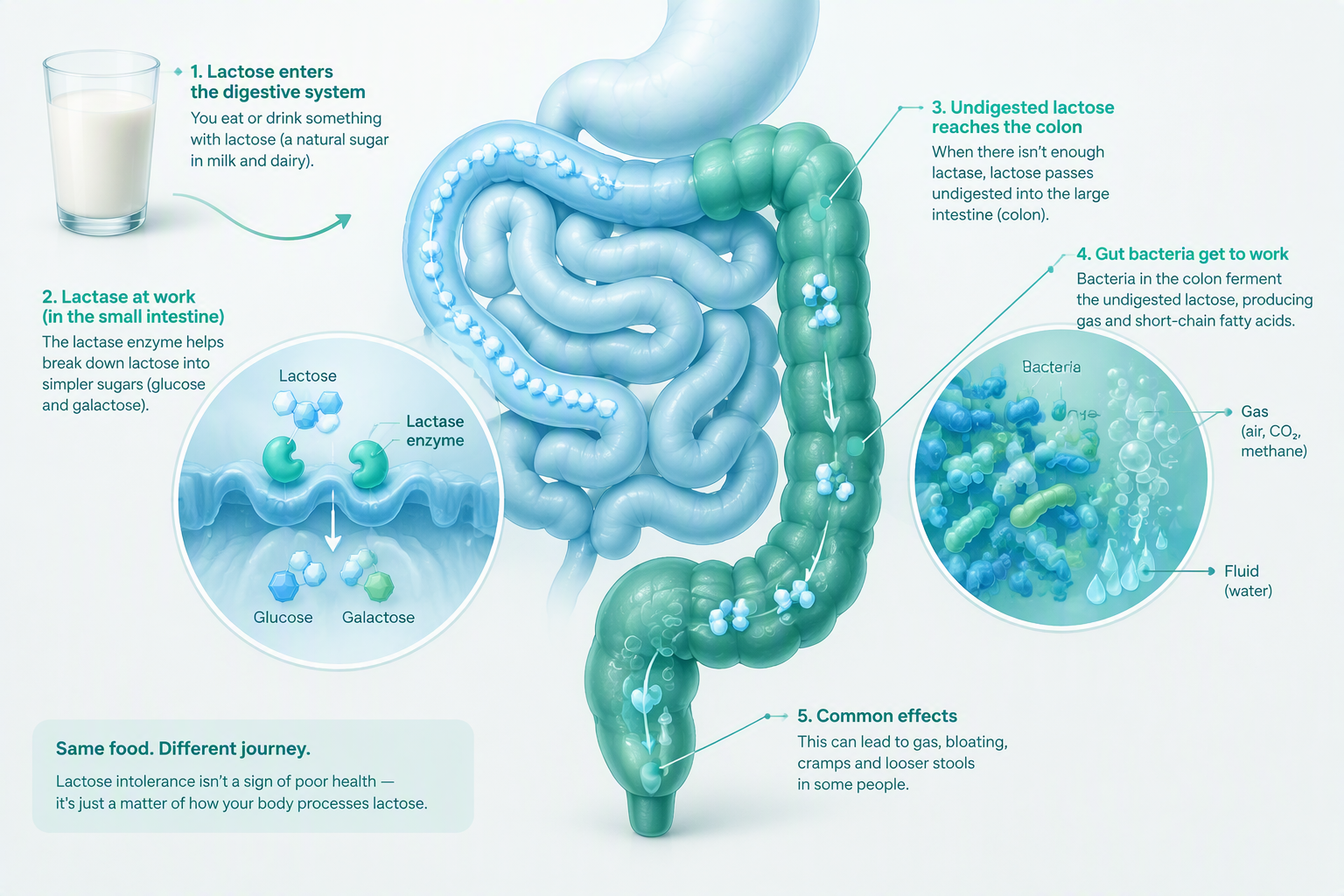
Lactose intolerance is a common, generally harmless digestive condition in which your body has trouble digesting lactose, the natural sugar in milk and dairy foods. It happens when the small intestine makes too little lactase enzyme for normal lactose digestion. The National Institute of Diabetes and Digestive and Kidney Diseases notes that this condition is manageable and distinct from a milk allergy (source).
During typical digestion, lactase splits lactose in milk into two simpler sugars, glucose and galactose. Those sugars can then pass through the intestinal lining and enter the bloodstream. When lactase levels are low, some or all of the lactose remains undigested, which is called lactose malabsorption.
After that undigested lactose reaches the colon, gut bacteria ferment it, producing gas, while the lactose also draws fluid into the bowel. That combination can cause:
- Extra gas: Fermentation may lead to bloating, pressure, or abdominal cramping.
- More fluid in the bowel: Water pulled into the colon can contribute to loose stools or diarrhea.
- Different reactions: The amount of lactose, the type of dairy food, and your personal tolerance can affect how you feel.
A full glass of milk may cause symptoms for one person, while a smaller serving of yogurt or cheese does not. Dairy is not inherently harmful, and lactose intolerance does not automatically mean you need to avoid every dairy food. Restricting all dairy without a clear reason can make meals harder and may exclude foods you tolerate well.
Bloating, abdominal discomfort, and bowel changes can also occur with other digestive conditions and their care. If dairy seems to trigger symptoms repeatedly, sharing the foods you ate, symptom timing, bowel changes, and sleep patterns with a healthcare professional can help clarify what is going on.
Why Can It Start in Adulthood?
When dairy symptoms emerge later in life, lactose intolerance in adults most often reflects a gradual drop in lactase, the enzyme that breaks down lactose. This common pattern, called primary lactase deficiency or lactase non-persistence, usually begins after childhood and may become noticeable in adolescence or adulthood when a meal contains more lactose than the remaining enzyme can handle.
Symptoms may seem to appear out of nowhere even though lactase production has been declining for years. That helps answer the question, can you suddenly become lactose intolerant: symptoms can feel sudden, but primary lactase deficiency usually develops gradually. It is not the same as a sudden milk allergy.
Family background can affect whether lactase production continues after childhood, so relatives may share similar experiences. Rates vary among population groups, but ancestry cannot diagnose lactose intolerance. Your symptom pattern and response to dairy offer more useful clues (source).
Secondary lactose intolerance can occur at any age when illness, surgery, or intestinal injury affects the small intestine. Common causes include:
- Gastroenteritis: An intestinal infection can temporarily disrupt the lining where lactase is made.
- Celiac disease or Crohn’s disease: These conditions can damage the small intestine and reduce lactase production.
- Inflammatory bowel disease, small intestinal bacterial overgrowth (SIBO), or surgery: Each may interfere with digestion and lower lactase activity.
Unlike primary lactase deficiency, secondary lactose intolerance may improve when the underlying condition is treated. New, severe, or worsening symptoms are worth discussing with a healthcare professional before restricting dairy long term.
Two early-life conditions rarely explain new symptoms in an otherwise healthy adult. Congenital lactase deficiency is a rare inherited condition present from birth, while developmental lactose intolerance can temporarily affect premature babies because lactase production increases late in pregnancy.
Lactose intolerance causes come down to lactase declining, either with age, after a gut infection, or with a disease of the small intestine.
When Do Symptoms Follow Dairy?

Whether lactase levels have declined gradually or after intestinal illness, lactose intolerance symptoms often follow foods or drinks containing lactose, but one upset stomach does not confirm lactose intolerance. A repeat pattern after milk, ice cream, or other foods with lactose in dairy products is more meaningful.
Common symptoms include:
- Bloating or a stretched, overly full feeling
- Excessive gas and stomach rumbling
- Lower abdominal cramps or pain
- Loose stools or diarrhea
- Nausea
Vomiting can occur, though it is less typical. These symptoms can disrupt your day, but they also overlap with stomach viruses, food poisoning, IBS, and other digestive concerns.
Discomfort often begins about 30 minutes to two hours after consuming lactose, although some people notice symptoms later within the next few hours. The NHS identifies this timing as a common feature of lactose intolerance (source). Rather than linking dairy to a single episode, watch for the same pattern on separate occasions.
The symptoms often occur together because lactose that is not fully digested reaches the colon. This process can cause gas and diarrhea together. Individual gut sensitivity affects how strongly you feel that pressure, so the same process may cause more intense bloating or abdominal cramps for one person than another.
Your response may also differ from meal to meal. A small serving might cause little discomfort, while a larger amount can bring on more noticeable symptoms. Lactase production, the amount eaten, and whether dairy is consumed alone or as part of a full meal can all affect the result.
A simple record can make patterns easier to spot:
- Food or drink: Include the dairy-containing item.
- Portion size: Note whether it was a small or large serving.
- Timing: Record when you ate and when symptoms began.
- Meal context: Include whether you ate the item alone or with a meal.
- Symptoms: Note digestive symptoms and bowel changes.
Information about what probiotics do for lactose digestion may help you prepare questions about digestive support. Persistent, severe, or unexplained symptoms warrant a conversation with a healthcare professional rather than self-diagnosis based on timing alone.
When the pattern stays unclear, the hydrogen breath test settles it.
When lactose intolerance symptoms occur depends on the dose and the meal, and symptoms of lactose intolerance are always digestive, never a rash or wheeze.
How Does It Differ From Milk Allergy or IBS?

Because dairy-related symptoms can overlap with other digestive concerns, lactose intolerance vs milk allergy differs by the body system involved. Lactose intolerance develops when the small intestine produces too little lactase, the enzyme that digests lactose, the natural sugar in milk. A milk allergy is an immune-system reaction to milk proteins, not trouble digesting sugar.
Even a small amount of dairy can trigger a milk allergy, with symptoms that may extend beyond digestion:
- Hives, itching, or swelling of the lips, face, or throat
- Wheezing, trouble breathing, or chest tightness
- Repeated vomiting, faintness, or marked weakness
Allergy-type reactions need prompt medical care rather than a home dairy-elimination trial.
Lactose intolerance more often causes bloating, gas, cramping, loose stools, and sometimes nausea after lactose-containing foods. Symptoms can shift with the amount eaten, your personal tolerance, meal size, and meal fat content. One uncomfortable episode after pizza or ice cream does not confirm lactose maldigestion, since other ingredients may also upset your digestion.
IBS can cause abdominal pain, bloating, diarrhea, constipation, or alternating bowel habits. Foods, stress, travel, poor sleep, and routine changes can all play a part. IBS and lactose intolerance can occur together, but symptoms that reliably follow dairy are more suggestive of lactose maldigestion than symptoms arising across many meals and situations.
Celiac disease and lactose intolerance can be connected because damage to the small-intestinal lining may reduce lactase production, and gastroenteritis, Crohn's disease, intestinal infections, SIBO, and small-intestinal surgery can also lead to secondary lactose intolerance. If symptoms begin after an illness, tolerance may improve once the underlying cause is treated and the small intestine heals.
Timing alone cannot separate these conditions. Seek healthcare evaluation before making lasting dairy restrictions if symptoms occur without dairy, continue despite avoiding lactose, or include:
- Unintended weight loss
- Ongoing diarrhea, fever, or blood in the stool
- Symptoms that wake you from sleep
- Hives, swelling, wheezing, vomiting, or faintness after dairy
A record of meals, symptoms, bowel movements, and sleep can help make the pattern clearer during a healthcare visit.
Unintended weight loss is not part of lactose intolerance, so weight loss that lactose cannot explain points to a different problem.
Lactose intolerance versus milk allergy is the distinction that matters most, since one is uncomfortable and the other can be dangerous.
How Is Lactose Intolerance Evaluated?

Given the overlap with milk allergy, IBS, and other conditions, evaluation usually starts with your symptom pattern, rather than a lab test. A clinician may ask when bloating, gas, abdominal cramps, nausea, or diarrhea follow lactose in dairy products, which foods cause symptoms, and how much you ate. They may also review lactose-free options, medications, recent intestinal illness or digestive surgery, and your family and medical history, with an exam when appropriate. This review is part of how lactose intolerance is diagnosed.
For mild symptoms that clearly follow dairy, a brief food trial can add useful detail. Avoid lactose-containing foods for about two weeks while keeping other meals consistent and tracking symptoms, then gradually reintroduce a usual lactose-containing food. Testing your dairy tolerance at home works best when you note meals, bowel movements, sleep, and symptoms instead of relying on memory.
Improvement during avoidance followed by returning symptoms can suggest lactose is a trigger, but it does not confirm lactose intolerance or mean you need to avoid dairy long term. Testing may help when the pattern remains unclear:
- Hydrogen breath test: After drinking a lactose-containing beverage, you provide breath samples over time. Higher hydrogen can mean lactose was not absorbed in the small intestine and was fermented by colon bacteria. Preparation and other digestive conditions can affect results.
- Lactose tolerance blood test: Blood glucose is measured after a lactose drink. A small rise may suggest poor lactose digestion.
- Stool acidity test: This detects acids from lactose fermentation and is used mainly for infants and young children.
Test selection depends on age, symptoms, and whether a dietary trial or breath test has already answered the question. Persistent, severe, new, or unexplained symptoms, especially those occurring without dairy, need evaluation for other causes. Blood in stool, fever, dehydration, and weight loss need prompt medical attention. Milk allergy, IBS, celiac disease, inflammatory bowel disease, infection, and temporary low lactase enzyme activity after an intestinal illness can resemble lactose intolerance.
Once the diagnosis is settled, management comes down to eating with less lactose and, when a dairy meal is unavoidable, lactase enzyme supplements.
A lactose tolerance test measures blood sugar after a lactose drink, while the hydrogen breath test for lactose intolerance is the more common choice.
How Can You Manage Dairy Symptoms?

Lactose intolerance does not reverse by prompting your body to make more lactase, but you can often manage symptoms without removing every dairy food. The aim is to identify portions, timing, and foods that keep eating comfortable while supporting adequate nutrition.
Before making major changes, use the diary to guide one change at a time. Recording details can turn a vague pattern into useful information for a healthcare visit, especially when symptoms happen during busy workdays or family meals.
Helpful diary details include:
- Dairy exposure: The food or drink, approximate portion, and whether you had it alone or with a meal.
- Timing: When you ate and when bloating, gas, abdominal pain, nausea, or bowel changes started.
- Bowel movements: Stool frequency and form, using a Bristol Stool Chart if helpful.
- Other influences: Other foods, sleep, stress, illness, and any new medications or supplements.
A diary can support a clinician conversation, but it cannot identify the cause of persistent or severe symptoms on its own. Secondary lactose intolerance can develop after intestinal injury, including infection or inflammation, so a sudden change in dairy tolerance deserves attention.
A one-variable trial is usually more useful than cutting out all dairy at once. Start with one familiar dairy food in a smaller portion, preferably with a meal, and note the response. On another day, change only the portion or spread dairy across the day. Trying a new yogurt, an enzyme product, and several dietary changes at the same time makes it hard to identify the actual trigger.
eating with less lactose can include lactose-free milk, yogurt, and other dairy foods that provide dairy nutrients with little lactose. Some people also tolerate naturally lower-lactose options, including cheddar, Swiss, and Parmesan, along with fermented yogurt or kefir. Fermentation reduces lactose, although individual tolerance still varies.
lactase enzyme supplements may help when symptoms reliably follow lactose-containing foods or drinks. Use them according to the label and track the result. These products support lactose digestion, not unexplained diarrhea or symptoms that occur when lactose is absent.
If you reduce dairy, replace calcium and vitamin D with lactose-free dairy, fortified alternatives, or suitable foods chosen with a registered dietitian or clinician. Celiac disease and lactose intolerance can occur together, while IBS and milk allergy require different evaluation. For people asking what happens if you ignore lactose intolerance, ongoing discomfort is one concern, but symptoms that persist, begin suddenly after illness, or do not consistently follow dairy need medical evaluation rather than further restriction.
Lactose intolerance treatment is really lactose intolerance management. A lactose intolerance diet is built on low-lactose dairy products such as hard cheese and yogurt, lactose-free dairy products, calcium and vitamin D for lactose intolerance from fortified foods, and a lactase supplement for the meals you cannot plan.
Yogurt for lactose intolerance works because live cultures digest part of the lactose. A registered dietitian for lactose intolerance is worth one visit when cutting dairy starts to crowd out calcium.
When Might Symptoms Point Somewhere Else?
Symptoms without a reliable dairy connection may have a cause other than lactose intolerance. The pattern is less convincing when bloating, cramps, loose stools, or nausea occur just as often without dairy, change despite similar lactose intake, or remain after a short, structured reduction in lactose.
IBS, celiac disease, intestinal infections, and other digestive conditions can produce similar symptoms. With IBS, discomfort and bowel changes may relate to meal size, stress, or several food triggers rather than lactose alone. Symptom timing, the type of symptoms, and patterns across your usual diet offer more useful clues than self-diagnosis.
Secondary lactase deficiency should be considered when gastroenteritis, celiac disease, Crohn’s disease, or other intestinal conditions coincide with a change in tolerance.
Some symptoms call for timely clinical assessment instead of an extended dairy-elimination experiment:
- Unintentional weight loss: Weight loss that lactose cannot explain deserves attention, especially if your eating habits have not changed.
- Blood in stool, persistent vomiting, or fever: These symptoms are not typical of lactose intolerance.
- Severe or worsening abdominal pain: Pain that becomes more intense or disrupts daily activities needs more than food restriction.
- Dehydration, nighttime diarrhea, or ongoing diarrhea: These symptoms can interfere with daily life and may point to another cause.
These signs do not automatically mean a serious condition, but dietary restriction alone should not be the long-term response.
A clinician can review your symptom timeline, recent stomach illness, medications, family history, usual diet, and whether lactose-containing foods consistently precede symptoms. Evaluation may include the hydrogen breath test or assessment for another digestive condition. Clarifying the cause can protect your comfort and nutrition, since prolonged dairy avoidance can make calcium and vitamin D harder to obtain while the actual trigger remains untreated.
Irritable bowel syndrome and lactose intolerance overlap often. Crohn's disease and lactose intolerance travel together when the small intestine is inflamed, which is one form of secondary lactase deficiency.
Lactose Intolerance FAQs
These FAQs cover common lactose intolerance questions, from symptom patterns and testing to practical ways to discuss your concerns with a healthcare professional.
1. Can Lactose Intolerance Cause Constipation?
Constipation is not a typical sign of lactose intolerance. Lactose that is not fully digested more often causes bloating, abdominal cramps, gas, nausea, loose stools, or diarrhea after dairy, with occasional vomiting. Primary lactase deficiency and congenital lactase deficiency can lead to lactose malabsorption, but constipation may reflect an individual response or another bowel-pattern condition. Consider your full symptom pattern, and discuss persistent, new, or troubling constipation with a healthcare professional.
Common lactose intolerance symptoms are gas, bloating, cramps, and diarrhea, so constipation on its own is unusual.
Lactose intolerance stomach pain is cramping from gas and fluid, not a sharp or localized pain.
2. Is Lactose Intolerance Genetic?
Often, yes. Primary lactase deficiency, or lactase nonpersistence, is often inherited because genes affect whether lactase production drops after infancy. Symptoms can start in adolescence or adulthood, but family history does not prove that lactose in milk is causing your symptoms or rule out a milk allergy. Rare congenital lactase deficiency is present from birth, while premature babies may have a temporary deficiency. Intestinal illness or injury can also cause secondary lactose intolerance (source).
Lactase deficiency in adults is the inherited kind. Developmental lactase deficiency is the premature-infant kind, and it resolves on its own.
3. Does Lactose-Free Milk Contain Dairy?
Lactose-free cow’s milk is still dairy unless its label says otherwise: it comes from milk, contains milk proteins, and has added lactase to break down most lactose. It can help you get calcium, vitamin D, and protein with less lactose, but it is not suitable for a milk allergy (source).
Plant-based beverages such as soy, almond, oat, coconut, and rice contain no milk lactose. Check the product name and ingredient label, then compare calcium and vitamin D fortification and protein per serving, because non-dairy options vary nutritionally.
Lactose-free dairy products are still dairy, so they are no help for a milk allergy.
4. Can Probiotics Help Lactose Intolerance?
Probiotics may ease lactose-related symptoms for some people, but they are not a reliable way to manage lactose intolerance. Benefits reported for some IBS products do not establish better lactose digestion, because effects differ by strain and product (source). More dependable options include smaller lactose portions, lactose-free dairy, or lactase tablets or drops taken immediately before or with lactose-containing foods or drinks. Discuss persistent symptoms or a probiotic supplement with a clinician.