


That 50-billion-CFU probiotic may look like the stronger choice, but the count alone can't tell you whether its probiotic strains fit IBS, constipation, or diarrhea. A strain is a distinct version of a microbe, identified by its genus, species, and code, such as Lactiplantibacillus plantarum 299v.
Two products can list the same species while containing different strains with different research records. Bifidobacterium longum 35624 has been studied in IBS, while Saccharomyces boulardii CNCM I-745 is considered separately for antibiotic-associated diarrhea because it is a yeast. Matching your digestive goal to the full label identifier, stated daily amount, expiration guarantee, and storage instructions keeps marketing claims in perspective.
Persistent or worsening symptoms, bleeding, fever, unintended weight loss, or severe pain need medical assessment rather than another supplement trial. People with weakened immunity, a central venous catheter, or serious medical treatment should speak with a healthcare professional before taking probiotics.
Probiotic Strains Key Takeaways
- Evidence for probiotic strains applies to the exact strain code, not an entire species or genus.
- Match the full genus, species, and strain code to research for your specific digestive goal.
- High CFU counts and multi-strain blends do not prove a product will help your symptoms.
- Bifidobacterium longum 35624 has IBS research, but its findings do not transfer to other Bifidobacterium strains.
- Saccharomyces boulardii CNCM I-745 is a yeast studied for antibiotic-associated diarrhea.
- Check strain amounts, serving size, expiration-date CFUs, and storage requirements before choosing a supplement.
- Seek medical care for severe, persistent, or worsening symptoms, bleeding, fever, dehydration, or unintended weight loss.
What Are Probiotic Strains?

Probiotic strains are live microorganisms, usually bacteria and sometimes yeasts, that may benefit health when consumed in adequate amounts. Not every fermented food or supplement is a probiotic for every digestive symptom. Potential probiotic benefits depend on the organism, the amount consumed, and evidence for the goal you have in mind, especially when symptoms involve irritable bowel syndrome (IBS).
A label’s full name follows a genus species and strain code format. In Lactobacillus acidophilus NCFM, Lactobacillus is the genus, acidophilus is the species, and NCFM is the strain code for one distinct variant. Some labels add a subspecies before the code. The complete designation, rather than the probiotic species alone, is what lets you compare a product with research.
Strain-level identification matters because findings do not transfer automatically among related microbes. Lactobacillus acidophilus NCFM, LA-14, and La5 have the same genus and species but are different specific probiotic strains, with their own properties and research records. A package that lists only Lactobacillus acidophilus does not provide enough detail to match it to a clinical study.
A useful label check includes:
- The full organism name: Look for the genus, species, and strain code, not only a broad category such as Lactobacillus.
- Evidence for your goal: A strain studied for antibiotic-associated diarrhea should not be assumed to help manage IBS symptoms.
- The stated amount: Even a researched strain must be present in an amount that matches the product’s intended use.
The broader probiotics overview covers the basics, but probiotic strain codes are what connect a package to relevant evidence.
Fermented foods can add variety and live microbes to your diet:
- Yogurt and kefir: These foods may contain live cultures, though the label may not name a studied strain.
- Sauerkraut, kimchi, and miso: Fermentation can introduce microbes, but the amount present when you eat them may not match a tested dose.
These foods are not automatically interchangeable with a strain-identified supplement. Taxonomy can also change over time. Lactiplantibacillus plantarum 299v may be labeled Lactobacillus plantarum 299v, yet 299v remains the key identifier. What probiotics are studied to do covers what studied strains are meant to do, while this page stays on how to identify them.
Digestive symptoms can have many causes, so persistent, severe, or worsening symptoms deserve evaluation by a qualified healthcare professional.
Which Probiotic Groups and Strains Matter?
With that strain-level focus, a probiotic group alone cannot tell you whether a product will help a specific digestive concern. Lactobacillus, Bifidobacterium, Bacillus, Streptococcus, and Saccharomyces are broad biological categories, not interchangeable answers for bloating, constipation, diarrhea, or IBS. Read the full genus, species, and strain code, much like a street address, because research on one organism does not automatically apply to its relatives.
The main probiotic groups differ in where they are commonly found and how they behave:
- Lactobacillus and renamed related genera: These lactic-acid-producing bacteria are often associated with the small intestine and vagina. Some Lactobacillus strains may limit certain unwanted microbes or support lactase activity, the enzyme that helps digest lactose. Genus names can change, so the strain number matters most. Lactiplantibacillus plantarum 299v, for example, may appear under an updated genus name, but that does not mean every Lactobacillus product suits bloating or lactose-related symptoms. Lactobacillus probiotics can help you recognize these naming changes.
- Bifidobacterium: The Bifidobacterium large intestine connection matters because these bacteria are especially common in the colon. They can process complex carbohydrates and fiber, and particular strains may affect bowel transit, gut-barrier function, or immune signaling. Bifidobacterium longum subsp. infantis 35624 has IBS research, while Bifidobacterium bifidum MIMBb75 is another strain-specific example. Bifidobacterium strains are not interchangeable simply because they share a genus.
- Bacillus: Bacillus coagulans and related organisms form spores, which are protective structures that can tolerate heat, stomach acid, and bile. That resilience may improve storage and survival through the stomach, but it does not establish symptom relief. MTCC 5856, DE111, and Unique IS2 MTCC 5260 are different strains with separate evidence records. The spore based probiotics guide explains this category in more detail. The bacillus coagulans guide focuses on its individual strains.
- Streptococcus: These probiotic species are more often associated with the mouth, throat, and upper digestive tract than with colon colonization. Streptococcus salivarius K12 and M18 are usually discussed for oral-health uses, so a Streptococcus label alone does not indicate a fit for bowel symptoms.
- Saccharomyces: This probiotic yeast is a beneficial yeast, not a bacterium. Saccharomyces boulardii CNCM I-745 is a yeast strain that is resistant to many antibiotics and has been studied for antibiotic-associated diarrhea and some infectious diarrhea, including Clostridioides difficile (source). It is distinct from Saccharomyces cerevisiae CNCM I-3856, so findings for one should not be applied to the other. The saccharomyces boulardii probiotic page covers the evidence and limits.
A complete strain identifier is more useful than a large organism count or a broad digestive-health claim.
Which Strains Match Your Digestive Goal?
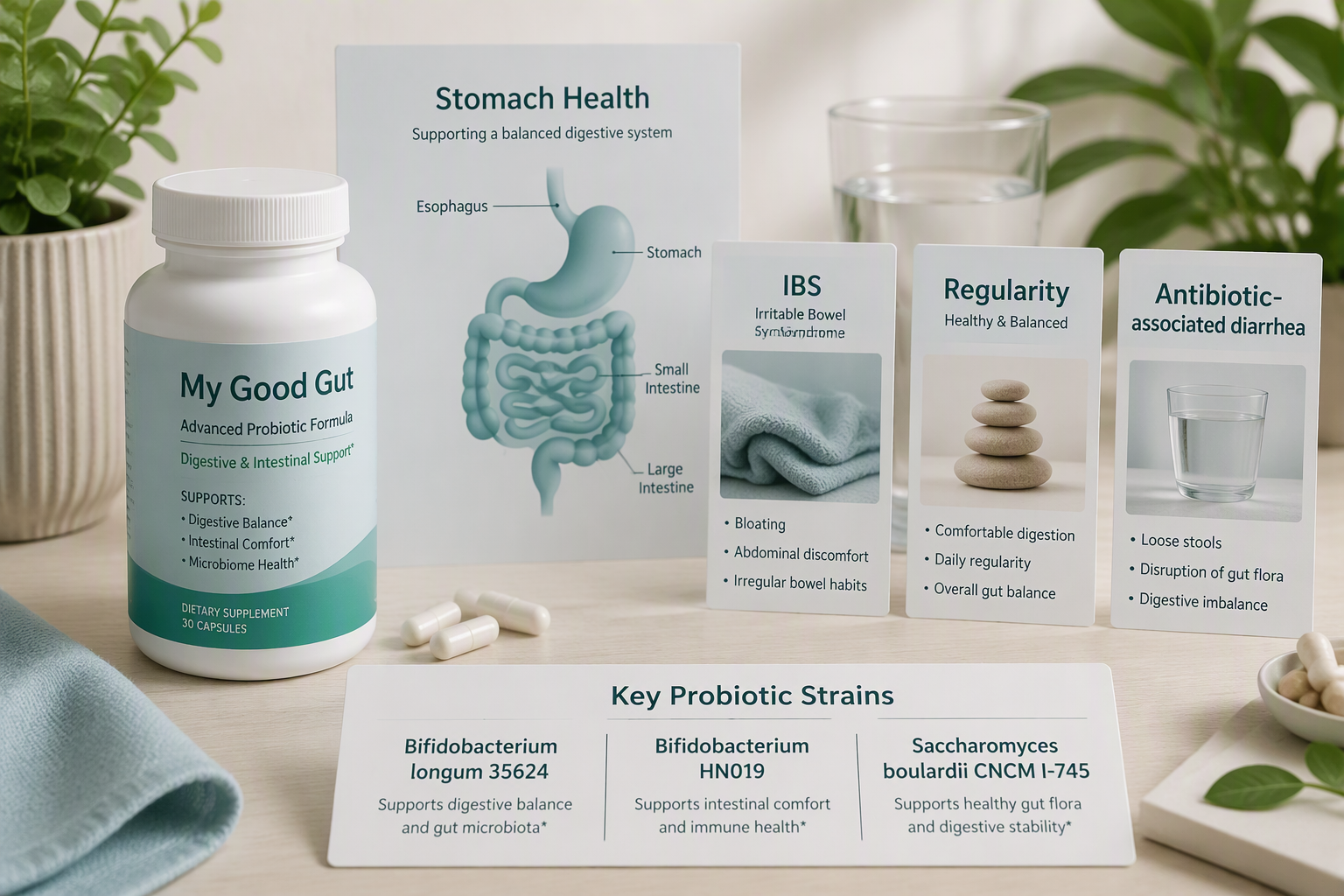
To apply that strain-level distinction to a product choice, start with your symptom or diagnosis, then compare the full genus, species, and strain code on the label with human research for that goal. Colony-forming units (CFUs) count live organisms, not the quality of the evidence. A larger CFU number, a longer ingredient list, or a familiar genus name does not make a product a better fit.
Use these routes when sorting through probiotics by digestive symptom:
- Diagnosed IBS: Named Bifidobacterium strains have been studied in people with IBS, but the results belong to the exact code, not the whole species. Bifidobacterium longum 35624, also labeled Bifidobacterium longum subsp. infantis 35624, is one example. The Bifidobacterium strains page weighs the IBS evidence strain by strain.
- Lactobacillus-related IBS evidence: Lactiplantibacillus plantarum 299v has IBS-specific research and may appear on older labels as Lactobacillus plantarum. The 299v code is the key identifier when the genus name changes. Lactobacillus rhamnosus GG is also its own strain, so its research does not apply to every L. rhamnosus product. The Lactobacillus probiotics page covers the relevant strain-level evidence.
- Antibiotic-associated diarrhea: Saccharomyces boulardii is a yeast, not a Lactobacillus or Bifidobacterium. Antibacterial antibiotics do not affect yeast in the same way they affect bacterial probiotics, which is why S. boulardii is considered separately during an antibiotic course. The saccharomyces boulardii probiotic page covers its uses and safety boundaries.
- Regularity and transit time: Bifidobacterium animalis subsp. lactis HN019 has been studied for stool frequency and transit time, making the Bifidobacterium strains page the relevant route when your aim is regular bowel movements. That research should not be treated as evidence for IBS pain, bloating, or diarrhea.
- Shelf stability or travel: Spore-based products and Bacillus coagulans may be worth examining when storage stability matters. The spore based probiotics guide and bacillus coagulans guide can help you assess those products. A spore form describes survival through storage and stomach acid, not whether the organism helps a particular symptom.
Specific probiotic strains are not interchangeable, including strains promoted for mood, stress resilience, or sleep through the gut-brain axis. Research in those areas remains limited and tied to the individual strain and dose.
Probiotic foods with live cultures can add variety, while a supplement still needs a studied strain code and dose.
Keep the label rule simple: the strain code must match the study and your digestive goal. Seek medical assessment instead of starting a supplement trial if symptoms are:
- New or severe
- Persistent or worsening
- Accompanied by bleeding, fever, or unintended weight loss
How Do You Read a Probiotic Strain Label?

After matching a strain to your digestive goal, a probiotic label can help you judge whether a product resembles one used in research, but only when it names the exact organism and dose. Broad claims such as “digestive support” or a species name alone are not enough. The meaningful match is the genus species and strain code, because results from one strain do not automatically apply to other probiotic strains in the same species.
For example, Lactobacillus acidophilus NCFM identifies one specific organism. As a complete label entry, Lactobacillus acidophilus NCFM is what you compare with research. A product labeled only “L. acidophilus” cannot be matched to research on NCFM. Genus names can change as taxonomy is updated, so probiotic strain codes such as 35624 and 299v are often the most reliable details for comparing products with studies.
These label checks help separate meaningful details from marketing:
- Full identifier: Look for the genus, species, and strain code for every organism, rather than a marketing phrase or species name alone.
- Transparent blend: Each strain should be named, with its amount listed separately. “10 strains” or a proprietary blend cannot show whether a studied strain is present at the researched dose.
- CFUs through expiration: Colony-forming units (CFUs) estimate live microorganisms per serving. Products may contain about 1 billion to more than 50 billion CFUs, but a larger total does not make a formula more relevant to bloating, constipation, or diarrhea.
- Serving size: Confirm whether the stated amount is for one capsule, one packet, or the full daily serving. Multi-capsule formulas can appear stronger on the front label than the amount in each capsule.
- Storage and expiration: Check whether refrigeration is needed and whether the CFU count is guaranteed through the expiration date, not only at manufacture. Heat, humidity, and frequent bottle opening can reduce viable cultures.
- Delivery design: Acid-resistant capsules, coatings, and protective matrices may help cultures survive stomach acid and reach the intestines. These features do not replace strain-specific evidence, a disclosed dose, or proper storage.
A practical comparison follows four steps:
- Start with your digestive goal and locate research on the exact strain, preferably in people with the relevant diagnosed condition rather than a general wellness population.
- Match the strain code and studied daily amount to the label, including the number of capsules or packets needed to reach that amount.
- Pick a format you can store correctly. A refrigerated product left in a hot car may not retain the live cultures listed on its label.
- Treat a high CFU number and a long strain list as secondary details. Neither establishes research relevance if individual strains or their amounts are undisclosed.
How to compare probiotic products can help you weigh label details alongside your symptoms, health history, and preferred format. Results vary by person, and any dietary or supplement advice should be individualized.
When Should You Avoid Probiotic Supplements?

Even with a label that matches research, probiotic supplements are not a good self-directed choice when symptoms could signal a serious condition or your health status raises infection risk. They may help some people with IBS, occasional constipation, gas, bloating, or mild digestive upset, but benefits depend on the specific strain, dose, and condition. Persistent, severe, or worsening symptoms need medical evaluation rather than a supplement trial that could delay diagnosis or treatment.
Talk with a healthcare professional before taking a probiotic if any of these apply:
- Weakened immunity: This includes a serious underlying illness or immune-suppressing medicines, including biologic drugs such as infliximab.
- Central venous catheter: Rare bloodstream infections involving supplemental bacteria or yeast can have more serious consequences when a catheter is present.
- Serious medical treatment: Extra caution is appropriate if you are hospitalized, critically ill, recovering from major surgery, or receiving intensive treatment.
Probiotics can interact with gut-associated lymphoid tissue, the immune tissue in your digestive tract that helps the body respond to pathogens. That possible role in immune function support does not make a supplement automatically safe for medically vulnerable people, especially at high doses.
Crohn’s disease and ulcerative colitis need individualized treatment, particularly during a flare or when bowel symptoms change. Although Lactobacillus rhamnosus GG has not shown benefit for Crohn’s disease, Escherichia coli Nissle 1917 and the original VSL#3 formulation showed only modest potential in mild-to-moderate ulcerative colitis. Studies of the original, pre-2016 formulation do not describe the VSL#3 product sold under that name later. This limited evidence does not support self-prescribing or replace gastroenterologist-led care.
Prompt medical care matters more than trying another strain when warning signs appear:
- Fever or blood in the stool: Either can point to infection or inflammation.
- Severe or escalating abdominal pain: Increasing pain is not an expected adjustment effect.
- Persistent vomiting or dehydration: Urgent assessment may be needed, especially if fluids will not stay down.
- Unexplained weight loss or a major new bowel-habit change: These symptoms need evaluation beyond routine digestive discomfort.
Short-term gas can occur, but it should not explain away warning signs. If you are otherwise healthy and have mild, familiar symptoms, a clinician or pharmacist can help you consider a time-limited, strain-specific trial. Check the label for the full strain code because evidence for one strain does not transfer to another product that lists the same species.
Probiotic Strains FAQs
These FAQs cover how to read probiotic strain labels, weigh digestive-health claims, and understand what evidence may or may not support for your symptoms.
1. Can You Take Multiple Probiotic Strains?
Yes, you can take multiple probiotic strains together, but more strains do not necessarily provide better digestive support. A blend makes sense only when its specific strain codes, including Bifidobacterium strains, and finished-product dose match your goal. Check the Supplement Facts panel instead of relying on a high CFU count or broad genus and species names. Consult a qualified healthcare professional before combining probiotics if you have a complex digestive condition, a weakened immune system, or take prescription medicines. Persistent, severe, or worsening symptoms need medical evaluation.
2. Do Probiotic Strains Survive Stomach Acid?
Reaching the intestine alive is not guaranteed. Survival varies by beneficial bacteria or beneficial yeast, the exact strain, live count, dose, timing, and formulation. Capsules, powders, and protective matrices may help cultures pass through stomach acid, but they do not show that a product will help your symptoms or replace strain-specific evidence (source).
Spore-forming Bacillus, including Bacillus coagulans, may tolerate heat, acid, and bile better than non-spore-forming probiotics. Unique IS2 (MTCC 5260) has adult IBS trial evidence (source), but acid tolerance alone does not mean every Bacillus product will help.
3. Are Probiotic Strains Safe With Infliximab?
Do not assume a generally well-tolerated probiotic is suitable while you take infliximab. Because infliximab changes immune activity and IBD has condition-specific risks, ask your gastroenterologist before starting, changing, or taking a high-dose probiotic, especially if you have a weakened immune system, severe illness, or a central venous catheter.
Certain strains may help some people with IBS, occasional constipation, gas, or bloating, but that does not equal immune function support or justify self-treating IBD. Probiotics have not shown benefit for Crohn’s disease, and limited findings in mild-to-moderate ulcerative colitis do not replace prescribed treatment or specialist guidance.
4. Can Probiotic Strains Cause Temporary Gas?
Temporary gas, digestive upset, bloating, or bowel changes can occur when you start a probiotic, but not everyone has these symptoms, and they do not signal bloating relief. Effects and tolerability are strain-specific, so findings for one strain do not apply automatically to another, even within the same species.
Try only one new product at a time. Stop it and seek prompt medical advice for severe, persistent, worsening, or alarming symptoms, including significant abdominal pain, vomiting, fever, blood in the stool, dehydration, or unexplained weight loss.