


Prebiotics aren't a cure for bloating or IBS, but the right foods and portions can support regularity without asking your gut to handle too much at once. These nondigestible compounds feed selected gut microorganisms after reaching the colon, where fermentation produces short-chain fatty acids and gas.
That gas matters when garlic, onions, chicory root, or an inulin powder trigger cramping or urgency, even though they are often marketed as gut-healthy choices. Start instead with one small, consistent serving of oats, a slightly green banana, or cooked-and-cooled potato, then increase only when symptoms remain manageable. A food-and-symptom log can help connect discomfort with portion size, several fermentable foods, or another factor.
IBS calls for more caution, not a permanent ban on every prebiotic food. A review of 11 trials involving 729 people found no overall IBS symptom improvement, while inulin-type fructans increased flatulence. A short-term low-FODMAP process with reintroduction and personalization can help identify foods and portions that fit your routine.
Prebiotics and IBS Key Takeaways
- Prebiotics are nondigestible compounds that feed selected gut microorganisms in the colon.
- Fermentation produces short-chain fatty acids but can also cause gas and bloating.
- Prebiotics differ from probiotics, which are live microorganisms consumed in foods or supplements.
- Start with small portions of oats, slightly green bananas, or cooked-and-cooled potatoes.
- Add only one new prebiotic food at a time and increase gradually.
- Garlic, onions, chicory root, inulin, and FOS may worsen IBS symptoms.
- Persistent, severe, or worsening digestive symptoms warrant care from a qualified healthcare professional.
What Are Prebiotics and How Do They Work?
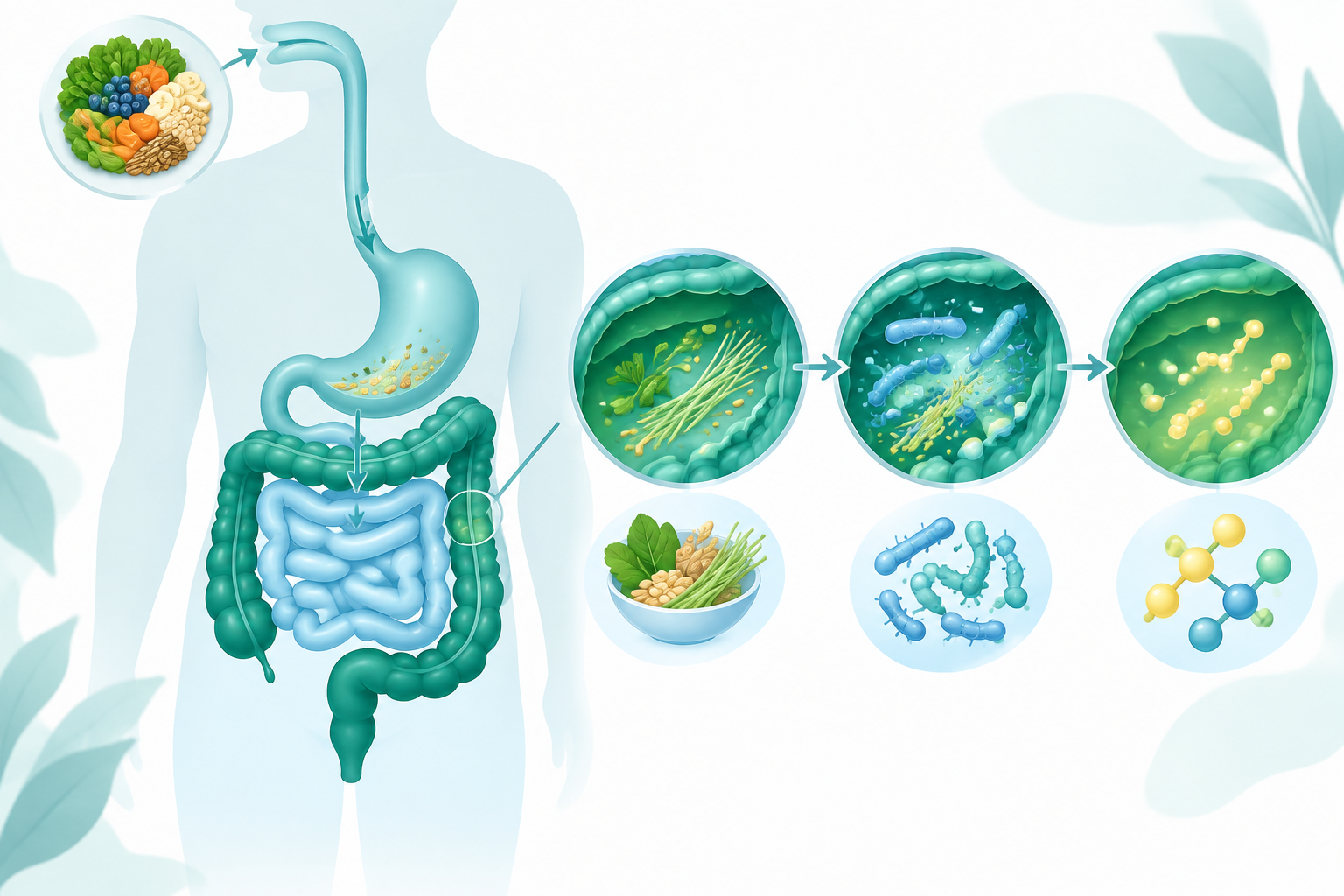
Prebiotics are nondigestible compounds in food that are selectively used by certain gut microorganisms and linked to a health benefit. They include specific plant fibers and complex carbohydrates, but not every dietary fiber qualifies as a prebiotic. The International Scientific Association for Probiotics and Prebiotics (ISAPP) established this definition in its 2017 consensus statement (source). In contrast, probiotic bacteria and yeasts are live microorganisms that you consume.
Unlike sugars and many starches, these nondigestible food fibers resist digestion in the stomach and small intestine. They arrive largely intact in the colon, which contains the densest community of gut microorganisms.
Common prebiotic compounds include:
- Inulin and fructooligosaccharides (FOS): Fructose-based carbohydrates found in plant foods.
- Galactooligosaccharides (GOS): Carbohydrates that can be made from lactose and added to some foods and supplements.
- Resistant starch: Starch that escapes small-intestine digestion and reaches the colon.
- Pectin and beta-glucan: Fibers with possible prebiotic effects, though the evidence is less specific than for inulin, FOS, and GOS.
In the colon, resident microorganisms ferment prebiotics for energy, a selective process that may support the activity or growth of particular beneficial gut bacteria rather than raising every type of bacteria equally. Your microbial response and digestive comfort can differ from someone else's, which is why gut health advice is rarely one-size-fits-all.
Fermentation creates short-chain fatty acids, including acetate, propionate, and butyrate. Prebiotics are fermented in the colon, and the short-chain fatty acids they produce can help nourish colon cells and support the intestinal barrier and mucus layer (source). Claims that prebiotics prevent or treat specific conditions are less certain.
Fermentation also produces gas. A rapid increase in fermentable fiber may bring bloating, cramping, or bowel-habit changes, especially if you have irritable bowel syndrome (IBS). This response does not mean prebiotics are harmful, but it does mean that food choice and portion size matter. The food examples ahead focus on options you may tolerate, and a gradual introduction can help you find a comfortable amount.
How Do Prebiotics Differ From Probiotics?
Prebiotics are fermentable fibers and related compounds that feed beneficial microorganisms already living in your gut. Probiotics are live microorganisms, usually bacteria or yeasts, that you consume in foods or supplements. Put simply, prebiotics provide fuel, while probiotics add microbes. Neither option works as a universal fix for bloating, constipation, or other digestive symptoms.
Common food examples make the distinction clearer:
- Oatmeal: Contains fermentable fiber that can serve as a prebiotic.
- Yogurt: Can provide probiotics when its label says it contains live and active cultures. Heat processing can remove those cultures, so check the package. Probiotic fermented foods that supply live cultures include additional food-based options.
- Sauerkraut and kefir: May contain live microorganisms, although the cultures vary by product and how it was prepared.
A synbiotic combines a prebiotic with a probiotic in one food, meal, or supplement. Oatmeal topped with live-culture yogurt is an easy example: the oatmeal supplies fermentable fiber, and the yogurt contributes live microbes. That pairing illustrates the concept, but it does not predict a particular symptom change.
Supplement labels can make the categories seem less clear. Prebiotics may be listed as fibers or related compounds, while probiotic products should identify the live microorganisms they contain. For a fuller category-by-category guide, how probiotics compare with prebiotics and other supplements provides the relevant distinctions.
Which Prebiotic Foods Should You Try First?
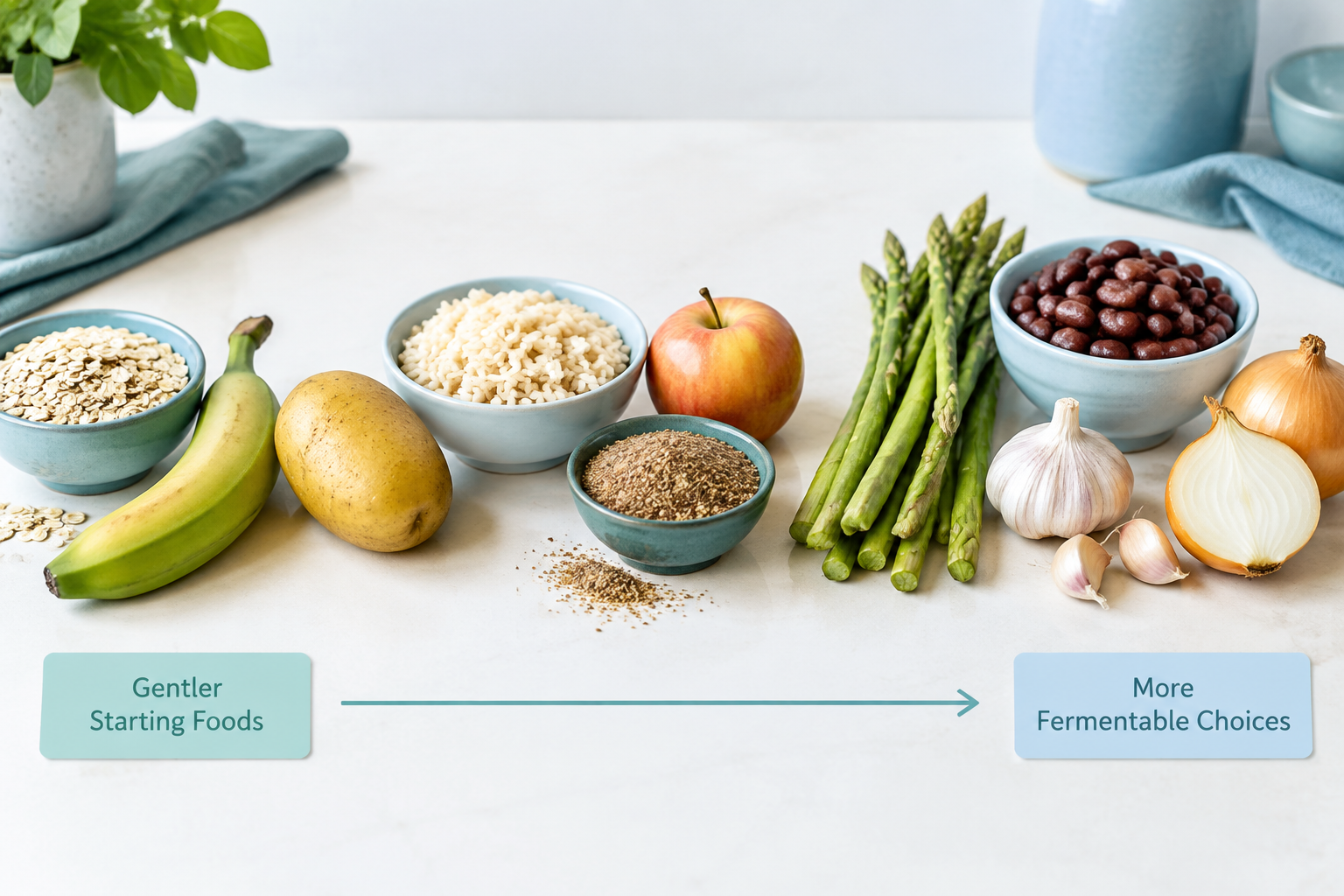
With the distinction between prebiotics and probiotics in mind, most people can start with prebiotic foods already in their meals instead of a supplement. Add only one or two new sources of prebiotic fiber at a time rather than sharply increasing fiber all at once.
Prebiotic compounds occur across many everyday plant foods, and one food can contain more than one type:
- Inulin and fructooligosaccharides (FOS): Garlic, onions, leeks, asparagus, chicory root, and Jerusalem artichokes are common sources. Chicory root is especially fermentable for some people.
- Galactooligosaccharides (GOS): Lentils, chickpeas, and beans provide GOS along with other fibers.
- Resistant starch: Slightly green bananas, oats, and cooked-then-cooled potatoes or rice contain resistant starch. Underripe bananas tend to contain more of it than fully ripe bananas.
- Beta-glucan: Oats and barley supply this type of soluble fiber.
- Pectin: Apples eaten with their skin and berries are useful pectin sources.
If bloating, gas, or irritable bowel syndrome (IBS) is a concern, begin with foods that are often less fermentable. Keeping the rest of the meal familiar makes it easier to notice whether a new food changes your symptoms.
A practical starting shortlist includes:
- Oats
- A slightly green banana
- Cooked-then-cooled potato or rice
- A small apple
- Ground flaxseed
Garlic, onions, chicory root, and Jerusalem artichokes are among the more fermentable choices, so they usually make more sense later and in small amounts for people with IBS. These foods can cause extra gas or discomfort even when they are well tolerated by someone else.
Changing one food at a time helps you identify your own tolerance pattern. The prebiotic foods guide linked above covers each food group, serving sizes, and My Good Gut's food-and-fiber chart values without turning every higher-fiber meal into a digestive experiment.
What Benefits Can Prebiotics Realistically Offer?
After choosing foods you can tolerate, prebiotics may support gut health through normal microbial fermentation, but they are not quick fixes or guaranteed treatments for digestive symptoms. They feed beneficial gut bacteria, and the same process that supports a healthy gut microbiome can cause gas or bloating for some people with IBS.
The evidence fits into three broad tiers:
- Established mechanism: Gut microbes ferment certain prebiotic fibers into short-chain fatty acids, including acetate, propionate, and butyrate. Butyrate fuels cells lining the colon and helps support the mucus layer and gut barrier, which limits the passage of unwanted substances into the bloodstream. If your usual fiber intake is low, fermentable fiber may also lead to softer, more regular stools. With IBS, however, increased fermentation can worsen bloating or gas.
- Promising but variable effects: Fermentation can lower colonic pH, which may improve calcium and magnesium absorption. A 2007 review concluded that the effect depends on the amount and type of prebiotic, on age, and on calcium intake, and that human results are less consistent than animal findings (source). Researchers are also studying changes in gut microbial diversity, immune activity, inflammation markers, and harmful microbes, but improved lab markers do not reliably lead to fewer infections or less discomfort.
- Emerging effects: Prebiotic-related microbial activity may affect appetite, fullness, blood sugar, insulin sensitivity, and body weight. Average effects in trials have been small and depend on the fiber, dose, and people studied. Prebiotics for weight loss covers those findings in detail.
One food or fiber cannot define your microbiome or predict your response. If prebiotic foods make symptoms worse, a smaller serving or different fiber source may be easier to tolerate than pushing through discomfort.
Prebiotic benefits separates stronger evidence from early or mixed findings. Digestive symptoms can have many causes, so consult a qualified healthcare professional for persistent, severe, or worsening symptoms. Results vary by person, and dietary or supplement choices should be individualized.
How Can You Add Prebiotics Without Triggering Symptoms?

To pursue those potential benefits without worsening discomfort, keep each food trial consistent. Avoid changing several meals or starting a supplement during the same trial, since that makes it hard to connect gas, bloating, cramping, or bowel-habit changes to one likely cause. This slower pace also gives a sensitive digestive system, especially one used to a low-fiber diet, time to adjust.
Begin with about one-quarter of a usual serving and increase it gradually over several days if symptoms stay mild. A slower increase can make prebiotic fiber easier to tolerate, especially for people with sensitive digestion (source). Portion size matters more than a universal dietary fiber goal because foods contain very different amounts. My Good Gut's food-and-fiber chart lists 2.8 grams of total fiber in one-half cup of cooked asparagus and 6.1 grams in one-half cup of cooked black beans, so those foods are not interchangeable starting portions.
A gradual trial can follow these steps:
- Choose one food, such as asparagus, beans, oats, or cooked-and-cooled potato, and start with about a quarter of a usual serving.
- Prepare that food the same way during the trial.
- Hold the quarter-serving amount steady for several days before increasing it.
- Move up only when symptoms are manageable, and stop at the last amount you tolerated comfortably.
Garlic and onions may be tougher starting choices if you have IBS. They contain fructooligosaccharides, also called FOS, which gut bacteria ferment readily. That process is part of how prebiotic fiber works, but it can also create more gas. Soluble fiber is often easier to tolerate initially than large amounts of insoluble fiber, though your own response is what matters most.
Regular fluids are especially helpful as you increase dietary fiber, particularly when you are aiming for softer, more regular stools. Fibers such as inulin may help with constipation, but increasing them too fast can cause bloating, cramps, loose stools, or urgency. Prebiotic-rich foods can also worsen symptoms for some people with diarrhea-predominant IBS.
A simple food-and-symptom log can help identify patterns:
- Food and portion: Record the food, amount, and meal time.
- Fluids: Note what you drink with meals and between them.
- Symptoms: Track later gas, bloating, pain, stool frequency and consistency, and urgency.
- Other factors: Include large meals, stress, and several fermentable foods eaten together.
If symptoms become uncomfortable, return to the last tolerated portion or pause briefly before retrying a smaller amount. Do not add another high-fiber food during that adjustment period. A difficult response to one food does not mean that every prebiotic food will cause the same problem.
Brief, mild gas or bloating often settles when increases are slower. Seek care from a qualified healthcare professional for:
- Severe pain
- Persistent or worsening diarrhea or constipation
- Vomiting
- Rectal bleeding
- Unexplained weight loss
- Symptoms that disrupt daily life
Repeated fiber intolerance may call for a personalized plan.
What Should You Know About IBS and Low-FODMAP Diets?
If your symptoms follow an IBS pattern, prebiotic foods can aggravate them when they contain FODMAPs, fermentable carbohydrates that pull water into the bowel and are rapidly fermented by gut bacteria. This can lead to gas, bloating, pain, urgency, or loose stools, even though the food may support gut health and be well tolerated by other people.
Garlic and onions are common examples because their fructans are a type of prebiotic fiber. Larger supplemental doses or a quick jump in dietary fiber can also cause temporary cramps, diarrhea, or gas, particularly if your usual diet is low in fiber. A gradual introduction is often easier on the digestive system.
Prebiotics are not a universal IBS treatment. A 2019 systematic review and meta-analysis of 11 randomized trials involving 729 people with IBS and other functional bowel disorders found no overall improvement in symptoms or quality of life. Inulin-type fructans increased flatulence, while non-inulin prebiotics at doses of 6 grams daily or less slightly improved flatulence (source). Still, prebiotic-rich foods may help some people with constipation have more regular bowel movements, so your recurring symptom pattern matters more than a blanket rule.
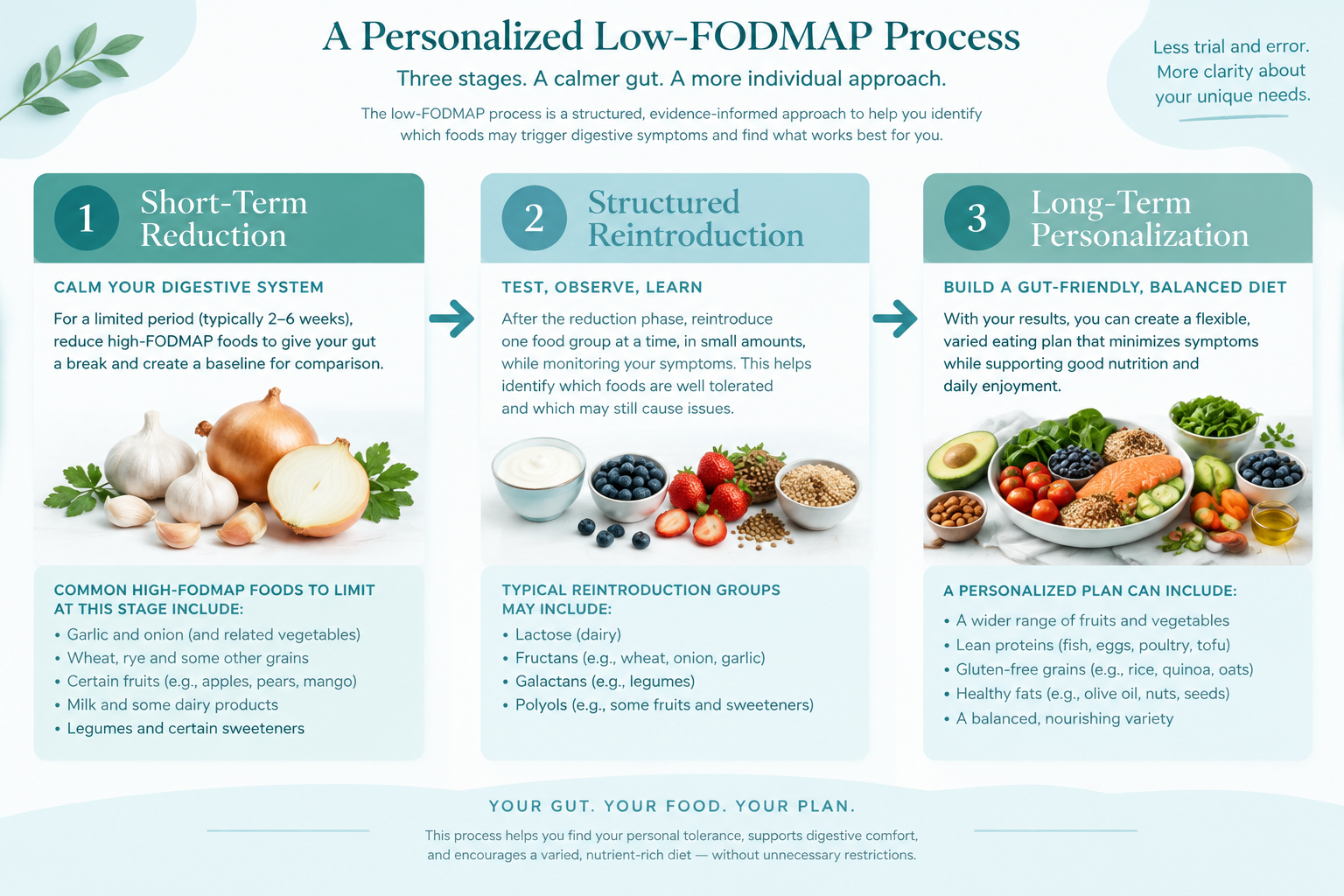
A low-FODMAP diet can help identify the FODMAP groups and portion sizes that trigger your symptoms, but it is meant to be a short-term, structured process rather than a permanent low-fiber diet. Its three phases are:
- Short-term reduction: High-FODMAP foods are limited for a defined period.
- Reintroduction: Individual FODMAP groups are brought back to identify personal tolerance.
- Personalization: Tolerated foods and portions return to regular meals.
Reintroduction protects food variety and helps prevent unnecessary long-term restriction, according to Monash University (source). The American College of Gastroenterology supports a limited low-FODMAP trial for overall IBS symptoms (source).
A registered dietitian can be especially helpful if symptoms are frequent, triggers remain unclear, food restriction feels overwhelming, or you are considering a full elimination phase. For readers weighing probiotics instead of, or alongside, prebiotic foods, probiotics for bloating, constipation, and diarrhea offers condition-specific guidance.
A qualified healthcare professional can help tailor an IBS plan.
When Might a Prebiotic Supplement Make Sense?
Prebiotic supplements are not automatically necessary. Plant foods supply prebiotic fibers alongside vitamins, minerals, and a mix of fiber types that a single powder cannot provide.
A concentrated fiber product may be useful when tolerable plant foods are hard to eat regularly because of:
- Limited appetite or food variety: Symptoms or other health concerns may make larger meals difficult.
- Food access or dietary restrictions: Budget, availability, allergies, or a restrictive diet can reduce your options.
- Persistently low fiber intake: A supplement can serve as a practical bridge when food changes have not been manageable.
Supplement labels often contain isolated fermentable fibers, including:
- Inulin or chicory-root fiber: These can ferment quickly and may trigger gas or bloating.
- Fructo-oligosaccharides and galacto-oligosaccharides: Also called FOS and GOS, these fibers may cause symptoms quickly in sensitive people.
- Resistant starch: This starch reaches the large intestine without being fully digested.
- Partially hydrolyzed guar gum (PHGG) and acacia: These soluble fibers may be easier for some people to tolerate.
A measured scoop can deliver far more fermentable material at once than a meal. With IBS or fructan sensitivity, PHGG, psyllium, or methylcellulose is usually a more forgiving starting point than an inulin or FOS powder. People who react to garlic, onions, or other high-FODMAP foods may need individualized guidance from a registered dietitian.
Prebiotic supplements compares fiber types, labels, and cautious trial approaches. Synbiotic products also contain live cultures, and added sweeteners or multiple ingredients can make a reaction difficult to interpret. How to evaluate a probiotic product can help you assess the strain, fiber, and added ingredients together.
A cautious trial may fit mild, stable symptoms. A clinician or registered dietitian can help tailor a fiber trial.
Prebiotics FAQs
These FAQs cover common questions about prebiotics, including food sources, digestive symptoms, and whether gradual changes may suit your routine. The answers offer practical context without suggesting that one approach fits everyone.
1. Do Prebiotics Cause Gas?
Yes. Prebiotics can cause temporary gas, bloating, or mild cramping, especially if you have IBS or increase fiber quickly. Gut bacteria ferment these fibers, creating gas along with short-chain fatty acids, including acetate, propionate, and butyrate. This response does not mean prebiotic foods are harmful.
Start with a small serving of one prebiotic food and increase gradually as tolerated. Large supplement doses may be harder to tolerate. Speak with a qualified healthcare professional if gas, pain, diarrhea, or bloating is persistent, severe, or worsening.
2. Can Children Take Prebiotics?
Most children can get prebiotic fiber from age-appropriate foods instead of supplements. Oats, barley, beans, lentils, chickpeas, green peas, bananas, and ground flaxseed can fit meals when portions suit your child's usual diet, chewing skills, and tolerance. A commonly used guide sets daily fiber at your child's age plus 5 grams, or about 11 grams for a 6-year-old (source). No separate target exists for prebiotic fiber.
Begin with about one-quarter of a usual serving and increase slowly to limit gas or bloating. Speak with a pediatrician or registered dietitian before major changes if your child has ongoing pain, constipation, diarrhea, poor growth, food restrictions, or a diagnosed digestive condition.
3. Do Antibiotics Affect Prebiotic Needs?
Antibiotics can temporarily alter your gut’s microbial mix, but that does not automatically create a need for a prebiotic supplement. Prebiotic fibers such as inulin reach the colon mostly undigested, where resident microorganisms ferment them. Recovery depends on the antibiotic, your usual diet, and your symptoms.
As tolerated, return to a varied, food-first pattern with plant foods. If you have IBS, add fermentable fibers gradually and scale back if gas, bloating, pain, or bowel changes worsen. Persistent, severe, or complicated symptoms after antibiotics need assessment from a qualified healthcare professional.
4. Can Prebiotics Help With Constipation?
Fermentable prebiotic fibers may support regular bowel movements by adding bulk and helping stool retain water. A 2024 meta-analysis found fructooligosaccharide supplements increased bowel-movement frequency and softened stools in functional constipation, though mild bloating was common (source). Fermentation may also improve calcium and magnesium absorption by lowering colonic pH, but symptoms should guide your intake.
Try one prebiotic food in a small portion, raise it gradually if tolerated, and drink more fluids as fiber increases, as NIDDK advises (source). Onions, leeks, asparagus, and chicory can worsen symptoms with sensitive digestion or diarrhea-predominant IBS. Seek qualified care for persistent, worsening, or concerning constipation.