


Eating out with IBS doesn't require avoiding restaurants or ordering the same plain meal every time. A smoother experience usually comes from checking the menu early, asking about hidden ingredients, choosing manageable portions, and keeping a simple backup plan. Your own symptom patterns matter more than a universal list of forbidden foods.
Garlic, onion, stocks, sauces, marinades, dairy, wheat, and sugar-free sweeteners can appear in dishes that sound straightforward. Ask whether these ingredients can be removed or served separately, and remember that a low FODMAP diet should identify personal triggers rather than create permanent restrictions. A food-and-symptom record or IBS tracking app can make familiar restaurant choices easier to recognize.
Portions, alcohol, stress, timing, and restroom access can affect symptoms even when the ingredients seem suitable. Planning where to sit, eating slowly, taking part of the meal home, and carrying a familiar snack can reduce pressure without turning dinner into a medical task. Persistent, severe, worsening, or unexplained symptoms need personalized advice from a qualified healthcare professional.
Eating Out With IBS Key Takeaways
- Check menus early and save two suitable orders plus one simple backup.
- Ask about garlic, onion, stocks, sauces, marinades, dairy, wheat, and sweeteners.
- Request sauces, dressings, and rich toppings separately whenever possible.
- Choose simple combinations with familiar protein, rice, potatoes, and tolerated vegetables.
- Eat regular meals, moderate portions, and slowly to reduce overeating-related symptoms.
- Consider alcohol, caffeine, carbonation, stress, timing, and restroom access when planning.
- Use enzymes only for specific suspected triggers and seek medical advice for concerning symptoms.
How Can You Plan Ahead For Eating Out With IBS?
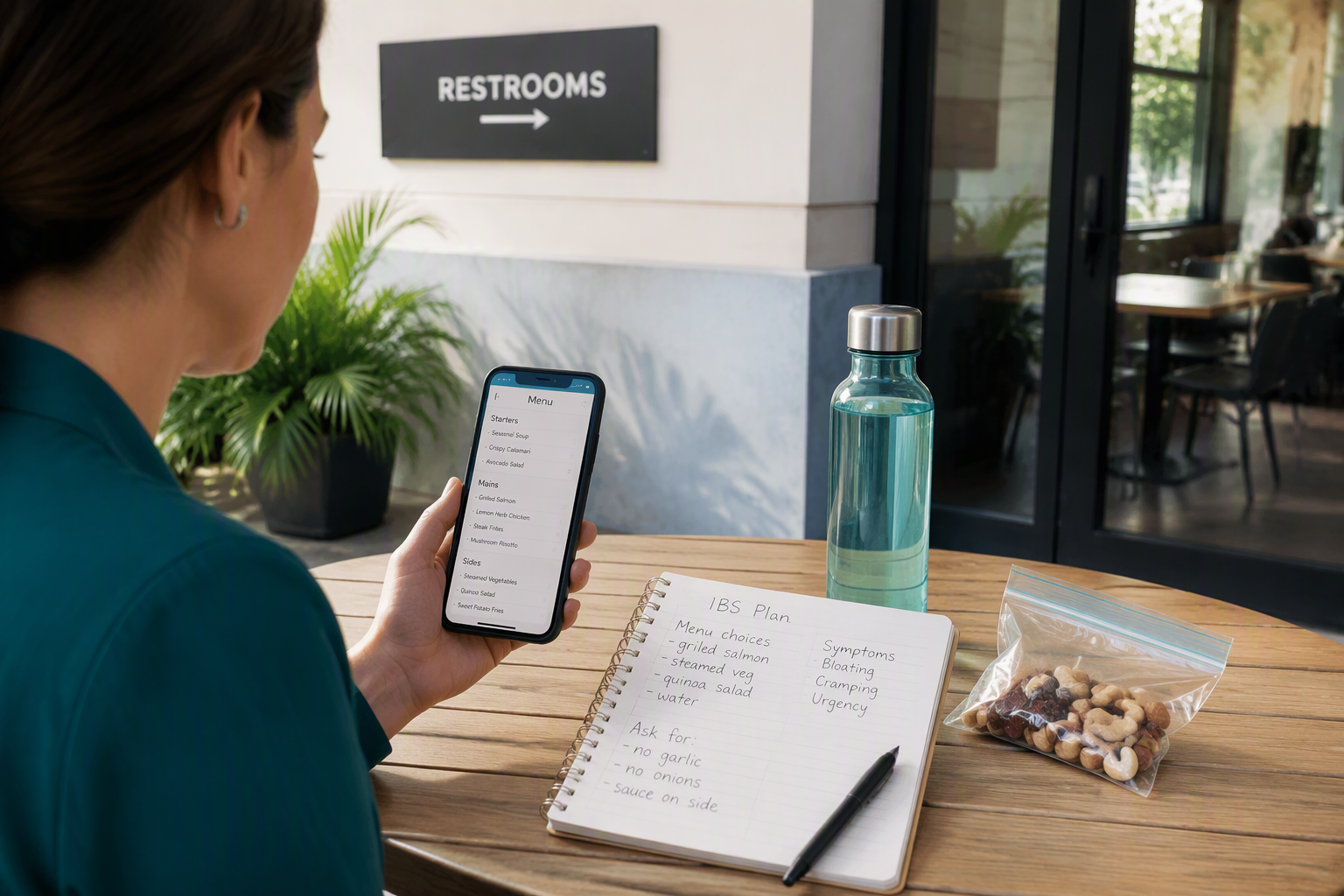
Planning ahead can make eating out with IBS more predictable, although it can’t guarantee symptom prevention. Restaurant menu planning starts before you leave:
- Check the restaurant’s current online menu for familiar ingredients and possible IBS triggers, such as onions, garlic, beans, creamy sauces, and marinades.
- Save two suitable orders and one simpler backup, such as grilled protein with a plain side.
- Review recent notes about ingredients, portions, drinks, timing, stress, and symptoms.
When menu details or substitutions aren’t clear, call a day or two ahead. Early contact helps with family meals, work events, and busy weekends. Specific requests usually work better than asking for a broad “IBS-safe” meal:
- Ask whether onions or garlic can be left out.
- Request sauce or dressing on the side.
- Check whether plain rice, potatoes, or vegetables are available.
- Ask whether a smaller portion is possible.
Your symptom history matters more than a universal restriction list. IBS food sensitivities vary, so a food that causes trouble for one person may be comfortable for another. If you’re considering a low FODMAP diet, which limits fermentable oligosaccharides, disaccharides, monosaccharides, and polyols, use individualized guidance instead of adding restrictions without a clear reason. Information about daily routines with IBS can also help with the social side of meals.
A dependable restaurant list can reduce uncertainty without making social plans feel restrictive. Favor places with understandable menus and staff who communicate clearly about ingredients and substitutions. For dining out with IBS, preview unfamiliar venues and decide ahead how much alcohol or how many other drinks fit your usual pattern.
Restaurant restroom planning belongs in the same preparation. Check whether restrooms are inside the venue, nearby, and easy to reach from your table. Consider the layout, especially if urgency or anxiety is part of your symptoms, and call ahead when access is unclear. A familiar location near accessible facilities may feel more manageable, while IBS and your partner offers context for handling shared meals. These steps make eating out when you have irritable bowel syndrome less dependent on luck.
How Do You Read Menus For Hidden FODMAP Ingredients?
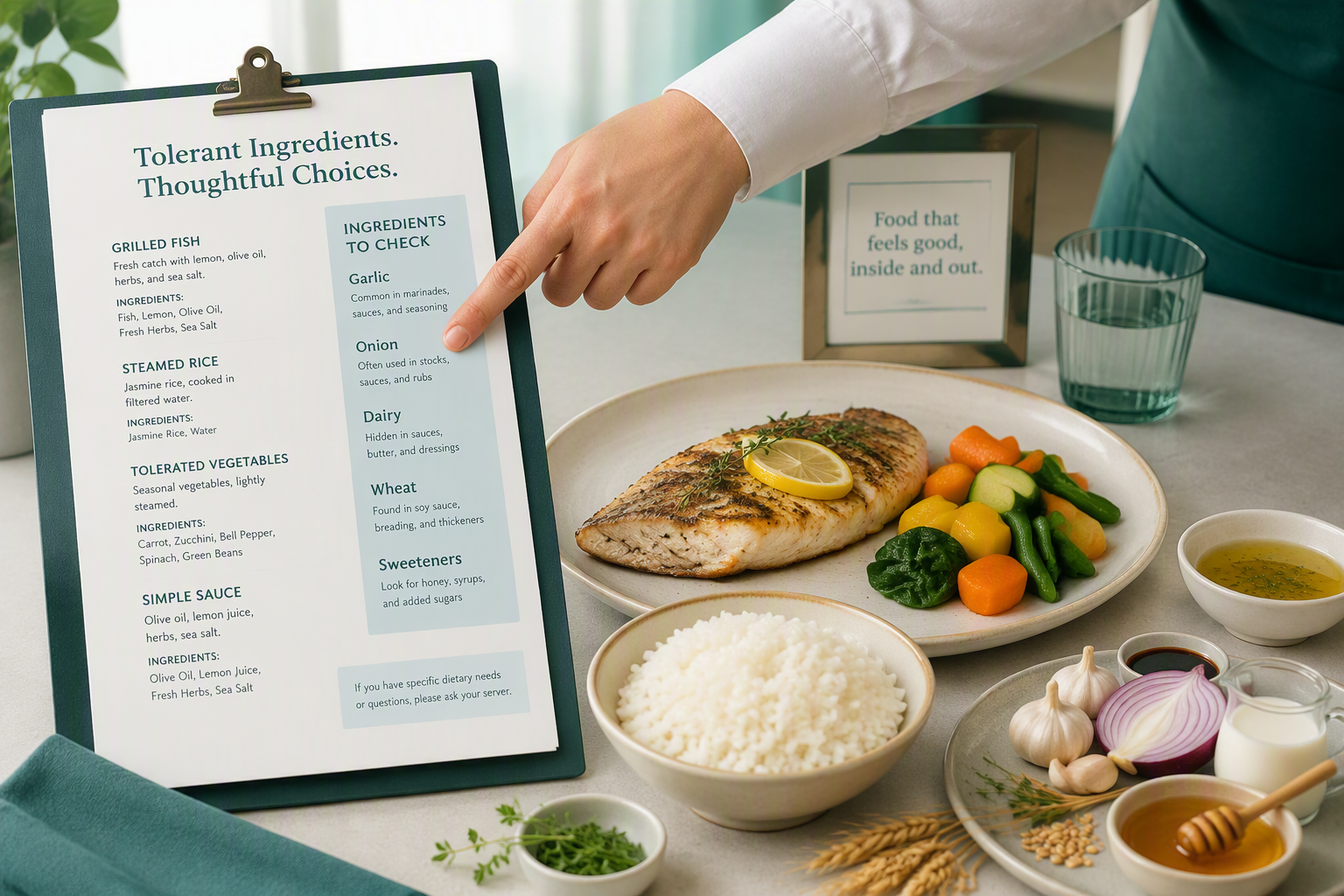
After planning ahead, start with the full dish description, then check how it’s prepared for hidden FODMAP ingredients. Garlic and onion are common FODMAP sources, and hidden garlic and onion can show up in sauces, dressings, soups, stocks, stews, marinades, gravies, and seasoning blends. Knowing which foods are high in FODMAPs before you arrive makes a menu much faster to read.
Words such as “aromatic,” “seasoned,” and “house-made” don’t identify the ingredients clearly. Use them as prompts for what to ask restaurant servers:
- Preparation: Does the dish contain garlic, onion, or stock made with either ingredient?
- Separate components: Are the sauce, dressing, marinade, or gravy prepared separately?
- Simple changes: Can those items come on the side or be left off?
- Unclear terms: What do “natural flavors,” “spices,” or “seasoning” mean in this dish?
Dairy, wheat, and rye may be present even when they aren’t named in the meal description. Cream sauces, butter-heavy dishes, ice cream, regular bread, pasta, pastry, batter, and breadcrumbs can matter if lactose or wheat contributes to your symptoms. Portion size and personal tolerance vary, so following a low FODMAP diet doesn’t mean rejecting every dish that contains one of these ingredients. Ask about substitutions before ruling out a meal.
Treat stocks, condiments, spreads, and dipping sauces as separate parts of the order. Hummus may contain garlic, while soup or stew may use onion-based stock. Dressings can include honey or high-fructose corn syrup, and sauces may contain milk or wheat-based thickeners. Requesting these items on the side can create more FODMAP-friendly options without discarding the entire dish.
Sides, desserts, and drinks deserve the same review as the entrée. Beans, soybeans, guacamole, pitted fruit, sugary cereal toppings, and milk-based beverages can add fermentable carbohydrates that the menu doesn’t explain. A plain protein with rice and a clearly identified vegetable is often easier to assess than a heavily prepared special, but the best choice depends on your tolerance.
The FODMAP diet is meant to help identify personal patterns, not create a permanent forbidden-food list. If ingredient details remain unclear, choose the simplest combination, request sauces separately, and consider your portion and the rest of the meal. A phone-based food and symptom record, such as food and symptom logging apps, can help you recognize which low-FODMAP foods at restaurants fit your routine. Record tolerated meals so future decisions require less guesswork.
What Should You Ask Restaurant Staff Before Ordering?
Once you identify possible hidden ingredients, ask restaurant staff about ingredients, preparation, portion size, and shared cooking surfaces before ordering. Mention that you have IBS and ask whether they can recommend a dish with fewer likely triggers. No restaurant can guarantee a completely ingredient-free meal.
Begin with garlic and onion, including hidden garlic and onion in seasonings, and ask whether either appears in the dish, stock, broth, soup base, spice blend, or cooking oil. These details often matter more than the menu description, especially with soups, sauces, and seasoned proteins.
Sauces, dressings, marinades, and condiments deserve separate questions because they may contain several triggers:
- Ingredient check: Ask whether they contain garlic, onion, wheat, dairy, honey, or sugar-free sweeteners.
- Food substitutions: Request the sauce on the side, or choose olive oil and vinegar when available.
- Less obvious sources: Ask about hummus, guacamole, soups, stews, gravies, desserts, and flavored drinks, where ingredients may not be clear from the name.
Dairy and wheat questions should cover both the recipe and preparation. Check for milk, cream, butter, soft cheese, breadcrumbs, pasta, and flour. A gluten-free or dairy-free label doesn’t reveal whether the food touched a shared pan, grill, or fryer, so ask about those surfaces if cross-contact concerns you.
Preparation methods can also change your options. Ask whether the kitchen can grill, bake, or steam the meal without onion, garlic, rich sauce, extra butter, or stock. Confirm whether seasonings can be left off. Calling ahead may help at busy restaurants or those with complex menus, although premade sauces and supplier ingredients can limit available food substitutions.
Useful questions to ask restaurant servers include:
- Portion size: “Can I order a half portion or smaller serving?”
- Leftovers: “Could I take part of the meal home?”
- Fallback choice: “What’s the simplest option if the ingredients can’t be confirmed?”
Large portions may cause symptoms even when the ingredients seem familiar. Smaller servings and slower eating can make IBS-friendly restaurant meals easier to manage. If staff can’t confirm ingredients or make changes, choose the simplest option you personally tolerate rather than ordering a complicated dish.
Questions can reduce uncertainty, but they can’t remove symptom risk or cross-contact risk. Persistent, severe, or worsening digestive symptoms warrant advice from a qualified healthcare professional because IBS-like symptoms can have other causes.
Which Restaurant Meals Can You Modify For IBS?
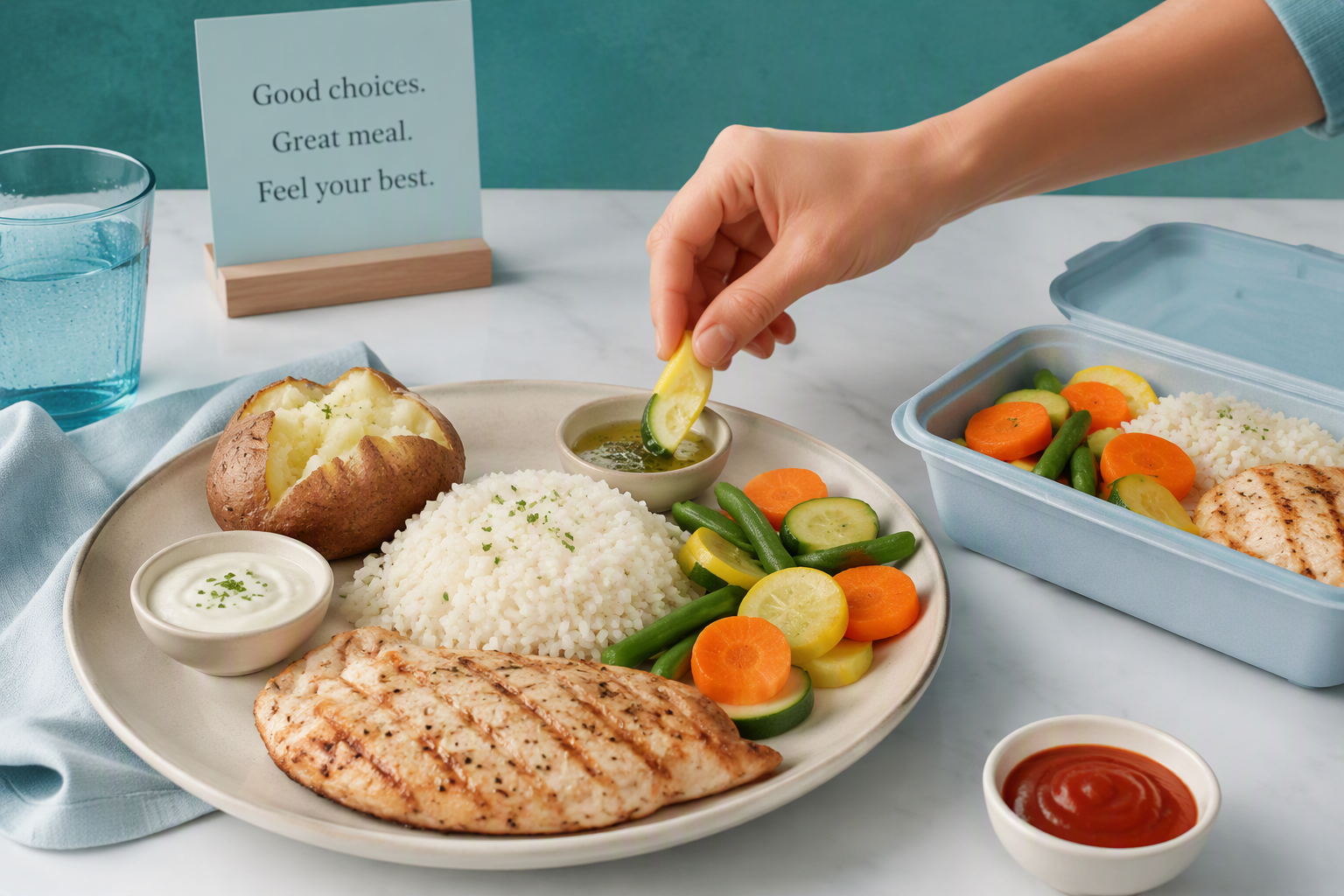
After asking about ingredients and preparation, the easiest IBS-friendly restaurant meals to modify usually keep ingredients separate: a simply grilled or baked protein, rice or a baked potato, and suitable vegetables. Chicken, fish, eggs, or another familiar protein can work when butter, garlic, onion, marinades, and rich sauces are left off or served separately. Your own tolerances matter more than any universal safe list.
Practical food substitutions can keep the meal enjoyable:
- Choose separate ingredients: A plain plate is easier to question and customize than a casserole, stuffed dish, or complex sauce.
- Keep portions moderate: A smaller serving may be easier to manage than a large restaurant plate, even when each ingredient seems familiar.
- Bring a backup plan: A familiar snack can reduce pressure when the menu has few FODMAP-friendly options. Gluten-free labeling alone doesn’t confirm that a meal is low in fermentable ingredients.
Italian cuisine offers useful swaps, but hidden ingredients still matter. A plain or gluten-free pizza base may suit some diners, although garlic or onion can appear in the crust, tomato passata, or sauce. Pasta with oil or a plain preparation is generally easier to customize than a creamy or heavily seasoned dish. Risotto is rice-based, but its stock may contain garlic or onion, so ask before ordering.
At Chinese restaurants, steamed rice with simply cooked chicken, fish, meat, or suitable vegetables may be easier to adjust than wontons, Hokkien noodles, or Chow Mein. Ask whether sauces contain garlic, onion, or polyols, the sugar alcohols that trigger symptoms for some people. Green spring-onion tops may be available instead of the white bulb. Sauce served separately gives you more control.
French meals can often be simplified with grilled fish, chicken, or meat alongside rice, potatoes, or suitable vegetables. Cream-based dishes, rich reductions, and complex seasoning deserve extra questions. Request vinaigrette separately and ask whether it contains garlic or onion. A simpler plate also makes it easier to identify a possible trigger later.
Indian dishes require careful questions about the curry base. Onion, garlic, cream, beans, and substantial spice may be present even when a dish is described as mild. Plain rice with grilled meat, fish, or suitable vegetables may be easier to adapt than curry. A sauce-free preparation is more reliable than judging tolerance by heat level alone.
When a menu cannot be modified, a familiar backup is practical self-care, not a failure. Consider other factors if your symptoms do not follow a clear pattern. Seek personalized medical advice when needed.
How Can You Manage IBS Symptoms While Dining Out?
After choosing a meal you can modify, you can manage IBS symptoms while dining out by reducing uncertainty, not by trying to control every ingredient. Eat your usual, tolerated meals earlier in the day instead of skipping food to “save room.” A small familiar snack can help when work, teaching, or family duties create a long gap. Arriving extremely hungry can make fast eating, overeating, bloating, and discomfort more likely. Advice about workplace IBS symptoms also applies to business lunches and team meals, where your control over timing and location may be limited.
Make the meal more predictable with a few practical choices:
- Ask about preparation: Find out whether the dish is fried, heavily buttered, spicy, or served with a rich sauce.
- Request simple swaps: Grilled food, sauce or butter on the side, and less spice may help when those ingredients have triggered symptoms before.
- Choose a modest portion: Eat slowly and pause before ordering more. Large portions can be difficult even when each ingredient seems familiar.
- Notice drink patterns: Sip water instead of gulping it, and observe whether caffeine, carbonation, or IBS and alcohol affect your symptoms.
Commonly listed IBS triggers don’t affect everyone. A brief food-and-symptom record can help you identify personal patterns instead of treating every online list as a rule. Avoid eliminating foods unless your own response supports that choice, since unnecessary restriction can make social meals harder without reducing your IBS symptoms.
Checking the restroom when you arrive can reduce anticipatory worry, especially when urgency is part of your symptoms. Once you arrive, check the restroom location, choose a seat that feels comfortable, and keep a takeaway container in mind if the serving is too large. A small IBS kit essentials can add reassurance without turning dinner into a medical task.
If IBS anxiety or an IBS flare starts, try slow breathing with a longer exhale, relax your abdominal muscles, take a brief walk, or step outside. Stress can affect the gut-brain connection and intensify symptom sensations, but that doesn’t mean the symptoms are imaginary. These strategies can ease pressure during a meal, though they don’t replace medical evaluation.
Rely on personalized medical advice when symptoms require evaluation. Consider other factors when symptoms lack a clear food pattern. Consult a qualified healthcare professional for persistent, severe, or worsening symptoms.
What Should You Know About Enzymes And Medical Advice?
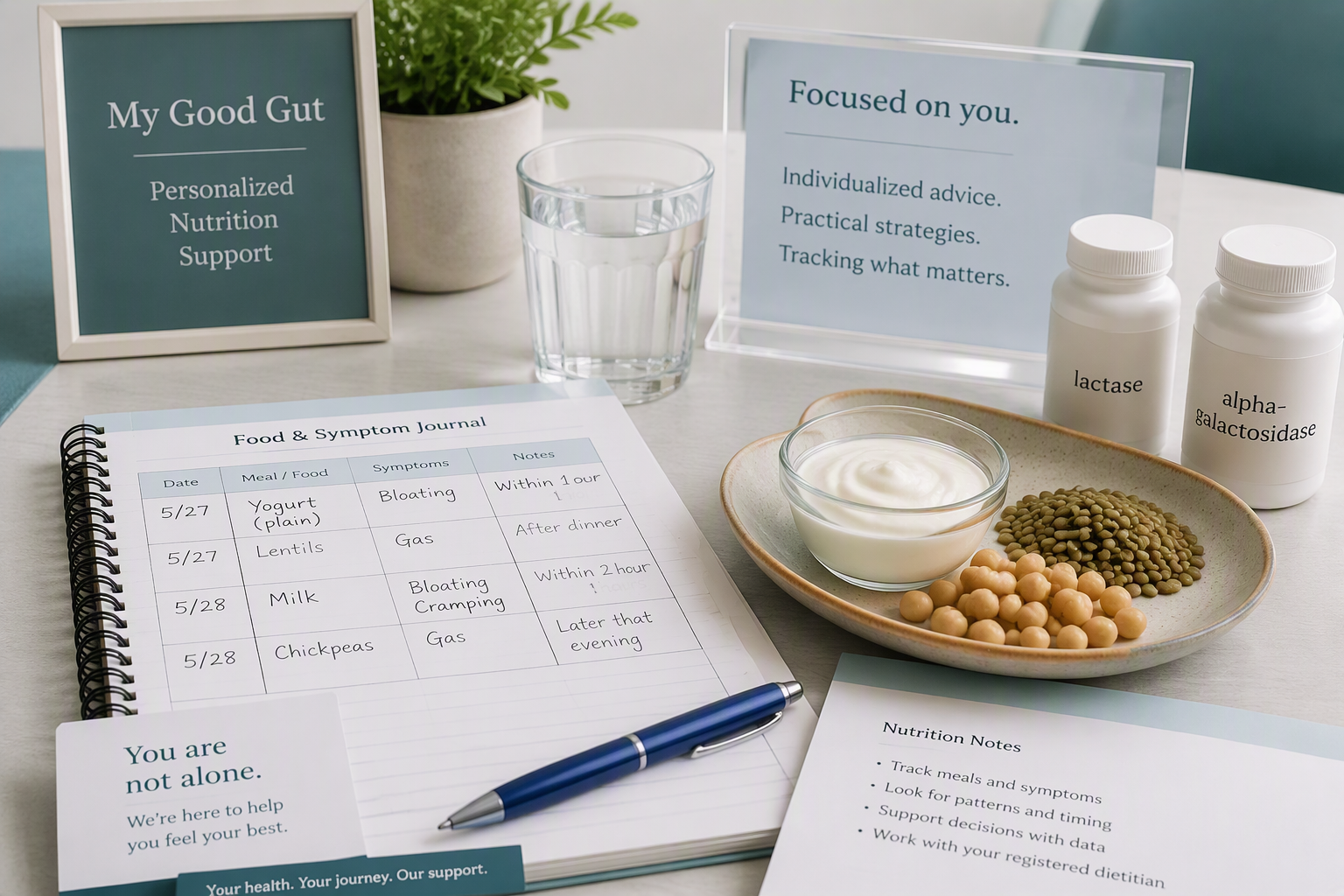
Although lactase and alpha-galactosidase may help with specific food components, neither treats IBS itself, while lactase may be relevant when milk, cream-based sauces, or soft cheeses repeatedly trigger symptoms because it helps digest lactose.
Dairy tolerance depends on the food and the amount. Hard cheeses often contain less lactose, while soft cheeses may cause symptoms when the portion is larger. Preparation, serving size, and your personal tolerance also matter. If a dairy-only pattern is clear, lactase enzyme tablets taken before a lactose-containing meal are the targeted option, though they do nothing for other ingredients in the dish.
Alpha-galactosidase targets GOS, carbohydrates found in beans, chickpeas, lentils, and similar legumes. Beano is the most widely reviewed product supplying this enzyme.
The evidence is genuinely mixed, so treat it as a trial rather than a solution. A randomized crossover trial found that oral alpha-galactosidase taken with high-GOS food produced a clinically significant symptom reduction in GOS-sensitive people with IBS, but about a third of participants never met the study's GOS-sensitivity threshold (source). A later double-blind crossover pilot found the enzyme was no better than placebo for postprandial symptoms (source). Whether it helps you appears to depend on whether GOS is actually one of your triggers.
The enzyme should match a suspected trigger rather than serve as a general remedy:
- Lactase: May help with lactose in dairy foods.
- Alpha-galactosidase: May help with GOS in beans, legumes, and related foods.
- Neither enzyme: Treats abdominal pain, bloating, constipation, or diarrhea caused by stress, overeating, or another ingredient.
Track the food, portion, preparation method, and symptoms before deciding that a supplement helped. Alpha-galactosidase potency may be listed in GALU or GalU units, and amounts from different brands aren't interchangeable. Avoid comparing or converting those values across products.
A gastroenterologist or registered dietitian can assess possible intolerances, review medications and supplement ingredients, and help prevent unnecessary food restrictions. Seek individualized medical advice before relying on enzymes, especially when symptoms persist, worsen, become severe, or lack a clear food pattern. Supplements don't replace diagnosis or medical care.
Digestive symptoms can have many causes. Use individualized guidance when making dietary or supplement decisions. This content is for educational purposes only and is not a substitute for personalized medical advice.
Eating Out With IBS FAQs
These FAQs address common concerns about choosing meals, reviewing menus, asking restaurant staff about ingredients, and planning for symptoms. They offer a calm, practical starting point when restaurant uncertainty makes social meals stressful.
1. Can Alcohol Worsen IBS During Restaurant Meals?
Alcohol can worsen IBS symptoms for some people, but tolerance varies, and which drinks are gentler depends on the ingredients as much as the alcohol itself. IBS and alcohol reactions may include digestive irritation or changes in bowel habits, and other ingredients can matter too. Cider, rum, and liqueurs may make a drink a high-FODMAP alcohol choice, while a simpler option may suit someone following a low-FODMAP alcohol plan. Choose a smaller serving, avoid unfamiliar cocktails, drink water alongside alcohol, and stop if symptoms begin. Track your own pattern instead of avoiding every alcoholic drink.
2. Are Buffet Meals Safe For People With IBS?
Buffet meals aren’t automatically unsafe with IBS, but unclear recipes, sauces, fillings, portions, and preparation methods can make IBS food sensitivities harder to manage. Shared utensils and mixed dishes may also create cross-contact with suspected triggers.
Review the menu and ask staff about ingredients before serving yourself. Choose simple, recognizable foods, keep sauces or dressings separate, and take a modest portion. If staff can’t confirm a dish’s ingredients or preparation, skipping it is a reasonable way to reduce uncertainty.
3. Should You Avoid Large Portions When Eating Out?
Large restaurant portions can increase bloating, cramping, and other IBS symptoms, especially when you arrive very hungry. Tolerance varies, so a meal that feels manageable for one person may trigger an IBS flare for another. Eat slowly, pause during the meal, and stop when comfortably full rather than finishing automatically. Sharing an entrée, ordering a smaller portion, or requesting a takeaway container early lets you save part of the meal for later.
4. Can Stress Trigger IBS Symptoms While Dining Out?
Yes. Anticipation, unfamiliar settings, or fear of urgent symptoms can trigger a real physical response through the gut-brain connection. IBS anxiety isn’t “just in your head,” and it doesn’t mean you must avoid restaurants. Reviewing the menu early, choosing a familiar meal, using slow breathing, and locating the restroom can ease uncertainty. If anxiety persists or limits daily activities, discuss it with a qualified healthcare professional, including guidance for IBS and toilet worry.