


A kombucha label that says "probiotic" doesn't mean the drink will ease bloating, irregular bowel habits, or IBS. Kombucha may contain live bacteria and yeast, but meaningful probiotic benefits require identified strains, a viable dose, and human research on the outcome you want.
That distinction gets lost when a fizzy, tart bottle is compared with yogurt or a supplement. Sugar, carbonation, acidity, caffeine, and fermentation by-products can also trigger gas, loose stools, or stomach discomfort, particularly with IBS. The label details that matter include named organisms, strain codes, viable CFU through expiration, added sugar, and alcohol content.
Traditional kombucha may contain less than 0.5% alcohol at bottling, though fermentation can continue during storage. A small serving with food is a reasonable tolerance test, but worsening symptoms are a reason to stop rather than push through discomfort.
Kombucha Probiotics Key Takeaways
- Kombucha may contain live microbes, but it is not automatically a clinically supported probiotic.
- Probiotic claims need named strains, viable doses, and human evidence for a specific outcome.
- No controlled human trial has established kombucha for treating IBS, bloating, constipation, or diarrhea.
- Kombucha can trigger bloating, gas, loose stools, or stomach discomfort from carbonation, acidity, sugar, or caffeine.
- Yogurt and strain-identified supplements usually offer clearer organism and dose information than kombucha.
- Check serving size, added sugar, caffeine, refrigeration instructions, and alcohol content before buying.
- Start with a small serving, stop if symptoms worsen, and seek care for severe or persistent symptoms.
What Is Kombucha And How Does Fermentation Work?

Kombucha tea is a fermented tea made by combining sweetened black or green tea with a SCOBY, short for symbiotic culture of bacteria and yeast. Despite its thick, pancake-like appearance, a SCOBY is not one microorganism or a standardized probiotic strain. It is a changing community of bacteria and yeast shaped by the tea, sugar, temperature, fermentation time, and handling.
The starting ingredients are simple, but the final drink can vary widely. Brewed tea provides water-soluble compounds, including catechins, theaflavins, thearubigins, flavonols, caffeine, and amino acids. Added sugar gives the microbes fuel. As kombucha fermentation proceeds, the culture may form at the surface or remain dispersed throughout the liquid.
Several microbial actions give kombucha its familiar fizz, tartness, and acidity:
- Yeast activity: Yeast makes an enzyme called invertase, which breaks sucrose, or table sugar, into glucose and fructose. The yeast then uses those sugars and produces carbon dioxide and ethanol.
- Carbonation and alcohol: Carbon dioxide can create light carbonation, while ethanol is a form of alcohol. The amount left in the finished drink depends on the recipe, temperature, fermentation time, and storage conditions.
- Bacterial activity: Acetic acid bacteria use sugars and oxidize ethanol. This process produces acetic acid, gluconic acid, and other organic acids that give kombucha its sour flavor and gradually lower its pH, a measure of acidity.
Published descriptions often place fermentation at approximately two to three weeks before storage and consumption, though homemade and commercial batches do not follow one fixed schedule. A shorter or cooler brew may be sweeter and less acidic. A warmer or longer brew may taste sharper, have less residual sugar, or develop more carbonation.
Processing also changes the finished product. Ingredients, refrigeration, pasteurization, shelf time, and packaging can affect flavor, acidity, sugar, carbonation, and alcohol content. One bottle of kombucha should not be assumed to match another, even when both are labeled as kombucha tea.
Kombucha may contain live bacteria and yeast, but that fact alone does not show it improves a digestive symptom or health outcome. The same distinction matters when comparing kombucha with other probiotic fermented foods. Fermentation microbes can differ greatly by food, batch, processing method, and storage.
A probiotic is more specific than a fermented food with living organisms. For a probiotic benefit to be supported, researchers generally need an identified genus, species, and strain, a viable amount shown to work, and evidence for a particular outcome. For example, Lactobacillus plantarum 299v identifies a specific strain, while “live and active cultures” does not.
That is why kombucha should not be presented as a treatment for irritable bowel syndrome (IBS), bloating, constipation, or other digestive symptoms. Its live cultures may be part of fermentation, but meaningful probiotic benefits require product-specific human evidence.
Does Kombucha Provide Meaningful Probiotics?
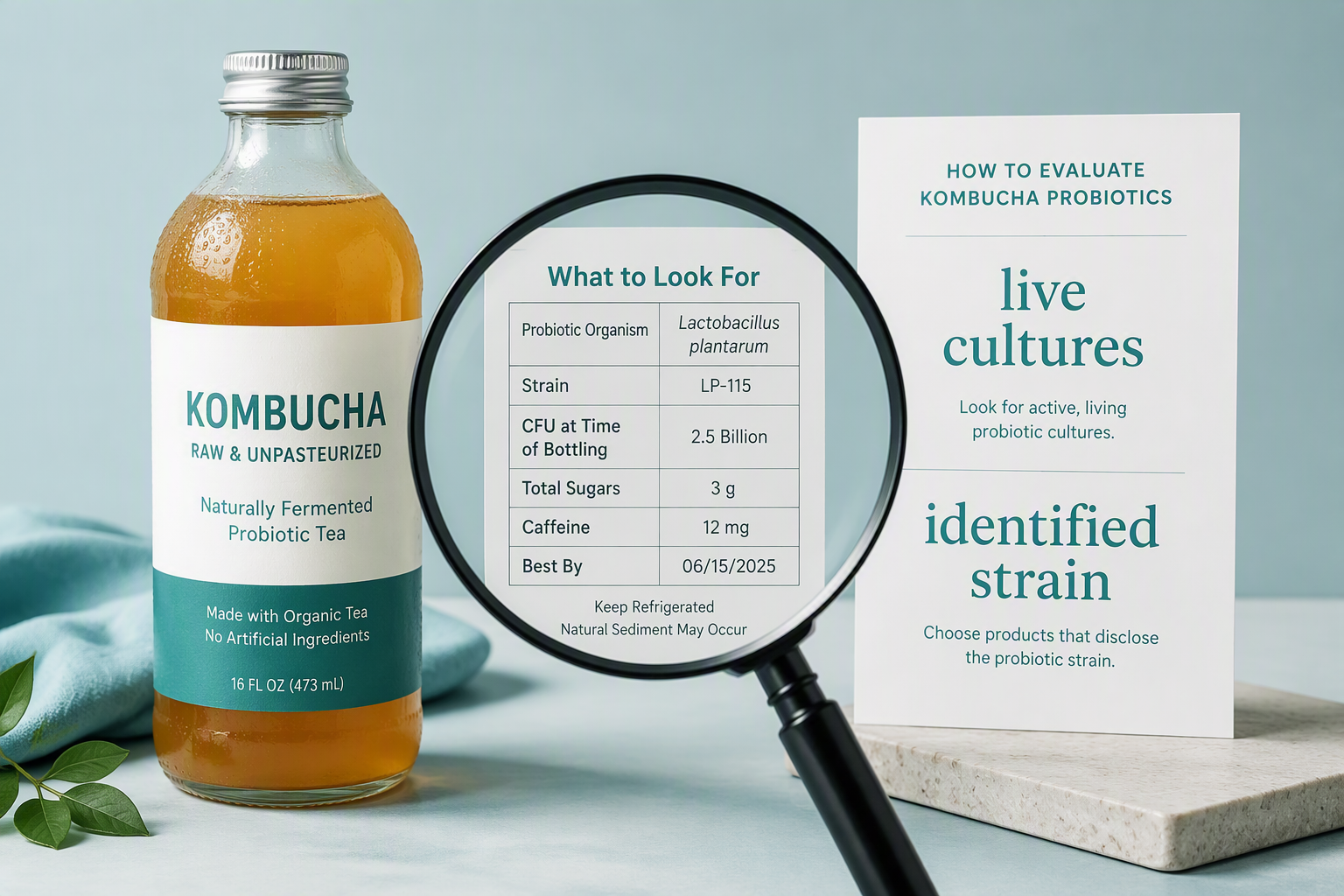
Because live cultures alone do not establish treatment benefits, kombucha may contain living microorganisms after fermentation, but live cultures do not automatically provide a meaningful probiotic benefit. For kombucha probiotics to be useful, identified organisms must survive in the amount you drink, and that exact strain and dose need human research behind them, while fermentation and gut health marketing alone cannot establish those points.
The probiotic content can differ widely from one kombucha to another. Tea, sugar, starter culture, fermentation time, temperature, storage, and bottling all influence which kombucha bacteria are present and how many remain alive. Findings from one bottle cannot be applied to every probiotic beverage, even when both products use the word "probiotic."
Is kombucha really a probiotic? A label supports a stronger probiotic claim only when it names the organism's genus, species, and strain designation, then states a viable dose through the end of shelf life. Labels that say only "live cultures," "probiotic," or "culture blend" suggest that live microbes may be present, not that the product supplies a studied probiotic dose.
A practical label check includes:
- Genus: The first part of an organism's name, such as Lactobacillus.
- Species: The second part, such as plantarum.
- Strain designation: A letter-and-number code, such as 299v, that identifies a specific strain.
- Viable dose: The amount expected to remain alive through the end of shelf life, rather than only at bottling.
A long strain list is not enough on its own. Without that documentation, claims about digestive benefits remain uncertain.
In kombucha, fermentation produces acetic acid, other organic acids, and postbiotic substances. These compounds may interact with the gut microbiota, but lab testing, microbial analysis, and plausible mechanisms do not prove that a particular drink improves bloating, bowel regularity, or other symptoms in people. Kombucha may support beneficial gut bacteria, while strong, high-quality research on kombucha itself remains limited (source).
Research on an individual probiotic strain or another fermented food does not automatically transfer to kombucha. Kimchi, a Korean fermented vegetable dish, and yogurt may contain live microbes, but their organisms, doses, food matrix, and preparation differ. Possible benefit is not the same as established clinical effectiveness.
For irritable bowel syndrome (IBS), kombucha is not a substitute for a studied strain or personalized medical care. If you try it, start with a small serving and watch for changes in pain, bloating, stool habits, and overall tolerance. Stop if symptoms worsen, and speak with a healthcare professional about symptoms that persist, become severe, or keep getting worse.
What Digestive Benefits Can Kombucha Offer?
Even when live cultures are present, kombucha's digestive effects remain possible rather than established. Fermentation creates a mix of bacteria and yeasts, yet the species, amounts, and survival through digestion can differ widely between products and batches. That is unlike a probiotic supplement with a named strain and a stated dose.
Possible kombucha health benefits are not limited to live cultures. Fermentation metabolites, including organic acids, may affect acidity, microbial activity, or signals in the gut even when live organisms do not reach the colon. The tea used, fermentation process, serving size, and your tolerance all shape the experience.
Kombucha prebiotics are also not a proven benefit. Some compounds formed during fermentation may create conditions that support existing gut microbiota, but human research has not shown dependable microbiome changes or relief of IBS symptoms from kombucha. It can fit within a varied plant-based diet alongside other fermented foods, including milk kefir, rather than replacing them.
Tea polyphenols may offer another possible pathway. These plant compounds can interact with gut microbes and show antioxidant activity and anti-inflammatory effects in laboratory and animal research, but those findings do not show that kombucha prevents disease or eases bloating, constipation, diarrhea, or abdominal pain in people. Animal studies of blood sugar or blood lipids also cannot answer whether kombucha improves digestive symptoms.
The evidence gap matters most if you have IBS or sensitive digestion. No controlled human trial has established a kombucha strain, dose, or probiotic count for treating IBS, bloating, diarrhea, or constipation. A label that highlights fermentation or lists many microbes does not turn kombucha into a treatment or a substitute for a studied probiotic strain.
A small trial with food can help you judge your own tolerance:
- Start small: Have a small serving with a meal instead of drinking a full bottle on an empty stomach.
- Track symptoms: Note bloating, abdominal pain, stool changes, and urgency for several days.
- Watch common triggers: Sugar, carbonation, acidity, and fermentation by-products can upset a sensitive stomach.
- Stop when symptoms worsen: Increasing discomfort is not detoxification or proof that the drink is helping.
Persistent, severe, or worsening symptoms need medical advice, especially if they interfere with eating, sleep, work, or daily life. Treat kombucha as an optional food choice, and prioritize the foods and habits your digestion tolerates well.
How Does Kombucha Compare With Yogurt And Supplements?
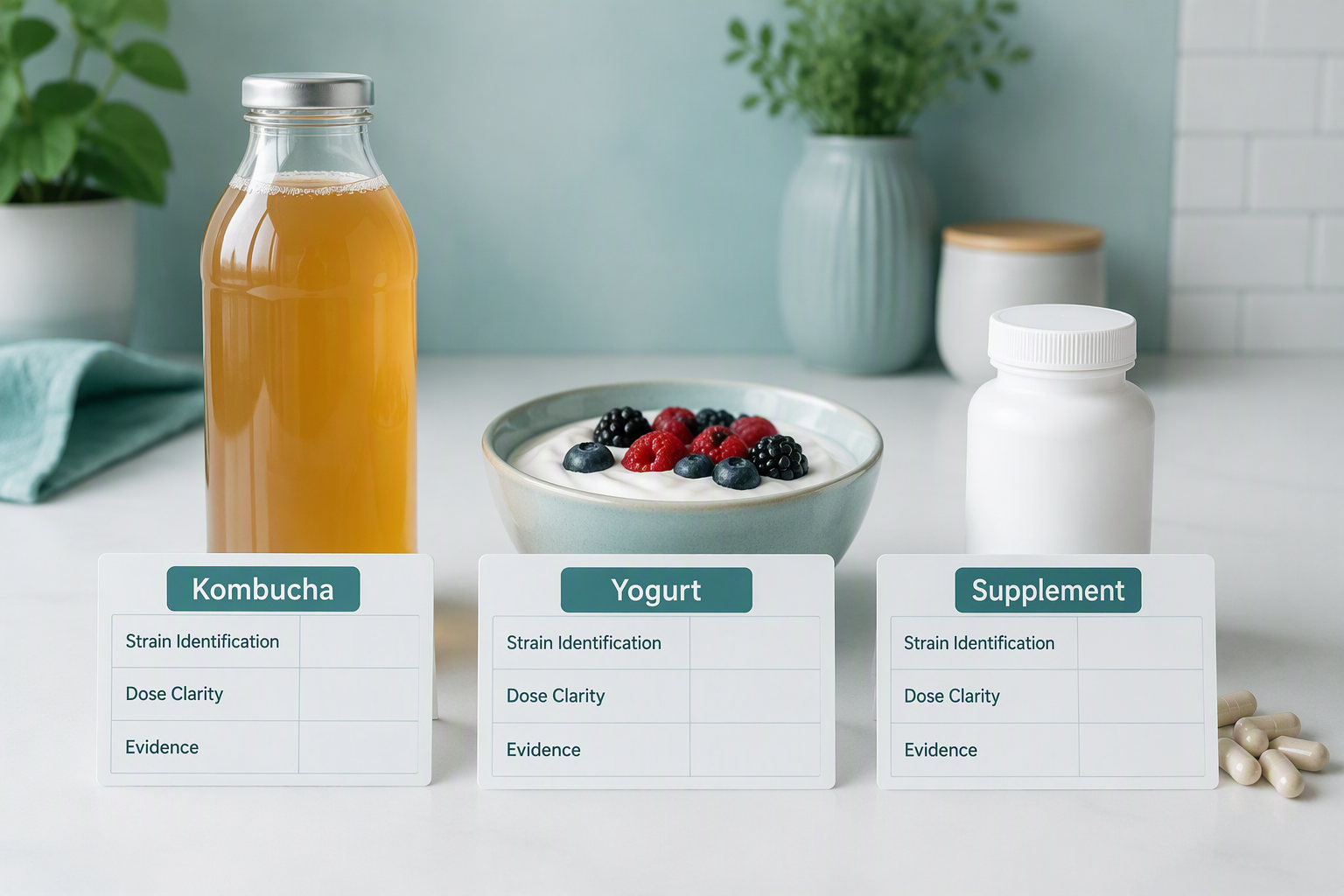
Given kombucha's limited evidence for digestive benefits, kombucha, yogurt, and supplements may all contain live microbes, but their labels and research support are not equally clear. A probiotic beverage can say "fermented" or "live cultures" without identifying the organisms inside, and kombucha does not consistently contain lactic acid bacteria. That makes it hard to connect a bottle of kombucha with a specific human study.
Yogurt with live cultures may name its starter cultures, though the strains and amounts can differ by product. Kombucha and yogurt are foods that can bring flavor, variety, and sometimes live cultures to your diet, but neither should be treated as a remedy for IBS symptoms.
Option | Identity on the label | Dose clarity | Evidence fit |
|---|---|---|---|
Kombucha | Organisms are often not named | Rarely guarantees a live-microbe amount through expiration | Human research specific to kombucha is limited |
Yogurt | Starter cultures may be listed | May state live cultures without a study-matched amount | Has broader food and fermentation research, with strain-specific limits |
Supplements | May list genus, species, and strain | Often lists CFU or active fluorescent units (AFU) | Strongest when the named strain and dose match a human study |
Supplements illustrate how product-level details can guide comparisons, as with Bifidobacterium infantis 35624 or Lactobacillus rhamnosus GG. Still, a high count or a long list of organisms does not establish that a product will help your symptoms, and research on one strain or blend cannot be assumed to apply to another.
When weighing a supplement, look for these details:
- Named strain: A strain code, such as 35624, 299v, or GG, separates one organism from another and allows a meaningful research match.
- Amount and unit: CFU and AFU are different measurement systems, so their numbers are not directly comparable. Check whether the stated amount is guaranteed at manufacture or through the expiration date.
- Storage and research match: Storage instructions, serving size, and human studies of the same strain for the outcome you care about make a label more useful.
Culturelle Digestive Daily, for example, lists 10 billion CFU of L. rhamnosus GG. Its strongest evidence concerns antibiotic-associated and pediatric diarrhea rather than IBS, which shows why a named strain still has to be matched to the outcome you care about. Multi-strain products that advertise a large combined count without stating each strain's amount cannot be matched to a studied dose at all.
Choose kombucha or yogurt if you enjoy them and they agree with you, while watching sugar, acidity, serving size, and symptom changes. A strain-identified supplement may make more sense when a study and dose match matters most, although prebiotic ingredients can worsen symptoms for people sensitive to fermentable fibers. Persistent, severe, or worsening digestive symptoms need evaluation by a qualified healthcare professional rather than self-treatment.
How Can You Choose And Drink Kombucha Safely?

When kombucha is the option you choose, safe kombucha use starts with the back label, not front-of-bottle claims. For kombucha safety, look for "live cultures" or "live and active cultures," then see whether bacterial or yeast species and strain details appear. A "proprietary culture" is hard to assess. If kombucha was pasteurized after fermentation, heat may have reduced or removed its living microorganisms.
The nutrition panel can reveal common symptom triggers:
- Serving size: Check whether one bottle contains multiple servings before choosing how much to drink.
- Total and added sugar: A tart taste or "natural" label does not mean low sugar. One bottle may contain much of the American Heart Association's daily added-sugar limit, which is less than 25 grams for women and 36 grams for men.
- Caffeine: Kombucha brewed with black or green tea may contain caffeine, which can worsen diarrhea, urgency, anxiety, or sleep problems for some people.
- Alcohol: Traditional kombucha may contain less than 0.5% alcohol at bottling, but ethanol content can rise if fermentation continues during storage (source). Check the label carefully if you avoid alcohol during pregnancy, recovery, or for medical, religious, or personal reasons.
For healthy adults, a small serving may be a cautious way to test tolerance, especially if digestion is sensitive or unpredictable. Start with less and watch for bloating, gas, or stomach upset, and having it with food may feel more comfortable. Kombucha side effects can include bloating, gas, loose stools, and stomach discomfort, especially after a larger-than-usual serving.
Storage affects both safety and the drink itself. Choose refrigerated bottles when the package calls for it, follow storage directions, and refrigerate bottles promptly at home at about 39°F. Even shelf-stable products can change with warmth or prolonged storage, affecting fermentation, carbonation, flavor, and alcohol content. Discard any bottle with a damaged seal, unusual pressure, or visible mold without tasting it.
Home-brewed kombucha is not automatically healthier and needs careful food-safety practices. Clean hands, sanitized equipment, clean work surfaces, and a tested recipe with controlled fermentation conditions help lower the risk of unwanted bacterial growth and foodborne illness. Discard the entire batch if black, gray, brown, green, or blue mold appears. If you are pregnant, immunocompromised, seriously ill, or otherwise medically vulnerable, speak with a healthcare professional before home brewing or avoid it.
If you have IBS, try kombucha without adding other new foods or supplements at the same time:
- Start with a small serving, with food if you prefer.
- Watch for bloating, abdominal pain, diarrhea, constipation, and urgency over the next day or two.
- Stop drinking it if symptoms worsen instead of pushing through discomfort.
Seek medical care for severe abdominal pain, dehydration, fever, vomiting, an allergic reaction, or blood in the stool. Digestive symptoms can have many causes, and results vary by person, so dietary advice should be individualized.
Kombucha Probiotics FAQs
These FAQs cover kombucha probiotics, how their live cultures compare with other probiotic foods and supplements, and the safety questions that may matter when digestive symptoms are already disruptive.
1. Do Kombucha Probiotics Survive Stomach Acid?
Some kombucha microbes may make it through stomach acid, but survival depends on the organism, fermentation, acidity, storage, and whether the drink is raw or pasteurized. Microbes that reach your intestine often pass through rather than permanently colonize your gut.
Most kombucha labels do not identify validated strains or provide a clinically established dose. Live cultures alone therefore do not show that kombucha reliably helps IBS, bloating, or other digestive symptoms.
2. Does Pasteurization Reduce Kombucha Probiotics?
Yes. Pasteurization and other heat treatments can destroy the live bacteria and yeast left after fermentation. That is the point of the process: heat extends shelf life and improves safety, and inactivating microorganisms is how it works. A pasteurized kombucha can keep its tangy taste while carrying few or no viable cultures.
For kombucha safety, look for "unpasteurized," "live cultures," or "contains live microorganisms." Shelf-stable products are often preserved, while refrigerated kombucha may contain live cultures, but refrigeration alone is not proof. Check the ethanol content as well, especially if you avoid alcohol.
3. How Should Kombucha Be Stored?
Store kombucha in its original, tightly sealed container in the refrigerator at about 39°F (4°C). Once opened, reseal it promptly and follow the label’s use-by timeframe. Leaving it at room temperature can allow fermentation to continue, building pressure, changing flavor, and potentially raising alcohol above the usual level of less than 0.5%.
Discard the whole container if you see black, gray, brown, green, or blue mold or notice a foul, rotten odor. Do not taste it to check, as spoiled kombucha may cause kombucha side effects beyond ordinary digestive discomfort.
4. Can Kombucha Probiotics Cause Bloating?
Yes. Kombucha can cause bloating, gas, or stomach upset even though it contains live cultures from a SCOBY, a symbiotic culture of bacteria and yeast. Carbonation adds gas, acidity may irritate a sensitive stomach, and residual sugar can trigger symptoms, particularly if you have IBS.
Try a small serving with food and choose a lower-sugar option. Stop if gas, cramping, loose stools, or reflux worsens, returns with each trial, or persists. Kombucha does not treat IBS, and severe, worsening, or ongoing symptoms warrant medical advice.
5. Are Kombucha Cultures Listed On Labels?
Not usually. To judge probiotic content, look past “live cultures” for named organisms, strain codes when available, and viable CFUs through the expiration date. Pasteurization and refrigeration can affect live microbes, and kombucha still contains some sugar and alcohol. A SCOBY, or symbiotic culture of bacteria and yeast, identifies a fermentation culture, not a clinically studied probiotic strain or guaranteed dose. Treat kombucha as one fermented food alongside varied plant foods, not a substitute for a probiotic with strain-specific human evidence.