


You've checked the bread, but the sauce and the shared toaster still leave you unsure about lunch. A gluten-free diet for celiac disease means avoiding wheat, barley, rye, and triticale for life, while checking labels and keeping gluten crumbs out of your food. Plain rice, beans, eggs, produce, and unbreaded proteins can make everyday meals simpler.
A "wheat-free" label doesn't rule out barley or rye, and a dish made with safe ingredients can pick up crumbs during preparation. In the United States, an FDA gluten-free claim requires a food to contain less than 20 parts per million of gluten and meet ingredient rules. The seven-day meal plan, label terms, and kitchen practices here show how those rules apply from shopping through serving.
Packaged gluten-free foods can also be low in fiber or lack nutrients commonly added to wheat products. Beans, gluten-free whole grains, and a registered dietitian can help you build meals that meet both safety and nutrition needs.
Celiac Gluten-Free Diet Key Takeaways
- Celiac disease requires a lifelong gluten-free diet, even when symptoms improve.
- Avoid wheat, barley, rye, triticale, and foods made from them.
- A wheat-free claim does not rule out barley or rye.
- FDA-labeled gluten-free foods must contain less than 20 parts per million of gluten.
- Use clean equipment and surfaces to prevent gluten cross-contact at home.
- Build meals around naturally gluten-free foods such as rice, beans, eggs, and produce.
- A registered dietitian can help assess fiber and nutrient intake.
Which Grains and Foods Contain Gluten?
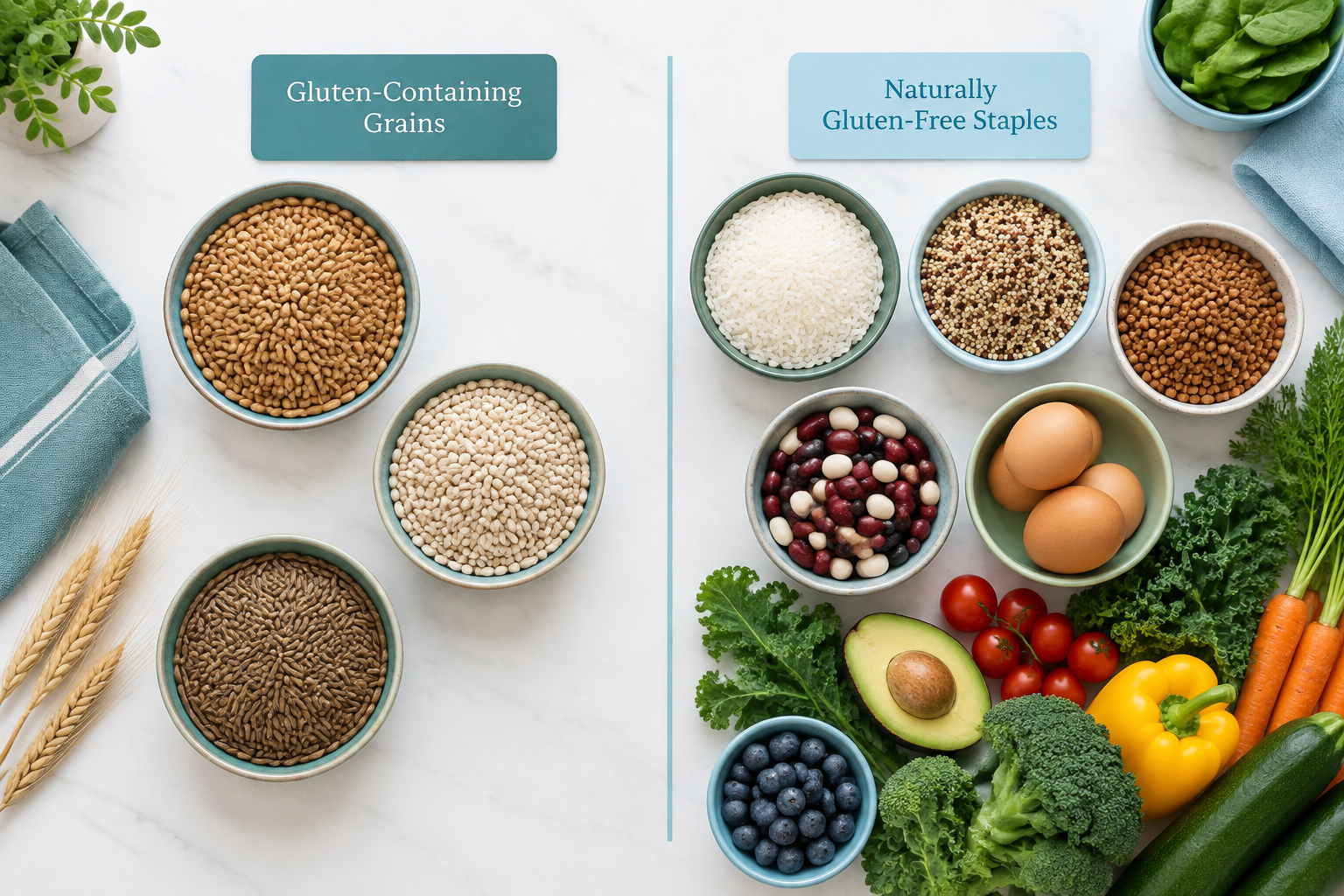
A gluten-free diet for celiac disease excludes wheat, barley, rye, and triticale, including products made from less familiar forms of these grains. The restriction remains lifelong, even after symptoms improve, because a strict gluten-free diet is the only effective medical treatment for celiac disease.
The main grains and grain products to avoid include:
- Wheat varieties and products: Spelt and durum, Kamut, farro, semolina, einkorn, emmer, bulgur, farina, wheat bran, and wheat germ.
- Other gluten-containing ingredients: Barley, rye, malt, and triticale, which is a wheat and rye cross.
Packaged foods made with these ingredients are off the menu too. Celiac disease, an autoimmune gut condition, affects the small intestine, so avoiding gluten consistently still matters when symptoms are quiet. People with non-celiac symptoms may follow a less strict approach, as explained in gluten sensitivity and the gluten-free diet.
Alongside naturally gluten-free staples such as rice, corn, quinoa, and buckwheat, beans, lentils, fruits, vegetables, potatoes, eggs, plain meat, fish, and poultry can also support balanced meals. Packaged flours, cereals, pasta, and grain mixes need label checks because shared processing can introduce gluten.
Hidden gluten may appear in foods that do not seem grain-based:
- Sauces and seasonings: Conventional soy sauce, teriyaki sauce, marinades, gravies, bouillon, dressings, condiments, malt, brewer’s yeast, modified food starch, and flavorings.
- Prepared foods: Soups, processed meats, imitation seafood, and seasoned meat or vegetable products.
- Health products: Some medications and supplements may contain gluten-based fillers or flavorings.
Choose a sauce with a gluten-free label instead of judging safety by its main ingredients. Check the ingredient list each time, including for medications and supplements, because formulations can change. The National Institute of Diabetes and Digestive and Kidney Diseases explains the diet and its role in celiac disease (source). When packaged foods replace basic staples, label checking becomes part of every shopping trip.
How Do You Read Labels for Hidden Gluten?
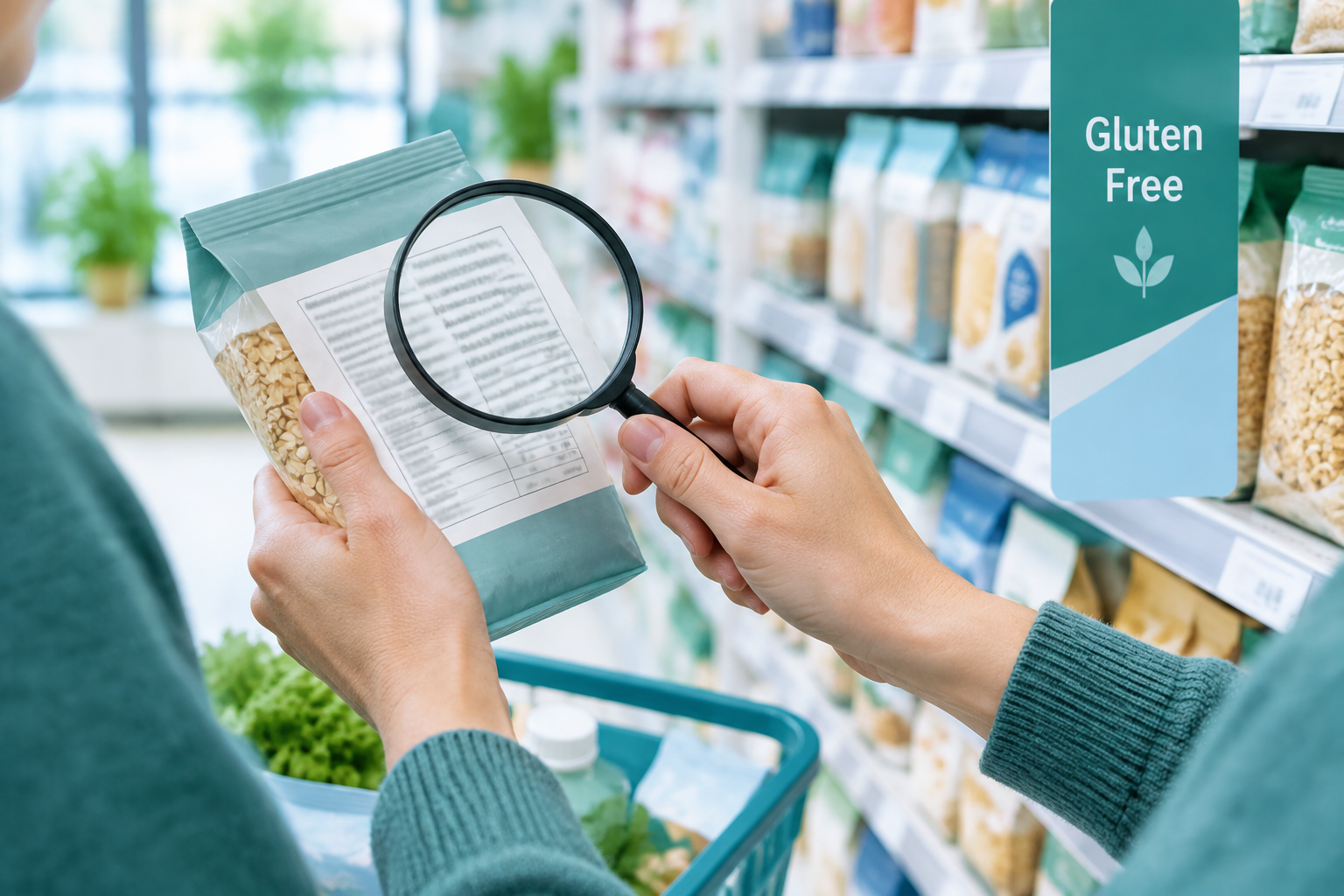
Read the ingredient list every time, even when a food looks naturally gluten-free. Gluten can be used as a thickener, stabilizer, or flavoring, so a product's main ingredient does not prove that it fits a celiac-specific diet.
Start with these terms:
- Wheat: Check for hydrolyzed wheat protein as well as wheat itself.
- Barley and rye: Both grains can contain gluten.
- Malt ingredients: Look for malt extract, malt flavoring, and malt vinegar.
- Brewer's yeast: This ingredient may need additional verification.
- Modified food starch: Check its source when the label does not clearly identify it.
The FDA rule also allows wheat starch that has been processed to remove gluten, as long as the finished food stays under 20 parts per million (source). Look for a gluten-free statement or contact the manufacturer when the product's status remains unclear. A "wheat-free" label is not the same as a gluten-free label because barley and rye may still be present.
In the United States, the Food and Drug Administration (FDA) gluten-free claim applies to foods containing less than 20 parts per million of gluten that also meet the agency's ingredient requirements. As a result, labeled gluten-free bread, pasta, and cereal can fit a celiac-specific diet. The FDA explains the claim in its consumer guidance (source). The federal regulation provides the detailed legal requirements (source).
A certification seal can apply a stricter standard, but no single logo has the same meaning across every program. Third-party certifiers set their own requirements, which may include additional testing or product monitoring. Check the specific seal's standard instead of treating every certification mark as interchangeable.
Some foods follow different labeling systems. United States Department of Agriculture-regulated foods and most alcoholic beverages may not use the FDA's standard rules, so verify uncertain products with the manufacturer. Save the response for processed foods you buy often, since a clear record can make future label checks faster and more consistent.
What Does a Week of Gluten-Free Meals Look Like?
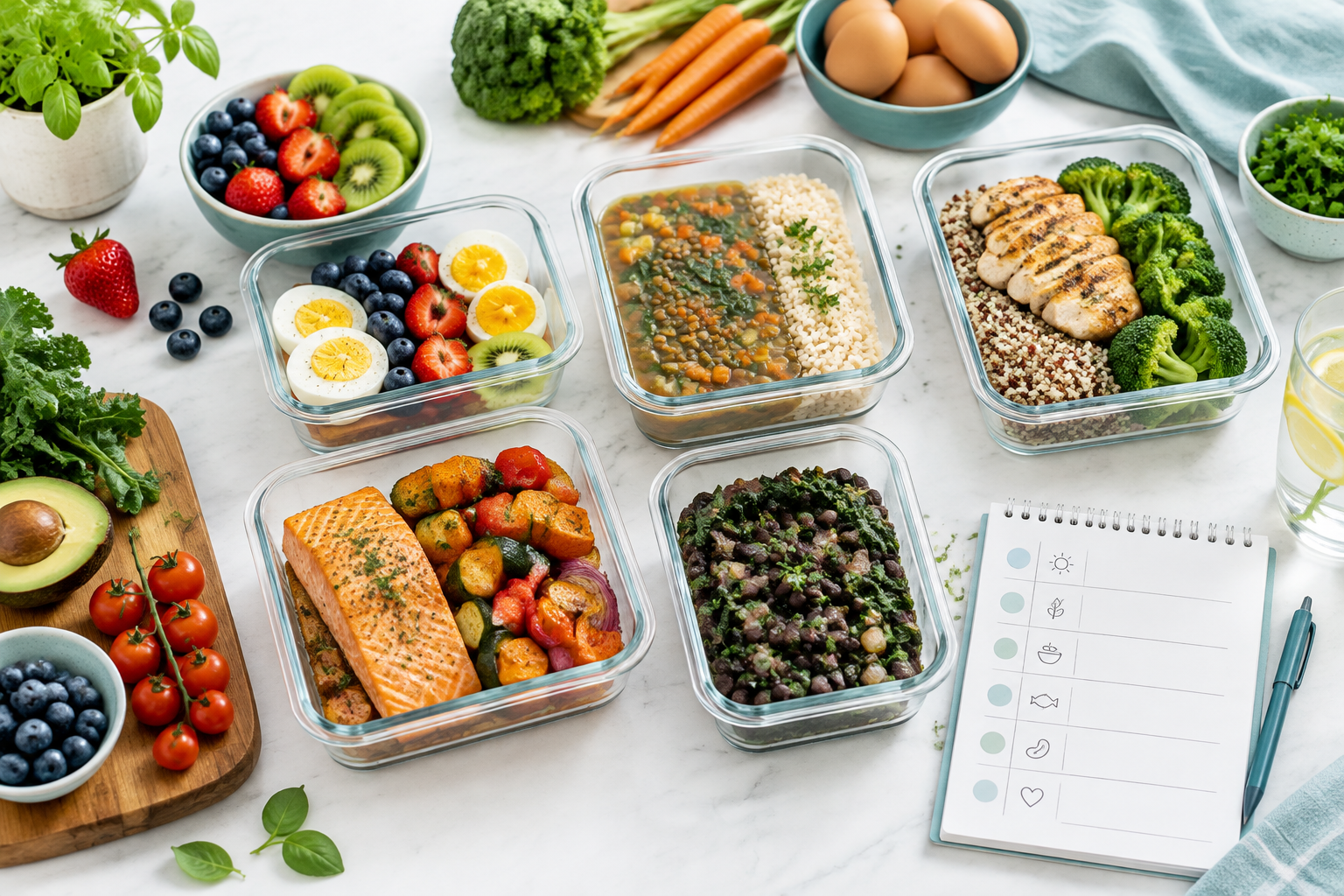
A seven-day gluten-free meal plan can stay practical and varied. Build it around naturally gluten-free foods such as plain produce, unbreaded meat and fish, eggs, plain dairy, legumes, nuts, seeds, potatoes, rice, quinoa, buckwheat, millet, and other gluten-free grains. Check sauces, coatings, seasonings, broths, and packaged grains separately because a naturally gluten-free main ingredient can become unsafe during processing.
Use this flexible starter menu:
- Day 1: Have eggs, fruit, and labeled gluten-free toast for breakfast. Choose chicken, vegetables, and rice for lunch, followed by salmon, roasted vegetables, and quinoa for dinner. Yogurt, berries, and nuts make a simple snack.
- Day 2: Start with yogurt, berries, and nuts. Make chickpea-and-potato salad with a checked dressing for lunch, then serve fish with sweet potato and leafy greens. Toppings and seasonings need their own label check.
- Day 3: Choose yogurt, fruit, and labeled gluten-free cereal in the morning. Have lentil-vegetable soup with rice for lunch, followed by chicken, buckwheat, and broccoli at dinner. Check the broth and seasoning blend.
- Day 4: Eat eggs and fruit for breakfast, black beans with corn for lunch, and fish with millet and vegetables for dinner. Canned beans, salsa, and packaged grains may contain added ingredients that require review.
- Day 5: Pair eggs or yogurt with fruit. Serve leftover salmon over greens at lunch, then chickpeas with quinoa for dinner.
- Day 6: Have yogurt, fruit, and nuts in the morning. Try a lentil-stuffed sweet potato for lunch, followed by unbreaded chicken or fish with vegetables and rice.
- Day 7: Repeat the easiest breakfast and use leftovers for lunch. Finish the day with unbreaded protein, potatoes, and greens. Fruit, nuts, or yogurt can fill snack or dessert spots.
A fiber-building swap changes a starch-only lunch into rice with black beans or lentils, vegetables, and fruit. Rotate legumes and gluten-free whole grains instead of assuming packaged gluten-free substitutes provide much fiber. Black beans, chickpeas, lentils, pinto beans, millet, and labeled gluten-free oats offer useful variety.
A registered dietitian can help adapt meals to your needs and make label checks easier. Evidence supports emphasizing naturally gluten-free foods while checking processed ingredients carefully (source).
How Do You Prevent Gluten Cross-Contact at Home?

A shared kitchen can support a gluten-free diet when you control crumbs, flour dust, and food residue. Cross-contact happens when gluten from one food reaches another, even when the final dish contains no gluten ingredients.
Group your grocery list by the foods you use most often:
- Plain proteins and dairy: Fresh meat, poultry, fish, eggs, milk, plain yogurt, and cheese without coatings or added seasonings.
- Produce: Fresh or frozen fruits and vegetables. Check sauces and seasoning packets separately.
- Legumes: Beans, lentils, chickpeas, and peas. These naturally gluten-free foods can add fiber to meals.
- Gluten-free grains and starches: Rice, potatoes, corn, quinoa, certified gluten-free oats, and gluten-free pasta.
- Packaged foods: Bread, broth, sauces, snacks, and spice blends that need careful label checks.
Read packaged-food labels for wheat, barley, rye, malt, and statements about shared equipment. A gluten-free label makes shopping easier, but check for changes when you buy a familiar product.
Keep a separate toaster for gluten-free bread. Dedicated porous items, such as wooden utensils and cutting boards, may be useful because crumbs can remain in small openings. When cleaning cannot remove residue, replace scratched pans, and clean counters, cookware, colanders, and shared appliances just before gluten-free preparation, especially after someone uses flour. Toaster ovens and air fryers can hold crumbs, so clean the basket, tray, and interior.
A GP or dietitian can help you manage the practical and nutritional demands of a gluten-free diet, including shopping and meal planning (source). Consistent kitchen habits protect your meals as much as careful ingredient choices.
Which Nutrients Can a Gluten-Free Diet Lack?
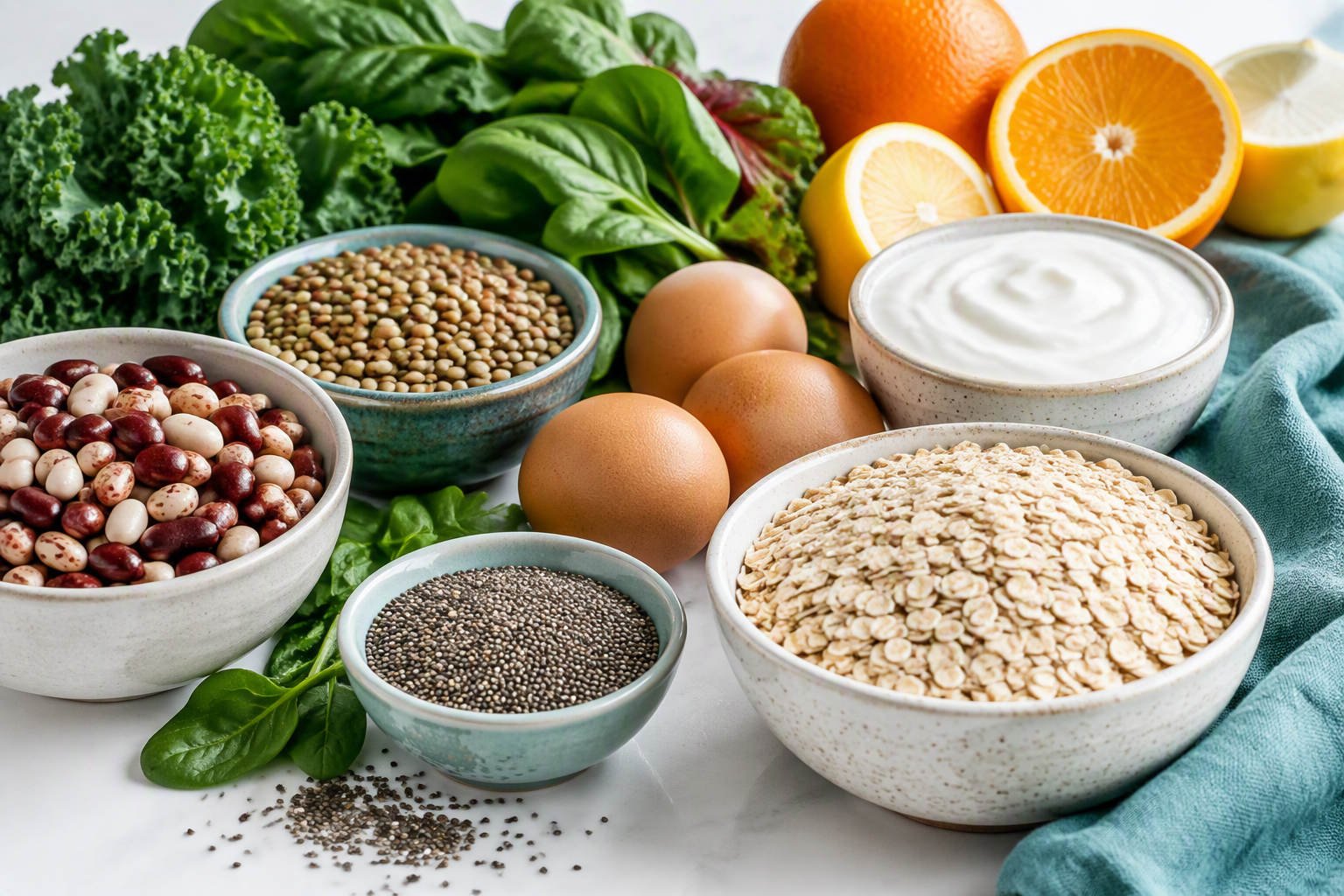
A gluten-free diet can fall short on fiber, iron, folate, other B vitamins, calcium, and vitamin D. The risk is higher when packaged gluten-free foods replace enriched wheat products, because many gluten-free breads, crackers, and baked goods aren’t fortified in the same way. A gluten-free label alone doesn’t mean a food is nutritionally complete.
Common food-based ways to cover these nutrients include:
- Fiber: Beans, lentils, chickpeas, vegetables, fruit, chia seeds, and certified gluten-free oats can add fiber to meals.
- Iron: Meat, poultry, seafood, eggs, beans, lentils, tofu, and iron-fortified foods can contribute iron. Pairing plant sources with vitamin C-rich foods may help your body absorb more of it.
- Folate and other B vitamins: Beans, leafy greens, eggs, meat, seafood, nuts, seeds, and fortified gluten-free products provide varied sources.
- Calcium and vitamin D: Dairy products, calcium-fortified beverages, canned fish with bones, eggs, and vitamin D-fortified foods may help fill these gaps.
A registered dietitian experienced in celiac disease can personalize meals, practice label reading with you, and assess whether you’re getting enough fiber, iron, folate, B vitamins, calcium, and vitamin D. Food usually comes first, while supplements may help when testing or dietary intake shows a need.
Lifelong medical follow-up is part of care, with blood tests for deficiencies and recovery (source), and the rest is covered under celiac treatment beyond the diet. Bring a simple record of fortified foods, legumes, dairy or alternatives, and supplements to your healthcare appointments.
Gluten-Free Diet FAQs
These are the diet questions people ask most, from oats to eating out.
Can People With Celiac Disease Eat Oats?
Oats are naturally gluten-free, but regular oats can contact wheat, barley, or rye during harvesting, transport, or processing. Choose oats certified or specifically labeled gluten-free instead of assuming a plain package is suitable. A small number of people with celiac disease may react to avenin, an oat protein, even when the oats have no gluten cross-contact. Discuss including gluten-free oats with your doctor, gastroenterologist, or registered dietitian, especially if symptoms appear after eating them.
Does Wheat-Free Mean Gluten-Free?
No. A wheat-free product may still contain gluten from barley or rye, so it may not be suitable for someone with celiac disease. Choose products labeled gluten-free rather than relying on a wheat-free claim alone.
Read the full ingredient list and allergen statement, checking for barley, rye, malt flavorings, and hidden gluten in ingredients such as modified food starch, whose source may need confirmation. “Contains Wheat” does not always identify barley or rye. Pay close attention to processed soups, sauces, snacks, and malt beverages, where gluten often hides.
How Can You Avoid Gluten When Eating Out?
When eating out, tell your server that you have celiac disease, not simply a gluten preference, and ask them to confirm your needs with kitchen staff. Check sauces, marinades, dressings, and other uncertain ingredients instead of relying on a gluten-free menu label. Ask whether staff will use clean surfaces and utensils and whether fried foods are cooked in a dedicated fryer. Confirm safe substitutions or omissions. Cross-contact can happen even when ingredients are gluten-free. If staff cannot verify ingredients or preparation, choose another dish or restaurant.
What Should You Do If Symptoms Continue?
If symptoms continue despite a gluten-free diet, contact your healthcare team and a registered dietitian instead of assuming you have ongoing exposure or that your small intestine has healed. Review food labels, restaurant meals, shared kitchens, and other cross-contact risks together. Symptoms alone cannot confirm gluten exposure or recovery. Even tiny amounts can trigger an immune response, harming the intestinal lining and villi, which may reduce nutrient absorption without noticeable symptoms. Blood tests, symptom review, and dietary assessment can guide further healing checks or evaluation for another cause (source).