


The laxative that works fastest isn't always the right answer for hard stools or sudden urgency. Bulk-forming fiber and osmotic laxatives usually soften stool more gradually, while stimulant and rectal options can trigger a quicker bowel movement but may bring cramping or urgency.
A product called a stool softener may sound like the obvious choice, yet docusate has limited evidence of benefit, and adding more fiber can worsen gas for some people with IBS. Timing also changes the decision: psyllium may take 12 to 72 hours, oral bisacodyl often works within 6 to 12 hours, and suppositories can act sooner when stool feels low in the rectum.
Repeated stimulant or rectal laxative use can lead to diarrhea, dehydration, and a missed cause of constipation. Matching the active ingredient to your stool pattern, schedule, and health conditions helps keep treatment measured and short term.
Laxative Types Key Takeaways
- Bulk-forming laxatives add water-holding fiber and usually work within 12 to 72 hours.
- Osmotic laxatives draw water into the bowel and can help dry, hard stools.
- Docusate may soften stool, but evidence for constipation relief is limited.
- Stimulant laxatives can cause cramping and urgency, so they fit short-term use.
- Suppositories or enemas may help when stool feels low in the rectum.
- Magnesium laxatives need caution with kidney disease, heart disease, or fluid-balance concerns.
- Severe pain, vomiting, blood or black stool, or inability to pass gas needs prompt care.
What Are the Main Laxative Types?
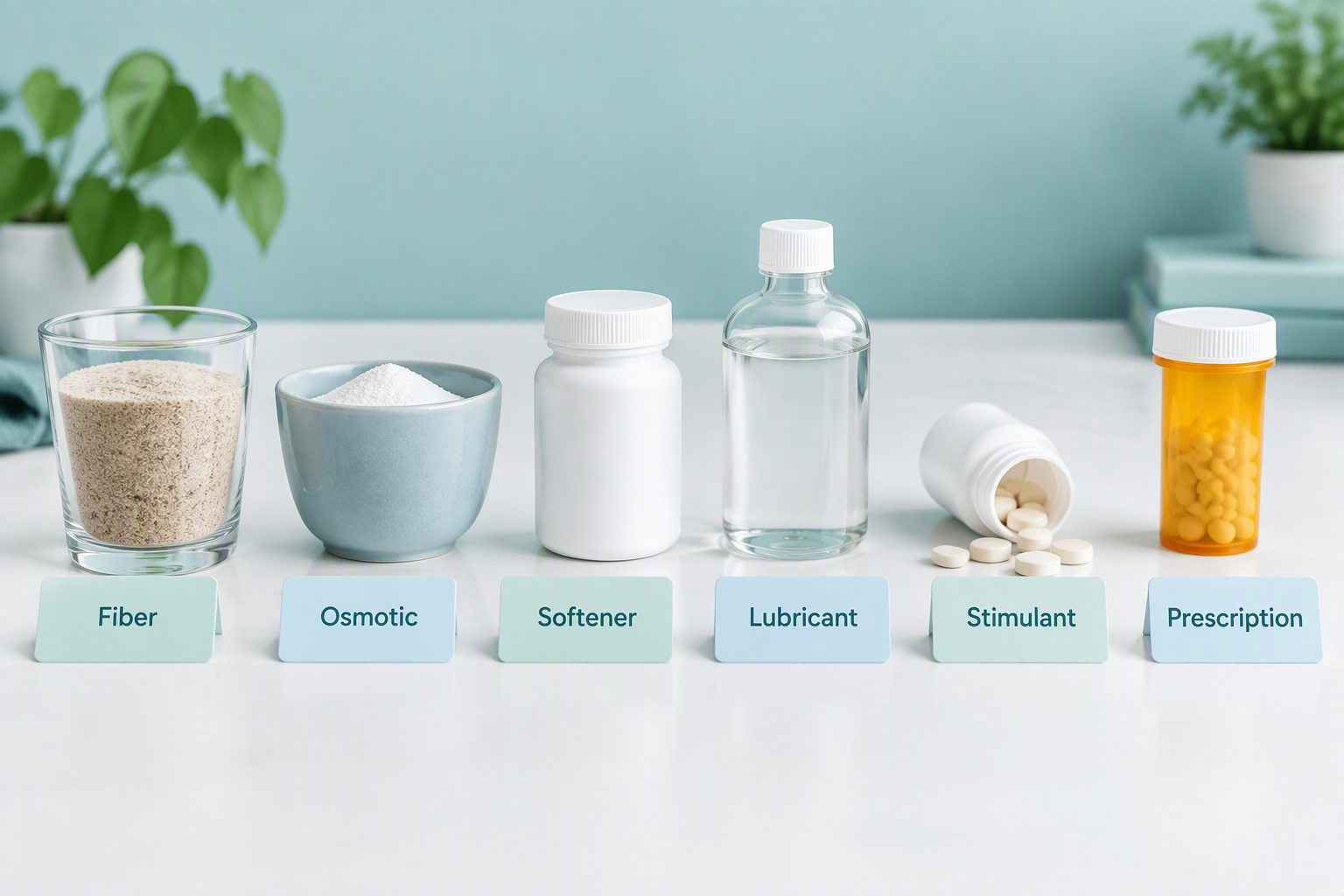
The main types of laxatives work through different mechanisms, so the best fit depends on whether your stools are hard, bowel movements are infrequent, or you need short-term relief. Constipation and its causes can also affect which option makes sense. Faster relief is not always the better choice for recurring symptoms.
How laxatives work comes down to adding bulk, drawing water into the bowel, easing stool passage, or prompting the colon to move. The six main laxative types include:
- Bulk-forming laxatives: Psyllium and methylcellulose absorb water to create a larger, softer stool that the colon can move more easily. They work gradually and require enough fluid. If you have irritable bowel syndrome (IBS), unflavored psyllium without sweeteners or extra ingredients can make it easier to tell how your body responds.
- Osmotic laxatives: Polyethylene glycol, magnesium hydroxide, and lactulose pull water into the bowel, helping soften dry or hard stool. These osmotic laxatives often work sooner than fiber-based options.
- Stool softeners: Docusate helps water mix into stool. Stool softeners may help when avoiding straining matters, but they are not intended for rapid relief.
- Lubricants: Mineral oil coats stool to support easier passage. It is generally for short-term use rather than ongoing constipation.
- Stimulant laxatives: Senna and bisacodyl encourage colon contractions and may work more quickly than bulk-forming laxatives or stool softeners. Cramping and urgency can occur, which may be disruptive during work or school.
- Prescription options: Secretagogues increase intestinal fluid, while other medicines affect bowel-motility pathways. These options differ from nonprescription treatments in who they suit and the monitoring they may require.
Take psyllium with at least 8 ounces of water, and separate it from oral medicines because fiber can interfere with medication absorption. Regular reliance on stimulant laxatives, or constipation that continues despite common approaches, warrants a conversation with a pharmacist or healthcare professional.
How Do Bulk-Forming and Osmotic Laxatives Differ?
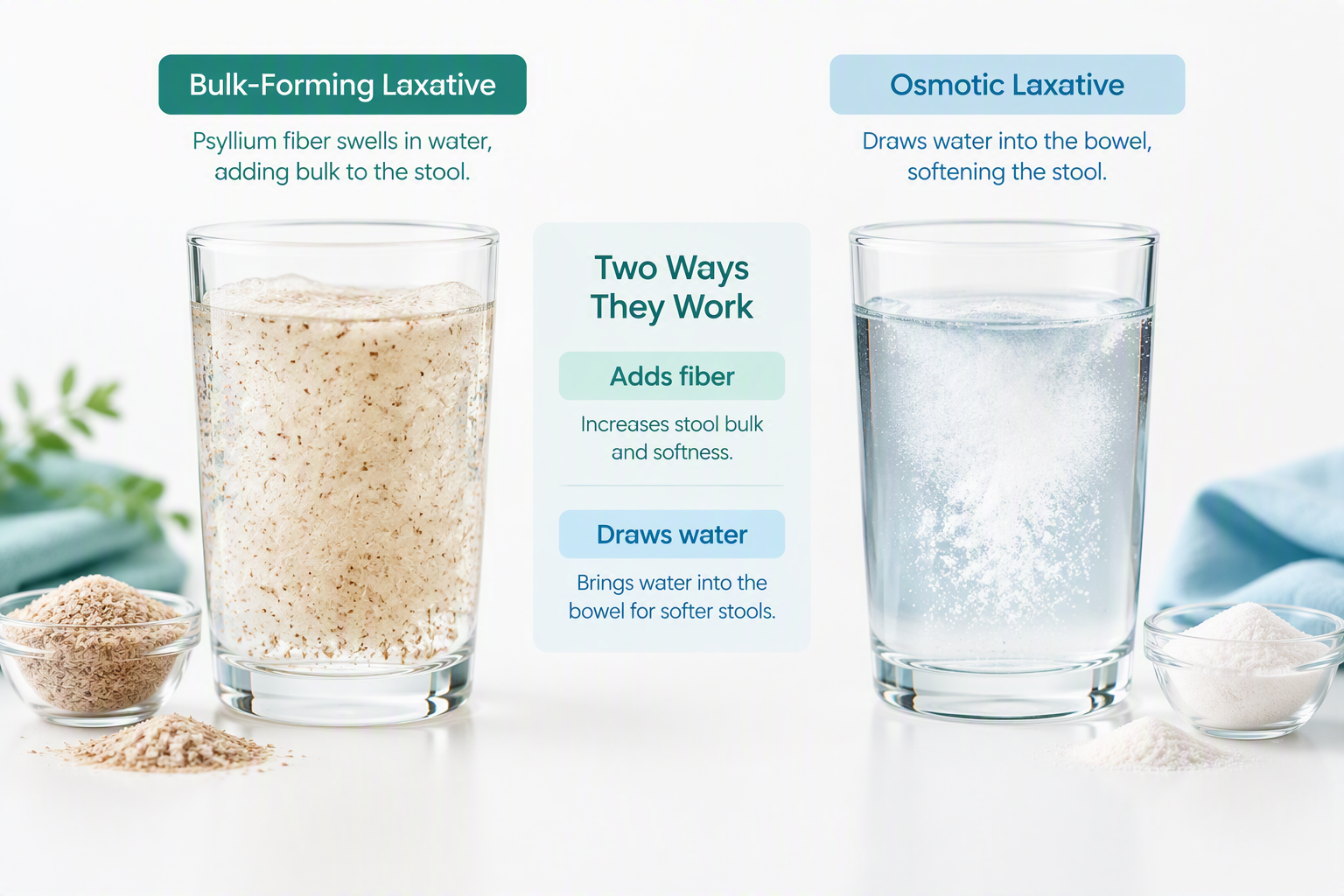
Among the main laxative types, bulk-forming laxatives add water-holding fiber to stool, while osmotic laxatives draw water into the intestine. Both can soften hard stools, but bulk-forming options are often a gentle first choice when fiber intake is low, while osmotic laxatives may fit when stools stay hard despite adequate fiber. The National Institute of Diabetes and Digestive and Kidney Diseases includes both among common constipation treatments (source).
The main differences are easier to compare side by side:
Type | How it works | Expected onset | Common drawbacks |
|---|---|---|---|
Bulk-forming laxatives | Psyllium, methylcellulose, and polycarbophil absorb water, adding soft bulk that encourages bowel contractions. | About 12 to 72 hours | Gas, fullness, and bloating |
Osmotic laxatives | Polyethylene glycol and magnesium draw water into the bowel without adding fiber. | Polyethylene glycol: about 1 to 3 days. Magnesium products may work faster (source). | Cramping, loose stools, diarrhea, or urgency |
Polyethylene glycol generally produces gradual stool softening, whereas magnesium hydroxide and magnesium citrate can cause a more forceful bowel movement, especially when the dose is stronger than you need. Medication references describe these differences in how laxatives work and their timing patterns (source).
For IBS, start fiber gradually rather than adding a full dose at once. If psyllium repeatedly worsens gas, methylcellulose may be easier to tolerate because it is less fermentable.
Bulk-forming laxatives need enough fluid to work safely:
- Follow the psyllium product's mixing directions.
- Drink fluids throughout the day, and do not take fiber immediately before bed.
- Ask a pharmacist about your fiber schedule if you take oral medicines.
Too little liquid can worsen constipation and may raise the risk of choking or blockage. Magnesium-based osmotic laxatives warrant extra caution if you have kidney disease, heart disease, fluid-balance concerns, or recurring cramps. Knowing how long laxatives take to work can help you choose a measured option instead of the fastest one.
A polyethylene glycol powder such as MiraLAX is the usual osmotic starting point, and magnesium hydroxide is the faster-acting alternative.
When Do Stool Softeners and Lubricants Fit?
Beyond options that add bulk or draw water into the bowel, stool softeners and lubricant laxatives can help with dry, hard-to-pass stool, but neither is meant for sudden urgency or fast constipation relief. Docusate and arachis oil may offer a gentler option when avoiding straining matters, while lubricant laxatives are reserved for brief use. Passing hard stools safely also means avoiding repeated straining and paying attention when hard stools keep returning.
Docusate and arachis oil may suit you if you can wait for a gentler change in stool consistency. They work gradually over a day or more rather than within hours, and although docusate is common when straining would be uncomfortable, evidence reviews have found limited benefit, including no better constipation prevention than placebo in some care settings.
Mineral oil is a lubricant that may help especially dry stool pass more easily. It is not a routine treatment for constipation and should only be used briefly. Important cautions include:
- Vitamin absorption: Mineral oil can reduce absorption of fat-soluble vitamins.
- Swallowing problems: Inhaled mineral oil can enter the lungs and cause aspiration pneumonia.
- Persistent constipation: Ongoing symptoms or repeated need for rectal or lubricant products merit a conversation with a pharmacist or healthcare professional.
A mild-sounding option is not always the best fit for recurring constipation, especially when stool changes are becoming a pattern.
When Are Stimulant Laxatives Useful?

Stimulant laxatives can prompt a bowel movement when occasional constipation has not improved with other over-the-counter laxatives. Bisacodyl and senna work differently from products that mainly add water or bulk to stool. They activate nerves in the colon, triggering the muscle contractions that move stool forward.
Knowing how long laxatives take to work can help you plan around work, school, or a commute. Oral bisacodyl usually works within 6 to 12 hours, so an evening dose may produce a morning bowel movement (source). Senna has a similar oral timeline, while rectal bisacodyl suppositories may work faster when waiting overnight is impractical (source). No option guarantees a result on a set schedule.
The main trade-offs include:
- Cramping and diarrhea: These common laxative side effects can be especially disruptive during a school day, work shift, commute, or any time bathroom access is limited.
- Senna-specific effects: Nausea, belching, and a change in urine color can occur with some senna-containing products.
- A short-term role: Stimulant laxatives fit brief, occasional constipation better than ongoing hard stools or a repeating irregular pattern.
- Overuse concerns: Repeated use can mask a cause of constipation and create problems from frequent diarrhea or growing reliance on laxatives.
For ongoing support, bulk-forming fiber or osmotic laxatives are often gentler starting points. Keep stimulant use short term, and speak with a pharmacist or clinician if constipation keeps returning or your bowel habits continue to change.
When Are Prescription Secretagogues Considered?
Prescription treatment may enter the conversation when fiber, an osmotic laxative such as polyethylene glycol, or brief stimulant use with bisacodyl or senna has not provided enough relief, causes side effects, or does not suit the likely cause of your symptoms. This level of constipation treatment calls for a clinician to weigh pain, bloating, stool consistency, urgency, health history, and current medicines, not simply how long you have been constipated.
Prescription secretagogues increase fluid in the intestines, making stool easier to pass and supporting more regular bowel movements. The main options work in slightly different ways:
- Linaclotide and plecanatide: These activate guanylate cyclase-C, a receptor that increases intestinal fluid.
- Lubiprostone: This activates chloride channels, which draw fluid into the bowel.
- Diarrhea: Loose stools can occur with these medicines and may be a poor fit if urgency or diarrhea is already part of your symptom pattern.
For constipation-predominant irritable bowel syndrome (IBS-C), treatment may need to address abdominal pain as well as constipation. With chronic idiopathic constipation, meaning constipation without an identified cause, the aim is usually more reliable stool passage. New or changing bowel habits still need attention because these medicines manage symptoms rather than offering a universal answer.
Prucalopride is not a secretagogue. It is a prokinetic, meaning it stimulates bowel movement rather than mainly increasing intestinal fluid, and may be considered when chronic constipation remains disruptive after other options have not helped enough.
Opioid-induced constipation takes a different path. When an opioid is the likely cause and standard laxatives have not helped sufficiently, a clinician may consider a peripherally acting mu-opioid receptor antagonist. These medicines counter opioid effects in the gut without intending to reduce pain relief, but the choice depends on your opioid regimen and medical history.
Rectal options can be useful when stool needs to pass more promptly, though when a suppository is the better choice depends on the symptom pattern. Enemas as a last resort reflects their greater potential for discomfort and complications when used casually.
Which Laxative Fits Hard Stools or Urgency?
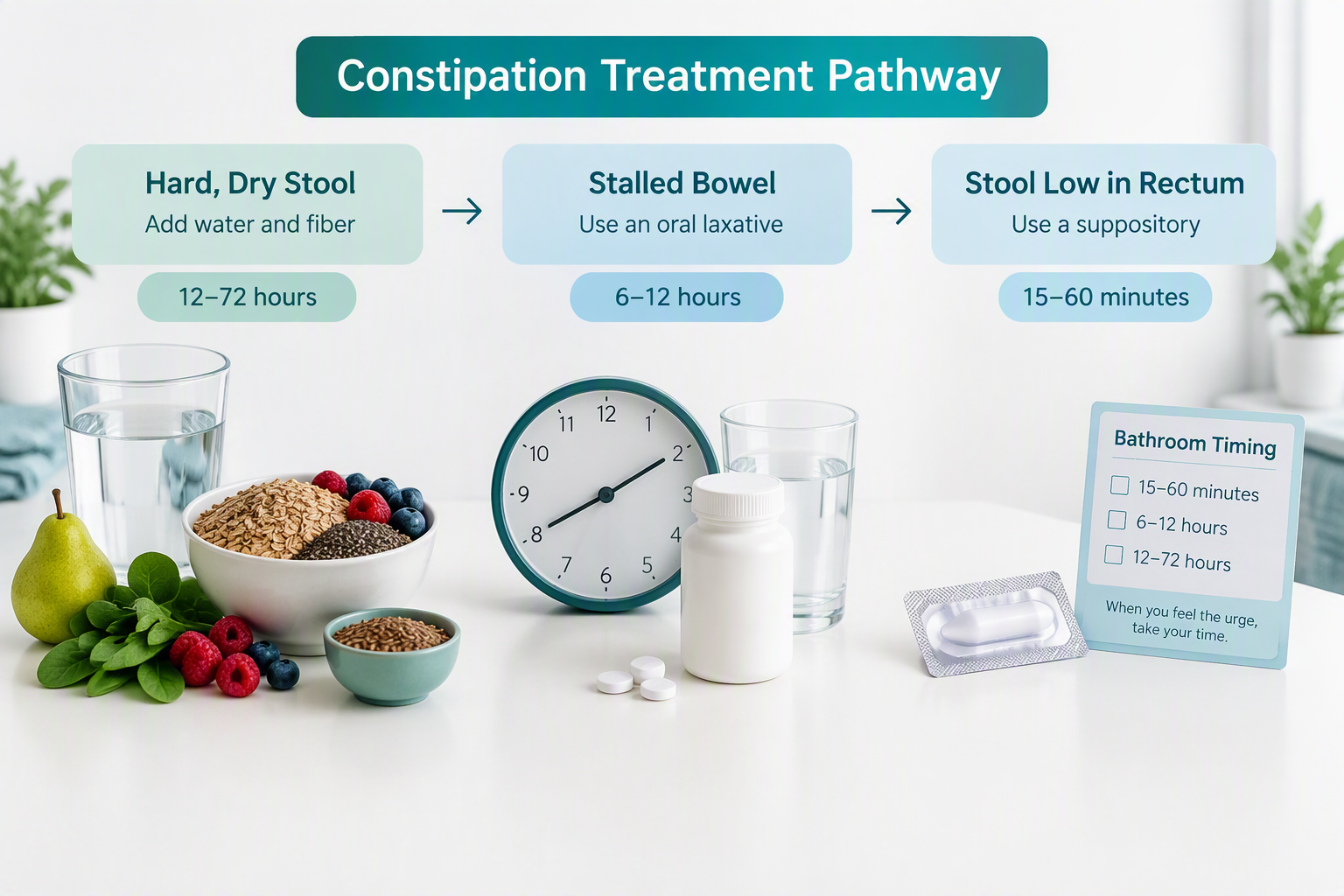
The right constipation treatment depends on whether stool is hard and dry, already soft but difficult to pass, or sitting low in the rectum. Timing also differs: bulk-forming fiber can take 12 to 72 hours, while rectal suppositories or enemas may work in roughly 15 minutes to one hour when stool feels low in the rectum, and oral stimulant laxatives generally take 6 to 12 hours (source).
Stool pattern or need | Option that may fit | What to expect |
|---|---|---|
Hard, dry, lumpy stool | Polyethylene glycol or bulk-forming fiber | Polyethylene glycol is an osmotic laxative that pulls water into stool, making it easier to pass. It can cause bloating or loose stool. Fiber may help, but some people with IBS find it increases gas. |
Hard stool that persists after fiber | Polyethylene glycol added or substituted | Adding more fiber is not always useful when it causes discomfort. Docusate is often called a stool softener, though its benefit is less certain than that label suggests. |
Stool is soft but difficult to pass | Bisacodyl for short-term use | Bisacodyl is a stimulant laxative that prompts bowel movement rather than adding moisture. Cramping and urgency can occur. |
Stool feels low in the rectum and relief is needed promptly | A suppository or enema | Rectal options may fit when stool is near the exit, but they are not the default for every episode. Sodium phosphate enemas are one occasional option. |
Bisacodyl is not necessarily stronger or better than polyethylene glycol. It addresses a different problem, like prompting a stalled bowel to move rather than softening dry clay. Medication use, symptom duration, mobility, and health conditions can change which option makes sense.
Use laxatives occasionally, follow the labeled dose, and avoid habitual daily use unless a clinician has advised it. Prompt medical advice is important for:
- Severe or worsening abdominal pain
- Vomiting or fever
- Blood in the stool or black stool
- Inability to pass gas
Frequent rectal treatments, recurring urgency, or a sudden change from your usual bowel pattern deserves discussion with a healthcare professional.
Laxative classification by mechanism, rather than by brand, is what makes the choice clear. What laxatives do, at bottom, is add water, add bulk, or add contractions. Stool softener laxatives suit straining, osmotics suit hard stool, and stimulants suit a stalled bowel.
What Are Anthraquinone Plant Laxatives?
Within the short-term stimulant options discussed above, anthraquinone laxatives are plant-based stimulant medicines that trigger nerves controlling colon muscles, producing contractions that move stool. Senna and cascara are common examples. Cascara buckthorn and rhubarb laxatives may contain buckthorn bark or rhubarb root, but natural ingredients are neither interchangeable nor meant for daily constipation treatment.
Unlike fiber, stool softeners, and osmotic laxatives that draw water into the bowel, anthraquinone plant laxatives are short-term choices after gentler over-the-counter options have not helped. The NHS classifies stimulant laxatives as medicines that stimulate bowel muscles (source).
The forceful bowel activity can create urgency, so follow package directions and stay near a bathroom. Common laxative side effects include:
- Abdominal cramping: Stronger colon contractions can be painful.
- Loose stools or diarrhea: These effects can disrupt work or a commute.
- Nausea or belching: Some people develop stomach upset.
- Urine color changes: Certain senna or cascara products may temporarily discolor urine.
Drug Facts labels matter because plant-laxative products vary in active ingredient, strength, and directions. Prolonged or excessive use of stimulant laxatives can cause diarrhea and electrolyte imbalance, and some references also warn about possible dependence with repeated use (source). Severe electrolyte imbalance can cause weakness, confusion, seizures, or heart-rhythm changes. Senna has been linked to uncommon liver injury (source).
Diarrhea can affect medicine absorption or tolerance. If you take prescription drugs, manage a health condition, or have persistent constipation or changing bowel habits, ask a pharmacist or healthcare professional before regular use.
How Can You Avoid Laxative Risks and Misuse?
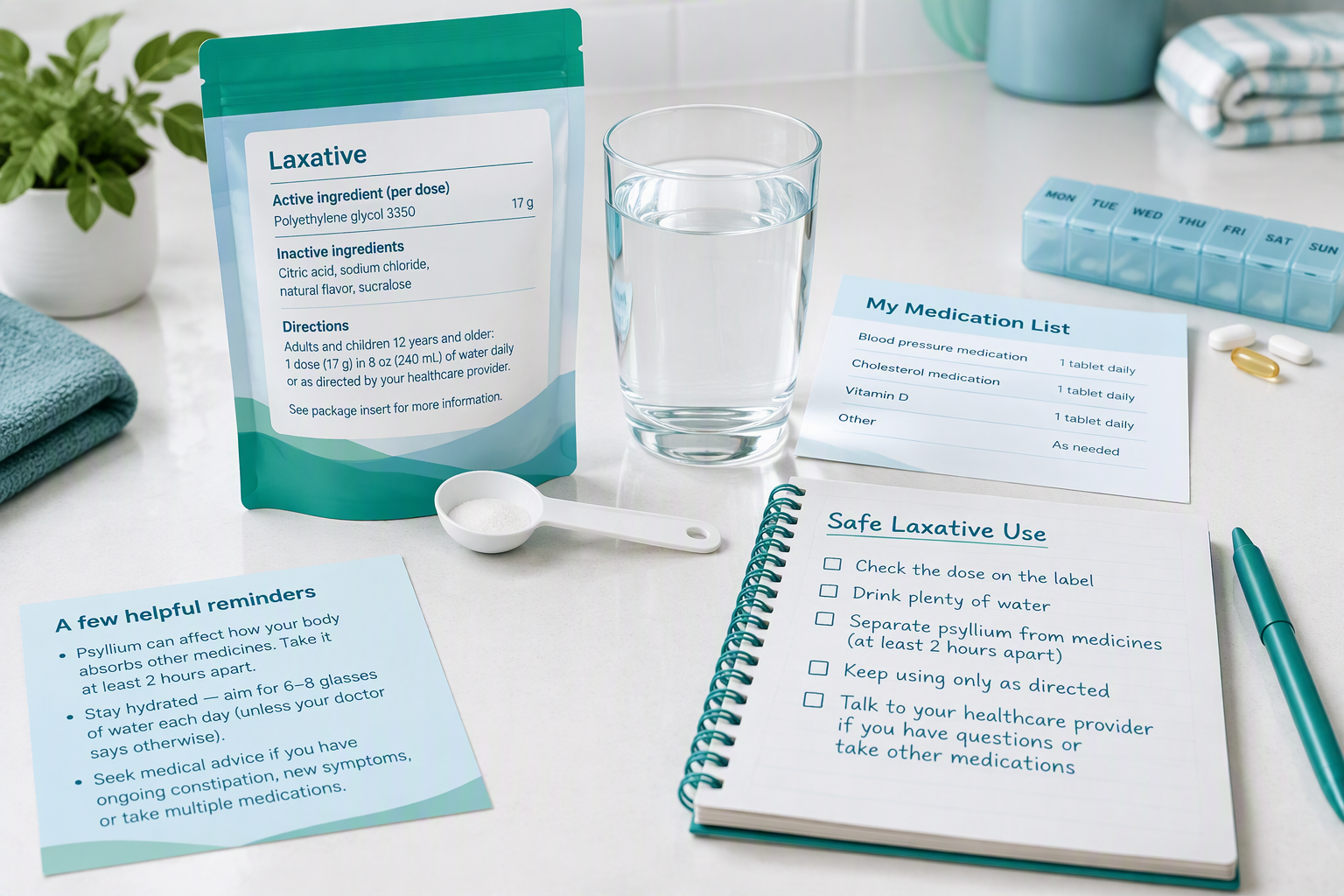
Choose one product with a clearly identified active ingredient, follow its laxative dosage instructions, and do not add another product when relief is delayed. Combining over-the-counter laxatives does not necessarily improve results, but it can raise the risk of cramping, diarrhea, dehydration, and electrolyte problems. Laxative misuse often begins with taking more than the label directs or escalating treatment for constipation that keeps returning.
Follow the package directions for the specific over-the-counter laxative you choose. Support bowel regularity with adequate fluids, fiber-rich foods, and unhurried time to use the bathroom. Persistent symptoms need an explanation, not a stronger dose.
For IBS, monitor symptoms as you increase psyllium. Take each dose with at least 8 ounces of water, and avoid taking it right before bed. A single-ingredient, unflavored product can also make it easier to tell whether sweeteners or flavorings aggravate IBS symptoms.
Several precautions matter before using a laxative:
- Kidney or heart conditions: Magnesium-containing and other osmotic laxatives may be unsuitable with kidney disease, heart failure, or another cardiac condition. Ask a pharmacist or clinician which options fit your health history.
- Medicine timing: Psyllium and other laxatives can affect absorption of oral medicines. Separate psyllium from other medicines by about one to two hours, especially levothyroxine, digoxin, lithium, carbamazepine, iron, calcium, and zinc.
- Combination products: Check every active ingredient rather than assuming a multi-symptom product works better. Duplicate ingredients can make side effects more likely.
Laxative dependence becomes a concern when laxatives are regularly needed to have a bowel movement rather than used for occasional constipation. Chronic constipation, unexplained changes in bowel habits, or repeated laxative use should be reviewed by a healthcare professional. Bring the product label, length of use, symptoms, and a complete list of medicines and supplements.
Stop self-treatment and seek prompt medical care for:
- Severe or worsening abdominal pain
- Persistent vomiting
- Marked bloating or belly swelling
- Fever, blood in stool, or black stool
- Unexplained weight loss or dehydration
- Inability to pass stool or gas
Inflammatory bowel disease or a possible bowel narrowing also warrants clinical guidance before taking a laxative.
Safe laxative use means the lowest effective dose for the shortest time. Laxative safety questions belong with a pharmacist when you take other medicines.
How Can Lifestyle Changes Support Regular Bowel Movements?

To reduce the need for repeated laxative use, for uncomplicated constipation, the daily-routine guidance linked earlier can support regular bowel movements before or alongside a laxative, especially when you make changes gradually to limit gas, cramps, and bloating.
With IBS or gas sensitivity, consider alternatives if psyllium remains uncomfortable. If gas continues, methylcellulose or partially hydrolyzed guar gum may be worth discussing with a pharmacist, along with how to take fiber products with enough fluid and separate them from oral medicines or supplements.
Natural alternatives to laxatives are the routine itself: fiber, fluids, movement, and a regular toilet time.
Laxative Types FAQs
Common questions about laxative types can help you compare how different options work, what you might expect, and which cautions may matter based on your symptoms, routine, and health history.
1. Can Children Take Laxatives?
Children can sometimes use laxatives, but they are not smaller adults. Use only products labeled for your child’s age, follow laxative dosage instructions exactly, and never give an adult dose. Before starting, ask a pediatric clinician or pharmacist to help match the ingredient and amount to your child’s weight, symptoms, medicines, and constipation pattern.
Ongoing constipation deserves evaluation, particularly with severe belly pain, vomiting, a swollen abdomen, blood in stool, fever, or poor drinking. These signs need prompt medical care.
2. Are Laxatives Safe During Pregnancy?
Constipation is common during pregnancy, but laxative choices need extra care. Begin with your obstetric clinician’s guidance on fluids, fiber-rich foods, gentle activity when suitable, and regular toilet habits. Over-the-counter bulk-forming fiber, osmotic laxatives, stool softeners, and stimulants are not automatically appropriate, since your health history, supplements, pregnancy complications, dose, and duration matter. Contact your obstetric clinician or pharmacist for persistent symptoms, and get prompt care for severe pain, vomiting, rectal bleeding, or constipation that does not improve (source).
3. Can Laxatives Interact With Medications?
Yes. Laxatives can change how oral medicines are absorbed or tolerated, so review the label and have a pharmacist check your prescription, over-the-counter, and supplement list. Psyllium can bind medicines, so do not take digoxin, aspirin and other salicylates, or nitrofurantoin within 3 hours of it (source). Use magnesium products cautiously with kidney or heart disease, and seek guidance for new or worsening symptoms.
4. How Long Can You Take Laxatives?
Over-the-counter laxatives are meant for occasional, short-term use. Follow the package directions rather than increasing the dose or relying on daily treatment, unless the label permits longer use or a clinician has recommended a plan for an ongoing condition. Frequent self-treatment can cause problems and may hide why constipation returns. Persistent, worsening, or recurrent symptoms need evaluation, especially with severe or ongoing abdominal pain, vomiting, blood or black stool, unexplained weight loss, or a new change in bowel habits.