


Sleep affects digestion, and digestive discomfort can disrupt sleep in return. Short or broken nights may change gut movement, appetite, and sensitivity, while reflux, bloating, or IBS symptoms can make settling down harder.
Your gut keeps working overnight, although motility slows and activity usually increases after waking. Calmer evening gut routines often start with timing: finish a substantial meal at least three hours before lying down when reflux is a problem, then remain upright and avoid a second large meal. A seven-day log of dinner timing, bedtime, overnight waking, and next-day symptoms can show patterns more reliably than one bad night.
Sleep changes are only one part of digestive symptoms. Repeated nighttime diarrhea, pain that wakes you, trouble swallowing, vomiting, black or bloody stools, or unexplained weight loss need timely medical attention.
Sleep and Digestion Key Takeaways
- Sleep and digestion influence each other through gut-brain, hormone, immune, and nerve signals.
- Gut motility slows overnight and usually increases after waking and around meals.
- Poor sleep may worsen constipation, urgency, bloating, reflux, and gut sensitivity.
- Finish substantial meals at least three hours before lying down to help reduce nighttime reflux.
- IBS symptoms and sleep loss can form a cycle of discomfort, worry, and fatigue.
- Consistent dinner, bedtime, and wake times can support more predictable digestion.
- Nighttime diarrhea, bleeding, vomiting, severe pain, or weight loss need medical attention.
How Do Sleep and Digestion Affect Each Other?
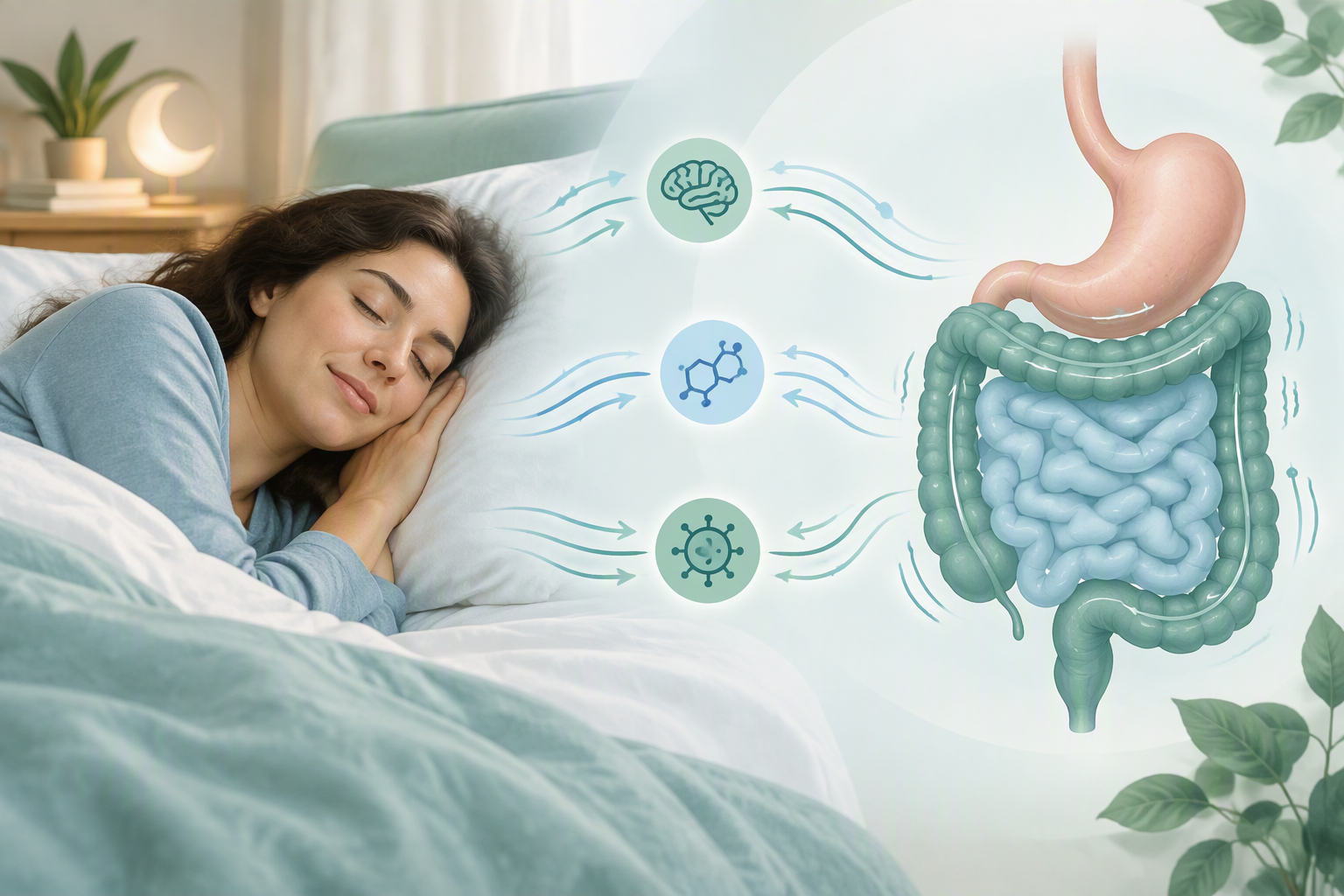
Sleep and digestion affect each other through the gut-sleep axis, a two-way communication system between the central nervous system, which includes your brain and spinal cord, and the enteric nervous system, the nerve network in your digestive tract. Nerve, hormone, and immune signals move in both directions. A restless night can change how your gut feels the next day, while discomfort can keep your body alert when it needs to rest.
The sleep effects on digestion are usually temporary after one poor night. Repeated short or broken sleep, however, may raise stress-hormone activity, increase gut sensitivity, and slow digestion for some people. Sleep also helps regulate ghrelin and leptin: ghrelin increases hunger, while leptin signals fullness. When sleep is disrupted, cravings for sugary or high-fat foods and eating past fullness may be more likely, which can worsen bloating, reflux, or irritable bowel syndrome (IBS) symptoms in people who are sensitive to those foods.
How digestion affects sleep often comes down to symptoms that make lying down or staying in bed uncomfortable:
- Reflux: Lying down can allow stomach contents to move upward, causing burning or discomfort.
- Pain and bloating: Cramping or abdominal pressure can make a comfortable sleep position hard to find.
- Bowel changes: Constipation, urgency, diarrhea, or repeated bathroom trips can delay sleep or wake you overnight.
- Symptom worry: After a difficult day with IBS symptoms, expecting discomfort at bedtime can raise tension and make rest harder.
Poor sleep can heighten next-day stress and gut sensitivity, so symptoms may feel tougher to manage by evening. Gut health day and night often depends on noticing patterns instead of blaming yourself for a single bad night.
Sleep and gut microbiome research adds another part to the sleep gut connection. Consistent, restorative sleep may support a healthier gut microbiome, while disrupted sleep has been linked with changes in microbial diversity and gut function (source). Microbial activity and gut-brain signaling may also influence sleep quality, which is why sleep and digestive habits work best when considered together.
Digestion on shift work can be especially difficult because meal timing, light exposure, and sleep schedules may all change at once.
What Does Your Gut Do Overnight?
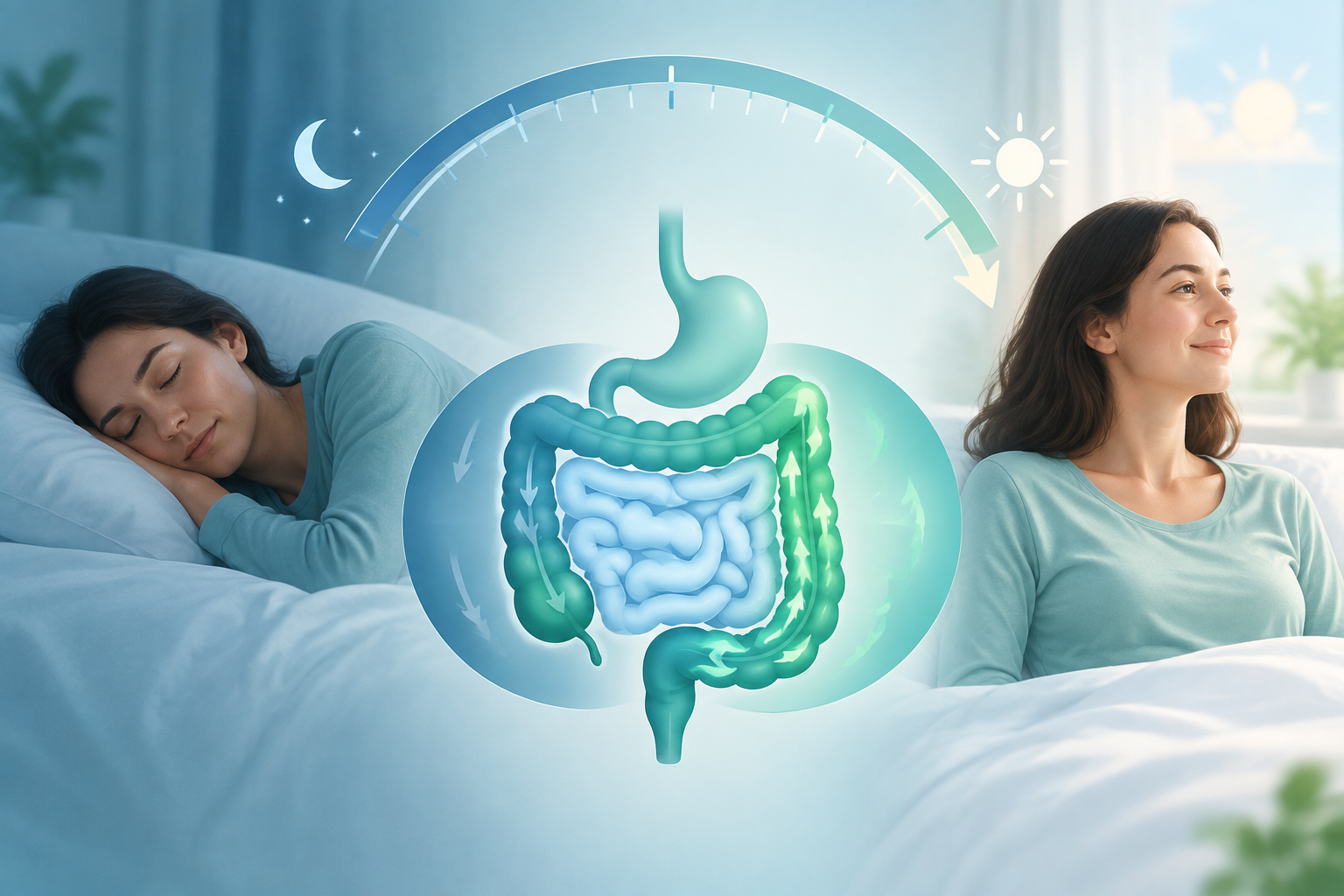
Within the gut-sleep connection, your gastrointestinal tract stays active overnight, but it moves at a slower, steadier pace. The digestive system's overnight work includes moving food along, absorbing nutrients, and maintaining the intestinal lining. Fewer nighttime urges to have a bowel movement, followed by more activity after waking, usually reflect a normal daily rhythm.
Peristalsis, the wave-like muscle action that moves food forward, slows in the stomach and intestines during sleep. Movement in the small intestine and contractions in the colon also decrease, although the pattern may become more regular than it is during the day. Activity typically picks up after you wake and around meals, which is one reason morning bowel movements are common.
The upper digestive tract also changes while you sleep. Swallowing, saliva production, and primary esophageal contractions, which help clear the esophagus, decrease overnight. Stomach emptying is generally slower, though it may speed up during rapid eye movement (REM) sleep. Sleeping after eating a large meal can therefore feel uncomfortable, especially if reflux already bothers you, without meaning that one difficult night signals a diagnosis.
Your body clock helps time digestive hormones, secretions, nutrient absorption, gut movement, and the gut microbiome with your sleep-wake cycle. Gastric acid secretion also follows a daily pattern and may peak around 10 PM to 2 AM. Regular sleep and meal times can support more predictable digestion, while late meals and changing schedules may throw that timing off. The National Heart, Lung, and Blood Institute notes that adequate sleep supports health and daily functioning (source).
Sleep also gives your gut time for gut tissue repair during sleep, including upkeep of the mucus lining and intestinal barrier. A single bloated or restless night is common, but a repeated pattern deserves attention:
- Persistent nighttime diarrhea.
- Abdominal pain that repeatedly wakes you.
- Severe or frequent reflux.
- Vomiting, bleeding, blood in stool, or black stool.
- Unexplained weight loss.
- A new, ongoing change in bowel habits.
These symptoms can overlap with irritable bowel syndrome (IBS), but symptoms that regularly interrupt sleep are a reason to speak with a clinician.
How Can Short Sleep Change Digestion?
Against the overnight digestive rhythm, sleep deprivation and digestion can influence each other, although the effects vary from person to person. One short night may leave you gassy, backed up, or more sensitive to a usual meal. Persistent fragmented sleep may add to constipation, reflux, or IBS symptoms. The National Heart, Lung, and Blood Institute notes that sleep deficiency affects body systems involved in stress and appetite regulation (source).
Changes in motility, or the movement of food and waste through the digestive tract, help explain how sleep affects digestion. Short or disrupted sleep is associated with irregular gut movement. For some people, slow digestion from poor sleep can mean constipation, bloating, abdominal distention, or fewer urges to have a bowel movement. Others may have looser stools or urgent, unpredictable trips to the bathroom. One bad night does not prove sleep caused a symptom, since meals, illness, stress, and menstrual cycles can also affect bowel habits.
Several pathways can make digestive symptoms more noticeable:
- Stress response: Inadequate sleep may raise cortisol and adrenaline, keeping your body in a fight-or-flight state. Over time, this can disrupt coordinated digestion, alter blood flow to the digestive tract, and potentially affect enzyme activity or nutrient absorption.
- Gut-brain signaling: The stress side of the gut-brain axis can become more active when sleep is poor. Sleep loss may increase visceral sensitivity, meaning normal gas, stretching, or bowel activity feels more crampy or painful.
- Appetite shifts: Lack of sleep can affect digestion indirectly by increasing hunger, reducing satisfaction after meals, and making rich, sugary, or highly processed foods more appealing. These choices may aggravate reflux, bloating, or irregular stools for some people, but they are only one part of the cycle.
- Microbiome changes: Research on sleep and gut microbiome patterns is still developing. Disrupted sleep is linked with lower microbial diversity and more inflammation-associated bacteria, which may influence the intestinal lining and immune activity.
Stomach pain and lack of sleep can be a frustrating pair, but worsened discomfort after a rough night does not automatically signal damage. Persistent poor sleep and gut health changes are worth tracking alongside meals, bowel patterns, and stress so you can spot patterns that deserve attention.
Which Symptoms Can Poor Sleep Worsen?
Poor or disrupted sleep can make digestive symptoms feel more intense and harder to manage, but it is rarely the only cause. Meals, stress, medicines, and underlying conditions can also contribute. Notice whether symptoms follow several short or restless nights instead of assuming sleep explains every flare.
Symptoms that may stand out after poor sleep include:
- Reflux symptoms: Heartburn at night, burning discomfort, regurgitation, or chest pressure can delay sleep or wake you up. Fragmented sleep may also heighten how strongly you feel acid reflux at night the next day. An occasional episode after a late, heavy meal differs from frequent nighttime heartburn that disrupts sleep. Sleep and acid reflux can become a difficult cycle, particularly when the lower esophageal sphincter, the muscle that helps stop stomach contents from moving upward, is not closing tightly enough.
- Bloating and abdominal pain: Poor sleep and ongoing stress can occur alongside more gas, bloating, cramping, and pain. Changes in gut-brain signaling and microbial activity may contribute. Chronic stress has also been linked with fewer beneficial gut bacteria, though microbiome changes alone do not prove the cause of symptoms.
- Bowel habit changes: Constipation, urgent stools, and diarrhea may be harder to manage during stretches of disrupted sleep. Lower tolerance for normal gas or bowel sensations can also make familiar symptoms feel more disruptive.
- Appetite and IBS symptoms: After a bad night, hunger may feel stronger or less predictable, and usual meals may seem harder to tolerate. For people with IBS, this can intensify a cycle of pain, bloating, constipation or diarrhea, and sleep loss. The gut makes much of the body's serotonin, and serotonin is one of the pathways involved in melatonin production and sleep timing (source).
Food timing can matter with reflux. The National Institute of Diabetes and Digestive and Kidney Diseases notes that certain foods and eating patterns worsen GERD symptoms for some people (source). Frequent symptoms need more attention than simply trying to sleep earlier.
IBD can also disturb sleep in ways that are easy to dismiss. People with IBD may take longer to fall asleep, wake more often, and have less daytime energy even when the disease appears quiet. Poorer sleep can also occur alongside more severe disease, so fatigue, pain, diarrhea, or repeated nighttime waking should be discussed with the clinician managing your IBD.
Get prompt medical care for:
- Severe or persistent abdominal pain
- Trouble swallowing
- Unintentional weight loss
- Dehydration, fever, or vomiting
- Black or bloody stool
- Ongoing diarrhea or constipation
- Symptoms that repeatedly wake you from sleep
Better sleep can support symptom management, while persistent or life-disrupting symptoms need a fuller clinical assessment.
Meal timing and the gut health diet can help you notice whether eating before bed lines up with reflux or uncomfortable fullness.
How Can You Ease Nighttime Reflux?

Among the symptoms poor sleep can intensify, nighttime reflux is more likely when you lie down with a full stomach because gravity no longer helps keep stomach contents down, and reflux that flares when you lie down is often the first sign of GERD. Sleep also reduces swallowing and saliva production, leaving the esophagus with fewer chances to clear acid. Burning, sour-tasting regurgitation, coughing, and wake-ups can disrupt sleep and feed a reflux-sleep cycle (source).
A practical evening routine can reduce the chance of symptoms:
- Finish your last substantial meal at least three hours before you lie down if nighttime reflux is a problem.
- Stay upright after dinner. A short walk, kitchen cleanup, or preparation for the next day can work better than reclining on the couch.
- Choose a lighter meal if work or family schedules make dinner late. Heavy, greasy, high-fat, and spicy foods may delay stomach emptying and worsen discomfort for some people.
- Raise your upper body with a wedge or by elevating the head of the bed. Stacked pillows can bend at your waist and add stomach pressure. Left-side sleeping may also help limit reflux if it is comfortable enough to maintain (source).
Trigger foods vary, so you do not need broad restrictions. Try rich fried foods, spicy dishes, tomato-based foods, citrus, chocolate, and carbonated drinks earlier in the day or in smaller portions. Test one change at a time, including whether alcohol or caffeinated drinks close to bedtime worsen symptoms. Peppermint can also aggravate heartburn or GERD in some people.
Sleep and IBS can overlap in frustrating ways, especially when nighttime burning adds to abdominal discomfort or irregular bowel habits the next day. Although sleep and IBS symptoms may not have the same cause, fewer reflux-related awakenings can make it easier to notice which routine changes help.
Frequent nighttime heartburn or symptoms that continue despite these changes deserve medical review. Contact a clinician promptly if reflux occurs with any of these warning signs:
- Trouble swallowing or pain with swallowing
- Unexplained weight loss
- Vomiting
- Chest pain
- Black stools
Discuss recurrent reflux with a clinician before relying on over-the-counter acid-reducing medicines for the long term.
Sleep and GERD form a loop, since acid reflux and sleep loss feed each other, and eating before bed and digestion is the usual weak point. Sleep-friendly evening foods are small, low in fat, and finished a few hours before lying down.
Why Can IBS and Sleep Form a Cycle?
IBS and sleep can reinforce each other, and this pattern is common, frustrating, and not a personal failure. Abdominal pain, bloating, urgency, constipation, or diarrhea may delay sleep or wake you during the night. After poor sleep, the same gut sensations can feel harder to ignore the following day.
Sleep loss can make gut sensations feel painful or urgent sooner than usual, while stress and worry about symptoms at work, during a commute, or at bedtime can turn up these gut-brain signals. That does not mean your symptoms are imagined or that new intestinal damage has occurred.
The cycle often builds through several connected effects:
- Nighttime disruption: Pain, reflux, heartburn, or an urgent bathroom trip can interrupt rest.
- Stronger symptoms: Poor sleep is associated with worse next-day abdominal pain, anxiety, fatigue, and distress in people with IBS.
- Harder routines: Fatigue and distress can make regular meals, hydration, movement, and coping with unpredictable bowel changes more difficult.
- Bedtime tension: Fear of symptoms or another sleepless night can make it harder to settle during an IBS flare.
Healthy sleep and gut health support each other, but sleep is only one contributor to IBS. More restorative rest may help reduce symptom intensity and make flares easier to manage, but it does not cure every cause of IBS. IBS involves altered gut-brain signaling and sensitivity, unlike inflammatory bowel disease, which involves ongoing inflammation and tissue damage.
Rest also supports recovery during an IBS flare. In people who are susceptible, insufficient sleep may worsen reflux, heartburn, bloating, abdominal pain, or constipation. There is no single best sleep position for digestion, so choose one that feels comfortable and does not worsen reflux.
Some symptoms need medical evaluation rather than sleep changes alone:
- Blood in the stool
- Unexplained weight loss
- Fever
- Persistent severe abdominal pain
- New or worsening symptoms that regularly wake you from sleep
These signs are not typical IBS patterns and deserve timely attention.
Sleep and IBS flare-ups track together in diary studies, and irritable bowel syndrome and sleep loss share the same stress pathway. Sleep and constipation link through gut motility at night, which slows when the body clock is off.
Build a Calmer Evening Gut Routine

To help steady the IBS-sleep cycle, a steady rhythm matters more than a perfect schedule. Healthy sleep and gut health are linked through your body clock, which helps coordinate rest and digestive activity. Keeping dinner, bedtime, and wake time fairly consistent, including weekends when practical, can make sleep and digestion more predictable. It will not explain every flare or bowel change, but it can give you a clearer baseline.
Aim to finish a large dinner at least three hours before lying down. A heavy, high-fat meal close to bedtime can leave you uncomfortably full and may worsen reflux symptoms. A practical evening-to-morning rhythm can include:
- Eat dinner at a similar time most nights, stopping before you feel stuffed.
- Remain upright after eating, especially if heartburn tends to wake you.
- Limit evening caffeine and alcohol, which can interfere with settling down, sleep quality, and overnight waking.
- Drink steadily through the day, then shift larger drinks earlier if bathroom trips disrupt sleep. Stay responsive to thirst rather than restricting fluids.
- Wake at a fairly consistent time, have a morning meal when possible, and allow unhurried toilet time if constipation is a concern.
Dinner adjustments should follow your symptoms, not universal food rules. A lighter meal may be more comfortable with nighttime reflux. With bloating, notice whether large portions, carbonation, or certain foods increase pressure. Familiar, tolerated foods and enough fluids may be easier to manage during diarrhea. These are low-pressure observations, not restrictive diets or ways to help manage IBS symptoms on their own.
If you are genuinely hungry near bedtime, a small, familiar snack is usually easier to tolerate than another large meal. A modest serving of complex carbohydrates with tryptophan, such as oatmeal, a banana, or a small handful of almonds, may work well for some people. Avoid foods that reliably trigger your heartburn, gas, urgency, or pain.
A seven-day log can replace guesswork with patterns. Record:
- Dinner: Timing and approximate portion size.
- Evening intake: Bedtime snacks, caffeine, and alcohol.
- Sleep: Bedtime, wake time, and overnight waking.
- Next-day symptoms: Reflux, bloating, bowel changes, urgency, or IBS pain.
Change one routine factor at a time when feasible. Sleep and stress can affect symptoms without being their only cause, so several days of notes are more useful than one difficult night.
An evening routine is not enough when symptoms persist or worsen. Seek prompt medical advice for repeated nighttime diarrhea, severe or increasing pain, trouble swallowing, vomiting, blood or black stools, unexplained weight loss, or dehydration.
Consistent sleep and digestion improve together, because circadian rhythm and digestion run on the same body clock. Gut microbiome and circadian rhythm are linked too, so poor sleep and gut bacteria shifts show up within days. Probiotics and sleep is an early research area, so treat supplements as optional.
Meal timing and sleep are linked in both directions, and sleep deprivation and gut health research is young but consistent on that point. Sleep and reflux improve together once dinner moves earlier.
Sleep Effects on Digestion FAQs
These FAQs address how sleep and digestion can affect each other, including possible links between poor rest and bloating, reflux, constipation, or IBS symptoms.
1. Does Sleeping Position Affect Digestion?
Sleeping on your left side or raising the head of your bed may reduce nighttime reflux for some people. Lying flat after a large meal can make reflux more likely, but no sleep position speeds digestion itself. Your circadian rhythm also helps coordinate gut motility, digestive hormones, nutrient absorption, and the gut microbiome. Irregular sleep and late-night eating can throw off that schedule, so leaving time between dinner and bed may ease heartburn when it is a recurring problem.
2. Can Sleep Apnea Cause Digestive Symptoms?
Sleep apnea does not directly cause digestive symptoms for everyone, but repeated breathing pauses disrupt sleep and stress the body. Poor sleep can make reflux, heartburn, bloating, constipation, abdominal pain, and IBS harder to manage. Stomach pain and lack of sleep can also feed into each other. Cortisol and adrenaline may affect digestion by shifting blood flow away from the gastrointestinal tract. Sleep apnea is associated with reflux and GERD, not proven as the sole cause. If symptoms occur with loud snoring, gasping, witnessed pauses, morning headaches, or major daytime sleepiness, discuss possible sleep apnea with a healthcare professional.
Sleep apnea and gut health connect through nighttime reflux and broken sleep.
3. Can Sleep Medicines Cause Constipation?
Some sleep medicines can contribute to constipation or changed bowel habits. The effect varies with the medicine, dose, other medications, hydration, diet, and your individual response. Does lack of sleep affect digestion? Ongoing sleep disruption can slow gut motility, or movement, adding to bloating, constipation, or irregularity.
One or two restless nights rarely cause major digestive changes. If constipation begins after starting or changing a prescribed sleep medicine, ask a pharmacist or clinician to review it rather than stopping it suddenly. Get prompt medical care for persistent or worsening constipation, severe abdominal pain, vomiting, or inability to pass stool or gas.
Sleep deprivation and gastrointestinal motility are the real issue, and treating the sleep loss usually helps the gut more than the medicine hurts it.