


A tight stomach doesn't automatically mean an emergency or a serious disease. It often comes from gas, indigestion, constipation, stress, food intolerance, or pregnancy-related changes, but tightness is a symptom rather than a diagnosis. The sensations can range from fullness and bloating to cramping or pressure.
After a rushed meal, swallowed air, carbonated drinks, and rich foods can create pressure that improves after belching or passing gas. Upper-belly tightness with heartburn can fit reflux or indigestion, while lower-abdominal pressure that eases after a bowel movement may point toward constipation or IBS. Tracking meal pace, bowel changes, menstrual timing, and relief after gas or stool helps clarify the pattern.
Abdominal rigidity is different: the belly stays hard or board-like and does not relax with gentle touch. Severe or worsening pain, repeated vomiting, fever, blood or black stool, fainting, or inability to pass gas or stool need urgent medical care. Persistent tightness that disrupts eating, sleep, or daily life also merits a clinician's advice.
Tight Stomach Key Takeaways
- Stomach tightness is a symptom that can involve digestion, muscles, hormones, or stress.
- Gas, swallowed air, indigestion, and constipation commonly cause a soft but pressured abdomen.
- Upper-abdominal tightness with heartburn may fit reflux or indigestion.
- IBS can cause recurring tightness with pain and changes in bowel habits.
- Track meals, bowel movements, stress, menstrual timing, and relief after passing gas or stool.
- Eat slowly, stay upright after meals, and try gentle movement for mild gas-related discomfort.
- Seek urgent care for a rigid abdomen, severe pain, repeated vomiting, bleeding, fever, or fainting.
What Does a Tight Stomach Feeling Mean?
A tight feeling in the stomach is a symptom, not a diagnosis. It can involve the digestive tract, abdominal muscles, hormonal changes, the stomach lining, or nearby organs. digestive symptoms and what drives them places a tight stomach among common concerns that can overlap.
The sensation may be hard to describe, and more than one feeling can occur at once:
- Cramping: Comes in waves, similar to a muscle spasm.
- Squeezing: Feels like pressure or a contracting sensation.
- Fullness: Leaves little room after eating, especially when your stomach feels tight and full.
- Bloating: Creates a stretched or swollen feeling, sometimes with visible distension.
- A knot in the stomach: Feels like focused tension or discomfort in one area.
Timing adds useful context but cannot identify the cause on its own. A tight feeling in the stomach after meals may occur with gas, indigestion, or a food trigger. Symptoms that track with bowel movements, stress, menstrual cycles, or pregnancy may have different explanations. Note whether your stomach feels tight briefly and occasionally or keeps returning and worsening.
Location and accompanying symptoms also help clarify the pattern. With upper-abdominal tightness, belching, nausea, heartburn, or appetite changes can occur. With lower-abdominal tightness, constipation, diarrhea, gas, or an urge to have a bowel movement may occur. Fever or urinary symptoms matter because they may point beyond a routine digestive issue.
A hard or rigid abdomen is different from ordinary tightness and needs prompt medical care, especially if it comes with the following symptoms (source).
- Severe or worsening pain
- Persistent vomiting
- Fever
- Blood in the stool
Is Your Belly Tight or Rigid to Touch?
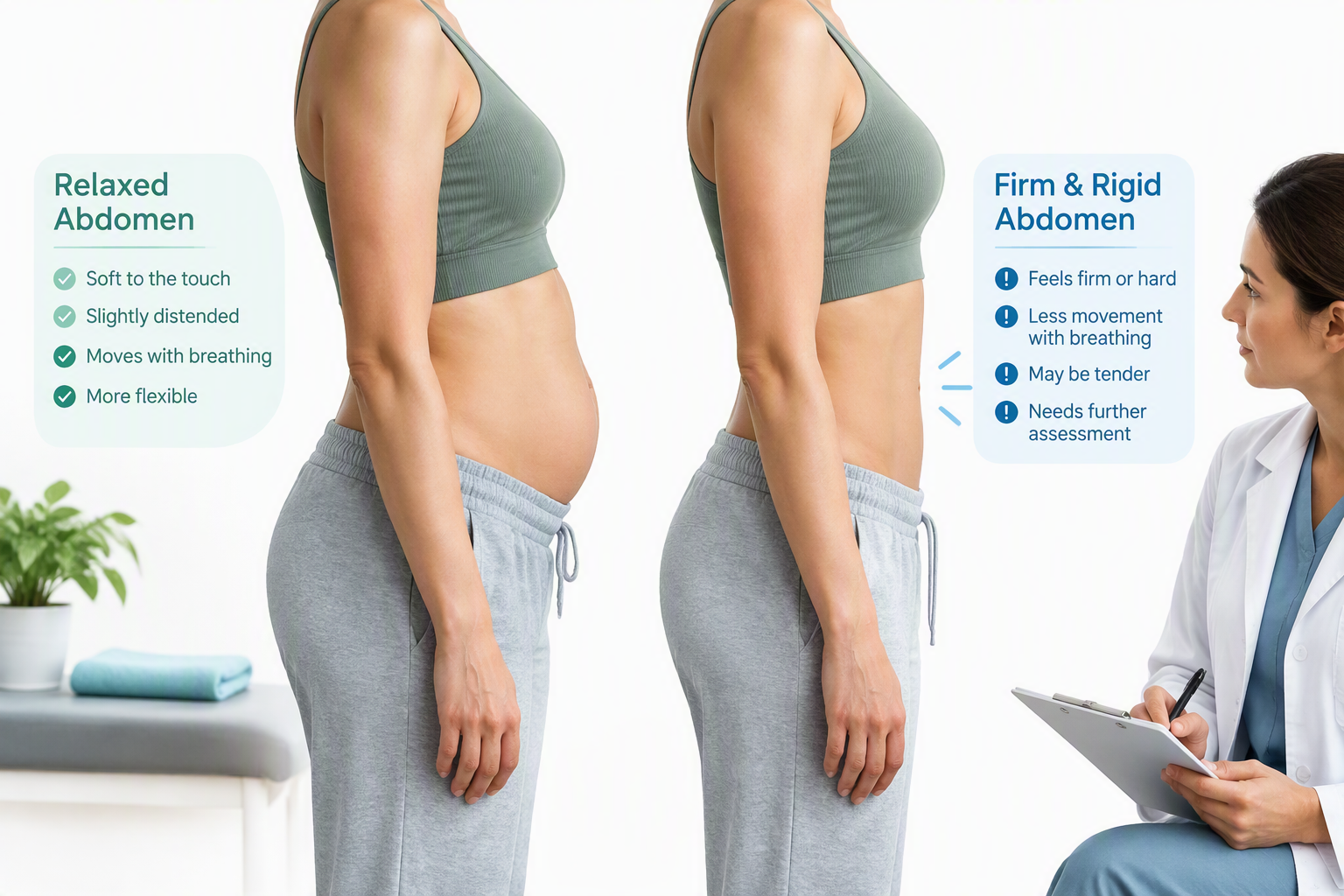
A tight abdomen often feels full, stretched, or pressurized, yet the abdominal wall stays soft when you relax. Gas, constipation, indigestion, stress, and pregnancy-related stretching can all create this feeling. A hard stomach can feel alarming, but temporary muscle tensing does not automatically mean abdominal rigidity.
Abdominal rigidity means the belly feels hard or board-like with gentle touch and will not relax voluntarily. Cold, anxiety, fear, or bracing for expected pain can make the muscles tighten briefly. Rigidity that persists may point to irritation inside the abdomen and needs prompt medical assessment.
Concerning signs alongside firmness include:
- Marked tenderness with gentle touch.
- Pain that gets worse when pressure is released.
- Severe or escalating abdominal pain.
- Visible swelling of the abdomen.
- Repeated vomiting, fever, or inability to pass stool or gas.
- Fainting or blood in vomit or stool.
Seek urgent medical care for a rigid or very tender abdomen, especially when any of these symptoms are present. Do not keep pressing on a painful belly to check whether it is firm, since repeated pressure can worsen discomfort and does not rule out a serious cause. The key difference is whether the muscles relax and whether pain, tenderness, swelling, or other warning signs are developing.
Could Gas or Indigestion Cause Post-Meal Tightness?

When the abdomen is soft rather than rigid, a tight stomach after eating often comes from gas, swallowed air, or indigestion. Gas can stretch the digestive tract, creating visible bloating or pressure that may shift around your belly. Belching or passing gas that eases the discomfort is a useful clue that trapped gas may be involved. The National Institute of Diabetes and Digestive and Kidney Diseases notes that air swallowed while eating or drinking can add to digestive gas (source).
Certain habits can make this pattern more noticeable:
- Eating quickly or talking during meals can increase swallowed air.
- Chewing gum, drinking through a straw, and having carbonated drinks can add air or gas.
- Sulfur-rich foods can contribute to foul-smelling rotten-egg burps, while slow stomach emptying may also play a role.
Indigestion can cause upper-belly tightness with uncomfortable fullness, burning, nausea, or frequent belching. Large meals, rapid eating, rich or fatty foods, caffeine, alcohol, smoking, anxiety, and certain medicines can all contribute. The National Institute of Diabetes and Digestive and Kidney Diseases describes indigestion as a group of upper-digestive symptoms that can occur together (source).
Tightness high in your stomach with heartburn, sour-tasting fluid, or symptoms that worsen when you lie down may fit reflux better than lower-belly gas. Early fullness, nausea, ongoing upper-abdominal pain, or tightness after small amounts of food can also occur with gastritis or a hiatal hernia.
Track what you ate, your meal size and pace, when symptoms began, and whether gas brings relief. Food intolerance or carbohydrates that are hard to digest can contribute, as covered in the later food-intolerance section. Severe, persistent, or worsening pain needs medical evaluation.
Could Constipation, Stress, or IBS Cause Tightness?

Beyond gas and indigestion, constipation can leave your abdomen feeling full, pressured, or tight when stool moves slowly through the bowel. Hard or dry stools, straining, discomfort, and fewer than three bowel movements a week can all fit this pattern. Having a bowel movement every day does not rule out constipation if you still feel like stool has not fully passed.
Stool that remains in the colon can also make gas harder to move through. The result may be bloating and distension, cramping, or a stretched feeling that becomes more noticeable after meals. A brief record of your usual bowel habits can help separate a one-time episode from a recurring pattern:
- Stool consistency: Note whether stools are hard, dry, loose, or change from day to day.
- Usual frequency: Compare recent bowel movements with what is normal for you.
- Incomplete emptying: Pay attention to whether you still feel blocked or full after using the bathroom.
- Symptom changes: Notice whether tightness improves after passing stool or gas.
A tight feeling can occur with irritable bowel syndrome, but tightness alone cannot diagnose IBS. Irritable bowel syndrome is a recurring pattern of abdominal pain or cramping with changes such as constipation, diarrhea, urgency, gas, or alternating bowel habits. Stress and anxiety may also contribute through the brain-gut connection. They can change digestive movement and make normal gut sensations feel more intense, leading to cramping, indigestion, diarrhea, constipation, or a clenched feeling sometimes called tight stomach anxiety. Symptoms remain real even when stress is part of the picture.
Common digestive symptoms often have more than one cause, so a single episode of tightness does not necessarily point to IBS, constipation, or anxiety.
Could Hormones, Pregnancy, or Food Intolerance Cause Tightness?
Outside bowel and stress-related patterns, hormones, pregnancy, and food intolerance can each make your abdomen feel tight, but the timing and other symptoms often point to the likely cause. Hormones and bloating commonly occur in the days before a period, when PMS can make the lower abdomen feel full, tense, or crampy.
Common PMS-related symptoms include:
- Fluid retention: A puffy or swollen feeling in the abdomen.
- Gas: Pressure or bloating that may change through the day.
- Pelvic cramps: A tight, aching sensation low in the abdomen.
A pattern that returns before your period and eases once bleeding begins is more consistent with PMS. Note when symptoms occur and whether they disrupt daily life. New, severe, persistent, or increasingly disruptive symptoms between periods need medical assessment.
A tight stomach during pregnancy may reflect the uterus growing and the surrounding tissues stretching. Braxton Hicks contractions can cause brief tightening, but they are usually irregular and may ease with rest, fluids, or a position change. Labor contractions tend to become more regular, stronger, and closer together (source).
Contact a maternity clinician promptly if tightening occurs with:
- Severe or worsening abdominal pain
- Vaginal bleeding or fluid leakage
- Faintness, fever, or chills
- Painful urination
- Reduced fetal movement later in pregnancy
- Pain with bleeding or dizziness early in pregnancy
Avoid using a heating pad or hot-water bottle on your abdomen during pregnancy unless your maternity clinician specifically advises it.
Food intolerance often follows a particular food and portion size. In lactose intolerance, dairy lactose is not fully digested and can ferment in the gut, causing rumbling, gas, pressure-like tightness, bloating, and sometimes diarrhea. When the belly looks swollen as well as feeling tight, this is often called bloating and abdominal distension.
Before cutting out broad food groups, track whether symptoms reliably follow the same food, amount, and meal context.
How Can You Relieve Stomach Tightness?

Small changes after meals can ease fullness, trapped gas, and indigestion. For how to relieve a tight stomach, eat more slowly, take smaller bites, and chew thoroughly rather than rushing or talking while you chew. Pause carbonated drinks for several days, then notice whether large, rich, spicy, or other personal trigger foods repeatedly worsen symptoms before cutting out many foods at once.
If pressure improves after you pass gas or move around, gentle activity may help ease trapped gas and discomfort. Helpful options include:
- A relaxed walk after eating.
- Light stretching or another comfortable activity.
- Staying upright instead of lying down immediately after a meal.
Skip strenuous exercise if it makes discomfort worse, especially after a large meal.
Constipation-related tightness usually improves more comfortably with gradual changes. Add fiber-rich foods slowly and drink enough water, because a rapid increase in fiber can temporarily worsen gas and bloating. Regular meals, gentle movement, and unhurried bathroom time can also support more consistent bowel habits. Mild stomach illness with loose stools, nausea, or low appetite often calls for rest and steady hydration. Small, frequent sips of fluids you can tolerate are usually easier than drinking a large amount at once, and bland foods can return gradually as your appetite does. Prompt medical assessment is important for:
- Vomiting that prevents you from drinking.
- Signs of dehydration.
- Fever, bloody or black stool, or severe abdominal pain.
MedlinePlus also identifies these symptoms as reasons to seek medical care (source).
Stress and IBS can tighten abdominal muscles and affect bowel habits, even when the discomfort feels very physical. Slow breathing, quiet rest, gentle stretching, a short walk, and consistent sleep may reduce muscle tension and help you notice whether symptoms settle. These measures support symptom management, but they do not dismiss persistent or disruptive symptoms.
When Should You Seek Medical Care?
Even after trying symptom-relief measures, tightness, bloating, or a tense feeling by itself is common and does not automatically mean an emergency, unlike vomiting that smells like poop. When deciding when to seek care for a tight stomach, focus on whether the abdomen is hard, very tender, visibly swollen, or involuntarily rigid to touch. Abdominal rigidity can point to a serious abdominal problem and should not be monitored at home.
Emergency care is needed now for:
- Sudden or severe pain: Severe stomach pain, especially when movement or releasing pressure makes it worse.
- A hard, board-like abdomen: Marked rigidity, swelling, or tenderness that makes movement difficult.
- Vomiting or bleeding: Repeated vomiting, being unable to keep fluids down, bloody vomit, bloody stool, or black, tar-like stool.
- A possible bowel obstruction: Vomiting that smells like stool with a swollen belly and no passage of gas or stool can fit this pattern.
- Whole-body warning signs: Trouble breathing, fainting, confusion, or marked weakness.
Contact your clinician the same day if tenderness is worsening, abdominal swelling is new or increasing, or fever occurs with abdominal symptoms. Ongoing vomiting or diarrhea also needs timely advice, particularly when dehydration causes very little urine, dizziness, dry mouth, or unusual sleepiness.
Do not use an anti-diarrheal medicine to self-treat severe pain with diarrhea, fever, bloody stool, or black stool. Slowing the bowel may be inappropriate when infection, inflammation, or bleeding is possible.
Pregnancy can cause stretching and occasional tightening that is not dangerous. Urgent maternity or emergency guidance is appropriate for:
- Severe or persistent pain
- Vaginal bleeding or leaking fluid
- Fever, fainting, or breathing difficulty
- Tightening accompanied by other concerning symptoms
A routine appointment can help when tightness, bloating, constipation, diarrhea, or pain keeps returning, gets worse, disrupts eating or daily life, or comes with a meaningful change in bowel habits. Persistent early fullness or unintentional weight loss also deserves medical discussion, although tightness alone does not mean cancer.
Bring notes on meal timing, relief after passing gas or stool, stress or menstrual timing, and visible abdominal distension. These details can help a clinician tell a recurring digestive pattern from symptoms that need further testing.
Tight Stomach Feeling FAQs
These FAQs address a tight stomach feeling, including common causes, practical next steps, and signs that warrant medical attention.
1. Can Dehydration Cause a Tight Stomach?
Dehydration can indirectly cause a tight, uncomfortable stomach by making constipation more likely. Hard stools, straining, fewer than three bowel movements a week, and lingering fullness can create pressure that feels like a tight stomach after eating or indigestion. Sipping fluids regularly may support digestion, especially with fiber, but tightness has many causes. Seek prompt medical care for confusion, fainting, very little urine, or inability to keep fluids down, and contact a healthcare professional for severe, persistent, or worsening abdominal pain.
2. Why Does My Stomach Feel Tight at Night?
A tight stomach at night often follows a large or rushed dinner, especially when you lie down soon afterward. Rich or spicy foods, caffeine, and alcohol can worsen indigestion or reflux, causing heartburn, nausea, gas, bloating, or a bad taste. Constipation, trapped gas, and stress-related muscle tension may also build during the day. Have recurring nighttime tightness or symptoms that disrupt sleep reviewed by a healthcare professional. Seek prompt care for severe or worsening pain, vomiting, fever, unexplained weight loss, blood or black stool, or a hard, rigid abdomen.
3. Can Exercise Cause Stomach Tightness?
Exercise can cause brief stomach tightness when your core muscles work hard or movement shifts gas and stimulates bowel activity. It is more likely after a large meal, during vigorous activity, or when you are dehydrated, and it should ease with a gentle cooldown, fluids, and rest. Avoid intense exercise until discomfort resolves. Stop and seek prompt medical care for severe or worsening pain, a rigid or very tender belly, repeated vomiting, fever, fainting, blood in stool, or pain that persists despite rest.
4. Does a Tight Stomach Mean Stomach Cancer?
A tight or bloated feeling, including a hard stomach, is not by itself a reliable sign of stomach cancer. Common digestive problems are more likely, but ongoing or worsening symptoms should be assessed rather than self-diagnosed.
Contact a qualified healthcare professional promptly if tightness occurs with unexplained weight loss, feeling full after small meals, blood in vomit or stool, repeated vomiting, unusual tiredness or shortness of breath that may signal anemia, or a lasting change in bowel habits.