


A delayed flight, an unfamiliar airport meal, and a missed bathroom break can be enough to upset a sensitive gut. Travel tips for gut health work best when they keep your usual food, fluids, movement, and symptom plan as steady as possible before, during, and after the trip. For IBS, constipation, diarrhea, or bloating, preparation is usually more useful than trying a new supplement on departure day.
Probiotics are often marketed as travel protection, yet they have not been proven to prevent traveler's diarrhea. Food and water safety, familiar snacks, and ORS for significant diarrheal fluid loss address different problems, while lower cabin pressure can expand intestinal gas and worsen flight bloating. A small sensitive-gut travel kit can keep daily supplies and symptom-specific backup within reach.
High fever, blood or black stool, severe pain, repeated vomiting, or dehydration need medical attention rather than repeated self-treatment. Keeping meals, hydration, sleep, and bathroom habits as consistent as possible can make travel disruptions easier to manage.
Travel Gut Health Key Takeaways
- Keep meals, fluids, movement, and bathroom habits close to your normal routine.
- Avoid trying new supplements, digestive products, or medicines on travel day.
- Pack familiar snacks, regular medicines, safe water options, and ORS in your carry-on.
- Drink consistently, move often, and avoid delaying bowel movements to reduce constipation.
- Choose thoroughly cooked hot foods and safe water where local water is uncertain.
- Use ORS for substantial diarrhea-related fluid loss, not ordinary sports drinks.
- Seek medical care for fever, blood or black stool, severe pain, or dehydration.
Prepare Your Gut Before You Leave

Preparation should match your destination, trip length, and usual symptoms. Domestic weekends, long-haul international flights, remote itineraries, and resort stays can disrupt meals, sleep, movement, and access to familiar food or water in different ways. These travel tips for gut health matter most when constipation, diarrhea, bloating, food sensitivities, or irritable bowel syndrome (IBS) already affects your routine.
In the days before departure, stick with foods and portions you know you tolerate. Avoid unusually rich meals and don't test unfamiliar restaurant dishes, ingredients, alcohol, or caffeine habits. Regular meals, hydration, sleep, and daily movement help protect gut health during travel by limiting the pileup of stress, missed meals, dehydration, jet lag, and new foods. Travel stress can make symptoms feel less predictable, especially when travel already feels rushed.
Keep your usual fiber routine rather than increasing it just before leaving. A sudden change can cause gas, bloating, or urgency for a sensitive gut while traveling. Continue a fiber food or supplement that already works for you, and consider an unflavored option if sweeteners trigger symptoms. One change at a time makes it easier to spot what is helping or causing trouble.
Never try a digestive product for the first time on travel day. Test new options at home, where bathroom access makes unexpected side effects easier to manage:
- Fiber supplements: Watch for gas, bloating, urgency, or constipation.
- Probiotics: A shelf-stable probiotic can be a personal trial before travel if you already tolerate it, but it has not been proven to prevent traveler's diarrhea (source).
- Peppermint products: Stop if they worsen reflux or heartburn.
- Digestive enzymes: Try only one new product at a time.
- Over-the-counter symptom medicines: Follow the label and note any cramping, constipation, or diarrhea.
An anti-diarrheal may help manage a known diarrhea-predominant IBS pattern, but it is not routine preflight insurance. Keeping gut health on the road means relying on familiar supports, not last-minute experiments, to maintain gut health while traveling. Travel stress and the gut explains why a rushed trip can unsettle digestion before the first unfamiliar meal.
Pack a Sensitive-Gut Travel Kit
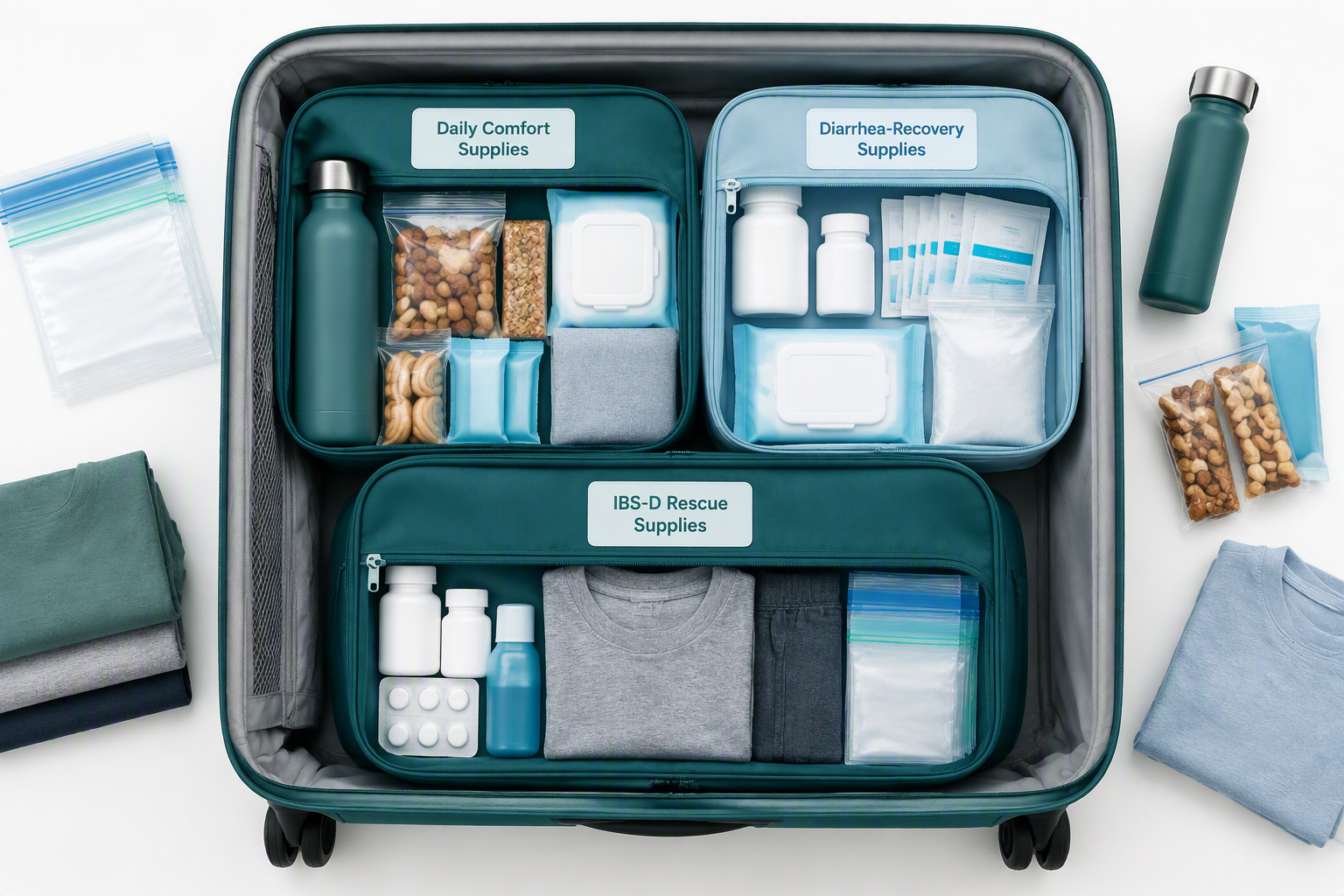
A small, discreet kit in your carry-on or day bag helps you manage a sensitive gut while traveling without relying on checked luggage. Tailor it to your destination’s food and water risks, trip length, transportation, pharmacy access, and usual pattern of constipation, diarrhea, bloating, or irritable bowel syndrome (IBS).
Three labeled pouches keep travel gut health supplies organized:
- Daily comfort supplies: Pack a refillable water bottle, familiar first-day foods, tolerated snacks, hand sanitizer, and regular digestive medicines in their original labeled containers. Choose fiber-containing snacks only if they already fit your plan. For fermentable oligosaccharides, disaccharides, monosaccharides, and polyols (FODMAP) choices, look for an explicit low-FODMAP or low-FODMAP certified label. Gut-friendly eating away from home can help when familiar snacks are not available.
- Diarrhea-recovery supplies: Include oral rehydration salts (ORS), safe water, and simple foods you know you tolerate. ORS contains a specific glucose-and-sodium balance for fluid lost through diarrhea, so it is not interchangeable with sports hydration drinks. Check electrolyte labels for sorbitol or xylitol, which can trigger symptoms.
- IBS-D rescue supplies: A clinician or pharmacist can help determine whether an over-the-counter anti-diarrheal or gentle laxative fits your symptoms, health conditions, and medicines. For a known irritable bowel syndrome with diarrhea (IBS-D) pattern, loperamide may be appropriate when used as directed as symptom-specific backup.
Safe hydration while traveling also means keeping prescriptions in hand luggage and checking destination restrictions, documentation requirements, and possible medication interactions before departure. Keep any medicine, supplement, electrolyte mix, or digestive aid in your kit limited to options you already tolerate.
Add unscented wipes, spare underwear or clothing, and opaque sealable bags, and bag used wipes unless restroom guidance clearly permits flushing. Checking toilet maps, onboard facilities, airline seating, and driving rest stops before leaving can reduce urgency stress.
Seek medical assessment instead of relying on rescue medicine for:
- Fever
- Blood or black stool
- Severe pain
- Signs of dehydration
A gut health packing list is short: gut-friendly travel snacks you already tolerate, oral rehydration salts, your usual medicines, and a small first-line kit.
Prevent Constipation and Flight Bloating

To reduce the need for the rescue supplies in your kit, prevent constipation while traveling and reduce bloating when flying by keeping drinking, eating, bathroom habits, and movement close to their usual pattern. Travel constipation often develops when fluids drop, meals become rushed, sitting stretches longer, and the urge to have a bowel movement is repeatedly delayed.
A few steady habits can make the trip easier:
- Drink consistently: Have fluids before leaving, sip during a flight or drive, and keep drinking after arrival. Dry cabin air can add to dehydration, fatigue, and slower digestion. Scale back alcohol or extra caffeine if either tends to leave you dehydrated or unsettled.
- Choose familiar fiber: Pack tolerated options such as nuts, seeds, whole-grain crackers, apples, bananas, berries, or simple-ingredient oat bars. Spread fiber across meals rather than adding a large serving at the airport.
- Make room for bathroom time: Early flights and time-zone shifts can interrupt your usual schedule. Give yourself a few unhurried minutes near your typical time, and avoid holding an urge when a restroom is available.
- Eat slowly and move often: Smaller, familiar meals and slower bites reduce swallowed air. Walk the terminal or a rest stop, use gentle in-seat stretches, and take a short walk after eating or arriving to encourage gut movement.
For travel-related constipation, consistency matters more than a perfect routine. Lower cabin pressure allows intestinal gas to expand, which can worsen bloating when flying. Nonrestrictive clothing, fewer carbonated drinks, and skipping chewing gum when it triggers symptoms can help you avoid bloating while traveling.
Fluid replacement also matters if diarrhea occurs during a trip, as the National Institute of Diabetes and Digestive and Kidney Diseases notes (source).
Travel constipation prevention is mostly hydration for travel constipation plus fiber and movement, with a gentle laxative for travel kept in the kit for day three, not day one.
Choose Food and Water Safely Abroad
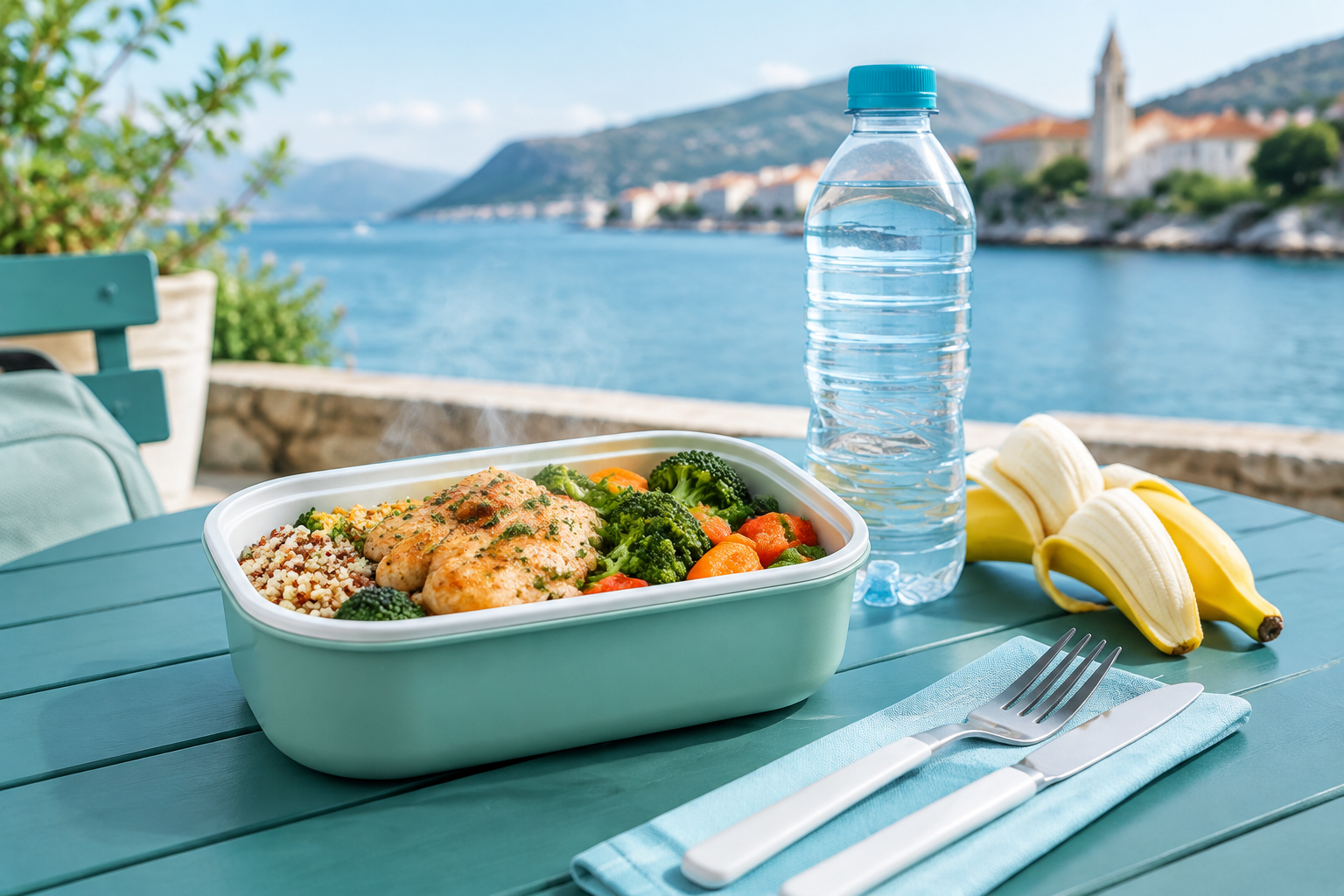
Along with replacing fluids when diarrhea occurs, eating safely abroad starts with checking destination-specific tap water safety before you leave, rather than relying on a hotel or restaurant setting. Where water is unsafe or uncertain, use sealed bottled, boiled, or reliably filtered water for drinking and brushing your teeth. Avoid ice cubes while traveling unless you can confirm they were made with safe water. These habits limit exposure to germs that can cause traveler’s diarrhea, according to World Health Organization guidance (source).
Travel food safety depends more on how food is prepared and served than on how polished a restaurant looks:
- Choose hot food: Order meals cooked to order and served piping hot. For street food safety, a busy stall may suggest food is replaced often, but visible heat and fresh cooking matter more than a long line.
- Pass on higher-risk raw foods: When local water is questionable, skip raw produce, salads, garnishes, and pre-cut fruit. Avoid raw or undercooked eggs, meat, seafood, and shellfish, and choose animal foods cooked thoroughly throughout.
- Peel intact fruit yourself: Bananas, oranges, and other fruit with a peel you can remove are often a more practical option than produce that has been cut, washed, or handled by someone else. Traveler’s diarrhea affects an estimated 10 to 70 percent of international travelers, depending on the destination (source).
Safe drinking water abroad is only part of the picture. Rich sauces, fried foods, spicy dishes, and unfamiliar ingredients may be safe to eat but still aggravate a sensitive digestive system when travel fatigue, stress, disrupted sleep, and new bacteria are already affecting your routine.
Start with smaller portions and simpler meals, then add unfamiliar foods gradually as you learn what feels comfortable. This approach supports traveler’s diarrhea prevention while helping meals feel more manageable during your trip.
Respond Quickly to Traveler’s Diarrhea

Even with careful food and water choices, traveler’s diarrhea needs fluids and rest first, not a “just in case” medication dose. Stop using questionable local food or water, rest when possible, and begin replacing lost fluids. Use a refillable bottle only with safe water. Otherwise, choose sealed bottled water or water that has been boiled or properly disinfected.
Safe hydration while traveling is easier when single-serve oral rehydration supplies are already in your bag, especially for hot climates, active days, or unexpected diarrhea. ORS supports rehydration after substantial fluid loss. Ordinary sports drinks and zero-sugar exercise electrolytes are designed for sweat replacement, not diarrhea-related rehydration.
Mix ORS packets with the exact amount of safe water stated on the label. If sorbitol or xylitol has triggered bloating or loose stools before, choose an option without those sweeteners.
Short-term symptom relief has clear limits:
- Loperamide: May reduce urgent, non-bloody diarrhea for some adults when used as labeled. Use loperamide only as directed.
- First doses: Avoid trying a new travel medicine on travel day. A new product can cause constipation or cramping when bathroom access is limited.
- Medication planning: A clinician or pharmacist can check for medicine interactions and discuss whether a standby antibiotic fits your health history and destination.
Avoid loperamide with fever, blood or black stool, severe cramps or abdominal pain, or signs of dehydration. Common travel digestive symptoms can overlap, but these warning signs need medical attention rather than symptom suppression.
Get prompt medical care for:
- High fever, blood or black stool, or severe or worsening abdominal pain.
- Confusion, fainting, very little urination, or an inability to keep fluids down.
- Diarrhea that is not improving, especially in young children, older adults, pregnant travelers, and people with weakened immune systems or significant chronic conditions.
Traveler's diarrhea prevention means preparing before departure, so you can focus on fluid replacement and warning signs if symptoms begin.
Bowel changes that continue after your trip may warrant a conversation about gut and stool tests after travel with a healthcare professional.
Reset Meal Timing After Jet Lag

Beyond preparing for diarrhea before departure, jet lag and digestion are connected because your appetite, bowel habits, and sleep schedule all follow a daily clock. Shift to local breakfast, lunch, and dinner times soon after arrival, even if your hunger still seems tied to home time. An unhurried bathroom opportunity at your usual local time can also help reestablish a predictable routine.
Sleep and gut health matter during this adjustment. Keep the same local bedtime and wake time for the first few days, and use an eye mask or earplugs if light or noise interrupts rest. Adequate sleep may support gut resilience, while poor sleep can make constipation, urgency, bloating, and appetite changes feel more noticeable.
The first day is easier on your gut when meals stay simple:
- Start with familiar foods: Choose meals you know you tolerate, in moderate portions.
- Add new foods gradually: Try rich, spicy, heavy, or unfamiliar foods one at a time over the next day or two.
- Avoid late overeating: A large meal close to bedtime can worsen reflux, bloating, or loose stools.
Meal timing while traveling works best when it follows daylight, gentle activity, and steady fluids. Walk outside after arrival, move during layovers, or stretch after long periods of sitting to support bowel regularity and reinforce the new day-night schedule. For constipation prevention, aim for at least 1.5 quarts of fluid daily, with more or less as needed for heat, activity, and your individual medical advice. Travel health guidance also highlights food, water, and routine changes that can affect how you feel (source).
Keep alcohol modest and limit caffeine while your body adjusts. If coffee is part of your routine, choose a smaller serving early in the local day rather than repeated coffee or energy drinks to fight fatigue.
Gut motility during travel slows with time-zone shifts and long sitting, so meal timing is one of the few levers you control.
Know When to Seek Follow-Up Care
Brief bloating, loose stools, or changed bowel habits can follow disrupted meals, sleep, movement, and unfamiliar food or water. Travelers’ diarrhea, often caused by contaminated food or water, commonly lasts one to two days and usually clears within a week. Although symptoms can also begin up to two weeks after you return home, most short-lived symptoms settle, but travel digestive health needs closer attention when illness is severe, persistent, or recurring.
Seek prompt medical advice for these warning signs:
- High fever, bloody stool, or black stool: These may point to infection or bleeding.
- Severe or worsening abdominal pain: Pain that escalates or is difficult to manage needs evaluation rather than repeated self-treatment.
- Repeated vomiting or diarrhea that is not improving: Ongoing fluid loss is especially concerning if you cannot keep fluids down.
- Signs of dehydration: Very little or dark urine, dry mouth, dizziness, faintness, or unusual weakness can mean water alone is not enough. Use fluids and a true oral rehydration solution made for substantial diarrheal fluid loss, not an exercise hydration product.
Persistent diarrhea, recurring urgency or cramps, or ongoing fatigue after a trip warrants medical evaluation. A clinician can consider the destination’s food and water risks, domestic or international travel, trip length, symptom timing, existing digestive conditions, and medicines when deciding whether testing for bacterial, parasitic, or other infections is appropriate.
Lingering diarrhea, urgency, cramps, or food-triggered symptoms after a stomach illness can reflect post-infectious IBS, which follows 10 to 15 percent of cases of travelers’ diarrhea. Evaluation can rule out an ongoing infection and support an individualized symptom-management plan. Symptoms often ease gradually, though recovery is not guaranteed.
Targeted remedies may fit an established symptom pattern, but they should also fit your health conditions and current medicines. Use loperamide only as directed for an established symptom pattern.
Travel digestive problems that last more than a few days after you get home deserve a visit. Gastroenterologist travel advice for people travelling with digestive conditions is worth a pre-trip appointment.
Digestive medications for travel should be the ones you already know, and food safety guidelines by destination change, so check before you go.
Travel Gut Health FAQs
These travel gut health FAQs cover common concerns about meals, routine changes, flights, and bathroom access, helping you plan with more confidence and less digestive stress.
1. Should You Take Probiotics Before Traveling?
A probiotic can be a reasonable travel comfort item if you already tolerate it, but it is not reliable protection against traveler’s diarrhea or other infections. Some Lactobacillus and Bifidobacterium strains may support the gut barrier and microbiome when you encounter unfamiliar microbes, though food and water precautions remain more dependable. If you choose one, use a shelf-stable product you know suits you, starting several days to a week before departure and continuing during the trip if desired. Avoid trying a new probiotic on travel day, especially if bloating or cramping can make it harder to manage travel stress.
Probiotics for travel are a personal trial, not a proven shield.
Preventing traveler's diarrhea is about food and water choices, not supplements.
2. Can Motion Sickness Affect Your Gut?
Motion sickness can cause nausea and bowel changes through brain-gut signaling, while lower cabin pressure can lead to bloating when flying as intestinal gas expands. Irregular meals, poor sleep, dehydration, less movement, time-zone changes, unfamiliar foods, and anxiety may overlap, so symptoms are not always caused by one meal or the journey alone. To avoid bloating while traveling, sip water, eat familiar foods, limit large meals and carbonated drinks before departure, move when possible, and use slow pacing and deep breathing. NIDDK advises replacing fluids lost to diarrhea (source).
3. How Do You Restore Gut Health Post-Trip?
Restore travel digestive health with fluids, familiar balanced meals, and a gradual return to routine. After loose stools or a long flight, begin with fluids, then choose moderate portions of tolerated protein and fiber-rich foods such as oats, apples, lentils, or peas instead of convenience foods. As gut health while traveling settles, resume regular sleep, add gentle movement, and slowly reintroduce yogurt, kefir, kimchi, or sauerkraut if tolerated. Contact a healthcare professional if diarrhea, constipation, pain, or other symptoms persist after returning home.
Maintaining gut health on vacation is easier than restoring it after, so keep the basics going while you are away.
A travel gut health checklist fits on one line: fluids, fiber, movement, sleep, familiar food.
4. Can Stress Trigger Stomach Problems While Traveling?
Yes. Travel anxiety, rushed connections, unfamiliar surroundings, and disrupted sleep can affect the gut-brain connection, altering digestive speed and making cramps, urgency, nausea, bloating, constipation, or diarrhea more noticeable. These symptoms are common and real, but stress is only one travel trigger.
To manage travel stress, leave extra time for transfers and meals, breathe slowly and deeply when anxiety builds, and keep familiar meal and bathroom routines when possible. Protecting sleep matters for sleep and gut health. Airport walks, rest-stop or in-seat stretches, and short walks after meals can offset prolonged sitting and encourage digestive movement.
IBS travel tips come down to the same routine, kept a little stricter.