


A sudden urge, painful cramping, or accident can turn a normal workday, drive, or family outing into a scramble. An IBS emergency kit reduces decisions under pressure by keeping bathroom, hygiene, clothing, hydration, food, and symptom-specific supplies in one place.
Build the kit around your usual pattern and products you already tolerate. The core is simple: wipes, spare underwear, odor-sealing bags, water, a familiar snack, and any clinician-approved medicine you know how to use. Add oral rehydration salts, heat, peppermint oil, or digestive enzymes only when each item has a clear purpose.
Restroom access comes first when urgency is building. Severe or rapidly worsening pain, blood or black stool, repeated vomiting, fainting, confusion, rigid swelling, or serious dehydration needs urgent medical evaluation, not another item from the kit.
IBS Emergency Kit Key Takeaways
- Build separate everyday and car kits around your most disruptive IBS symptoms.
- Prioritize restroom access, hygiene supplies, spare clothing, and sealable disposal bags.
- Carry water and familiar foods instead of testing new ingredients during a flare.
- Use OTC products only when already tolerated and appropriate for the symptom pattern.
- Take psyllium gradually with at least 8 ounces of water when clinically suitable.
- Adapt supplies for commuting, work, social events, travel, and possible delays.
- Seek urgent care for bleeding, severe pain, repeated vomiting, fainting, or rigid swelling.
What Should You Do When IBS Symptoms Start?

At the first sign of an irritable bowel syndrome (IBS) flare, pause and identify the main symptom before choosing a response. An IBS attack may bring toilet urgency, diarrhea, constipation, IBS bloating, cramping, or pain. Compare what you feel with your usual IBS symptoms, since a new or sharply different pattern needs medical attention.
If you’re driving, pull off the road in a safe, private place. Turn off the vehicle and apply the brake before opening your kit, since making the situation safe comes before managing the symptom.
Restroom access takes priority when urgency or IBS diarrhea is building, the same access-first thinking that runs through living with IBS day to day. Leave a line, meeting, store, or route early instead of waiting until the feeling becomes overwhelming. Staff may discreetly direct you to a private restroom, while a restroom locator can help when you’re away from familiar places. Information about anxiety about bathroom access may also make it easier to leave before symptoms peak.
If an accident happens, change into spare underwear and trousers when you can. Clean your skin gently without scrubbing, then remind yourself that an accident is a symptom, not a personal failure. Avoiding self-blame matters because shame can add stress to an already difficult moment.
Hydration is usually easier when you take small, regular sips rather than drinking a large amount quickly. Water or another drink you already tolerate may be suitable, especially after diarrhea. An oral rehydration drink may help after substantial fluid loss if you’ve used it safely before, but it does not replace medical assessment when symptoms are severe, persistent, or worsening.
Once you’re somewhere safe, calming strategies may reduce stimulation and support the brain-gut response:
- Slow breathing: Breathe steadily, making each exhale longer than the inhale.
- Gentle movement: Take a short walk if movement feels comfortable.
- Quiet support: Read, meditate, take a bath, or sit with someone you trust.
Stress and anxiety can intensify urgency or cramping for some people. These techniques can support IBS symptom management, but they aren’t guaranteed to stop symptoms immediately.
Match your response to the dominant symptom and use only over-the-counter products you already tolerate. Follow package directions, and ask a qualified healthcare professional or pharmacist about medication safety when appropriate. Avoid trying unfamiliar supplements, fiber products, or foods during an active IBS flare-up. An established symptom plan is safer than experimenting while symptoms are already active.
Seek urgent help for any of these warning signs:
- Severe pain: Abdominal pain is severe or rapidly worsening.
- Reduced alertness: You faint, feel confused, or show signs of serious dehydration.
- Ongoing vomiting: You vomit repeatedly or cannot keep fluids down.
- Abnormal stool: Stool is black or contains blood.
- Abdominal swelling: Your abdomen becomes swollen and rigid.
Contact a qualified healthcare professional about persistent, new, unexplained, or noticeably changed symptoms, along with fever, unintentional weight loss, or symptoms that wake you at night. This content is for educational purposes only and is not a substitute for personalized medical advice. Consider dietary or supplement advice only when it fits your established symptom pattern.
What Belongs In An IBS Emergency Kit?
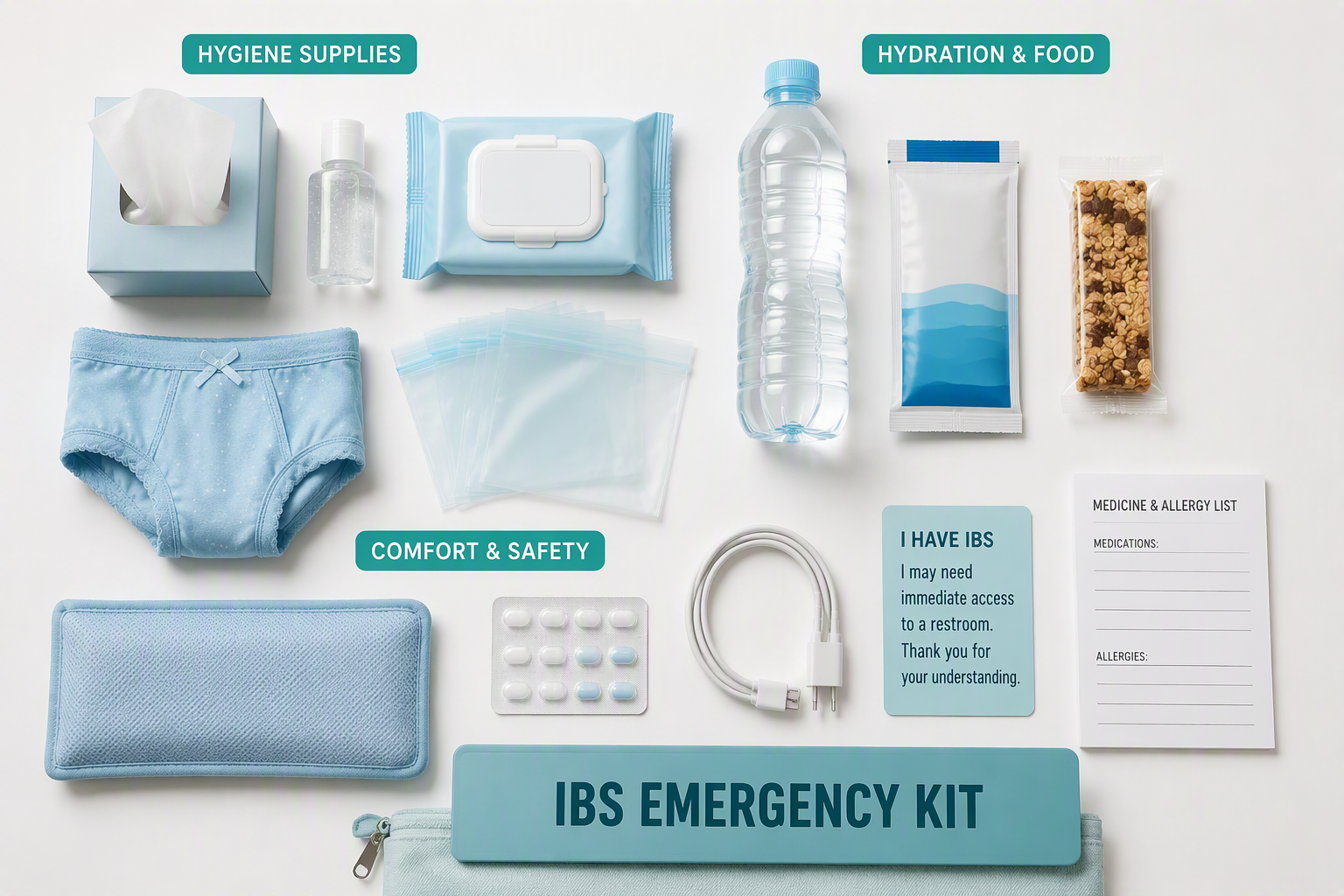
A useful IBS emergency kit covers cleanup, clothing, hydration, food, comfort, and communication without becoming too bulky to carry. Keep a small everyday pouch and a larger car or travel kit.
Core cleanup and clothing supplies
- Toilet paper or tissues, hand sanitizer, spare underwear, and lightweight trousers.
- Portable wipe packets such as WaterWipes On-The-Go. Dispose of wipes in a bin unless local instructions explicitly say they are safe to flush.
- Opaque, sealable bags for wipes or clothing. BOS odor-sealing bags are a general option. Fab Little Bag offers a smaller discreet format.
- A separate clean bag so fresh clothing never touches used items.
Hydration and food
Carry a refillable water bottle and one shelf-stable food you already tolerate. Fody snack bars are a packaged low-FODMAP option, but check the flavor and ingredients against your own triggers before relying on them away from home.
After meaningful fluid loss from diarrhea or vomiting, a glucose-and-sodium oral rehydration solution can be more purposeful than a sports drink. TRIORAL oral rehydration salts use a WHO-style formula. Mix and use them exactly as directed. People with kidney, heart, blood-pressure, or fluid-balance conditions should ask a clinician first.
Comfort and symptom supplies
A portable heat wrap can help some people manage familiar cramps. ThermaCare heat wraps are cordless. Follow the label, protect your skin, and do not use heat while sleeping or where sensation is reduced.
Keep prescribed medicine and any familiar OTC product in its original packaging. For peppermint oil already approved in your plan, IBgard's 12-count travel pack is compact. Peppermint can worsen reflux and is not suitable for everyone.
Add identification, a payment card, a phone charger, a medicine-and-allergy list, and saved restroom locations. Guidance on IBS on a flight can help adapt the kit for carry-on limits.
Restock used items, check packaging and expiry dates, and replace food or medicines that have been exposed to unsafe car temperatures. A small kit you will carry is more useful than an exhaustive one left at home.
How Can You Match Supplies To Your Symptoms?
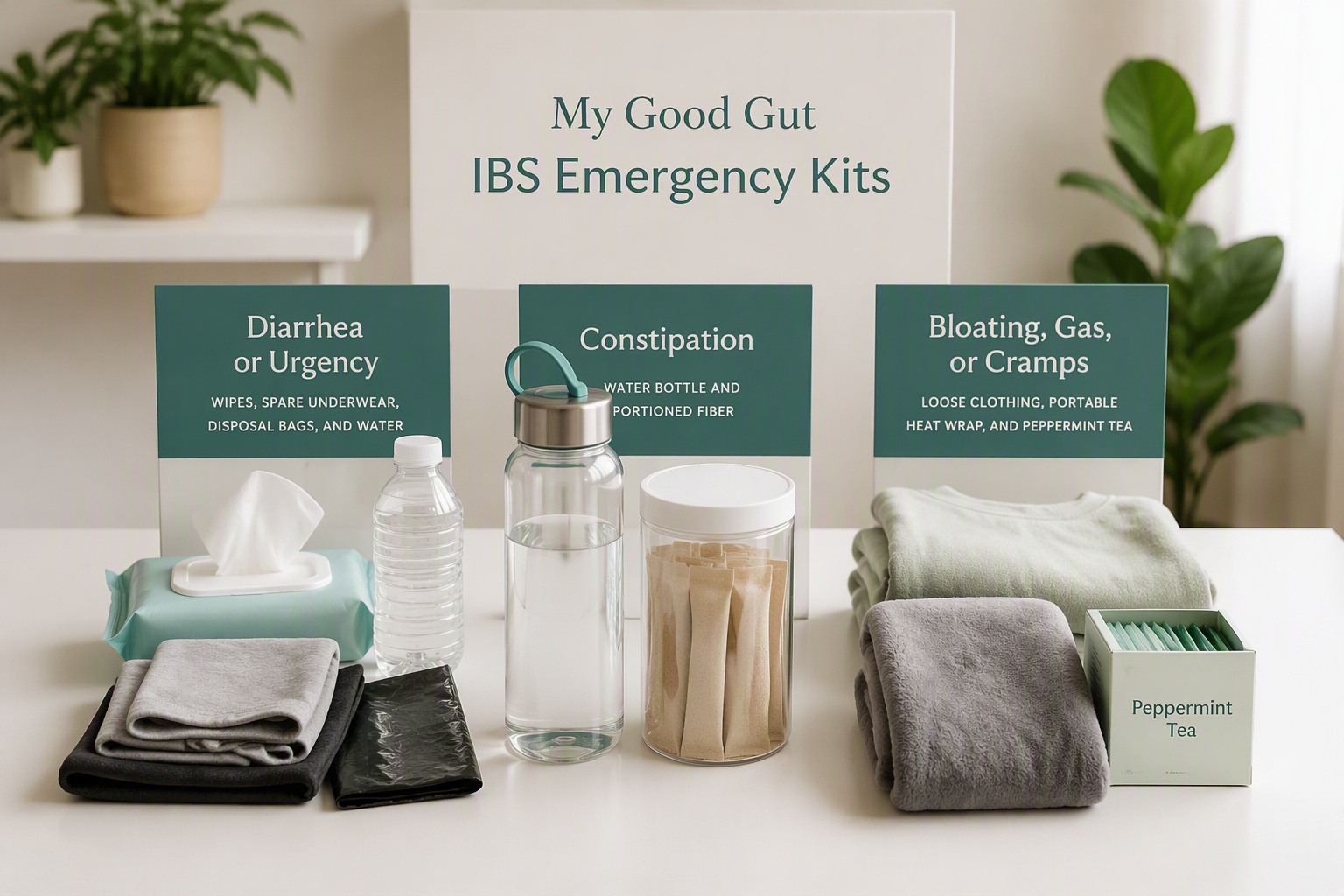
Match the kit to the symptom most likely to disrupt you.
Diarrhea or urgency
Keep wipes, sanitizer, spare underwear, a clothing bag, and odor-sealing disposal bags together so you can grab them at once. Add water, a familiar snack, and, if your clinician says it is appropriate, an oral rehydration sachet for substantial fluid loss. Identify restrooms before a longer route. Access often matters more than carrying extra products.
If loperamide is already appropriate for your usual IBS diarrhea, carry one labeled package and follow it exactly. Understanding how the antidiarrheal loperamide works makes it easier to judge when it fits and when it does not. Do not take it for bloody or black stool, fever, suspected infection, severe pain, or a new bowel pattern without medical advice.
Constipation
Stay with your established plan instead of trying a new laxative away from home. Carry water and a familiar food. If psyllium is part of your plan, portion it securely and take it with the amount of water specified on the label. Ask a pharmacist how to space it from oral medicines because fiber can affect absorption.
Bloating, gas, or cramps
Loose clothing, a waistband extender, or a portable heat wrap can reduce pressure. Use the lowest comfortable heat setting, follow wear-time limits, and check the skin. Peppermint tea is another compact option when you tolerate it, and individually wrapped Twinings peppermint tea is easy to keep dry in a work or travel kit.
Repeatable food triggers
Carry an enzyme only when you know the trigger it targets, because choosing a digestive enzyme depends entirely on which food causes the problem. Lactase is for lactose. Alpha-galactosidase is for GOS in foods such as beans and legumes. FODZYME is designed for fructan, GOS, and lactose exposure. These do not treat IBS generally, and an active flare is not the time for a first trial.
Keep nausea supplies simple: small sips of water, a familiar bland snack, and a resealable bag. Seek care for persistent, severe, or worsening symptoms, blood or black stool, fainting, marked dehydration, fever, repeated vomiting, or intense pain.
Which OTC IBS Options May Fit Your Symptoms?
OTC products should solve one defined problem, not act as a catch-all for IBS. Use only products you already tolerate, follow the label, and ask a clinician or pharmacist when pregnancy, other medicines, or another health condition changes the risk.
- Usual IBS diarrhea: Imodium A-D and generic loperamide contain the same active medicine. Choose one, not both, and do not use loperamide for fever, blood or black stool, suspected infection, severe pain, or unexplained diarrhea without medical advice.
- Constipation: The right laxative depends on stool consistency, hydration, medicines, and the cause. Recurrent self-treatment deserves a pharmacist or clinician review.
- Soluble fiber: Psyllium may help some people when introduced gradually and taken with enough fluid. Harvard Health includes psyllium among evidence-based IBS approaches (source). Mayo Clinic advises increasing fiber slowly (source). Ask how to space it from oral medicines.
- Cramping or bloating: Enteric-coated peppermint oil such as the IBgard travel pack may fit an established plan. It can worsen reflux, and tea and capsules are not interchangeable.
- Lactose: Lactase tablets help digest lactose. They do not treat IBS itself.
- GOS in beans or legumes: Beano supplies alpha-galactosidase. Evidence is trigger-specific, and enzyme strength varies by product.
- Fructan, GOS, and lactose exposure: FODZYME On-The-Go combines enzymes for those carbohydrates. It does not cover every FODMAP or make an unlimited portion symptom-proof.
Antacids and anti-gas products have similarly narrow roles: match them to acid-related burning or occasional trapped gas rather than general IBS symptoms. Avoid broad enzyme blends when you cannot tell which ingredient or food changed the result.
Seek urgent care for severe or rapidly worsening pain, blood or black stool, fever with significant diarrhea, repeated vomiting, fainting, inability to keep fluids down, marked dehydration, rigid swelling, or unexplained weight loss. New or changing symptoms need evaluation more than another OTC product.
How Should You Adapt Your Kit For Daily Life?
Use separate versions of the kit for the settings you actually encounter:
- Commute: Wipes, disposal bags, tissues, spare underwear, and a clothing bag within reach.
- Work: A discreet desk or locker pouch. See managing IBS on the job for bathroom-access and meeting plans.
- Social events: A slim pouch with tissues, a familiar snack, and only products you already use safely.
- Travel: Personal supplies in your carry-on, plus enough for delays and a backup set when practical.
Test the packed kit on an ordinary day. Confirm that clothing, wipes, bags, water, food, and symptom supplies are easy to reach. Review menus and restroom locations before an event, and avoid making a stressful outing the first test of a food, supplement, or medicine. Guidance on IBS-friendly restaurant choices can help.
Store heat wraps and medicines according to their labels and away from temperature extremes. Prolonged heat can injure skin. Use the lowest comfortable setting, inspect the area regularly, and never sleep with a heating device. People with reduced sensation need extra caution, and pregnancy requires clinician-specific advice. Cleveland Clinic explains the risk of repeated low-level heat exposure (source).
Review the kit monthly and before trips: replace used supplies, check seals and expiration dates, swap out foods that no longer fit your plan, and discard items damaged by heat or moisture. Seek medical guidance when symptoms are worsening, disrupting daily life, or leading to frequent OTC use.