


Exercise can help some people with IBS, but it can also worsen urgency, cramping, bloating, nausea, or diarrhea when the effort is too hard or symptoms are active. Walking, relaxed cycling, swimming, and gentle mobility work are practical starting points. Your response depends on your symptoms, fitness, meal timing, heat, hydration, and bathroom access.
The evidence is promising but uncertain. A Cochrane review found that the physical-activity studies in adults with IBS were small and that the overall certainty of evidence was low or very low (source). Treat exercise as a flexible part of symptom management, not a guaranteed treatment.
Start with a short session at a conversational pace and change one variable at a time. Stop for severe or worsening pain, blood or black stool, repeated vomiting, fainting, chest pain, breathing trouble, marked weakness, or dehydration.
IBS and Exercise Key Takeaways
- Exercise may ease some IBS symptoms, but individual responses vary and benefits aren’t guaranteed.
- Start with 10 to 15 minutes of comfortable walking, cycling, swimming, or mobility work.
- Use the talk test to keep exercise at a manageable intensity.
- Vigorous or prolonged workouts may trigger urgency, cramping, nausea, bloating, or diarrhea.
- During flares, choose gentle movement or rest based on symptom severity and hydration.
- Track exercise, meals, fluids, symptoms, stress, sleep, and next-morning bowel patterns.
- Stop and seek medical care for severe pain, bleeding, fainting, vomiting, dehydration, or worsening symptoms.
Can Exercise Help or Aggravate IBS?
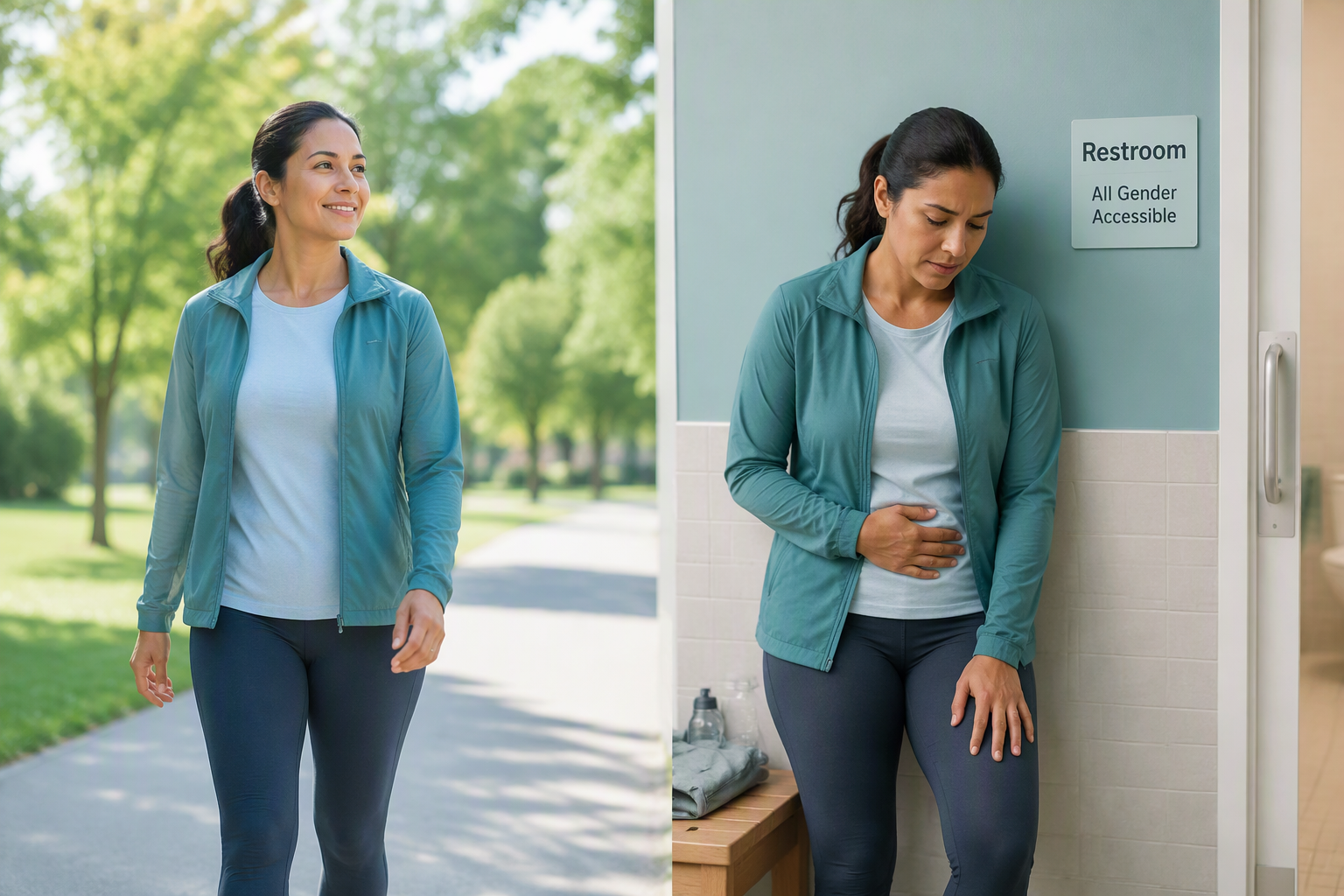
Exercise may help some people with IBS, but it is not a guaranteed treatment and should not be presented as a proven way to reduce gut inflammation. A Cochrane review of randomized trials found possible symptom and quality-of-life benefits but rated the evidence low or very low certainty because studies were small and differed in design (source).
Manageable options include comfortable walking, relaxed cycling, swimming, and gentle mobility work. Begin with a session you can tolerate and increase only the duration, frequency, or effort, not all three at once. A short walk that leaves you steady is more useful than a demanding workout that causes a setback.
Strenuous or prolonged activity can aggravate urgency, cramping, nausea, bloating, or diarrhea, especially when heat, dehydration, recent food, or an active flare is involved. If symptoms worsen, test one contributor at a time:
- Reduce intensity or duration.
- Allow more time after eating.
- Adjust fluid timing without forcing a large volume at once.
- Move indoors or choose a cooler time.
- Stay near a bathroom or switch to an at-home session.
Track the activity, approximate effort, meal timing, symptoms, and next-morning bowel pattern. Guidance on managing IBS day to day can help fit activity around work, meals, and stress.
Stop and seek medical guidance for severe or increasing pain, repeated vomiting, inability to keep fluids down, blood or black stool, fainting, marked weakness, or signs of dehydration.
How Does Exercise Affect IBS Symptoms?
With those benefits and risks in mind, exercise response depends on your symptoms, workout intensity, and recovery. A steady, manageable routine is more useful than pursuing one specific IBS exercise effect.
Movement can change gut motility, the way the intestines move their contents. Gentle or moderate activity may support intestinal transit for some people with constipation. Vigorous exercise can speed movement and trigger urgency or diarrhea. Changes in intestinal transit time are possible, but they aren’t predictable treatment effects, so your response matters more than a fixed rule.
The gut-brain axis is the two-way communication between the digestive system and brain. Regular activity may support mood, sleep, and anxiety control, which can moderate stress responses that heighten pain sensitivity, bloating, or urgency. That doesn’t mean IBS symptoms are psychological. The nervous and digestive systems affect each other, and poor sleep, worry, and physical strain can influence both.
A manageable walk, easy bike ride, or gentle stretching session may provide a restorative break during a demanding day. However, excessive intensity, long workouts, or pressure to meet a performance goal can turn exercise into another stressor and make symptoms harder to interpret.
Researchers also study inflammation and oxidative stress, or chemical activity that can affect cells. Exercise may influence these processes, but the proposed mechanisms don’t show that physical activity treats the underlying cause of IBS. Benefits vary by symptom pattern, and the evidence doesn’t support promising a specific result.
The possible relationship between exercise and gut microbiota is also uncertain. Activity may affect intestinal transit, microbial diversity, short-chain fatty acids, gut-barrier function, and gut-brain signaling. A 2024 review of 32 studies in IBS, 19 in humans and 13 in animals, found that more than half of the human studies reported no significant effect of exercise on microbial diversity (source). Claims connecting exercise, the gut microbiome, and IBS therefore remain limited.
Your routine can stay simple:
- Constipation or sluggishness: Try easy or moderate movement and note whether regularity improves without more pain.
- Diarrhea or urgency: Choose shorter, lower-intensity sessions near a restroom, and avoid vigorous exercise during active symptoms.
- Bloating or pain: Use walking, gentle cycling, or stretching, then increase duration only after your body handles the current level comfortably.
Track IBS symptoms such as pain, bloating, stool frequency, and urgency over several sessions instead of judging one workout. Use these observations to guide adjustments rather than to predict a fixed response. Persistent, severe, or worsening symptoms need clinical assessment. Seek prompt medical advice for:
- Blood in the stool
- Fainting
- Unexplained weight loss
- Fever
- Severe pain
Use the guidance as general information. A calm, consistent routine gives you useful information without forcing exercise to become another source of stress.
Choose IBS-Friendly Exercise and Intensity
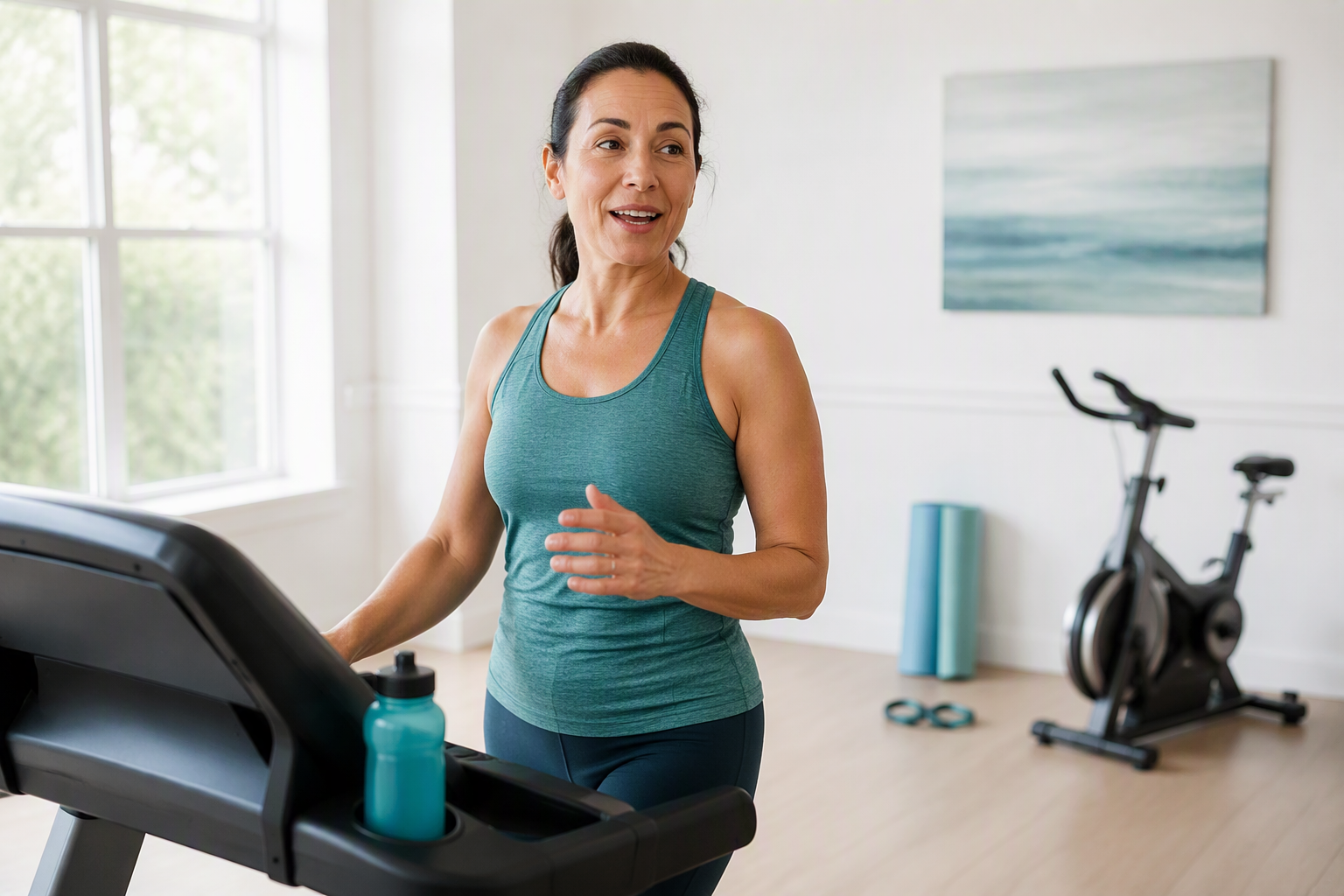
Start with low- to moderate-intensity activity and adjust it to your bowel symptoms, energy, and confidence that day. Try 10 to 15 minutes of walking, swimming, cycling, or mobility work, then check symptoms later that day and the following morning.
The talk test is a simple effort guide: at a moderate pace, you should still be able to speak in short sentences. Strained breathing, rising abdominal pain, or urgency means slow down or stop.
Activity | When it may fit | IBS-related caution |
|---|---|---|
Walking | A flexible starting point, including on mild-symptom days | Shorten the route if urgency or cramping appears |
Swimming | Low-impact activity when heat makes outdoor exercise uncomfortable | Confirm bathroom access before entering the pool |
Cycling | Adjustable aerobic work | Hard efforts or long rides may increase urgency |
Running | An option when symptoms are stable and predictable | Begin with short walk-jog intervals |
Resistance training | Strength work with adjustable load | Avoid maximal lifts, breath-holding, and sharp pressure increases |
Yoga, Tai Chi, or mobility | Useful when fatigue or symptom anxiety makes aerobic work unappealing | Avoid deep twists or compression that worsens symptoms |
Match the day rather than forcing the calendar. With settled symptoms, combine easy aerobic work and light resistance training. With bloating or constipation discomfort, try a short walk or mobility session. With active urgency or diarrhea, stay near a bathroom and choose brief movement or rest. With fatigue, reduce the dose without treating the change as failure.
Build duration and frequency gradually. If you eventually aim for the general adult activity target, the CDC recommends at least 150 minutes of moderate activity a week plus two days of muscle-strengthening activity (source). That is a public-health target, not an IBS prescription or a starting requirement.
Plan Before, During, and After Workouts
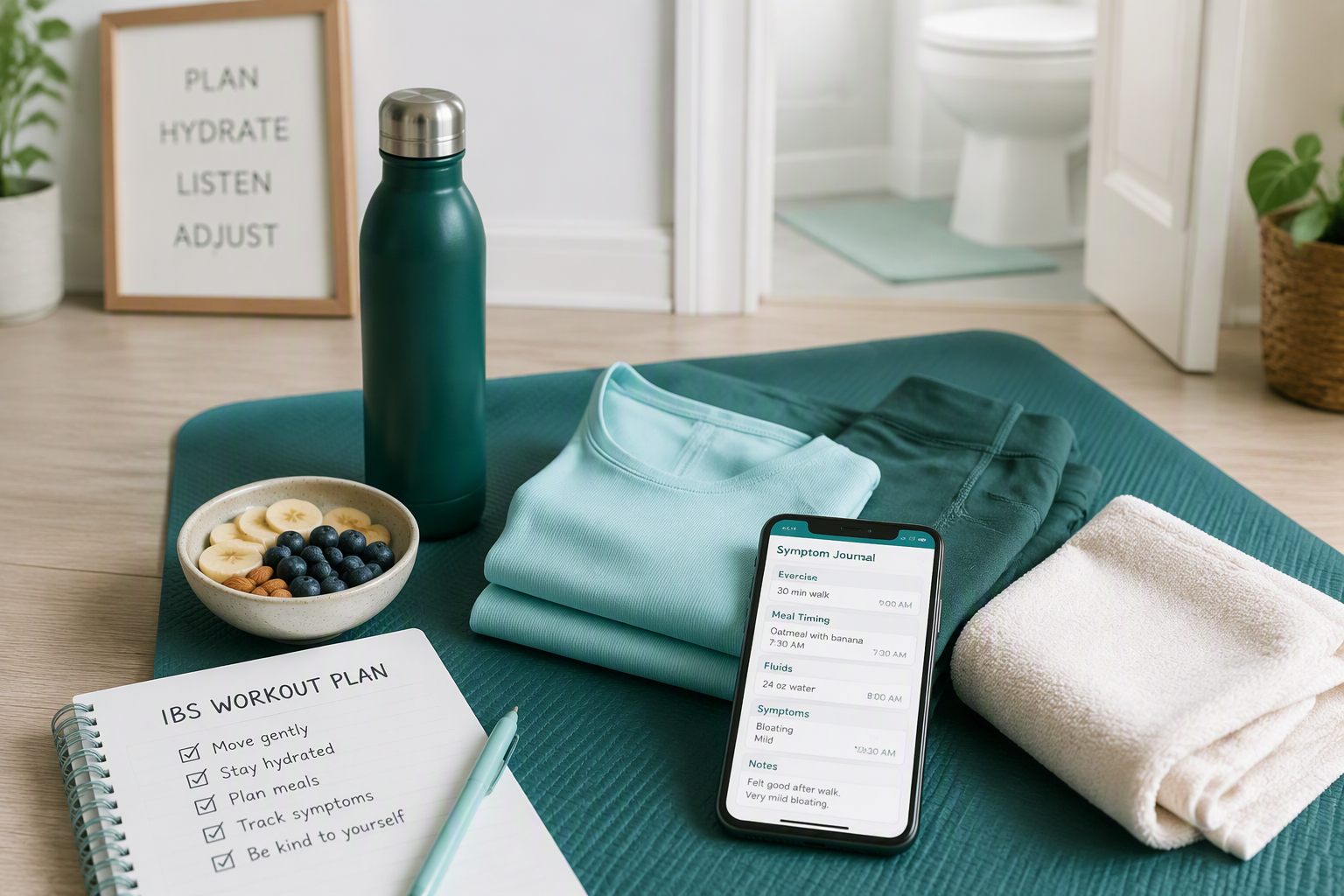
Before each workout, check the day’s bowel pattern, pain, energy, heat, and bathroom access. Active diarrhea, urgency, significant pain, or dehydration may call for rest or a shorter at-home session.
Choose a familiar meal or snack and allow time for it to settle. Avoid testing a new high-FODMAP food, caffeine dose, sweetener, supplement, or sports product on an important workout day. Sorbitol and xylitol can loosen stool or increase gas for some people.
A simple plan has four stages:
- Before: Sip fluids according to thirst and conditions. Wear comfortable clothing and choose a route with an easy bathroom exit.
- During: Begin at a conversational pace. Slow down, use the bathroom, or end the session when cramping, urgency, dizziness, or unusual discomfort appears.
- After: Cool down, replace fluids, and eat familiar food when appetite returns.
- Review: Note the activity, effort, food, caffeine, sweeteners, heat, and delayed symptoms.
For a longer or sweat-heavy workout where an electrolyte mix already fits your plan, LMNT and Ultima Replenisher are stevia-sweetened options without sorbitol or xylitol in the referenced formulations. Check the current ingredient label because formulas can change. These are exercise electrolyte mixes, not substitutes for a glucose-and-sodium oral rehydration solution after substantial diarrhea or vomiting.
For a portable food option, the GoMacro FODMAP Friendly variety pack may be convenient, but test the specific flavors at home and check ingredients against your personal triggers.
Pushing through pain makes triggers harder to interpret. Stop when symptoms are escalating and seek medical guidance for warning signs rather than trying to finish the workout.
How Should You Exercise During an IBS Flare?

An IBS flare is a reason to adjust exercise, not a test of willpower.
During a flare | A more suitable choice | What to avoid for now |
|---|---|---|
Abdominal pain or marked bloating | A short easy walk, gentle mobility, or rest | Intervals, heavy lifting, long runs, or compression that worsens pain |
Constipation and mild cramps | Several brief walks or relaxed mobility | Straining, breath-holding, or intense exercise through cramps |
Diarrhea or urgency | An at-home session, breathing work, or rest near a bathroom | Vigorous cardio after repeated bowel movements |
Moderate or severe symptoms | Rest and return gradually after symptoms settle | Exercising through dehydration, sleep disruption, or worsening pain |
Pause for dizziness, unusual weakness, or signs of dehydration. With diarrhea, bathroom access and fluid recovery matter more than the planned workout. An at-home routine may also reduce stress when fear of bathroom urgency is part of the flare.
Gentle yoga may suit some people, although it is not a guaranteed treatment. A small randomized study found improvements after an eight-week online yoga and meditation program, but the sample and format limit how broadly the result applies (source).
Seek prompt medical care for severe or rapidly worsening pain, blood or black stool, repeated vomiting, inability to keep fluids down, fainting, chest pain, trouble breathing, rigid swelling, or marked dehydration. Fever, unexplained weight loss, nighttime symptoms, or a major change from your usual pattern also needs clinical review.
Return with a few minutes of easy walking or mobility once symptoms improve. Increase only after the current level is tolerated without a clear flare response.
Build a Sustainable IBS Exercise Routine
A sustainable IBS exercise routine is one you can repeat without increasing symptom anxiety. Start with three short, comfortable sessions a week, keep the pace conversational, and change only one factor at a time: duration, frequency, or intensity.
If symptoms worsen, return to the last level you tolerated. During a flare, light movement is reasonable only when it feels comfortable. Pausing during poor sleep, dehydration, or an unusually stressful week protects consistency rather than signaling failure.
For several weeks, note activity, effort, meal timing, bowel symptoms, stress, sleep, and recovery. Patterns are more useful than judging one difficult workout. Easier days, adequate fluids, familiar foods, and sufficient sleep can support follow-through. If work is the obstacle, IBS at work offers related planning.
Set goals around consistency, energy, mood, confidence, and quality of life rather than eliminating symptoms. In a small long-term follow-up, 39 participants from an earlier physical-activity trial reported improved IBS and psychological symptom scores after a median 5.2 years, but the small follow-up group means the result is encouraging rather than definitive (PubMed).
Reassess every few weeks and seek medical advice for persistent, worsening, or concerning symptoms. A routine that respects symptom limits is more useful than a demanding schedule you cannot sustain.
When Should You Stop Exercising or Call a Doctor?

Mild, familiar IBS symptoms may settle when you slow down, use the bathroom, drink fluids, or switch to gentler movement. Stop exercising and rest if discomfort becomes more than mild, feels unusual, or continues after you reduce your pace. IBS symptom severity matters more than finishing a planned workout.
Seek urgent medical help for any of these symptoms:
- Severe or worsening abdominal pain
- Repeated vomiting
- Fainting, chest pain, or trouble breathing
- Marked dizziness or unusual weakness that does not improve promptly
Blood in the stool, black or tar-like stools, persistent fever, significant unexplained weight loss, or abdominal swelling that does not settle also need prompt medical review. These signs do not fit the usual IBS pattern and may point to another condition.
Severe or recurrent diarrhea, including diarrhea-predominant IBS symptoms, can become risky when it prevents normal fluid intake or occurs with vomiting. Pause exercise if you urinate very little, have a dry mouth, or feel light-headed. Resume activity only after you can drink normally and have recovered from possible dehydration.
Arrange a clinical review when symptoms repeatedly interrupt exercise, continue after you stop, wake you at night, or steadily worsen despite lowering intensity. New symptoms, symptoms that begin later in adulthood, or a major change from your usual pattern also deserve medical attention before harder workouts. Digestive symptoms can have many causes, so a clinician may need to reassess the diagnosis or treatment plan rather than assume IBS is responsible.
A simple record can make that conversation more useful. Note the exercise timing and intensity, bowel symptoms, food, fluids, and recovery time. Keeping an flare-up supplies for IBS available may ease anxiety during necessary trips away from home, but it cannot replace medical evaluation.
Manageable cramping, gas, urgency, or a temporary bowel change usually calls for adjustment rather than complete avoidance. Unusually intense, persistent, progressive, or warning-sign symptoms call for stopping and getting appropriate care. Use this guidance as general information. Persistent, severe, or worsening symptoms require clinical review. Any dietary or supplement advice should be individualized.
IBS and Exercise FAQs
These IBS and exercise FAQs address common concerns about choosing activities, adapting routines around symptoms, and deciding when to seek medical guidance. Use them with the wider IBS guide as you consider practical options that recognize individual differences.
1. Should You Exercise on an Empty Stomach With IBS?
There is no universal rule about exercising on an empty stomach with IBS. Some people tolerate gentle activity before eating, while others experience nausea, cramping, urgency, or weakness. Meal size, timing, ingredients, exercise intensity, and your usual trigger pattern may all matter.
Compare cautiously: try the same light activity on one day before eating and on another day after a small, familiar meal with time to digest. Change only one factor, keep fluids available, and record how you feel during the session and afterward. Do not force fasted exercise, and stop if you feel faint, weak, unusually nauseated, or increasingly unwell.
2. Can Strength Training Trigger IBS Symptoms?
Moderate strength training isn’t automatically an IBS trigger, so begin with lighter weights, shorter sessions, and comfortable rest periods instead of exercising to exhaustion. Breathe steadily, since straining or holding your breath may worsen discomfort, and sip fluids if large drinks increase urgency or bloating.
Let symptoms guide adjustments. When abdominal pain, bloating, urgency, or bowel changes increase, reduce the weight, repetitions, or workout length, or switch to gentle mobility. Long, intense workouts, especially in heat, are more likely to cause digestive symptoms than manageable resistance exercise. Return gradually as you feel better.
3. Does Walking Help IBS-Related Constipation?
Gentle walking may support IBS-related constipation by encouraging gut motility, helping gas and stool move through the digestive tract, and making bowel movements more comfortable for some people. It may ease symptoms without guaranteeing more frequent bowel movements. One study of adults found that colon transit time differed by physical activity level, which offers a plausible mechanism rather than proof that walking will change your own pattern (source). Choose a comfortable pace and stop if walking causes pain.
4. Can Exercise Cause IBS-Related Bloating?
Exercise can sometimes worsen IBS-related bloating, especially during hard workouts, heat exposure, or exertion that redirects blood flow from digestion. Jostling may increase gas, cramping, urgency, or abdominal pressure, although low- to moderate-intensity activity helps some people. Try a cooler setting, small steady sips of fluid, and waiting after a large meal, then slow down or shorten the workout and track one trigger at a time if bloating begins. Stop for severe or worsening abdominal pain, vomiting, faintness, chest pain, bloody stool, or symptoms that don’t settle with rest. Persistent symptoms need medical assessment. This content is for educational purposes only and is not a substitute for personalized medical advice.