


Probiotics can help with constipation, though far less reliably than the shelf suggests. Certain strains have improved stool frequency or transit time in trials, and the finding doesn't hold across every product or every person.
Bifidobacterium-containing products show the more consistent signal. The two named most often are Bifidobacterium animalis subsp. lactis HN019 and BB-12, and their evidence comes from transit time and bowel-movement frequency in generally healthy adults. Neither has established results for constipation in diagnosed IBS, a distinction most product pages quietly skip.
How you measure matters just as much. Frequency alone is a blunt instrument, and straining or the feeling of incomplete emptying usually shifts before the number of trips does. Adding a fiber blend at the same time will muddy the answer, since it changes stool form on its own.
Key Takeaways
- Probiotic evidence for constipation is mixed and specific to individual strains.
- Bifidobacterium-containing products show the most consistent signal in reviews.
- HN019 and BB-12 were studied for transit and frequency in generally healthy adults.
- Neither strain has established results for constipation in diagnosed IBS.
- Track Bristol stool type, straining, and incomplete emptying, not frequency alone.
- Added prebiotics or fiber blends change stool form and confuse a trial.
- Constipation with bleeding, weight loss, or a new persistent change needs assessment.
Can Probiotics Relieve Constipation?
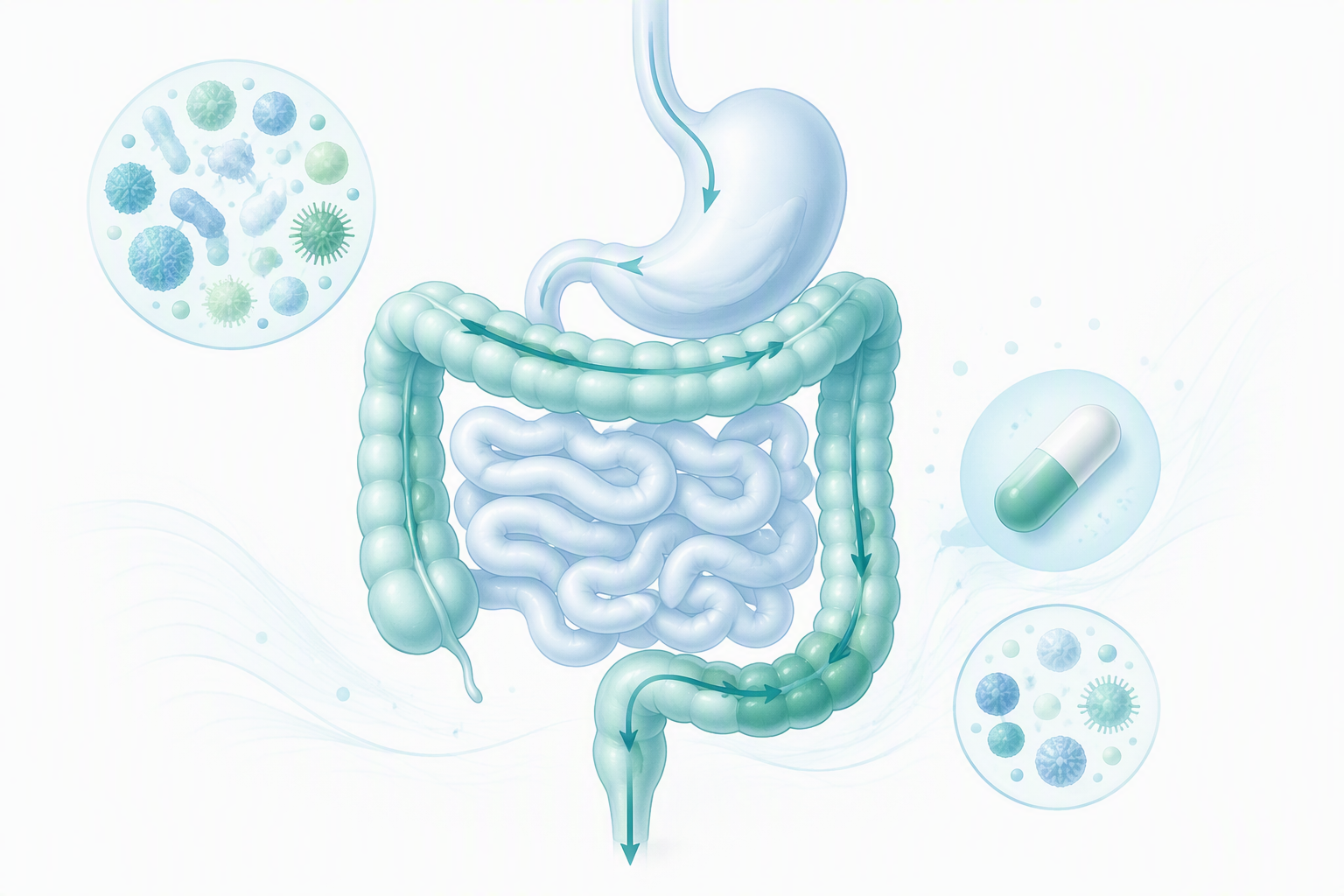
Probiotics may modestly help some adults with constipation, but they do not work immediately or the same way for everyone. They can support bowel regularity alongside established constipation care, not replace it or an evaluation when constipation symptoms persist, worsen, or disrupt daily life.
Studies of probiotics for constipation commonly assess these outcomes:
- Defecation frequency: How often you have a bowel movement.
- Stool consistency: Whether stools are softer and easier to pass.
- Gastrointestinal transit time: How long food and waste take to move through the digestive tract.
Some randomized controlled trials report more frequent bowel movements or fewer hard stools, while others find little change, which is why probiotics sit late in the order of constipation causes and treatment. A review of probiotic trials found an average 12.4-hour reduction in whole-gut transit time. That group-level finding cannot predict your response, and faster movement through the gut alone may not bring complete constipation relief if straining, incomplete emptying, pain, or bloating continue.
Broad probiotic claims are unreliable because studies do not test one uniform treatment. The findings can differ by strain, daily dose, treatment length, capsule or food format, participant group, and the definition of constipation used. A species name alone is not enough. The complete strain designation, often letters and numbers following the species name, connects a product to the research behind it. That pattern holds across which digestive conditions probiotics may help, not just constipation.
Certain Bifidobacterium lactis strains have the most consistent evidence for improving bowel-movement frequency in adults, with some evidence of fewer hard stools. Effects on stool consistency and other digestive symptoms remain mixed. Research on one strain does not automatically apply to another product that shares only the Bifidobacterium lactis species name.
The right next step depends on your symptom pattern:
- Occasional constipation: Fluids, gradual fiber changes, movement, and a regular bathroom routine are often the foundation. A probiotic may be an optional addition.
- Chronic constipation: Medications, pelvic floor problems, diet, and other health conditions can contribute, so a broader assessment may be needed.
- Constipation with possible irritable bowel syndrome (IBS): Recurring abdominal pain with major bowel-habit changes calls for extra caution when weighing supplement claims. Small intestinal bacterial overgrowth (SIBO) is another concern people may raise when bloating or gas worsens, though those symptoms have several possible causes. Questions about can probiotics cause SIBO need that wider context.
Look for the full strain name on the label and compare it with studies in people whose symptoms resemble yours. One unsuccessful trial does not mean every probiotic will fail, but it does mean switching products repeatedly without a clear reason is unlikely to help. Evidence for constipation also differs from evidence for probiotics for loose stools.
Persistent, severe, or worsening symptoms should be discussed with a qualified healthcare professional, especially when constipation is new or accompanied by concerning changes, according to the National Institute of Diabetes and Digestive and Kidney Diseases (source).
Which Options Have Constipation Evidence?

Probiotics and constipation research is active but uneven, so no single product or category suits everyone with chronic constipation. Trials of probiotics, prebiotics, and synbiotics are hard to compare directly, because they differ in participants, formulations, doses, treatment length, and even how they define constipation (source). A positive result for one finished product does not automatically apply to another.
The outcomes that matter most are the ones that affect daily comfort:
- Spontaneous bowel movements: More bowel movements without needing a rescue laxative.
- Stool passage: Softer stools or stools that are easier to pass.
- Straining: Less effort or discomfort during a bowel movement.
- Overall comfort: Less fullness, bloating, or discomfort from feeling backed up.
An option may shorten transit time, meaning the time material moves through your digestive tract, or increase bowel-movement frequency without improving straining or comfort. That difference is important when difficult, painful stool passage is the main problem.
Bifidobacterium-containing probiotics are a category with a promising signal. Reviews of this literature suggest Bifidobacterium-containing products show a more consistent signal for constipation-related outcomes than other probiotic categories. Bifidobacterium lactis is often discussed for transit time and bowel-movement frequency in general adult populations, but it is not an established treatment for IBS.
Still, category-level findings do not mean every Bifidobacterium product will help. Benefits can depend on the exact strain, the amount used, and the finished formulation. A label that names a species or makes a broad digestion claim cannot predict whether a product has evidence for constipation.
Look for the complete strain name and code, usually the letters and numbers after the species name, along with research on an outcome that matters to you. Similar-looking products are not interchangeable, even when they contain related microbes.
These options differ in both what they contain and how they may affect your symptoms:
- Probiotics: Live microorganisms intended to affect the gut microbiota.
- Prebiotics: Fermentable ingredients that nourish certain microbes already in the digestive tract.
- Synbiotics: Products that combine probiotics with one or more prebiotics.
Prebiotics may help some people, but fermentation can also increase gas or abdominal discomfort, especially when constipation overlaps with IBS symptoms. A multi-ingredient product can also make it harder to identify what is helping or aggravating your symptoms.
Certain well-studied options may offer modest support for regularity or easier stool passage, but the evidence does not support a universal probiotic recommendation. Persistent, severe, or worsening constipation, bleeding, unexplained weight loss, or new severe pain should be evaluated by a qualified healthcare professional.
How Do Probiotic Strains Compare?
Evidence for probiotics follows the full strain name or code, not the species name alone. A result for one probiotic strain cannot be carried over to another strain, dose, formula, fermented food, or multi-strain product. When you compare labels, look beyond broad names such as Bifidobacterium lactis, Lactobacillus casei, or Lactobacillus reuteri.
The studies for these organisms have focused on different constipation-related outcomes:
Probiotic studied | Outcomes examined | What the evidence does and does not show |
|---|---|---|
Bifidobacterium lactis, including HN019 and BB-12 | Defecation frequency and gut transit time | This is the most commonly studied of these three for constipation. Findings on stool consistency and other digestive symptoms are mixed, and these strains are not established treatments for IBS. |
Lactobacillus casei Shirota | Bowel movement frequency, stool texture, straining, incomplete evacuation, and some abdominal symptoms | This wider set of findings applies to Lactobacillus casei Shirota, not to every L. casei product. |
Lactobacillus reuteri | Functional constipation outcomes, including frequency, stool form, and transit | The species name alone cannot confirm whether a product matches the research. Check the strain code and the population studied. |
For Bifidobacterium lactis, the most consistent research focus is bowel movement frequency and the time it takes material to move through the gut. That may matter if constipation mainly means infrequent stools. It does not mean every B. lactis product will change hard stools, bloating, or abdominal discomfort. B. lactis HN019 and BB-12 have been studied for constipation-related transit and frequency in general adult groups, not for diagnosed IBS.
Lactobacillus casei Shirota has been examined across more symptoms. Studies have looked at more frequent bowel movements, softer stool consistency, and less straining, along with abdominal discomfort, pain, gas, and a feeling that a bowel movement was incomplete. Those are outcomes studied with Shirota specifically, not benefits to expect from another L. casei formula or from probiotics as a whole.
Lactobacillus reuteri is linked to functional constipation research, but the species name is still too broad to guide a purchase. Lactobacillus reuteri DSM 17938 is one specific strain designation. Before considering a supplement, compare the full label with the study details, including the strain, who took it, and whether the measured outcome matches your symptom.
These differences help set realistic expectations rather than identify one best probiotic for everyone. A label listing only “B. lactis,” “L. casei,” or “L. reuteri” does not confirm that it contains the researched strain.
For persistent constipation or constipation alongside possible IBS symptoms, discuss your symptoms and supplement evidence with a qualified healthcare professional.
How Do Foods, Prebiotics, and Synbiotics Differ?
Probiotic foods, prebiotics, and synbiotics may support regularity, but they are not interchangeable treatments for constipation. Yogurt and kefir can be approachable choices because they may contain live microorganisms, yet their effects depend on the organisms present, serving size, storage, and your tolerance.
Fermented does not automatically mean probiotic. Check labels for “live and active cultures” or named organisms, especially with yogurt and kefir. Other fermented foods, including sauerkraut and kimchi, may not contain verified live strains when you eat them, and their organisms may not be studied for bowel regularity.
A probiotic food also differs from a supplement that names a specific strain with evidence for constipation. If bloating is also a concern, do probiotics help bloating explains why the type of microorganism and your individual response matter.
Prebiotics are fermentable substances that feed the gut microbiota already in your digestive tract. They are not live bacteria. For dietary fiber and constipation, start with fiber-rich foods, such as:
- Fruits and vegetables: These add fiber and water-rich foods to meals and snacks.
- Beans and whole grains: These provide fermentable fiber that may support stool bulk and movement through the bowel.
- Prebiotic ingredients: Inulin and fructooligosaccharides, often called FOS, are added to some foods and supplements.
Increasing fermentable fiber too quickly can cause gas, bloating, or discomfort. That does not necessarily mean fiber is a poor fit, but the amount, source, or pace may need to change.
A few food-based options have been studied for regularity:
- Kiwifruit: Eating two to three kiwifruits daily was linked with more frequent stools and fewer side effects than prunes or psyllium.
- Rye bread: Six to eight slices daily may increase stool frequency and shorten transit time. Rye can worsen symptoms for people who are sensitive to fermentable carbohydrates.
Synbiotics combine a live microorganism with a prebiotic substrate intended to support it. The combination is not automatically more helpful for constipation. Look for the exact strain and prebiotic ingredient, consider whether you tolerate both, and match the evidence to the symptom you want to address.
Food choices can add nourishment, fiber, and routine, while prebiotics may help increase fermentable fiber intake. If you have IBS-like pain or bloating, introduce one change at a time and discuss persistent, severe, or worsening constipation with a qualified healthcare professional.
How Do You Confirm a Probiotic Contains That Strain?

For constipation, the exact probiotic strain matters more than the large-print genus name. Findings on gut transit time and bowel-movement frequency in generally healthy adults are tied to Bifidobacterium animalis subsp. lactis HN019 and BB-12. A label that says only “Bifidobacterium” does not confirm that either strain is present.
When comparing products, check for the details that connect the label to the research:
- Full strain code: Look for HN019 or BB-12 after the species name, not only Bifidobacterium animalis subsp. lactis.
- CFU dose: A larger CFU dose cannot make up for a missing strain code. More organisms from an unidentified probiotic strain are not equivalent to the studied strain.
- Relevant outcome: Research on antibiotic-associated diarrhea or broad “digestive support” does not establish constipation relief. Shelf marketing often blends these claims together, even though they answer different questions.
HN019 and BB-12 are not established answers for IBS with constipation. Their research concerns transit time and stool frequency in general adult populations, not demonstrated benefit for people diagnosed with IBS. This distinction matters because probiotic findings do not transfer from one strain to another, even within the same species.
A targeted trial is easier to interpret when the probiotic is the only new variable. Choose a product without added prebiotics, fiber blends, or digestive enzymes, since these ingredients can change stool form or frequency on their own. That simpler setup gives you a clearer sense of whether the probiotic may be contributing to a change.
What Should You Track, and When Should You Stop a Probiotic?

Track the symptoms that describe constipation, not bowel-movement frequency alone. With probiotics for constipation, the first change may be softer stool or less effort in the bathroom, even if your schedule has not changed.
A brief daily note can capture the changes that matter most:
- Bowel-movement frequency: Record how often you go each week without assuming that a daily bowel movement is the only healthy pattern.
- Bristol Stool Form Scale type: Note whether stool shifts away from hard, dry pellets toward a form that is easier to pass.
- Straining: Record whether passing stool requires hard pushing or an extended time on the toilet.
- Incomplete emptying: Note whether you still feel stool remains after a bowel movement.
Straining and incomplete emptying can ease before frequency changes. Any benefit is usually modest, such as improved stool form or easier passage, and may take weeks rather than days. A higher CFU dose does not automatically produce better results because the strain, product quality, and your symptoms matter more than a large number on the label.
Mild gas or bloating can occur when you start a probiotic and may settle with time. Stop taking it if pain, bloating, or constipation clearly worsens or does not settle. Probiotic safety also means speaking with a clinician before starting if you take infliximab or another immune-modifying medicine, have weakened immunity, are seriously ill, have recently had major surgery or been hospitalized, or are pregnant.
Constipation needs medical assessment rather than another supplement when it occurs with:
- Unintentional weight loss
- Blood in the stool
- Vomiting
- Severe abdominal pain
- A new, persistent change in bowel habits
Dietary fiber and constipation often belong in the same conversation, though increasing fiber too quickly can worsen gas or discomfort for some people.
When Should You Seek Care for Constipation?
Constipation symptoms can be occasional, but new, persistent, painful, or worsening symptoms need more attention. Constipation may involve fewer than three bowel movements a week, hard or dry stools, straining, or a feeling that you have not fully emptied. A brief change after travel or a disrupted schedule is common, but chronic constipation should not be managed indefinitely with home remedies or a probiotic alone.
Urgent medical care is needed when constipation may involve a blockage, bleeding, or another serious problem. Do not wait for fiber, a laxative, or a probiotic to work if you have any of these signs:
- Severe abdominal pain or pain that steadily worsens.
- A swollen, tight, or rigid abdomen.
- Repeated vomiting.
- Inability to pass stool or gas.
- Blood in the stool or black, tarry stools.
- Fainting, fever, or dehydration signs such as very little urine, dizziness, or unusual weakness.
Arrange a non-emergency appointment if constipation lasts several weeks, returns despite routine changes, starts suddenly without a clear reason, or disrupts work, sleep, meals, or family life. Unexplained weight loss, ongoing fatigue, anemia, or a lasting change in bowel habits also need evaluation. It is especially important to get checked when symptoms begin later in adulthood or colorectal cancer or inflammatory bowel disease runs in your family.
Low fiber intake, not drinking enough fluids, limited activity, travel, and regularly delaying a bowel movement can all contribute. Medications matter too. Opioid-induced constipation is a common effect of prescription pain medicine, and iron supplements can slow bowel movements as well. Do not stop a prescribed medication on your own. A clinician or pharmacist can review prescription and over-the-counter products and help you consider safer ways to manage constipation.
Recurring symptoms may need a diagnosis rather than another supplement. Constipation with abdominal pain, bloating, diarrhea episodes, food-related symptoms, or incomplete emptying may occur with IBS-C. Healthcare professionals may use the Rome IV criteria, which are symptom-based standards, alongside your history to assess IBS. Celiac disease, hypothyroidism, diabetes, Parkinson’s disease, and intestinal abnormalities that affect stool passage can also change bowel regularity.
Digestive symptoms have many possible causes, and familiar lifestyle triggers do not rule out an underlying condition. Consult a qualified healthcare professional for persistent, severe, or worsening constipation.
Probiotics for Constipation FAQs
These FAQs cover probiotics for constipation, including strain differences, realistic expectations, and signs that warrant medical care. They can help you weigh practical options without assuming every probiotic works the same way.
1. Can Probiotics Cause Constipation?
Probiotics can sometimes coincide with constipation or a brief change in bowel habits, but they are not expected to cause constipation for most people. Responses vary with the strain, dose, delivery form, and added ingredients. Mild gas, bloating, or stool changes may settle as your digestive system adjusts.
Pause the product if stools become harder or less frequent, straining increases, or symptoms feel more than temporary. If constipation continues after stopping, becomes severe, or worsens, consult a qualified healthcare professional, especially with other concerning symptoms.
2. Do Probiotics Help IBS-Related Constipation?
IBS-C differs from functional constipation because it includes recurring abdominal pain connected to bowel movements. A probiotic that improves stool frequency or transit in functional constipation may not help the full IBS symptom pattern. Any benefit is strain-specific, so findings for one product do not apply to every probiotic. Probiotics may help manage bloating, discomfort, or bowel habits for some people, but they do not treat IBS or replace an IBS care plan. Persistent, worsening, or disruptive symptoms need evaluation by a qualified healthcare professional.
3. Can Children Take Probiotics for Constipation?
Children may be able to use a pediatric, age-appropriate probiotic, but it is not a universal constipation remedy or a replacement for standard constipation care. Possible benefit depends on the specific strain, dose, product quality, and your child’s individual needs. Evidence for one strain or product does not automatically apply to another.
Talk with a pediatric clinician before starting one for persistent, severe, or recurring constipation, especially with illness, immune problems, poor growth, or regular medicines. Seek urgent care for a swollen abdomen, repeated vomiting, blood in stool, fever, severe pain, weight loss, weakness, or constipation beginning in early infancy.
4. Can You Take a Probiotic While Using a Laxative?
Usually yes, though it makes the result harder to read. A laxative acts on the stool that is already there, while a probiotic, if it helps at all, works over weeks. Starting both at once leaves you unable to say which produced the change.
If you already use a laxative regularly, keep that routine steady rather than stopping it to test a supplement. Constipation that persists, worsens, or arrives with bleeding, weight loss, or new severe pain needs assessment rather than another product.