


Probiotics won't cure lactose intolerance, and nothing restores the lactase your body has stopped making. What some strains may do is help break lactose down as it passes through, which can make a given amount of dairy sit more comfortably.
That's a narrower claim than treating the condition, and it's worth keeping separate from what lactase supplements do. Those act directly on the sugar itself. Yogurt with live cultures is often tolerated better than the same volume of milk, which is a useful clue about how modest the effect really is.
Testing a probiotic here works differently too. You're not tracking daily symptoms against a baseline, you're checking whether the same glass of milk causes less trouble than it used to.
Key Takeaways
- Probiotics do not cure lactose intolerance or restore lactase production.
- Some strains may improve lactose digestion, which is a much narrower claim.
- Lactase supplements act directly on the sugar and work differently.
- Yogurt with live cultures is often tolerated better than an equivalent glass of milk.
- Test against comparable dairy meals rather than a daily symptom baseline.
- Lactose intolerance and milk allergy are different conditions with different risks.
- Persistent symptoms despite avoiding lactose deserve evaluation for another cause.
Can Probiotics Help Lactose Intolerance?
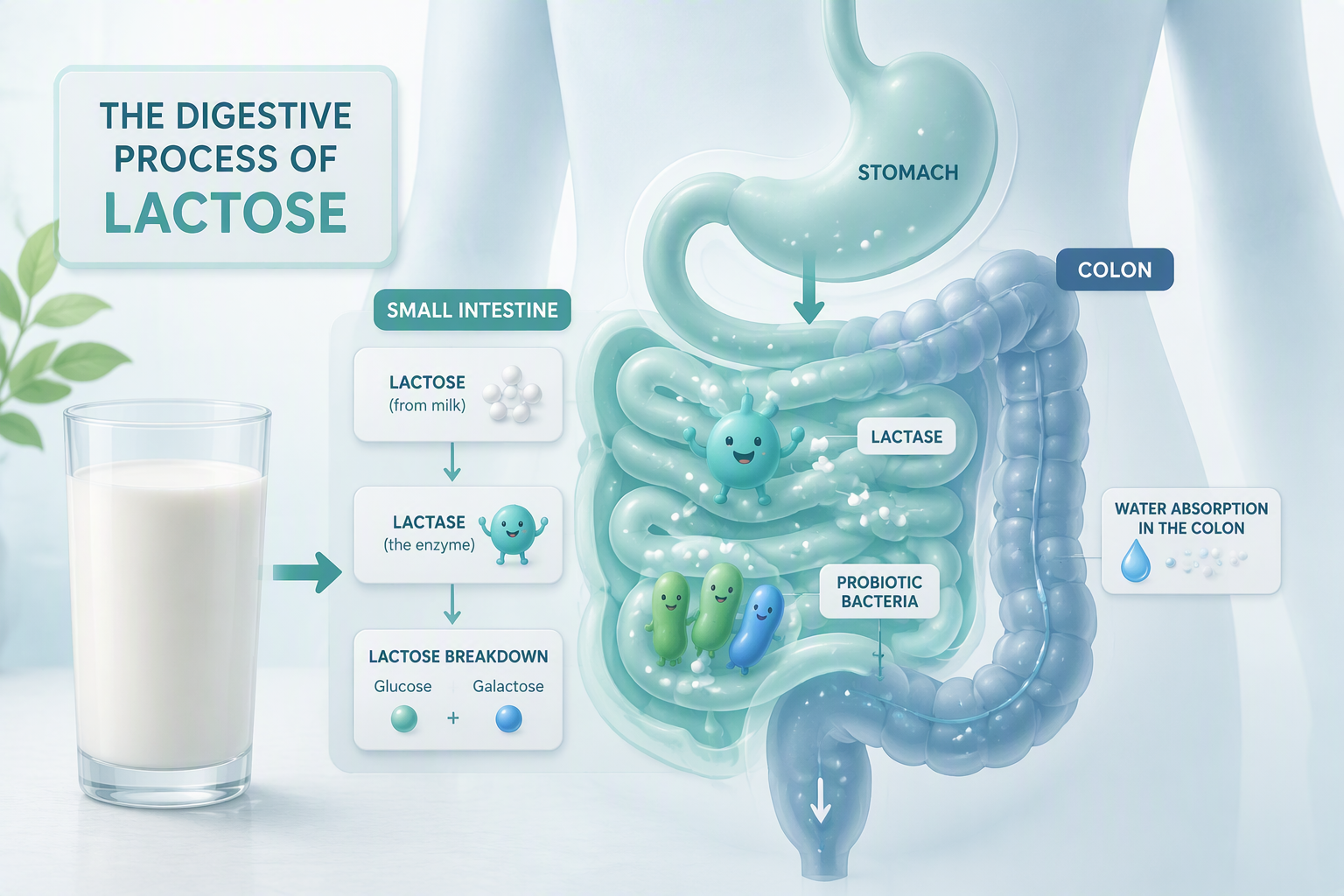
Probiotics may help some people with lactose intolerance digest dairy with fewer symptoms, but they do not cure the condition or work reliably for everyone. Bloating, gas, cramps, and diarrhea can be disruptive, and your response can vary by bacterial strain, dose, dairy portion, and digestive sensitivity.
Lactase deficiency occurs when your small intestine makes too little lactase enzyme, also called beta-galactosidase. This enzyme breaks down lactose, the natural sugar in milk. Live bacteria in some fermented foods and supplements may add beta-galactosidase activity, supporting lactose digestion before leftover lactose reaches the colon, where it is fermented and may cause symptoms. The National Institute of Diabetes and Digestive and Kidney Diseases describes this process in lactose intolerance (source).
Lactose malabsorption and symptomatic lactose intolerance are related but different, and lactose intolerance beyond probiotics has its own hub. Malabsorption means lactose is not fully digested or absorbed, while intolerance means that undigested lactose causes noticeable discomfort. Some people have lactose malabsorption without symptoms, while others react to a smaller serving because of:
- Dairy portion size: Larger amounts leave more lactose to break down.
- The rest of the meal: Food eaten with dairy can affect how quickly it moves through your digestive tract.
- Digestive sensitivity: Irritable bowel syndrome or another digestive condition can make gas and intestinal stretching feel more uncomfortable.
- The dairy product: Yogurt and other fermented dairy foods may be easier to tolerate than milk because they often contain less lactose and live cultures.
For that reason, probiotics for lactose intolerance are best treated as a focused trial, not a replacement for established options. Lactase products and lactose-reduced foods more directly reduce lactose exposure. Yogurt may offer both lower lactose content and live cultures, but results with probiotics and lactose intolerance remain specific to the product and strain studied. Evidence from one yogurt, bacterial strain, or multi-strain supplement cannot be assumed to apply to another. Probiotics for digestive complaints may be relevant when symptoms extend beyond dairy.
Try one probiotic food or supplement for a short period while tracking dairy portions and symptoms. Avoid changing several foods or supplements at once, since that makes your results hard to interpret. Probiotics for diarrhea symptoms may be more relevant when diarrhea is a major concern, while whether probiotics suit small intestinal bacterial overgrowth (SIBO) needs separate consideration.
What Does the Evidence Show by Strain?

Evidence on probiotics for lactose intolerance is strain-specific. In other words, findings for one Lactobacillus or Bifidobacterium strain do not apply to every product carrying that species name. Studies also use different measures, such as breath hydrogen after lactose, digestive symptoms, and changes in the gut environment, so there is no single dependable result for everyone.
Traditional yogurt cultures have the most practical evidence. Streptococcus thermophilus and Lactobacillus delbrueckii subsp. bulgaricus can provide lactase activity during digestion, which may help explain why yogurt is easier to tolerate than an equal serving of milk for some people. Your portion size, the presence of live cultures, and the degree of lactose malabsorption can all affect the result.
Fresh, regular yogurt improved breath-hydrogen results and short-chain fatty acid profiles in people with and without lactose maldigestion, while heated yogurt did not. Live, active cultures may contribute to this difference because heating can reduce or eliminate the organisms that supply lactase activity. A yogurt’s live-culture status may matter more than front-label marketing.
Several probiotic strains have been studied individually:
- Lactobacillus acidophilus DDS-1: Daily use was associated with fewer lactose-intolerance symptoms in research. That finding does not mean every L. acidophilus supplement will help manage bloating, gas, or abdominal discomfort.
- Lactobacillus casei Shirota: This strain has been studied for lactose maldigestion. A label that lists only “L. casei” does not confirm that the product contains Shirota.
- Bifidobacterium breve Yakult and Bifidobacterium animalis IM386: These strains have also been examined, but their results cannot be assumed for other Bifidobacterium products.
Check the full strain name or code before choosing a supplement. Evidence for Lactobacillus plantarum MP2026, Bifidobacterium longum, or Lactobacillus rhamnosus does not transfer to another strain in the same species. Think of the species as a family name and the strain as a specific address, since the strain identifies the organism actually studied.
A systematic review can combine research on fermented foods and supplements, but available summaries have not established a reliable pooled benefit or one best strain for all people. Live-culture yogurt or a supplement that names a studied strain may be worth a thoughtful trial alongside more established options, including lactase enzymes and lactose-reduced foods.
Persistent, severe, or worsening digestive symptoms should be discussed with a qualified healthcare professional.
Should You Choose Probiotics or Lactase?

For lactose intolerance, lactase is usually the more practical first choice when symptoms reliably follow dairy. A lactase enzyme breaks down lactose in the food you eat, making it a meal-specific lactose intolerance treatment rather than a general digestive supplement. Probiotics do not replace lactase, and their effects on bloating or bowel habits are less predictable.
Most people with lactase deficiency do not need to eliminate every dairy food. The goal is to find your personal lactose tolerance by starting with a modest portion instead of a large glass of milk. Some people can manage up to 4 ounces, or 118 milliliters, of milk. Spreading smaller portions across the day may be more comfortable than having the same amount all at once.
These options can make dairy easier to tolerate:
- Pair dairy with food: Having milk, cheese, or other dairy with a meal may cause fewer symptoms than having it alone.
- Choose lactose-reduced products: Lactose-free or lactose-reduced milk can be a practical everyday choice without avoiding dairy entirely.
- Use lactase for known triggers: Lactase tablets, drops, liquid, and powder can offer flexibility for restaurant meals or occasional foods. Results vary, so pay attention to what works with your usual portion sizes.
- Try lower-lactose foods: Yogurt and kefir may be easier to tolerate because their live cultures can help digest lactose. Still, yogurt and lactose intolerance can be an uncomfortable combination for some people, so begin with a small serving.
- Test aged cheeses: Fermented dairy products such as Swiss and cheddar contain relatively little lactose, but they do not guarantee symptom-free eating.
Match the option to your symptom pattern:
- For regular dairy intake, start with lactose-free products or smaller portions eaten with meals.
- For a predictable dairy trigger, take lactase with the food.
- If bloating, gas, or irregular bowel patterns continue when dairy is limited, consider a time-limited probiotic trial. Choose a product that names a specific strain code, rather than relying only on a species name or a high live-culture count.
Persistent, worsening, severe, or dairy-unrelated symptoms need individualized care. Milk allergy involves an immune reaction and requires different management than lactose intolerance, so do not self-treat a suspected allergy with supplements.
How Do You Test a Probiotic Against Real Dairy Meals?

A probiotic trial for lactose intolerance tests your response to dairy foods. It cannot restore lactase, the enzyme that digests lactose, and it does not replace diagnosis or established lactose intolerance treatment options such as lactase enzymes or lactose-free dairy. It also is not appropriate for a milk allergy, a separate immune-system condition.
The comparison is not whether digestive symptoms improve on an average day. Instead, look for a different response after similar dairy exposures. For example, does your usual glass of milk, latte, or serving of ice cream cause less bloating, gas, cramping, diarrhea, or urgency than it did before probiotic supplementation?
A brief record makes that comparison more useful:
- Dairy food: Note the type and rough amount, such as 8 ounces of milk or a half-cup of ice cream.
- Lactose support: Record whether you used a lactase tablet, selected lactose-free dairy, or had the food without either.
- Probiotic details: Write down the product, dose, and timing. Probiotic strains differ, so changing products during the trial makes the result harder to interpret.
- Symptoms afterward: Note which symptoms occurred and when, including abdominal discomfort, bowel-pattern changes, and urgency.
Keep your typical diet, lactase routine, and medicines as consistent as practical for the first several days. A new fiber powder, enzyme blend, or major diet change can make it unclear what influenced your symptoms.
Review the pattern after several weeks of repeated, comparable dairy meals rather than swapping products every few days. Continue only when similar exposures repeatedly cause fewer or milder symptoms.
If bloating rather than diarrhea is the symptom you keep logging, probiotics and bloating relief covers how that one behaves on its own.
When Should You Seek Medical Advice?
Contact a qualified healthcare professional if symptoms persist, worsen, disrupt work, meals, sleep, or daily life, or do not improve after reducing lactose or using lactase. Probiotics are not appropriate self-management for warning signs that may point to a condition beyond lactose intolerance.
Prompt medical assessment is important for:
- Unintentional weight loss
- Ongoing diarrhea or constipation
- Blood in your stool
- Fever or repeated vomiting
- Severe abdominal pain
- Signs of dehydration, such as very dark urine or dizziness
- Symptoms that wake you from sleep
New or sudden difficulty with dairy also deserves evaluation, especially after a stomach infection. Secondary lactose intolerance can occur when damage to the small intestine temporarily or permanently reduces lactase, the enzyme that digests lactose. If symptoms continue or you have concerns about nutrient absorption, a clinician may consider underlying conditions such as celiac disease instead of simply having you restrict more foods.
A hydrogen breath test may help show whether lactose is not being fully digested and absorbed. After drinking a lactose-containing liquid, you provide breath samples that are checked for hydrogen. Higher levels can suggest that lactose reached gut bacteria, but a clinician should decide whether the test fits your symptoms and interpret it alongside your diet, medical history, and other possible causes of bloating or bowel changes.
Milk allergy is different from lactose intolerance. Lactose intolerance involves trouble digesting lactose, a milk sugar. A milk allergy is an immune reaction to milk proteins and can be life-threatening. Seek urgent medical care after milk exposure if you develop:
- Hives
- Swelling of the lips, tongue, or throat
- Wheezing or trouble breathing
- Dizziness or fainting
- Vomiting soon after eating or drinking milk
Lactase, lactose-reduced foods, and probiotics do not treat a milk allergy. Professional guidance can help you avoid unnecessary food restrictions and find the right next step.
Probiotics for Lactose Intolerance FAQs
These FAQs cover the role probiotics may play in lactose intolerance, how they compare with other options, and when symptoms warrant medical care. They can help you make informed food and supplement choices without assuming one approach works for everyone.
1. Can Probiotics Cause Gas or Bloating?
Probiotics can cause temporary gas, bloating, or bowel changes when you first start them, but this does not mean they improve lactose digestion. Evidence for bloating relief remains limited, including for lactic acid bacteria and beta-galactosidase in fermented milk.
With probiotic yogurt, bloating and gas from dairy that begins 30 minutes to 2 hours later may be triggered by lactose. Yogurt and lactose intolerance can coexist, so check for lactose or other dairy ingredients. Stop the product and seek qualified medical care for severe, persistent, or worsening symptoms, vomiting, significant diarrhea, hives, swelling, or breathing trouble.
2. Are Probiotic Yogurts Suitable for Lactose Intolerance?
Probiotic yogurt may be easier to tolerate than milk because fermentation breaks down some lactose before you eat it. Its live cultures, especially Streptococcus thermophilus and Lactobacillus delbrueckii subsp. bulgaricus, may also provide beta-galactosidase, an enzyme that helps digest lactose and can reduce gas, bloating, or abdominal discomfort for some people.
Tolerance still varies. Lactose content, serving size, active cultures, and your sensitivity all affect symptoms, so begin with a small portion and adjust based on how you feel.
3. Do Probiotics Cure Lactose Intolerance?
Probiotics do not cure lactose intolerance or restore lactase, the enzyme that digests lactose. Certain strains may help break down lactose in the colon and reduce gas, bloating, or diarrhea for some people, but results vary by person and product. They are a possible symptom-management tool, not a substitute for diagnosis or established options such as lactose-reduced foods, lactase products, and smaller servings, including up to 4 ounces (118 milliliters) of milk.
4. Can You Take Lactase and a Probiotic Together?
Yes. They work by different routes and do not conflict. A lactase supplement acts on the lactose in the meal you take it with, while a probiotic may gradually improve how well you handle lactose but does not replace the enzyme.
Take lactase with the dairy-containing meal as its label directs, and keep the probiotic on its usual schedule. If your goal is to find out whether the probiotic is doing anything, add one at a time. Starting both together makes it impossible to tell which one helped.