


Morning or night matters far less than the label in your hand. Most timing advice online is written as though every probiotic behaves the same way, and the directions on your specific product override all of it.
Formulation is what actually changes the answer. Standard Lactobacillus and Bifidobacterium capsules are more exposed to stomach acid, while enteric-coated, delayed-release, and spore-based products are built to survive it. A 2011 laboratory model found better survival when a probiotic went in just before or with milk or milk-based oatmeal rather than water or apple juice, and worst survival 30 minutes after a meal.
None of that predicts symptom relief for any one person. Picking the label-approved time you're least likely to skip does more for the outcome than optimizing the hour.
Best Time to Take Probiotics Key Takeaways
- The product label's directions override any general rule about timing.
- Delivery format matters more than the clock, since coatings resist stomach acid.
- Standard capsules are often taken with food or shortly before a meal.
- Saccharomyces boulardii is more flexible around meals than bacterial strains.
- A 2011 model found the poorest survival 30 minutes after a meal.
- Take probiotics with cool or room-temperature water, never a hot drink.
- Consistency beats a perfect dosing hour you can't sustain.
What Do the Label's Timing Directions Tell You?
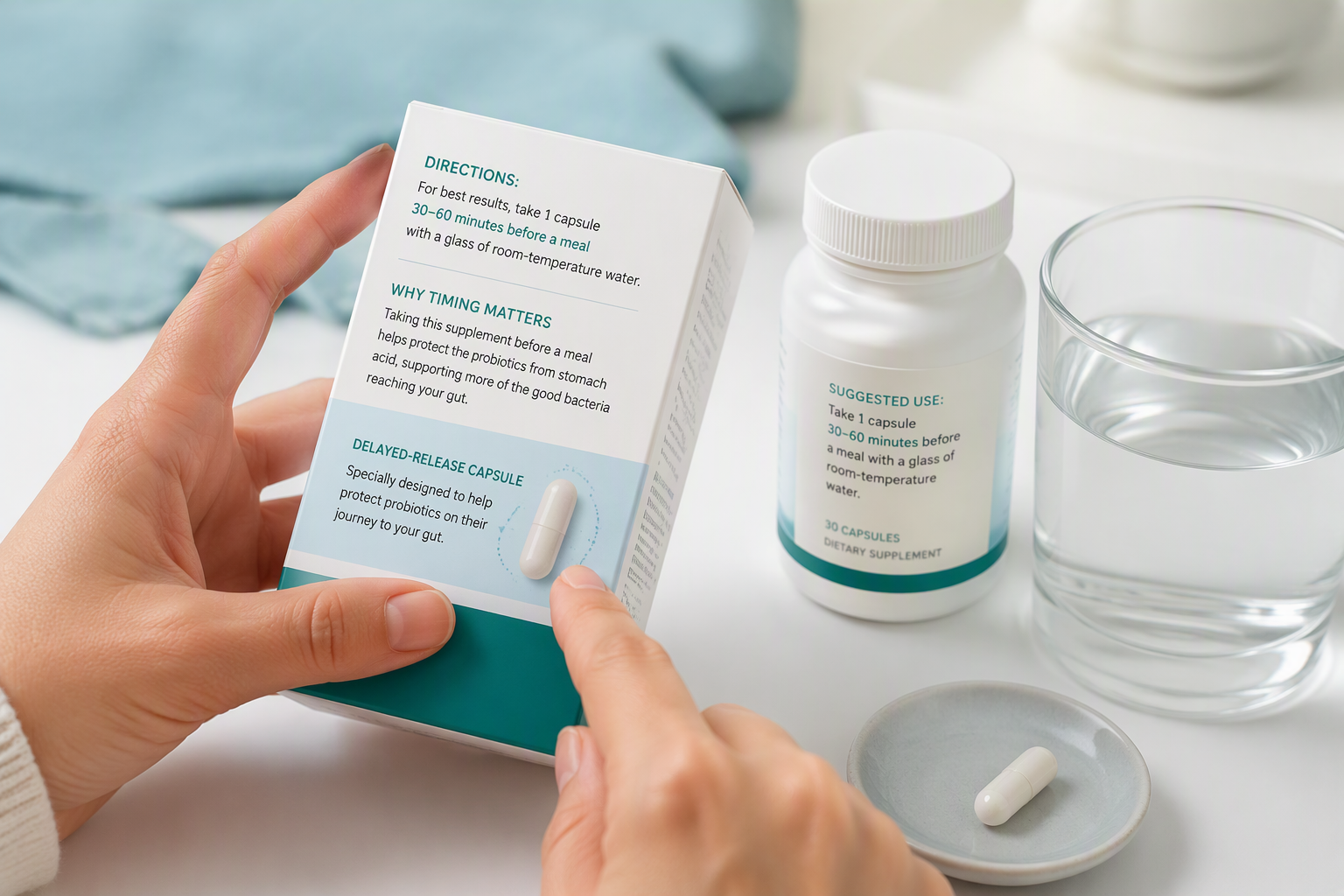
The directions line, not the Supplement Facts panel, gives you the clearest answer about when to take a probiotic. Probiotic label instructions may say to take it before food, with a meal, at bedtime, or without a timing preference, and those brand-specific probiotic instructions should outweigh general advice about taking probiotics in the morning or at night.
Delivery format helps explain why timing differs between products:
- Standard capsules and powders: These formats can be more exposed to stomach acid, so food-related directions may matter more.
- Enteric-coated, delayed-release, and advanced-delivery products: These formulations are designed to help microorganisms pass through the stomach. They are often less dependent on meal timing, but the package directions still apply.
- Spore-based products: These contain organisms with naturally hardy forms and may also be less tied to a particular meal schedule.
Strain-specific probiotic timing matters only when a specific strain was studied on a specific schedule. For symptoms associated with irritable bowel syndrome (IBS), the strain code and the people studied often tell you more than a broad species name. A species name alone does not mean another product will work the same way.
The probiotic dosing guide covers the broader label check, including strain codes, dose, and storage. For how to take probiotics in daily life, choose a label-approved time you can keep consistently. Regular use matters more than finding one supposedly perfect hour.
A label-approved time you keep every day is also what makes the rest measurable, since how long until probiotics work and how to tell probiotics are working both assume a steady routine.
Which Probiotics Have Different Timing Needs?
Those label and formulation differences mean there is no universal best hour for probiotic timing. Start with the probiotic label instructions, since the named strain, whether it contains live bacteria or yeast, its delivery system, and its intended use can all affect the schedule. Rather than following a fixed morning-or-night rule, a routine that fits reliably with breakfast, lunch, or another regular part of your day is often more useful.
Common formats can have different timing needs:
- Standard Lactobacillus and Bifidobacterium capsules: Live bacterial products may be more affected by probiotics and stomach acid. Many standard Lactobacillus and Bifidobacterium products may be better taken with food or shortly before a meal, but the label should come first because timing can vary by strain and product (source). Follow the package directions for before-food, with-food, or other use.
- Enteric-coated probiotics and delayed-release capsules: These protective formats are designed to better withstand stomach acid. Many can be taken as probiotics with or without food and at different times of day, but do not apply an uncoated capsule's schedule automatically.
- Spore-based probiotic strains: Bacillus spores tolerate digestion differently from standard live bacteria. These products are often directed to be taken with a regular meal, though the label remains the deciding guidance.
- Saccharomyces boulardii: This yeast probiotic is generally more flexible around meals. Check the label carefully when taking antibiotics, since directions can vary.
- Oral probiotic lozenges: Let these dissolve slowly in your mouth as directed. They are not swallowable digestive capsules, so their use differs from standard probiotic products.
Delivery format matters as much as the organism name. Choose the label-approved schedule you can follow consistently at work or home.
1. Lactobacillus — Often Best Before Or With Meals
Many standard Lactobacillus capsules and powders fit best shortly before a meal or with its first few bites. Food temporarily buffers stomach acid, which may support probiotic bacteria survival during stomach transit. This practical pattern for probiotics before a meal does not guarantee symptom relief or apply to every product. Research also indicates that food can influence how many live microorganisms reach the intestine (source).
Breakfast is often an easy option. Oatmeal made with milk, or a meal with yogurt, eggs, or nut butter, includes carbohydrate plus a modest amount of protein or fat. A mixed meal may offer more protection than taking a standard product long after eating, but a high-fat meal is not required.
The label matters more than general timing advice. Before settling on a routine, consider:
- Delivery method: Enteric-coated, delayed-release, and advanced-delivery products may have different directions.
- Strain identity: Lactobacillus strains vary, so a named strain code can matter more than the species name alone.
- Drink temperature: Cool or room-temperature water is preferable to hot beverages, which may harm live microorganisms.
If the label conflicts with meal-based guidance, follow the label. A repeatable routine with a suitable meal is more useful than chasing a perfect clock time.
2. Saccharomyces boulardii — Flexible Around Meals And Antibiotics
Unlike the bacterial Lactobacillus products above, Saccharomyces boulardii is a probiotic yeast rather than a bacterial probiotic, so its meal timing is often more flexible. Research has found similar survival with or without food, which can make breakfast, lunch, or an evening routine workable. The product label still takes priority, especially for enteric-coated, delayed-release, or other specialized delivery systems.
Spacing probiotics and antibiotics is mainly a concern with bacterial products. Because antibiotics target bacteria, they may not affect S. boulardii in the same way. That can make it a practical consideration for probiotics after antibiotics, but it does not mean that every timing precaution disappears.
A simple routine should account for these exceptions:
- Follow the label: Take the product with or without food as its directions state.
- Ask about antifungals and other medicines: Antifungal medicines can act on yeast. A pharmacist or clinician can help when your antibiotic, probiotic, or other medications create uncertainty.
- Keep the strain distinct: S. boulardii differs from Saccharomyces cerevisiae CNCM I-3856, a separate yeast studied in IBS research. Findings for one do not apply to the other.
A consistent daily time can support regular use and an ongoing presence of the supplemented organism. Results and tolerability vary by person.
3. Bifidobacterium — Benefits From Meal-Related Acid Protection
Bifidobacterium may be more likely to reach the intestine alive when you take a standard capsule or powder with a meal or within about 30 minutes before one. Food can briefly buffer stomach acid, and a meal with some protein or healthy fat may offer added protection. This is practical digestive-wellness guidance, not a guaranteed result.
The product label takes priority over general timing advice. Enteric-coated, delayed-release, advanced-delivery, and spore-based formulas may have different directions. If the label does not name a timing window, taking the probiotic with a regular meal is a simple routine.
A useful label check includes:
- Strain code: Look beyond Bifidobacterium or B. longum for a specific code, such as 35624.
- Condition claim: Match an IBS claim to research on that exact strain, not only the species.
- Directions: Follow the product’s storage and timing instructions.
Evidence on meal timing is limited and mixed, and findings for one Bifidobacterium strain do not apply to every product or symptom. Consistent use as directed usually matters more than choosing breakfast versus bedtime because probiotics are intended to maintain an ongoing presence of the supplemented microorganisms.
4. Lactobacillus rhamnosus — Timing Depends On The Exact Strain
Lactobacillus rhamnosus is a species, not a complete dosing instruction. Strain-specific probiotic timing depends on the full strain code, the delivery format, the product’s intended use, and its label directions. For instance, timing guidance for L. rhamnosus LRa05 does not automatically apply to every other L. rhamnosus strain.
Use your package as a short reading sequence:
- Find the strain code: Look on the Supplement Facts panel or manufacturer information for letters and numbers after the species name. If the package names only Lactobacillus rhamnosus, the preferred timing is less certain, so its directions should guide your routine.
- Read the food instruction: A product may say to take it with food, before a meal, or once daily. Follow that wording instead of placing every L. rhamnosus supplement into the same morning, evening, or empty-stomach schedule.
- Note the delivery format: Capsules may protect probiotic cells from stomach acid better than powders, liquids, or food and beverage formats. Delayed-release, advanced-delivery, and enteric-coated probiotics are designed to resist stomach acid and may be usable with or without food, but manufacturer instructions still come first.
Once the label gives you an allowed window, pair it with a dependable cue, such as breakfast or an evening snack. Keep the timing matched to your own strain code and format.
5. Lactobacillus acidophilus — Check Acid Protection And Label Directions
Lactobacillus acidophilus may be less tied to meal timing when a product contains an acid-tolerant strain or uses protective delivery. That does not make morning, evening, or empty-stomach use the right choice for everyone. Survival through digestion still depends on the exact strain, dose form, and product design.
Look beyond the species name on the package. For example, L. acidophilus LA85 identifies a specific strain, while “Lactobacillus acidophilus” alone does not. Evidence for one acidophilus strain does not automatically apply to another product.
Before choosing a routine, check the full label for these details:
- Protective wording: “Enteric-coated,” “delayed-release,” “acid-resistant,” or “advanced delivery” may indicate a design intended to help the organisms withstand stomach acid.
- Format and directions: Capsules, powders, liquids, and probiotic foods can have different instructions. Some protected capsules may be taken with or without food, but the manufacturer’s directions come first.
- Storage: Confirm whether the product needs refrigeration or should stay in a cool, dry place.
Take the probiotic with a cool or room-temperature drink rather than hot coffee or tea. Using it at the same label-supported time each day is generally more practical than trying to find a perfect hour.
When Should You Take Probiotics With Food?
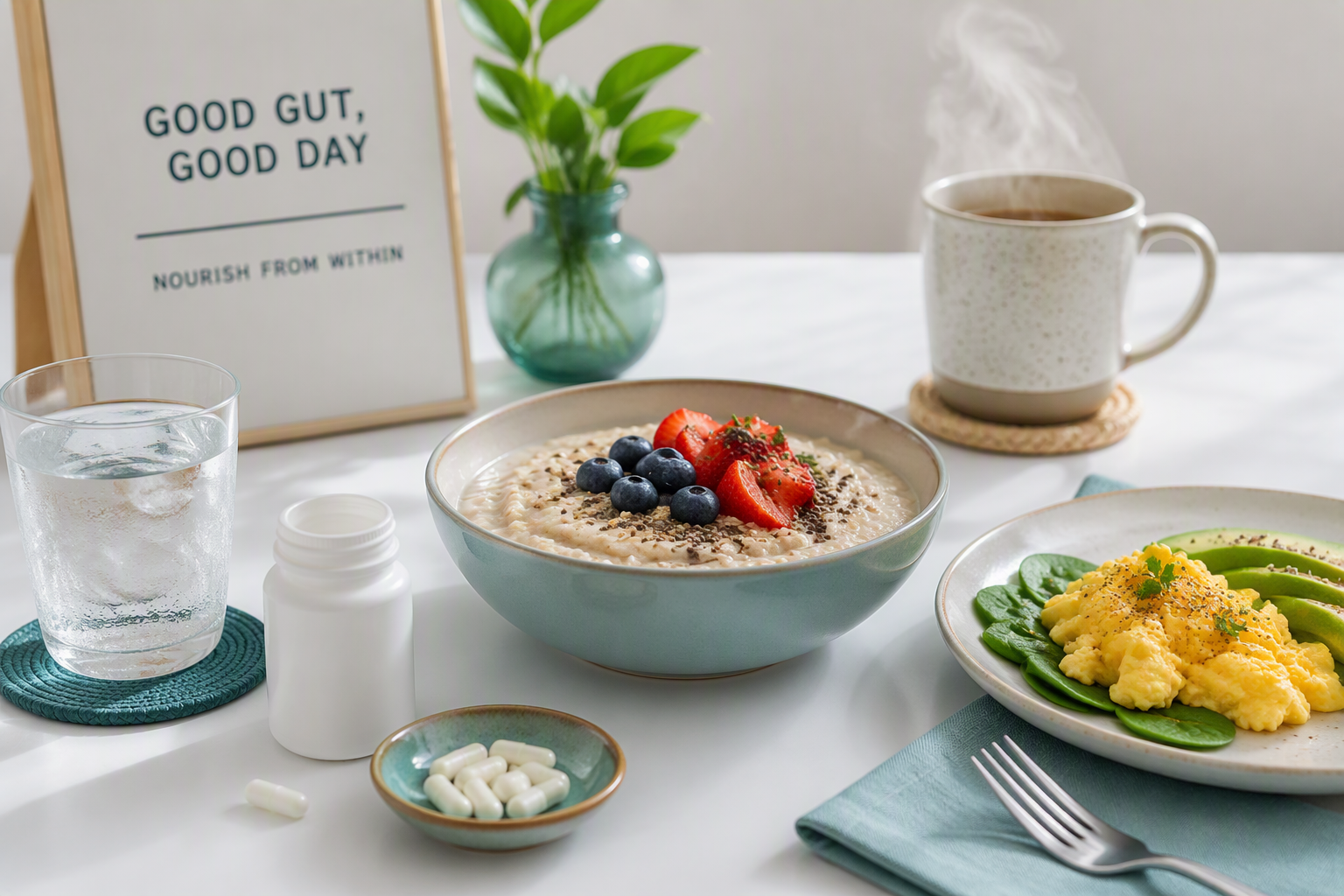
For standard capsules and powders, once strain and delivery differences are accounted for, a meal or the start of a meal may be a practical time to take probiotics unless the label says otherwise. Breakfast can be an easy routine, but when to take probiotics matters less than following the product directions consistently. Food may briefly buffer probiotics and stomach acid, helping more live microorganisms pass through the stomach.
The main timing options are:
- With a meal: This is convenient and often a sensible default for probiotics with or without food directions that do not name a specific schedule.
- Probiotics before a meal: A dose shortly before eating may suit products containing Lactobacillus or Bifidobacterium, although the label remains the priority.
- On an empty stomach: This may fit products designed for it or labels that direct it. Strains and delivery systems vary.
A 2011 laboratory model found greater Lactobacillus and Bifidobacterium survival when taken just before or with milk or milk-based oatmeal rather than water or apple juice. Survival was lowest 30 minutes after a meal, though this does not predict symptom relief for any individual (source). Yogurt, milk, eggs, fish, or a balanced breakfast may offer modest buffering, but you do not need a high-fat meal solely for a probiotic.
Take probiotics with cool water or probiotics with room-temperature water. Avoid hot drinks with probiotics, including coffee and tea, because heat may harm live microorganisms. If you take a probiotic on an empty stomach, avoid pairing it right away with acidic drinks or foods, such as citrus juice, vinegar, coffee, pineapple, or tomato juice or sauce.
How Do You Build A Consistent Probiotic Routine?
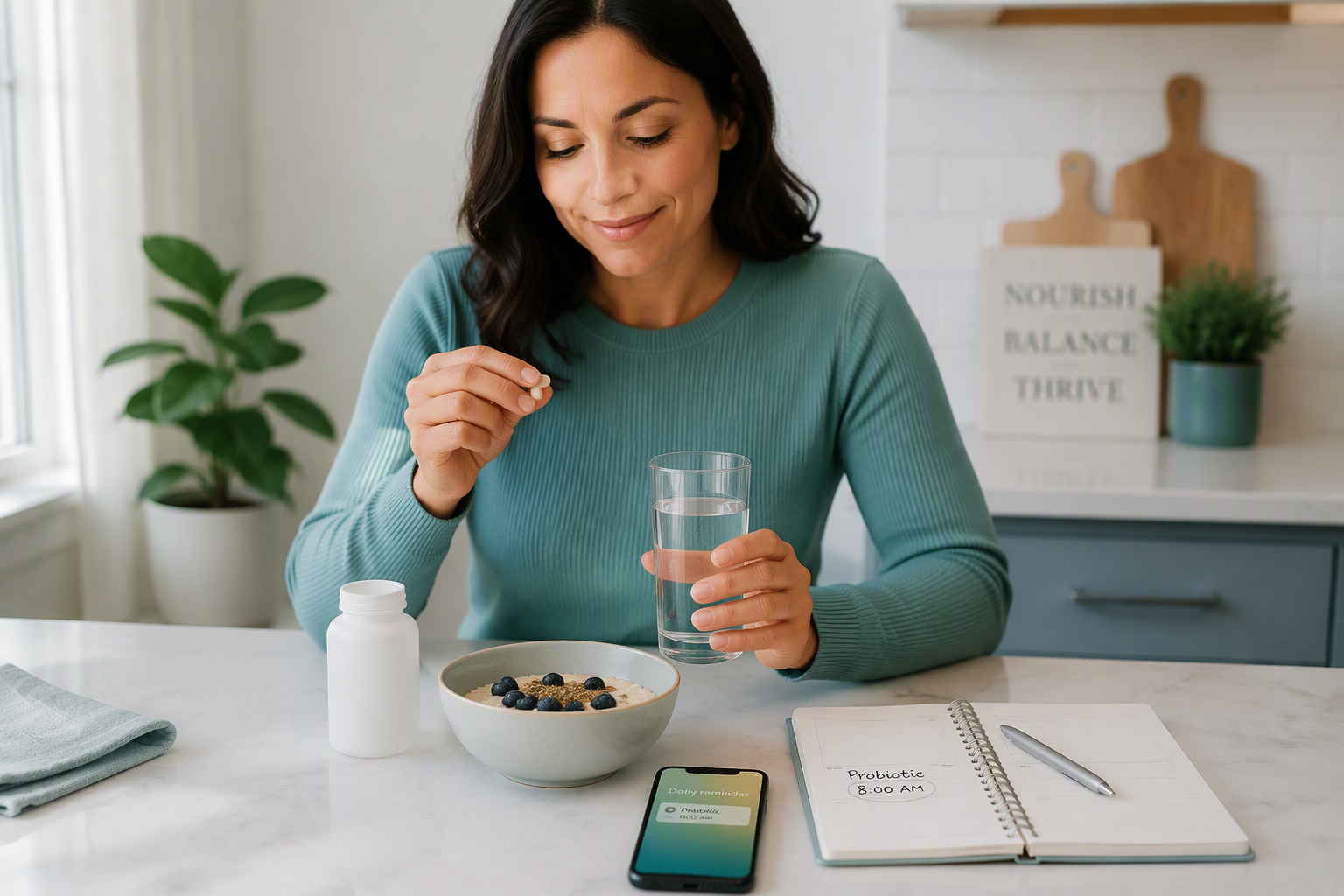
Daily probiotic consistency matters more than taking a dose at one exact hour. The best time to take probiotics is when you can reliably remember them, such as with breakfast, dinner, packing lunch, or brushing your teeth. Follow the product label first because probiotic timing, food instructions, and storage needs vary by formulation.
When the label allows use with food, keep the bottle where you eat that meal and take it in the same order each day. If mornings are rushed or breakfast is often skipped, an evening routine may be more practical. Rather than following an idealized plan, the answer to when to take probiotics should fit your work and family schedule.
A few habits can protect the live microorganisms and make the routine easier to maintain:
- Taking probiotics with cool water or probiotics with room-temperature water helps avoid unnecessary heat exposure.
- Let a hot drink cool before taking your dose, and treat the label as the final word on storage and dosing.
- If you miss a dose, resume your usual schedule at the next appropriate opportunity. Do not double doses unless the label or a healthcare professional directs you to do so.
Mild gas or bloating can occur when you start a probiotic. If daytime discomfort is bothersome and the label permits it, a bedtime dose may be more comfortable. Persistent, severe, or worsening symptoms need guidance from a qualified healthcare professional rather than repeated schedule changes. The National Institutes of Health notes that probiotic effects and safety can vary by product and person (source).
Steady use is also what makes any change in your symptoms readable.
How Should You Take Probiotics With Antibiotics?
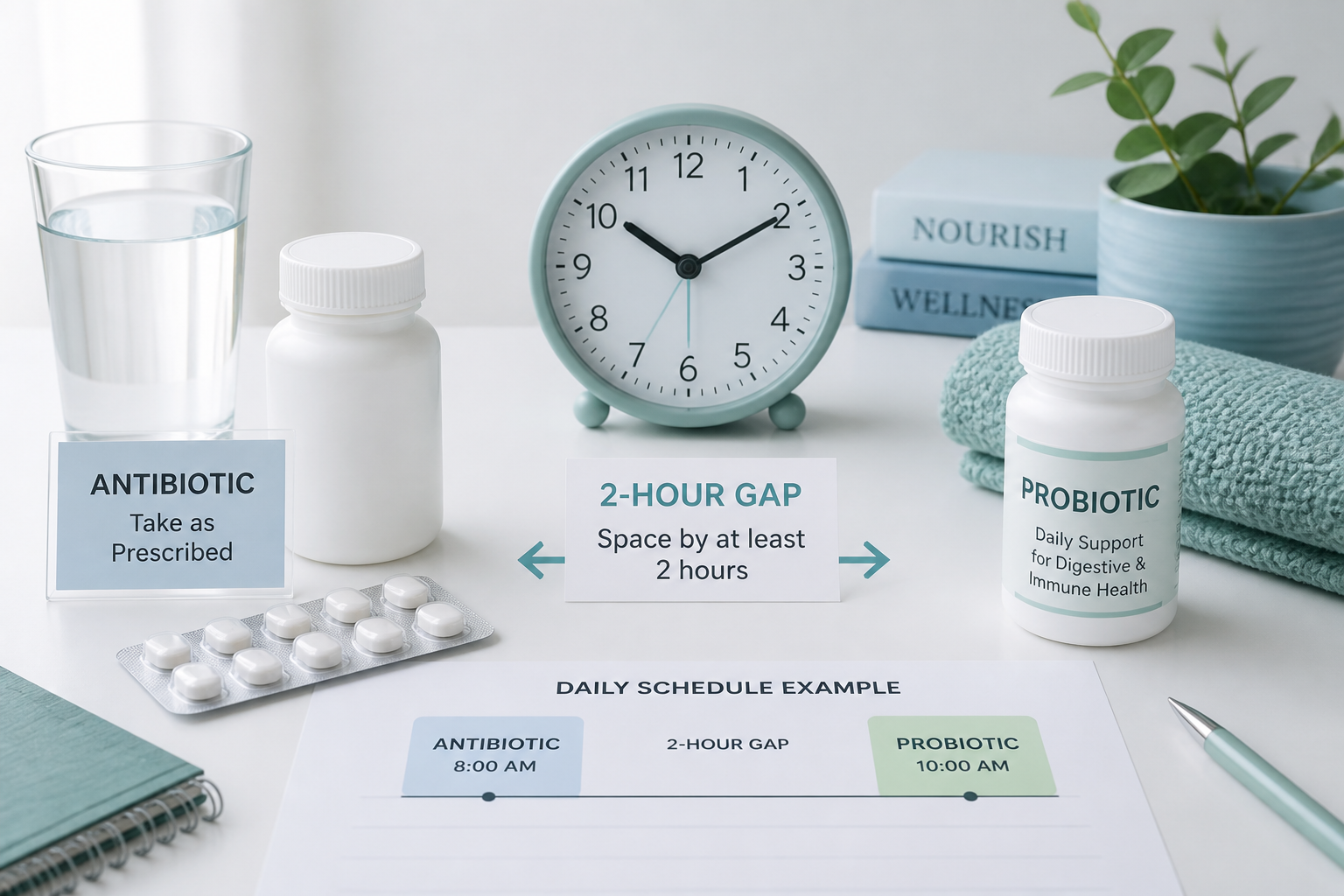
For bacterial probiotics used alongside antibiotics, keep at least a two-hour gap before or after each antibiotic dose. This approach to spacing probiotics and antibiotics may reduce the chance that the antibiotic affects the live bacteria in the supplement.
The product label comes first because timing can differ by strain and delivery system. Directions may vary for:
- Enteric-coated products: These have a coating designed to help the supplement pass through the stomach.
- Delayed-release or advanced-delivery formulas: These products may use specific instructions to protect the microorganisms.
- Spore-based probiotic strains: These strains can have different storage and timing guidance from standard bacterial probiotics.
If a pharmacist’s advice differs from the package directions, follow the pharmacist’s guidance. Take each dose with cool or room-temperature water, since hot coffee, tea, and other hot drinks may harm live microorganisms.
A steady schedule is usually easier to maintain than changing the time each day. Pick one daily time that preserves the two-hour interval for bacterial products, such as midafternoon if your antibiotic is taken at breakfast and dinner.
Saccharomyces boulardii follows a different schedule because it is a yeast, not a bacterial probiotic. The same separation from antibiotics generally does not apply, and it can usually be taken with or without food, although its label still matters.
This timing guidance applies during antibiotic use and does not answer questions about probiotics after antibiotics. A routine you can follow consistently helps maintain a continuing presence of supplemented microorganisms in your gut microbiome.
Best Time to Take Probiotics FAQs
These FAQs address common questions about probiotic timing, meals, antibiotics, and symptom changes so you can choose a routine that fits your schedule while keeping strain differences and safety in mind.
1. Is Morning or Night Better for Probiotics?
For most people, morning is not better than night. The best time to take probiotics is the time you can repeat while following the label’s food and storage directions. Morning probiotics may fit your breakfast routine, while dinner can work with a regular evening meal. Bedtime probiotics may feel more comfortable if daytime use brings mild gas or bloating. Pairing your dose with brushing your teeth or another dependable habit supports daily probiotic consistency.
2. What Should You Avoid When Taking Probiotics?
Avoid taking probiotics with hot coffee, tea, or other hot drinks. Cool or room-temperature water is a better choice because heat may harm live microorganisms. If you take a probiotic on an empty stomach, avoid immediately having highly acidic foods or drinks, including citrus, orange or grapefruit juice, vinegar, coffee, pineapple, and tomato juice or sauce.
An inconsistent routine can make it harder to tell how the product fits your symptoms. Follow the label’s storage instructions, including refrigeration when stated, and take it as directed.
3. How Long Do Probiotics Take to Work?
Mild gas, bloating, or bowel-habit changes may occur as you adjust during the first few days, but they do not confirm probiotic effectiveness. For probiotics for gas and bloating, taking the labeled dose at bedtime may be easier if daytime symptoms are uncomfortable. Changes may take days to a few weeks and vary by strain and symptom, so evidence for one product does not apply to all others. A consistent cue, such as breakfast or brushing your teeth, matters more than the hour. Seek care if symptoms persist, worsen, or become severe.