


Bile acid diarrhea (BAD) and Irritable Bowel Syndrome with Diarrhea (IBS-D) can cause similar diarrhea, but symptoms alone cannot distinguish them. BAD occurs when excess bile acids reach the colon and draw water into the bowel, while IBS-D involves abdominal pain, altered bowel habits, and changes in gut-brain signaling.
Very watery stools, intense urgency, nighttime diarrhea, fatty-meal triggers, or symptoms after gallbladder removal can make BAD worth discussing with a healthcare professional.
BAD vs IBS-D Key Takeaways
- BAD and IBS-D overlap, so symptoms alone cannot confirm either condition.
- BAD commonly causes watery diarrhea, intense urgency, and sometimes accidents.
- IBS-D typically includes recurrent abdominal pain linked to bowel movements.
- Gallbladder removal or terminal-ileum disease can increase suspicion for BAD.
- SeHCAT is unavailable in the United States.
- US testing may include serum 7αC4 or a 48-hour stool bile-acid test.
- BAD and IBS-D require different treatment strategies and individualized medical guidance.
What Are Bile Acid Diarrhea And IBS-D?
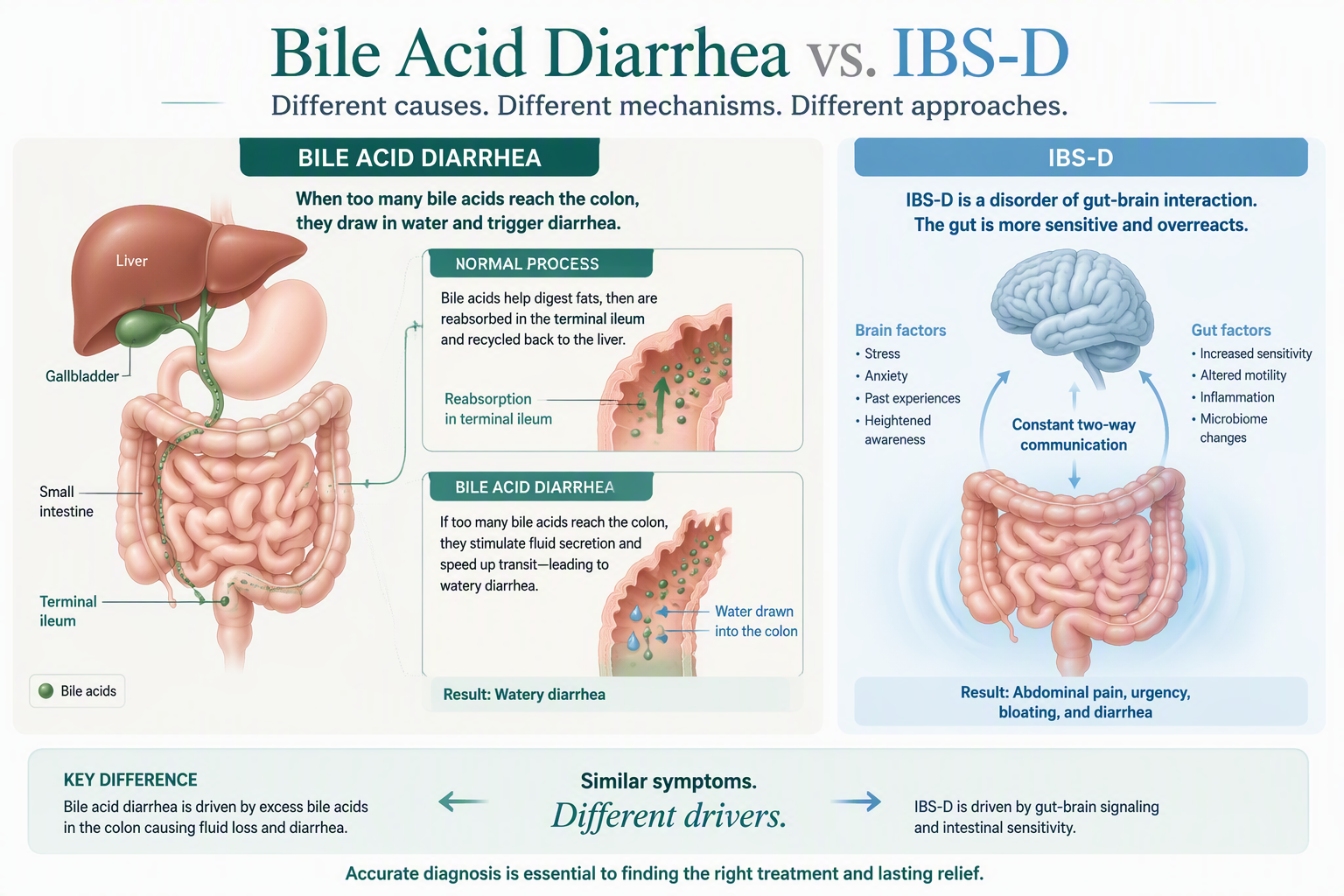
Bile acid diarrhea (BAD), also called bile acid malabsorption, occurs when excess bile acids reach the colon and cause watery, urgent stools. IBS-D, or irritable bowel syndrome with diarrhea, is a disorder of gut-brain interaction that can produce similar symptoms. Symptoms alone cannot confirm either condition.
The liver makes bile acids to help digest fat. After bile enters the small intestine, the terminal ileum, its final section, normally reabsorbs and recycles almost all of it. Poor reabsorption or overproduction can leave excess bile acids in the colon.
Those bile acids can irritate the colon, draw water into the bowel, and speed intestinal movement. Chronic watery diarrhea, sudden urgency, and fecal leakage may occur, especially with terminal ileum disease or after certain intestinal surgeries. This pattern may support a clinical discussion about BAD, but it does not establish the cause.
IBS-D is more than loose stools. The digestive tract may appear structurally normal, while altered motility, heightened visceral sensitivity, and disrupted gut-brain signaling make ordinary gas or stretching painful. Rapid contractions may also move stool too quickly.
Both conditions can cause recurring diarrhea, abdominal discomfort, urgency, and unpredictable bathroom needs. Their usual distinctions include:
Feature | BAD | IBS-D |
|---|---|---|
Main mechanism | Bile-acid irritation of the colon | Changes in gut-brain signaling, movement, and sensitivity |
Common context | Ileum disease, intestinal surgery, poor reabsorption, or overproduction | Symptoms without an obvious structural abnormality |
Evaluation and care | May include targeted testing and bile-acid treatment | Usually uses symptom-based criteria and individualized care |
The question of bile acid diarrhea vs IBS-D sits inside a broader bowel-symptom evaluation, and how clinicians confirm IBS shows where overlapping causes get separated. Persistent, severe, or worsening diarrhea deserves assessment by a qualified healthcare professional.
How Do Symptoms And Risk Factors Differ?
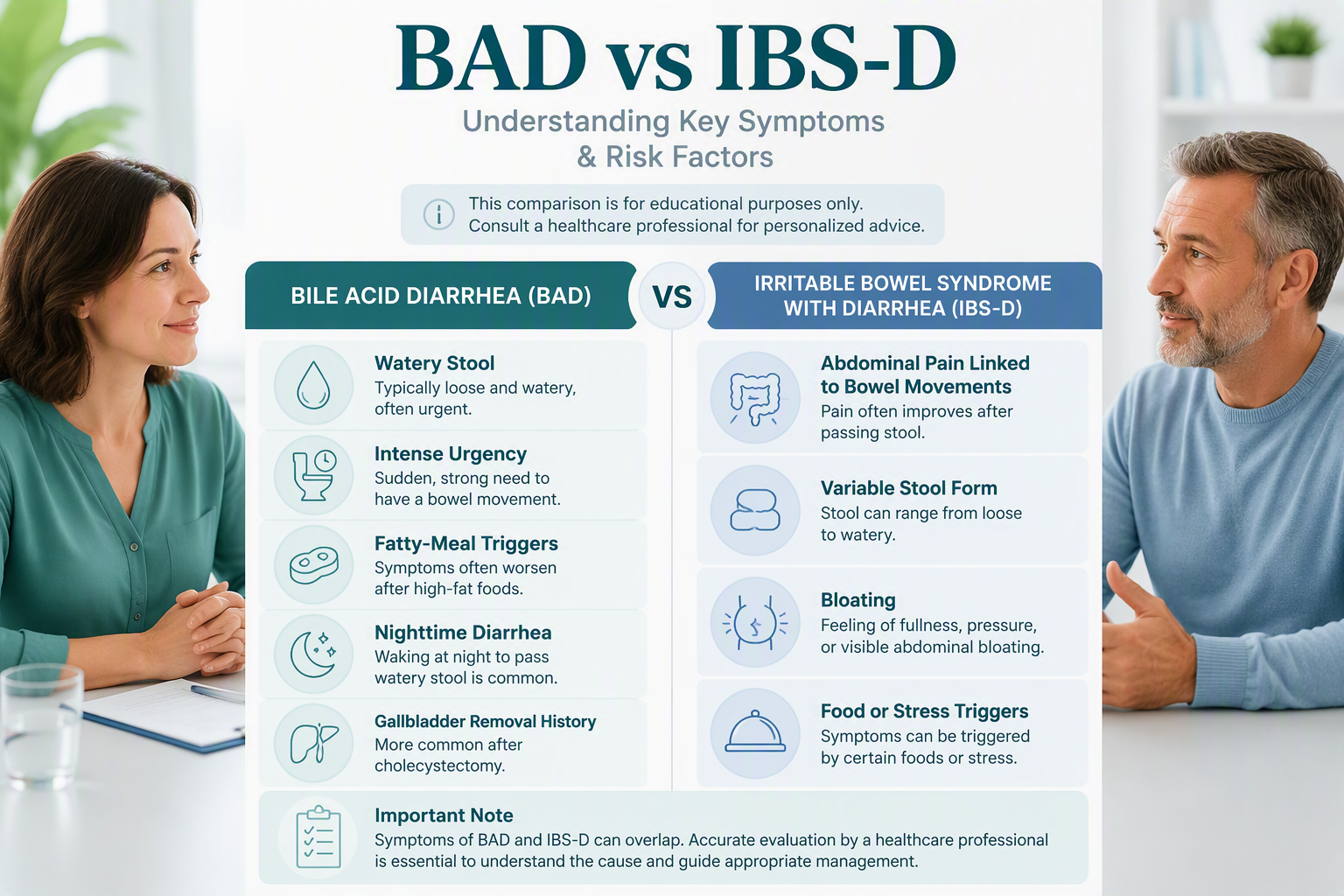
BAD more often causes very watery stools, frequent bowel movements, and marked urgency. Diarrhea-predominant irritable bowel syndrome (IBS-D) can also cause loose or watery stools, but stool consistency often varies more.
Pattern | BAD | IBS-D |
|---|---|---|
Stool appearance | Watery, sometimes pale, yellow-green, greasy, or fatty-looking | Loose or watery, with more variation |
Urgency | Often intense, with accidents or difficulty staying near a bathroom | Possible, but less specific |
Nighttime symptoms | May wake you, especially after a heavy or fatty meal | Usually occurs while awake and rarely interrupts sleep |
Abdominal pain | Can occur | Recurrent pain linked with bowel movements is central |
One study found loose or watery stools in 61.0% of people with BAD compared with 30.9% of people without BAD. Urgency and fear of losing bowel control were also more common with BAD, but symptoms alone cannot confirm the cause.
Fatty, greasy, or rich meals are more characteristic BAD triggers because excess bile acids can reach the colon and draw in water. Fatty foods may also worsen IBS-D, which has broader food, stress, and gut-sensitivity triggers. Tracking meal timing, stool changes, urgency, pain, and sleep disruption is more useful than starting broad food restrictions.
Certain health histories raise suspicion for BAD:
- Gallbladder removal: Diarrhea that begins afterward may reflect disrupted bile handling.
- Terminal-ileum disease or surgery: Inflammation or surgery involving this part of the small intestine can interfere with bile-acid recycling.
- Diagnostic overlap: BAD affected 44 of 219 people diagnosed with IBS-D, about 20%, in one study.
These patterns support a testing conversation, not self-diagnosis. Persistent, severe, or worsening symptoms need evaluation by a qualified healthcare professional.
What Symptoms And Risks Suggest Bile Acid Diarrhea?
Very watery, frequent, and unpredictable diarrhea can justify asking a clinician whether BAD needs specific evaluation. Severe urgency, difficulty reaching the bathroom, or accidents may occur when excess bile acids draw water into the colon and speed bowel movements. These signs can overlap with IBS-D and do not confirm a diagnosis.
Timing and medical history can add useful context:
- After meals: Diarrhea that begins soon after eating or worsens after fatty meals may support targeted consideration of BAD.
- At night: Repeatedly waking with diarrhea or urgent bowel movements is less typical of a functional bowel pattern and deserves medical discussion.
- Pain: Abdominal pain related to bowel movements is central to IBS-D. BAD can cause pain, but relatively little pain compared with the diarrhea may suggest another cause.
- Surgery: Gallbladder removal or surgery involving the terminal ileum can reduce normal bile acid reabsorption, so these details help a clinician weigh the likely cause.
A brief record of meals, stool timing, urgency, accidents, and nighttime episodes can help you describe the pattern. BAD may be primary bile acid diarrhea, also called idiopathic bile acid diarrhea, or may follow another condition or surgery. Symptoms can also resemble bacterial overgrowth mistaken for IBS, so tracking should support, not replace, professional evaluation.
What Symptoms Commonly Occur With IBS-D?
IBS-D, or irritable bowel syndrome with diarrhea, is defined by recurring abdominal pain linked to bowel movements and changes in stool frequency or appearance. Pain may improve or worsen after defecation. Knowing what defines an IBS diagnosis can help frame this pattern, but symptoms alone cannot confirm a diagnosis.
BAD may cause more prominent watery diarrhea and urgency with relatively little pain. Pain related to bowel movements is not required, so severe diarrhea with limited pain is worth discussing with a gastroenterologist.
IBS-D symptoms may include chronic loose stools, bloating, and unpredictable discomfort. Stress, anxiety, hormonal changes, gut microbiome changes, gut hypersensitivity, and rapid intestinal contractions may affect symptom intensity. Triggers vary by person, including:
- Foods: High-FODMAP foods, caffeine, alcohol, or personal sensitivities.
- Patterns: Stool changes, urgency, pain timing, meals, stress, and hormonal changes.
Broadly removing dairy, flour, sugar, or processed foods may not provide lasting improvement. A qualified healthcare professional can help you consider structured, personalized dietary guidance rather than assuming one diet fits everyone.
Kelly's experience. It took about seven or eight months of tests that kept coming back normal: bloods, stool samples, eventually a colonoscopy. I remember my doctor saying “everything looks fine,” and thinking, then why am I planning my whole week around where the toilets are? Nobody mentioned bile acid diarrhea. I had never heard the phrase. I left with the letters IBS and no real idea what to do next.
Kelly Chow lives with IBS-D and writes for My Good Gut.
IBS-D and BAD can overlap, so persistent, severe, worsening, or disruptive symptoms merit medical review. Results vary by person, and dietary advice should be individualized.
What About Diarrhea After Gallbladder Removal?
Gallbladder removal can change how bile reaches your intestine and may contribute to BAD. The gallbladder stores bile between meals and releases it when you eat. Without it, bile enters the intestine more continuously. In some people, enough bile reaches the colon to draw in water and speed bowel movements.
Diarrhea linked to this change often begins within weeks or months after surgery. Symptoms may include chronic watery diarrhea, strong urgency, and bowel changes that feel more noticeable than pain. Fatty or heavy meals can make symptoms worse. This pattern supports asking about BAD, but it does not confirm the condition, because other surgical or unrelated causes can lead to unpredictable diarrhea.
Post-surgical diarrhea is sometimes labeled diarrhea-predominant irritable bowel syndrome (IBS-D) because the symptoms overlap and routine tests may be normal. If symptoms began after surgery or standard IBS-D treatment has not helped, the diagnosis deserves another clinical review. Secondary bile acid diarrhea may be missed, and an earlier IBS-D diagnosis is not a closed door.
Bring these details to your appointment:
- Timing: When diarrhea began compared with gallbladder removal.
- Stool pattern: Changes in consistency, urgency, frequency, and nighttime symptoms.
- Food response: Whether fatty meals reliably worsen symptoms.
- Surgical details: The operation date and available operative information.
Ask whether bile acid diarrhea should be evaluated. That question can guide a focused healthcare conversation, but it cannot replace an individual diagnosis. Consult a qualified healthcare professional for persistent, severe, or worsening symptoms.
How Are Bile Acid Diarrhea And IBS-D Diagnosed?
A bile acid diarrhea diagnosis and an IBS-D diagnosis use different pathways, although symptoms may overlap. Your clinician will review watery or urgent diarrhea, duration, abdominal pain, stool patterns, medications, infections, gallbladder removal, ileal disease, and family history. BAD is an under-recognized cause of chronic diarrhea, according to the National Institute of Diabetes and Digestive and Kidney Diseases (source). One study identified BAD in 44 of 219 people with IBS-D, so persistent symptoms or poor treatment response deserve reconsideration.
The initial assessment usually focuses on:
- Symptoms: Loose or watery stools, urgency, frequency, pain, and changes after meals
- Medical history: Gallbladder removal or ileal disease that may affect bile acid reabsorption
- Other causes: Infection, inflammation, malabsorption, medication effects, or structural disease
BAD-specific testing may include a selenium-75 homocholic acid taurine (SeHCAT) scan, 48-hour fecal bile-acid collection, stool bile-acid testing, or blood testing for serum 7α-hydroxy-4-cholesten-3-one, also called 7αC4 or C4. Availability varies by country. Blood and stool tests may be combined, while an empiric bile-acid sequestrant trial may be considered when validated testing is unavailable. Bile acid malabsorption is a related term often used for problems involving bile acid handling.
IBS-D is assessed clinically with Rome IV criteria after important causes of chronic diarrhea have been considered. Recurrent abdominal pain must be associated with bowel movements or changes in stool frequency or form, with loose or watery stools predominating. Evaluation may include blood and stool tests, celiac-disease testing, inflammatory bowel disease assessment, and colonoscopy when symptoms, age, history, or examination findings warrant it.
Routine blood work, standard stool tests, and colonoscopy can all be normal in primary BAD and IBS-D. Normal results therefore do not settle the comparison. Persistent watery diarrhea after unrevealing investigations warrants asking whether disease-specific testing is appropriate. Other look-alikes follow this same pathway, including diverticular disease and IBS symptoms.
Seek evaluation from a qualified healthcare professional for these red flags:
- Bleeding or systemic symptoms: Blood in the stool, unexplained weight loss, anemia, or fever
- Concerning patterns: Nighttime symptoms, new symptoms later in life, or abnormal examination findings
- Family history: Inflammatory bowel disease or colorectal cancer
These findings call for evaluation rather than assuming IBS-D or BAD.
How Is Bile Acid Diarrhea Tested?
The SeHCAT scan is often mentioned in BAD articles, but it is not available in the United States. Your symptoms alone cannot confirm a bile acid diarrhea diagnosis, so US clinicians usually use blood or stool testing instead.
SeHCAT measures how much of a swallowed bile-acid marker remains in your body. You swallow a capsule containing a mildly radioactive marker, have an initial scan, and return about a week later for a second scan. Low retention supports BAD. The test is used in the United Kingdom, much of Europe, and Canada, while US patients usually need another pathway.
The main US testing options are:
- Serum 7αC4: This blood test measures 7α-hydroxy-4-cholesten-3-one, also called C4. Higher levels suggest increased bile-acid production, and serum 7αC4 is the most widely available option in the United States.
- 48-hour fecal bile-acid test: This stool test measures total and individual bile acids. Preparation may require a 100-gram-fat diet for two days before and during collection, freezing samples, and saving every stool for 48 hours. Depending on the laboratory, the same sample may also support fecal-fat testing.
Interpretation is not uniform. Cutoffs, laboratory methods, and preparation rules vary, while liver disease or statin use may affect results. Mayo Clinic describes the blood, stool, and treatment-response approaches used in practice (source).
If testing is unavailable or inconclusive, your gastroenterologist may supervise a trial of cholestyramine, colesevelam, or colestipol. These bile-acid sequestrants bind bile acids in the intestine, and a low-fat diet may be used alongside them. Improvement can support suspected BAD, but it does not prove the diagnosis because symptoms fluctuate, placebo effects occur, and these medicines may help other forms of diarrhea.
How Is IBS-D Evaluated?
IBS-D is usually diagnosed from the Rome IV symptom pattern after a clinician considers other causes of chronic diarrhea. Symptoms alone cannot confirm IBS-D or reliably distinguish it from bile acid diarrhea.
Rome IV criteria include recurrent abdominal pain linked to bowel movements, a change in stool frequency, or a change in stool form. Symptoms must have started months earlier and occurred recently. Your clinician may also review medications, diet, past infections, surgeries, symptom timing, and possible gut microbiome changes.
Initial evaluation may include:
- Blood tests: Look for anemia and other clues to conditions outside IBS-D.
- Stool tests: Check for infection, hidden blood, or intestinal inflammation.
- Celiac testing: Assess for celiac disease, which can cause chronic diarrhea.
- Inflammation testing: Fecal inflammatory markers help assess inflammatory bowel disease.
Normal blood tests, stool tests, or colonoscopy do not prove IBS-D. Primary bile acid diarrhea can also produce normal routine results, which is one reason chronic watery diarrhea has sometimes been labeled IBS-D after an incomplete evaluation.
Colonoscopy is selective rather than automatic. A clinician may recommend it for:
- Visible blood: Blood in the stool.
- Unexplained weight loss: Weight loss without an expected cause.
- Anemia: Especially when the cause is unclear.
- Nighttime diarrhea: Symptoms that wake you.
- Family history: A strong history of bowel disease or colorectal cancer.
- Screening needs: New symptoms at an age when colorectal cancer screening is appropriate.
Persistent or worsening diarrhea warrants review by a qualified healthcare professional.
How Do Treatments And Nutrition Strategies Differ?
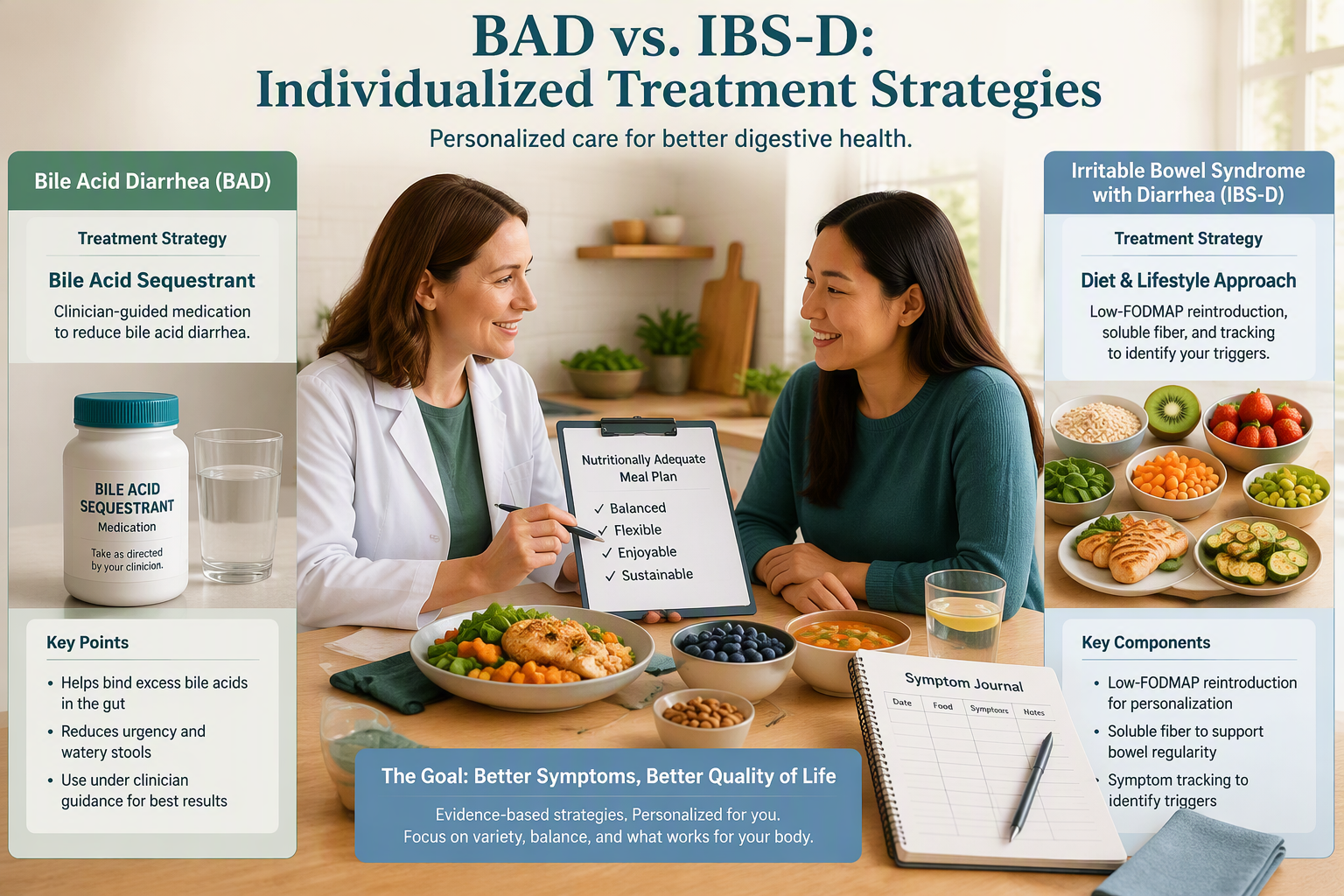
BAD and diarrhea-predominant irritable bowel syndrome (IBS-D) can both cause watery, urgent stools, but they need different treatment strategies. BAD treatment targets excess bile acids, while IBS-D care manages diarrhea, pain, bloating, urgency, and bowel sensitivity. Similar symptoms do not confirm BAD on their own, even when they follow gallbladder removal or intestinal disease.
Concern | BAD | IBS-D |
|---|---|---|
Main focus | Bind excess bile acids | Manage several symptoms and triggers |
Nutrition | Often lower fat | Individualized changes or a time-limited low-FODMAP trial |
Options | Cholestyramine, colesevelam, or colestipol | Soluble fiber, loperamide, rifaximin, eluxadoline, neuromodulators, stress management, or gut-directed hypnotherapy |
Bile-acid sequestrants bind excess bile acids in the intestine and are commonly used with healthcare-professional guidance. Lower-fat eating may complement treatment because fat can stimulate bile release, although unpleasant taste or texture can affect consistent use. A poor response does not automatically rule out BAD if dosing or adherence needs review.
IBS-D treatment is individualized rather than centered on one mechanism. Stress, anxiety, hormonal changes, microbiome changes, caffeine, alcohol, FODMAPs, and personal food sensitivities may influence symptoms. A low-FODMAP approach should be a short test followed by structured reintroduction, not a permanent restrictive diet.
A symptom record can support a more useful healthcare conversation. Include:
- Meals: Note fat, fiber, dairy, caffeine, alcohol, and suspected triggers.
- Symptoms: Record urgency, stool patterns, pain, bloating, and timing.
- Context: Add stress, travel, hormonal changes, medications, and bathroom access problems.
- Nutrition: Discuss protecting calories, nutrients, fiber, and food enjoyment during dietary changes.
How Is Bile Acid Diarrhea Treated?
Clinician-directed bile-acid sequestrants are the main targeted treatment for BAD. They bind excess bile acids in the intestine, making them less likely to draw water into the colon and trigger watery stools or urgency.
Common options include:
- Cholestyramine: A powder that some people find difficult to mix or unpleasant in taste.
- Colesevelam: Tablets that may be easier for some people to take.
- Colestipol: Another option a clinician may consider.
Treatment choice and response vary by person. Follow the prescribed timing and formulation instructions, and tell your clinician if taste, constipation, nausea, or another side effect makes treatment difficult to continue.
Bile-acid sequestrants can bind other oral medicines and reduce their absorption. Give a pharmacist or clinician your complete medication and supplement list, then ask how far apart to take each product. Do not stop, change, or separate an essential medicine without individualized advice.
A balanced, appropriately lower-fat eating pattern may support treatment, but it does not replace evaluation or medication. Large amounts of dietary fat can increase bile acids entering the intestine for some people. A clinician or registered dietitian can help reduce high-fat meals while preserving adequate calories, protein, fiber, and nutritional variety.
Sustained fat restriction combined with ongoing bile acid loss may affect vitamins A, D, E, and K because dietary fat carries these vitamins. Unnecessarily narrow diets can also reduce fiber, calories, nutrients, and enjoyment of food without improving symptoms. Track food-related patterns for follow-up, and ask whether vitamin status should be checked rather than starting supplements independently.
How Is IBS-D Managed?
IBS-D management is personalized because food triggers, stool patterns, health conditions, and treatment risks vary. A gastroenterologist or registered dietitian may guide a short, structured food trial, such as a limited low-FODMAP approach, followed by reintroduction to identify tolerable foods without unnecessary long-term restriction.
A treatment plan may combine these options:
- Food changes: Individualized adjustments can ease symptoms while protecting nutritional variety and reducing fear around eating.
- Stool control: Loperamide or another antidiarrheal may reduce loose stools and urgency. Rifaximin or eluxadoline may suit selected people with IBS-D, but prescription choices depend on other conditions, medicines, and treatment risks.
- Soluble fiber: A gradual increase may improve stool consistency. Start conservatively and take it with adequate water because a rapid increase can worsen gas or discomfort.
- Gut-brain care: Stress-management skills, cognitive behavioral therapy, gut-directed hypnotherapy, or selected neuromodulators may help when pain, stress, or symptom-related anxiety intensifies bowel symptoms.
Kelly's experience. Sudden elimination was hard, but reintroduction was harder, because you never knew whether the next trial would end up somewhere you didn't want it to go. Having a support group around me, and my colleague Chelsea Cleary, a registered dietitian nutritionist, guiding me through it, is the reason I can eat as widely as I do now.
Bathroom access, travel planning, and fear of eating away from home are real quality-of-life concerns, not proof that symptoms are “just stress.” Medical review, registered dietitian input, and lived IBS experience can help you prepare practical questions for a healthcare visit.
Persistent watery urgency warrants a diagnostic safety check. If food trials, fiber, antidiarrheals, or standard IBS-D treatments do not provide enough control, ask a qualified healthcare professional whether BAD should be reconsidered. BAD and IBS-D can overlap but may need different treatment approaches. Check when IBS diarrhea needs urgent assessment if symptoms are severe, worsening, or persistent.
How Do These Symptoms Affect Daily Life?

The clinical comparison between BAD and IBS-D can miss the daily cost of unpredictable diarrhea. Staying near a bathroom, fearing loss of bowel control, or planning outings around urgency is a real burden whether the eventual explanation is BAD, IBS-D, or both.
Practical planning may ease daily routines while evaluation continues, but it cannot replace medical care. Low-cost steps include:
- Checking bathroom locations before commuting, traveling, or attending unfamiliar events.
- Timing meals around meetings, classes, or teaching schedules when possible.
- Carrying spare underwear, pants, wipes, and a sealable bag.
- Telling a trusted partner or employer only what feels necessary, such as needing quick bathroom access or flexible breaks.
Kelly's experience. If I am meeting someone or have to be somewhere, I scope out the coffee shops and bathrooms around the area first. It sounds like nothing, but I am often thankful I did the research. Early on, I canceled a vacation with friends because I was embarrassed about my situation.
These steps may reduce stress, but they cannot show whether chronic watery diarrhea is caused by BAD, IBS-D, or another condition. A symptom diary recording urgency, stool patterns, meals, and missed activities can give your clinician a clearer picture.
Food-related anxiety can also narrow your diet far beyond a clinician’s recommendations. That response is understandable, not a personal failing, but excessive restriction can create nutrition and quality-of-life concerns. A registered dietitian can help you keep meals varied while symptoms are assessed. Living with IBS-D day to day covers management beyond this comparison.
When diarrhea reshapes work, travel, relationships, or eating, that impact belongs in the medical conversation. Ask whether your current diagnosis fully explains the pattern and whether BAD should be considered.
Which Possibility Should You Discuss With A Clinician?
A two- to four-week symptom record can help your clinician assess BAD, diarrhea-predominant irritable bowel syndrome (IBS-D), or both. It cannot diagnose either condition, but it can show patterns that guide testing.
Record these details each day:
- Stools: Frequency, watery or loose appearance, urgency, and accidents.
- Timing: Symptoms after meals, especially fatty foods, plus nighttime episodes.
- Pain: Severity and whether a bowel movement changes it.
- Medical history: Gallbladder removal, terminal-ileum or other intestinal surgery, Crohn’s disease, prior intestinal inflammation, microscopic colitis, or recent infection.
- Medicines and care: Every prescription, over-the-counter medicine, supplement, prior stool or blood test, imaging study, endoscopy, colonoscopy, and treatment response.
Kelly's experience. It never occurred to me to ask. When a doctor gives you a diagnosis, you do not tend to think something else might be going on until you have tried a treatment plan that just does not work. What I would tell anyone now is to keep a log of everything: what you eat, the timing, and what happens afterward.
BAD and IBS-D can overlap rather than act as separate diagnoses. One study identified BAD in 44 of 219 people with IBS-D, about 20%, while other published estimates run as high as one-third. The range reflects different tests and diagnostic cutoffs rather than disagreement about whether the overlap is real. Very watery stools, disproportionate urgency, accidents, symptoms soon after eating, fatty-food triggers, frequent nighttime urgency, or relevant surgery make targeted BAD evaluation worth discussing alongside an IBS-D assessment.
Bring your records and prior results to the appointment, and take a short list of questions with you. These six cover most of what readers tell us they wish they had asked:
- Which bile acid diarrhea tests can you order here, and which one fits my situation? Availability differs by health system and laboratory, so this is a more useful question than requesting a test by name.
- What would a positive or negative result actually change about my treatment? This tells you whether testing is worth the preparation involved.
- Is a supervised trial of a bile-acid sequestrant reasonable for me, and how would we judge whether it worked? Agreeing in advance on what counts as improvement prevents an inconclusive trial.
- If I start a sequestrant, how far apart should I take my other medicines and supplements? These medications can bind other drugs and reduce their absorption, so spacing matters.
- Given how my symptoms have responded so far, should my current diagnosis be revisited? A previous IBS-D label does not rule out BAD.
- Who can help me with diet, and how do we protect nutrition while we work this out? This opens the door to a registered dietitian rather than another round of self-directed restriction.
Ask about evaluation rather than starting treatment without medical guidance. Seek timely care for persistent, severe, worsening, bloody, unexplained, or frequent nighttime diarrhea.
Bile Acid Diarrhea Vs IBS FAQs
These FAQs cover common questions about bile acid diarrhea vs. IBS, including overlapping symptoms, testing discussions, and individualized food guidance. They can help you prepare for a conversation with a qualified healthcare professional without treating symptoms alone as a diagnosis.
1. Can Bile Acid Diarrhea And IBS-D Occur Together?
Yes. BAD and diarrhea-predominant irritable bowel syndrome (IBS-D) can overlap. Primary bile acid diarrhea, also called idiopathic bile acid diarrhea, may drive much of the frequent, watery, or urgent diarrhea while IBS-type abdominal pain and bowel symptoms continue.
Published estimates place BAD in about 20% to one-third of people diagnosed with IBS-D, with one review in Clinical Gastroenterology and Hepatology estimating approximately one-quarter (study). Different tests and diagnostic cutoffs explain the range. Persistent or poorly controlled diarrhea warrants clinician-led evaluation because symptoms alone cannot confirm BAD.
2. Does Gallbladder Removal Increase Bile Acid Diarrhea Risk?
Yes. Diarrhea that begins or worsens after gallbladder removal raises suspicion for BAD because surgery can change how bile reaches the intestine. It is worth discussing with a clinician, but surgery is a risk factor, not proof of BAD.
BAD can also occur with an intact gallbladder. Primary BAD, Crohn’s disease, celiac disease, microscopic colitis, and rapid intestinal transit can all contribute. Disease or surgery involving the terminal ileum, including ileal resection, can reduce bile acid reabsorption and cause secondary bile acid diarrhea. Symptoms alone cannot confirm the diagnosis.
3. What If IBS-D Treatment Does Not Work?
If fiber, antispasmodics, or a properly supervised low-FODMAP plan hasn’t helped, ongoing IBS-D symptoms call for a treatment review, not repeated self-experimentation. Watery or urgent diarrhea, especially after fatty meals or at night, may point to BAD or another cause.
Tell your gastroenterologist about these patterns, past treatments, gallbladder removal, or intestinal disease. Your clinician may consider BAD testing or other evaluations. Don’t start, stop, or test a bile acid medication on your own. Persistent, severe, or worsening symptoms need qualified medical care.
4. Can You Get Tested For Bile Acid Diarrhea In The US?
Yes, bile acid diarrhea can be diagnosed in the United States, but not with the SeHCAT scan described in many articles. SeHCAT is used in the United Kingdom, Europe, and Canada, but it isn’t available in the US.
A gastroenterologist may order a serum 7αC4 blood test, a 48-hour stool bile-acid collection, or a monitored trial of a bile-acid sequestrant when validated testing isn’t accessible. Availability varies by health system and laboratory, so ask which option your clinician can order rather than requesting a specific test by name.