


A working probiotic looks less dramatic than the marketing implies. What you're looking for is a measurable shift in the one symptom you set out to change, not a whole-body reset, and no probiotic has been shown to permanently rebuild anyone's gut microbiome.
Baseline is what makes the difference readable. Without a record of how often symptoms happened before you started, a good week is indistinguishable from a working product, and bloating in particular fluctuates enough to fool anyone. Recording one or two priority outcomes daily gives you something to compare.
Early gas or bloating is the most misread signal of all. It's common in the first days, it often settles, and it is not evidence the product is doing its job.
Signs Probiotics Are Working Key Takeaways
- A meaningful benefit is a measurable change in the symptom you targeted.
- No probiotic has been shown to permanently change the gut microbiome.
- Record a baseline before starting, or improvements can't be judged.
- Track one or two priority outcomes daily rather than everything at once.
- Early gas or bloating is common and is not proof the product works.
- Match the strain code and dose to the research for your goal.
- Symptoms that worsen or persist are a reason to stop and seek advice.
What Counts as a Meaningful Probiotic Benefit?

A meaningful probiotic benefit is a clear, measurable improvement in the digestive symptom you wanted to address. That might mean fewer bloating episodes, more comfortable and regular bowel movements, less urgency with loose stools, or less abdominal discomfort. A general sense that digestion feels “better” is harder to evaluate.
For most people, probiotic benefits are modest and consistent rather than dramatic. Research has not established a whole-body “gut reset” or a permanent change to the gut microbiome for everyone. Probiotic effectiveness varies with the health condition, diet, stress, medications, dose, and exact microorganism used (source).
A simple record makes it easier to judge whether a product is helping. Track one main symptom alongside the exact product, probiotic strain, dose, and how long you take it:
- Bloating: Note how often it occurs and whether it interferes with meals, work, sleep, or comfortable clothing.
- Bowel movements: Record frequency, urgency, ease of passing stool, and whether stools are loose, hard, or formed.
- Abdominal discomfort: Rate pain or cramping as mild, moderate, or severe and note when it happens.
How to take probiotics can help you keep the product details consistent while you track symptoms. Another person’s result cannot predict yours, especially if their diagnosis, routine, or medication use differs.
The species name on a label is not enough. Match the full strain code, because findings for one strain do not automatically apply to other products in the same species. For example, Bifidobacterium longum subsp. infantis 35624 and Lactiplantibacillus plantarum 299v have been studied in irritable bowel syndrome (IBS), but that evidence does not validate every Bifidobacterium or Lactiplantibacillus product.
The gut supports nutrient absorption and produces much of the body’s serotonin, which helps explain interest in the gut-brain link. Still, changes in mood, energy, sleep, skin, or immune health can have many causes. Keep your focus on the digestive outcome you intended to improve, and treat broader changes as associations rather than guaranteed probiotic effects.
Which Digestive Changes Should You Track?

To make that symptom record meaningful, start with a baseline before changing your routine. For several days, note how often you have bowel movements, whether you strain, whether you feel fully emptied, and how your symptoms feel. This gives you a reference point, so one unusually good or difficult day does not outweigh a repeated pattern.
A daily log can include:
- Bowel habits: Record bowel movements per day or week, stool form, and any constipation or loose-stool episodes. Plain descriptions are fine, or you can use the Bristol Stool Form Scale. Improvement may mean more regular bowel movements, a softer stool that is still formed, less straining during bowel movements, or easier-to-pass stool. You do not need a bowel movement every day to be improving.
- Symptoms: Rate gas, bloating, visible abdominal distension, cramping, and abdominal discomfort from 0 to 10. Note when symptoms occur, possible food or stress triggers, and whether they interrupt meals, sleep, work, exercise, or social plans.
- Daily function: Less bloating, less gas, and reduced cramping can matter, but so can being able to finish a workday, sleep comfortably, or eat a meal with less disruption.
- Probiotic details: Write down the exact product, full strain code, dose, start date, and how consistently you use it. A species name or colony-forming unit count alone does not show that a product has evidence for your specific goal.
Track the symptom your probiotic is intended to support instead of expecting every digestive concern to change at once. Strain-specific human research matters. For example, Bifidobacterium longum subsp. infantis 35624 has been studied in people with IBS, but that evidence does not automatically apply to other products labeled with the same species.
If you take a probiotic during or after antibiotics, log every loose-stool or diarrhea episode separately and note its timing compared with antibiotic doses. Fewer episodes of antibiotic-associated diarrhea may be meaningful, though the illness, antibiotic, and food changes can each affect stools.
Review the full planned trial for trends, such as fewer difficult bowel movements in most weeks or lower average bloating scores. Keep early unwanted changes, including extra gas or looser stools, in a separate note.
Individual responses to dietary or supplement advice can differ.
Does Your Probiotic Strain Match Your Goal?
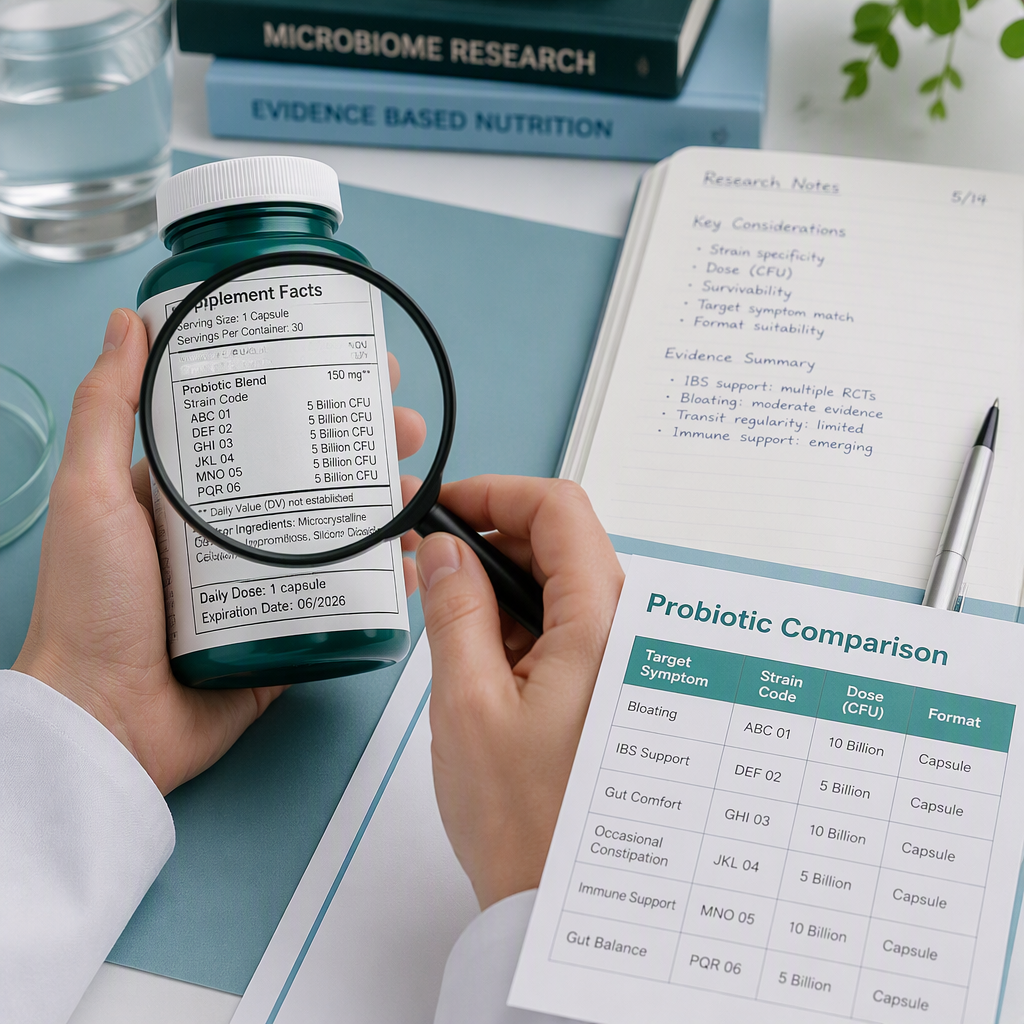
A probiotic strain is identified by its full scientific name and strain code, not by a genus name such as Lactobacillus or Bifidobacterium alone. Whether probiotics may help depends on the exact strain, dose, delivery format, your main symptom, and your digestive history. Your main symptom and digestive history also shape your response.
Choose one measurable outcome rather than tracking general “gut health.” Useful changes to watch include:
- After antibiotics: Fewer episodes of antibiotic-associated diarrhea or reduced diarrhea compared with your usual pattern.
- For constipation: More regular bowel movements and less straining.
- For IBS symptoms: Less gas, bloating, abdominal distension, cramping, stomach or abdominal discomfort, or a more predictable stool pattern.
For diagnosed IBS, a high colony-forming unit (CFU) count or a broad “multi-strain” claim is not enough. Human IBS trials have evaluated Bifidobacterium longum subsp. infantis 35624, Lactiplantibacillus plantarum 299v, Lactobacillus rhamnosus GG, Saccharomyces cerevisiae CNCM I-3856, and Bacillus coagulans Unique IS2. Evidence for one probiotic strain does not apply to a different strain in the same species.
Labels can be confusing because scientific taxonomy changes over time. Strain 299v may appear as Lactobacillus plantarum or Lactiplantibacillus plantarum, while 35624 may be listed as Bifidobacterium infantis or B. longum subsp. infantis. The strain code is the dependable match, since a species-only label cannot confirm that a product contains the studied strain.
Dose and format should resemble the research. Lactiplantibacillus plantarum 299v, for example, has been sold in a capsule containing 20 billion CFU. More CFUs are not automatically better, and yogurt is not automatically equivalent to a studied capsule. Look for the complete strain code, a live count through the expiration date, and a format that matches the research. A consistent routine, including the best time to take probiotics daily, makes symptom changes easier to assess.
For a personal trial, use one named strain in one research-relevant format consistently for eight weeks. Track the defined symptom you chose instead of making several changes at once. Mild gas or stool changes can occur early, but stop using the product and consult a qualified healthcare professional if symptoms are severe, persistent, or worsening.
How Do You Measure Probiotic Results Against a Baseline?
After choosing a named strain and target symptom, a useful probiotic test starts before the first dose. Without a baseline, you cannot tell whether a change reflects probiotic effectiveness, a normal symptom swing, a stressful week, or a meal that did not agree with you.
For several days to one week before starting, track one or two symptoms that matter most. Bloating after dinner or urgent loose stools in the morning are easier to compare than scattered notes on every digestive sensation.
A simple daily entry includes:
- Date and timing: Add one dated entry each day, recorded close to the symptom or bowel movement rather than from memory later.
- Priority symptom: Use the same severity scale every time, such as 0 for none through 10 for severe.
- Bowel changes: Note stool frequency, consistency, constipation, diarrhea, or urgency when these relate to your goal.
- Daily impact: Record practical effects, such as disrupted sleep, discomfort at work, missed plans, or a rushed search for a restroom.
- Product details: Include the exact product name, species, strain code, daily dose, form, and start date.
Record the strain code with your daily entry. For example, 299v and 35624 are strain codes, and results tied to one strain do not automatically apply to another product from the same species, regardless of its CFU count, ratings, or bestseller status.
Compare weekly patterns with your baseline instead of treating one comfortable day as proof or one difficult day as failure. The meaningful signal is a change large enough to improve daily life, such as fewer urgent bathroom trips or less discomfort during meetings.
How long probiotics take to work depends on your symptom, the product, and its named strain. A fuller look at probiotic response times by symptom explains why some people notice changes after several weeks while others do not (source).
When probiotics work, the clearest sign is practical improvement in your target symptom that matches the product and strain you are taking.
Are Early Side Effects a Sign of Benefit?
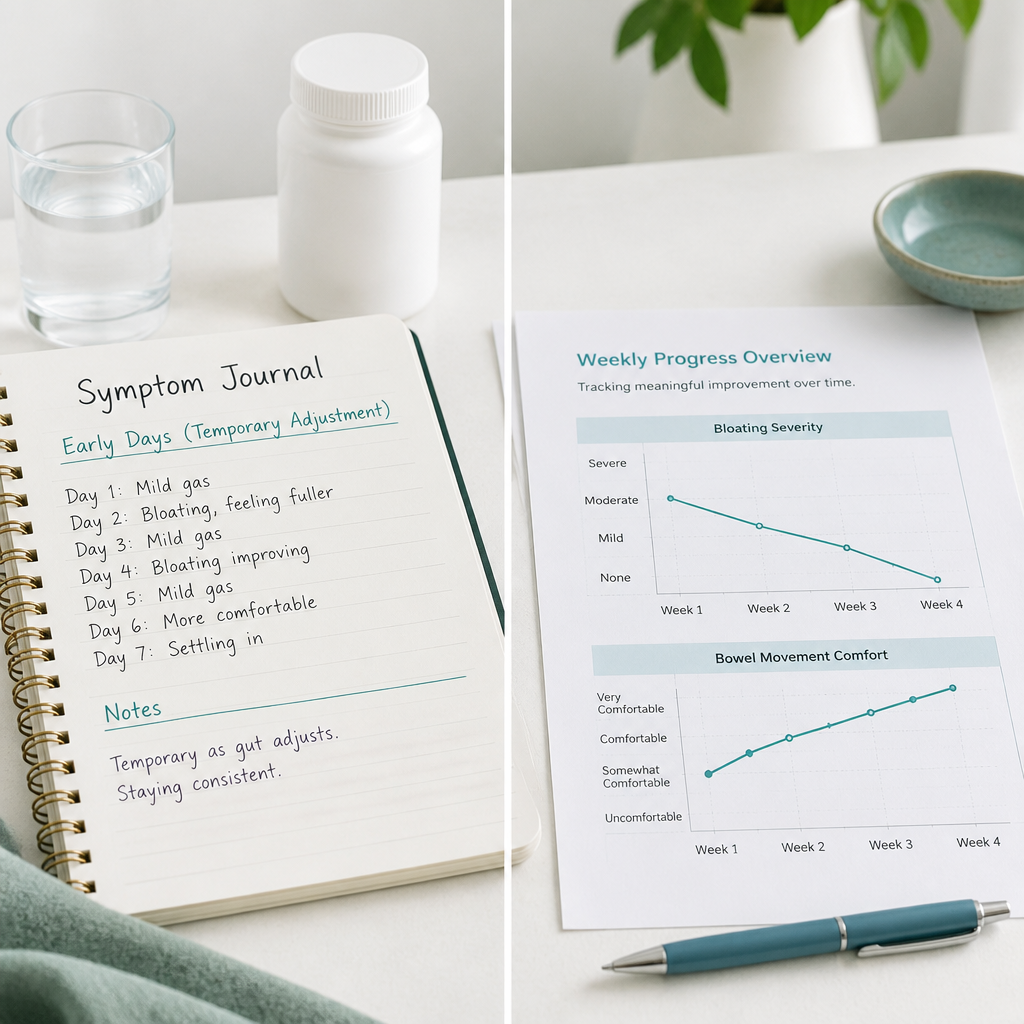
While you measure results against your baseline, a short-lived increase in gas, abdominal bloating, or bowel sounds can occur during the first few days to about one week of taking a probiotic. As the product interacts with your existing gut environment and dietary carbohydrates, especially fermentable fiber, it may cause temporary digestive discomfort. These early signs probiotics are working are easy to misread, but they are possible side effects, not proof that the probiotic is helping or that it suits your symptoms.
More reliable signs probiotics are working are sustained, trackable improvements in the symptom you chose to address. That may mean less gas after meals, less bloating over the week, reduced cramping, more comfortable bowel movements, or fewer urgent loose stools. Initial gas does not predict later benefit.
Results can differ based on the exact strain, dose, delivery method, diet, target symptom, and your individual gut microbiome. A probiotic that helps one person with constipation may not help another person with diarrhea or IBS, even when both products contain similar types of bacteria.
Fatigue, headaches, and digestive upset are sometimes described online as a microbiome “die-off” or Herxheimer reaction. Because this explanation is not established for routine probiotic adjustment symptoms, worsening symptoms are not necessary cleansing, so there is no reason to push through discomfort in hopes of a later benefit.
For mild symptoms that remain tolerable, a slower start can make changes easier to interpret:
- Take the probiotic every other day during the first week, then move toward the label’s daily dose if symptoms settle.
- Keep your diet stable, especially your intake of fermentable fiber, while you assess the probiotic.
- Avoid starting other digestive supplements at the same time, since several changes can obscure the cause of new symptoms.
If discomfort remains disruptive after the early adjustment period, worsens with continued use, or continues after reducing the dose, the product, dose, or timing may not be a good fit. Stop self-experimenting and speak with a qualified healthcare professional about persistent, severe, or worsening digestive symptoms.
When Should You Stop and Seek Care?
Because worsening symptoms are not an adjustment to push through, stop the probiotic and seek prompt medical care for severe or escalating abdominal pain, frequent or profuse diarrhea, blood or black stools, fever, repeated vomiting, fainting, confusion, or signs of dehydration. Very dark urine, barely urinating, dizziness, or being unable to keep fluids down also need urgent attention. These are not normal adjustment symptoms.
Urgent warning signs include:
- Severe or unusual pain: Abdominal pain that is intense, worsening, or clearly different from your usual discomfort.
- Serious bowel changes: Frequent diarrhea, blood or black stools, or a major change in your usual bowel pattern.
- Whole-body symptoms: Fever, repeated vomiting, fainting, confusion, very dark urine, minimal urination, or trouble keeping fluids down.
Mild gas or bloating can happen early in a probiotic trial and may settle. However, diarrhea, substantial cramping, or other digestive distress that lasts beyond one to two weeks, gets worse, or disrupts eating, sleep, work, or daily life may mean the supplement is not a good fit. The National Center for Complementary and Integrative Health advises discussing probiotic use with a healthcare professional when concerns arise (source).
Stop rather than increasing the dose, then discuss the symptom pattern with a qualified healthcare professional. This matters when probiotics not working seems to be the issue, because a higher dose does not necessarily solve a poor match.
Do not let a probiotic trial hide a meaningful IBS flare. Pause the supplement and arrange clinical review if your usual symptoms are clearly worse after a couple of weeks, including more urgent diarrhea, constipation, pain, bloating, or a major bowel-habit change. New skin flare-ups, unusual fatigue, or symptoms outside your normal IBS pattern also deserve reassessment.
Review the exact strain code, dose, delivery method, target symptom, and your personal health context when deciding whether to continue the product. If a product has not helped by the planned end of your trial, reconsider it with a qualified healthcare professional. Persistent or severe adverse effects need earlier advice, since digestive symptoms can have many causes and this guidance does not replace personalized medical care.
Signs Probiotics Are Working FAQs
These FAQs cover common questions about signs probiotics are working, including symptom changes, realistic timelines, and when medical guidance may be appropriate.
1. Can Probiotics Cause Constipation at First?
A probiotic can coincide with brief constipation when you first start it, but that does not show it is helping. During the first few days to a week, some people notice gas or bloating as the microbes interact with dietary fiber and the existing gut microbiome, while others have reduced constipation or looser stools. Responses vary by strain and person. Stop the product and speak with a qualified healthcare professional if constipation worsens, persists, becomes painful, or occurs with other concerning symptoms.
2. Do Daily Probiotics Keep Working Long-Term?
Daily probiotics do not always provide lasting or increasing benefits. When probiotics work, your target symptom stays better than its usual baseline during consistent use. Track bloating, constipation, diarrhea, or abdominal discomfort rather than vague changes in your probiotic results timeline. If probiotics not working means no clear ongoing difference, check whether the product names a strain with evidence for your goal and reconsider how long probiotics take to work. Discuss persistent symptoms or uncertain results with a qualified healthcare professional.
3. Should You Take Probiotics With Antibiotics?
Probiotics are not necessary for everyone taking antibiotics, though a clinician or pharmacist can help you decide whether one may support reduced diarrhea from antibiotic-associated diarrhea. Fewer or milder episodes may be a meaningful sign of benefit, but probiotics do not treat the infection or guarantee that digestive symptoms will disappear. Follow the product’s directions for timing around antibiotic doses, since schedules vary. Track the exact strain code, your intended outcome, length of use, and changes in stool frequency or consistency.
4. Can Immunosuppressants Affect Probiotic Safety?
If you take immunosuppressants, have reduced immune health, are seriously ill, or are otherwise medically vulnerable, talk with your prescribing clinician before trying a probiotic. Live microorganisms can pose a small but greater risk when immune defenses are lowered, and supplements do not replace prescribed treatment or individualized medical advice.
Severe or worsening cramping, diarrhea, or digestive distress is not a sign to push through. Seek healthcare advice if symptoms persist beyond one to two weeks or become severe, as another cause may need attention.